Health officials blamed rising health care costs and lack of federal funding. (Elisa Schu/picture alliance via Getty Images)
(NEW YORK) — An emergency rule from the Florida Department of Health went into effect on Sunday that could restrict tens of thousands of people from accessing HIV medication.
The state issued cuts to the AIDS Drug Assistance Program (ADAP), a federal-state partnership that provides free FDA-approved HIV medication for low-income, uninsured or underinsured people.
Under the emergency rule, eligibility for ADAP was lowered to include those at or below 130% of the federal poverty level, which equals about $20,345 per year for a one-person household, according to the Department of Health and Human Services.
Previous eligibility was at or below 400% of the poverty level, which equals about $62,600 per year for a one-person household, according to HHS.
Additionally, the emergency rule limits insurance coverage of Biktarvy, a once-daily pill to treat HIV and used by about 60% of those enrolled in ADAP.
HIV advocates estimate that as many as 16,000 of the 30,000 Floridians enrolled in ADAP could be at risk of restricted access.
“These cuts will impact communities throughout the state, will threaten the lives of people with HIV and will lead to spikes in new HIV diagnoses and a rise in health care costs as people with HIV develop serious infections requiring hospitalization,” said Dr. Anna K. Person, chair of the HIV Medicine Association, a community of health care professionals that works toward advancing the response of the HIV epidemic, in a statement.
“HIV treatment disruptions of this magnitude will result in a public health disaster. Florida must follow due process and work with health care professionals, people with HIV and the state legislature to address any funding challenges,” the statement continued.
The new emergency rule is only in effect for 90 days and cannot be renewed unless a rule is proposed to implement the changes through formal administrative rulemaking.
Health officials have cited the “rising health care insurance premiums nationwide” and lack of federal funding as reason for the cuts. Officials said the adjustments will prevent a shortfall of more than $120 million for the state.
The Florida Department of Health did not immediately return ABC News’ request for comment.
Three people are dead and 14 others hospitalized following a mass shooting early Sunday morning. (Brandon Bell/Getty Images)
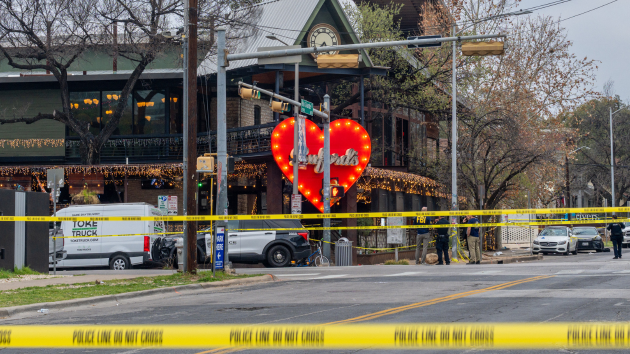
(NEW YORK) — The FBI said it is investigating a possible terrorism motive in a mass shooting early Sunday outside a bar in Austin, Texas, that left two people dead and more than a dozen others injured.
The suspected gunman was killed in a confrontation with police officers, who were already staged in the city’s entertainment district when the shooting broke out, Austin Police Chief Lisa Davis said at a news conference on Sunday.
The suspect’s name was not immediately released. But sources with knowledge of the investigation told ABC News that he is a 53-year-old man from Pflugerville, Texas, who was born in Senegal and was a naturalized U.S citizen.
Alex Doran, the acting special agent in charge of the FBI’s San Antonio field office, said a motive for the shooting remains under investigation, but terrorism is a possible motive.
“There were indicators on the subject and in his vehicle that indicate potential nexus to terrorism,” Doran said Sunday. “Again, it’s still too early to make a determination on that.”
Davis said 911 callers began reporting a shooting on Sixth Street in downtown Austin just before 2 p.m. She said the 911 callers stated that someone was shooting around Buford’s Bar.
“We know that a large SUV drove several times around the block in that area,” Davis said. “At one point, [the suspect] put his flashers on, rolled down his window and began using a pistol, shooting out of his car windows, striking patrons of the bar that were on the patio and that were in front of the bar.”
Davis said the suspect then parked his vehicle, got out and opened fire on people gathered on the sidewalk.
She said the Austin police department had a contingent of officers assigned to patrol the area in the busy Sixth Street entertainment district. She said the officers were about 55 to 56 seconds away from where the suspect was shooting, and rushed toward the gunfire.
Davis said the suspect was walking in the direction of the police when officers confronted him and killed him.
“There is no question in my mind that the quick response of the police officers and of our EMS personnel and those professionals made a difference and saved lives,” Austin Mayor Kirk Watson said at the news conference.
Three Austin Police Department officers encountered a suspect armed with a gun on the street near Buford’s Bar, police said at an earlier news conference. The officers returned fire, fatally shooting the man, police said.
The FBI’s Joint terrorism Task Force is joining the investigation into the shooting, sources familiar with the matter told ABC News.
The Austin Police Department had earlier released a statement urging people to avoid the area near the 600 block of Rio Grande Street, the Downtown Austin block where the bar is located.
Photos and videos from the scene showed a major emergency response. Paramedics and officers arrived on the scene less than a minute after the first call came in, Chief Robert Luckritz, of the Austin-Travis County EMS, said on Sunday.
Three people, including a suspect, were pronounced dead at the scene, Luckritz said, adding that another 14 were transported to local hospitals for treatment for injuries.
As the response began, the Austin Fire Department had said that emergency personnel were responding to an “Active Attack” call.
“AFD is working an Active Attack call on West 6th St. unified command with @Austin_Police and @ATCEMS This is an active scene we will release information as becomes available,” the department said on social media. “Avoid the area.”
Three people are dead and 14 others hospitalized following a mass shooting early Sunday morning. (Brandon Bell/Getty Images)
(NEW YORK) — The FBI said it is investigating a possible terrorism motive in a mass shooting early Sunday outside a bar in Austin, Texas, that left two people dead and more than a dozen others injured.
The suspected gunman was killed in a confrontation with police officers, who were already staged in the city’s entertainment district when the shooting broke out, Austin Police Chief Lisa Davis said at a news conference on Sunday.
The suspect’s name was not immediately released. But sources with knowledge of the investigation told ABC News that he is a 53-year-old man from Pflugerville, Texas, who was born in Senegal and was a naturalized U.S citizen.
Alex Doran, the acting special agent in charge of the FBI’s San Antonio field office, said a motive for the shooting remains under investigation, but terrorism is a possible motive.
“There were indicators on the subject and in his vehicle that indicate potential nexus to terrorism,” Doran said Sunday. “Again, it’s still too early to make a determination on that.”
Davis said 911 callers began reporting a shooting on Sixth Street in downtown Austin just before 2 p.m. She said the 911 callers stated that someone was shooting around Buford’s Bar.
“We know that a large SUV drove several times around the block in that area,” Davis said. “At one point, [the suspect] put his flashers on, rolled down his window and began using a pistol, shooting out of his car windows, striking patrons of the bar that were on the patio and that were in front of the bar.”
Davis said the suspect then parked his vehicle, got out and opened fire on people gathered on the sidewalk.
She said the Austin police department had a contingent of officers assigned to patrol the area in the busy Sixth Street entertainment district. She said the officers were about 55 to 56 seconds away from where the suspect was shooting, and rushed toward the gunfire.
Davis said the suspect was walking in the direction of the police when officers confronted him and killed him.
“There is no question in my mind that the quick response of the police officers and of our EMS personnel and those professionals made a difference and saved lives,” Austin Mayor Kirk Watson said at the news conference.
Three Austin Police Department officers encountered a suspect armed with a gun on the street near Buford’s Bar, police said at an earlier news conference. The officers returned fire, fatally shooting the man, police said.
The FBI’s Joint terrorism Task Force is joining the investigation into the shooting, sources familiar with the matter told ABC News.
The Austin Police Department had earlier released a statement urging people to avoid the area near the 600 block of Rio Grande Street, the Downtown Austin block where the bar is located.
Photos and videos from the scene showed a major emergency response. Paramedics and officers arrived on the scene less than a minute after the first call came in, Chief Robert Luckritz, of the Austin-Travis County EMS, said on Sunday.
Three people, including a suspect, were pronounced dead at the scene, Luckritz said, adding that another 14 were transported to local hospitals for treatment for injuries.
As the response began, the Austin Fire Department had said that emergency personnel were responding to an “Active Attack” call.
“AFD is working an Active Attack call on West 6th St. unified command with @Austin_Police and @ATCEMS This is an active scene we will release information as becomes available,” the department said on social media. “Avoid the area.”
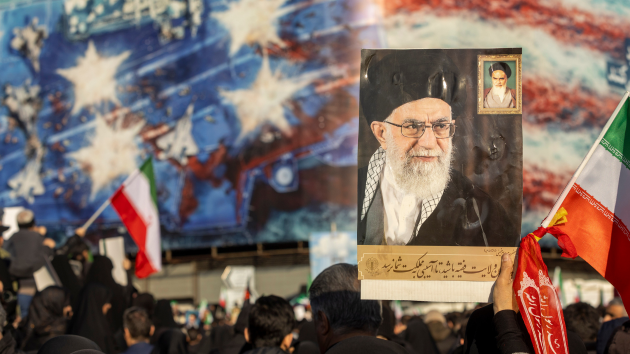
thousands of people gather in Enghelab Square for a pro-government demonstration after Iranian state media confirmed the death of Ayatollah Ali Khamenei on March 1, 2026 in Tehran, Iran. (Majid Saeedi/Getty Images)
(LONGDON) — The interim leadership council of Iran has been formed following the death of Ayatollah Ali Khamenei, the country’s supreme leader, Iranian state TV reported Sunday.
The interim leadership council will include Iranian President Masoud Pezeshkian, the head of the judiciary and Ayatollah Alireza Arafi, who was selected as the representative of the Guardian Council.
According to the Islamic Republic constitution, the Guardian Council consists of 12 members: six “faghihs,” or Islamic jurists, and six Muslim “experts” in various areas of law.
Watch ABC Sunday night at 9 p.m. ET for an ABC News special “Shockwaves: The Attack on Iran” to see the latest on the unfolding situation in the Middle East. Stream on Disney+ and Hulu.
Pezeshkian — who sources told ABC News was targeted in Saturday’s joint U.S.-Israel attack — resurfaced on Sunday on Iranian state TV. He said that the interim leadership council has started its work following the death of Khamenei.
In a taped video message broadcast on the Iranian state TV, Pezeshkian said that the armed forces of the Islamic Republic are “powerfully crushing the enemy’s bases.”
Secretary of the Supreme National Security Council of Iran, Ali Larijani, appeared in a television interview in Iran on Sunday and commented on the death of Khamenei, saying, “The passing of a great personality has wounded the hearts of all of us.”
“Americans should know that by stabbing the hearts of the Iranian nation, their hearts will be stabbed,” Larijani said. “What they did in a cruel way towards the Iranian leadership has angered the people so much that they will never achieve their goals.”
He also said a temporary leadership council would be formed of the president, the head of the judiciary, and one of the jurists of the Guardian Council.
A spokesperson for the Guardian Council said, “The country’s constitution provides for the current situation and the leadership council will be in charge until the leadership is determined.”
According to the law, the leadership must be determined as soon as possible, given the war conditions. Israel Defense Forces (IDF) said 40 Iranian commanders were also killed in Saturday’s attack that President Donald Trump described as a “massive and ongoing operation” against Iran and its Middle East proxies.
The IDF said the Israeli Air Force struck and eliminated seven members of the top Iranian security leadership who had gathered at several locations in Tehran.
Among those eliminated in the strikes was Abdolrahim Mousavi, who served as chief of staff of the armed forces, according to the IDF.
Mousavi served as one of the highest senior military ranking officials and was the successor of Mohammad Bagheri, the chief of staff of the Iranian Armed Forces, who was killed in the opening strike of “Operation Rising Lion” in June 2025.
The majority of the highest-ranking senior military officials of the Iranian security leadership were also killed, the IDF said.
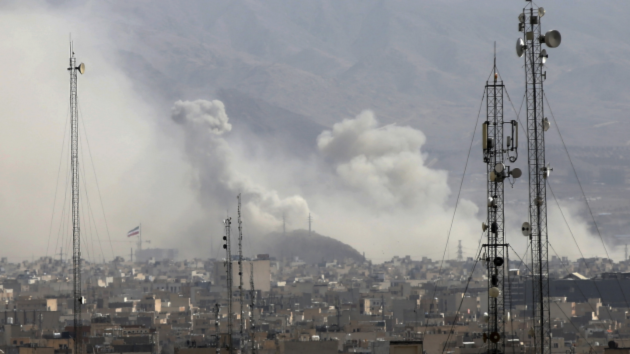
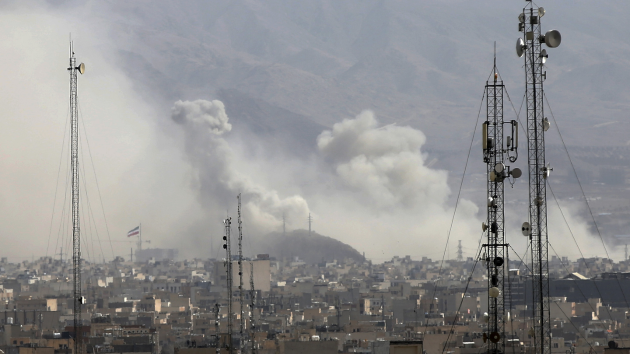
Smoke rises over the city center after an Israeli army launches 2nd wave of airstrikes on Iran on February 28, 2026. (Photo by Fatemeh Bahrami/Anadolu via Getty Images)
(NEW YORK) — Saturday’s attack against Iran was the Pentagon’s first use of one-way drones in combat, CENTCOM said, and only about three months since its first notable test in the field — a rapid turnaround for a weapon system in the United States’ arsenal.
The use of one-way drones comes as military planners have been rapidly building up a squadron in the Middle East of Low-Cost Unmanned Combat Attack System, or LUCAS, a one-way attack drone produced by Arizona-based SpektreWorks.
Each unit costs about $35,000 — much cheaper than a $30 million Reaper drone and subsequent munitions.
The drones are brand new, being deployed to the Middle East in December and having their first test flight from a Navy ship that month.
The American drone was reverse-engineered from Iran’s Shahed drones that have been used by Iran against Israel and by Russia against Ukraine.
The new drones are part of CENTCOM’s Task Force Scorpion Strike, which was founded shortly after Defense Secretary Pete Hegseth directed acceleration of the acquisition and deployment of cheap drone technology last summer.
LUCAS drones are designed to operate autonomously, according to CENTCOM. They can be launched with different mechanisms to include catapults, rocket-assisted takeoff, and ground and vehicle systems.
“Autonomous” doesn’t always refer to technology that doesn’t require humans for a designate a target, just that it doesn’t necessarily require human involvement after a target is selected, according to Pentagon policy.
One-way attack drones became notable in the war in Ukraine and spurred enormous investment into the technology from the Pentagon as a significantly cheaper option with relative ease of use compared to other weapons and aircraft.
“The first hours of the operation included precision munitions launched from air, land, and sea,” CENTCOM said in a statement.
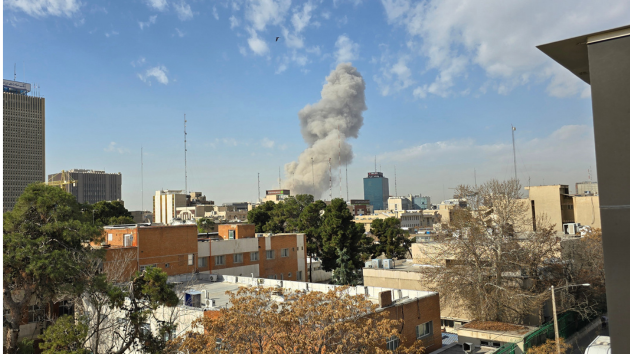
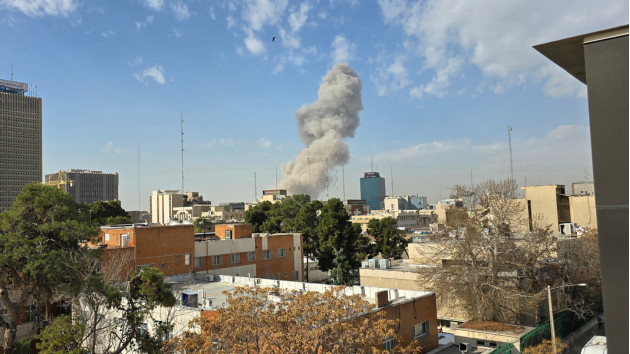
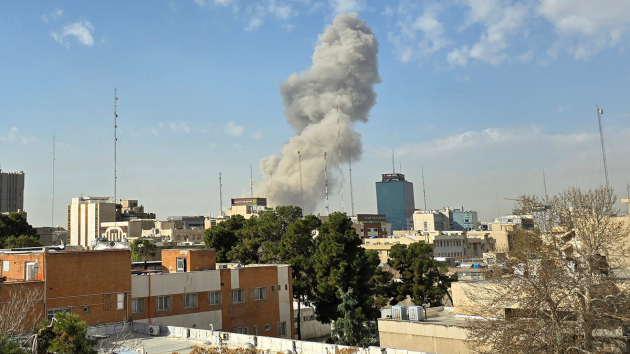
A plume of smoke rises after an explosion on February 28, 2026 in Tehran, Iran. (Majid Saeedi/Getty Images)
(NEW YORK) — Dozens of students at an Iranian all-girls elementary school were among those killed during the U.S. and Israeli military strikes throughout the country Saturday morning, officials in Iran claimed.
The country’s leaders and state TV said 85 people who were at the Shajare Tayyiba Elementary School were dead, as of 10:40 a.m. ET, after the school in Minab was attacked.
At least 92 injuries related to the school attack were reported, according to Iran’s Tasnim News Agency, which cited the local governor.
Iranian officials have not immediately said how many of the dead and wounded are children. Earlier in the morning, Iran’s state broadcaster, IRIB, reported shortly after that the death toll had risen to 57 school girls, with another 60 injured.
Iranian President Masoud Pezeshkian blasted the United States and Israeli governments for the deaths and injuries in a statement Saturday carried by the IRGC-affiliated Fars News Agency.
“This barbaric act is another black page in the record of countless crimes committed by the aggressors against this land that will never be erased from the historical memory of our nation,” he said.
Iranian Foreign Minister Abbas Araghchi said in an X post that the school was “bombed in broad daylight, when packed with young pupils.”
A spokesman for U.S. Central Command said in a statement that it would look into the reports about the school being bombed but emphasized, “Unlike Iran, we have never — and will never — target civilians.”
“We take these reports seriously and are looking into them,” Capt. Tim Hawkins, a CENTCOM spokesman, said in a statement. “The protection of civilians is of utmost importance, and we will continue to take all precautions available to minimize the risk of unintended harm.”
International law prohibits the deliberate targeting of schools and universities during armed conflicts.
The U.S. military has a rigorous targeting process using different forms of intelligence to ensure that any targets to be struck by bombs or missiles are, in fact, enemy targets and will not harm civilians or strike civilian targets.
Claims of civilian casualties are investigated as much as possible, although it may not be possible to do so in areas controlled by hostile forces.
The Global Coalition to Protect Education from Attack, a non-profit that tracks military attacks on academic institutions, documented more than 6,000 attacks on schools, universities, students and education personnel worldwide between 2022 and 2023.
The group’s global research found that 10,000 students and education personnel were killed, injured, abducted or otherwise harmed during that time period.
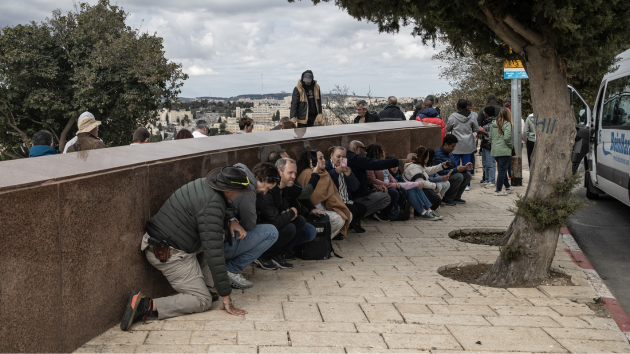
People take shelter as Iran launched missiles and drones towards Israel following the US-Israeli attacks, in Jerusalem on February 28, 2026. (Photo by Mostafa Alkharouf/Anadolu via Getty Images)
(NEW YORK) — In announcing the U.S. military strike on Iran, President Donald Trump went significantly beyond his previous justification of destroying the country’s nuclear program.
He’s now also calling for regime change — and encouraging the Iranian people to rise up and overthrow their government.
Three sources briefed on the attack told ABC News that Iran’s Supreme Leader Ayatollah Ali Khamenei and President Masoud Pezeshkian were both targeted during the strikes.
But whether American bombing could help make regime change happen — without also deploying U.S. forces on the ground — was unclear, as was who might replace Iran’s current leaders.
“Our objective is to defend the American people by eliminating imminent threats from the Iranian regime, a vicious group of very hard, terrible people,” Trump announced in a video posted to his social media account early Saturday morning.
Speaking to what he called “the great, proud people of Iran,” he added, “I say tonight that the hour of your freedom is at hand.”
“When we are finished, take over your government. It will be yours to take. This will be probably your only chance for generations,” he said.
“For many years, you have asked for America’s help, but you never got it. No president was willing to do what I am willing to do tonight. Now you have a president who is giving you what you want, so let’s see how you respond.” he said.
“America is backing you with overwhelming strength and devastating force. Now is the time to seize control of your destiny and to unleash the prosperous and glorious future that is close within your reach,” he said.
Shortly after, in a brief phone call with a Washington Post reporter, the president said that all he wants is “freedom for the people” of Iran.
In January, during widespread protests in Iran when thousands of Iranians were reported killed, Trump posted on social media, “Iranian Patriots, KEEP PROTESTING — TAKE OVER YOUR INSTITUTIONS!!! Save the names of the killers and abusers. They will pay a big price.”
“HELP IS ON ITS WAY,” Trump added at the time, though he faced criticism for taking no further action at that point.
Israeli Prime Minister Benjamin Netanyahu, in his own video statement Saturday echoed Trump’s call, saying the attack’s goal was “to remove the existential threat posed by the terrorist regime in Iran.”
Iran has claimed it is not pursuing a nuclear weapon and has the sovereign right to pursue a peaceful nuclear program for civilian purposes.
Imminent threat? Up to now, Trump has said he preferred a diplomatic solution and has not presented a clear justification for why strikes are needed now, since he has repeatedly insisted Iran’s nuclear program was “obliterated” in U.S. strikes he ordered last June — a claim he repeated at last week’s State of the Union address.
In making his new case for the strikes, the president is arguing attacks are warranted to “defend the American people by eliminating imminent threats from the Iranian regime” without providing clear evidence of that.
Trump also argued Iranian missiles could “soon” reach the U.S — but the president has provided no details.
Iran is “developing long range missiles that can now threaten our very good friends and allies in Europe, our troops stationed overseas and could soon reach the American homeland,” he said.
Yet, according to a one-page document released by the Defense Intelligence Agency earlier this year, Iran is looking to develop an intercontinental ballistic missile by 2035.
Just a few days ago, after the president’s State of the Union address, Secretary of State Marco Rubio told reporters Iranian missiles could reach the United States “one day.”
“Clearly, they are headed in a pathway to one day being able to develop weapons that can reach the continental U.S. They already possess weapons that can reach much of Europe already now as we speak, and the ranges continue to grow every single year exponentially,” Rubio said.
Whether the Iranian missile threat was “imminent” — and whether Congress should vote on committing American troops to an extensive military operation — aimed at pursuing such a broad goal of regime change in Iran — will likely dominate the debate when lawmakers return to Washington this week.
A plume of smoke rises after an explosion on February 28, 2026 in Tehran, Iran. (Photo by Majid Saeedi/Getty Images)
(NEW YORK) — The U.S. and Israel’s large-scale strikes on Iran Saturday are expected to rattle oil markets when trading resumes Sunday evening, with analysts anticipating an immediate price reaction and impact on gas prices.
The central concern isn’t just Iran’s oil production, but its influence over the Strait of Hormuz, one of the world’s most important checkpoints for oil.
According to the U.S. Energy Information Administration, roughly 20% of the world’s oil passes through the strait, making Iran’s threats to close the waterway a significant risk. The U.S. is trying to control for this situation by vowing to “annihilate” Iran’s navy.
Saudi Arabia and the United Arab Emirates have limited infrastructure in place that can bypass the Strait of Hormuz, which has the potential to mitigate any transit disruptions, but not offset them entirely.
While Iran has never followed through on these threats in the past, the perception of risk is still enough to move markets.
GasBuddy’s Patrick DeHaan expects crude oil to jump 5-10% as markets reopen, pushing oil above $70 a barrel.
While this would be much less dramatic than the response to the start of the Russia-Ukraine war in 2022, which drove prices above $100 a barrel, it would still move the average price of gas to above $3 a gallon for the first time this year.
DeHaan noted that gasoline and diesel prices in the U.S will not skyrocket overnight, and the actual impact will depend on the intensity and duration of the conflict.
A plume of smoke rises after an explosion on February 28, 2026 in Tehran, Iran. (Majid Saeedi/Getty Images)
(NEW YORK) — President Donald Trump threatened “certain death” to elite forces in the Iranian regime and advised the country’s military to lay down their weapons as the United States and Israel launched attacks on the country early Saturday.
Announcing the “massive and ongoing operation” against Iran and its Middle East proxies, Trump promised immunity to members of “the Islamic Revolutionary Guard, the armed forces and all of the police if they “lay down” their weapons now.
“So, lay down your arms. You will be treated fairly with total immunity, or you will face certain death,” Trump said in a video address released overnight.
To the people of Iran, Trump said, “The hour of your freedom is at hand.”
“When we are finished, take over your government. It will be yours to take,” he added. “This will probably be your only chance for generations.”
Trump explained that among the reasons for launching the military operation is that the Iranian regime has failed to negotiate in good faith a deal in which they would agree to stop pursuing nuclear weapons.
Iran has stated numerous times that it doesn’t want nuclear weapons, but believes it has the right to use nuclear power for civilian purpose. It had also been part of a nuclear deal with the U.S., which Trump withdrew from during his first term.
Trump said Iran’s “menacing activities directly endanger the United States, our troops, our bases overseas and our allies throughout the world.”
Iranian Foreign Minister Abbas Araghchi said the U.S.-Israel strikes on Saturday were “wholly unprovoked, illegal, and illegitimate.”
Trump did not specifically say what led his administration to believe the U.S. was in imminent danger.
In a sobering message to the American people, Trump said, “The lives of courageous American heroes may be lost and we may have casualties.”
“That often happens in war. But we’re doing this not for now, we’re doing this for the future, and it is a noble mission,” Trump said.
He said that after the U.S. targeted Iran’s nuclear facilities last year in limited strikes, the regime continued to rebuild its nuclear program.
“They rejected every opportunity to remove their nuclear ambitions and we can’t take it anymore,” Trump said.
He said Iran was developing long-range missiles with the capability of threatening U.S. allies in Europe and U.S. troops stationed overseas and “could soon reach the American homeland.”
Trump said the operation intends to “prevent this very wicked, radical dictatorship from threatening America and our core national security interests.”
“We are going to destroy their missiles and raise their missile industry to the ground. It will be totally, again, obliterated,” Trump said. “We are going to annihilate their Navy. We’re going to ensure that the region’s terror proxies can no longer destabilize the region or the world and attack our forces.”
ABC News contributor Steve Ganyard, a retired U.S. Marine Corps colonel and former deputy assistant secretary of state, said it appears the U.S. operation in Iran will be a “dayslong” effort.
“I think the real point here in what the president is saying, this could be a long-term effort,” Ganyard said. “This isn’t just a pinprick. They are going after missile sites. They’re going after nuclear sites. The president did mention naval sites.”
Ganyard said that it appears the U.S. military has a list of widespread targets not seen in previous attacks, such as “Operation Midnight Hammer” that targeted Iran’s nuclear facilities in June 2025.
“The U.S. is hitting things that Iran could do to effect the rest of the world, which include nuclear sites, missile sites, the [Iranian] Navy that may be able to close the very strategic waters that could effect the global economy,” Ganyard said.
Smoke rises over the city center after an Israeli army launches 2nd wave of airstrikes on Iran on February 28, 2026. (Photo by Fatemeh Bahrami/Anadolu via Getty Images)
(NEW YORK) — Last summer, the United States struck several nuclear weapons facilities in Iran.
In the wake of the strikes, carried out by the highly advanced American B-2 bombers, President Donald Trump declared that the Iranian regime’s nuclear capabilities had been “obliterated.”
However, questions arose in the wake of the strikes about what was actually destroyed.
In the intervening months, the U.S. has tried to negotiate with the Iranian regime to reach a nuclear deal and Trump has repeatedly threatened the regime.
Recently, the administration began to float a potential strike, while maintaining that the nuclear program had been “obliterated,” leaving the justification for doing so unclear. In his address after Saturday’s strikes, Trump mentioned “imminent threats from the Iranian regime,” missile and nuclear capabilities as well as regime change.
Iran has stated numerous times that it doesn’t want nuclear weapons but believes it has the right to use nuclear power for civilian purpose.
A recent Defense Intelligence Agency memo suggested Iran was looking to develop an intercontinental ballistic missile by 2035, but Trump suggested missiles could be capable of reaching the U.S. “soon.”
Here’s how the events have unfolded.
June 12, 2025: Israel launches a series of preemptive strikes against Iran, hitting military targets including the nuclear program. A dayslong conflict erupts.
June 22, 2025: U.S. launches Operation Midnight Hammer, with more than 100 planes, including seven B-2 stealth bombers, targeting three nuclear sites in Iran. In the wake of the strike, Defense Secretary Pete Hegseth said the country’s nuclear ambitions were “obliterated.”
Hegseth said at the time that the scope of the operation was “intentionally limited” to give the Iranians a chance to negotiate and the attack was not about “regime change.” At the same time, Israel said that it struck “dozens of military sites” in Iran.
Trump floated the idea of regime change at the time writing on Truth Social – “It’s not politically correct to use the term, “Regime Change,” but if the current Iranian Regime is unable to MAKE IRAN GREAT AGAIN, why wouldn’t there be a Regime change???”
December 2025-January 2026: Protests break out in Iran that become widespread. The protests turn deadly, with the Human Rights Activists News Agency (HRANA) saying that thousands were killed. Trump threated to hit the regime “hard” if protesters were killed.
Jan. 26, 2026: Trump tells Axios that Iran “wants to make a deal.” “They were going to hang 837 people, and I told them, if you do it, you’re going to pay a price like nobody’s ever paid before. They pulled back. I appreciated that, but a lot of people have been killed. So, we’ll see what happens. I can say this. They do want to make a deal,” he said.
Jan. 28, 2026: Trump says on Truth Social that a “massive armada is heading to Iran” and “Hopefully Iran will quickly “Come to the Table” and negotiate a fair and equitable deal – NO NUCLEAR WEAPONS.” He further warned that “he next attack will be far worse” than Midnight Hammer.
Jan. 30: Trump says Iran wants to make a deal.
Feb. 3: A U.S. official confirms talks are tentatively scheduled to take place in Turkey.
Feb. 4: Secretary of State Marco Rubio says the U.S. is ready for Iran talks but “they will have to include certain things, and that includes the range of their ballistic missiles, that includes their sponsorship of terrorist organizations across the region, that includes a nuclear program, and that includes the treatment of their own people.”
Feb. 6: U.S. and Iran engage in indirect talks in Oman. After the talks, Iranian Foreign Minister Abbas Araghchi called them a “good start” according to state media.
Feb. 11: Vice President JD Vance says he wants a deal with Iran, but “if we can’t cut that deal, then there’s another option on the table.” He said regime change was “up to the Iranian people.”
Feb. 13: Trump says regime change is the “best thing that could happen.” He urged Iran to make a deal. “I will say they wanted to talk, but so far, they do a lot of talking, and no action,” he said.
Feb. 19: Trump gives Iran 15 days “maximum” to make a deal. “We’re either going to get a deal or it’s going to be unfortunate for them,” he said.
Feb. 24: During the State of the Union speech, Trump issued a stark warning to the Iranian regime. “They’ve already developed missiles that can threaten Europe and our bases overseas, and they’re working to build missiles that will soon reach the United States of America,” Trump said. Trump insisted that Iran would not agree to not pursue a nuclear weapon. He said “no nation should ever doubt America’s resolve.”
Feb. 26: The U.S. and Iran hold high stakes talks in Geneva. The administration said that it wanted a full stop to Iranian uranium enrichment. Secretary of State Marco Rubio said the regime posed a “threat” and “you can see them always trying to rebuild elements of” the nuclear program. Vance says there is “no chance” of a drawn out war.
Feb. 27: Trump says he is “not happy” with negotiations with Iran. “I’m not happy with the fact that they’re not willing to give us what we have to have.” But he said a final decision had not been made as to whether to strike. Earlier in the day, it was announced that Rubio would travel to Israel on Monday and Tuesday.
Feb. 28: The U.S. launches Operation Epic Fury, which Trump called “major combat operations” alongside Israel. Trump justified the attacks to “defend the American people by eliminating imminent threats from the Iranian regime.” He also called on the Iranian people to rise up and depose the regime. Trump has not provided evidence of the threats posed by Iran and did not seek the approval of Congress.