
With millions still unboosted against COVID, public health experts face tricky messaging around potential 4th shot

With millions still unboosted against COVID, public health experts face tricky messaging around potential 4th shot
Getty Images/Morsa Images/Stock

(NEW YORK) — When the first coronavirus vaccines were shipped out across the country more than a year ago, millions of Americans waited eagerly for their turn to get a shot, hoping that it would lead to a return to normal.

In the spring of 2021, after every adult became eligible for the vaccine, over 2 million people a day were getting their first dose. However, in recent months, with most of those willing to get their shots now inoculated, vaccination rates have plummeted.

The number of Americans who are receiving their first COVID-19 vaccine now stands at a pandemic low, with fewer than 80,000 Americans initiating vaccination each day. Further, since December, the rate of people getting boosted has also fallen significantly, dropping from 1 million booster shots administered a day to less than 140,000.

“Dropping of local vaccine mandates and the end of the omicron surge are likely contributing to a stalling out in first time vaccines and boosters,” said John Brownstein, Ph.D., an epidemiologist at Boston Children’s Hospital and an ABC News contributor. “Unfortunately, at this point, there are not many tools left in the toolbox to encourage people to be up to date.”

Although there are certainly fewer unvaccinated than vaccinated people in the U.S., tens of millions of Americans remain unvaccinated and unboosted. Across the country, more than 58 million eligible Americans remain unvaccinated, while 87.6 million Americans — about half of those currently eligible to be boosted — have yet to receive their supplemental dose.

Amid the declining interest, some scientists and health officials say it is possible Americans could need an additional booster this fall, or seasonal boosters in the future, to address waning vaccine immunity or new coronavirus variants.

“The potential future requirement for an additional boost or a fourth shot for mRNA or a third shot for J&J is being very carefully monitored in real time, and recommendations, if needed, will be updated according to the data as it evolves,” White House chief medical adviser Dr. Anthony Fauci during a press briefing last month.

The experts interviewed by ABC News are concerned about how to convey that message while maintaining trust as well as how additional doses might further exacerbate inequities in access and care around the country.

Since the fall, immunocompromised Americans have already had the option to receive a fourth mRNA dose. However, for the general public, the benefit of additional doses still is not clear.

In an interview with Bloomberg TV last week, Fauci said that the Centers for Disease Control and Prevention is studying data on a “month-by-month basis,” and should durability rates continue to fall, officials will have to decide whether to begin offering a fourth dose, particularly to those at higher risk, such as the elderly.

However, even if data emerges indicating the need for a fourth dose, convincing Americans to get another shot may present a new set of challenges.

“I think we can expect to see less uptake of fourth doses than we saw of third doses,” Dr. Shira Doron, an infectious disease physician and hospital epidemiologist at Tufts Medical Center, told ABC News. “A change in the messaging around the goal of the vaccination program would help a lot.”

Some people point erroneously to the increase in breakthrough infections as a reason to not get vaccinated, she said.

Thus, experts say, it is important for public health experts to emphasize the benefit of vaccination, and how dramatically reducing the risk of developing severe illness or dying if infected.

In December, a period of omicron dominance, unvaccinated people were 14 times more likely to die of COVID-19 compared to people who received the one-shot Johnson & Johnson shot or two shots of Pfizer and Moderna vaccines.

Health experts also caution that if a fourth dose is eventually needed, it will be important for health officials to outline what the purpose of an additional dose would be.

“Are we trying to prevent all infections, or are we trying to prevent severe disease?” Doron asked. “Public messaging that is honest about the waning effectiveness for infection and focuses on a need for additional doses only when effectiveness against severe disease has waned, and only for those populations in whom that has happened, might help restore trust and increase vaccine uptake.”

Evidence exhibiting protection against severe illness and death, will ultimately be paramount, Brownstein added.

“Clinical data, combined with real-word evidence, must show that additional shots provide critical protection against severe illness and death,” he said.

Experts are particularly concerned about the continued growing racial disparity in the current booster drive, and the impact such gaps in uptake could have on populations that are already at increased risk of severe COVID-19 outcomes.

Black and brown Americans are currently lagging in the booster effort, with only 39.5% of eligible Hispanic/Latino Americans boosted, and 43.8% of eligible Black Americans boosted. Asian Americans lead every race/ethnicity group, with 58.9% of the eligible population boosted.

“Vaccine rollouts have highlighted critical inequities in access and education, leading to concerning differences in vaccination rates across race and ethnicity,” Brownstein explained.

If additional shots are needed in the future, experts worry about deepening inequities.

“A fourth shot strategy is likely to only further inequities in protection unless accompanied with direct efforts to bring the entire population up to date,” Brownstein added.

As health officials plan for the months and years ahead, Doron suggested there are several potential ways to proceed, including switching to an annual vaccination should a seasonal pattern with COVID-19 emerge or waiting for continued signs of waning effectiveness and recommending a fourth dose then, particularly to those at high risk.

“Any determination that additional booster doses are needed will be based on data available to the agency,” a representative from the FDA told ABC News in a statement.

Regardless of how officials decide to move forward, experts say it will be essential to convince Americans of the importance and benefits of vaccines, and thus, that low COVID-19 vaccination rates could not only undermine recovery prospects, but potentially also lead to another surge of infections in the advent of a new variant.

“The case for a fourth shot needs to be incredibly compelling, if we expect the American public to get on board,” Brownstein said. “The focus should continue to be on primary care providers and frontline health care workers to continue to educate the public on the value of vaccines.”

Copyright © 2022, ABC Audio. All rights reserved.
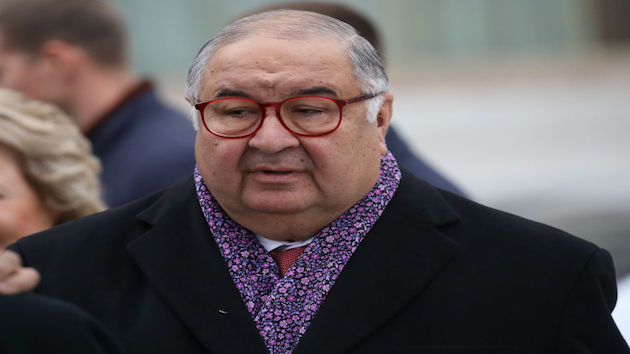
U.S. announces new sanctions on Russian oligarchs it says enabling Putin

U.S. announces new sanctions on Russian oligarchs it says enabling Putin
Mikhail Svetlov/Getty Images

(WASHINGTON) — The U.S. on Thursday announced new sanctions against members of the Russian elite, including Russian President Vladimir Putin’s spokesman, and said it would block 19 oligarchs and 47 of their relatives and close associates from traveling to the United States.

The United States will sanction Kremlin spokesman Dmitry Peskov, as well as one of Russia’s richest men, Alisher Usmanov, according to the White House.

Germany had already seized Usmanov’s superyacht, and the White House said both the boat and Usmanov’s private jet — which it said was one of the largest privately-owned aircraft in Russia — would be blocked for use in the U.S. or by Americans.

“These are significant steps that will impact the people who are closely around President Putin,” White House press secretary Jen Psaki told reporters.”We want him to feel the squeeze. We want the people around him to feel the squeeze.”

This is a developing story. Please check back for updates.

Copyright © 2022, ABC Audio. All rights reserved.

Girl inspired by grandpa’s cancer experience makes care bags for chemo patients

Girl inspired by grandpa’s cancer experience makes care bags for chemo patients
Courtesy Jillian Enderton

(NEW YORK) — A New York girl is on a mission to brighten the lives of cancer patients in her community.

Sophie Enderton of Newfane, New York, started her “Sophie’s chemo bags” initiative after seeing her late grandfather, Terry Enderton, undergo chemotherapy after he was diagnosed with pancreatic cancer last October.

“She saw him kind of struggling and losing his hair and getting tired and just having to sit at chemo,” Sophie’s mom, Jillian Enderton, explained to “Good Morning America.” “I think his chemo was two or three hours long and he was saying how many people were there just sitting around and she wanted to do something to help him and other chemo patients.”

So Sophie got to work and enlisted the help of her parents and maternal grandparents to help bring her vision to life.

She and her mom researched chemo-friendly care package ideas on Pinterest, while she and her grandparents went shopping for comforting items, like blankets, pillows, cozy socks, soup bowls, pre-made soups, mints, and ginger candies. Later, Sophie added games, such as playing cards and checkers sets.

Sophie’s great-grandmother even knitted several homemade blankets for the first set of “Sophie’s chemo bags” and as word spread, so did the donations.

“We received a lot of donations from people in the community, family and friends, so she’s able to put a little bit more in there and have more extra money to do it again in December. She wants to do it again at Christmas also,” Enderton said.

Sophie made a total of ten bags for her first set to patients at Roswell Park Comprehensive Cancer Center in Buffalo, New York. The first bag went to none other than her beloved grandpa Terry.

“He was super proud of her and the work she was doing and wanting to help others,” Enderton recalled. “Very proud grandpa.”

Sophie is making sure to carry on what she started, honoring her late grandfather in the process.

“He passed away in December after a short battle of pancreatic cancer,” Enderton continued. “His birthday’s at the end of March and we are scheduled to go up actually on his birthday and drop more bags off.”

For this second round of chemo bags, Sophie added 5 more bags for children as well.

“She wanted to do some for kids because she doesn’t think it’s fair that they have to go be sick so she wanted to brighten their day too,” Enderton said.

The 39-year-old mom said her daughter’s chemo bags project seems to be supporting her through the grieving process.

“She’s putting her energy into something else so that’s helping her, knowing that she is helping others who are going through the same thing. She’s actually flattered by all the attention. She’s like, ‘I just wanted to help people.’”

Enderton said her daughter and father-in-law had a special bond and Terry Enderton would pick her up to and from school in his red Corvette, as well as attend all her soccer and softball games. “She just loves the time they really spent together. She says he was one of her best friends and he was there for everything,” she said.

“We just want to keep it going and do grandpa proud.”

Copyright © 2022, ABC Audio. All rights reserved.

Navy recovers stealth F-35 from South China Sea

Navy recovers stealth F-35 from South China Sea
U.S. Navy-contracted diving support vessel (DSCV) Picasso, successfully retrieved the F-35C Lightning II aircraft that crashed during routine flight operations earlier this year in the South China Sea, March 2. – U.S. Navy

(NEW YORK) — The U.S. Navy said Thursday it has recovered the stealth F-35C fighter jet that fell into the South China Sea after a crash landing aboard the aircraft carrier USS Carl Vinson in late January.

The jet’s resting place in international waters had fueled speculation that China might want to attempt its own salvage operations of the world’s most advanced stealth fighter jet.

On Jan. 24 while conducting regular flight operations in the South China Sea the jet crashed on the carrier’s deck while attempting a landing. It ultimately slid off of the deck into the ocean waters and seven sailors, including the pilot, were injured in the crash.

The Navy said shortly after the incident that it would attempt to recover the jet that ultimately was located at a depth of more than two miles.

“The wreckage was recovered from a depth of approximately 12,400-feet by a team from CTF 75 and the NAVSEA’s Supervisor of Salvage and Diving (SUPSALV) embarked on the diving support construction vessel (DSCV) Picasso,” said a statement from the Navy’s Seventh Fleet.

“The task force’s expertise in rapid, scalable command, control, and communications, agile logistics, organic security, and explosive ordnance disposal was the most flexible choice for the fleet commander to respond in a timely manner,” said CTF 75 Commodore, Capt. Gareth Healy.

The plane was recovered using a remotely operated vehicle, known as the CURV-21, that attached specialized rigging and lift lines to the aircraft so it could be raised by the crane aboard the Picasso.

“The aircraft will be delivered to a nearby military installation to aid in the ongoing investigation and evaluated for potential transport to the United States,’ said the statement.

Soon after the crash, a video that showed the aircraft on approach and photos that showed the aircraft floating in the water were posted on social media and confirmed by the Navy as having been taken aboard the aircraft carrier.

Five sailors, including a junior officer, were later charged with leaking a second video that showed the actual crash that had been recorded by one of the ship’s surveillance cameras.

Copyright © 2022, ABC Audio. All rights reserved.

House approves bill to help veterans exposed to ‘burn pits’

House approves bill to help veterans exposed to ‘burn pits’
Michael Godek/Getty Images

(WASHINGTON) — The House on Thursday approved a bill that would provide millions of veterans with expedited health care and disability payments related to illnesses caused by toxic exposure from burn pits.

The final vote was 256-174.

Thirty-four Republicans voted with all Democrats to support the bill.

The push to support military veterans plagued with health issues caused by toxic exposure to burn pits got a significant boost during President Joe Biden’s State of the Union address Tuesday — his support coming just before the House was set to vote Thursday.

“I’m calling on Congress: pass a law to make sure veterans devastated by toxic exposures in Iraq and Afghanistan finally get the benefits and comprehensive health care they deserve,” Biden said, calling it part of “a sacred obligation to equip all those we send to war and care for them and their families when they come home.”

Biden lamented the dangers of the toxic smoke from burn pits, which have resulted in enduring health issues for military veterans stationed overseas in Iraq, Afghanistan and Southwest Asia.

The open-air combustion of trash and other waste in burn pits is a common practice of military operations. Common materials incinerated in burn pits included human waste, paint, metal cans, food waste, unexploded ordnance, lubricant products, plastics, rubber, wood and even jet fuel.

Active-duty service members who have been exposed to these toxic chemicals are often plagued with life-threatening diseases and illness.

“And they come home, many of the world’s fittest and best-trained warriors in the world, never the same,” Biden told lawmakers. “Headaches. Numbness. Dizziness. A cancer that would put them in a flag-draped coffin.”

Biden poignantly recalled the memory of his late son, Beau Biden, who died from brain cancer in 2015.

“We don’t know for sure if a burn pit was the cause of his brain cancer, or the diseases of so many of our troops,” Biden said. “But I’m committed to finding out everything we can.”

Approximately 82% of post-9/11 veterans who served in Iraq and Afghanistan reported being exposed to burn pits and/or airborne toxic materials during their service, according to Iraq and Afghanistan Veterans of America, a nonprofit organization.

About half of those exposed believe they have symptoms associated with the exposure, and another 41 percent are unsure if their symptoms are related.

“My eyes burned. It was hard to take a deep breath when I coughed and it made chest hurt and it made me cough,” Katie Purswell, a former veteran and director of health policy at the American Legion, said during a press conference on Capitol Hill Wednesday.

“I choked on the odor from the winds when they would pick up after a while. I started waking up with bloody noses. It was difficult and painful to breathe. After I got home, I had bronchitis for a year. I don’t think my runtime has ever recovered. I just can’t take a deep breath anymore,” she said, describing the symptoms she faced following prolonged exposure to toxic burn pits while stationed overseas.

Purswell was joined by former veterans, advocates, members of Congress, and comedian Jon Stewart at the Capitol Wednesday in support of a bill the House intends to pass Thursday.

Stewart and fellow advocate and 9/11 first responder John Feal have long lobbied Congress for veterans and first responder health care, often challenging lawmakers in emotional testimony — protesting what they believe is inadequate care for the nation’s veterans.

“Last night, they were seen,” Stewart said of the president’s national address. “The president of the United States saw their struggle.”

The group is calling on Congress to pass the bill, Honoring Our PACT Act, that aims to improve health care and benefits for veterans exposed to toxic substances.

The bill would specifically designate 23 respiratory illnesses and cancers as likely linked to toxic exposures related to military burn pits and airborne hazards exposure.

Currently, the Department of Veterans Affairs decides these exposure claims on a case-by-case basis, with the exception of those filed for asthma, rhinitis or sinusitis. The burden of proving one’s illness is related to a burn pit exposure falls on the veteran, leading to delays in health care.

“There is no other toxic exposure legislation in Congress like it in scope or soundness,” Rep. Mark Takano, chairman of the House Veterans’ Affairs Committee, said Wednesday.

The California Democrat authored the legislation that has bipartisan support in the House.

“Without hesitation, our veterans raised their right hand to protect and defend this nation. And many are now sick as a result of that service. We made a pact with these individuals — a pact I’m afraid to say we have not yet honored,” Takano said.

Takano said his bill will address the full gamut of issues affecting toxic exposed-veterans, access to health care and benefits, while also reforming the VA’s “presumptive” decision-making process to provide health care to more than 3.5 million veterans who have been exposed.

The White House on Monday announced that the Department of Veterans Affairs is also making efforts to rework their policies – the VA proposed a rule that would recognize nine new respiratory illnesses as conditions that are presumed linked to a veterans’ military service, which would help fast track them for payouts and medical care.

Dennis McDonough, secretary of Veterans Affairs, alluded to the proposed changes during an interview with ABC News last month.

McDonough, acknowledging the “cumbersome” process veterans must go through to prove their illnesses are linked to exposure to burn pits, told ABC News that the department is working to establish the evidence to suggest even more illnesses are linked to burn pit exposure that he hopes the department will soon recognize.

The Senate Veterans Affairs Committee is undertaking its own effort to address the issue of toxic exposure for veterans as part of a three-step, bipartisan approach. But advocates, including Stewart and Feal, say the Senate’s effort doesn’t go as far in scope.

Some senators, however, are concerned that the House’s version of the bill is too pricey: the House bill calls for nearly $300 billion in spending over 10 years.

House Speaker Nancy Pelosi called out Republicans who voted against the bill for its hefty price tag at her press briefing Thursday.

“It really amazed me, and I’m rarely amazed and surprised around here,” Pelosi remarked to reporters.

“Oh really?” she went on, directing her ire at Republicans.

“You just gave tax cuts in 2017 to the richest people in America,” she said, referring to the Republican tax plan that went into effect under the Trump administration.

“Tax cuts for the rich. Cancer for our veterans. That’s how we see this discussion and this debate,” she added.

During Wednesday’s press conference with advocates, Pelosi — flagged by Stewart and Feal — defended the price tag.

“Don’t even talk to us about the price,” Pelosi said. “This is a cost of war that we should recognize … it’s going to be worth it. But it’s going to have a big price tag.”

“Because what we are looking at is the value of what this does for our country,” she said.

Sources familiar with the process told ABC News that members of the House and Senate will have to figure out their policy differences and take their respective bills to conference in the coming months to reach a final compromise.

The process could delay passage in the Senate for months to come before it would eventually reach Biden’s desk for his signature.

Stewart and Feal had a stark message for members of the Senate.

“Once this is done, make no mistake, then the battle shifts to the Senate. And as you know, they are excellent at killing things that are necessary. And we cannot allow it to happen,” Stewart said. “And you cannot allow this feeling of unity and hope and finally being seen to dissipate. We need all of your help to put the pressure on to make sure that the comprehensive needs that they have are passed.”

Feal warned Senate Majority Leader Chuck Schumer that he plans to lobby him hard.

“Let Schumer know that we want a bill compatible to the honorable PACT Act. If he does not do that, then I will make his life miserable,” Feal said.

A spokesman to Schumer said in a statement to ABC News: “Leader Schumer believes strongly in this bill and will do everything he can to pass it.”

ABC News Devin Dwyer contributed to this report.

Copyright © 2022, ABC Audio. All rights reserved.

Gap in COVID-19 vaccine uptake between urban and rural areas in the US continues to widen: CDC

Gap in COVID-19 vaccine uptake between urban and rural areas in the US continues to widen: CDC
Morsa Images/Getty Images

(ATLANTA) — The gap in COVID-19 vaccination uptake between rural and urban Americans is continuing to widen, a federal report published Thursday found.

As of Jan. 31, 2022, 75.4% of people aged five and older living in urban counties have received at least one dose of the vaccine, according to the Centers for Disease Control and Prevention.

By comparison, just 58.8% of those living in rural areas had been given at least an initial shot — a nearly 17% difference.

However, a previous report by the federal health agency found that, in April 2021, the gap was smaller with 45.7% of urban residents given at least one dose of the COVID vaccine compared to 38.9% of rural residents.

This means that in the span of nine months, disparities based on geographic location have more than doubled.

The authors say the large gap is likely due to less access to health care and increased vaccine hesitancy in rural areas.

“Addressing barriers to vaccination in rural areas is critical to achieving vaccine equity, reducing disparities, and decreasing COVID-19-related illness and death in the United States,” the authors wrote.

According to the new report, 46 states had higher COVID vaccine uptake in urban areas than in rural areas with just one state — Arizona — having higher coverage in rural areas.

Three states: Delaware, New Hampshire and Rhode Island, and Washington, D.C., have no rural counties so differences in vaccination coverage could not be evaluated.

In both rural and urban counties, women were more likely to be vaccinated than men.

Data showed 77.4% of urban women and 61.4% of rural women had received at least one dose by the end of January compared to 73.2% of urban men and 55.7% of rural men, respectively.

This is similar to the CDCs report looking at April 2021 vaccination rates, which also showed more women getting vaccinated.

Among all age groups, vaccination uptake was higher in urban counties with the largest difference being among 12-to-17-year-olds.

The report showed just 38.7% of rural teenagers had received at least an initial vaccine dose compared to 64.9% of urban teenagers.

However, the researchers found that there was relatively no difference in the percentage of people in rural or urban areas who received booster or additional doses, both being similarly low.

About 50.4% of fully vaccinated urban residents had received a booster shot as of Jan. 31, 2022 as had 49.7% of rural residents.

The CDC authors noted Americans living in rural counties tend to be aged 65 or older and have more pre-existing conditions.

This puts them at high risk of severe COVID-19 complications and is why rates of death from the virus are higher in rural areas than in urban areas.

Dr. Matt Feeley, part of ABC News’ Medical Unit, contributed to this report.

Copyright © 2022, ABC Audio. All rights reserved.

Ivermectin, condemned by experts as COVID-19 treatment, continues to be easily accessible through telemedicine

Ivermectin, condemned by experts as COVID-19 treatment, continues to be easily accessible through telemedicine
Dimas Ardian/Bloomberg via Getty Images

(NEW YORK) — In the early days of the coronavirus pandemic, as hospitals became overrun, a group of doctors began touting an anti-parasitic medicine called ivermectin as a viable treatment for COVID-19, one going as far as calling it a “miracle cure” for the coronavirus, despite experts in the medical community urging caution and warning that science so far did not support its use in the treatment of COVID-19 outside of a clinical trial.

“There is a drug that is proving to be a miraculous impact, and when I say miracle, I do not use that term lightly,” Dr. Pierre Kory, a critical care physician, said at a congressional hearing in December 2020. “And I don’t want to be sensationalized.”

Major health institutions like the FDA and CDC issued warnings urging against the use of ivermectin as a COVID-19 treatment, even as a group called the Front Line COVID-19 Critical Care Alliance, co-founded by Kory, and another group called America’s Frontline Doctors, continued to promote the drug on their websites, on social media and at speaking engagements — making ivermectin one of the most controversial topics related to the pandemic.

The drug, commonly used for livestock and pets in an animal-grade formula, is also FDA-approved in a human formula to treat parasitic infections and skin conditions such as scabies. In 2020, as the medical community was furiously looking for ways to treat coronavirus patients, and vaccines still seemed like a distant dream, a study in Australia suggested that ivermectin could “stop the SARS-CoV-2 virus growing in cell culture” in a laboratory.

But what happened in that test tube didn’t prove that the drug could heal a person sick with COVID-19 or prevent COVID-19 in people, and the university website where the study is posted warns that “whilst shown to be effective in the lab environment, ivermectin cannot be used in humans for COVID-19 until further testing and clinical trials have been completed to establish effectiveness of the drug.”

Ivermectin advocates often cite “dozens” of studies that show benefits of ivermectin in combating COVID-19, but a closer look at the studies shows that some of them have been retracted for flawed or fabricated data and analysis, while many randomized trials have shown no benefits. There have been some small studies that did suggest positive effects of ivermectin on treating COVID-19 patients, but no large, rigorous, randomized controlled trial has shown that COVID-19 is effective at treating or preventing COVID-19, medical experts say.

The general consensus in the medical community now is that there’s not enough data to recommend ivermectin for routine use as a COVID-19 treatment, said Dr. Adrian Hernandez, professor of medicine and vice dean and executive director of Duke Clinical Research Institute, who is leading a nationwide clinical trial on potential treatments for COVID-19. And doctors point out that there are side effect risks with any pharmaceuticals, so using the medication for unintended purposes may be dangerous.

And even with the arrival of highly effective treatments and vaccines, support for ivermectin has continued among some vaccine skeptics, including Kory, who have championed the drug as a COVID-19 cure and a key part of early treatment, and have urged Americans to stock up on it.

In August, prescriptions for ivermectin jumped to nearly 25 times the normal rate, to 88,000 per week, up from just 3,600 per week before the pandemic, according to the CDC.

“Let me just say very clearly that ivermectin is not a recommended treatment for COVID-19,” U.S. Surgeon General Vivek Murthy said in August. “It is not a recommended drug to prevent COVID-19.”

At your doorstep within days

Despite the warnings from health agencies about unproven COVID-19 treatments, several physicians groups have partnered with telemedicine platforms and pharmacies to offer easy access to drugs like ivermectin. But the easy access comes at a cost, with a telemedicine visit and the cost of the prescription typically ranging from $90-$300.

ABC News was able to obtain 28 pills of ivermectin for a total of $339, including a $90 telemedicine consultation fee and a charge of $249 from an online pharmacy — which included a $25 shipping fee for overnight delivery — after filling out an application and providing a medical history through a telemedicine platform, and having a brief conversation with someone who claimed to have no knowledge about the drug or COVID-19.

It was an unusual process for obtaining a medicine: Georgia-based ABC News Senior National Correspondent Steve Osunsami first spoke with a woman who said she was calling from Alabama and described herself as a technical nurse, while a Florida-based nurse practitioner — who didn’t speak with Osunsami but had a license to practice in Georgia — sent the prescription for the pills to a New York pharmacy that then shipped the pills to Georgia.

Osunsami began the process by registering online, after which he was contacted by the woman in Alabama. “Which one of the medications are you interested in?” she asked Osunsami, who told her he was interested in ivermectin. The woman then asked him if he had high blood pressure or allergies, and took some additional information.

“All right, that’s all the information I need,” the woman said. “So let’s send this to the pharmacy.”

Asked if there was anything else to know about the drug, the woman directed Osunsami to the pharmacy that would fill his prescription.

“I don’t have any medical knowledge as far as medicine or even about COVID,” said the woman. “I don’t have any medical knowledge at all. I’m so sorry, but I really don’t.”

But no matter, because the prescription was already on its way.

Osunsami was not asked if he wanted a consultation with a doctor or a pharmacist. He did receive some guidance including how to use the medicine and what side effects to look out for with the drug.

‘Millions of dollars being made’

One year after his congressional testimony, Kory doubled down on the anti-parasitic drug, calling ivermectin the “single greatest solution to the pandemic” in a blog post earlier this month — even though top health agencies have said ivermectin is not yet proven to be effective against the coronavirus.

And just days ago, Kory launched his own telemedicine platform that offers ivermectin as part of its treatment protocols. For $250, his website offers a 15-minute “‘Meds on Hand’ Treatment Kit” consultation with a nurse practitioner through text or telephone — and for a premium of $950, you can even arrange a personalized visit with Kory himself. The website doesn’t say whether the platform sends the drugs to a pharmacy or it sells them directly. It says ivermectin is part of their treatment protocol.

The website offers ivermectin and a few other drugs like hydroxychloroquine, a once-promising COVID-19 treatment that had its FDA emergency authorization revoked after it failed to show a benefit in large studies, as part of its COVID-19 treatment protocols.

Neither Kory, representatives for his new telemedicine platform, or members of the Front Line COVID-19 Critical Care Alliance responded to ABC News’ multiple requests for comment regarding promoting the use of drugs for the treatment of COVID-19 that have not been proven to be effective treatments for the disease.

Critics say that at least one other group is capitalizing on the interest in ivermectin — apparently by leveraging a network of doctors available to write the prescriptions.

ABC News obtained an email sent by Encore Telemedicine, an entity that was connecting patients to telemedicine services for people seeking consultation through the physicians group America’s Frontline Doctors. In the email, Encore Telemedicine sought to entice physicians to “become part of an ivermectin ‘COVID-19 project'” with the potential to receive “tens of thousands of dollars per month” from prescribing ivermectin and hydroxychloroquine.

“We can send you as many patients per day at $30 per patient per encounter as you would like,” the email stated. “We have physicians making tens of thousands of dollars per month.”

Neither Encore Telemedicine nor America’s Frontline Doctors responded to ABC News’ requests for comment. Encore Telemedicine’s website has been down for several months.

The booming online industry of telemedicine offering unproven COVID-19 treatments like ivermectin has caught the attention of lawmakers, who have launched an investigation into America’s Frontline Doctors and SpeakWithAnMD.com, a telemedicine platform.

In a letter sent by the House Subcommittee on the Coronavirus Crisis to America’s Frontline Doctors, House investigators refer to Encore Telemedicine, the company that ABC News obtained the email from, as the parent company of SpeakWithAnMD.com.

The House probe, launched in October, is investigating the entities for allegedly “spreading misinformation and facilitating access to disproven and potentially hazardous coronavirus treatments, such as hydroxychloroquine and ivermectin.”

“Attempts to monetize coronavirus misinformation have eroded public confidence in proven treatments and prevention measures and hindered efforts to control the pandemic,” Rep. James E. Clyburn (D-S.C.), chairman of the House Subcommittee on the Coronavirus Crisis, wrote in a letter to Dr. Simone Gold, the leader of America’s Frontline Doctors, over the fall.

“We think there are millions of dollars being made by various groups selling misinformation,” Clyburn told ABC News. “[We’re] doing what we think is necessary to try to get to the bottom of this.”

Copyright © 2022, ABC Audio. All rights reserved.

COVID-19 pandemic vs. endemic: What’s the difference, and why it matters

COVID-19 pandemic vs. endemic: What’s the difference, and why it matters
Tetra Images/Getty Images

(NEW YORK) — The United States marked a new stage in the government’s response to the COVID-19 pandemic when President Joe Biden announced in his State of the Union address Tuesday that “COVID-19 no longer need control our lives.”

The World Health Organization declared a global pandemic in March 2020 due to rapid spread of COVID-19 all across the globe.

However, as many experts believe the virus that causes COVID-19 will never be eradicated, the world must at some point transition away from “pandemic” and toward an “endemic” phase.

Pandemics are a widespread, rapid spread of disease, with exponentially rising cases over a large area. Endemic viruses, meanwhile, are constantly present and have a fairly predictable spread. That predictability allows health care systems and doctors to prepare and adapt, reducing loss of life.

For a pandemic to reach an endemic phase, it would need to be “a situation where you have a background level” of disease, said Dr. Daniel McQuillen, president of the Infectious Diseases Society of America and a senior physician in the division of infectious diseases at Beth Israel Lahey Health in Massachusetts.

This means that, while some people would still get infected, it wouldn’t be an unbearable number with devastating consequences that overwhelms the public, hospital systems and providers.

The seasonal flu, or influenza, is an example of an endemic virus. H1N1 influenza has had pandemic spread of variants in the past, such as the Spanish flu in 1918 and swine flu in 2009. Variants of these are now part of respiratory viruses that we encounter regularly.

“There’s not a hard and fast rule for when a pandemic becomes an endemic,” said Dr. Paul Goepfert, a professor of medicine in the University of Alabama at Birmingham’s division of infectious diseases.

Without knowing if there may be another variant on the horizon and without a predictable pattern of disease, it’s still too soon to tell if the nation has reached an endemic phase.

That’s why many Americans are concerned it’s too soon to lift mask mandates. There is still a lot of transmission, and young children and immunocompromised people are still vulnerable.

However, McQuillen said the new guidelines from the Centers for Disease Control and Prevention are a reasonable shift, as they focus on local transmission and capacity.

“We’re going from trying to prevent disease completely to going more to how do we deal with preventing severe illness and hospitalizations and how do we prevent our health care system from getting so swamped that we can’t take care of even normal problems,” he said.

This must be determined at a local level.

“I think [the new CDC guidance] reflects this need to be flexible in how to respond to the pandemic,” said Dr. Natasha Chida, assistant professor in the division of infectious diseases at Johns Hopkins University.

Pandemics are “not a static experience,” she said. Some places in the country still have very low hospital capacity, so they would struggle to handle additional cases and thus would benefit from masking. But when numbers are low, we should “be able to have a normal type of experience,” she said.

Despite the new guidelines, many experts are hesitant to say the nation has entered an endemic phase just yet, as only time will tell if a new variant will arise and cause similar upheaval.

“Endemic is where you are seeing consistently low numbers, the health care system is able to manage it [and] people are able to get the care they need,” Chida said.

While the U.S. is getting close, numbers have dropped before and then new variants emerged, so it’s “too soon to say” if we are in this phase yet, she said.

To prepare for and prevent another wave, McQuillen, Goepfert and Chida each emphasized the importance of building better infrastructure for public health initiatives. This includes equitable vaccine distribution across the globe and increasing supply of treatments and testing — items currently outlined in the White House’s new pandemic policy agenda.

Goepfert also noted the importance of supporting primary care providers, both in allowing them to administer vaccines in their clinics and ease of access to treatment.

“What the pandemic laid bare was that public health has been massively under-resourced for decades, and people suffered because of that,” Chida said.

Now, with more than 75% of Americans vaccinated, experts are hopeful that the country can move toward better control of the disease and toward a new endemic phase — where we can control the disease, and it doesn’t control us.

Copyright © 2022, ABC Audio. All rights reserved.

Russia-Ukraine live updates: Lavrov declines to comment on civilian deaths in Ukraine

Russia-Ukraine live updates: Lavrov declines to comment on civilian deaths in Ukraine
Aytac Unal/Anadolu Agency via Getty Images

(NEW YORK) — Russian forces are continuing their attempted push through Ukraine from multiple directions, while Ukrainians, led by President Volodymr Zelenskyy, are putting up “stiff resistance,” according to U.S. officials.

The attack began Feb. 24, when Russian President Vladimir Putin announced a “special military operation.”

Russian forces moving from neighboring Belarus toward Ukraine’s capital, Kyiv, don’t appear to have advanced closer to the city since coming within about 20 miles, although smaller advanced groups have been fighting gun battles with Ukrainian forces inside the capital since at least Friday.

Russia has been met by sanctions from the United States, Canada and countries throughout Europe, targeting the Russian economy as well as Putin himself.

Here’s how the news is developing. All times Eastern:

Mar 03, 6:50 am
Russian foreign minister declines to comment on civilian deaths in Ukraine

Russian Foreign Minister Sergey Lavrov wouldn’t comment on civilian deaths from Russia’s invasion of Ukraine when pressed during an interview Thursday with ABC News’ George Stephanopoulos on Good Morning America.

“I cannot comment,” Lavrov said, adding that there are “a great deal” of “conjectures.”

Mar 03, 6:36 am
Russia says talks with Ukraine will resume Thursday

A second round of talks between Russian and Ukrainian negotiators will be held at the previously planned venue in neighboring Belarus on Thursday at around 3 p.m. local time (7 a.m. ET), according to Vladimir Medinsky, head of the Russian delegation and aide to Russian President Vladimir Putin.

“The talks will take place — we are now in contact with the Ukrainian side — at the same venue where they were planned, on the territory of the Brest region of Belarus,” Medinsky told reporters Thursday, adding that Russian negotiators are “waiting calmly.”

“I think the talks will begin at 3 p.m.,” he said.

Mar 03, 6:08 am
Ukraine claims to have raised flag over town outside Kyiv

Ukraine claimed Thursday to have raised its flag over the town of Bucha, close to the Ukrainian capital where some of the most intense fighting has been taking place in recent days and where Russia’s push south on Kyiv appears to have stalled.

A video posted on the official Facebook page of the Ukrainian Armed Forces’ ground troops purportedly shows soldiers hoisting the national flag outside Bucha’s town hall. The town is just a few miles north of the edge of Kyiv and about 15 miles from the center of the capital. Fighting is reported to be ongoing nearby and, in the video, an explosion can be heard in the distance as they raise the blue and yellow flag.

Mar 03, 5:34 am
Ukraine requests no-fly zone over Chernobyl

Ukraine is asking the International Atomic Energy Agency (IAEA) to call on NATO to close access to the airspace over the country’s Chernobyl nuclear power plant and the surrounding exclusion zone.

The deserted exclusion zone around the Chernobyl nuclear power plant, where the world’s worst nuclear accident took place in 1986, was seized by Russian forces last week.

A joint appeal to the IAEA was signed Wednesday by Ukrainian Energy Minister Herman Galushchenko, Oleh Korikov, head of the State Nuclear Regulatory Inspectorate of Ukraine, and Petro Kotin, head of Ukraine’s state nuclear energy company Energoatom.

“The fact of the seizure of the world-famous Chernobyl nuclear power plant has all the hallmarks of an act of nuclear terrorism committed against Chernobyl nuclear facilities and its personnel by Russian military units,” they said in the appeal.

Mar 03, 5:06 am
Russia claims to have hit another TV tower in Kyiv

Russia claimed Thursday that its forces have “disabled” another television tower in Ukraine’s capital.

Russian troops fired precision-guided weapons at a TV and radio center in the Lysa Hora region of Kyiv, according to Russian Ministry of Defense spokesman Igor Konashenkov.

“A strike delivered by a long-range precision-guided weapon disabled a reserve TV and radio center in the Lysa Hora area in Kyiv which the Ukrainian Security Service has been using for psychological operations against Russia,” Konashenkov said at a press briefing Thursday. “There are no casualties and there is no damage done to residential buildings.”

There were reports of more explosions in Kyiv on Thursday morning, but Ukrainian officials have yet to confirm that a second TV tower was hit.

A Russian missile struck Kyiv’s main TV tower in the heart of the capital on Tuesday.

Ukrainian Defence Minister Oleksii Reznikov has said that Russia is aiming to cut off a large part of Ukraine from the internet and communications.

Mar 03, 4:37 am
Russia claims to have seized eastern Ukrainian city

Russia claimed Thursday that its forces have seized the eastern Ukrainian city of Balakliya.

Russian troops worked together with Russia-backed separatist forces on the “successful offensive,” according to Russian Ministry of Defense spokesman Igor Konashenkov.

“The city of Balakliya has been freed from nationalist battalions,” Konashenkov said at a press briefing Thursday.

Balakliya is about 55 miles southeast of Kharkiv, Ukraine’s second-largest city, where heavy shelling continued Thursday.

Mar 02, 11:25 pm
US condemns Kremlin’s ‘full assault’ on ‘truth’ in media

The U.S. State Department is condemning Moscow’s attack on the media, saying the Kremlin “is engaged in a full assault on media freedom and the truth, and Moscow’s efforts to mislead and suppress the truth of the brutal invasion are intensifying.”

“The people of Russia did not choose this war. Putin did,” Ned Price, State Department spokesman, said in a statement. “They have a right to know about the death, suffering and destruction being inflicted by their government on the people of Ukraine. The people of Russia also have a right to know about the human costs of this senseless war to their own soldiers.”

The statement comes 24 hours after the Russian government blocked the country’s only two major independent news broadcasters, Dozhd TV and Radio Ekho Moskvy, accusing them of spreading “false information” about Moscow’s invasion of Ukraine.

“Ekho Moskvy has been respected for its even-handed treatment of breaking news since its founding 32 years ago, and, until yesterday, its broadcasts reached some 1.8 million daily listeners throughout Russia and beyond,” the State Department said in a statement Wednesday night. “Dozhd, which has been operating for more than a decade, is similarly known for high-quality reporting.”

Russian state channels, such as RT and Sputnik, are banned from using the word “war” or “invasion” in relation to Russia’s assault on Ukraine. Russian President Vladimir Putin instead has referred to it as a “special military operation.”

The State Department said the Russian Parliament will consider a bill Friday to make “unofficial” reporting on the invasion punishable by up to 15 years in prison.

Copyright © 2022, ABC Audio. All rights reserved.

Mental health effects of Ukraine war zone on children

Mental health effects of Ukraine war zone on children
Christopher Furlong/Getty Images

(NEW YORK) — As the Russian invasion of Ukraine intensifies, children are experiencing devastating consequences of being caught up in the war zone.

At least seven children have been killed, according to United Nations High Commissioner for Human Rights, and several more have been injured during air strikes and blasts.

Dozens of children are hiding in bomb shelters, basements, metro stations and other underground areas while others have fled their homes for neighboring countries.

Psychologists and other experts say there are also mental health concerns these children face and that it’s important they have as much structure as possible to keep a sense of stability in their lives.

And adults can better provide for their children by taking care of their own mental health needs.

“Children are extremely vulnerable to insecurity, not only the physical trauma but the psychological trauma, and it can reverberate and have repercussions for a long time,” Dr. Paul Wise, a professor of pediatrics at Stanford University, told ABC News.

Mental health risks for children in war zones

There are physical risks for children that come with living in war zones, such as breathing in smoke and ash from fires and blasts that can affect the nose and lungs. But there are also mental health risks.

Studies have shown that children and families living in or fleeing war regions have an increased risk of suffering from mental health problems.

“We’ve seen past war situations like what is happening in Ukraine, an increase in depression, anxiety,” Dr. Monica Barreto, a clinical psychologist at Orlando Health Arnold Palmer Hospital for Children, told ABC News.

And while not all children will be traumatized, they may react differently to the traumatic situations they’re witnessing.

“Some children may be more agitated, they may be harder to calm down, just more unsettled,” said Dr. Jack Shonkoff, director for the Center of the Developing Child at Harvard University. “Some children in these circumstances tend to be more withdrawn, they’re not crying as much, they’re not demanding much attention.”

He continued, “Sometimes people might look at that and say, ‘This child is managing pretty well.’ Sometimes that’s a sign of the things to worry about the most because these children are withdrawing, they’re internalizing a lot of what’s going on.”

Taking care of adults’ needs helps children

Shonkoff, who is also a professor of child health and development, said one way to ensure a good outcome for children in a war zone is by making sure the adults are being taken care of too.

“The most important factor that determines how children are going to basically survive and go forward after a war experience is the nature of the adults who are caring for them,” he said. “If the parents and the caregivers are significantly traumatized, they can’t provide that sense of support. The adults’ needs become critically important to protect the children.”

He likens it to a safety presentation on a flight, when flight attendants tell passengers to secure their own oxygen masks before helping others.

“That’s not a way of saying you’re more important than your child. It’s a way of saying if you pass out, your child won’t be OK,” Shonkoff said.

As for babies, he explained they are highly attuned to what’s going on and if adults are not engaging with them, it can hurt the babies’ development.

“If the parent is so traumatized or depressed, they can’t coo back, can’t smile back. That signals danger to the brain even though the baby doesn’t know what’s going on. That can create excessive stress in the body, raise inflammation and blood pressure levels,” Shonkoff said.

Wise adds that children look to adults not only for protection but also for how frightened they should be and “for understanding what’s happening to them in a time of profound insecurity, and children will feel the best protected with a strong, coherent community life and family life.”

Children need as much as structure as possible

The experts say it’s important to make sure that children are provided structure as much as possible while living in war zones to help with their development and well-being.

Barreto mentioned videos she’s seen online of Ukrainian families in bunkers trying to provide play and teachers trying to teach lessons.

“Children are no longer in school, they’re no longer in a safe environment,” she said. “Maintaining some of that structure can be very helpful and protective during these times.”

Barreto added that the same recommendations apply for children in refugee camps, making sure they are set up with their families and that some time is provided so they can experience “normality” whether that is playtime or having lessons.

Copyright © 2022, ABC Audio. All rights reserved.