
A tale of two New Yorks: COVID-19 hospitalization rate surging upstate

A tale of two New Yorks: COVID-19 hospitalization rate surging upstate
Massimo Giachetti/iStock

(NEW YORK) — COVID-19-related hospitalizations have been on an upward trend in New York state since last month, but there appears to be a drastic divide between the Big Apple and some of the state’s more rural areas, health data shows.

In New York City, the seven-day average of new COVID-19 hospitalizations per 100,000 people rose from 0.5 on Nov. 10 to 1.1 on Dec. 7, the New York State Department of Health said.

The story is different in several counties hundreds of miles north, where new COVID-19 hospitalizations are rising at a higher rate. In the Finger Lakes region, officials in several counties declared a state of emergency after the seven-day average of new COVID-19 hospitalizations per 100,000 people went from 2.9 on Nov. 10 to 4.9 on Dec. 7.

David Larsen, an associate professor of public health at Syracuse University, told ABC News that there are several factors behind this divide, but the most important one is the lower vaccination rates in certain counties upstate.

“At the end of the day, you’re more likely to get severe COVID-19 symptoms and go to the hospital if you’re not vaccinated,” Larsen said.

Health experts and state officials predict the situation upstate is only going to get worse during the holidays and colder months, but the tide can be turned if more people get their shots and heed health warnings.

As of Dec. 8, 74.9% of all New York state residents have at least one COVID-19 vaccine dose, but those numbers vary by region, according to state health data.

New York City and Long Island had over 78% of their populations with at least one shot, the state data showed. Further north, the rates for at least one dose in the Mohawk Valley, the Finger Lakes and North Country sections were 60.6%, 68.5%, and 63% respectively.

There is even more division within the regions when it comes to vaccination, the data shows; for example, counties that are along the Interstate 87 corridor, such as Hamilton, Schenectady and Saratoga, all have rate of at least one dose above 75% of their populations.

Counties directly west of those locations, Schoharie, Fulton and Montgomery, have one-dose vaccination rates under 65%, the state data showed.

New York Gov. Kathy Hochul has repeatedly highlighted that the unvaccinated are the ones suffering and being hospitalized.

“It is a conscious decision not to be vaccinated. And the direct result is a higher rate of individuals in those regions upstate as well as it has a direct correlation to the number of hospitalizations,” she said during a Dec. 2 news conference.

Dr. Isaac Weisfuse, an adjunct professor of public health at Cornell University, told ABC News that there are fewer options for upstate residents to turn to for medical help and fewer hospitals in the area are handling patients from more locations.

Weisfuse, a former deputy health commissioner for New York City’s Health Department, noted that New York City residents have much closer access to amenities like free testing sites and medical clinics than their upstate counterparts.

“If you live in a rural county in New York state and it takes a while to get to a doctor, you may put it off. So when you do eventually go get care, you may be sicker versus someone who lives closer and gets a quicker diagnosis,” he said.

Larsen added that there has been pandemic fatigue across the country, and many Americans have scaled back on mitigation measures, especially mask-wearing indoors.

While New York City requires proof of vaccination for indoor activities, such as movie theaters and restaurants, there are no such rules in many upstate counties. As a result, some upstate residents have less of an incentive to get their shots, and are less cautious in indoor group settings, according to Larsen.

“We’re doing less mask wearing. What that does is it increases transmission, which is fine for the vaccinated people but it does go to the unvaccinated people and they are higher risk,” he said.

Weisfuse said the hospitalizations are likely to grow upstate and have ripple effects for those regions. The governor has ordered elective surgeries to be postponed at 32 hospitals upstate that have seen their available beds decrease.

State officials said they are beefing up their marketing efforts to encourage eligible New Yorkers to get their shots.

Weisfuse said this outreach needs to be done meticulously if upstate officials want to avoid more overcrowded emergency rooms this winter.

“The state needs to take a good look at the pockets of non-vaccination,” he said. “They need to make some targeted intervention in those neighborhoods.”

Anyone who needs help scheduling a free vaccine appointment can log onto vaccines.gov.

Copyright © 2021, ABC Audio. All rights reserved.

Missing 15-year-old Indiana girl may be in danger, police say

Missing 15-year-old Indiana girl may be in danger, police say
Courtesy Indianapolis Metropolitan Police Dept.

(INDIANAPOLIS) — Police in Indiana are asking the public to help find a missing 15-year-old girl who they said may be in danger.

Cabrini Stott was last seen on Sunday, Dec. 5, in the 5800 block of Village Plaza S. Dr. in Indianapolis, the Indianapolis Metropolitan Police Department said.

Police said in a statement they believe Stott “may possibly be in danger,” but on Thursday a police spokesperson declined to provide more information.

Stott, a 10th grader at BELIEVE Circle City High School, was last at school on Friday, the school’s executive director, Kimberly Neal-Brannum, told ABC News.

Neal-Brannum said the teen has “a smile that’ll light up a room,” describing her as “smart, funny, charismatic, athletic, involved in school.”

“She’s a good volunteer. She does a lot of community service,” Neal-Brannum said. “She definitely is a good kid.”

Cabrini has black hair and brown eyes. She stands at 5 feet 2 inches tall and weighs 130 pounds, police said.

Anyone with information is asked to call the Missing Persons detectives at 317-327-6160 or Crime Stoppers of Central Indiana at 317-262-8477.

Copyright © 2021, ABC Audio. All rights reserved.

Kids are driving up COVID cases, but parents are still reluctant to vaccinate them, poll shows

Kids are driving up COVID cases, but parents are still reluctant to vaccinate them, poll shows
jacoblund/iStock

(NEW YORK) — Roughly two-thirds of parents of elementary school-aged children are either holding off on getting their younger children vaccinated or refuse to do so, according to a poll released Thursday by the nonprofit KFF.

Parents of teens are more willing to get their kids vaccinated, but only about half of that age group have gotten the shot so far, KFF found.

The new findings come despite increasing evidence that the COVID-19 vaccine is safe and that kids and teens are now helping to drive the pandemic.

According to a recent analysis by the Department of Health and Human Services, cases among kids under age 18 spiked 884% since last summer. It was the largest increase in cases among all age groups.

“Most of them haven’t had a chance to talk to their doctor about it yet, so I’m not surprised,” Liz Hamel, vice president of public opinion and survey research at KFF, said of elementary school parents who remain hesitant.

Hamel cautions that the poll was taken before news of the omicron variant, which could sway parents. But based on how the vaccine rollout has gone so far, Hamel predicts that the third of parents who flatly refuse the vaccine won’t budge even as time passes. That’s because the estimation of adults who don’t want the vaccine — about 12-16% — has remained steady for about a year.

But the other third of parents of elementary-aged children who say they want to “wait and see” to vaccinate their elementary school children will probably get their kids a shot with time.

“I do think it will take a longer time for parents to come around, but I think that that is the group that eventually will get their kids vaccinated,” Hamel said.

More than 5 million children ages 5 to 11 have received at least one shot of the Pfizer vaccine since it became widely available to the public on Nov. 2, following a clinical trial involving 3,100 kids that found no safety concerns.

The Centers for Disease Control and Prevention, which tracks vaccine safety, says it hasn’t seen any signs yet that the vaccine has caused serious side effects in that age group, including the myocarditis seen in a small group of older teens and young adults.

Immunization experts say that if serious side effects do occur, they would happen as soon as the immune system is triggered — no later than two months of receiving a shot.

“Data take time to look at and collect. But so far, really there have been no signals” of safety concerns, CDC Director Dr. Rochelle Walensky told ABC News Wednesday.

“We have nearly 5 million children. I would say … if you want your children fully vaccinated by the holidays, now is the time,” she later added.

Still, many parents aren’t scheduling appointments just yet. While 5 million kids have gotten at least one shot, an estimated 28 million children ages 5 to 11 are eligible.

Vaccine hesitancy appears to be partisan, according to KFF. Nearly half of Republican parents of kids ages 5 to 11 plan to refuse the vaccine for their young children, compared with 7% of Democratic parents.

“Groups of parents who are less likely to say they have a vaccinated child — including younger parents, those without college degrees, and Republicans — are more likely to say they don’t have enough information,” according to the study.

Copyright © 2021, ABC Audio. All rights reserved.

India’s top military leader among 13 dead in helicopter crash

India’s top military leader among 13 dead in helicopter crash
omersukrugoksu/iStock

(NEW YORK) — India’s military chief and his wife were among 13 killed in a helicopter crash around noon local time on Wednesday.

Gen. Bipin Rawat was traveling to Defence Services Staff College, Wellington in the southern Indian state of Tamil Nadu to address the faculty and student officers of the Staff Course. The helicopter crashed roughly 2 miles away from the college, in Coonoor.

The Indian Air Force confirmed the crash in a thread on Twitter, calling it a “tragic accident,” adding that the vehicle was an IAF Mi 17 V5, a Soviet-designed military helicopter.

One of the 14 people aboard the aircraft survived and was being treated at a hospital.

The cause of the crash wasn’t immediately known. Authorities are investigating.

Prime Minister Narendra Modi called Rawat “an outstanding soldier” and a “true patriot” who has greatly contributed to modernizing India’s armed forces and security apparatus.

“His insights and perspectives on strategic matters were exceptional,” Modi stated on his official Twitter account. “India will never forget his exceptional service.”

Other Indian officials express their condolences, some on social media.

“India stands united in this grief,” Rahul Gandhi, a member of the Indian National Congress, tweeted, calling the accident “an unprecedented tragedy.”

Born in 1958, Rawat became India’s first chief of defense staff, or CDS, in 2019. As the highest-ranking active duty military officer in the country, he also worked as an adviser to the minister of defense and led India’s Department of Military Affairs.

Copyright © 2021, ABC Audio. All rights reserved.
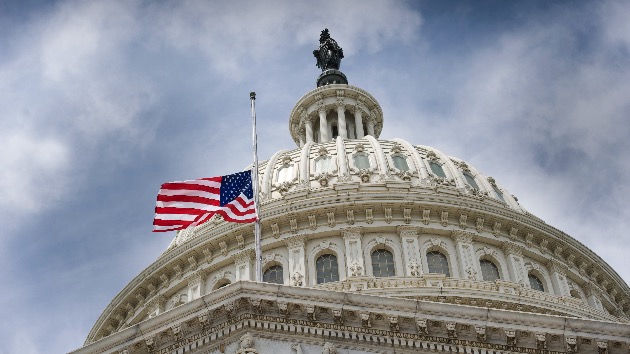
Bob Dole, longtime GOP Senator and presidential nominee, to lie in state at US Capitol

Bob Dole, longtime GOP Senator and presidential nominee, to lie in state at US Capitol
ftroy2402/iStock

(WASHINGTON) — Former Sen. Bob Dole — a decorated World War II veteran and presidential candidate who served in Congress for 36 years — will lie in state at the U.S. Capitol on Thursday as the nation honors the late American statesman.

Dole died Sunday in his sleep at the age of 98.

A formal arrival ceremony will begin at 9:45 a.m. on Thursday followed by a congressional tribute ceremony at 10 a.m. including remarks from President Joe Biden, who worked alongside Dole in the Senate for more than 20 years and called him “a man of extraordinary courage, both physical and moral courage.”

“Our nation owes Bob Dole a debt of gratitude for the remarkable service and a life well-lived,” Biden said on Wednesday in his first public comments about Dole since the senator’s death.

“Like all true friendships, regardless of how much time has passed, we picked up right where we left off, as though it were only yesterday that we were sharing a laugh in the Senate dining room or debating the great issues of the day, often against each other, on the Senate floor,” Biden, who last saw Dole at the White House in February, wrote on Sunday in a statement.

The president will also deliver a eulogy at Dole’s memorial service on Friday at Washington National Cathedral, which will air on ABC News and ABC News Live.

Thursday’s ceremony at the Capitol will be open only to invited guests, lawmakers said, due to the COVID-19 pandemic, but the public can watch online as he lies in state in the Capitol Rotunda until 8 p.m. — an honor reserved for the most revered American officials.

Dole was severely wounded in action while serving as an Army officer in World War II and left with limited mobility in his right arm — but he persevered. From humble beginnings, Dole went on to graduate law school, serve in the Kansas state legislature and then four terms in the House of Representatives and five terms in the Senate. He also led the Senate Republican Conference for more than a decade and was the longest-serving Republican leader until recently surpassed by Sen. Mitch McConnell of Kentucky.

In Congress, Dole helped shape tax, social security and foreign policy, as well as government farm and nutrition programs. He was an advocate for the rights of veterans and Americans with disabilities, instrumental in the passage of the Americans with Disabilities Act in 1990.

He was known was known as one of the “last lions of the Senate.”

Dole ran for president three times, losing primaries in 1980 to Ronald Reagan and in 1988 to George H.W. Bush. After winning the Republican party nomination in 1996, he lost the general election to Bill Clinton, who later presented him with the Presidential Medal of Freedom.

In a USA Today op-ed Dole finished on pen and paper less than two weeks before his death, he said Congress needs teamwork now more than ever, and wrote, “Those who suggest compromise is a sign of weakness the fundamental strength of our American democracy.”

A formal departure ceremony from the Capitol will be held at 9:30 a.m. on Friday ahead of a funeral at Washington National Cathedral and ceremony at the World War II Memorial with remarks from Chairman of the Joint Chiefs of Staff Gen. Mark Milley.

Dole’s body will then be flown to Kansas for services in his home state.

Copyright © 2021, ABC Audio. All rights reserved.

Bob Dole, longtime GOP Senator and presidential nominee, lies in state at US Capitol

Bob Dole, longtime GOP Senator and presidential nominee, to lie in state at US Capitol
ftroy2402/iStock

(WASHINGTON) — Former Sen. Bob Dole — a decorated World War II veteran and presidential candidate who served in Congress for 36 years — lay in state at the U.S. Capitol on Thursday as the nation honored the late American statesman.

Dole died Sunday in his sleep at the age of 98.

Dole’s longtime wife, Elizabeth, and daughter, Robin, were escorted by service members and alongside lawmakers for the formal arrival of Dole’s casket ahead of a congressional tribute ceremony with remarks from President Joe Biden, who worked alongside Dole in the Senate for more than 20 years and called him “a man of extraordinary courage, both physical and moral courage.”

The Capitol ceremony began with an invocation by the House Chaplain who said Dole has “revealed to us what moral and faithful service should be.”

“In extolling Sen. Dole’s unequal integrity, disarming humor, and deep compassion, may we be inspired to reach into the depths of our own small-town virtues or our big city bravado to immolate this plain spokesman statesman, this decorated war hero, this, your, humble servant,” she said in an opening prayer.

Biden, in his remarks, first thanked Dole’s daughter and wife of 46 years, Elizabeth, who also served in the Senate, representing North Carolina, for allowing the ceremony to take place. He then said, “America has lost one of our finest patriots.”

“We meet here in the very heart of American democracy, the capital of the United States of America, to receive a hero of that democracy for a final time,” Biden began. “Robert Joseph Dole belongs here in this place, in this temple of liberty to liberty and temple to possibilities.”

“He, too, was a giant of our history, and that’s not hyperbole,” Biden said, after listing great leaders in American history, including George Washington, Abraham Lincoln, Dwight Eisenhower and Martin Luther King Jr. “It’s real. Of wit and grace, of principle and persistence, of courage and conviction.”

The president shared a light-hearted, personal story before reading a portion of Dole’s final message to the nation.

“They once asked him, why in God’s name did he vote to continue to fund Amtrak. He said because if he didn’t, Biden would stay overnight and cause more trouble,” Biden said to laughter. “Bob and I, like many of us here, we disagreed on a number of things, but not on any of the fundamental things. We still found a way to work together.”

“As divided as we are, the only way forward for democracy is unity, consensus,” Biden said. “We can find that unity again.”

He will also deliver a eulogy at Dole’s memorial service on Friday at Washington National Cathedral, which will air on ABC News and ABC News Live.

Senate Minority Leader Mitch McConnell offered words on Dole’s management in the Senate, having served twice as majority leader for Republicans, and got laughs when describing Dole’s “trademark wit.”

“‘If I’d known, he said, we were going to win control of the Senate, we’d run better candidates,'” McConnell recalled. “I swear, Bob could have made it as a stand-up comic. But in that maiden speech, Bob was earnest. He was already championing a signature cause, helping Americans with disabilities,” McConnell said, garnering a nod from Vice President Kamala Harris, who sat in the socially-distanced audience.

Thursday’s ceremony at the Capitol was open only to invited guests, lawmakers said, due to the COVID-19 pandemic, but the public can watch online as he lies in state in the Capitol Rotunda until 8 p.m. — an honor reserved for the most revered American officials.

Honor guards greeted the body of the late senator shortly after 9:45 a.m. on Thursday and carried his casket up the steps of the building Dole served in for nearly four decades. The last senator to lie in state at the Capitol Rotunda was the late Sen. John McCain in 2018. Twelve U.S. presidents have also had the honor.

Dole was severely wounded in action while serving as an Army officer in World War II and left with limited mobility in his right arm — but he persevered. From humble beginnings, Dole went on to graduate law school, serve in the Kansas state legislature and then four terms in the House of Representatives and five terms in the Senate. He also led the Senate Republican Conference for more than a decade and was the longest-serving Republican leader until recently surpassed by Sen. Mitch McConnell of Kentucky.

In Congress, Dole helped shape tax, social security and foreign policy, as well as government farm and nutrition programs. He was an advocate for the rights of veterans and Americans with disabilities, instrumental in the passage of the Americans with Disabilities Act in 1990.

He was known as one of the “last lions of the Senate.”

Dole ran for president three times, losing primaries in 1980 to Ronald Reagan and in 1988 to George H.W. Bush. After winning the Republican party nomination in 1996, he lost the general election to Bill Clinton, who later presented him with the Presidential Medal of Freedom.

In a USA Today op-ed Dole finished on pen and paper less than two weeks before his death, he said Congress needs teamwork now more than ever, and wrote, “Those who suggest compromise is a sign of weakness the fundamental strength of our American democracy.”

A formal departure ceremony from the Capitol will be held at 9:30 a.m. on Friday ahead of a funeral at Washington National Cathedral and ceremony at the World War II Memorial with remarks from Chairman of the Joint Chiefs of Staff Gen. Mark Milley.

Dole’s body will then be flown to Kansas for services in his home state.

Copyright © 2021, ABC Audio. All rights reserved.

Omicron live updates: 11 medical center staffers test positive, some with new variant

Omicron live updates: 11 medical center staffers test positive, some with new variant
CasPhotography/iStock

(NEW YORK) — As the COVID-19 pandemic has swept the globe, more than 5.2 million people have died from the disease worldwide, including over 793,000 Americans, according to real-time data compiled by Johns Hopkins University’s Center for Systems Science and Engineering.

Just 60.4% of the population in the United States is fully vaccinated against COVID-19, according to data from the Centers for Disease Control and Prevention.

Here’s how the news is developing. All times Eastern:

Dec 09, 5:57 am
Omicron spreads but severe cases remain low in South Africa, WHO says

The World Health Organization said Thursday that preliminary data indicates hospitalizations in South Africa remain low, offering “signs of hope,” despite the fact that the omicron variant is spreading rapidly and weekly COVID-19 cases on the African continent have surged by 93%.

In the week ending on Dec. 5, southern Africa recorded a 140% hike in COVID-19 cases, the highest of any region on the continent for that period, mainly driven by an uptick in South Africa, according to the WHO. While researchers are still working to determine whether omicron is fueling the surge, the WHO said that emerging data from South Africa indicates the new variant may cause less severe illness. Data on COVID-19 hospitalizations across South Africa between Nov. 14 and Dec. 4 show that intensive care unit occupancy was only 6.3%, which the WHO said is very low compared with the same period when the country was facing the peak linked to the delta variant in July.

Furthermore, data from the same two-week period from one of the South African health districts most impacted by omicron show that out of more than 1,200 hospital admissions related to COVID-19, there were 98 patients receiving supplemental oxygen and only four on ventilators. The WHO cautioned that the data is “very preliminary with a small sample size and most of the people admitted to the health facilities were under the age of 40.”

Since omicron was first identified in southern Africa in November, confirmed cases of the variant have been reported in 57 countries around the world. In an effort to prevent the spread of the new variant, more than 70 countries have imposed travel bans that are mainly targeting southern African nations, some of which have yet to report any omicron cases, according to the WHO.

“With Omicron now present in nearly 60 countries globally, travel bans that mainly target African countries are hard to justify,” Dr. Matshidiso Moeti, the WHO’s regional director for Africa, said in a statement Thursday. “Through the diligent surveillance efforts of African scientists, the new variant of concern was first detected on this continent, but it’s unclear if transmission was taking place silently in other regions. We call for science-based public health measures to counter the spread of COVID-19. The travel restrictions come at the height of the end-of-year tourist season, ravaging Africa’s economies, with a knock-on impact that is potentially devastating to the health of Africans.”

Dec 08, 9:44 pm
FDA authorizes antibody cocktail for use before COVID-19 exposure

The Food and Drug Administration has authorized the first monoclonal antibody therapy for use before COVID-19 exposure.

AstraZeneca’s Evusheld antibody cocktail can now be given to certain people for preventative use against the virus, including those who are moderately to severely immunocomromised due to a medical condition or medication, and those who have a history of severe adverse reactions to a COVID-19 vaccine. People also must not be currently infected with COVID-19 or have been recently exposed to the virus.

In a recent Phase III clinical trial, AstraZeneca found that the therapy reduced the risk of developing symptomatic COVID-19 infections by 83% in people who did not have the virus, had not been exposed to it and were unvaccinated, when compared to the placebo group.

AstraZeneca told ABC News it is testing the product against the new omicron variant and is “hopeful” that it will hold up against it. Results are expected to become available “within weeks,” the company said. So far, Evusheld has been found to neutralize all previous COVID-19 variants of concern, it said.

AstraZeneca said it has agreed to supply the U.S. government with 700,000 doses of Evusheld, which will be distributed to states and territories at no cost and on a pro-rata basis.

-ABC News’ Sasha Pezenik

Dec 08, 9:40 pm
New Hampshire deploying National Guard to hospitals amid surge

New Hampshire will be deploying National Guard members to hospitals statewide to provide support as the state sees a record number of COVID-19 hospitalizations, Gov. Chris Sununu announced Wednesday.

Seventy members will be deployed in the coming week and assist with food service and clerical work, officials said.

The Federal Emergency Management Agency will also be sending a team of 30 paramedics to help the hospitals with the highest COVID-19 burdens, the governor said.

There are 462 current COVID-19 hospitalizations in the state, the highest since the pandemic began.

Dec 08, 8:48 pm
Senate votes to repeal Biden mandate; won’t affect rule due to objection in House

The Senate passed a repeal of President Joe Biden’s vaccine mandate on private businesses with over 100 employees by a vote of 52-48 Wednesday night, but the mandate is not threatened due to opposition in the Democrat-controlled House.

Two Democrats crossed party lines and voted with Republicans to repeal the mandate. The votes cast by Sens. Joe Manchin, . and Jon Tester, D-Mont., were expected.

While the legislation has now passed the Senate, it will almost certainly not impact the mandate.

It’s unclear if the Senate-passed repeal will even be brought up in the House. Speaker Nancy Pelosi is not required to bring it up for a floor vote, and at least 218 signatures would be needed to force consideration. Even then, if the House were to pass it, White House press secretary Jen Psaki said on Tuesday that Biden would veto it should it land on his desk.

The mandate faces stiffer opposition in ongoing legal challenges from several Republican-led states.

-ABC News’ Allie Pecorin

Copyright © 2021, ABC Audio. All rights reserved.

Omicron live updates: ‘Signs of hope’ as hospitalizations remain low in South Africa

Omicron live updates: 11 medical center staffers test positive, some with new variant
CasPhotography/iStock

(NEW YORK) — As the COVID-19 pandemic has swept the globe, more than 5.2 million people have died from the disease worldwide, including over 793,000 Americans, according to real-time data compiled by Johns Hopkins University’s Center for Systems Science and Engineering.

Just 60.4% of the population in the United States is fully vaccinated against COVID-19, according to data from the Centers for Disease Control and Prevention.

Here’s how the news is developing. All times Eastern:

Dec 09, 9:30 am
US processing 1 million PCR tests per day

The U.S. is processing 1 million PCR tests each day, CDC director Dr. Rochelle Walensky told ABC News chief medical correspondent Dr. Jennifer Ashton during an interview Wednesday at the CDC’s Emergency Operation Center.

“That gives us a really good window as to test positivity,” Walensky said. “It also gives us the samples we need in order to sequence, because we can’t sequence from a rapid test.”

“The rapid tests, I think, have another important role, and that is to empower people to help make smart decisions,” Walensky said. “Don’t do a test that you’re not going to do anything with the information. Most people now who do a rapid test are doing so either to protect themselves or somebody who they’re about to go see or some family member. And so they are generally motivated, I would say, to do the right thing with the result.”

-ABC News’ Eric M. Strauss, Sony Salzman

Dec 09, 5:57 am
Omicron spreads but severe cases remain low in South Africa, WHO says

The World Health Organization said Thursday that preliminary data indicates hospitalizations in South Africa remain low, offering “signs of hope,” despite the fact that the omicron variant is spreading rapidly and weekly COVID-19 cases on the African continent have surged by 93%.

In the week ending on Dec. 5, southern Africa recorded a 140% hike in COVID-19 cases, the highest of any region on the continent for that period, mainly driven by an uptick in South Africa, according to the WHO. While researchers are still working to determine whether omicron is fueling the surge, the WHO said that emerging data from South Africa indicates the new variant may cause less severe illness. Data on COVID-19 hospitalizations across South Africa between Nov. 14 and Dec. 4 show that intensive care unit occupancy was only 6.3%, which the WHO said is very low compared with the same period when the country was facing the peak linked to the delta variant in July.

Furthermore, data from the same two-week period from one of the South African health districts most impacted by omicron show that out of more than 1,200 hospital admissions related to COVID-19, there were 98 patients receiving supplemental oxygen and only four on ventilators. The WHO cautioned that the data is “very preliminary with a small sample size and most of the people admitted to the health facilities were under the age of 40.”

Since omicron was first identified in southern Africa in November, confirmed cases of the variant have been reported in 57 countries around the world. In an effort to prevent the spread of the new variant, more than 70 countries have imposed travel bans that are mainly targeting southern African nations, some of which have yet to report any omicron cases, according to the WHO.

“With Omicron now present in nearly 60 countries globally, travel bans that mainly target African countries are hard to justify,” Dr. Matshidiso Moeti, the WHO’s regional director for Africa, said in a statement Thursday. “Through the diligent surveillance efforts of African scientists, the new variant of concern was first detected on this continent, but it’s unclear if transmission was taking place silently in other regions. We call for science-based public health measures to counter the spread of COVID-19. The travel restrictions come at the height of the end-of-year tourist season, ravaging Africa’s economies, with a knock-on impact that is potentially devastating to the health of Africans.”

Dec 08, 9:44 pm
FDA authorizes antibody cocktail for use before COVID-19 exposure

The Food and Drug Administration has authorized the first monoclonal antibody therapy for use before COVID-19 exposure.

AstraZeneca’s Evusheld antibody cocktail can now be given to certain people for preventative use against the virus, including those who are moderately to severely immunocomromised due to a medical condition or medication, and those who have a history of severe adverse reactions to a COVID-19 vaccine. People also must not be currently infected with COVID-19 or have been recently exposed to the virus.

In a recent Phase III clinical trial, AstraZeneca found that the therapy reduced the risk of developing symptomatic COVID-19 infections by 83% in people who did not have the virus, had not been exposed to it and were unvaccinated, when compared to the placebo group.

AstraZeneca told ABC News it is testing the product against the new omicron variant and is “hopeful” that it will hold up against it. Results are expected to become available “within weeks,” the company said. So far, Evusheld has been found to neutralize all previous COVID-19 variants of concern, it said.

AstraZeneca said it has agreed to supply the U.S. government with 700,000 doses of Evusheld, which will be distributed to states and territories at no cost and on a pro-rata basis.

-ABC News’ Sasha Pezenik

Dec 08, 9:40 pm
New Hampshire deploying National Guard to hospitals amid surge

New Hampshire will be deploying National Guard members to hospitals statewide to provide support as the state sees a record number of COVID-19 hospitalizations, Gov. Chris Sununu announced Wednesday.

Seventy members will be deployed in the coming week and assist with food service and clerical work, officials said.

The Federal Emergency Management Agency will also be sending a team of 30 paramedics to help the hospitals with the highest COVID-19 burdens, the governor said.

There are 462 current COVID-19 hospitalizations in the state, the highest since the pandemic began.

Dec 08, 8:48 pm
Senate votes to repeal Biden mandate; won’t affect rule due to objection in House

The Senate passed a repeal of President Joe Biden’s vaccine mandate on private businesses with over 100 employees by a vote of 52-48 Wednesday night, but the mandate is not threatened due to opposition in the Democrat-controlled House.

Two Democrats crossed party lines and voted with Republicans to repeal the mandate. The votes cast by Sens. Joe Manchin, . and Jon Tester, D-Mont., were expected.

While the legislation has now passed the Senate, it will almost certainly not impact the mandate.

It’s unclear if the Senate-passed repeal will even be brought up in the House. Speaker Nancy Pelosi is not required to bring it up for a floor vote, and at least 218 signatures would be needed to force consideration. Even then, if the House were to pass it, White House press secretary Jen Psaki said on Tuesday that Biden would veto it should it land on his desk.

The mandate faces stiffer opposition in ongoing legal challenges from several Republican-led states.

-ABC News’ Allie Pecorin

Copyright © 2021, ABC Audio. All rights reserved.

‘Stop the Steal’ organizer cooperating with Jan. 6 committee probe, will appear for deposition Thursday

‘Stop the Steal’ organizer cooperating with Jan. 6 committee probe, will appear for deposition Thursday
Jon Cherry/Getty Images

(WASHINGTON) — Ali Alexander, a prominent conservative activist who organized “Stop the Steal” rallies after the 2020 election, is cooperating with the House Jan. 6 select committee and is scheduled to appear behind closed doors on Thursday morning.

Alexander, who was banned from Twitter over his posts about the presidential election, is expected to tell investigators that he had “nothing to do” with any violence that occurred on Jan. 6 at the Capitol, according to a prepared opening statement obtained by ABC News.

“I had nothing to do with the planning. I had nothing to do with the preparation. And I had nothing to do with the execution,” he said in the prepared statement.

Alexander’s cooperation with the committee was first reported by The New York Times.

“As a Black and Arab man, an American, it is common for people who look like me to be blamed for things we did not do,” he said.

Alexander said he attended President Donald Trump’s address to supporters on the National Mall as a guest. Hinting at disagreements with activists in his circle, he is expected to tell the committee that other organizers removed information from the program that would have instructed rallygoers where to go after the event — which could have prevented Trump supporters from marching to the Capitol.

Lawmakers issued subpoenas to Alexander and other conservative activists and organizers who were involved in setting up the post-election rallies in support of Trump’s challenges to the election results.

Investigators are interested in any communications between organizers, Trump White House officials and congressional Republicans — and whether the potential for violence was raised before the assault on the Capitol.

In a statement announcing its subpoena to Alexander in November, the committee said Alexander repeatedly referenced the potental for violence at “Stop the Steal” events following the election.

Ahead of the attack on the Capitol, Alexander was in communication with some Republican lawmakers and aides as he organized rallies around the country on Trump’s behalf. He spoke at a Jan. 5 rally in Washington with far-right and pro-Trump extremist groups, leading chants of “Victory or death!”

In his opening remarks, Alexander said he had spent more than 100 hours working to gather records to comply with the committee’s requests, and called the ordeal “extremely difficult and burdensome.”

“But I am voluntarily here to do the patriotic thing,” he is expected to tell the panel in his opening remarks.

Ahead of Alexander’s appearance, former Trump White House chief of staff Mark Meadows sued the committee and House Speaker Nancy Pelosi over the subpoenas issued for his documents and phone records, after he declined to appear for a deposition and Democrats vowed to hold him in contempt of Congress.

The committee has interviewed more than 275 witnesses, issued dozens of subpoenas and collected thousands of pages of records, along with social media, cell phone and communications data. The panel is expected to start a new round of public hearings as soon as next month.

Chairman Bennie Thompson, D-Mississippi, said the committee has also questioned state election officials in key battleground states about efforts to challenge their work and any potential contacts from the Trump administration.

Copyright © 2021, ABC Audio. All rights reserved.

Inside Biden’s ‘summit for democracy’ amid pressure to make virtual meetings meaningful

Inside Biden’s ‘summit for democracy’ amid pressure to make virtual meetings meaningful
Official White House Photo by Adam Schultz

(WASHINGTON) — By gathering leaders Thursday from 112 of the world’s democracies — some healthy, some challenged — President Joe Biden has done the easy part of a campaign promise: He’s held a summit for democracy within his first year in office.

But to actually make meaningful progress pushing back on the global “democratic recession,” as his administration has warned of, will require far more than speeches, video meetings, and even a joint statement, which it’s unclear his summit will yield.

“Here in the United States, we know as well as anyone that renewing our democracy and strengthening our democratic institutions requires constant effort,” Biden said in opening remarks at the first “Summit for Democracy” Thursday morning.

In front of two video panels with 80 world leaders participating virtually, Biden declared democracy as “the defining challenge of our time,” citing “outside pressure” from autocrats.

“They seek to advance their own power, explore and expand their influence around the world and justify their repressive policies and practices as a more efficient way to address today’s challenges. That’s how it’s sold. By voices that seek to fanned the flames of social division and political polarization,” he said.

The president has cast the fight between democracies and authoritarian governments like China and Russia’s as pivotal to the 21st century — and said his administration will prove that democratic governments can still deliver for their publics.

Activists around the world are pressing the administration, along with their own governments, to demonstrate that this week — taking or announcing concrete steps like strengthening free and fair elections, countering corruption, bolstering a free press and combating disinformation, among other things.

While the guest list has drawn lots of attention, especially for some illiberal heads of government, it’s what the attendees agree on that will really matter, according to many experts — with some skeptical that there will be impactful commitments.

“The Biden administration is conceptually approaching it from the right lens in terms of looking inward and outward and being humble about the challenges that we’re facing” in the U.S., according to Marti Flacks, director of the Human Rights Initiative at the think tank CSIS. But “in practice, translating that into concrete commitments and actions that resonate domestically is very challenging.”

Those commitments will be tested over the next “year of action,” according to the administration, with a second summit the White House plans to hold in-person next year to take stock.

“The interval period between these two events — the virtual and hopefully the in-person — really gives us, I think, a rare opportunity to translate into action commitments that are going to be put on the table,” said Uzra Zeya, the top U.S. diplomat for democracy and human rights. “This is not a one-off event, but it’s really an ongoing engagement process that we hope will culminate in an in-person summit with new platforms and coalitions working together meaningfully.”

Democracy has been deteriorating consistently for the last 15 years, according to Freedom House, a Washington think tank that analyzes and rates governments. Its annual survey found this year that less than 20% of the global population lives in a country considered “free” in their analysis — the lowest percentage since 1995.

That includes the U.S., but there are worrying signs that American democracy is slipping, including partisan attacks on elections, dark money in politics and racial disparities, according to Freedom House — which ranks Belize, Mongolia and Romania’s democracies as stronger.

The International Institute for Democracy and Electoral Assistance, a Swedish think tank, has gone even further, issuing a report last month that said the U.S. has fallen “victim to authoritarian tendencies itself, and was knocked down a significant number of steps on the democratic scale.”

Biden has leaned into that reality, urging the passage of voting rights legislation or historic investments in social programs. But more politically, he’s also gone after supporters of former President Donald Trump, who continued to spread unfounded conspiracies about election fraud, with a senior administration official blaming “Republican legislators” in particular for a “systematic assault.”

“The president has been forthright and clear about the challenges facing democracy here at home throughout his presidency, and I think you can expect him to do so as well at the summit,” the official said Tuesday.

The administration has also announced a series of steps in advance of the meetings — an indication of what kind of action it wants other countries to take. For example, the administration is collecting a group of countries that will commit to stop exporting and sharing technology that could be used to violate human rights, like artificial intelligence.

The Treasury Department is also moving to implement a policy that requires the disclosure of who controls shell companies and has proposed increased oversight of all-cash real estate deals — both of which corrupt foreign officials and other bad actors often use to hide money in the U.S. made illicitly overseas.

The White House also unveiled the first-ever strategy to counter corruption, laying out steps to do so that if “matched with appropriate resources… has the power to fundamentally change the calculus for kleptocrats,” according to Gary Kalman, director of the U.S. office of Transparency International, a German-based nonprofit advocacy group.

“In a world where corruption fuels authoritarianism, today’s strategy provides a forward-looking blueprint for bolstering government integrity and advancing democracy,” he added in a statement Monday.

But the strength of these public commitments will be heavily scrutinized. Already, there’s been criticism that some countries crafted theirs without any input from civil society.

“Having worked with parties and NGOs around the world, I was inundated with emails and calls pleading for advice as to how they could influence their own country’s democracy plan,” Laura Thornton, director of the Alliance for Securing Democracy, a bipartisan U.S. advocacy group, wrote.

Biden will address the summit twice, with opening remarks Thursday and closing remarks Friday. The heads of the other 111 invited governments will make their own speeches, which are expected to include some announcements of how they’re strengthening democracy in their country.

But some of those leaders have checkered records when it comes to doing so.

Filipino President Rodrigo Duterte, for example, has weaponized a war on drugs and terrorism to crack down on dissent and journalists and to rule with violent impunity.

Brazilian President Jair Bolsonaro has sowed doubts about the country’s presidential election next year and threatened to not accept the results, along with attacking the judiciary, political opponents and the free press.

Pakistani Prime Minister Imran Khan will speak, but it’s the military that rules as “political arbiter — more powerful than either the judiciary or the elected government — and sets the constraints within which civilian politics play out,” according to Freedom House.

The Biden administration has defended its invitation list by saying it included a “regionally diverse set” of “established and emerging” democracies, according to Zeya, who added, “The invitation to join us at the summit — it’s not a mark of approval, nor is non-invitation from the summit a sign of disapproval from the United States.”

But if the administration invited them anyway because new “progress and commitments” from these countries “would advance a more just and peaceful world,” as Zeya said, it’s notable then that allies like Turkey and Hungary or neighbors in Central America’s “Northern Triangle” were left off the list.

Certain countries with authoritarian leaders will instead have their opposition leaders participate, including Belarus’s Svetlana Tikhanovskaya and Venezuela’s Juan Guaido, who the U.S. still recognizes as the country’s interim leader.

The administration also invited civic leaders, lawmakers and parliamentarians, journalists, and activists outside of government to address the summit outside of the leader speeches with dozens of side events. So while Duterte will get to pontificate, Filipino journalist Maria Ressa, who shared this year’s Nobel Peace Prize and has been jailed and harassed by Duterte’s government, also spoke Wednesday.

ABC News’ Justin Gomez contributed to this report.

Copyright © 2021, ABC Audio. All rights reserved.