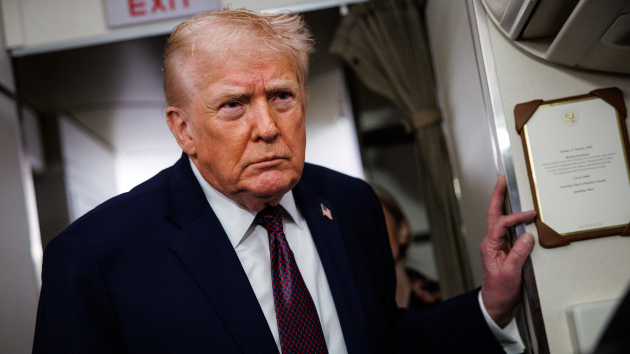
(DETROIT) — President Donald Trump on Tuesday is turning his focus to the economy amid his administration’s intense foreign policy push with a speech at the Detroit Economic Club.
Trump’s remarks come as many Americans remain concerned about high prices.
A recent Quinnipiac University poll found 64% of registered voters said the cost of living is a “very serious problem” in the United States. On the economy overall, nearly half of voters said they think it’s getting worse, and 57% of voters said they disapproved of Trump’s handling of the issue.
As Trump left the White House on Tuesday, he touted new inflation data and continued his pressure campaign on Federal Reserve Chairman Jerome Powell to lower interest rates.
“We have very low inflation. So, that would give ‘too-late Powell’ the chance to give us a nice, beautiful, big rate cut, which would be great for the country,” Trump told reporters. “But rates are falling also, and growth is going up. We have tremendous growth numbers. So, growth is going up. So, I’ll be talking about that today in Detroit, the big speech, and I can only say that the country is doing well.”
Powell is now facing criminal investigation by the Justice Department over his testimony last year about the renovation of the central bank’s headquarters in Washington. Powell said he believes the probe is politically motivated.
When asked by ABC News on Tuesday if he approved of the investigation, Trump said, “He’s billions of dollars over budget. So either he’s incompetent or he’s crooked. I don’t know what he is. But certainly he doesn’t do a very good job.”
Inflation held steady at 2.7% in December, U.S. Bureau of Labor Statistics data showed, its lowest level since July but still higher than the Fed’s target rate.
Tuesday’s trip to Michigan is the latest stop in the administration’s push to sell the president’s economic agenda to voters ahead of the 2026 midterm elections.
November’s off-year elections in New York City, New Jersey and Virginia showed pocketbook issues were top of mind for voters. Democrats who focused on affordability won big in those races, according to exit polls. Trump has derided affordability as a “Democratic hoax.”
Trump’s faced criticism from some in his own party, including former Republican Rep. Marjorie Taylor Greene, for not doing more to address the high cost of living and focusing too much on foreign affairs.
In recent days, Trump’s announced several economic proposals — including a ban on large institutional investors from “buying more single-family homes” and a 1-year, 10% cap on credit card interest rates. Trump’s housing plan has been met with some skepticism from analysts, and banks have pushed back on his pitch to cap credit card interest rates.
White House press secretary Karoline Leavitt, previewing Trump’s Detroit speech on Monday, told reporters he would discuss recent news on inflation and mortgage rates.
“These economic policies are really coming into fruition now that we’re in 2026 and we’ll be seeing more tax cuts into the pockets of the American people later this spring as well. So, it’s all good news on the economic front, and I know the president looks forward to talking about that tomorrow in Michigan,” Leavitt said.
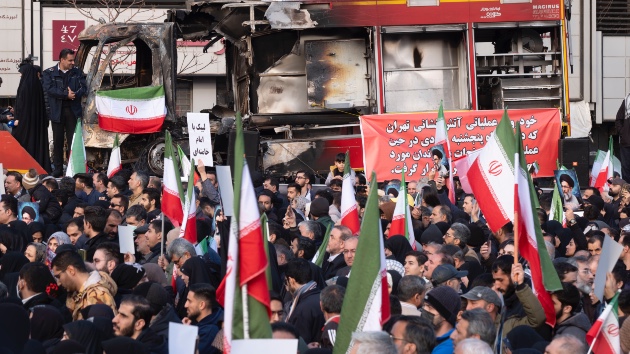
Iranian protesters participate in a pro-Government rally in Tehran, Iran, on January 12, 2026. The rally takes place in Tehran against the recent anti-government unrest, opposition to the U.S. and Israel in Iran, and in support of Supreme Leader Ayatollah Ali Khamenei. (Photo by Morteza Nikoubazl/NurPhoto via Getty Images)
(LONDON) — The death toll from major anti-government protests in Iran reached at least 2,000 as of Tuesday, according to data published by the U.S.-based Human Rights Activists News Agency (HRANA), over 16 days of unrest.
U.S. President Donald Trump wrote on social media on Tuesday, “Iranian Patriots, KEEP PROTESTING – TAKE OVER YOUR INSTITUTIONS!!! Save the names of the killers and abusers. They will pay a big price.”
“I have cancelled all meetings with Iranian Officials until the senseless killing of protesters STOPS. HELP IS ON ITS WAY,” Trump added.
At least 10,721 people have been arrested, HRANA said in an earlier update on Tuesday, in protests that have been recorded in 606 locations in 187 cities across all 31 Iranian provinces. Among the dead are at least nine children, the group reported.
The HRANA data relies on the work of activists inside and outside the country. ABC News cannot independently verify these numbers. The group earlier on Tuesday said 646 people had been killed. The Iranian government has not provided any death tolls during the ongoing protests.
Iranian state-aligned media, meanwhile, has reported that more than 100 members of the security forces have been killed in the unrest. HRANA said that 133 military and security personnel were among those killed in the protest wave to date, along with one prosecutor.
Trump on Monday announced a 25% tariff on any country doing business with Iran, after repeatedly warning Tehran against the use of force to suppress the ongoing protests.
“Effective immediately, any Country doing business with the Islamic Republic of Iran will pay a Tariff of 25% on any and all business being done with the United States of America,” Trump said in a social media post on Monday. “This Order is final and conclusive.”
In response to the announcement, Chinese Foreign Ministry spokesperson Mao Ning said the position of Beijing — which is a key trading partner for Tehran — “is very clear — there are no winners in a tariff war. China will firmly safeguard its legitimate rights and interests.”
China “supports Iran in maintaining national stability,” she added. “We have always opposed interference in other countries’ internal affairs and the use or threat of force in international relations.”
Members of Trump’s national security team — including Secretary of State Marco Rubio, Defense Secretary Pete Hegseth and CIA Director John Ratcliffe — met Tuesday morning to discuss Iran, according to White House press secretary Karoline Leavitt. Trump did not attend the meeting, nor was he scheduled to, she said.
One U.S. official told ABC News that among the options under consideration regarding Iran are new sanctions against key regime figures or against Iran’s energy or banking sectors.
Leavitt suggested to reporters on Monday that military options remain open to Trump.
The president, she said, “is always keeping all of his options on the table and air strikes would be one of the many, many options on the table for the commander in chief. Diplomacy is always the first option for the president.”
Citing “escalating” protests and increased security measures, the State Department also urged Americans to leave Iran.
U.S. citizens should expect continued internet outages, plan alternative means of communication, and, if safe to do so, consider departing Iran by land to Armenia or Türkiye,” a new security alert posted on the U.S. “virtual” Embassy Tehran website on Monday stated.
Protests have been spreading across the country since late December. The first marches took place in downtown Tehran, with participants demonstrating against rising inflation and the falling value of the national currency, the rial.
As the protests spread, some have taken on a more explicitly anti-government tone.
The theocratic government in Tehran — headed by Supreme Leader Ayatollah Ali Khamenei — moved to tame the protests, with security forces reportedly using tear gas and live ammunition to disperse gatherings.
A sustained national internet outage has been in place across the country for several days. Online monitoring group NetBlocks said on Tuesday that the “nationwide internet shutdown” had been ongoing for 108 hours.
The United Nations’ High Commissioner for Human Rights Volker Turk said in a statement on Tuesday that hundreds of people had been killed and thousands arrested.
Turk said he was “horrified by the mounting violence against protesters” and urged Iranian authorities to immediately halt all forms of violence and repression, and restore full access to internet and telecommunications.
Khamenei and top Iranian officials have said they are willing to engage with the economic grievances of protesters, though have framed the unrest as driven by “rioters” and “terrorists” sponsored by foreign nations — prime among them the U.S. and Israel — and supported by foreign infiltrators.
On Monday, Foreign Minister Abbas Araghchi described the wave of protests as a “terrorist war” while speaking to foreign diplomats in Tehran.
Also on Monday, state television broadcast footage of pro-government rallies organized in other major cities.
The footage showed crowds waving Iranian flags in Tehran’s Revolution Square. State television described the Tehran demonstration as an “Iranian uprising against American-Zionist terrorism.”
Dissident figures abroad, meanwhile, have urged Iranians to take to the street and overthrow the government.
Iran’s exiled Crown Prince Reza Pahlavi — who from his base in the U.S. has become a prominent critic of the Iranian government — on Monday appealed to Trump to act in support of the protesters.
“I have called the people to the streets to fight for their freedom and to overwhelm the security forces with sheer numbers,” Pahlavi wrote on X. “Last night they did that. Your threat to this criminal regime has also kept the regime’s thugs at bay. But time is of the essence.”
“Please be prepared to intervene to help the people of Iran,” Pahlavi added.
ABC News’ Somayeh Malekian, Morgan Winsor, Meredith Deliso, Anne Flaherty, Mariam Khan, Othon Leyva, Britt Clennett, Joseph Simonetti and Lalee Ibssa contributed to this report.
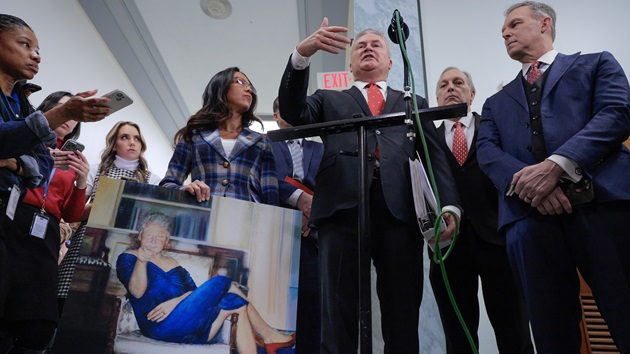
House Oversight and Government Reform Committee Chairman James Comer (R-KY) talks to reporters after former President Bill Clinton did not appear for a closed-door deposition in the Rayburn House Office Building on Capitol Hill on January 13, 2026 in Washington, DC. Chip Somodevilla/Getty Images
(WASHINGTON) — The chairman of the Republican-led House Oversight Committee said the panel will move forward with contempt of Congress proceedings against former President Bill Clinton after he failed to appear for a subpoenaed deposition on Tuesday as part of the panel’s investigation into convicted sex offender Jeffrey Epstein.
The committee had threatened to hold the former president and former Secretary of State Hillary Clinton in contempt of Congress if they did not appear for separate scheduled closed depositions set for Tuesday and Wednesday, respectively.
“I think everyone knows by now, Bill Clinton did not show up. And I think it’s important to note that this subpoena was voted on in a bipartisan manner by this committee. This wasn’t something that I just issued as chairman of the committee. This was voted on by the entire committee in a unanimous vote of the House Oversight Committee to subpoena former President Clinton and former Secretary of State Hillary Clinton,” Oversight Chairman James Comer said Tuesday morning.
“We will move next week in the House Oversight Committee markup to hold former President Clinton in contempt of Congress,” Comer, a Republican, later added.
A lawyer for the Clintons, David Kendall, has not responded to requests for comment on whether Hillary Clinton will appear on Capitol Hill for her Wednesday subpoenaed deposition.
In a four-page letter posted on social media Tuesday morning, the Clintons publicly called out Comer for threatening to hold them in contempt of Congress.
“Despite everything that needs to be done to help our country, you are on the cusp of bringing Congress to a halt to pursue a rarely used process literally designed to result in our imprisonment. This is not the way out of America’s ills, and we will forcefully defend ourselves,” the letter states.
The Clintons contend in the letter that Comer’s approach to the committee’s work on the Epstein investigation has “prevented progress in discovering the facts about the government’s role” and that the chairman has “done nothing” to force the Justice Department to comply with its disclosure obligations required by Epstein Files Transparency Act, passed late last year.
“We have tried to give you the little information that we have,” the Clintons wrote. “We’ve done so because Mr. Epstein’s crimes were horrific. If the Government didn’t do all it could to investigate and prosecute these crimes, for whatever reason, that should be the focus of your work — to learn why and to prevent that from happening ever again. There is no evidence that you are doing so.”
For months, Republicans on the committee have been demanding that the Clintons provide testimony to lawmakers, citing the former president’s travels on Epstein’s private aircraft in the early 2000s and the Clinton “family’s past relationship” with Epstein and his associate, Ghislaine Maxwell. The panel initially issued subpoenas for the Clintons on Aug. 5 to appear in October.
Kendall has continued to argue that the couple has no information relevant to the committee’s investigation of the federal government’s handling of investigations into Epstein and Maxwell, and should not be required to appear for in-person testimony. Kendall has contended that the Clintons should be permitted to provide the limited information they have to the committee in writing.
“There is simply no reasonable justification for compelling a former President and Secretary of State to appear personally, given that their time and roles in government had no connection to the matter at hand,” Kendall wrote in one of the letters sent to the committee in October of last year. He argued that the committee should excuse the Clintons, as the committee had done for five former attorneys general who were each excused after certifying to the committee that they had no relevant knowledge.
Bill Clinton has not been accused of wrongdoing and denies having any knowledge of Epstein’s crimes. No Epstein survivor or associate has ever made a public allegation of wrongdoing or inappropriate behavior by the former president in connection with his prior relationship with Epstein.
Former Secretary of State Clinton “has no personal knowledge of Epstein or Maxwell’s criminal activities, never flew on his aircraft, never visited his island, and cannot recall ever speaking to Epstein. She has no personal knowledge of Maxwell’s activities with Epstein,” Kendall wrote. “President Clinton’s contact with Epstein ended two decades ago, and given what came to light much after, he has expressed regret for even that limited association,” an Oct. 6 letter to the committee says.
Comer wrote in a letter to Kendall in October that the committee is “skeptical” that the Clintons have only limited information and stated it was up to the committee, not the Clintons, to make determinations of the value of the information.
“[T]he Committee believes that it should be provided in a deposition setting, where the Committee can best assess its breadth and value,” Comer wrote.
Last month, in response to the Epstein Files Transparency Act, the Justice Department released several photographs of former President Clinton apparently taken during his international travels with Epstein and Maxwell from 2002 to 2003, although the released photographs contained no information identifying when or where they were taken. Following that disclosure, a spokesperson for the two-term Democratic president argued that the Trump administration released those images to shield the Trump White House “from what comes next, or from what they’ll try to hide forever.”
“So, they can release as many grainy 20-plus-year-old photos as they want, but this isn’t about Bill Clinton. Never has, never will be,” Clinton’s spokesperson Angel Ureña wrote on X Dec. 22.
Ureña did not respond to an email inquiry from ABC News on Monday.
What is contempt of Congress?
The House of Representatives can hold an individual “in contempt” if that person refuses to testify or comply with a subpoena. The contempt authority is considered an implied power of Congress.
“Congress’s contempt power is the means by which Congress responds to certain acts that in its view obstruct the legislative process. Contempt may be used either to coerce compliance, to punish the contemnor, and/or to remove the obstruction,” according to a report from the Congressional Research Service.
Any person summoned as a congressional witness who refuses to comply can face a misdemeanor charge that carries a fine of up to $100,000 and up to a year in prison if that person is eventually found guilty.
What would the process look like?
To hold someone in contempt of Congress, the Oversight Committee would first mark up and then vote to advance the contempt resolution. Once the committee approves the resolution, which is expected given the GOP majority, the resolution now could go to a vote in the full House.
A simple majority is needed to clear a contempt resolution on the floor. Notably, it does not require passage in the Senate.
The resolution, if passed, would direct the speaker of the House to refer the case to the U.S. Attorney for the District of Columbia — under the Department of Justice — for possible criminal prosecution.
History of contempt
Congress has held Cabinet officials in contempt of Congress for refusing to comply with a House subpoena, including Attorney General William Barr and Commerce Secretary Wilbur Ross in 2019 and then-Attorney General Eric Holder in 2012. The DOJ never prosecuted them even though the House voted to hold them in contempt.
The House held Peter Navarro, a former top trade adviser in the Trump administration, in contempt of Congress in 2022 for defying a subpoena to provide records and testimony to the now-defunct House select committee investigating the Jan. 6 attack on the U.S. Capitol. Navarro was sentenced to jail time.
Steve Bannon, a Trump ally, was also held in contempt of Congress in 2022 for not complying with the Jan. 6 select committee. Bannon was also sentenced to prison time.
The GOP-led House voted to hold Attorney General Merrick Garland in contempt of Congress in 2024 over the DOJ failing to provide audio of then-President Joe Biden’s interview with special counsel Robert Hur. The DOJ did not prosecute the case, but the audio was released.
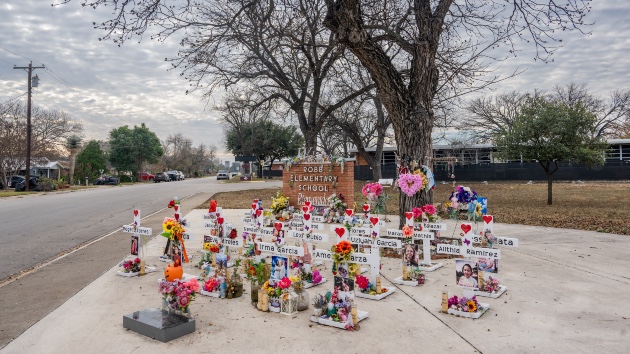
A memorial dedicated to the 19 children and two adults murdered on May 24, 2022 during a mass shooting at Robb Elementary School is seen on January 06, 2026 in Uvalde, Texas. (Photo by Brandon Bell/Getty Images)
Editor’s note: Some of the testimony described below is extremely graphic.
(UVALDE, Texas) — Robb Elementary School teacher Elsa Avila was taking photos of her fourth-graders with their science projects on May 24, 2022, when she said a young girl noticed something was wrong — that other students was running to their classroom and screaming.
Avila testified that her students immediately hid, as they had during lockdown training.
“We heard loud, loud shots in the hallway,” Avila said on Tuesday at the trial of former Uvalde, Texas, school police officer Adrian Gonzales. “They knew that it was, you know, a real thing.”
When Avila briefly stood up to instruct her students to make sure everyone was “safe and out of sight,” she said she felt a piercing pain on her left side.
“I felt the burning pain,” she said. “I put my hand on my side and I saw blood. When I took my hand away, I saw blood. So, I knew that I had been shot.”
As she recounted her injury, Avila banged her hands on the witness stand — the wood ringing from her Rosary ring — to describe the sounds she heard.
“I fell to the floor, and we kept hearing the shots,” she said.
Avila said she was lying on the floor in intense pain and “trying so hard to keep it in.”
She said her students tried to comfort her while they sheltered in place.
“They were hugging each other. They were helping each other stay quiet. Some of them were tapping me. They were telling me, ‘Miss, Miss. We love you. We love you. You’re going to be OK, you’re going to be OK,'” she testified.
Avila’s harrowing testimony comes on the second week of Gonzales’ trial. Prosecutors allege Gonzales, who is charged with child endangerment, did not follow his training and endangered the 19 students who died and an additional 10 surviving students.
Gonzales has pleaded not guilty and his lawyers argue he is being unfairly blamed for a broader law-enforcement failure that day. It took 77 minutes before law enforcement mounted a counterassault to end the May 2022 rampage.
Avila maintained her composure throughout most of her testimony, though she broke down in tears when she described what she felt in those moments.
“I was in so much pain towards the end there, my body was going into shock, and my legs were already starting to shake. My whole body was starting to shake,” she said. “I kept praying, you know, God, please don’t let me die.”
During a brief cross examination, Avila testified about hearing officers trying to negotiate with the gunman.
“I heard a voice saying, you know, ‘Sir, we need you to stop, we don’t want anyone else to get hurt,'” she said.
Avila testified that, even when officers broke through her classroom windows to begin rescuing students, some students wanted to stay with her due to her injury.
Former fourth-grade teacher Arnulfo Reyes also testified on Monday and Tuesday, recounting in excruciating detail the moments when gunman Salvador Ramos shot and wounded him and shot and killed all 11 children in his classroom.
Reyes said he fell to the ground after he was struck by gunfire. Then, the shooter “came around and he shot the kids,” Reyes testified, maintaining his composure.
After the first series of gunshots, Reyes testified that a student in a nearby classroom mistook Ramos for police.
“A student from that classroom said, ‘Officer, come in here. We’re in here,'” Reyes testified. “And I heard he walked over there, and I heard more shooting.”
As Reyes lay on the ground bleeding from wounds to his arm and back, he said the shooter returned to his classroom and noticed he was still alive.
“He came and he tried to taunt me. He got some of my blood and splashed it on my face,” he said.
During cross-examination, defense lawyer Nico LaHood tried to deflect some blame from Gonzales, suggesting Reyes was at least partially at fault for leaving his classroom door unlocked the morning of the shooting.
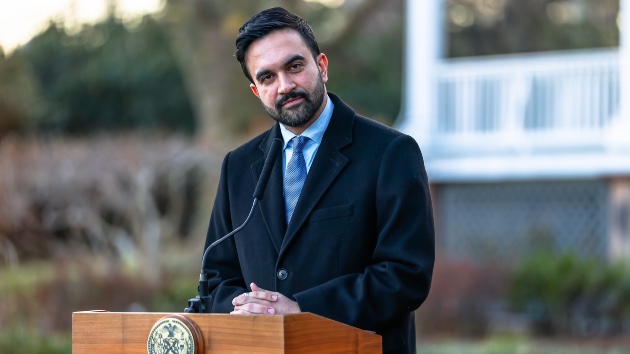
Mayor Zohran Mamdani speaks at a press conference during moving day at Gracie Mansion on January 12, 2026 in New York City. (Photo by Michael M. Santiago/Getty Images)
(NEW YORK) — A New York City Council employee was detained during a “routine” immigration appointment on Long Island on Monday, according to city officials, who called the incident an “egregious government overreach.”
Mayor Zohran Mamdani said he is “outraged” by the worker’s arrest.
“This is an assault on our democracy, on our city, and our values,” he said in a statement on X. “I am calling for his immediate release and will continue to monitor the situation.”
The Department of Homeland Security defended the arrest late Monday, saying the employee is in the U.S. illegally and has an alleged criminal history that includes an arrest for assault. The agency did not provide additional details on the assault arrest.
DHS Assistant Secretary Tricia McLaughlin identified the employee in a statement Monday night as Rafael Andres Rubio Bohorquez, whom she alleged is a “criminal illegal alien from Venezuela.”
McLaughlin said Rubio Bohorquez entered the U.S. on a B2 tourist visa in 2017 that required him to leave the country by Oct. 22, 2017.
“He had no legal right to be in the United States,” McLaughlin said in a statement. “Under Secretary Noem, criminal illegal aliens are not welcome in the United States. If you come to our country illegally and break our law, we will find you and we will arrest you.”
The employee was detained by federal immigration officials during an appointment in Bethpage in Nassau County earlier Monday, according to NYCCouncil Speaker Julie Menin.
The speaker said the employee has legal authorization to remain in the country until this coming October.
Menin said the employee is a “central staff member working as a data analyst for approximately a year.”
The city council learned of his detainment Monday afternoon, when the employee used his one phone call to contact the council’s human resources department for help and said he had been detained, according to Menin.
“DHS confirmed that this employee had gone in for a routine court appointment and was nevertheless detained. They provided no other basis for his detainment,” Menin said during a press briefing on Monday. “On the contrary, he was a city council employee who is doing everything right. He went to the court when he was asked.”
Menin said the city council is demanding the return of the employee, whom she did not identify, citing privacy concerns.
Democratic New York Congressman Dan Goldman said the employee is of Venezuelan descent and is a “law-abiding immigrant with work authorization.”
“I want to be very clear: There is no indication that there’s anything about this individual other than his immigration status that caused him to be arrested,” he said during Monday’s press briefing.
DHS said the staffer was not authorized to work in the U.S.
The employee has been transferred to a detention center in Manhattan, according to Menin. She said the city council has been unable to reach his family members.
Goldman said his office has reached out to U.S. Immigration and Customs Enforcement.
“We will continue to fight this,” he said. “We will continue to push for not only this person’s release, which is so obviously necessary, but for this immigration dragnet to stop.”
New York Attorney General Letitia James also called for the staffer’s immediate release, saying in a statement on X, “We will not stand for attacks on our city, its public servants, and its residents.”
In response to the incident, New York Gov. Kathy Hochul said, “This is exactly what happens when immigration enforcement is weaponized.”
“Detaining people during routine court appearances doesn’t make us safer,” she said in a statement on X. “It erodes trust, spreads fear, and violates basic principles of fairness.”
Iranian protesters participate in a pro-Government rally in Tehran, Iran, on January 12, 2026. The rally takes place in Tehran against the recent anti-government unrest, opposition to the U.S. and Israel in Iran, and in support of Supreme Leader Ayatollah Ali Khamenei. (Photo by Morteza Nikoubazl/NurPhoto via Getty Images)
(LONDON) — The death toll from major anti-government protests in Iran reached at least 2,000 as of Tuesday, according to data published by the the U.S.-based Human Rights Activists News Agency (HRANA), over 16 days of unrest.
U.S. President Donald Trump wrote on social media on Tuesday, “Iranian Patriots, KEEP PROTESTING – TAKE OVER YOUR INSTITUTIONS!!! Save the names of the killers and abusers. They will pay a big price.”
“I have cancelled all meetings with Iranian Officials until the senseless killing of protesters STOPS. HELP IS ON ITS WAY,” Trump added.
At least 10,721 people have been arrested, HRANA said in an earlier update on Tuesday, in protests that have been recorded in 606 locations in 187 cities across all 31 Iranian provinces. Among the dead are at least nine children, the group reported.
The HRANA data relies on the work of activists inside and outside the country. ABC News cannot independently verify these numbers. The group earlier on Tuesday said 646 people had been killed. The Iranian government has not provided any death tolls during the ongoing protests.
Iranian state-aligned media, meanwhile, has reported that more than 100 members of the security forces have been killed in the unrest. HRANA said that 133 military and security personnel were among those killed in the protest wave to date, along with one prosecutor.
Trump on Monday announced a 25% tariff on any country doing business with Iran, after repeatedly warning Tehran against the use of force to suppress the ongoing protests.
“Effective immediately, any Country doing business with the Islamic Republic of Iran will pay a Tariff of 25% on any and all business being done with the United States of America,” Trump said in a social media post on Monday. “This Order is final and conclusive.”
In response to the announcement, Chinese Foreign Ministry spokesperson Mao Ning said the position of Beijing — which is a key trading partner for Tehran — “is very clear — there are no winners in a tariff war. China will firmly safeguard its legitimate rights and interests.”
China “supports Iran in maintaining national stability,” she added. “We have always opposed interference in other countries’ internal affairs and the use or threat of force in international relations.”
Trump’s national security team are expected to meet at the White House on Tuesday to discuss his options for intervention in the Islamic Republic.
One U.S. official told ABC News that among the options under consideration are new sanctions against key regime figures or against Iran’s energy or banking sectors.
White House press secretary Karoline Leavitt suggested reporters on Monday that military options remain open to Trump.
The president, she said, “is always keeping all of his options on the table and air strikes would be one of the many, many options on the table for the commander in chief. Diplomacy is always the first option for the president.”
Citing “escalating” protests and increased security measures, the State Department also urged Americans to leave Iran.
“U.S. citizens should expect continued internet outages, plan alternative means of communication, and, if safe to do so, consider departing Iran by land to Armenia or Türkiye,” a new security alert posted on the U.S. “virtual” Embassy Tehran website on Monday stated.
Protests have been spreading across the country since late December. The first marches took place in downtown Tehran, with participants demonstrating against rising inflation and the falling value of the national currency, the rial.
As the protests spread, some have taken on a more explicitly anti-government tone.
The theocratic government in Tehran — headed by Supreme Leader Ayatollah Ali Khamenei — moved to tame the protests, with security forces reportedly using tear gas and live ammunition to disperse gatherings.
A sustained national internet outage has been in place across the country for several days. Online monitoring group NetBlocks said on Tuesday that the “nationwide internet shutdown” had been ongoing for 108 hours.
The United Nations’ High Commissioner for Human Rights Volker Turk said in a statement on Tuesday that hundreds of people had been killed and thousands arrested.
Turk said he was “horrified by the mounting violence against protesters” and urged Iranian authorities to immediately halt all forms of violence and repression, and restore full access to internet and telecommunications.
Khamenei and top Iranian officials have said they are willing to engage with the economic grievances of protesters, though have framed the unrest as driven by “rioters” and “terrorists” sponsored by foreign nations — prime among them the U.S. and Israel — and supported by foreign infiltrators.
On Monday, Foreign Minister Abbas Araghchi described the wave of protests as a “terrorist war” while speaking to foreign diplomats in Tehran.
Also on Monday, state television broadcast footage of pro-government rallies organized in other major cities.
The footage showed crowds waving Iranian flags in Tehran’s Revolution Square. State television described the Tehran demonstration as an “Iranian uprising against American-Zionist terrorism.”
Dissident figures abroad, meanwhile, have urged Iranians to take to the street and overthrow the government.
Iran’s exiled Crown Prince Reza Pahlavi — who from his base in the U.S. has become a prominent critic of the Iranian government — on Monday appealed to Trump to act in support of the protesters.
“I have called the people to the streets to fight for their freedom and to overwhelm the security forces with sheer numbers,” Pahlavi wrote on X. “Last night they did that. Your threat to this criminal regime has also kept the regime’s thugs at bay. But time is of the essence.”
“Please be prepared to intervene to help the people of Iran,” Pahlavi added.
ABC News’ Somayeh Malekian, Morgan Winsor, Meredith Deliso, Anne Flaherty, Mariam Khan, Othon Leyva, Britt Clennett, Joseph Simonetti and Lalee Ibssa contributed to this report.
A memorial dedicated to the 19 children and two adults murdered on May 24, 2022 during a mass shooting at Robb Elementary School is seen on January 06, 2026 in Uvalde, Texas. (Photo by Brandon Bell/Getty Images)
Editor’s note: Some of the testimony described below is extremely graphic.
(UVALDE, Texas) — As the sound of gunshots got closer to Room 111 in Robb Elementary School, former fourth-grade teacher Arnulfo Reyes testified that all he could do was tell his students to get under their desks, stay quiet and close their eyes.
“I had told them to close their eyes, because I didn’t want them to see if something bad was going to happen,” Reyes testified Monday at the trial of former Uvalde, Texas, school police officer Adrian Gonzales.
Prosecutors allege Gonzales, who is charged with child endangerment, did not follow his training and endangered the 19 students who died and an additional 10 surviving students. Gonzales has pleaded not guilty and his lawyers argue he is being unfairly blamed for a broader law-enforcement failure that day. It took 77 minutes before law enforcement mounted a counterassault to end the May 2022 rampage.
In excruciating detail, Reyes recounted the tragic moments when gunman Salvador Ramos shot and wounded him and shot and killed all 11 children in his classroom.
Reyes said he fell to the ground after he was struck by gunfire. Then, the shooter “came around and he shot the kids,” Reyes testified, maintaining his composure.
After the first series of gunshots, Reyes testified that a student in a nearby classroom mistook Ramos for police.
“A student from that classroom said, ‘Officer, come in here. We’re in here,'” Reyes testified. “And I heard he walked over there, and I heard more shooting.”
As Reyes lay on the ground bleeding from wounds to his arm and back, he said the shooter returned to his classroom and noticed he was still alive.
“He came and he tried to taunt me. He got some of my blood and splashed it on my face,” he said.
Reyes acknowledged that his sense of time from the shooting was unclear.
“I’m not sure how long, I just know it felt like forever,” he said, adding that all he could do in those moments was pray.
“I just closed my eyes real tight and just waited for everything to be over,” he said.
During cross-examination, defense lawyer Nico LaHood tried to deflect some blame from Gonzales, suggesting Reyes was at least partially at fault for leaving his classroom door unlocked the morning of the shooting.
Reyes will be back on the stand on Tuesday.
Though Reyes did not mention Gonzales by name during Monday’s testimony, the former teacher offered the jury one of the most graphic accounts of the shooting.
Former acting Dallas District Attorney Messina Madson told ABC News that prosecutors are likely attempting to use emotional testimony to emphasize the scope of the tragedy and to argue that someone other than the shooter should bear responsibility for the tragedy.
“This is an unusual way to apply this law, and so from an overall point of view of what the district attorney’s office is trying to do is say this is a tragedy,” Madson said. “This is a terrible, horrible thing that happened, and it is so horrible that not only do we have to mourn it, but somebody is criminally responsible, besides the person who pulled the trigger.”
Iranian protesters participate in a pro-Government rally in Tehran, Iran, on January 12, 2026. The rally takes place in Tehran against the recent anti-government unrest, opposition to the U.S. and Israel in Iran, and in support of Supreme Leader Ayatollah Ali Khamenei. (Photo by Morteza Nikoubazl/NurPhoto via Getty Images)
(LONDON) — The death toll from major anti-government protests in Iran reached at least 2,000 as of Tuesday, according to data published by the the U.S.-based Human Rights Activists News Agency (HRANA), over 16 days of unrest.
At least 10,721 people have been arrested, HRANA said, in protests that have been recorded in 606 locations in 187 cities across all 31 Iranian provinces. Among the dead are nine children, the group reported.
The HRANA data relies on the work of activists inside and outside the country. ABC News cannot independently verify these numbers. The group earlier on Tuesday said 646 people had been killed. The Iranian government has not provided any death tolls during the ongoing protests.
Iranian state-aligned media, meanwhile, has reported that more than 100 members of the security forces have been killed in the unrest. HRANA said that 133 military and security personnel were among those killed in the protest wave to date, along with one prosecutor.
U.S. President Donald Trump on Monday announced a 25% tariff on any country doing business with Iran, after repeatedly warning Tehran against the use of force to suppress the ongoing protests.
“Effective immediately, any Country doing business with the Islamic Republic of Iran will pay a Tariff of 25% on any and all business being done with the United States of America,” Trump said in a social media post on Monday. “This Order is final and conclusive.”
In response to the announcement, Chinese Foreign Ministry spokesperson Mao Ning said the position of Beijing — which is a key trading partner for Tehran — “is very clear — there are no winners in a tariff war. China will firmly safeguard its legitimate rights and interests.”
China “supports Iran in maintaining national stability,” she added. “We have always opposed interference in other countries’ internal affairs and the use or threat of force in international relations.”
Trump’s national security team are expected to meet at the White House on Tuesday to discuss his options for intervention in the Islamic Republic.
One U.S. official told ABC News that among the options under consideration are new sanctions against key regime figures or against Iran’s energy or banking sectors.
White House press secretary Karoline Leavitt suggested reporters on Monday that military options remain open to Trump.
The president, she said, “is always keeping all of his options on the table and air strikes would be one of the many, many options on the table for the commander in chief. Diplomacy is always the first option for the president.”
Citing “escalating” protests and increased security measures, the State Department also urged Americans to leave Iran.
“U.S. citizens should expect continued internet outages, plan alternative means of communication, and, if safe to do so, consider departing Iran by land to Armenia or Türkiye,” a new security alert posted on the U.S. “virtual” Embassy Tehran website on Monday stated.
Protests have been spreading across the country since late December. The first marches took place in downtown Tehran, with participants demonstrating against rising inflation and the falling value of the national currency, the rial.
As the protests spread, some have taken on a more explicitly anti-government tone.
The theocratic government in Tehran — headed by Supreme Leader Ayatollah Ali Khamenei — moved to tame the protests, with security forces reportedly using tear gas and live ammunition to disperse gatherings.
A sustained national internet outage has been in place across the country for several days. Online monitoring group NetBlocks said on Tuesday that the “nationwide internet shutdown” had been ongoing for 108 hours.
The United Nations’ High Commissioner for Human Rights Volker Turk said in a statement on Tuesday that hundreds of people had been killed and thousands arrested.
Turk said he was “horrified by the mounting violence against protesters” and urged Iranian authorities to immediately halt all forms of violence and repression, and restore full access to internet and telecommunications.
Khamenei and top Iranian officials have said they are willing to engage with the economic grievances of protesters, though have framed the unrest as driven by “rioters” and “terrorists” sponsored by foreign nations — prime among them the U.S. and Israel — and supported by foreign infiltrators.
On Monday, Foreign Minister Abbas Araghchi described the wave of protests as a “terrorist war” while speaking to foreign diplomats in Tehran.
Also on Monday, state television broadcast footage of pro-government rallies organized in other major cities.
The footage showed crowds waving Iranian flags in Tehran’s Revolution Square. State television described the Tehran demonstration as an “Iranian uprising against American-Zionist terrorism.”
Dissident figures abroad, meanwhile, have urged Iranians to take to the street and overthrow the government.
Iran’s exiled Crown Prince Reza Pahlavi — who from his base in the U.S. has become a prominent critic of the Iranian government — on Monday appealed to Trump to act in support of the protesters.
“I have called the people to the streets to fight for their freedom and to overwhelm the security forces with sheer numbers,” Pahlavi wrote on X. “Last night they did that. Your threat to this criminal regime has also kept the regime’s thugs at bay. But time is of the essence.”
“Please be prepared to intervene to help the people of Iran,” Pahlavi added.
ABC News’ Somayeh Malekian, Morgan Winsor, Meredith Deliso, Anne Flaherty, Mariam Khan, Othon Leyva, Britt Clennett and Joseph Simonetti contributed to this report.
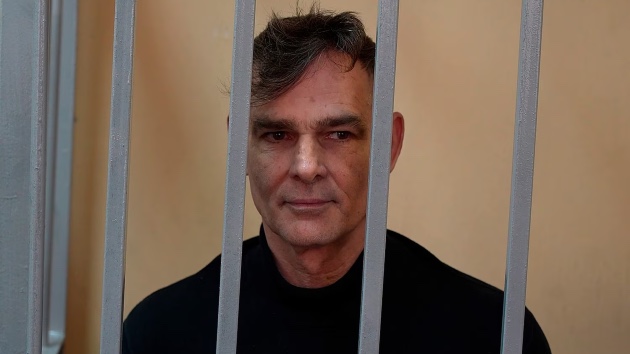
David Barnes appears in court in Russia on Feb. 13, 2024 (ABC News)
(NEW YORK) — Paul Carter and his friend David Barnes have been speaking with each other since their days in first grade in Huntsville, Alabama, more than 60 years ago.
Yet since Jan. 13, 2022, their conversations over the phone haven’t been the same.
“It’s hard to sit there and hear him just plea, ‘Somebody get me home,'” Carter told ABC News in an interview.
Barnes, a 68-year-old father of two boys, is serving the longest prison sentence of any American who is currently being held in Russia. He was recently relocated to a penal colony hundreds of miles from Moscow.
Tuesday marks four years since Barnes was taken into custody.
His family says Barnes’ arrest came after he traveled from his apartment in The Woodlands, Texas, to Russia at the end of 2021 to try to gain visitation or custody rights to his sons through Moscow’s family court system.
Barnes’ ex-wife, Svetlana Koptyaeva, had taken their children to her native Russia following bitter divorce and child custody proceedings in Montgomery County, Texas. Upon learning of Barnes’ arrival in Russia, his family says she contacted law enforcement in Moscow and accused him of having abused the two boys.
“[She] did not want him to have access to his children, so she made the worst possible accusation that she could come up with,” Margaret Aaron, Barnes’ sister, told ABC News.
Moscow prosecutors’ case against Barnes was unlike any other involving an American jailed in Russia in recent memory, since Barnes was not accused of committing a crime on Russian soil.
Instead, Moscow prosecutors alleged that he abused his sons in suburban Houston, even though Texas law enforcement says they had no involvement in the Russian trial and previously found those allegations to not be credible after conducting their own investigation in response to Koptyaeva’s claims.
“I stand firmly by the allegations against Mr. Barnes,” Koptyaeva wrote to ABC News in an email Monday. “They are supported by my sons’ testimonies and evidence presented in both U.S. and Russian courts.”
Barnes was convicted by a judge in Moscow in 2024 and sentenced to more than 21 years in prison.
“Was it a fair trial? By no means,” Carter said.
After spending years in a detention center in the Russian capital, Barnes was recently transferred to the IK-17 penal colony, according to a spokesperson for his family. The facility previously housed other high-profile detainees like American Paul Whelan, who was freed from Russia in 2024 as part of a prisoner swap.
“We can’t speak for the other people that are in jail in Russia but we absolutely know without a doubt that David is an innocent guy that’s being held on some horrendous charges,” Carter said.
‘Nothing to justify what happened’
While Barnes already stood trial in Moscow, prosecutors more than 6,000 miles away in Texas are hoping that his ex-wife will face a different set of accusations in a courtroom 40 miles north of Houston.
The criminal case against Koptyaeva dates back nearly seven years.
From 2014 to 2019, Texas court records show that Barnes and Koptyaeva were going through an acrimonious divorce and child custody dispute.
“It gradually deteriorated,” Carter said. “He married a woman that he loved and brought two children into the world and, through forces that he didn’t understand or see, it went downhill.”
Koptyaeva raised serious accusations against Barnes during this time, accusing him of abusing their children, which he vehemently denied.
“I can say that the allegations against Mr. Barnes were investigated and evaluated by law enforcement here in Montgomery County and charges were not brought against him,” Montgomery County First Assistant District Attorney Kelly Blackburn told ABC News on Monday.
The custody battle between Barnes and Koptyaeva ultimately resulted in a family law trial.
“A jury also heard evidence regarding the allegations during his custody dispute in the family law trial and even after hearing about the allegations, still awarded Mr. Barnes custody of his two children,” Blackburn said. “And that is when his ex-wife fled with them to Russia.”
The Montgomery County Sheriff’s Office alleged that despite a judgment giving Barnes partial custody of their children, Koptyaeva “failed to comply with any condition for travel outside of the United States with the children,” and left the country with the boys on a Turkish Airlines flight from Houston to Istanbul on March 26, 2019.
Interpol published yellow global police notices containing pictures of the children and Koptyaeva was subsequently charged with interference with child custody, a felony crime in Texas.
A warrant for Koptyaeva’s arrest in connection with this charge is still active, according to Blackburn.
“I am not planning to return to the United States,” Koptyaeva told ABC News. “However, if I were to do so, I would plead not guilty, as I did nothing wrong. My actions were solely to protect my children from severe abuse, something any parent would do in my situation.”
A Texas court subsequently designated Barnes as the primary guardian of the children, but since the boys were believed to have ultimately ended up in Russia with Koptyaeva, he was unable to have a relationship with them.
Barnes’ friends and family maintain that Barnes’ desire to legally reunite with his children is what prompted him to travel to Moscow after COVID-19 restrictions were lifted. Instead, he ended up in a series of Russian detention centers.
“There’s nothing to justify what happened,” Carter said.
New Year, new hope?
As Barnes begins his fifth year of detention in Russia, for the first time he is being held in a penal colony a long distance away from Moscow
“From what we understand, the climate is quite a bit different,” Carter said, explaining that while Barnes was often housed in a cell with 14 to 17 other people in Moscow, he has more room to walk around in his new facility.
Carter said that the penal colony is a labor camp of sorts, but Barnes’ labor has largely been restricted to shoveling show. He is worried about his friend’s medical condition though, noting that Barnes has lost around 10 teeth since he has been in custody.
Koptyaeva has maintained that Barnes was justifiably charged and convicted, while Barnes’ relatives and acquaintances have been advocating for the U.S. government to declare that Russia is wrongfully detaining Barnes.
“We commend all efforts to secure Mr. Barnes’ release,” Rep. Dan Crenshaw, Rep. Dale Strong and Sen. John Cornyn wrote in a letter to Secretary of State Marco Rubio in November. “As the Administration continues negotiations with Russia, we urge you to utilize every tool available to facilitate his return to the United States.”
Blackburn, the Montgomery County First Assistant District Attorney, said he is not in a position at this time to say whether Barnes’ detention in Russia is wrongful, noting, “I don’t know what evidence was presented during the trial or anything else about how the proceeding[s] [were] conducted.”
The State Department has not answered ABC News’ questions over whether it considers Barnes’ detention to be wrongful.
“The Department of State has no higher priority than the safety and welfare of American citizens,” the agency said in a statement to ABC News. “U.S. Embassy officials continue to provide consular assistance to Mr. Barnes.”
Carter said that there has been increased advocacy against Barnes’ detention recently and that he is hopeful that the Trump administration will be able to bring his friend home — but fears Barnes being devastated if he is left out of another prisoner exchange.
“He’s been in some insufferable conditions and it doesn’t need to continue,” his friend said.
ABC News’ Tanya Stukalova contributed to this report.
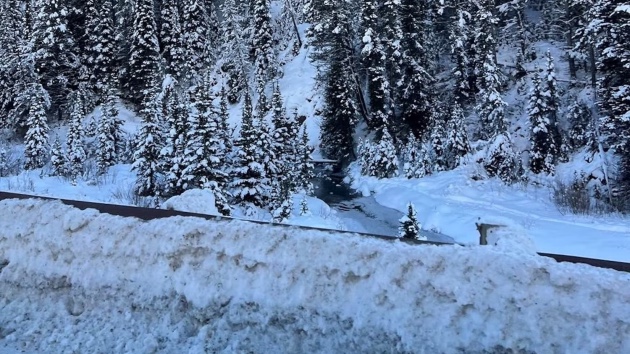
A Utah man was found dead after being caught in an avalanche Sunday afternoon in Lincoln County, Wyoming, authorities said. (Lincoln County Sheriff’s Office)
(LINCOLN COUNTY, Wyo) — A Utah man was found dead after being caught in an avalanche Sunday afternoon in Lincoln County, Wyoming, authorities said.
Nicholas Bringhurst, 31, was snowmobiling in the LaBarge Creek area when he was caught in an avalanche that buried him in snow, according to the Lincoln County Sheriff’s Office.
The sheriff’s office received a notification from a satellite device reporting an injured person, and Air Idaho was contacted and responded to the area.
“Bringhurst’s friend located and unburied him and initiated CPR,” authorities said. “However, Bringhurst died as a result of being caught in the avalanche.”
Lincoln County Coroner Dain Schwab said the coroner’s office will investigate and determine the cause of death.
“The Sheriff’s Office expresses our deepest sympathies to the Bringhurst family,” officials said.
ABC News’ Tristan Maglunog contributed to this report.