Trump meets with Syria’s president in historic White House visit

Trump meets with Syria’s president in historic White House visit
Contributor/Getty Images

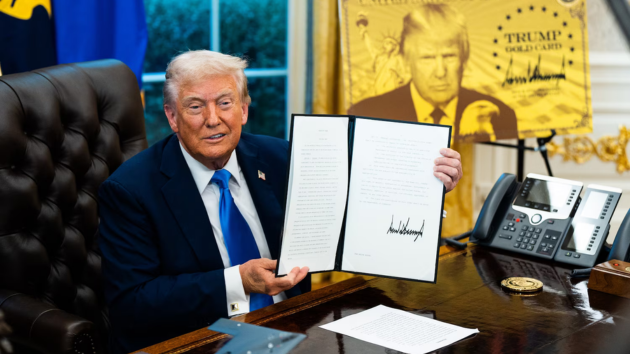
(WASHINGTON) — President Trump met on Monday at the White House with Syrian President Ahmed al-Sharaa, the White House said.

The visit marked the first time a Syrian president has ever visited the White House and is viewed as a crucial first step in normalizing U.S.-Syria relations.

The White House did not allow reporters and cameras access to the meeting.

Al-Sharaa is the former leader of U.S.-designated terror group al-Qaeda who was once wanted by the U.S. as a terrorist with a $10 million bounty on his head. He has even served time in the infamous Abu Ghraib prison.

A senior Trump administration official said Trump and al-Sharaa were expected to focus on counterterrorism efforts in Syria, and to discuss the signing of an agreement for Syria to join the U.S.-led coalition against the Islamic State. The coalition includes some 80 countries working to prevent a resurgence of the extremist group, according to the official.

It’s also the third meeting between Trump and al-Sharaa this year, as the Syrian leader confronts the challenges of rebuilding the country, seeking to restore ties with Arab countries and the West after years of civil war under Bashar al-Assad’s regime. The Assad regime’s fall brought to an end nearly 14 years of civil war.

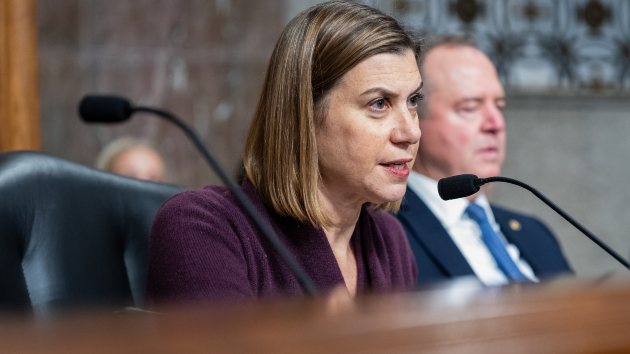
Al-Sharaa arrived in Washington on Saturday and held meetings with members of Congress over the weekend, including with House Foreign Affairs Committee Chairman Brian Mast, a Republican who represents a district in Florida.

Mast shared in a statement that he and al-Sharaa “broke bread” and had a “long and serious conversation about how to build a future for the people of Syria free of war, ISIS, and extremism.”

“He and I are two former soldiers and two former enemies. I asked him directly ‘Why we are no longer enemies?’” Mast revealed.

“His response was that he wishes to ‘liberate from the past and have a noble pursuit for his people and his country and to be a great ally to the United States of America,'” Mast shared in the statement.

The U.S. on Friday removed sanctions on al-Sharaa just one day after the United Nations Security Council lifted similar sanctions ahead of his meeting with Trump.

According to a notice on the U.S. Treasury Department website, the United States removed Specially Designated Global Terrorist designations on Sharaa and Syria’s interior minister, Anas Khattab.

Copyright © 2025, ABC Audio. All rights reserved.

Government shutdown timeline: How senators went from 40-day impasse to sudden deal

Government shutdown timeline: How senators went from 40-day impasse to sudden deal
Speaker Mike Johnson delivers remarks to reporters on November 10, 2025 on Capitol Hill in Washington, DC. (Tom Brenner/Getty Images)

(WASHINGTON) — The longest government shutdown in U.S. history appears to be nearing its end, after senators suddenly advanced a funding deal over the weekend after 40 days of little progress.

The agreement still needs to pass the Senate and the House before going to President Donald Trump’s desk. In the meantime, pain continues to grow for Americans on everything from food assistance to air travel.

Here’s a timeline of major developments from the weekslong impasse.

Oct. 1: The federal government shut down at 12:01 a.m. after competing Republican and Democratic proposals that would have funded the government failed in the Senate at the eleventh hour. The Democrat bill included extensions for health care subsidies under the Affordable Care Act while the Republicans’ “clean” bill would have funded the government at current levels until Nov. 1.

Oct. 10: The Trump administration begins to lay off thousands of federal workers. Agencies impacted include the Commerce, Education, Energy, Health and Human Services, Housing and Urban Development, Homeland Security and Treasury departments.

Oct. 14: Two weeks into the shutdown with virtually no progress, House Speaker Mike Johnson predicts they are headed toward “one of the longest shutdowns in American history.” The House has remained out of session the entire shutdown after Republican members passed a clean, seven-week funding bill in mid-September.

Oct. 15: The Pentagon says that troops have been paid and will not miss a paycheck due to the shutdown after shifting existing funds.

Oct. 24: More than 500,000 federal employees miss their first full paycheck. Days later, the president of the country’s largest union representing federal workers called on lawmakers to pass a short-term spending bill to end the shutdown, a statement seized on by Republicans to ramp up pressure on Democrats.

Oct. 30: President Trump, after weeklong overseas trip, inserts himself in the shutdown showdown by calling on Senate Republicans to terminate the filibuster in order to unilaterally reopen the government. But Senate Majority Leader John Thune quickly rejected Trump’s demand.

Nov. 1: Funds run dry for SNAP benefits, leaving 42 million Americans vulnerable — and setting off a complex legal fight between the administration and states. Plus, open enrollment begins for Affordable Care Act recipients with prices for insurance premiums skyrocketing next year.

Nov. 4: The Senate fails for the 14th time to advance a clean, short-term funding bill.

Nov. 5: The shutdown becomes the longest in U.S. history. Trump brings Senate Republicans to the White House to talk shutdown, after Republican losses in key elections across the country. Democrats capitalize on election wins to argue Republicans should negotiate with them on health care.

Nov. 7: Air travel is even more heavily impacted as the Federal Aviation Administration begins to reduce flight capacity at major airports across the country. Senate Minority Leader Chuck Schumer put on the table a Democratic proposal for a short-term extension of government funding that includes a one-year extension of ACA subsidies. Republicans quickly rejected the offer.

Nov. 8: Thune said he plans to keep the Senate in session until the government is funded, and said Republicans will push forward with a plan to advance a short-term funding bill with a “mini-bus” of three, full-year funding bills for SNAP benefits and the Special Supplemental Nutrition Program for Women, Infants, and Children, as well as veterans programs. Schumer calls it a “terrible mistake” for Republicans to have rebuffed Democrats’ offer.

Nov. 9: A sudden breakthrough moment on Capitol Hill as senators reach a bipartisan deal to end the shutdown. Eight Democrats vote with Republicans to advance the measure in a 60-40 vote.

The bill does not include any of the Democratic demands on health care, but sources told ABC News that Republican leadership promised to allow a vote on a bill of Democrats’ choosing related to the ACA in December.

It also includes a new government funding extension of Jan. 30, 2026; language to reverse Trump administration firings during the shutdown; and to ensure furlough workers receive backpay.

Nov. 10: Senate reconvenes to move ahead on the deal, with questions remaining on how fast they can get it done. Speaker Johnson tells House members to start returning to Washington immediately, and says the House will vote as quickly as possible on the funding bill once it clears the Senate to send it to President Trump’s desk.

Copyright © 2025, ABC Audio. All rights reserved.

Trump administration still asking Supreme Court to block SNAP funding order

Trump administration still asking Supreme Court to block SNAP funding order
Supplemental Nutritional Assistance Program (SNAP) signage at a grocery store in Dorchester, Massachusetts, US, on Monday, Nov. 3, 2025. Mel Musto/Bloomberg via Getty Images

(WASHINGTON) — Amid efforts to end the ongoing government shutdown, the Trump administration has informed the Supreme Court that it intends to continue seeking a stay of a lower court’s order requiring full payment of November SNAP benefits.

That order remains on hold following a late-Friday night administrative action by Justice Ketanji Brown Jackson. 

Solicitor General John Sauer told the court that if the government reopens, its request would become moot — but in the meantime, the administration is making clear that it still wants the justices to allow it to make an only a partial payment of SNAP benefits for the month. 

The administration is currently seeking to “undo” hundreds of millions of dollars in SNAP benefits that went out after the U.S. Department of Agriculture, which operates SNAP, told states Friday afternoon that it was “working towards implementing November 2025 full benefit issuances” to comply with a court order. 

The administration asked the Supreme Court on Friday for an emergency stay of a ruling by U.S. District Judge John McConnell ordering the administration to fully fund the Supplemental Nutrition Assistance Program for the month of November, saying it would partially fund SNAP with approximately $4.5 billion but that it needed the remaining funds to support WIC programs that feed children.

Justice Jackson granted the stay, pending a decision on the administration’s appeal to the 1st U.S. Circuit Court of Appeals.

Late Sunday, the circuit court denied the administration’s appeal, rejecting the administration’s argument that harm suffered by the government by complying with the order would outweigh the harm suffered by the millions of Americans who rely on the food assistance program. 

“These immediate, predictable, and unchallenged harms facing forty-two million Americans who rely on SNAP benefits — including fourteen million children — weigh heavily against a stay,” wrote Judge Julie Rikelman. 

On Saturday the USDA told states that they must “immediately undo any steps taken to issue full SNAP benefits for November 2025” but 20 states said they had already begun the process of issuing full November benefits.

A federal judge in Boston has set an emergency hearing for Monday afternoon to consider the legality of the administration’s guidance that states “undo” SNAP benefits. 

A group of state attorneys general argue that it would be nearly impossible — as well as unfair and illegal — to unwind hundreds of millions in SNAP benefits after they have already been issued. 

“In the span of less than a week, USDA has circulated multiple formal guidance documents, each inconsistent with the prior one, forcing the Plaintiffs into a continual state of whiplash,” they argued in a court filing. 

Copyright © 2025, ABC Audio. All rights reserved.
FDA removes ‘black box’ warning label on hormone replacement therapy for menopause

FDA removes ‘black box’ warning label on hormone replacement therapy for menopause
A sign for the U.S. Food and Drug Administration’s White Oak campus in Silver Spring, Maryland is seen on April 8, 2025. Maansi Srivastava/For The Washington Post via Getty Images

(NEW YORK) — The Food and Drug Administration said Monday it will remove the “black box” warning from hormone replacement therapy (HRT) products for menopause.

The change comes after two studies in the early 2000s claimed that there were major risks associated with HRT, including breast cancer. This led to the FDA placing its highest warning label on the drugs, prompting a significant decline in usage.

The public health agency estimates millions of women have avoided HRT out of fear of cancer or heart risks, based on an outdated analysis of data.

“This is, in my opinion, one of the greatest mistakes in modern medicine — the demonization of hormone replacement therapy,” FDA Commissioner Dr. Marty Makary said on Monday.

An expert panel formed at the FDA in recent months reviewed the latest scientific studies and recommended the removal of the warning, Makary explained.

“Hormone replacement therapy may improve the health outcomes of women at a population level more than any other intervention, arguably, with the exception of, say, antibiotics or vaccines,” Makary said.

The timing of when women initiate HRT “is an important nuance that has been lost” and “one of the design flaws” of the early 2000s studies Makary said.

Current understanding is that the benefits of HRT outweigh the potential risks when taken before age 60 or within 10 years of the onset of menopause.

“This is really the result of doctors waving a flag in the air for decades of women who have said, ‘Hey, we didn’t feel like we got the right information,'” Makary said.

Consumers will see a different label on the products in several months, he added.

There are still risks associated with HRT and women considering it should speak with their doctor as it requires a prescription.

This is a developing story. Please check back for updates.

Copyright © 2025, ABC Audio. All rights reserved.

Supreme Court denies Kim Davis’ petition to overturn same-sex marriage ruling

Supreme Court denies Kim Davis’ petition to overturn same-sex marriage ruling
(Grant Faint/Getty Images)

(WASHINGTON) — The Supreme Court on Monday denied a bid from former Kentucky county clerk Kim Davis to appeal her $100,000 damages suit and get the justices to revisit the landmark 2015 decision in Obergefell v Hodges.

The court did not explain its decision.  

Davis gained international attention after she refused to issue a marriage license to a gay couple on religious grounds in open defiance of the high court’s ruling and was subsequently jailed for six days. A jury later awarded the couple $100,000 for emotional damages plus $260,000 for attorneys fees.

In a petition for writ of certiorari filed in August, Davis argued First Amendment protection for free exercise of religion immunizes her from personal liability for the denial of marriage licenses.

She also claimed the court’s decision in Obergefell v Hodges — which rooted marriage rights for LGBTQ couples in the 14th Amendment’s due process protections — was “legal fiction.”

Lower courts had dismissed Davis’ claims and most legal experts considered her bid a long shot.

Davis’ appeal to the Supreme Court comes as conservative opponents of marriage rights for same-sex couples pursue a renewed campaign to reverse legal precedent and allow each state to set its own policy.

This is a developing story. Please check back for updates.

Copyright © 2025, ABC Audio. All rights reserved.

Canada loses measles elimination status amid year-long outbreak: Health officials

Canada loses measles elimination status amid year-long outbreak: Health officials
(DIGICOMPHOTO/SCIENCE PHOTO LIBRARY/Getty Images)

(NEW YORK) — Canada has lost its measles elimination status after struggling to contain a year-long outbreak, the country’s public health agency announced on Monday.

The Public Health Agency of Canada said it was informed of the loss by the Pan American Health Organization (PAHO) after more than 12 months of continuous measles transmission. Canada’s outbreak began in late October 2024 with more than 5,100 measles cases recorded, the health agency said.

Cases have been confirmed in most of Canada’s 10 provinces as well as the northwest territories.

Canada is able to re-establish its measles elimination status if measles transmission related to the current outbreak is “interrupted” for at least 12 months, according to health officials.

This is a developing story. Please check back for updates.

Copyright © 2025, ABC Audio. All rights reserved.

1st snow of the season hits Midwest as South braces for freezing temperatures

1st snow of the season hits Midwest as South braces for freezing temperatures
Snow Potential – Through Wednesday Map (ABC News)

(NEW YORK) — The first snow of the season struck the Midwest this weekend, and more snow is on the way for the North in the next few days while freeze warnings hit the South.

The snow forecast

Very heavy snow — at rates of 2 inches per hour — fell overnight in Valparaiso, Indiana, with more than 9 inches of snow reported as of early Monday.

South Bend, Indiana, has reported more than 8 inches of snow, while more than 1 foot of snow has fallen in some parts of Michigan and Wisconsin.

Chicagoans are waking up to 1 to 2 inches of snow, with another brief round of light snow expected Monday morning.

This lake effect snow event will continue along eastern and southern Lake Michigan through Monday afternoon. Some areas along the eastern side of Lake Michigan could get more than 6 inches of snow on Monday.

One to 2 inches of snow is possible in Indianapolis, and even Louisville, Kentucky, could get up to 1 inch of snow.

In the Smoky Mountains, places like Gatlinburg, Tennessee, could see up to 8 inches of snow, and higher elevations could get up to 15 inches of snow and strong wind gusts.

Further east, areas downwind of Lake Erie and Lake Ontario will see major lake effect snow on Monday night.

The deep freeze forecast

Parts of the South are waking up to their coldest weather of the season on Monday, with temperatures dropping below freezing in Texas, Oklahoma and Arkansas. 

Dozens of daily record low temperatures are possible across the Southeast on Tuesday morning. The temperature is forecast to plunge to 28 degrees in Wilmington, North Carolina; 31 degrees in Savannah, Georgia; 30 degrees in Mobile, Alabama; and 26 degrees in Montgomery, Alabama. Even Miami is forecast to drop to 48 degrees.

Copyright © 2025, ABC Audio. All rights reserved.

Stocks rise after Senate moves to end government shutdown

Stocks rise after Senate moves to end government shutdown
Traders work on the floor of the New York Stock Exchange (NYSE) on Nov. 7, 2025 in New York City. (Spencer Platt/Getty Images)

(NEW YORK) — Stocks rose in early trading on Monday after the Senate voted hours earlier to advance a potential deal on the government shutdown, which has weighed on economic output and cast uncertainty over markets for well over a month.

The Dow Jones Industrial Average jumped 240 points, or 0.5%, while the S&P 500 climbed 1%. The tech-heavy Nasdaq increased 1.6%.

Lawmakers in a rare Sunday session cleared a key hurdle toward potentially reopening the government by advancing a short-term funding bill by a razor-thin vote of 60-40, just meeting the threshold for it to pass.

Stocks rebounded on Monday after major indices registered a loss over the previous week, a rare blemish that hadn’t happened in four weeks prior.

The economy has shown some signs of strain during the shutdown.

The Senate is scheduled on Monday to reconvene at 11 a.m. ET to continue working toward ending the federal government shutdown, which is now in its 41st day.

There are still some procedural measures necessary for the Senate to pass a deal on the government shutdown and send it for potential approval in the Republican-controlled House.

A potential resolution of the government shutdown would restore jobs and backpay for thousands of federal employees, which is expected to provide a jolt for the U.S. economy.

The federal government would also resume the collection and release of key government day in the event of shutdown deal, allowing investors to observe monthly inflation and hiring reports.

The Federal Reserve is set to issue a decision on the level of interest rates early next month. The central bank has slashed interest rates a quarter of a percentage point at each of its last two meetings.

Copyright © 2025, ABC Audio. All rights reserved.

Enough Senate Democrats vote with Republicans to break government shutdown impasse

Enough Senate Democrats vote with Republicans to break government shutdown impasse
Aaron Schwartz/Getty Images

(WASHINGTON) — The Senate passed a key test vote Sunday night on a plan that would be a major step toward reopening the government.

After 40 days of a standoff, the bill advanced by a vote of 60-40, just barely meeting the 60 votes needed to keep it moving forward.

The vote was gaveled down to applause in the chamber at 10:49 p.m. ET.

Democratic Sens. Tim Kaine, Dick Durbin, Maggie Hassan, Jeanne Shaheen and Jacky Rosen were the Democrats who flipped to vote for this bill.

They join Democrats Catherine Cortez Masto, John Fetterman and Independent Angus King, who have been voting in favor of a government funding bill for weeks. Sen. Rand Paul was the only Republican to vote against it.

The vote was a big test to gauge whether enough Democrats would vote with Republicans to break the impasse, even though they wouldn’t get an extension of Obamacare subsidies that expire at the end of the year, which they have been holding out for through the 40-day shutdown, the longest in U.S. history.

Multiple Senate sources told ABC News’ Jonathan Karl earlier on Sunday that the bill would extend funding to Jan. 31 as well as provide funding for the remainder of the fiscal year to other agencies like the Department of Agriculture to pay for SNAP benefits and the Department of Veterans Affairs.

A senior Democratic senator told Karl there would be more than enough Democratic votes to pass this, although a majority of Democrats, including most of the leadership, voted against it.

Democrats would get nothing on health care beyond a promise that the Senate will vote on extending Affordable Care Act subsidies before the end of the year — essentially what Senate Majority Leader John Thune offered more than a month ago and Democrats objected to.

Although most Senate Democrats may have opposed this bill, they were resigned to the fact that this part of the fight is over, sources said. They will take the battle over health care to the midterms and argue that Republicans refused to do anything for the millions of Americans who will see their health insurance premiums skyrocket.

Passage of the bill does not immediately reopen the government. The House will also have to approve the bill. The House has been out of session since September and Speaker Mike Johnson would need to call his members back to Washington to consider this bill before it could head to President Donald Trump’s desk.

The Senate wants to modify the bill in a number of ways. Now that the bill has passed the test vote, the debate can begin. There are some key modifications that senators want to make to the bill:

  • They want to change its expiration date from Nov. 21 to the end of January.
  • They want to attach three full-year funding bills to it. The government is usually funded through 12 full-year appropriations bills. The three that senators hope to include are Military Construction and Veterans Affairs, the Legislative Branch, and the Department of Agriculture. If lawmakers fail to fund the government by the new deadline, programs covered by these bills would be fully funded through the end of the fiscal year.
  • There could be the inclusion of some sort of language guaranteeing Democrats a vote by a certain date on a bill to address health care. There could also be some sort of language to reverse some of the administration’s reductions in force of government workers that occurred during the shutdown.

Unless there’s total agreement by all senators to quickly adjust the bill, it could take the Senate up to a week to process it. 

Copyright © 2025, ABC Audio. All rights reserved.

Trump pardons Rudy Giuliani, other key figures allegedly involved in efforts to overturn the 2020 election

Trump pardons Rudy Giuliani, other key figures allegedly involved in efforts to overturn the 2020 election
Alex Kent/Getty Images

(WASHINGTON) — President Donald Trump issued a sweeping pardon to key figures allegedly involved in the plan to arrange an alternate slate of electors and “expose voting fraud”  during the 2020 election, according to U.S. Pardon Attorney Ed Martin.

Trump pardoned high-profile individuals allegedly involved in his attempt to overturn the election, including Rudy Giuliani, Sidney Powell, Boris Epshteyn, John Eastman and Mark Meadows — and 72 other individuals allegedly associated with the effort to challenge the 2020 election results.

The pardon, which Trump appears to have signed on Friday, covers each of the president’s co-defendants who were charged in Georgia for a sweeping scheme to overturn election results.

Four of the pardon recipients pleaded guilty in the Georgia case.

“This proclamation ends a grave national injustice perpetrated upon the American people following the 2020 Presidential Election and continues the process of national reconciliation,” the pardon says.

The pardon language explicitly states that it does not apply to Trump himself. “This pardon does not apply to the president of the United States,” according to the pardon.

Copyright © 2025, ABC Audio. All rights reserved.