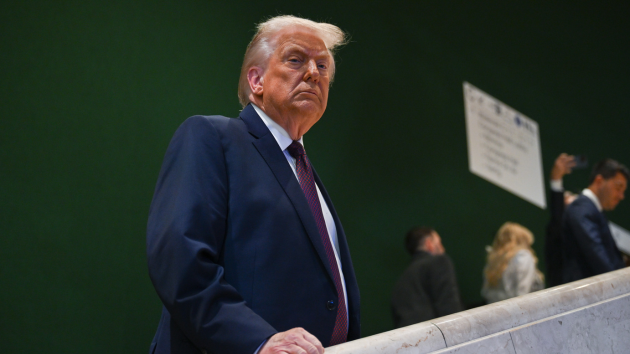
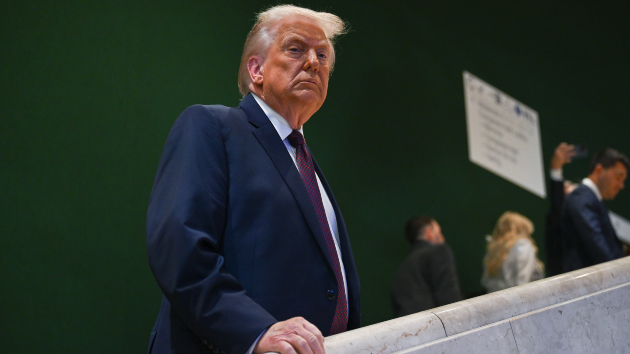
US President Donald Trump attends the signing ceremony of the Peace Charter for Gaza as part of the 56th World Economic Forum in Davos, Switzerland on January 22, 2026. (Photo by Harun Ozalp/Anadolu via Getty Images)
(WASHINGTON) — The families of two Trinidadian nationals killed in an October airstrike are suing the U.S. government for wrongful death and extrajudicial killings.
In a lawsuit filed on Tuesday, attorneys representing the families said the Oct. 14 attack was “part of an unprecedented and manifestly unlawful U.S. military campaign of lethal strikes against small boats in the Caribbean and eastern Pacific Ocean.”
The two men — Chad Joseph and Rishi Samaroo — had been fishing off the Venezuelan coast and were returning to their homes in Trinidad and Tobago when the strike occurred, according to the lawsuit.
“These premeditated and intentional killings lack any plausible legal justification,” attorneys for the families wrote. “Thus, they were simply murders, ordered by individuals at the highest levels of government and obeyed by military officers in the chain of command.”
President Donald Trump said in October that “six male narcoterrorists aboard the vessel were killed in the strike” and the vessel was affiliated with an unnamed “designated terrorist organization conducting narcotrafficking.”
The lawsuit argues that because the strike did not occur within an active armed conflict, the laws of war do not apply.
“Instead, the rules under international human rights law and federal law regulate the government’s strikes,” the lawsuit states “And those rules protect the right to life and prohibit extrajudicial killings.”
The lawsuit alleges violations of the Death on the High Seas Act and the Alien Tort Statute, which allows foreign citizens to sue in U.S. courts over human rights violations committed abroad.
One of the victims, according to the lawsuit, 26-year-old Joseph, lived in Trinidad with his wife and three children. He frequently traveled between Trinidad and Venezuela for fishing and farm work.
According to the filing, he was fearful of the trip due to reports of U.S. military strikes in the region.
“But he was determined to return to his wife and their children as soon as possible,” the lawsuit states.
On Oct. 14, Joseph’s wife heard reports of a boat strike just off the Venezuelan coast. Because no one has heard from him since Oct. 12, the family concluded that Joseph “was a passenger on board the boat that the United States destroyed on or about October 14.”
The second victim, 41-year-old Samaroo, was a Trinidadian construction worker and fisherman, the lawsuit says. He had been working on the same farm as Joseph and planned to return home to care for his mother who was sick, according to the complaint.
“Mr. Joseph and Mr. Samaroo were two of at least 125 victims of the United States’ 36 lethal military strikes against people on boats since September 2,” the attorneys said.
The families are seeking compensatory and punitive damages.
The Pentagon told ABC News on Tuesday, “As a matter of policy, the Department does not comment on pending litigation.”
As of Jan. 27, 2026, there have been 36 total kinetic strikes with 37 go-fast boats destroyed, including 1 semi-submersible and 1 low-profile vessel; with 116 narco-terrorist deaths and 10 active searches suspended, according to U.S. Southern Command.
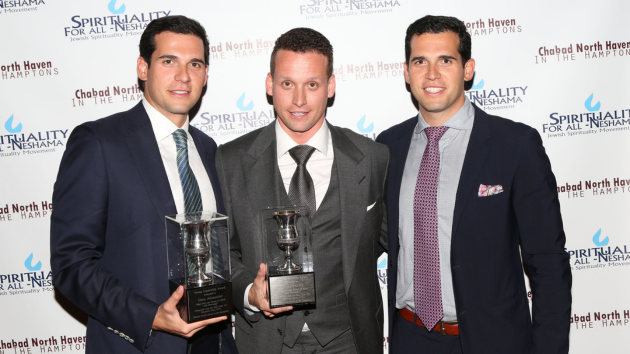
Oren Alexander, Tal Alexander and Alon Alexander attend Chanukah With The Stars Gala on December 10, 2014 at Harmonie Club in New York City. (Photo by J Grassi/Patrick McMullan via Getty Images)
(NEW YORK) — Three sons of wealth and privilege “were partners in crime” who used their money and status to lure women and girls with promises of trips, exclusive parties and celebrity encounters so they could sexually assault them, a federal prosecutor said Tuesday during opening statements in the trial of Alon, Oren and Tal Alexander.
“These three brothers masqueraded as party boys when really they were predators,” the prosecutor, Madison Smeyser, said. “The brothers used whatever means necessary — sometimes drugs, sometimes alcohol, sometimes brute force — to carry out their rapes.”
The former real estate titans, Oren and Tal Alexander, along with their brother, Alon Alexander, have denied sexually assaulting anyone or running a sex trafficking conspiracy, as prosecutors have charged. They sat at the defense tables with their lawyers in suits and open-collar shirts.
If convicted, Oren and Alon Alexander, 38-year-old twins, and Tal Alexander, 39, could face life in prison.
“They came from a wealthy family, and they lived a life of luxury. But their luxurious lifestyle had a dark side,” Smeyser said.
A defense attorney called the brothers successful, ambitious, arrogant young men “who liked and pursued women” so they could have as much sex as possible.
“That’s not trafficking. That’s dating. That’s hooking up,” the lawyer, Teny Geragos, said during opening statements. She said the accusers, many of whom are expected to testify under pseudonyms, are motivated by shame, regret or money.
Prosecutors told the jury of six men and six women they would see a recording of Oren Alexander’s alleged rape of a then-17-year-old who will testify under the name Amelia. She was “far from sober, almost incoherent” at the time and has no memory of what happened, Smeyser said.
At an exclusive party in Manhattan, Alon Alexander allegedly raped a woman who regained consciousness to find him standing over her naked. When she told him she did not want to have sex, prosecutors said he laughed and said she already had, before raping her again.
Prosecutors said Tal Alexander invited a woman to the Hamptons, chased her into the shower, grabbed her by the neck and sexually assaulted her from behind as the woman cried, “no, no, no.”
Jurors were told they would read the brothers’ exuberant text messages after some of the encounters. “They celebrated raping women and girls,” Smeyser said.
Other messages, she said, suggested “the defendants knew they had to stay out of a courtroom like this one,” including one text that said the only thing that could bring down the brothers is “some ho complaining.”
The defense conceded the brothers were womanizers who jurors might find immoral but insisted they were not criminals.
“It was crude, it was arrogant, it will make you cringe,” defense attorney Deanna Paul said. “But we’re not here for the Asshole Awards.”
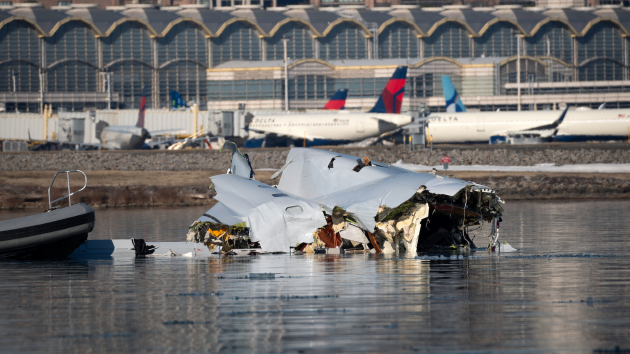
In this U.S. Coast Guard handout, the Coast Guard investigates aircraft wreckage on the Potomac River on January 30, 2025 in Washington, DC. (Petty Officer 1st Class Brandon Giles/ U.S. Coast Guard via Getty Images)
(WASHINGTON) — The National Transportation Safety Board on Tuesday presented a cockpit visual simulation demonstrating what contributed to the deadly mid-air collision between an Army helicopter and an American Airlines jet near Washington, D.C., last year.
The simulation indicates it was very difficult for both aircraft to see each other before the January 2025 crash that occurred as the jet was landing at Ronald Reagan National Airport, killing 67 people, according to the NTSB.
The first video shows the last three minutes before the collision from the viewpoint of the right seat of the helicopter.
Around 8:46:15, a magenta circle with a label “Flight 5342” appears just above the horizon on the right side of the upper portion of the screen. The label “Flight 5342” fades out about 8:46:35. The magenta circle tracks the lights of Flight 5342 and remains visible until the airplane becomes visually recognizable about a minute later.
After a Traffic Alert and Collision Avoidance System warning indicated in the transcript, the local controller on the ATC recording is heard asking the pilots if they have the CRJ (Flight 5342) in sight and the pilots confirm they do. It remains unclear what they thought they had in sight. There was only one controller working both the helicopter and plane traffic, the NTSB said.
The simulation screen goes black at the moment of the collision.
The second animation shows the viewpoint of pilots from Flight 5342 as the plane approaches the runway to land. According to the cockpit voice recorder transcript shared by the NTSB, the last words about one second before the crash from both the first officer and the captain were “oh” and “ohhh ohhhh” as the animation shows the helicopter colliding with the plane.
About 90% of wreckage from both aircraft was recovered by the NTSB.
A third animationshows what the local controller from the DCA tower saw at the time of the crash as they were handling the air traffic and issuing instructions. Based on the recordings, the NTSB said Flight 5342 was not warned by the controller of the nearby helicopter at any point. A conflict alert came 26 seconds before the collision between the two aircraft as they were 1.6 miles apart, according to the NTSB.
According to the NTSB, the local tower said they were concerned about the close proximity of the helicopter and Flight 5342.
“This coupled with the conflict alert that was active at the time, the controller should have issued a safety alert, which would have included updated traffic advisory information and an alternate course of action if feasible, neither were done. In this case, had a safety alert been issued, it would have increased the situation awareness of both crews and alerted them of their closing proximity to one another. Additionally, a timely safety alert may have allowed action to be taken by one or both crews to avoid avert the collision,” NTSB investigator Brian Soper said at the hearing.
NTSB Chair Jennifer Homendy also said that a $400 GPS device known as ADSB-In could have prevented the DCA crash. The NTSB has recommended ADSB-In be required in aircraft 17 times since 2006, but the FAA has repeatedly disregarded the recommendation, she said.
The system would have alerted the American Airlines crew 59 seconds before the crash that they were going to collide, and the helicopter crew would have been alerted 48 seconds before the crash, the NTSB chair said. The Army has since installed the system.
DCA controller overwhelmed
The controller working the night of the crash was handling both helicopter and plane traffic and had been doing so for four hours, NTSB investigators said.
A human behavior investigator said the controller’s mental awareness had diminished over time. He should have given a definitive warning of the impending collision and he should have given clear avoidance instructions, the investigator said.
NTSB investigators said the last communication between the helicopter and the controller where they asked the pilot if they have the AA5342 in sight was “not a safety alert by definition, but it was an attempt to de-conflict.”
Ninety seconds before the collision, the local controller working in the tower became overwhelmed as he was handling aircraft both on ground and in the air. On the night of the collision, the controller was working two controller positions. This is a routine practice which is usually done later at night when the aircraft volume goes down.
The NTSB said, “keeping the local control and helicopter control positions combined on the night of the accident, increased the local controller’s workload and reduced his situation awareness.”
Investigators said the controller could have asked for the positions to be decombined because of being overwhelmed, but it would have taken at least a couple of minutes before anyone else could take over. Additionally, the assistant local controller and the supervisor overseeing operations at the time could have served as an extra set of eyes to help the local controller.
However, Homendy revealed that at the time, the assistant controller was writing down information on helicopters and the supervisor did not exhibit situational awareness as they learned during the interview that the supervisor only recalled one helicopter in the area at the time when there were five.
Following the crash, the NTSB issued recommendations for better training to be provided for controllers so they can recognize safety issues and threats in the environment.
NTSB chair’s concerns
Ahead of Tuesday’s hearing, Chair Homendy said she fears that some of the agency’s safety recommendations, which will be issued at the conclusion of the hearing, may once again go unimplemented.
“Of course I’m concerned. We have 300 aviation recommendations that still haven’t been implemented. Those recommendations were issued because somebody died or was injured, and they have not been implemented yet. So here we are again,” Homendy told ABC News.
“So yes, at the end of this, I am concerned that we’re going to issue recommendations and that they won’t be implemented,” Homendy said. “I can tell you, and anyone who knows me knows I vigorously advocate for the implementation of our recommendations. I don’t care when it is. Could be 50 years later, as I did with positive train control, and I will not hold back on these.”
At Tuesday’s hearing, NTSB investigators will present their investigative findings to board members and the public. NTSB board members, including Homendy, will then question investigators and the parties to the investigation.
At the end of the hearing, the board members will vote on the probable cause of the crash and the agency’s safety recommendations. The NTSB can only make recommendations and does not have the authority to enforce them, therefore they are not always adopted.
Though a formal final report will be released two weeks after the hearing, this hearing will mark the end of what Homendy described as “one of the most complex investigations” conducted by the agency, which they had aimed to conclude by the first anniversary of the mid-air collision.
Homendy told ABC News the investigation “was not easy and it was definitely not straightforward.”
“We will start in one direction and then take it in a different direction, depending on what we’re finding, and then we’ll exclude things that didn’t have anything to do with the investigation. But we have to do our due diligence to make sure that we’re tracking all of that down, all that evidence to support that it wasn’t a factor, while also looking at the issues that were,” Homendy said.
Homendy said the helicopter altimeter discrepancy is what surprised her the most in this investigation.
“The altimeters I did not see coming, that we would have some problems with how the altimeters were reading,” Homendy said.
During last year’s three-day investigative hearing, investigators said they found discrepancies in the altitude data shown on radio and barometric altimeters on Army helicopters after conducting test flights following January’s accident.
It is likely that the helicopter crew did not know their true altitude due to notoriously faulty altimeters inside this series of Black Hawks, according to the investigation. At their closest points, helicopters and planes flew within 75 feet of each other near DCA, an astonishingly close number. During the hearings, the NTSB was told Army Black Hawks can often have wrong readings and a margin of error of +-200 feet.
Another key focus of Tuesday’s hearing is the close proximity of the helicopter route to the runways at Reagan National Airport. According to the NTSB, which cited FAA surveillance data, there were over 15,000 close-proximity events between helicopters and commercial aircraft at DCA between October 2021 and December 2024.
Homendy said warnings about the close proximity were raised by people, but they were ignored.
“Years ago, that hot spot was identified and [people] repeatedly tried to say that the helicopter route needed to be moved, and nobody listened. It was like the ultimate in government bureaucracy,” Homendy said.
“They were completely ignored. Told it couldn’t be done, not responded to, said it would probably be too political. Those are quotes from our interviews, but they went nowhere.”
At last year’s hearing, FAA officials cited “bureaucratic process” as a deterrent to addressing these issues.
Other topics expected to be discussed include the approval of helicopter routes near DCA, the experience level of the air traffic controllers working in the tower at the time of the crash, the visibility study, and the testing of the barometric altimeters.
When asked what stays with her from this investigation, Homendy pointed to a personal item recovered with the wreckage.
“In the hangar, we had the Black Hawk laid out. We had the wreckage laid out for 5342 and on the side next to 5342 there were some personal effects, and a lot of people mentioned different things, but every time I passed, there was a brown teddy bear, just eight inches maybe, and it was muddy and dried mud, dried water, and I just kept looking at the teddy bear, and that’s the thing that sticks with me,” Homendy said.
(NEW YORK) — A person was shot in an incident involving U.S. Border Patrol in Arivaca, Arizona, a Pima County Sheriff’s Department spokesperson told ABC News.
The shooting occurred early Tuesday morning, the Santa Rita Fire District said. Emergency responders provided first aid at the scene and the person was taken to a hospital in unknown condition, officials said.
The FBI described the incident as “an alleged assault on a federal officer” and said “the subject was taken into custody.”
Pima County Sheriff spokesperson Angelica Carrillo said, “All we have to release at this, at this point, is that a U.S. Border Patrol agent was involved in a shooting here in Arivaca, and that the FBI Phoenix office has called the sheriff’s department to assist in this investigation.”
The sheriff’s office said it’s leading the use-of-force investigation involving the agent, at the request of the FBI.
“We ask the community to remain patient and understanding as this investigation moves forward,” the sheriff’s department said.
This is a developing story. Please check back for updates.
The measles virus. (BSIP/Universal Images Group via Getty Images)
(SOUTH CAROLINA) — The record-breaking measles outbreak in South Carolina continues to grow with 89 new cases reported since the last update on Friday.
This brings the total number of cases in the outbreak to 789.
At least 557 people are currently in quarantine across the state, including students from various schools.
This is South Carolina’s largest measles outbreak in over 30 years, a spokesperson for the state’s health department told ABC News.
There have been at least 416 confirmed measles cases across the United States so far this year, the latest CDC data shows.
CDC data shows that the majority of cases occur among people under 19. About 2% of all measles cases in the U.S. have been hospitalized.
Dr. Kristin Moffitt, an infectious diseases physician at Boston Children’s Hospital, previously told ABC News she is “very alarmed” by the increase in measles cases in the U.S. over the last year or two.
“I’m very worried about our current year already,” she told ABC News. “Exceeding 2,000 cases in the last year is indeed alarming [and] … I am worried that even our current year is off to a very concerning start.”
Moffitt said that declining vaccination rates across the U.S. are behind the recent increase in measles cases.
“This is entirely due to declining vaccination rates,” she said. “It’s very clear based on where these outbreaks are occurring.”
The CDC currently recommends that people receive two doses of the MMR vaccine, the first at ages 12 to 15 months and the second between 4 and 6 years old. One dose is 93% effective, and two doses are 97% effective against measles, the CDC says.
However, federal data shows vaccination rates have been lagging in recent years. During the 2024-2025 school year, 92.5% of kindergartners received the MMR vaccine, according to data. This is lower than the 92.7% seen in the previous school year and the 95.2% seen in the 2019-2020 school year, before the COVID-19 pandemic.
The national trends mirror those see in counties across the U.S. A recent map from ABC News — a collaboration with researchers from Boston Children’s Hospital, Harvard School of Medicine and Icahn School of Medicine at Mt. Sinai that allows people to type in their ZIP code and see the measles risk in their area — found a wide range of risks in areas across the U.S.
Some counties and ZIP codes fell into the “lowest risk,” with 85% or more of children under 5 years old receiving one or more measles vaccine dose to “very high risk,” with fewer than 60% of children under age 5 receiving one or more measles vaccine doses.
ABC News’ Mary Kekatos and Dr. Richard Zhang contributed to this report.
Secretary of Homeland Security Kristi Noem speaks during a news conference in the National Response Coordination Center at the Federal Emergency Management Agency headquarters, January 24, 2026 in Washington. (Al Drago/Getty Images)
(WASHINGTON) — Homeland Security Secretary Kristi Noem met with President Donald Trump in the Oval Office on Monday, two sources told ABC News, as the administration faces fallout over federal agent operations in Minnesota and the fatal shooting of Alex Pretti.
Noem’s top adviser, Corey Lewandowski, White House chief of staff Susie Wiles, White House press secretary Karoline Leavitt and White House communications director Steven Cheung were also present, according to sources.
White House deputy chief of staff Stephen Miller, who had called Pretti a “domestic terrorist” without evidence, was not at the meeting, sources said.
Sources said the meeting lasted about two hours and came at the request of Noem. The White House declined to comment.
The New York Times was the first to report on the meeting.
Much of the scrutiny inside the administration has been directed toward Noem over her initial response to the killing of Pretti, sources said. After Pretti was killed Saturday, Noem — like Miller — was quick to call him a “domestic terrorist” without evidence.
Asked by ABC News Chief White House Correspondent Mary Bruce if the president agreed with that characterization, White House press secretary Karoline Leavitt distanced the president from those comments.
“Look, as I’ve said, I have not heard the president characterize Mr. Pretti in that way,” Leavitt said during the White House press briefing on Monday. “However, I have heard the president say he wants to let the facts in the investigation lead itself.”
While sources said Noem is expected to keep her job as of now, her focus is expected to shift to other priorities.
Trump, as he left the White House on Tuesday afternoon to travel to Iowa for an economic speech, told reporters that Noem would not be stepping down.
“I think she’s done a very good job. The border is totally secure,” Trump said.
But sources described a rift between Noem and Trump’s border czar Tom Homan — a frosty relationship that existed prior to the shooting in Minneapolis.
Assistant DHS Secretary Tricia McLaughlin said Noem is “very happy” Homan will be overseeing the actions on Minneapolis.
“Secretary Noem will continue to oversee the Department of Homeland Security, and she is very happy that Tom Homan, who is a great asset to the president, has a great depth of experience and insight, will be overseeing Minneapolis,” she said during an interview on Fox News Tuesday morning.
Homan was also at the White House on Monday before heading to Minnesota at the direction of Trump — bypassing the normal chain of command where Noem and Customs and Border Protection commander-at-large Greg Bovino had been overseeing ICE operations. Bovino is now returning to El Centro, California, to resume his duties as chief of that sector, multiple sources told ABC News.
Trump said on Monday that Homan would report directly to him.
Minnesota’s Democratic Gov. Tim Walz met with Homan on Tuesday morning. The two spoke about a number of items, including a “significant reduction in the number of federal forces in Minnesota, and an end to the campaign of retribution against Minnesota,” according to the governor’s office.
Trump said on Tuesday that Homan would also be meeting with Minneapolis Mayor Jacob Frey, also a Democrat.
“I hear that’s all going very well,” Trump said Tuesday.
The decision to send Homan into the state came as a relief to several Republicans on Capitol Hill who had personally reached out to the president and other White House officials directly about the response. Criticism has grown from congressional Republicans over the Pretti shooting and Minnesota ICE operation, with more than two dozen GOP lawmakers calling for a thorough investigation.
A person familiar with the planning said Homan will likely focus on more targeted immigration enforcement efforts.
Noem and her top adviser, Lewandowski, have pushed for a harder line immigration approach including street sweeps. Bovino rankled some who felt his direct reporting to the Homeland Security secretary was problematic, and bypassed Rodney Scott, the chief of U.S. Customs and Border Protection, sources said.
“The President’s entire immigration enforcement team — including Secretary Noem and Border Czar Homan — are on the same page. They are working together seamlessly to implement the President’s agenda, protect the American people, and deport criminal illegal aliens,” White House spokeswoman Abigail Jackson said in a statement.
ABC News’ Isabella Murray contributed to this report.
President Donald Trump attends the signing ceremony of the Peace Charter for Gaza as part of the 56th World Economic Forum in Davos, Switzerland on January 22, 2026. (Harun Ozalp/Anadolu via Getty Images)
(NEW YORK) — Mortgage rates whipsawed in recent weeks as markets reacted to a flurry of policies from the Trump administration.
It began with a major milestone. Mortgage rates earlier this month fell below 6% for the first time in nearly three years, according to a data released by Mortgage News Daily.
“The progress stems directly from President Trump’s aggressive agenda to restore the American Dream of homeownership,” the White House touted in a statement on Jan. 12. The Trump administration cited its announcement days earlier, calling on government-sponsored mortgage lenders to purchase $200 billion in mortgage-backed securities.
Within little more than a week, however, mortgage rates had climbed to 6.21%, responding to rattled bond markets and erasing the previous reduction. The uptick came as Trump issued a tariff threat to European allies over his demands to acquire Greenland at the time. When Trump backed off of that levy soon afterward, mortgage rates fell but remained above previous lows, Mortgage News Daily data showed.
The volatility in mortgage rates underscored the risks posed by recent trade tensions, which threaten to push up Treasury yields and, in turn, drive mortgage rates higher, some analysts told ABC News.
Still, they added, mortgage rates will likely face downward pressure this year from anticipated interest-rate cuts at the Federal Reserve, and Trump may take further steps of his own to reduce borrowing costs.
“President Trump is certainly not sitting back and doing nothing,” Susan Wachter, a professor of real estate at University of Pennsylvania’s Wharton School of Business, told ABC News.
“Some of it is big things on the international front, which are potentially destabilizing. And there’s an attempt to do anything and everything for the affordability of housing,” Wachter added.
To be sure, average 30-year mortgage rates have dropped from 7.08% to 6.17% since Trump took office, according to Mortgage News Daily. That drop-off owes in part to a post-pandemic cooldown of inflation, which allowed the Federal Reserve to begin lowering interst rates.
In a social media post earlier this month, Trump said lower mortgage rates would “make the cost of owning a home more affordable. It is one of my many steps in restoring Affordability.”
Mortgage rates closely track the yield on a 10-year Treasury bond. Since bonds pay a given investor a fixed amount each year, the specter of inflation risks higher prices that would eat away at those annual payouts. In turn, bonds often become less attractive in response to economic turmoil. When demand falls, bond yields rise.
U.S. Treasury yields jumped last week in the aftermath of Trump’s tariff threat over Greenland, which appeared to presage a possible trade war with several European allies.
The 10-year Treasury yield climbed as high as 4.3% in the aftermath of Trump’s threat, before dropping steadily down to 4.21% as Trump withdrew the levy and backed negotiations over Greenland, MarketWatch data showed.
As tensions rose in response to Trump’s tariff threat, some major U.S. bondholders in Europe appeared poised to sell. A Danish pension fund, AkademikerPension, said last Tuesday it would unload U.S. treasuries by the end of the month. It remains unclear whether other European bondholders will follow suit, especially after Trump’s reversal on tariffs.
If a substantial share of U.S. bondholders were to sell off their assets, it would slash demand and push up bond yields, some analysts said.
Since 30-year mortgage rates and other key interest rates track the yield on 10-year treasury bonds, a selloff of treasuries could bring about higher monthly payments for home loans, Raymond Robertson, a professor of trade, economics and public policy at Texas A&M University, told ABC News.
“It’s a pretty big concern,” Robertson said.
Marc Norman, associate dean at the New York University School of Professional Studies and Schack Institute of Real Estate, said bondholders are evaluating the reliability of U.S. government debt.
“Basically, it’s a bet on the U.S. government,” Norman told ABC News. “If that becomes unstable and people lose trust, it could have a big effect.”
Despite the uptick in mortgage rates in recent weeks, borrowing costs for homebuyers remain markedly lower than where they stood a year ago.
Analysts attributed the drop to a series of interest rate cuts at the Fed, as well as Trump’s order calling on Fannie Mae and Freddie Mac to buy hundreds of billions of dollars in mortgage-backed securities. After the order, Bill Pulte, the head of the Federal Housing Finance Agency, instructed Fannie Mae and Freddie Mac to up their bond investments in an effort to put downward pressure on mortgage rates, the Associated Press reported last week.
By ordering a federal agency to buy up some mortgage-backed securities, the Trump administration helped increased demand for the underlying loans, which pushed bond yields lower, Wachter said.
“This mortgage bond proposal is not a big move but it makes a difference,” Wachter added. Wachter said she expects mortgage rates to fall further over the course of this year, though she acknowledged ongoing risk: “Investors don’t like uncertainty.”
Still, Wachter said, “If you’re looking to buy a home, today is as good a day as any.”
If homebuyers move forward with a purchase but later find that mortgage rates have continued to fall, they can opt to refinance their homes. “The old saying is, ‘You marry the home and you date the mortgage,'” Wachter said.
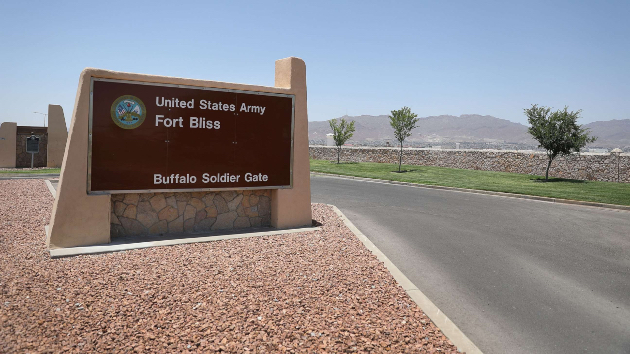
In this June 25, 2018, file photo, an entrance to Fort Bliss is shown, in Fort Bliss, Texas. (Joe Raedle/Getty Images, FILE)
(EL PASO, Texas) — Several detainees at a Texas immigration detention facility claim in sworn court declarations that they heard a Cuban immigrant, whose death was later ruled a homicide, pleading for medication shortly before hearing what sounded like guards slamming him to the ground.
Geraldo Lunas Campos died in ICE custody on Jan. 3 at Camp East Montana, according to the Department of Homeland Security.
He is the third detainee to die at the detention center since it opened last year as a tent facility on the grounds of the Fort Bliss Army base outside El Paso.
In an autopsy report released last week, the El Paso County deputy medical examiner determined that Campos died from “asphyxia due to neck and torso compression.”
Attorneys for the Campos family filed an emergency petition last week to prevent alleged witnesses from being deported. The petition, which was granted by a federal judge, cites reports alleging that guards at the facility choked and asphyxiated Campos.
Some of those witnesses submitted sworn declarations this week alleging that they heard Campos ask guards for his asthma medication on the day he died.
“The guard then said, ‘Shut up or we’re going to make you faint,'” wrote Henry Bolano, a detainee, in English and Spanish. “The last thing I heard was Geraldo speak in a voice that sounded like he couldn’t breathe. He said, ‘Let go of me. You’re asphyxiating me.'”
“Then there was silence,” Bolano wrote.
Santo Jesus Flores, another detainee, said he heard a “struggle ensue” that sounded like “the slamming of a person’s body against the floor or the wall” after Campos asked for his medication.
“I heard Geraldo scream that he could not breathe,” Flores said. “I could hear them trying to revive him, but they could not keep him alive.”
A DHS spokesperson did not respond to a request for comment from ABC News regarding the detainees’ sworn declarations.
According to DHS, Campos was detained in July during an immigration enforcement action in New York. He had prior convictions including sexual contact with a minor and criminal possession of a weapon, according to the DHS and court records.
In a statement released following his death, a DHS spokesperson said Campos was pronounced dead after “experiencing medical distress.”
“Lunas became disruptive while in line for medication and refused to return to his assigned dorm,” the statement said. “He was subsequently placed in segregation. While in segregation, staff observed him in distress and contacted on-site medical personnel for assistance.”
In this U.S. Coast Guard handout, the Coast Guard investigates aircraft wreckage on the Potomac River on January 30, 2025 in Washington, DC. (Petty Officer 1st Class Brandon Giles/ U.S. Coast Guard via Getty Images)
(WASHINGTON) — The National Transportation Safety Board on Tuesday presented a cockpit visual simulation demonstrating what contributed to the deadly mid-air collision between an Army helicopter and an American Airlines jet near Washington, D.C., last year.
The simulation indicates it was very difficult for both aircraft to see each other before the January 2025 crash that killed 67 people as the jet was landing at Ronald Reagan National Airport, according to the NTSB.
The first video shows the last three minutes before the collision from the viewpoint of the right seat of the helicopter.
Around 8:46:15, a magenta circle with a label “Flight 5342” appears just above the horizon on the right side of the upper portion of the screen. The label “Flight 5342” fades out about 8:46:35. The magenta circle tracks the lights of Flight 5342 and remains visible until the airplane becomes visually recognizable about a minute later.
After a Traffic Alert and Collision Avoidance System warning indicated in the transcript, the local controller on the ATC recording is heard asking the pilots if they have the CRJ (Flight 5342) in sight and the pilots confirm they do. It remains unclear what they thought they had in sight. There was only one controller working both the helicopter and plane traffic, the NTSB said.
The simulation screen goes black at the moment of the collision.
The second animation shows the viewpoint of pilots from Flight 5342 as the plane approaches the runway to land. According to the cockpit voice recorder transcript shared by the NTSB, the last words about one second before the crash from both the first officer and the captain were “oh” and “ohhh ohhhh” as the animation shows the helicopter colliding with the plane.
About 90% of wreckage from both aircraft was recovered by the NTSB.
A third animationshows what the local controller from the DCA tower saw at the time of the crash as they were handling the air traffic and issuing instructions. Based on the recordings, the NTSB said Flight 5342 was not warned by the controller of the nearby helicopter at any point. A conflict alert came 26 seconds before the collision between the two aircraft as they were 1.6 miles apart, according to the NTSB.
According to the NTSB, the local tower said they were concerned about the close proximity of the helicopter and Flight 5342.
“This coupled with the conflict alert that was active at the time, the controller should have issued a safety alert, which would have included updated traffic advisory information and an alternate course of action if feasible, neither were done. In this case, had a safety alert been issued, it would have increased the situation awareness of both crews and alerted them of their closing proximity to one another. Additionally, a timely safety alert may have allowed action to be taken by one or both crews to avoid avert the collision,” NTSB investigator Brian Soper said at the hearing.
Ahead of Tuesday’s hearing, Chair Jennifer Homendy said she fears that some of the agency’s safety recommendations, which will be issued at the conclusion of the hearing, may once again go unimplemented.
“Of course I’m concerned. We have 300 aviation recommendations that still haven’t been implemented. Those recommendations were issued because somebody died or was injured, and they have not been implemented yet. So here we are again,” Homendy told ABC News.
“So yes, at the end of this, I am concerned that we’re going to issue recommendations and that they won’t be implemented,” Homendy said. “I can tell you, and anyone who knows me knows I vigorously advocate for the implementation of our recommendations. I don’t care when it is. Could be 50 years later, as I did with positive train control, and I will not hold back on these.”
At Tuesday’s hearing, NTSB investigators will present their investigative findings to board members and the public. NTSB board members, including Homendy, will then question investigators and the parties to the investigation.
At the end of the hearing, the board members will vote on the probable cause of the crash and the agency’s safety recommendations. The NTSB can only make recommendations and does not have the authority to enforce them, therefore they are not always adopted.
Though a formal final report will be released two weeks after the hearing, this hearing will mark the end of what Homendy described as “one of the most complex investigations” conducted by the agency, which they had aimed to conclude by the first anniversary of the mid-air collision.
Homendy told ABC News the investigation “was not easy and it was definitely not straightforward.”
“We will start in one direction and then take it in a different direction, depending on what we’re finding, and then we’ll exclude things that didn’t have anything to do with the investigation. But we have to do our due diligence to make sure that we’re tracking all of that down, all that evidence to support that it wasn’t a factor, while also looking at the issues that were,” Homendy said.
Homendy said the helicopter altimeter discrepancy is what surprised her the most in this investigation.
“The altimeters I did not see coming, that we would have some problems with how the altimeters were reading,” Homendy said.
During last year’s three-day investigative hearing, investigators said they found discrepancies in the altitude data shown on radio and barometric altimeters on Army helicopters after conducting test flights following January’s accident.
It is likely that the helicopter crew did not know their true altitude due to notoriously faulty altimeters inside this series of Black Hawks, according to the investigation. At their closest points, helicopters and planes flew within 75 feet of each other near DCA, an astonishingly close number. During the hearings, the NTSB was told Army Black Hawks can often have wrong readings and a margin of error of +-200 feet.
Another key focus of Tuesday’s hearing is the close proximity of the helicopter route to the runways at Reagan National Airport. According to the NTSB, which cited FAA surveillance data, there were over 15,000 close-proximity events between helicopters and commercial aircraft at DCA between October 2021 and December 2024.
Homendy said warnings about the close proximity were raised by people, but they were ignored.
“Years ago, that hot spot was identified and [people] repeatedly tried to say that the helicopter route needed to be moved, and nobody listened. It was like the ultimate in government bureaucracy,” Homendy said.
“They were completely ignored. Told it couldn’t be done, not responded to, said it would probably be too political. Those are quotes from our interviews, but they went nowhere.”
At last year’s hearing, FAA officials cited “bureaucratic process” as a deterrent to addressing these issues.
Other topics expected to be discussed include the approval of helicopter routes near DCA, the experience level of the air traffic controllers working in the tower at the time of the crash, the visibility study, and the testing of the barometric altimeters.
When asked what stays with her from this investigation, Homendy pointed to a personal item recovered with the wreckage.
“In the hangar, we had the Black Hawk laid out. We had the wreckage laid out for 5342 and on the side next to 5342 there were some personal effects, and a lot of people mentioned different things, but every time I passed, there was a brown teddy bear, just eight inches maybe, and it was muddy and dried mud, dried water, and I just kept looking at the teddy bear, and that’s the thing that sticks with me,” Homendy said.
The 2025 Doomsday Clock time is displayed after the time reveal held by The Bulletin of the Atomic Scientists at the United States Institute of Peace on January 28, 2025 in Washington, DC. Kayla Bartkowski/Getty Images
(WASHINGTON) — The “Doomsday Clock” — a symbolic clock that represents how close humanity is to global catastrophe — has moved closer to midnight.
The Bulletin of the Atomic Scientists announced Tuesday that the clock is now 85 seconds to midnight, with midnight representing the apocalypse.
The organization cited nuclear weapons, climate change and biological threats as the three biggest concerns to humanity and the motivation to move the clock closer to midnight.
The new time is four seconds closer to midnight than the 2025 Doomsday Clock.
The clock, set by the Bulletin of the Atomic Scientists, a nonprofit media organization comprised of world leaders and Nobel laureates.
It is “a design that warns the public about how close we are to destroying our world with dangerous technologies of our own making,” according to the group.
Intended to be a metaphor and graphic reminder of the perils humans must address, the Doomsday Clock was established in 1947 by Albert Einstein, Manhattan Project director J. Robert Oppenheimer and University of Chicago scientists who helped develop the first atomic weapons as part of the Manhattan Project.
When it was introduced — two years after the U.S. dropped atomic bombs on Hiroshima and Nagasaki in Japan — it was set to seven minutes before midnight.
Since then, the clock has been adjusted both forward and backward multiple times.
The farthest the clock has been adjusted from midnight was at 17 minutes in 1991, after then-President George H.W. Bush and Soviet President Mikhail Gorbachev announced reductions in the nuclear arsenals of their respective countries and the Strategic Arms Limitation Treaty was revived.
In 2025, the clock moved to 89 seconds before midnight. The 2024 and 2023 Doomsday Clock was set to 90 seconds before midnight.
ABC News’ Bill Hutchinson contributed to this report.