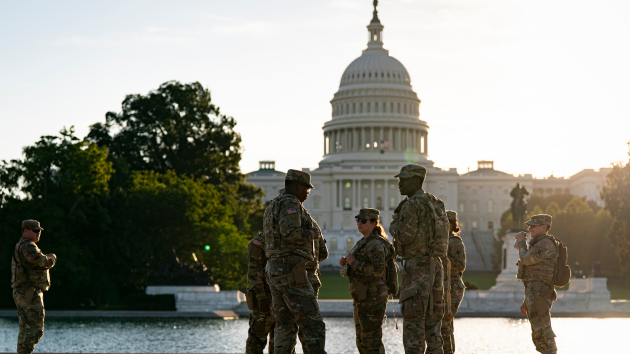
(NEW YORK) — The National Guard is planning to train as many as 500 troops per state to serve as part of a rapid-response force focused on civil disturbance missions, according to a U.S. official.
The move follows an executive order signed by President Donald Trump in August that called for each state to have National Guard quick reaction forces that could be deployed on short notice for “quelling civil disturbances and ensuring the public safety and order.”
Each state will be required to have a quick reaction force ready by the start of next year with most states required to have 500 personnel assigned to the force.
The development was first reported by The Guardian which obtained a copy of an Oct. 8 internal memo from the National Guard detailing each state’s allotment. The Guardian posted the memo on its website.
Each of the 50 states and four territories with National Guards already have dedicated quick-reaction forces that assist with natural disasters and civil disturbances.
It is unclear if the forces outlined in the memo are in addition to those — or a larger version specifically trained for civil disturbances.
It is also unclear how the force would be different from existing quick-reaction forces already available to each state.
Over the summer, Trump deployed thousands of National Guard troops to Los Angeles amid protests over the surge of immigration enforcement there and later to Washington, D.C., as part of what he called a crime-fighting initiative.
The Trump administration has also sought to deploy Guard troops in Chicago and Portland.
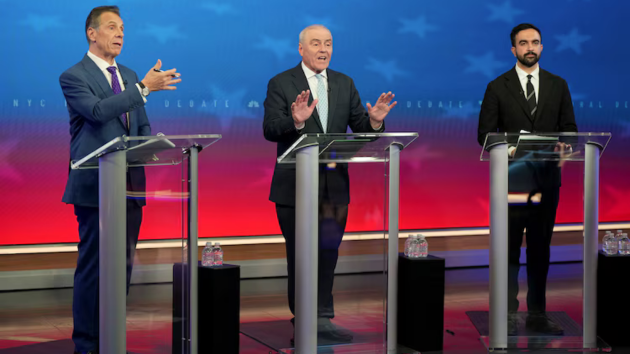
Mayoral candidates, Independent nominee former New York Gov. Andrew Cuomo, Republican nominee Curtis Sliwa and Democratic nominee Zohran Mamdani participate in a mayoral debate at Rockefeller Center on October 16, 2025 in New York City. Angelina Katsanis/Pool/Getty Images
(NEW YORK) — Almost 300,000 people have voted early in New York City’s 2025 election — which features a closely-watched mayor’s race that has grabbed headlines nationwide — as of the end of the fourth day of early voting on Tuesday, according to the New York City Board of Elections.
That marks a major increase from the 55,106 voters who voted by the end of the fourth day of early voting in 2021’s mayoral election. More than five times as many votes have been cast in the 2025 race as of the end of Tuesday.
Out of the city’s five boroughs, Brooklyn leads with the most early votes so far with 92,035 people having voted early there as of Tuesday night. By comparison, at the end of the fourth day of early voting in 2021, only 13,831 people had voted in Brooklyn.
Staten Island and the Bronx, meanwhile, are lagging behind. As of the end of the fourth day of early voting in 2025, 22,417 votes were cast on Staten Island and 24,919 were cast in the Bronx.
What this means for Democratic candidate State Assemblyman Zohran Mamdani, independent candidate former Gov. Andrew Cuomo, or Republican candidate Curtis Sliwa isn’t quite certain, according to Laura Tamman, a political science professor at Pace University.
“It’s hard to say definitively what is happening with only borough-wide numbers available,” she told ABC News on Monday.
“However, the proportionally low turnout in Staten Island and the Bronx is not great news for Andrew Cuomo. For him to have a chance, he would need those areas to be showing up in proportionally higher numbers than Brooklyn, Queens and Manhattan,” Tamman added. “Given that Andrew Cuomo has consistently trailed Mamdani by double digits, Andrew Cuomo continues to appear highly unlikely to win the election.”
That said, early voting in 2025 is not entirely an apples-to-apples comparison with 2021.
Early voting was first implemented in New York in 2019, so 2021 was the first mayoral race it was used for. Many voters may have also still been getting used to voting in person again after the COVID-19 pandemic.
Additionally, the 2021 matchup between Democratic candidate Eric Adams and Republican candidate Curtis Sliwa was a much more traditional matchup, without a high-profile independent in the race, and Adams was effectively on a glide path in the Democratic-dominated Big Apple, according to Tamman.
“Turnout in the 2021 contest between Eric Adams and Curtis Sliwa was lower because the race was viewed as less competitive than this year’s contest,” she said.
ABC News’ Averi Harper, Emily Guskin and Ivan Pereira contributed to this report.
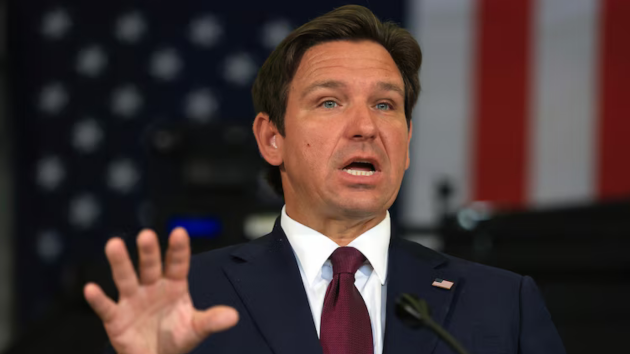
In this May 1, 2025, file photo, Florida Gov. Ron DeSantis speaks during a press conference held at the ICE-Enforcement and Removal Operation office in Miramar, Fla. Joe Raedle/Getty Images, FILE
(FLORIDA) — All 43 Democratic state legislators in Florida have asked Republican Gov. Ron DeSantis to declare a state of emergency as nearly three million Floridians are set to lose their access to SNAP food assistance benefits when funding for the program expires Saturday amid the federal government shutdown.
In a letter to the governor dated Oct. 28, the legislators ask him to “declare a State of Emergency on Food Insecurity to unlock state emergency resources” to make available resources that will allow various state agencies to acquire extra food and funding and to expand school meal programs until SNAP benefits are restored.
“Under Section 252.36 of the Florida Statutes, the Governor has clear authority to declare a State of Emergency when ‘the occurrence or threat thereof is imminent.’ Hunger is both,” the letter states.
“For families already struggling under record food and housing costs, the loss of this critical support would be catastrophic. Local food banks and pantries have already reported overwhelming demand and depleted supplies,” the letter states. “Food insecurity is also increasing for federal employees and our military families as the shutdown continues. This is not speculation; it’s reality.”
“We are days away from a full-blown hunger emergency that will leave families without food during the holiday season. The state cannot stand by,” the letter further states, adding “No child should go hungry because politicians in Washington can’t agree.”
An ABC News request for comment sent to the office of Gov. DeSantis did not immediately receive a response. However, when asked for a reaction to the letter during an unrelated press conference Wednesday at the University of South Florida, DeSantis responded, “Did those Democrats write a letter to Chuck Schumer asking him to stop filibustering the spending?” referring to the Democratic Senate minority leader.
Schumer and House Minority Leader Hakeem Jeffries have been at the center of an impasse with Republican leadership, Senate Majority Leader Tom Thune and House Speaker Mike Johnson, since the shutdown began on Oct. 1.
Nearly 42 million Americans were receiving SNAP benefits as of May 2025, the most recent data available, according to the USDA, which funds the state-administered program. Just over 2.9 million Floridians receive SNAP benefits, making Florida the fourth-highest SNAP recipient, according to the latest USDA data, after California, Texas and New York.
There have been thirteen failed votes in the Senate to reopen the government, with the most recent on Tuesday. Democrats have refused to vote on a short-term funding bill that doesn’t address the issue of extending subsidies for the Affordable Care Act, which expire Dec. 31, and Republicans have said they will not address the issue without Democrats first voting on a bill to re-open the government.
On Tuesday, 25 states and the District of Columbia sued the Trump administration over the impending loss of SNAP benefits amid the federal government shutdown, which is now the second-longest in U.S. history.
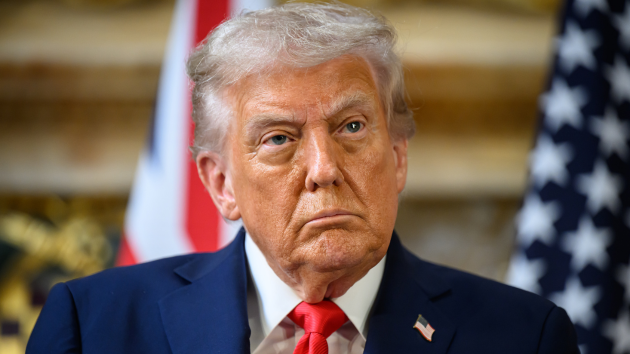
President Donald Trump talks at a press conference with UK Prime Minister Keir Starmer (not pictured) at Chequers at the conclusion of a state visit on September 18, 2025 in Aylesbury, England. This is the final day of President Trump’s second UK state visit, with the previous one taking place in 2019 during his first presidential term. (Photo by Leon Neal/Getty Images)
(WASHINGTON) — The White House fired all six members of the Commission of Fine Arts, which is slated to review President Donald Trump’s controversial construction projects, and will replace them with its own appointees, a White House official told ABC News.
The six members, who were appointed by former President Joe Biden, were removed Tuesday night by the White House, according to an administration official. The seventh seat on the commission had been vacated before Tuesday.
The official said the White House is “preparing to appoint a new slate of members to the commission that are more aligned with President Trump’s America First Policies.”
The Washington Post first reported the move Tuesday evening.
In replacing the members of the CFA, Trump has removed a potential obstacle to the massive $300 million ballroom he is building on the White House grounds after demolishing much of the East Wing, and the ceremonial arch he wants to build.
The arch — similar to the Arc de Triomphe in Paris — would be built in a roundabout in front of Arlington National Cemetery at one end of the Arlington Memorial Bridge across the Potomac River from the Lincoln Memorial.
The president said both construction projects would be paid for by private donations.
Trump has faced questions about the legality and review process for the projects but he has provided few answers.
The Commission of Fine Arts provides the federal government “expert advice” to promote the “the federal interest and preserve the dignity of the nation’s capital.” The group is composed of seven members appointed by the president.
The CFA has the authority to review construction projects measuring whether they match the “design and aesthetics” of Washington, D.C., but does not have approval power on projects.
The commission’s next meeting is scheduled for Nov. 20, but it is unclear if it will happen because of the ongoing government shutdown. According to the CFA website, the commission will begin accepting submissions for new projects once the government reopens.
In addition to reviewing designs for federal construction projects, the CFA also provides feedback on coins, medals and private building projects.
The president is not obligated to follow the CFA’s recommendation.
When President Harry Truman added a balcony to the White House, the renovation was completed over the CFA’s objections.
Federal projects in the D.C. area are typically overseen and approved by the National Capital Planning Commission, which is also led by Trump appointees.
Will Scharf, the White House staff secretary, currently chairs the NCPC and has expressed enthusiasm for the ballroom project.
“I know the president thinks very highly of this commission, and I’m excited for us to play a role in the ballroom project when the time is appropriate for us to do so,” he said in a September meeting in which he brushed aside criticism of the White House construction from the media.
The Senate’s Energy and Natural Resources Committee is scheduled to meet on Wednesday to examine part of the National Historic Preservation Act, which requires federal agencies to consider the effects of projects on historic properties.
The hearing was scheduled to focus on guidelines that don’t apply to the White House, but the ballroom project is expected to come up.
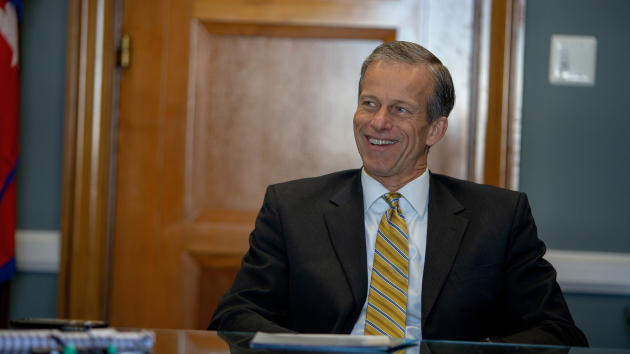
: Senator John Thune (R-SD) at the annual GRAMMYs on the Hill Advocacy Day on Capital Hill on April 19, 2018 in Washington, DC. Capitol Hill’s largest and most prestigious legislative event for music creators. (Photo by Tasos Katopodis/WireImage for The Recording Academ
(WASHINGTON) — With critical food assistance benefits set to run out Saturday, Senate Majority Leader John Thune on Wednesday said he is talking with President Donald Trump about the shutdown as lawmakers appear sympathetic, but still entrenched.
The Department of Agriculture said earlier this week that Supplemental Nutrition Assistance Program benefits, which serve roughly 42 million low-income Americans, will not be issued on Nov. 1 amid the ongoing government shutdown.
On Tuesday night as he traveled to South Korea, Trump signaled his administration may find a solution to help fund SNAP, saying “we’re going to get it done,” without offering any details on how.
At the same time, Trump blamed Democrats for putting Americans at risk of losing critical federal food assistance this weekend.
“The Democrats have caused the problem on food stamps … because all they have to do is sign, and, you know, they sign, I’ll meet with them,” Trump said.
Asked about Trump’s SNAP benefits comments, Thune told reporters on Wednesday that he spoke to Trump on Tuesday, but didn’t have insight into what his comments meant.
“I think that what he is saying consistently is ‘Open up the government and then we’ — and that’s the way to fund SNAP,” Thune said.
Republican Sen. Josh Hawley has a new bill that would fund SNAP during the shutdown. While several Republican senators support it, Thune has appeared lukewarm about bringing it to the floor.
Asked if Trump’s comments were an endorsement of bills like Hawley’s that would fund SNAP during the shutdown, Thune said he wasn’t sure if that’s what Trump was referring to.
“I think the message that he and the rest of the White House, including JD yesterday, have delivered pretty clearly is ‘Open up the government and that’s the way to fund SNAP and everything else.’ If he’s got something else he’s thinking about, I’ll certainly be open to listening to that,” Thune said.
On Wednesday morning, House Speaker Mike Johnson warned that the impacts of the government shutdown this week — including a possible food crisis as well as missed paychecks for federal workers and air traffic controllers — are “getting really tough for the American people,” placing the onus squarely on Democrats.
“The Democrats are coming near now to a cliff that they will not be able to turn back from,” Johnson said at a news conference in the Capitol. “You’ve got families and children that rely upon SNAP benefits that are going to go hungry here at the end of the week.”
As Democrats continue their fight over health care subsidies as the Nov. 1 open enrollment date approaches, Trump said Tuesday night that he would work with Democrats — as long as they vote to fund the government.
“I’d say, open up the government and we’ll work it out,” Trump told reporters.
Democrats are working to balance their health care demands and find solutions for SNAP, with Democratic Sen. Ben Ray Luján expected to attempt to get the Senate to unanimously pass legislation that would direct the USDA to release available contingency funds to ensure benefits under SNAP and the Women, Infants, and Children (WIC) program continue during the shutdown.
Luján’s bill is co-sponsored by every Democrat in the Senate, but does not have any Republican co-sponsors. Because it’s being put on the floor by Democrats, the only way the bill could pass is if every senator supports it — meaning it will likely fail as a result.
“Right now, we’re staring down the barrel at two crises at once. A health care crisis and a hunger crisis,” Senate Minority Leader Chuck Schumer said in a press conference Wednesday afternoon.
“We don’t want to pit health care and food. Thank you. We think you can have both,” he later shouted.
Schumer has continued to call on Republicans to “sit-down and negotiate with us” to reopen the government and address the health care crisis.
Thune told reporters Wednesday morning that discussions over a path out of the shutdown have “ticked up significantly” and that he’s “hopeful” that something fruitful will soon emerge.
“It’s ticked up significantly,” Thune said of talks among rank-and-file members. “And hopefully that’ll be a precursor of things to come. But yeah, there’s a lot of higher-level conversation.”
Thune stressed that conversations are going on among rank-and-file members and not among leadership.
“There are a lot of rank-and-file members that continue to, I think, want to pursue solutions and to be able to address the issues they care about, which is including health care, which as I just said right there we are willing to do, but it is obviously contingent upon them opening up the government.”
ABC News’ Megan Mistry, Isabella Murray and Lalee Ibssa contributed to this report.
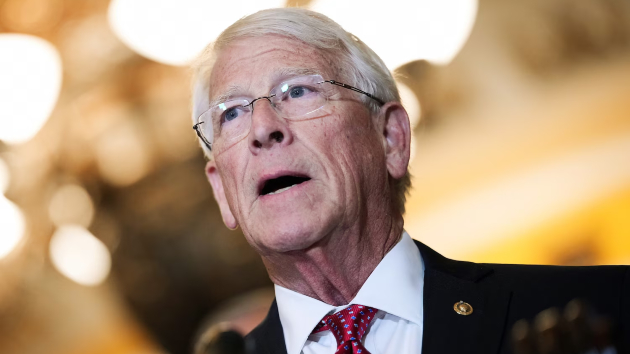
Senate Armed Service Committee Chairman Sen. Roger Wicker speaks to reporters following the Senate policy luncheon at the Capitol, Sept. 3, 2025. Kevin Dietsch/Getty Images
(WASHINGTON) — The Pentagon’s decision to pull out as many as 800 troops deployed in Eastern Europe has prompted a rare, forceful pushback from congressional Republicans who said Wednesday the move sends the “wrong signal” to Russia at a time the U.S. is trying to force Vladimir Putin to negotiate a ceasefire in Ukraine.
In a joint statement, the top Republicans on the House and Senate armed services committees said they would not support changes to the military’s posture in Europe without a “rigorous interagency process,” including coordination with Congress.
“Unfortunately, this appears to be exactly what is being attempted,” wrote Sen. Roger Wicker of Mississippi and Rep. Mike Rogers of Alabama, who as panel chairmen oversee defense policy issues related to the Pentagon’s nearly $1 trillion annual budget.
U.S. officials confirmed Wednesday that the Army’s 2nd Infantry Brigade Combat Team of the 101st Airborne Division would return to its base in Fort Campbell, Kentucky, without being replaced. Romania’s defense minister, Ionut Mosteanu, noted the change in a statement, saying that the U.S. plans to reduce force size in NATO’s so-called “Eastern Flank” would still leave about 1,000 troops in Romania.
“This is not an American withdrawal from Europe or a signal of lessened commitment to NATO and Article 5,” a statement from U.S. Army Europe and Africa said, referring to the provision in the alliance’s treaty calling for mutual defense.
“Rather this is a positive sign of increased European capability and responsibility,” wrote the command that oversees Army troops in Europe and Africa.
Wicker and Rogers directly pushed back on the notion that Europe was ready to fill the gaps when it comes to NATO security, noting that it needs time to build up its defenses and saying the move risks “inviting further Russian aggression.”
“This decision also sends the wrong signal to Russia at the very moment President Trump is applying pressure to force Vladimir Putin to come to the table to achieve a lasting peace in Ukraine,” the senators wrote. “The President has it exactly right: now is the time for America to demonstrate our resolve against Russian aggression. Unfortunately, the Pentagon’s decision appears uncoordinated and directly at odds with the President’s strategy.”
The Pentagon did not immediately respond to a request for comment and it was not clear whether Trump was aware of the plan.
A senior NATO military official, who spoke on condition of anonymity, said adjustments to force posture were not unusual in Europe and that the alliance believes the U.S. and Trump remain committed to its alliance.
“Even with this adjustment, the U.S. force posture in Europe remains larger than it has been for many years,” the NATO official said. “There are still many more U.S. forces on the continent than before 2022. NATO and U.S. authorities are in close contact about our overall posture — to ensure NATO retains our robust capacity to deter and defend.”
Pushback against the Trump administration by congressional Republicans has been extraordinarily rare during the president’s second term, with the president retaining a firm grip on the GOP.
Kat Abughazaleh, who has announced a campaign for Illinois’ 9th Congressional District, carries yard signs into her brand-new campaign office in the Rogers Park neighborhood on May 6, 2025. Eileen T. Meslar/Chicago Tribune/Tribune News Service via Getty Images
(CHICAGO) — A federal grand jury has indicted progressive Illinois House candidate Kat Abughazaleh for allegedly assaulting and conspiring to injure law enforcement during a protest last month at an Immigration and Customs Enforcement facility near Chicago.
Abughazaleh and five others were charged with felony offenses for their alleged involvement in a series of skirmishes with officers that later went viral on social media outside of the facility in Broadview, Illinois.
Abughazaleh, 26, posted a video on social media Wednesday responding to the indictment, in which she proclaimed her innocence.
“This political prosecution is an attack on all of our First Amendment rights,” Abughazaleh said. “I’m not backing down, and we’re going to win.”
The indictment alleges Abughazaleh conspired with others to impede a law enforcement officer from carrying out his duties on Sept. 26 by surrounding his vehicle and banging “aggressively” to prevent it from moving outside of the Broadview facility’s staging area.
Abughazaleh has posted multiple videos of her joining protests outside of the facility, including one on Sept. 19 that showed her being thrown to the ground by an ICE officer. The videos have led to calls from right-wing activists such as Laura Loomer to have the DOJ arrest Abughazaleh and others who joined in the protests.
This is a developing story. Please check back for updates.
(NEW YORK) — Two men hired by Iran in a failed plot to kill Masih Alinejad, an Iranian dissident, author and activist, at her New York City home in 2022 were sentenced to 25 years in prison on Wednesday.
A Manhattan federal court jury convicted Rafat Amirov and Polad Omarov of murder-for-hire and attempted murder in aid of racketeering in March.
Federal prosecutors said the two partnered with the Islamic Revolutionary Guard Corps in an attempt to silence one of Iran’s most vocal, internationally recognized and effective critics in exchange for half a million dollars.
“I looked these men in the eyes — men who intended to silence me for defending women’s freedom — and am still standing,” Alinejad said after the sentencing hearing.
The journalist said the verdict is a “victory for my fellow dissidents who continue to fight for freedom and refuse to be silenced.”
“For too long, dictators have treated America as their personal playground to orchestrate transnational oppression,” she said. “It’s past time the U.S. government makes clear that U.S. residents are protected and that if they are targeted on American soil, there will be consequences for the hitmen as well as the regimes that sent them.”
In a video posted on social media Wednesday morning, Alinejad said she was en route with the FBI to the federal courthouse for the sentencing “to face my would-be assassins” and read a victim impact statement.
“As you see, I’m wearing red because they were hoping to cover all over my body with blood,” she said. “I’m wearing red to celebrate my life.”
Ahead of the sentencing, prosecutors said Omarov and Amirov deserved 55 years in prison because they sought “to soak the Brooklyn streets with the victim’s blood.”
Meanwhile, Omarov’s attorney argued for a sentence of no more than 10 years and Amirov’s attorney argued for no more than 13 years.
Prosecutors said the pair is part of an Eastern European criminal organization with ties to Iran and wanted to use the bounty to build power and influence in the Russian mob.
“When Amirov and Omarov were presented with a $500,000 bounty to assassinate Ms. Alinejad, they pursued the assignment quickly and relentlessly,” federal prosecutors said.
Prosecutors said that in late July 2022, the triggerman hired by Amirov and Omarov “repeatedly traveled” to Alinejad’s Brooklyn neighborhood to surveil her.
At one point, the triggerman, Khalid Mehdiyev, saw Alinejad on her porch while he was walking around the neighborhood, and by the time he was able to make his way back to his car to retrieve an assault rifle, she had gone back inside, prosecutors said. “Alarmed” by the sight of Mehdiyev, Alinejad left her house on July 28, 2022, to stay with a friend out of state, prosecutors said.
Alinejad posted a video on social media of Mehdiyev outside her house on July 28, 2022.
When the triggerman drove away from the Brooklyn residence that day, the NYPD pulled him over for blowing a stop sign and driving on a suspended license. The officers arrested him and, during an inventory search of the car, found the assault rifle, as well as 66 rounds of ammunition, a ski mask, gloves and a bundle of cash, prosecutors said.
(WASHINGTON) –The Federal Reserve cut its benchmark interest rate a quarter of a percentage point on Wednesday, opting for its second interest rate cut this year in an effort to jumpstart the flagging labor market.
The widely expected move delivers a lowering of interest rates sought by President Donald Trump, though the size of the cut falls short of the major drawdown called for repeatedly by the president.
The policy marks the first interest rate adjustment since the outset of a weekslong government shutdown that threatens to cool economic activity, all the while sharply restricting the release of gold-standard federal data prized by Fed policymakers.
In a rare exception, the U.S. government issued an inflation report last week showing a continued acceleration of price increases, which may complicate the Fed’s attempt to revive the labor market.
Inflation has picked up in recent months while hiring has slowed, posing a risk of an economic double-whammy known as “stagflation.”
Those economic conditions have put the Federal Reserve in a bind, since the central bank must balance a dual mandate to keep inflation under control and maximize employment.
“Uncertainty about the economic outlook remains elevated. The Committee is attentive to the risks to both sides of its dual mandate and judges that downside risks to employment rose in recent months,” the Federal Open Market Committee (FOMC), a policymaking body at the Fed, said in a statement on Wednesday.
If the Fed raises interest rates as a means of protecting against tariff-induced inflation, it risks tipping the economy into a downturn. On the other hand, if the Fed lowers rates to stimulate the economy in the face of a hiring slowdown, it threatens to boost spending and worsen inflation.
Last month, the Fed cut its benchmark interest rate a quarter of a percentage point, opting for its first interest rate cut this year. The federal funds rate stands between 3.75% and 4%, preserving much of a sharp increase imposed in response to a pandemic-era bout of inflation.
Last month, the Federal Open Market Committee (FOMC), a policymaking body at the Fed, projected two additional quarter-point rate cuts over the remainder of the year. By contrast, Trump has called for rate cuts totaling as much as 3 percentage points.
Trump has carried out a pressure campaign at the Fed with little precedent.
In recent months, Trump moved to fire one member of the Fed’s board of governors and secure Senate confirmation for another. Both officials were among the 12 policymakers who cast votes on last month’s interest-rate decision, though their status remained uncertain days before the Fed meeting. They both stand poised to cast votes again on Wednesday.
Stephen Miran, a top White House economic advisor who joined the Fed last month, cast the lone vote in favor of a larger half-point rate cut.
Trump attempted to fire board member Lisa Cook, who sued Trump over her attempted ouster, saying the decision violated her legal protections as an employee at the independent federal agency. Trump said he removed Cook over mortgage fraud allegations against her.
Federal law allows the president to remove a member of the Fed board “for cause,” though no president has attempted such a removal in the 112-year history of the central bank.
Last month, a federal judge issued a preliminary injunction requiring the Fed to let Cook continue serving in her role as a governor of the Federal Reserve System as her lawsuit moves through the courts.
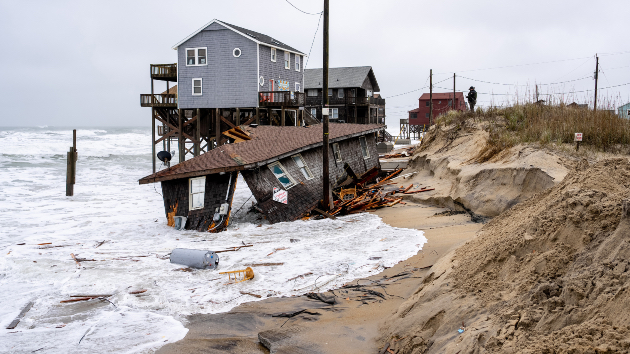
A one-story beach cottage fell into the Atlantic Ocean on the Outer Banks March 13, 2023, the fourth home to collapse into the sea on Hatteras Island in the past year. (Daniel Pullen/The Virginian-Pilot/Tribune News Service via Getty Images)
(NEW YORK) — Several more North Carolina homes have collapsed into the Atlantic Ocean, and more could collapse in the coming days, according to the National Park Service.
Five unoccupied homes in the Outer Banks fell into the sea on Tuesday afternoon amid rough surf, the NPS announced.
Two of the homes that collapsed on Tuesday were located on Tower Circle Road in the community of Buxton, while two were located on Ocean Drive and one on Cottage Avenue, according to the NPS. All of the homes fell between 2 p.m. and 2:45 p.m. ET.
Local officials are attempting to reach the owners of the homes to determine their plans for cleaning up the debris on the beaches lining the Cape Hatteras National Seashore, the NPS said.
Officials advised visitors to the Cape Hatteras National Seashore to avoid the beach and stay out of the water in Buxton due to “varying amounts” of hazardous debris that are currently littering the beach south of the collapse site. Large pieces of lumber have also been observed in the surf and shorebreak.
The Outer Banks is a chain of barrier islands stretching the coast of North Carolina, featuring more than 100 miles of shoreline. The picturesque seaside communities are known for their beach homes propped on high stilts.
But more than two dozen privately-owned homes along the Cape Hatteras National Seashore have collapsed into the Atlantic since 2020, according to the NPS.
Sixteen of those homes succumbed to the sea since Sept. 16 of this year, according to the NPS.
Most of the debris from the homes that collapsed prior to the latest event had been cleaned up before Tuesday, the NPS said. There is potential for more homes to subside in the coming days.
Rising sea levels that have resulted from global warming and the melting of ice caps have likely exacerbated the natural sea erosion that occurs daily from the impacts of wind, waves and tides.
In the Outer Banks, the villages of Rodanthe and Buxton have been hit particularly hard by the effects of coastal erosion, according to the NPS.
The Outer Banks — along with other barrier islands on the East Coast — often face the brunt of inclement weather that impacts the eastern coast of the U.S.
In August, mandatory evacuations were issued in several counties in the Outer Banks due to Hurricane Erin, despite the storm not making landfall in the U.S.
Eight homes collapsed between Sept. 30 and Oct. 3 after the impacts from Hurricanes Humberto and Imelda, both of which stayed far in the Atlantic but still brought massive waves to the eastern seaboard.
An additional home fell on Oct. 18, days after the first nor’easter of the season battered the East Coast.
Projects to fortify the beaches near the Outer Banks, including beach nourishment and jetty repairs, are scheduled for 2026, ABC Raleigh-Durham affiliate WTVD reported.
Local officials are trying to preserve and secure the beaches as quickly as possible, Bobby Outten, manager of Dare County, told WTVD.