A plane heading to Jamaica to help with storm relief crashed in a waterway in a community in Coral Springs, Florida, Nov. 10, 2025. (Obtained by ABC News)
(CORAL SPRINGS, Fla.) — Two people died when a small plane heading to Jamaica for Hurricane Melissa relief efforts plunged into a waterway in a Coral Springs, Florida, neighborhood, according to local officials.
The Beech B100 went down at about 10:19 a.m. on Monday behind some homes, according to the National Transportation Safety Board and the Coral Springs Fire Department.
No one on the ground was injured and no houses were hit, fire officials said.
The plane went down about five minutes after takeoff from Fort Lauderdale Executive Airport and was heading to Sangster International Airport in Montego Bay, Jamaica, for relief efforts, according to Fort Lauderdale city officials.
Jamaica is working to rebuild after the massive destruction caused by Hurricane Melissa. The storm made landfall on the island on Oct. 28 as a Category 5 hurricane, one of the most powerful landfalls on record in the Atlantic basin.
There were more than 30 deaths in Jamaica from Melissa and 100,000 housing structures were damaged, according to the United Nations.
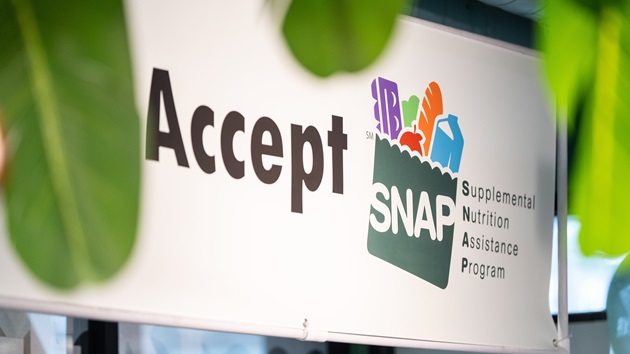
Supplemental Nutritional Assistance Program (SNAP) signage at a grocery store in Dorchester, Massachusetts, US, on Monday, Nov. 3, 2025. Mel Musto/Bloomberg via Getty Images
(WASHINGTON) — A federal judge said Monday that she will continue to block the Trump administration from enforcing a memo directing states to “undo” the issuance of full SNAP benefits.
The administration is currently seeking to “undo” hundreds of millions of dollars in SNAP benefits that went out after the U.S. Department of Agriculture, which operates the Supplemental Nutrition Assistance Program, told states Friday afternoon that it was “working towards implementing November 2025 full benefit issuances” to comply with a court order.
During a tense hearing Monday afternoon, U.S. District Judge Indira Talwani rebuked the Trump administration for “trying to play vindictive games” with states that sent benefits to SNAP recipients.
“It would seem to me that if the agency is trying to comply with the law and with the executive branch’s preferences on policies, a piece of that wouldn’t be trying to play vindictive games with the states. That’s not part of it,” said Talwani, who said she planned to issue a written ruling later Monday.
The USDA sent out its initial guidance after U.S. District Judge McConnell on Thursday ordered the Trump administration to fully fund SNAP by Friday — but on Saturday the USDA told states that they must “immediately undo any steps taken to issue full SNAP benefits for November 2025.”
Twenty states said they had already begun the process of issuing full November benefits.
“What you have right now is confusion of the agency’s own making,” Judge Talwani said.
The Trump administration, meanwhile, asked the Supreme Court Monday to stay the order requiring full payment of November SNAP benefits in order to allow Congress to finalize an end to the ongoing government shutdown without judicial interference.
“The irreparable harms of allowing district courts to inject themselves into the shutdown and decide how to triage limited funds are grave enough to warrant a stay,” wrote Solicitor General John Sauer.
Justice Ketanji Brown Jackson, who paused the order late Friday night, is expected to revisit it Tuesday.
Sauer, in an earlier filing, told the court that if the government reopens, its request would become moot — but in the meantime, the administration is making clear that it still wants the justices to allow it to make an only a partial payment of SNAP benefits for the month.
The administration asked the Supreme Court on Friday for an emergency stay of a ruling by U.S. District Judge John McConnell ordering the administration to fully fund SNAP for the month of November, saying it would partially fund SNAP with approximately $4.5 billion but that it needed the remaining funds to support WIC programs that feed children.
Justice Jackson granted the stay, pending a decision on the administration’s appeal to the 1st U.S. Circuit Court of Appeals.
Late Sunday, the circuit court denied the administration’s appeal, rejecting the administration’s argument that harm suffered by the government by complying with the order would outweigh the harm suffered by the millions of Americans who rely on the food assistance program.
“These immediate, predictable, and unchallenged harms facing forty-two million Americans who rely on SNAP benefits — including fourteen million children — weigh heavily against a stay,” wrote Judge Julie Rikelman.
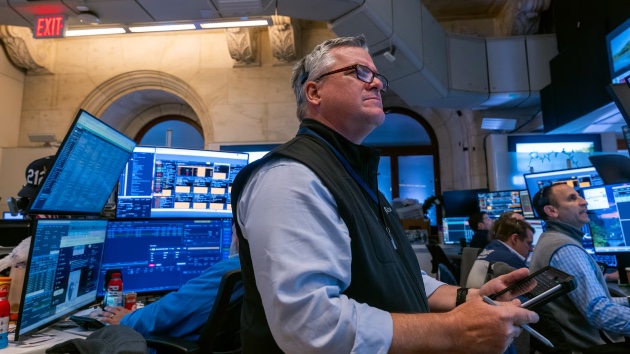
Traders work on the floor of the New York Stock Exchange (NYSE) on Nov. 7, 2025 in New York City. (Spencer Platt/Getty Images)
(NEW YORK) — Stocks closed markedly higher on Monday after the Senate voted hours earlier to advance a potential deal on the government shutdown, which has weighed on economic output and cast uncertainty over markets for well over a month.
The Dow Jones Industrial Average closed up 380 points, or 0.8%, while the S&P 500 climbed 1.5%. The tech-heavy Nasdaq increased 2.2%.
Lawmakers in a rare Sunday session cleared a key hurdle toward potentially reopening the government by advancing a short-term funding bill by a razor-thin vote of 60-40, just meeting the threshold for it to pass.
Stocks rebounded on Monday after major indices registered a loss over the previous week, a rare blemish that hadn’t happened in four weeks prior.
The economy has shown some signs of strain during the shutdown.
A report on Friday revealed a decline in shopper attitudes in November, leaving consumer sentiment at its lowest point since 2022, University of Michigan data showed.
The survey came days after data from the Federal Reserve Bank of New York showed Americans’ household debt levels have reached a record high.
Those developments could hold significant stakes for the wider economy, since consumer spending accounts for about two-thirds of U.S. economic activity.
Still, markets have proven resilient over a turbulent year marked by fluctuating tariffs, stubborn inflation and a slowdown of hiring. The tech giants have defied these headwinds, buoyed in part by an investment boom in artificial intelligence.
The S&P 500 has soared 14% in 2025, while the Dow has climbed 10%. The Nasdaq has surged 19%.
The Senate reconvened on Monday to continue working toward ending the federal government shutdown, which is now in its 41st day.
There are still some procedural measures necessary for the Senate to pass a deal on the government shutdown and send it for potential approval in the Republican-controlled House.
A potential resolution of the government shutdown would restore jobs and backpay for thousands of federal employees, which is expected to provide a jolt for the U.S. economy.
The federal government would also resume the collection and release of key government day in the event of shutdown deal, allowing investors to observe monthly inflation and hiring reports.
The Federal Reserve is set to issue a decision on the level of interest rates early next month. The central bank has slashed interest rates a quarter of a percentage point at each of its last two meetings.
(NEW YORK) — President Donald Trump over the weekend vowed to provide each American a $2,000 dividend to be distributed from what he said was tariff revenue.
“A dividend of at least $2000 a person (not including high income people!) will be paid to everyone,” the president wrote on social media Sunday, in part.
Within hours, however, Treasury Secretary Scott Bessent cast doubt on the plan, saying the payout could merely refer to tax savings enshrined by Trump’s signature domestic spending measure.
A tariff dividend may come “in lots of forms,” Bessent told ABC News’ “This Week” on Sunday, adding that he had not spoken with Trump about the proposal.
The idea of a potential tariff dividend – reminiscent of pandemic-era stimulus checks – has raised questions about who would qualify and what to make of the Trump administration’s mixed signals about the proposal. Some economists questioned whether the dividend is achievable with available tariff funds.
Here’s what to know about the proposed $2,000 tariff dividends.
What is a dividend?
The term “dividend” typically describes a payout to individual shareholders, funded by a company’s profits.
In this case, the concept functions in a similar fashion, indicating payouts to Americans that are funded by tax raised by Trump’s far-reaching tariffs.
The proposal mirrors the three stimulus checks mailed to Americans during the pandemic, two of which were authorized by Trump. Those three payments totaled as much as $3,200 per tax filer, as well as $2,500 per child, according to the Pandemic Response Accountability Committee, a watchdog established by Congress.
What did Trump say about a potential $2,000 tariff dividend?
Trump announced the policy proposal in a brief message on social media on Sunday morning, focused on tariff-related tax revenue.
“People that are against Tariffs are FOOLS! We are now the Richest, Most Respected Country In the World, With Almost No Inflation, and A Record Stock Market Price. 401k’s are Highest EVER,” the president wrote. “A dividend of at least $2000 a person (not including high income people!) will be paid to everyone.”
The message did not specify who would qualify for the payout or how the policy would operate.
Who would qualify for the $2,000 dividend?
It is not clear who would qualify for the payout, though Trump said the measure would exclude “high income people.”
The pandemic-era stimulus checks enacted by Trump were made available to individuals bringing in as much as $75,000 per year and couples earning up to $150,000. Beyond those benchmarks, higher earners were eligible for smaller payments.
Last year, median U.S. household income was $83,730, the Census Bureau found.
Did Treasury Secretary Scott Bessent cast doubt on the dividend checks?
Hours after Trump’s announcement, Treasury Secretary Bessent appeared to throw cold water on the likelihood of tariff-related dividend checks.
On Sunday, Bessent suggested the $2,000 savings may instead be rooted in tax cuts previously enshrined by Trump’s One Big Beautiful Bill legislation, which he signed into law on July 4.
“It could be just the tax decreases that we are seeing on the president’s agenda. No tax on tips, no tax on overtime, no tax on Social Security, deductibility on auto loans. Those are substantial deductions that are being financed in the tax bill,” Bessent told ABC News’ “This Week” Sunday.
“The real goal of tariffs is to rebalance trade and make it more fair,” Bessent added.
The dueling remarks from Trump and Bessent come days after the Supreme Court heard arguments about whether a president has the constitutional authority to unilaterally levy tariffs. Arguing on behalf of the Trump administration, Solicitor General John Sauer downplayed the revenue-raising component of the policy, saying the tariffs do not encroach upon the taxing power afforded to Congress under the Constitution.
“The fact that [the tariffs] raise revenue is only incidental,” Sauer told the justices.
Has the U.S. raised enough tariff revenue to fund $2,000 checks?
If Trump were to make the dividend payments available to anyone earning $100,000 or less, the policy would reach about 150 million Americans, amounting to roughly $300 billion in dividends, Erica York, a policy expert at the Tax Foundation, said in a post on X.
As of Sept. 30, the federal government had generated $195 billion in tariff-related revenue, according to the Treasury Department.
By that math, the estimated $300 billion cost of the dividend check proposal would far exceed the amount of currently available tariff revenue.
When factoring in only revenue generated by Trump’s new levies and deducting some negative budgetary impact from those policies, York estimated net tariff revenues of only $90 billion, falling even shorter of the $300 billion required.
Moreover, depending on how the Supreme Court may rule regarding Trump’s legal authority to levy tariffs, the White House may be forced to return tens of billions of dollars in revenue to importers who paid the tax, the Committee for a Responsible Federal Budget found.
In theory, however, the Trump administration could promise to pay the dividend from anticipated tariff revenue. The Treasury Department has forecast $3 trillion in tariff revenue over the next decade. Should the Trump administration choose that route, the dividend payments would add the federal debt, which currently stands at over $38 trillion, according to the Treasury Department.
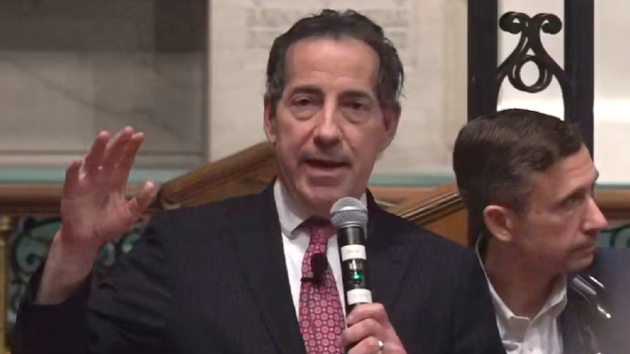
Rep. Jamie Raskin (D-MD) addresses the crowd at a Democratic “People’s Town Hall” in Bethlehem, PA on March 20, 2025. (ABC News)
(NEW YORK) — Rep. Jamie Raskin sent a sharply worded six-page letter to President Donald Trump on Sunday following new information his committee received from a whistleblower alleging that Ghislaine Maxwell is preparing a “commutation application” for the Trump administration and receiving preferential treatment while incarcerated.
Raskin, the top Democrat on the House Judiciary Committee, accused the Trump administration of allowing “a corrupt misuse of law-enforcement resources” and demanded that Deputy U.S. Attorney General Todd Blanche testify before the Judiciary Committee immediately to “answer for this corrupt misuse of law enforcement resources and potential exchange of favors for false testimony exonerating you and other Epstein accomplices.”
White House spokeswoman Abigail Jackson said in a statement about Raskin’s letter: “The White House does not comment on potential clemency requests. As President Trump has stated, pardoning Ghislaine Maxwell is not something he has thought about.”
Asked in July about a possible pardon for Maxwell, Trump said no one had approached him, though he reiterated his power to grant one.
The Justice Department has not responded to ABC News’ request for comment.
Democratic Rep. Robert Garcia, the ranking member on the House Oversight Committee who has led the minority on the panel’s Epstein investigation — released a statement on Monday calling on House Speaker Mike Johnson and Trump to “publicly oppose a commutation or pardon by President Trump” after the Judiciary Committee Democrats released their whistleblower information.
Johnson has resisted calls to swear in Democratic Rep.-elect Adelita Grijalva, who won a special election in September to succeed her father Rep. Raul Grijalva, who died in March, and said he would after the House reconvenes following the Senate passing a government funding bill.
The speaker sent the House home after it passed the funding resolution four days before Grijalva’s election.
The speaker has denied that his decision is related to her intent to become the 218th signature on a discharge petition forcing a vote to release the Department of Justice’s full Epstein file.
“This is a White House cover-up, and Speaker Johnson is now complicit. Seat Adelita Grijalva, and release the Epstein files, now,” Garcia said.
Raskin’s letter is a follow-up to an August 12 letter he and other Democrats sent to the Department of Justice and the Bureau of Prisons about Maxwell’s transfer to Federal Prison Camp Bryan, a minimum-security facility that he said was an “apparent flagrant violation of BOP policies, including one that explicitly prohibits the placement of sex offenders in such facilities.”
Maxwell is serving a 20-year prison sentence for child sex trafficking and other offenses in connection with Jeffrey Epstein, the former financier and convicted sex offender who died by suicide in jail in 2019.
FCI Tallahassee in Florida, where Maxwell had been held, is a “low security” prison for men and women, while FPC Bryan is a “minimum security” camp just for women.
The transfer followed Maxwell’s two-day meeting in July with Blanche in Tallahassee, where her attorney said the two discussed “about 100 names” associated with Epstein, after the Trump administration promised to release additional information about the deceased sex offender.
(WASHINGTON) — President Trump met on Monday at the White House with Syrian President Ahmed al-Sharaa, the White House said.
The visit marked the first time a Syrian president has ever visited the White House and is viewed as a crucial first step in normalizing U.S.-Syria relations.
The White House did not allow reporters and cameras access to the meeting.
Al-Sharaa is the former leader of U.S.-designated terror group al-Qaeda who was once wanted by the U.S. as a terrorist with a $10 million bounty on his head. He has even served time in the infamous Abu Ghraib prison.
A senior Trump administration official said Trump and al-Sharaa were expected to focus on counterterrorism efforts in Syria, and to discuss the signing of an agreement for Syria to join the U.S.-led coalition against the Islamic State. The coalition includes some 80 countries working to prevent a resurgence of the extremist group, according to the official.
It’s also the third meeting between Trump and al-Sharaa this year, as the Syrian leader confronts the challenges of rebuilding the country, seeking to restore ties with Arab countries and the West after years of civil war under Bashar al-Assad’s regime. The Assad regime’s fall brought to an end nearly 14 years of civil war.
Al-Sharaa arrived in Washington on Saturday and held meetings with members of Congress over the weekend, including with House Foreign Affairs Committee Chairman Brian Mast, a Republican who represents a district in Florida.
Mast shared in a statement that he and al-Sharaa “broke bread” and had a “long and serious conversation about how to build a future for the people of Syria free of war, ISIS, and extremism.”
“He and I are two former soldiers and two former enemies. I asked him directly ‘Why we are no longer enemies?’” Mast revealed.
“His response was that he wishes to ‘liberate from the past and have a noble pursuit for his people and his country and to be a great ally to the United States of America,'” Mast shared in the statement.
The U.S. on Friday removed sanctions on al-Sharaa just one day after the United Nations Security Council lifted similar sanctions ahead of his meeting with Trump.
According to a notice on the U.S. Treasury Department website, the United States removed Specially Designated Global Terrorist designations on Sharaa and Syria’s interior minister, Anas Khattab.
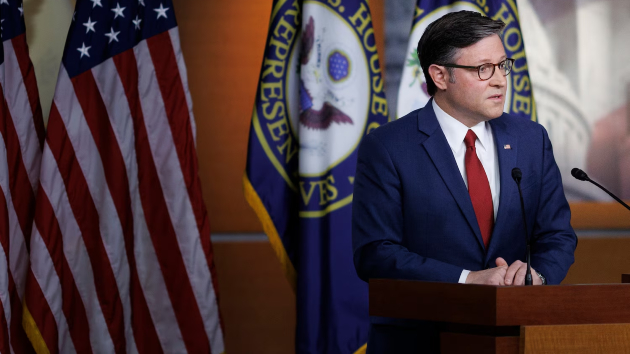
Speaker Mike Johnson delivers remarks to reporters on November 10, 2025 on Capitol Hill in Washington, DC. (Tom Brenner/Getty Images)
(WASHINGTON) — The longest government shutdown in U.S. history appears to be nearing its end, after senators suddenly advanced a funding deal over the weekend after 40 days of little progress.
The agreement still needs to pass the Senate and the House before going to President Donald Trump’s desk. In the meantime, pain continues to grow for Americans on everything from food assistance to air travel.
Here’s a timeline of major developments from the weekslong impasse.
Oct. 1: The federal government shut down at 12:01 a.m. after competing Republican and Democratic proposals that would have funded the government failed in the Senate at the eleventh hour. The Democrat bill included extensions for health care subsidies under the Affordable Care Act while the Republicans’ “clean” bill would have funded the government at current levels until Nov. 1.
Oct. 10: The Trump administration begins to lay off thousands of federal workers. Agencies impacted include the Commerce, Education, Energy, Health and Human Services, Housing and Urban Development, Homeland Security and Treasury departments.
Oct. 14: Two weeks into the shutdown with virtually no progress, House Speaker Mike Johnson predicts they are headed toward “one of the longest shutdowns in American history.” The House has remained out of session the entire shutdown after Republican members passed a clean, seven-week funding bill in mid-September.
Oct. 15: The Pentagon says that troops have been paid and will not miss a paycheck due to the shutdown after shifting existing funds.
Oct. 24: More than 500,000 federal employees miss their first full paycheck. Days later, the president of the country’s largest union representing federal workers called on lawmakers to pass a short-term spending bill to end the shutdown, a statement seized on by Republicans to ramp up pressure on Democrats.
Oct. 30: President Trump, after weeklong overseas trip, inserts himself in the shutdown showdown by calling on Senate Republicans to terminate the filibuster in order to unilaterally reopen the government. But Senate Majority Leader John Thune quickly rejected Trump’s demand.
Nov. 1: Funds run dry for SNAP benefits, leaving 42 million Americans vulnerable — and setting off a complex legal fight between the administration and states. Plus, open enrollment begins for Affordable Care Act recipients with prices for insurance premiums skyrocketing next year.
Nov. 4: The Senate fails for the 14th time to advance a clean, short-term funding bill.
Nov. 5: The shutdown becomes the longest in U.S. history. Trump brings Senate Republicans to the White House to talk shutdown, after Republican losses in key elections across the country. Democrats capitalize on election wins to argue Republicans should negotiate with them on health care.
Nov. 7: Air travel is even more heavily impacted as the Federal Aviation Administration begins to reduce flight capacity at major airports across the country. Senate Minority Leader Chuck Schumer put on the table a Democratic proposal for a short-term extension of government funding that includes a one-year extension of ACA subsidies. Republicans quickly rejected the offer.
Nov. 8: Thune said he plans to keep the Senate in session until the government is funded, and said Republicans will push forward with a plan to advance a short-term funding bill with a “mini-bus” of three, full-year funding bills for SNAP benefits and the Special Supplemental Nutrition Program for Women, Infants, and Children, as well as veterans programs. Schumer calls it a “terrible mistake” for Republicans to have rebuffed Democrats’ offer.
Nov. 9: A sudden breakthrough moment on Capitol Hill as senators reach a bipartisan deal to end the shutdown. Eight Democrats vote with Republicans to advance the measure in a 60-40 vote.
The bill does not include any of the Democratic demands on health care, but sources told ABC News that Republican leadership promised to allow a vote on a bill of Democrats’ choosing related to the ACA in December.
It also includes a new government funding extension of Jan. 30, 2026; language to reverse Trump administration firings during the shutdown; and to ensure furlough workers receive backpay.
Nov. 10: Senate reconvenes to move ahead on the deal, with questions remaining on how fast they can get it done. Speaker Johnson tells House members to start returning to Washington immediately, and says the House will vote as quickly as possible on the funding bill once it clears the Senate to send it to President Trump’s desk.
Supplemental Nutritional Assistance Program (SNAP) signage at a grocery store in Dorchester, Massachusetts, US, on Monday, Nov. 3, 2025. Mel Musto/Bloomberg via Getty Images
(WASHINGTON) — Amid efforts to end the ongoing government shutdown, the Trump administration has informed the Supreme Court that it intends to continue seeking a stay of a lower court’s order requiring full payment of November SNAP benefits.
That order remains on hold following a late-Friday night administrative action by Justice Ketanji Brown Jackson.
Solicitor General John Sauer told the court that if the government reopens, its request would become moot — but in the meantime, the administration is making clear that it still wants the justices to allow it to make an only a partial payment of SNAP benefits for the month.
The administration is currently seeking to “undo” hundreds of millions of dollars in SNAP benefits that went out after the U.S. Department of Agriculture, which operates SNAP, told states Friday afternoon that it was “working towards implementing November 2025 full benefit issuances” to comply with a court order.
The administration asked the Supreme Court on Friday for an emergency stay of a ruling by U.S. District Judge John McConnell ordering the administration to fully fund the Supplemental Nutrition Assistance Program for the month of November, saying it would partially fund SNAP with approximately $4.5 billion but that it needed the remaining funds to support WIC programs that feed children.
Justice Jackson granted the stay, pending a decision on the administration’s appeal to the 1st U.S. Circuit Court of Appeals.
Late Sunday, the circuit court denied the administration’s appeal, rejecting the administration’s argument that harm suffered by the government by complying with the order would outweigh the harm suffered by the millions of Americans who rely on the food assistance program.
“These immediate, predictable, and unchallenged harms facing forty-two million Americans who rely on SNAP benefits — including fourteen million children — weigh heavily against a stay,” wrote Judge Julie Rikelman.
On Saturday the USDA told states that they must “immediately undo any steps taken to issue full SNAP benefits for November 2025” but 20 states said they had already begun the process of issuing full November benefits.
A federal judge in Boston has set an emergency hearing for Monday afternoon to consider the legality of the administration’s guidance that states “undo” SNAP benefits.
A group of state attorneys general argue that it would be nearly impossible — as well as unfair and illegal — to unwind hundreds of millions in SNAP benefits after they have already been issued.
“In the span of less than a week, USDA has circulated multiple formal guidance documents, each inconsistent with the prior one, forcing the Plaintiffs into a continual state of whiplash,” they argued in a court filing.
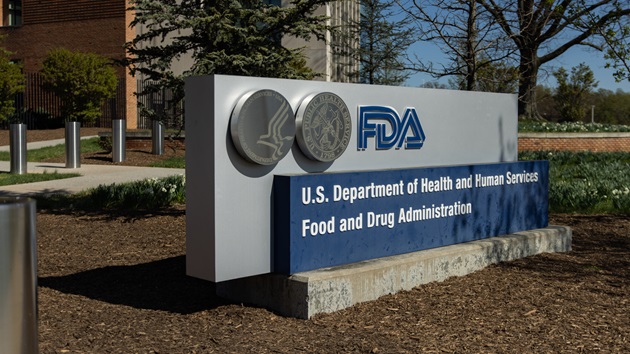
A sign for the U.S. Food and Drug Administration’s White Oak campus in Silver Spring, Maryland is seen on April 8, 2025. Maansi Srivastava/For The Washington Post via Getty Images
(NEW YORK) — The Food and Drug Administration said Monday it will remove the “black box” warning from hormone replacement therapy (HRT) products for menopause.
The change comes after two studies in the early 2000s claimed that there were major risks associated with HRT, including breast cancer. This led to the FDA placing its highest warning label on the drugs, prompting a significant decline in usage.
The public health agency estimates millions of women have avoided HRT out of fear of cancer or heart risks, based on an outdated analysis of data.
“This is, in my opinion, one of the greatest mistakes in modern medicine — the demonization of hormone replacement therapy,” FDA Commissioner Dr. Marty Makary said on Monday.
An expert panel formed at the FDA in recent months reviewed the latest scientific studies and recommended the removal of the warning, Makary explained.
“Hormone replacement therapy may improve the health outcomes of women at a population level more than any other intervention, arguably, with the exception of, say, antibiotics or vaccines,” Makary said.
The timing of when women initiate HRT “is an important nuance that has been lost” and “one of the design flaws” of the early 2000s studies Makary said.
Current understanding is that the benefits of HRT outweigh the potential risks when taken before age 60 or within 10 years of the onset of menopause.
“This is really the result of doctors waving a flag in the air for decades of women who have said, ‘Hey, we didn’t feel like we got the right information,'” Makary said.
Consumers will see a different label on the products in several months, he added.
There are still risks associated with HRT and women considering it should speak with their doctor as it requires a prescription.
This is a developing story. Please check back for updates.
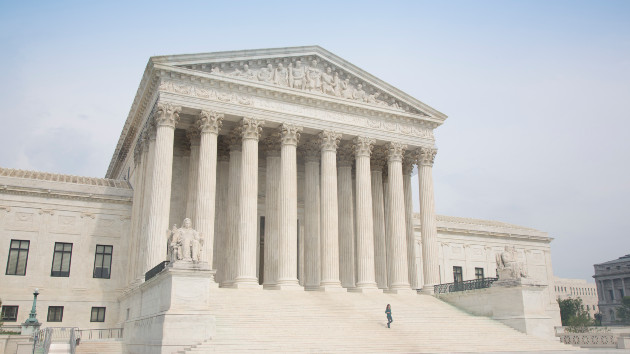
(WASHINGTON) — The Supreme Court on Monday denied a bid from former Kentucky county clerk Kim Davis to appeal her $100,000 damages suit and get the justices to revisit the landmark 2015 decision in Obergefell v Hodges.
The court did not explain its decision.
Davis gained international attention after she refused to issue a marriage license to a gay couple on religious grounds in open defiance of the high court’s ruling and was subsequently jailed for six days. A jury later awarded the couple $100,000 for emotional damages plus $260,000 for attorneys fees.
In a petition for writ of certiorari filed in August, Davis argued First Amendment protection for free exercise of religion immunizes her from personal liability for the denial of marriage licenses.
She also claimed the court’s decision in Obergefell v Hodges — which rooted marriage rights for LGBTQ couples in the 14th Amendment’s due process protections — was “legal fiction.”
Lower courts had dismissed Davis’ claims and most legal experts considered her bid a long shot.
Davis’ appeal to the Supreme Court comes as conservative opponents of marriage rights for same-sex couples pursue a renewed campaign to reverse legal precedent and allow each state to set its own policy.
This is a developing story. Please check back for updates.