
Trump denies he’s ‘desperate’ to make deal with Iran, insists Tehran is ‘begging’ for one

Trump denies he’s ‘desperate’ to make deal with Iran, insists Tehran is ‘begging’ for one
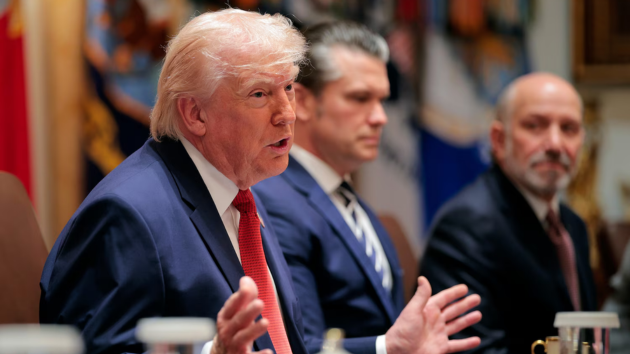
President Donald Trump speaks during a cabinet meeting in the Cabinet Room of the White House, March 26, 2026. (Chip Somodevilla/Getty Images)

(WASHINGTON) — President Donald Trump on Thursday insisted Iran is “begging to make a deal” to end the war amid seemingly tenuous indirect talks between the U.S. and Tehran.

“I mean, I read a story today that I’m desperate to make a deal. I’m not,” the president said during a meeting of his Cabinet at the White House.

“I’m the opposite of desperate, I don’t care … In fact, we have other targets we want to hit before we leave. We’re hitting them on a daily basis,” Trump added.

Trump also revealed the “very big present” from Iran he said earlier this week was a sign talks were progressing: 10 oil tankers were allowed safe passage through the Strait of Hormuz.

“I say they’re lousy fighters, but they’re great negotiators,” he said of the Iranians.

 “And they are begging to work out a deal,” Trump said. “I don’t know if we’ll be able to do that. I don’t know if we’re willing to do that.”

White House special envoy Steve Witkoff confirmed during Thursday’s meeting that the U.S. presented Iran with a 15-point framework for a peace deal by way of Pakistan.

Witkoff did not provide any specifics on what is in the proposal, though sources previously told ABC News it addressed Iran’s ballistic missile and nuclear programs as well as maritime routes.

“I can say this, we will see where things lead and if we can convince Iran that this is the inflection point with no good alternatives for them other than more death and destruction,” Witkoff said. “We have strong signs that this is a possibility, and if a deal happens, it will be great for the country of Iran, for the entire region and the world at large.”

Iran responded to the plan through intermediaries overnight, according to the semi-official Tasnim news agency, which quoted an informed source. Reuters reported that according to a senior Iranian official, Iran’s initial response to the U.S. proposal was that it was “one-sided and unfair.”

The administration now ramping up pressure on Iran to agree to a diplomatic off-ramp.

White House press secretary Karoline Leavitt warned on Wednesday: “President Trump does not bluff, and he is prepared to unleash hell. Iran should not miscalculate again.”

President Trump earlier Thursday told Iran to “get serious, before it is too late.”

The first indication of new talks came from President Trump on Monday, as he announced he was postponing major attacks he’d threatened on Iran’s energy infrastructure for five days — until Friday — due to what he said were “very strong talks.”

Trump was asked Thursday about the status of that deadline, and whether it would be pushed back.

“I don’t know yet. I don’t know,” Trump said. He later added, “And we have a lot of time. You know what? It’s a day. In Trump time, a day, you know what it is, that’s an eternity.”

Hours later, Trump posted on social media that he was pushing the deadline to April 6.

“As per Iranian Government request, please let this statement serve to represent that I am pausing the period of Energy Plant destruction by 10 Days to Monday, April 6, 2026, at 8 P.M., Eastern Time. Talks are ongoing and, despite erroneous statements to the contrary by the Fake News Media, and others, they are going very well,” his post read.

Involved in negotiations are Witkoff, Jared Kushner, Vice President JD Vance and Secretary of State Marco Rubio, according to Trump.

Vance, during Thursday’s Cabinet meeting, emphasized the importance of preventing Iran from obtaining a nuclear weapon and warned that there are “further military options” possible. 

The U.S. is continuing to send thousands more U.S. troops to the Middle East, and the Pentagon is seeking $200 billion in supplemental funding as the conflict continues.

With the conflict in its fourth week, President Trump on Thursday continued to repeat the four-to-six-week timeline he estimated at the onset of the conflict and said the operation is “ahead of schedule.”

Trump said the war will “end soon” and once again referred to it as an “excursion” and a “little detour.”

Trump and his top officials have changed their rhetoric over the course of the conflict, first calling it a “war” but more recently calling it a “military operation.”

Trump acknowledged that inconsistency in remarks at the annual National Republican Congressional Committee (NRCC) dinner on Wednesday night. He said the change was because of concerns that Congress has not authorized military action.

“I won’t use the word war, because they say if you use the word war, that’s maybe not a good thing to do. They don’t like the word war because you’re supposed to get approval. So, I’ll use the word military operation, which is really what it is,” the president said.

Copyright © 2026, ABC Audio. All rights reserved.
Ousted Venezuelan President Maduro returns to court, judge says he won’t dismiss case

Ousted Venezuelan President Maduro returns to court, judge says he won’t dismiss case
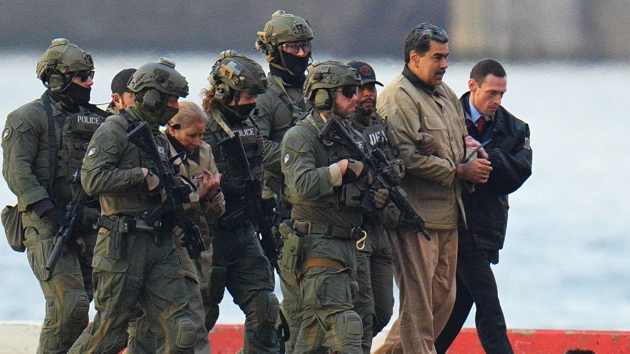
Nicolas Maduro and his wife, Cilia Flores, are seen in handcuffs after landing at a Manhattan helipad, escorted by heavily armed Federal agents as they make their way into an armored car en route to a Federal courthouse in Manhattan on January 5, 2026 in New York City. (Photo by XNY/Star Max/GC Images)

(NEW YORK) — After three months in jail, ousted Venezuelan President Nicolas Maduro appeared thinner and grayer, but still in command, as he appeared in federal court in Manhattan for a status conference on Thursday.

Maduro — was shackled at the ankles and wearing a beige smock over an orange shirt — nodded to the gallery and said “good morning,” in English.

Judge Alvin Hellerstein said he would not dismiss the narcoterrorism and other charges Maduro faces, but appeared to wrestle with how to assure Maduro had access to sufficient counsel.

The defense argued the case must be tossed because the Treasury Department had not given the government of Venezuela a special license to fund Maduro’s defense with funds subject to U.S. sanctions.

“I’m not going to dismiss the case,” Hellerstein said. However, the judge questioned the national security need for sanctions now that Maduro is no longer in charge and he and his wife, Cilia Flores, are in American custody.

“I see no abiding interest in national security in the right to defend yourself,” Hellerstein said. “The right to defend is paramount.”

A federal prosecutor said Maduro should not be allowed to use Venezuelan funds after he was accused of plundering the country’s wealth.

“A defendant has no right to spend a third party’s money,” prosecutor Kyle Wirshba said.

Defense attorney Barry Pollack said the quality of Maduro’s defense would suffer with court-appointed counsel, whose taxpayer-funded resources are often limited.

Pollack said the allegations “against these defendants occurred in Venezuela.”

Hellerstein agreed that defending Maduro would come at “great expense” and deplete the resources of most public defenders.

“Truthfully, we have no case like this,” Hellerstein said.

President Donald Trump said at a Cabinet meeting Thursday that he was hopeful that additional charges will be brought against Maduro and said Maduro should be charged for facilitating the transport of people and drugs into the U.S.  

“I hope that charge will be brought at some point,” Trump said.

“He emptied his prisons into our country and was a major purveyor of drugs coming into our country. … I would imagine there are other trials coming,” Trump said.

Maduro and his wife pleaded not guilty to federal charges including narco-terrorism during their first appearance in court in January, and their attorneys have since pushed to have the case dismissed over concerns that the Trump administration is blocking the Venezuelan government from paying their legal fees.

For more than a decade, Maduro enjoyed an opulent life as Venezuela’s president, living in the neoclassical palace in Caracas and accruing a net worth reportedly in the millions. He allegedly owned multiple mansions, two private jets, millions in jewelry and cash, a horse farm, and a fleet of luxury vehicles.

But he’s pushing to have his case dismissed by arguing he doesn’t have enough money to pay for his own legal defense — and his lawyers argue his due process rights will be violated if Venezuela is unable to pay for his lawyers because of U.S. sanctions on the country.

“I understand that the government of Venezuela is prepared to fund my legal defense and it is my expectation that it will,” Maduro said in a sworn declaration. “I have relied on this expectation and cannot afford to pay for my own legal defense.”

As the Trump administration gradually warms relations with Venezuela, Thursday’s hearing marks the second time that the ousted Venezuelan leader has appeared in a U.S. courtroom since special operations forces captured him in Caracas in January.

The Department of Justice initially brought an indictment against Maduro and 14 other Venezuelan officials in March of 2020, arguing they committed narco-terrorism by conspiring with drug cartels to allow the flow of cocaine into the United States.

Nearly six years later, prosecutors filed a new indictment charging Maduro, Flores, Maduro’s son, and three others with narco-terrorism conspiracy, cocaine importation conspiracy and weapons offenses.

Maduro “sits atop a corrupt, illegitimate government that, for decades, has leveraged government power to protect and promote illegal activity, including drug trafficking,” the indictment said.

Prosecutors alleged that Maduro allowed “cocaine-fueled corruption to flourish for his own benefit,” including by providing diplomatic cover to drug traffickers and money launderers. Maduro has pleaded not guilty and denies being involved in drug trafficking.  

“[Maduro] is at the forefront of that corruption and has partnered with his co-conspirators to use his illegally obtained authority and the institutions he corroded to transport thousands of tons of cocaine to the United States,” the indictment said.

-ABC News’ Emily Chang, Michelle Stoddart and Fritz Farrow

Copyright © 2026, ABC Audio. All rights reserved.

Man arrested in 1990 ‘Lovers’ Lane’ cold case murders: Houston police

Man arrested in 1990 ‘Lovers’ Lane’ cold case murders: Houston police
Undated photos of Cheryl Henry and Andy Atkinson who were killed in 1990. (Harris County District Attorney’s Office)

(HOUSTON) — A man has been arrested in a 1990 cold case double murder known as the “Lovers’ Lane” killings, Houston police said.

Floyd William Parrott, 64, is charged with capital murder for the killings of Cheryl Henry, 22, and Garland “Andy” Atkinson, 21, police said.

The victims were found in a car parked in a cul-de-sac on Aug. 23, 1990, police said. Both suffered injuries to their necks, police said.

Houston police, the Harris County District Attorney’s Office, the FBI and the Texas Attorney General’s Cold Case and Missing Persons Unit worked together on the case, police said, but decades went by without answers.

Police have not revealed what led them to zero in on Parrott, but they said he was identified as the suspect this month.

Parrott was arrested in Lincoln, Nebraska, on Wednesday and is awaiting extradition to the Harris County, police said.

The DA’s office called the arrest a “significant step in the ongoing pursuit of justice for Cheryl Henry, Andy Atkinson, and their families.”

The DA’s office said authorities are working to coordinate a news conference.

Copyright © 2026, ABC Audio. All rights reserved.

2 charged in connection with alleged explosive device at MacDill Air Force Base: FBI

2 charged in connection with alleged explosive device at MacDill Air Force Base: FBI

(WASHINGTON) — The FBI has announced charges against a brother and sister in connection with an alleged improvised explosive device that was found near the visitors center at MacDill Air Force Base in Florida last week.

Alen Zheng was charged by indictment with one count of attempted damage of government property by fire or explosion, one count of unlawful making of a destructive device and possession of an unregistered destructive device.

Ann Mary Zheng was also indicted on charges alleging that she was an accessory after the fact and tampered with evidence by attempting to destroy, mutilate and conceal a 2010 black Mercedes GLK 350.

“A brother and sister have now been indicted,” FBI Director Kash Patel said in a post on X on Thursday. “One is in custody for accessory and evidence tampering and the primary suspect is charged with explosives offenses and is currently in China.”

A possible IED was discovered outside the visitor’s center at MacDill AFB on March 16, though it is unclear when the device was placed. Court records indicate that March 10 is a date associated with the siblings’ alleged conduct.

This is a developing story. Please check back for updates.

Copyright © 2026, ABC Audio. All rights reserved.
What to know about US ground troops headed to the Middle East

What to know about US ground troops headed to the Middle East
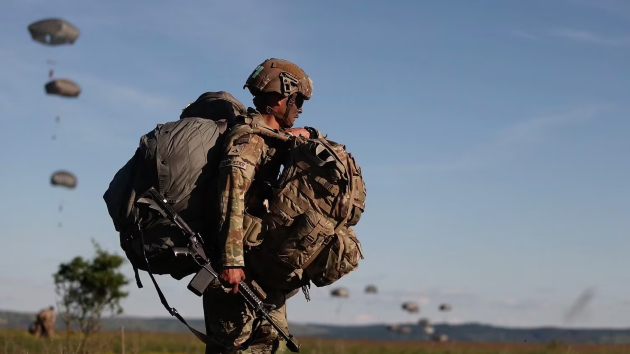
U.S. Army paratroopers, assigned to 82nd Airborne Division, execute Joint Force Entries as part of a multinational exercise at Luna and Cincu, Romania, May 13-15, 2024. (US Army)

(WASHINGTON) —  The Pentagon is preparing to surge as many as 5,000 troops to the Middle East — with some forces already in transit, according to two U.S. officials.

It’s a mix of Army paratroopers and Marines.

Among them are some 1,500 paratroopers from the 82nd Airborne Division, the Army’s premier ground combat unit based out of Fort Bragg, North Carolina.

There are also two Marine units likely headed to the region, according to the two U.S. officials.  

The Airborne unit is designed to deploy on short notice and seize contested terrain by parachuting out of airplanes behind enemy lines.

But that doesn’t necessarily mean they would jump out of planes for a mission. The last time the 82nd Airborne parachuted into combat was the invasion of Panama in 1989. Before that, they did four jumps in World War II.

It’s unclear where the troops will land or when they will arrive. It’s likely they would flow into established U.S. hubs such as Jordan or Kuwait.

Additionally, Marine forces are already moving into position, the officials said. The 31st Marine Expeditionary Unit, a 2,200-strong crisis response force, is slated to reach the Middle East this week after a transit by sea from Japan, according to the two officials.

Another Marine unit, the 11th MEU — also a 2,200-strong force — has begun sailing from California toward Japan and could ultimately be redirected to the Middle East as part of the buildup, the officials said. But any contribution from that force would take weeks to materialize because of time taken to get to that part of the world by ship.

The Marines and paratroopers are apart of “light infantry” units, meaning they are not arriving with any notable arsenal of heavily armored vehicles such as tanks.

Copyright © 2026, ABC Audio. All rights reserved.

Smoking rate among US adults drops to record low as vape use rises: CDC

Smoking rate among US adults drops to record low as vape use rises: CDC
Signage outside the Center for Disease Control (CDC) headquarters in Atlanta, Georgia, US, on Friday, Dec. 5, 2025. (Megan Varner/Bloomberg via Getty Images)

(NEW YORK) — Cigarette smoking among U.S. adults continues to fall to record low levels as e-cigarette use rises, according to a report from the Centers for Disease Control and Prevention (CDC) published early Thursday.

Nearly 10% of adults in the U.S. smoked cigarettes in 2024, the report found. This is down from about 11% in 2023, CDC data shows.

Rates of cigarette use have dramatically fallen since a landmark 1964 Surgeon General report warned about the dangers of cigarette smoking and linked it to lung cancer, chronic bronchitis and other serious diseases.

The 1964 report also found a 70% higher mortality rate among smokers and helped launch a nationwide anti-smoking campaign.

At the time, more than 42% of adult Americans were smokers, according to the Surgeon General.

“Decreased cigarette use is certainly in line with decades of trends and really hard work on the part of public health and education folks to get the word out about how awful cigarettes are and how deadly they are,” Dr. Maria Rahmandar, medical director of the substance use & prevention program in the division of adolescent and young adult medicine at Ann & Robert H. Lurie Children’s Hospital of Chicago, told ABC News.

“However, with decreased cigarette use, that means that big tobacco companies are losing money, and so they’re always looking for new ways to capture customers and hook new people on powerfully addictive … nicotine,” she added.

The new CDC report found those living in rural areas were more likely to smoke more than city dwellers. More than 15% of those in non-metropolitan areas smoked cigarettes compared to those living in cities, the report noted.

Meanwhile, the report found that 7% of American adults used e-cigarettes, or vapes, in 2024.

This is a slight uptick from 6.5% of adults reporting e-cigarette use in 2023 and nearly double from the 3.7% of adults who reported using e-cigarettes in 2020, CDC data shows.

“I think we had a shot [at] the first tobacco‑free generation prior to e‑cigarettes coming onto the market. Unfortunately, it’s kind of derailed that progress,” Thomas Carr, director of national policy at the American Lung Association, told ABC News.

The report found that vaping patterns were similar to cigarettes by metro areas, where 6.1% reported using e-cigarettes compared to 9.2% in rural areas. 

Previous CDC data found that men; those who identify as lesbian, gay or bisexual; and those who report serious psychological distress are more likely to report current e-cigarette use.

The CDC has also previously found that some adults use e-cigarettes to try to quit smoking cigarettes. The health agency notes the Food and Drug Administration has not approved any e-cigarette to help people quit smoking.

Rahmandar said e-cigarettes have been marketed as a way for people to get off cigarettes, which she noted can help. But she cautioned that there are still many unknowns about e-cigarette harms.

“Cigarettes are terrible, and it is possible that e‑cigarettes are safer — not safe — safer than cigarettes,” she said. “So could it be better for somebody to switch that in a harm reduction philosophy? Yes, however, we still don’t know long term effects of e‑cigarettes, either … We know that there are immediate effects. There certainly are harmful chemicals, carcinogens, toxins, heavy metals, respiratory irritants and other things inside of there that certainly can cause immediate harm.” 

By age, those between age 45 and 64 were most likely to be smokers followed by those between ages 25 and 44.

Among vapers, those between ages 18 and 24 had the highest prevalence of e-cigarette use followed by those between ages 25 and 44.

Previous CDC data has shown that the majority of young adults who use e-cigarettes have never smoked cigarettes.

“I think this is … the JUUL generation,” Carr said, referencing what was the most popular e-cigarette in the U.S. “From 2017 to 2019, they got teens to get hooked on JUUL, and they’re now adults, and unfortunately, they haven’t been able to quit using e-cigarettes.”

Tiffany Le, MD, is a pediatrics resident at UT Southwestern Medical Center and a member of the ABC News Medical Unit. 

ABC News’ Liz Neporent contributed to this report.

Copyright © 2026, ABC Audio. All rights reserved.

Transgender women cannot participate in female Olympic events, International Olympic Committee says

Transgender women cannot participate in female Olympic events, International Olympic Committee says
Olympic rings stand in front of Ponte di Castelvecchio on day fourteen of the Milano Cortina 2026 Winter Olympic games on February 20, 2026 in Verona, Italy. (Photo by Claudio Lavenia/Getty Images)

(LONDON) — Transgender women athletes cannot participate in female Olympic events, the International Olympic Committee said on Thursday, as the committee announced a new policy limiting eligibility for female events to biological females.

The policy will begin for the 2028 Olympics in Los Angeles.

The committee said the decision was “evidence‑based and expert‑informed,” and “protects fairness, safety and integrity in the female category.”

The IOC said eligibility will be “determined on the basis of a one‑time SRY gene screening.”

The committee said “athletes with an SRY-positive screen, including XY transgender and androgen-sensitive XY-DSD athletes, continue to be included in all other classifications for which they qualify. For example, they are eligible for any male category, including in a designated male slot within any mixed category, and any open category, or in sports and events that do not classify athletes by sex.”

IOC President Kirsty Coventry said in a statement that the new policy “is based on science and has been led by medical experts.”

“At the Olympic Games, even the smallest margins can be the difference between victory and defeat,” she said. “So, it is absolutely clear that it would not be fair for biological males to compete in the female category. In addition, in some sports it would simply not be safe.”

Copyright © 2026, ABC Audio. All rights reserved.
UN peacekeepers in Lebanon fired upon 20 times amid Israel-Hezbollah fight: Official

UN peacekeepers in Lebanon fired upon 20 times amid Israel-Hezbollah fight: Official
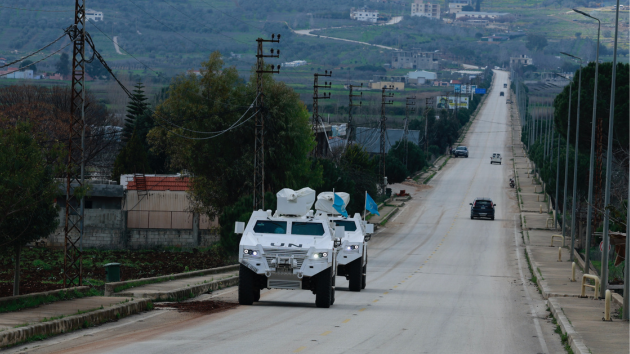
Lebanese army forces carry out efforts to reinforce their positions at the Serde area, accompanied by the United Nations Interim Force on February 25, 2026, in Marjayoun, Lebanon. (Photo by Ramiz Dallah/Anadolu via Getty Images)

(LONDON) — United Nations peacekeepers operating in southern Lebanon have been fired upon around 20 times since the resumption this month of hostilities there between Israel and the Iranian-backed Hezbollah militia, a spokesperson for the force told ABC News.

Around 7,500 personnel from 48 countries make up the U.N. Interim Force in Lebanon (UNIFIL) mission, tasked with monitoring the cessation of hostilities between Israel and Hezbollah in support of the Lebanese Armed Forces (LAF).

UNIFIL peacekeepers have regularly been caught in the crossfire between the warring sides in recent years, with intense bouts of violence in southern Lebanon touched off by the Oct. 7, 2023, attack by Iranian-backed Hamas militants into southern Israel and the subsequent war in the Hamas-ruled Gaza Strip, which Hezbollah joined in support of Hamas.

Limited respite secured by a November 2024 ceasefire deal between Israel and Hezbollah has now given way to another round of conflict, sparked by the joint U.S.-Israeli attack on Iran in late February. Hezbollah joined the conflict on March 2, firing projectiles into northern Israel, seemingly in support of their patrons in Tehran.

Hezbollah leader Naim Qassem said the attacks were a response to Israeli “transgressions” since the signing of the 2024 ceasefire, which he described as “excessive.”

The Israel Defense Forces said this week that the group had fired over 2,000 rockets and drones toward northern Israel during the conflict to date. A 27-year-old Israeli woman was killed by a Hezbollah rocket on Tuesday.

More than 1 million people in Lebanon have been displaced by Israel’s offensive and evacuation orders, according to U.N. data. More than 1,000 people have been killed by Israeli attacks in Lebanon in the latest round of fighting, the country’s health ministry said.

Peacekeepers are now back in the line of fire from both sides. Of the roughly 20 firing incidents so far recorded since Feb. 28, UNIFIL spokesperson Kandice Ardiel told ABC News that a preliminary count found that around 60% were of unknown origin, 25% were attributed to the IDF and 15% to non-state actors on the Lebanese side — “most likely” Hezbollah.

Four UNIFIL peacekeepers have so far been injured in two separate incidents, Ardiel said. Three of the injuries were minor and one was severe. The peacekeeper who sustained severe injuries is now in a stable condition, she said.

UNIFIL has not yet established responsibility for the incidents that caused casualties, Ardiel added. 

However, the IDF has acknowledged responsibility for one incident, when it said that on March 6 an Israeli tank mistakenly fired on a UNIFIL position, wounding Ghanaian peacekeepers.

Hezbollah is not known to have claimed responsibility for any recent attacks on UNIFIL forces.

Ardiel credited UNIFIL’s security measures for the relatively low number of casualties to date.

Even the force’s headquarters in the coastal city of Naqoura, she said, “has been hit with bullets, shrapnel, fragments of intercepted projectiles.” On Monday, the headquarters was also struck by “a rocket fired by a non-state actor — likely Hezbollah,” Ardiel said.

UNIFIL was first deployed to Lebanon in 1978, tasked with monitoring the ceasefire that ended an Israeli incursion into the south of the country.

Since 2006, UNIFIL has been tasked with monitoring the cessation of cross-border hostilities following a major conflict between the IDF and Hezbollah and supporting the planned — but ultimately unrealized — Hezbollah withdrawal from the area and the redeployment of the LAF in its place. That plan was set out by U.N. Security Council resolution 1701.

The U.S.-brokered 2024 ceasefire between Israel and Hezbollah restated UNIFIL’s role in supporting the LAF’s disarmament of all non-state armed groups — prime among them Hezbollah — south of the Litani River. The LAF claimed to have achieved the first phase of this plan in January, but Hezbollah’s daily fire toward Israel seems to undercut those claims.

Israeli forces retained control of five positions on Lebanese territory and continued strikes against alleged Hezbollah targets all across Lebanon despite the ceasefire deal. Hezbollah was vocally critical of the continued Israeli presence and attacks but did not retaliate.

The resumption of hostilities earlier this month prompted a major new Israeli campaign. Israeli Defense Minister Israel Katz said he instructed the IDF to “accelerate the destruction of Lebanese homes in the line of contact villages, to thwart threats to Israeli communities, in accordance with the model of Beit Hanoun and Rafah,” referring to Israel’s destruction of Gaza towns during operations against Hamas.

Katz sent thousands of additional troops into southern Lebanon, vowing to seize the territory up to the Litani River to create what he called a “defensive buffer.” The effort included the destruction of several bridges along the Litani, which Katz claimed were being used by Hezbollah.

Ardiel said the destruction of those bridges — which she described as “vital arteries” — would complicate UNIFIL and LAF efforts in the area.

“While peacekeepers are well-prepared and supplied and can continue daily activities, we rely on these arteries for essential logistical movements, including troop rotations,” Ardiel said, urging all actors to avoid harm to civilians and damage to civilian infrastructure.

UNIFIL troops, she added, have facilitated the safe movement of around 100 civilians from dangerous areas.

UNIFIL peacekeepers remain in all their positions, Ardiel said, but, “due to the volatile and dangerous security situation, our movements are heavily restricted. We are no longer conducting patrols in the way we used to, so our monitoring is more limited than it was before.”

“Our patrols are now focused on areas around our positions, to ensure our peacekeepers are safe and discourage armed groups from using our positions as cover for their activities,” she added.

Copyright © 2026, ABC Audio. All rights reserved.
Wind power will continue to grow, despite Trump administration’s attempts to halt renewable energy: Experts

Wind power will continue to grow, despite Trump administration’s attempts to halt renewable energy: Experts
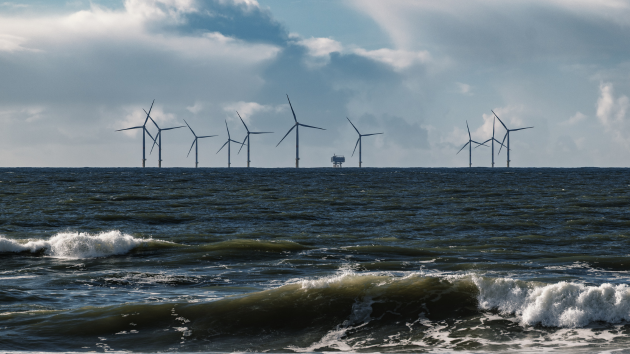
A general view of wind turbines at the Saint-Nazaire offshore wind farm, off the coast of the Guerande peninsula in western France, in Batz-sur-Mer, on December 3, 2025. (Photo by Jerome Gilles/NurPhoto via Getty Images)

(NEW YORK) — Wind power production will continue to advance, despite the Trump administration’s attempts to halt the growing momentum of renewable energy, experts told ABC News.

On Monday, the U.S. Department of the Interior reached a $928 million deal with French energy company TotalEnergies to end the company’s offshore wind development off the East Coast and redirect that investment into domestic fossil fuel initiatives, describing the “landmark agreement” as a way to lower energy costs and strengthen the nation’s energy security.

The move continues efforts by President Donald Trump and his administration to stall renewable energy, including the Department of Justice suing the state of California earlier this month over its electric vehicle mandate, signing an executive order last month directing the Department of Defense to purchase electricity from coal-fired power plants and the Environmental Protection Agency rescinding the landmark “endangerment finding” that has served as the scientific and legal foundation for federal regulations on carbon dioxide and five other heat-trapping greenhouse gases or more than 16 years.

Offshore wind is facing the most “headwinds” from the federal government, but is still persevering, Erin Baker, distinguished professor and faculty director at the Energy Transition Institute at the University of Massachusetts Amherst, told ABC News. The actions of the Trump administration have had “very little impact” on the global increase in production of renewable energy, Baker added.

What the nearly $1 billion deal with TotalEnergies entails
As part of the deal, TotalEnergies will commit $928 million to fossil fuel development in the United States, matching the amount the company previously paid for offshore wind leases. Upon meeting those commitments, the federal government will reimburse the company up to the value of those lease payments, the Interior Department said.

Citing national security concerns, the Interior Department said TotalEnergies has pledged not to develop any new offshore wind projects in the United States.

“This agreement is yet another win for President Trump’s commitment to affordable and reliable energy for all Americans,” Interior Secretary Doug Burgum said in a ​statement. “Offshore wind is one of the most expensive, unreliable, environmentally disruptive, and subsidy-dependent schemes ever forced on American ratepayers and taxpayers.”

The agreement supports the administration’s push for affordable, reliable baseload energy, officials said, arguing that offshore wind projects are costly and less dependable. Ending the projects would reduce unnecessary federal spending while supporting domestic energy production, according to the Interior Department.

North Carolina Gov. Josh Stein described the move as “a terrible deal for the people of North Carolina and our country” in a post on X.

Because offshore wind is installed in federal waters, the power of the federal government over offshore wind projects is higher than in onshore wind projects, Michelle Solomon, senior policy analyst at Energy Innovation, a non-partisan research and analysis nonprofit that supports clean energy, told ABC News.

“I think the really unfortunate thing about this news is that offshore wind is a really, really reliable resource that can really help mitigate spiking fossil fuel prices in the winter,” she said.

The momentum for wind energy is too strong to stall, experts said
Wind is the largest and most reliable source of renewable energy. It can also help energy bills stay affordable during extreme weather due to its capacity to produce fuel-free energy, Solomon said.

The power purchase agreements signed by offshore wind companies suppress electricity prices, Baker said. The companies agree to “always buy the wind when it blows,” which then brings down the entire cost to purchase electricity, she said, describing it as “good business.”

“They’re not doing it for environmental reasons,” Baker said of renewable energy companies. “They’re doing it just for business reasons.”

In 2025, wind and solar energy generated a record 17% of electricity in the U.S., up from less than 1% in 2005, according to data recently released by the Energy Information Administration (EIA).

The total net generation from wind and solar together reached 760,000 gigawatt-hours (GWh) last year, enough to power tens of millions of average American homes, according to the EIA. Wind power generated 464,000 GWh, a 3% increase over 2024.

The milestone comes amid federal energy policy changes, including the early phase-out of renewable tax incentives and other regulatory changes.

“The momentum is definitely still there,” Solomon said.

“Even though [the Trump administration] was actively trying to stop those industries, they still were growing,” Baker said.

Another benefit to wind is that it’s the type of energy that can “come online the most quickly” after it is built, Solomon said.

“In this moment, when we’re needing to build electricity generation resources really quickly to deal with low growth, data centers, [wind farms] are the ones that are going to be able to respond really quickly,” she said.

Wind and solar made up nearly 90% of new U.S. electricity capacity in 2025, according to the Federal Energy Regulatory Commission. That trend is expected to continue into 2026, Solomon said.

Global renewable energy capacity is expected to more than double by 2030, according to the EIA.

Trump has long criticized wind energy
Trump’s criticism of wind turbines dates back to his first term.

In 2019, Trump claimed that noises from wind turbines “cause cancer” and negatively impact property values. In 2024, during his presidential campaign, Trump stated that wind turbines “kill whales” and vowed to write an executive order on “Day 1” to end offshore wind projects.

On Jan. 20, 2025, the first day of his second term, Trump signed an executive order to withdraw all areas of the outer continental shelf from offshore wind leasing. A federal judge in the U.S. District of Massachusetts ruled in December that the stop to permits on wind farms was illegal.

The deal with TotalEnergies is the latest move by the administration in an attempt to halt the increased production of wind power.

In December 2025, the Interior Department froze large offshore wind projects on the East Coast, citing national security concerns. Federal judges ruled that all five projects could resume construction, concluding that the government did not show that the risk was so imminent that it should stop.

The projects included Empire Wind, the wind farm being built 15 to 30 miles south of the coast of Long Island, and the Coastal Virginia Offshore Wind, which started delivering to the state’s power grid on Monday, developer Dominion Energy announced.

Despite the victories for the offshore wind developers, the delays to the project have led to an uncertain investment environment and increased both the cost to build and the costs to consumers’ energy bills, Solomon said.

The impact of these actions will raise energy costs in the end, Solomon said.

Copyright © 2026, ABC Audio. All rights reserved.
Conservatives gather for CPAC as MAGA fights over Iran war

Conservatives gather for CPAC as MAGA fights over Iran war
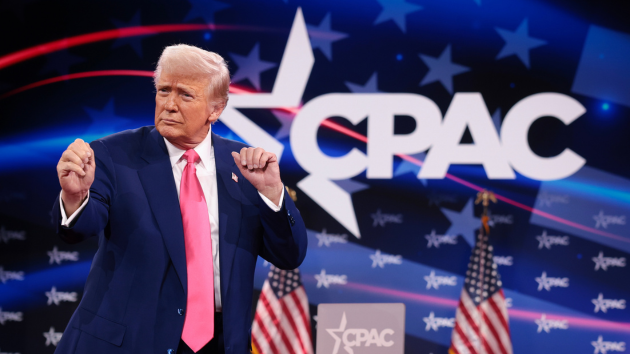
U.S. President Donald Trump dances on stage after speaking at the Conservative Political Action Conference (CPAC) at the Gaylord National Resort Hotel and Convention Center on February 22, 2025 in Oxon Hill, Maryland. (Photo by Win McNamee/Getty Images)

(NEW YORK) — Conservatives from across the country will descend on Texas this week for the Conservative Political Action Conference (CPAC), one of the largest gatherings for Republicans in the year.

But the yearly gathering comes during a fraught time for the party as the ongoing war with Iran has split some of President Donald Trump’s MAGA followers.

And for the first time in nearly a decade, Trump will not attend the event. A White House official told ABC News that Trump could not attend due to his schedule and the ongoing conflict in Iran.

Vice President JD Vance, who spoke at the gathering last year, is also not listed as a speaker.

Since the war began in February, notable Trump allies have publicly broken from him over the conflict. Most recently, former National Counterterrorism Center Director Joe Kent resigned over his opposition to the war, making him the highest-profile administration official to step down over the issue.

Other MAGA allies, such as Tucker Carlson and former Trump adviser Steve Bannon, have spoken out against the war.

Bannon, who will speak at CPAC, said on his “War Room” podcast this month that if the war becomes “a hard slog,” it could cost the GOP voters before November’s midterm elections.

“We’re going to bleed support,” Bannon said at the time.

In an interview with Piers Morgan earlier this month, Carlson said the Iran war was a “betrayal” to Trump’s supporters.

“Breaking faith with those people, those voters, the ones who actually got Trump elected and whose coalition promised a new day in American politics, that’s a big deal. It’s a betrayal on the level that I don’t think people who aren’t in those groups can understand, like, this is heartbreak. This is heartbreaking,” Carlson said.

Texas Sen. Ted Cruz, who is widely seen as a potential 2028 presidential candidate and has been supportive of the war, is also scheduled to speak at the gathering.

A Quinnipiac poll released Tuesday found that a little more than half — 54% — of voters oppose the U.S. military action in Iran, while 39% support it.

But 86% of Republicans overall support Trump’s military action while 92% of Democrats and 64% of independents oppose it, according to the Quinnipiac poll.

CPAC occurs this year as the midterm primaries are underway and comes ahead of the bitter Texas Senate Republican primary runoff between Sen. John Cornyn, who has held his seat since 2002, and state Attorney General Ken Paxton, which Trump hasn’t yet made an endorsement in.

Paxton is slated to address Friday’s Ronald Reagan Dinner, while Cornyn is not scheduled to speak.

Other notable GOP candidates attending the event include former Republican National Committee Chair Michael Whatley, who’s running for retiring GOP Sen. Thom Tillis’ seat in North Carolina, and businessman Nate Morris, who is running for retiring Republican Sen. Mitch McConnell’s seat in Kentucky.

Copyright © 2026, ABC Audio. All rights reserved.