
In Lebanon, a brewing disaster that could outlast the war in Iran

In Lebanon, a brewing disaster that could outlast the war in Iran
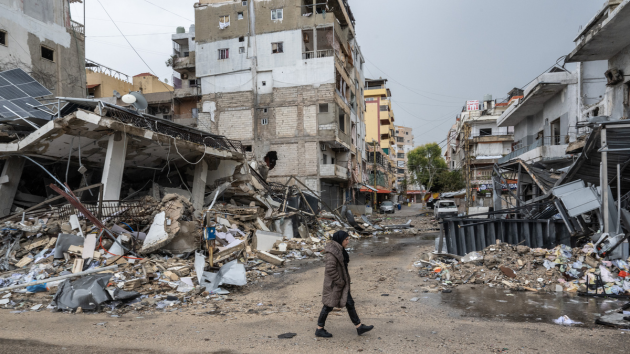
Residential and commercial buildings damaged by Israeli Air strikes that were targeting the Hezbollah affiliated al-Qard al-Hassan financial institution on March 22, 2026 in Tyre, Lebanon. (Photo by Guy Smallman/Getty Images)

(LONDON) — The escalating Israeli operation against the Iranian-backed Hezbollah militia in Lebanon may prove to be the most intractable theater of the wider U.S.-Israeli confrontation with Iran, analysts who spoke with ABC News warned.

But the showdown unfolding in Lebanon could pose an existential threat to both Hezbollah and the Lebanese state, experts said, with the latter having long struggled to rein in the powerful militia but now facing growing pressure — and threats — from Israel to do more despite the danger of civil instability.

The technocratic government that came to power in Beirut on a wave of optimism in February 2025 is now facing “the worst possible combination of factors,” Emile Hokayem of the International Institute for Strategic Studies think tank told ABC News during a recent webinar hosted by the U.K.-based Chatham House think tank.

Lebanon “is a secondary front at the moment that is likely to burn for longer both because the Israelis see the political-military opportunity, but also the Iranians see it as a place where they can bleed and distract the Israelis,” Hokayem added.

Cascading crises
Even before the latest round of violence erupted, observers were noting rising discontent with Hezbollah among the wider Lebanese population and their elected representatives. 

The recent scars of Hezbollah’s activities were all too visible. On the edges of Beirut’s stylish downtown area and the trendy Mar Mikhael neighborhood is the devastated port area, wrecked by a massive explosion in 2020, with efforts to apportion responsibility for the disaster allegedly repeatedly stymied by Hezbollah. While some blame Hezbollah, others blame the entire political ruling class and the systemic corruption in the country.

Villages across the Hezbollah-dominated south and east of the country lay in ruins from Israeli missiles, bombs and artillery shells fired in clashes since Hezbollah attacked Israel in solidarity with Hamas after the latter’s deadly surprise Oct. 7, 2023, attack on Israel. In a U.S.-brokered ceasefire between Israel and Lebanon in 2024, the Israeli army partially withdrew, holding on to five positions in southern Lebanon.

Parts of Beirut’s southern Dahiyeh area — a longtime Hezbollah stronghold — were cratered, with giant posters of its slain totemic leader Hassan Nasrallah, who was killed in a massive 2024 Israeli airstrike on the city, seen by ABC News late last year rising above the arterial road which runs through the area from the airport to the rest of the city.

The conflict significantly degraded Hezbollah’s capabilities, apparently setting the stage for Lebanon to appoint a new government with fewer ties to the group — led by Prime Minister Nawaf Salam and President Joseph Aoun — after more than two years of a caretaker cabinet amid a political deadlock.

Neither were formally endorsed by Hezbollah. Aoun, the country’s former army chief, and his new government said they were committed to disarming Hezbollah, appealing to foreign partners to help.

Many observers suggested Hezbollah appeared to be in a historically weak position from late 2024 into early 2026. Its patrons in Tehran were themselves weakened by confrontations with Israel and, later, the U.S. Discontent inside Iran exploded into multiple rounds of anti-government protests, with Tehran’s funding and direction of foreign proxy forces a common grievance among demonstrators.

The fall of Tehran-aligned and Hezbollah-bolstered Syrian President Bashar al-Assad across the border in December 2024 robbed Hezbollah of strategic depth, vital arms smuggling routes and financial opportunities. Nasrallah — an icon of the Iran-directed “Axis of Resistance” — was dead, as were many of the group’s most senior military and strategic minds, according to long-time observers of the group.

Meanwhile, strikes that Israel described as targeted against Hezbollah personnel and infrastructure in Lebanon continued, killing hundreds of people despite the November 2024 ceasefire deal. Hezbollah did not respond, apparently pursuing a policy of strategic patience that some observers interpreted as operational weakness.

Before the outbreak of its latest war with Israel in 2023, estimates of Hezbollah’s military strength ranged from 30,000 to more than 50,000 personnel. Its parliamentary party won 15 seats in the last Lebanese legislative elections in 2022, securing around 20% of all votes to the tune of nearly 360,000 ballots, according to data from Lebanon’s Interior Ministry.

Aoun’s government took some steps to curtail Hezbollah’s uniquely powerful position, in which it had been able to establish — with Iranian help — what analysts often described as “a state within a state.” 

The Lebanese Armed Forces claimed in January to have completed the first phase of the plan to disarm all non-state groups in the area south of the Litani River — around 18 miles north of Israel’s border — as part of the 2024 ceasefire deal.

Those efforts continued after the U.S. and Israel launched their latest military campaign against Iran in late February. In early March, the Lebanese government declared all military activities by Hezbollah illegal. The army also set up checkpoints to search vehicles headed south for weapons.

But the idea of the state’s open confrontation with the Iranian-backed militia group prompts fears of a slide back into the bloody anarchy of the 1975-1990 civil war that killed more than 100,000 people and devastated the young nation.

Sectarian tensions are again rising in Lebanon. Last month, Salam criticized the country’s sectarian political system — designed to ensure power sharing between the country’s ethnic and religious groups — as “a source of harm both for the state and for the citizens.”

The state’s forces, while popular, are broadly considered to be weak relative to other regional militaries and non-state actors. Meanwhile, despite its recent setbacks, Hokayem said Hezbollah remains “a very powerful coercive force domestically in Lebanon, where they can punish, intimidate and possibly assassinate their enemies.”

Hezbollah’s new leader, Naim Qassem, said in August that the group would not surrender its weapons to the state, warning there would be “no life in Lebanon” if its arms were taken by force.

“I wouldn’t be surprised if we see, in addition to communal violence, more targeted hits — including assassinations — inside the country,” Hokayem said of intensifying Hezbollah activity. “If the military, the security forces are not able to prevent that or contain this, then you can easily see a loss of trust in central institutions, which is already very low.”

“Given the trajectory of events, more likely than not the state will weaken despite what some people in Washington say or would like to believe,” he added.

A ‘prolonged’ conflict
Israeli forces are now moving deeper into southern Lebanon, with the Israel Defense Forces having issued a series of “urgent” warnings for the full evacuation of the country south of the Zahrani River, which sits around 36 miles north of the border. That order came on top of an evacuation order for all residents south of the Litani River — 18 miles north of the border — and for all residents in the southern Beirut suburbs.

Human Rights Watch said that more than a million people have been forced to flee their homes — nearly one-fifth of the entire population of the country. More than 1,000 people have been killed by Israeli attacks in Lebanon in the latest round of fighting, the country’s health ministry said.

Israel’s aggressive policy in Lebanon came after Hezbollah fired on northern Israel on March 2, joining Tehran in its response to the U.S.-Israeli campaign launched against Iran on Feb. 28.

Hezbollah defied assessments it had been substantially weakened by its two-year involvement in the war in Gaza, firing rockets and drones daily toward northern Israel. 

The IDF said this week that Hezbollah had fired over 2,000 projectiles toward Israel so far. That fire has killed four people — two civilians and two soldiers.

IDF Lt. Gen. Eyal Zamir said on March 22 that the Israeli operation “has only just begun,” describing the nascent campaign as “a prolonged operation.” As of March 24, the IDF had destroyed multiple bridges spanning the Litani River.

Israeli Defense Minister Israel Katz said he instructed the IDF to “accelerate the destruction of Lebanese homes in the line of contact villages, to thwart threats to Israeli communities, in accordance with the model of Beit Hanoun and Rafah,” referring to Israel’s destruction of Gaza towns during the war on Hamas.

Katz said troops would seize and hold southern Lebanon up to the Litani River to create what he called a “defensive buffer.”

More extreme voices have demanded a permanent occupation. Far-right Israeli Finance Minister Bezalel Smotrich, for example, said the Litani should form “the new Israeli border,” in an echo of longheld ambitions of Israeli ultranationalists.

Lebanon’s president described the destruction of the bridges over the Litani and continued Israeli strikes elsewhere as a “dangerous escalation and flagrant violation of Lebanon’s sovereignty.” The measures, Aoun said, “are considered a prelude to a ground invasion.”

But there appears little hope of relief from Beirut’s two prime foreign partners — the U.S. and France — Hokayem said. “The Americans essentially have washed their hands of Lebanon,” he said, citing frustration with the government’s inability or unwillingness to rein in Hezbollah.

“In Washington there are people who have this illusion that you can break the back of Hezbollah, if only there was a bit more spine in some in Beirut,” Hokayem said. “It’s very difficult to see that.”

Barbara Leaf, who served as the assistant secretary of state for near eastern affairs under President Joe Biden, said during the Chatham House event that the U.S. had taken a “hectoring” approach with the new Lebanese government. The message, Leaf said, is, “Take care of Hezbollah, and if not, the Israelis will.”

The U.S. Department of State has urged all Americans in Lebanon — of whom there were around 86,000 in 2022, according to the State Department — to leave the country as soon as possible.

Earlier this month, President Donald Trump said of the situation in Lebanon, “We’re working on it very hard. We love Lebanon. We love the people of Lebanon, and we’re working very hard.” Hezbollah, he said, “has been a disaster for many years.”

Days later, Trump again said Hezbollah has been “a big problem” that was “rapidly being eliminated” by Israeli military action.

With clear U.S. backing, Israeli leaders appear set on a decisive operation in Lebanon, which forms one theater of Prime Minister Benjamin Netanyahu’s drive to create what he calls a “new Middle East” shorn of Iranian influence.

Those ambitions will require a long-term presence on Lebanese territory, Yezid Sayigh, of the Malcolm H. Kerr Carnegie Middle East Center think tank in Beirut, wrote in early March. “A complementing Lebanese effort is necessary, hence the effort to force the Lebanese government’s hand one way or the other,” he added.

But the ongoing operation may undermine the very partners Israel needs in Beirut, Hokayem said. “A Lebanon in which so much territory is occupied will struggle to enter any kind of genuine peace negotiations with Israel,” he said.

“I don’t think they could be a central authority with enough strength and legitimacy,” he added.

Faced with yet another national crisis, many in Lebanon are pessimistic. The country must consider “the worst-case scenarios,” political scientist Ziad Majed wrote earlier this month.

This means, Majed said, huge destruction in Hezbollah’s heartlands in the south, the eastern Bekaa Valley and southern Beirut combined with a military occupation blocking hundreds of thousands of displaced people from returning to their homes.

Such a scenario, Majed warned, could “lead to suffocating living crises and social and political tensions that many might exploit for political opportunism, incitement and other forms of sectarian conflict.”

Copyright © 2026, ABC Audio. All rights reserved.
Ousted Venezuelan President Nicolas Maduro set to return to Manhattan federal court

Ousted Venezuelan President Nicolas Maduro set to return to Manhattan federal court
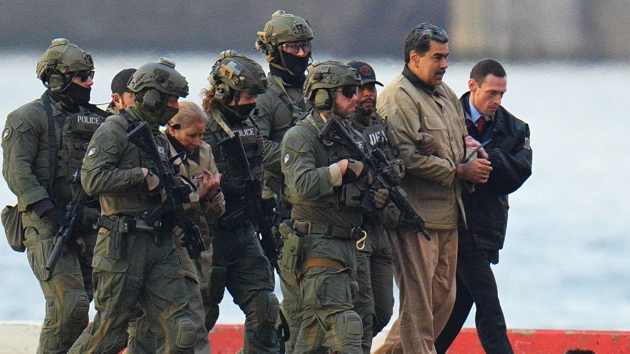
Nicolas Maduro and his wife, Cilia Flores, are seen in handcuffs after landing at a Manhattan helipad, escorted by heavily armed Federal agents as they make their way into an armored car en route to a Federal courthouse in Manhattan on January 5, 2026 in New York City. (Photo by XNY/Star Max/GC Images)

(NEW YORK) — Ousted Venezuelan President Nicolas Maduro and his wife Cilia Flores are set to return to a Manhattan courtroom on Thursday for a status conference that could determine the trajectory of the criminal case against them.

Maduro and Flores pleaded not guilty to federal charges including narco-terrorism during their first appearance in court in January, and their attorneys have since pushed to have the case dismissed over concerns that the Trump administration is blocking the Venezuelan government from paying their legal fees.

For more than a decade, Maduro enjoyed an opulent life as Venezuela’s president, living in the neoclassical palace in Caracas and accruing a net worth reportedly in the millions. He allegedly owned multiple mansions, two private jets, millions in jewelry and cash, a horse farm, and a fleet of luxury vehicles. 

But as he awaits trial in a Brooklyn jail cell, the ousted head of state is now pushing to have his case dismissed by arguing he doesn’t have enough money to pay for his own legal defense — and his lawyers argue his due process rights will be violated if Venezuela is unable to pay for his lawyers because of U.S. sanctions on the country.

“I understand that the government of Venezuela is prepared to fund my legal defense and it is my expectation that it will,” Maduro said in a sworn declaration. “I have relied on this expectation and cannot afford to pay for my own legal defense.”

As the Trump administration gradually warms relations with Venezuela, Thursday’s hearing marks the second time that the ousted Venezuelan leader has appeared in a United States courtroom since special operations forces captured him in Caracas in January.

During the status conference on Thursday, U.S. District Judge Alvin Hellerstein is expected to hear from both sides about how the case will progress toward a trial, including what pre-trial motions the defense plans to make and how much evidence has been turned over by prosecutors.

In a move that triggered an international outcry, Maduro was captured and brought to the U.S. in January after the United States carried out what President Trump described as a “large scale strike” in the Venezuelan capital.

Maduro’s attorneys seek dismissal

Last month, attorneys for Maduro and Flores asked the court to dismiss the indictment after the Department of Treasury Office of Foreign Assets Control (OLFAC) restricted the ability for Venezuela to pay for their legal fees. 

Defense lawyers argue that the couple’s Sixth Amendment and due process rights would be violated if Venezuela is unable to financially support Maduro, who Venezuelan interim president Delcy Rodriguez says is still “the legitimate president” of the country.

“The conduct of the United States government not only undermines Mr. Maduro’s rights but also this Court’s mandate to provide a fair trial to all defendants who come before it in accordance with the protections afforded by the U.S. Constitution,” Maduro’s attorney Barry Pollack said in a motion last month.

Prosecutors with the U.S. Attorney’s Office for the Southern District of New York have pushed back on the request, arguing that Maduro and Flores are still allowed to access their own money to pay for their legal defense. While the Treasury Department initially allowed Venezuela to pay for their legal defense, prosecutors said the authorization was an “administrative error” and denied that the decision to change the terms of their license was targeted. 

“OFAC’s Longstanding sanctions regime predated the initiation of the criminal charges the defendants now face and was instituted for purposes completely separate from the criminal charges currently pending before this Court,” defense lawyers said. “The defendants’ attempts to portray OFAC’s sanctions as a targeted attack on the defendants and their rights are misleading and undermined by the facts and chronology of this case and OFAC’s independent decision-making.”

Defense attorneys expressed skepticism about that argument by highlighting that the Trump administration has recently issued multiple licenses to allow the export of Venezuelan oil and other goods despite the existing sanctions.

“There is no apparent reason why the use of Venezuelan funds to pay for the legal defense in this case jeopardizes national security and the government offers none,” defense attorneys said. “The national security emergency rationale that the government invokes, without explaining, has even less force now that the government has normalized relations with the government of Venezuela and recognized the current Venezuelan government.”

While the issue is fully briefed, the judge could opt to set a separate hearing on the motion.

‘I am innocent,” Maduro told the court

Maduro’s last appearance in federal court came just days after he was captured in Venezuela by U.S. special operations forces and transported to New York to face criminal charges.

After Judge Hellerstein summarized the charges against him, Maduro told the court through an interpreter that he is “the president of Venezuela” and that he was “captured at home in Caracas, Venezuela.” 

“I am innocent. I am not guilty. I am a decent man. I am still president of my country,” Maduro said to enter his plea.

Flores similarly pleaded not guilty after being informed of the charges against her and her rights. Their attorneys did not ask for bail or their release, though Judge Hellerstein said he would be open to reviewing a bail application in the future. In the meantime, the former heads of state have been detained at the federal detention center in Brooklyn.

As he was escorted out of the courtroom, Maduro responded to a member of the public seated in court who shouted at him in Spanish to say in part, “You will pay in the name of Venezuela.”

“I am the elected president. I am a prisoner of war. I will be free,” Maduro responded.

Maduro’s defense?

During his arraignment in January, Maduro’s attorney signaled that they will likely argue that Maduro should be protected from prosecution as a head of state.

“He is the head of a sovereign state,” said Pollack, added that there are “issues about the legality of his military abduction.”

Maduro’s lawyers have not yet filed any motions based on that argument, instead focusing on concerns about his due process rights after the Treasury Department cut off Venezuela’ s ability to pay for Maduro’s legal defense. 

According to ABC News Legal Contributor James Sample, Maduro’s lawyers could attempt to argue that he is protected by “head of state immunity,” which is a principle of international law that the leaders of other countries are shielded from the jurisdiction of other country’s criminal courts.

“They will be arguing that because he was the head of essentially a sister sovereign of another nation, and he was doing those things in that nation, that the United States courts lack the jurisdiction, which is simply to say the power to hold him criminally accountable,” Sample said. “Whether a U.S. court will embrace that defense or not is a different matter, but it is not a frivolous argument.”

Former Panamanian strongman Manuel Noriega, who was never elected president, unsuccessfully attempted to use head-of-state immunity when he was tried in the U.S. on drug smuggling charges in 1991, but a federal appeals court concluding he “never served as the constitutional leader of Panama.”

What prosecutors allege

The Department of Justice initially brought an indictment against Maduro and 14 other Venezuelan officials in March of 2020, arguing they committed narco-terrorism by conspiring with drug cartels to allow the flow of cocaine into the United States.

Nearly six years later, prosecutors filed a new indictment charging Maduro, Flores, Maduro’s son, and three others with narco-terrorism conspiracy, cocaine importation conspiracy and weapons offenses.

“Nicolas Maduro Moros, the defendant, now sits atop a corrupt, illegitimate government that, for decades, has leveraged government power to protect and promote illegal activity, including drug trafficking,” the indictment said. 

Prosecutors alleged that Maduro allowed “cocaine-fueled corruption to flourish for his own benefit,” including by providing diplomatic cover to drug traffickers and money launderers. Maduro has pleaded not guilty and denies being involved in drug trafficking.  

“[Maduro] is at the forefront of that corruption and has partnered with his co-conspirators to use his illegally obtained authority and the institutions he corroded to transport thousands of tons of cocaine to the United States,” the indictment said. 

Copyright © 2026, ABC Audio. All rights reserved.
Bail granted for 2 arrested in connection with London ambulance arson, police say

Bail granted for 2 arrested in connection with London ambulance arson, police say
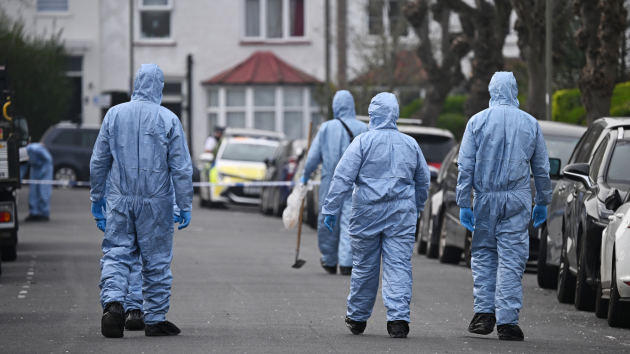
A Police forensic team carry out investigations at a location near to the scene after four Hatzola ambulances were set on fire overnight next to Machzike Hadath Synagogue, on March 23, 2026 in the Golders Green area of London, England. (Photo by Leon Neal/Getty Images)

(LONDON) — Two men who were arrested as part of an investigation into an arson attack on a Jewish charity’s ambulances in the north London neighborhood of Golders Green have been released on bail, British police said on Thursday.

The men, both British nationals, were taken into custody Wednesday morning at separate addresses in northwest and central London.

They were arrested on suspicion of arson with intent to endanger life and both were taken to a London police station before being released on bail, according to London’s Metropolitan Police Service.

Four ambulances used by Hatzola, a volunteer-led ambulance service in north London, were set on fire at about 1:30 a.m. on Monday morning, police said. Three masked or hooded individuals were seen setting the fires, police said. Investigators said that they were combing through hours of CCTV footage related to the case, in part to “trace the suspects’ movements.”

Police said on Thursday that the investigation was ongoing and searches were carried out at both the addresses in northwest and central London, as well as at two other addresses in northwest London on Wednesday.

Cmdr. Helen Flanagan, head of Counter Terrorism Policing London, which is leading the investigation, said they are continuing “to work to try and identify all of those involved in this appalling attack and the investigation team is working around the clock to do this.”

“Although the two men have been released from police custody, there are strict bail conditions in place while we continue to investigate their suspected involvement in this incident,” she added. “I can reassure the public that we will be closely monitoring these while we carry out further enquiries.”

Detective Chief Superintendent Luke Williams, who leads policing in northwest London, said “an enhanced, bespoke policing plan and activity, which is particularly focused around vulnerable areas right across London, will continue over coming days and weeks.”

“This includes specialist officers and capability being deployed alongside local officers to help protect certain locations and will also involve highly visible armed police patrols to serve as a deterrent to anyone seeking to cause our communities harm,” Williams noted. “I must stress that these are precautionary and not in response to any specific threat, and we continue to work alongside our colleagues in Counter Terrorism policing to support their investigation. We will also continue to work closely with local communities and our partners to listen to their concerns and respond to these.”

Copyright © 2026, ABC Audio. All rights reserved.

DOJ to pay ex-Trump adviser Michael Flynn $1M to settle malicious prosecution suit: Sources

DOJ to pay ex-Trump adviser Michael Flynn M to settle malicious prosecution suit: Sources
DOJ to pay ex-Trump adviser Michael Flynn $1M to settle malicious prosecution suit: Sources

(WASHINGTON) — The Justice Department has reached an agreement with President Donald Trump’s former national security adviser Michael Flynn to pay him roughly $1.2 million to settle a lawsuit brought by the former general claiming he was politically targeted for prosecution during Trump’s first administration, sources familiar with the matter tell ABC News. 

This is a developing story. Please check back for updates.

Copyright © 2026, ABC Audio. All rights reserved.
Boy receiving Citizen Honor Award for shielding classmate during school shooting in Minneapolis

Boy receiving Citizen Honor Award for shielding classmate during school shooting in Minneapolis
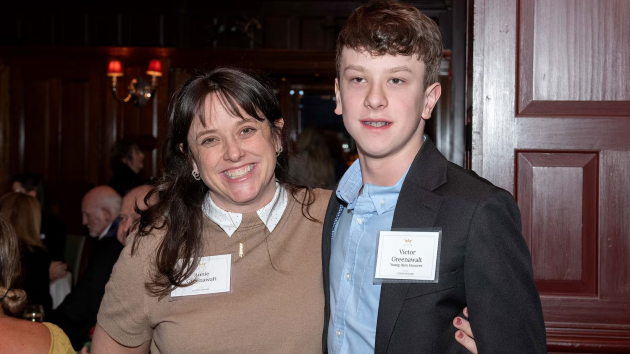
Victor Greenawalt, a Citizen Honor Award recipient, poses with his mother in Washington, D.C., March 24, 2026. (Congressional Medal of Honor Society)

(MINNEAPOLIS) — A 11-year-old boy from Minneapolis will be recognized with a Citizen Honor Award in Washington, D.C., on Wednesday for helping save a classmate’s life during a mass shooting at their school.

Victor Greenawalt is among this year’s six honorees — five individuals and one nonprofit — for showing “extraordinary bravery far beyond his years,” the Congressional Medal of Honor Society said in a statement. “Instinctively, Victor protected a classmate with his own body, directly saving their life.”

Victor was injured when he used his body to shield his friend from the gunfire at Annunciation Catholic School, according to MPR News.

“My friend Victor, like, saved me though. He laid on top of me, but he got hit,” the friend, Weston Halsne, told Minneapolis station KARE last year. “He was really brave.”

An 8-year-old and 10-year-old sitting in pews were killed and many others were injured when the shooter opened fire through the windows of the school’s church on Aug. 27, 2025. The shooter died at the scene from a self-inflicted gunshot wound, police said.

Victor is receiving the young hero award, which honors Americans 17 years old or younger “for their courage in a dire situation,” the Congressional Medal of Honor Society said.

Copyright © 2026, ABC Audio. All rights reserved.
US moved over 1,000 refugees to base in Doha almost 2 years ago. Now it’s been targeted

US moved over 1,000 refugees to base in Doha almost 2 years ago. Now it’s been targeted
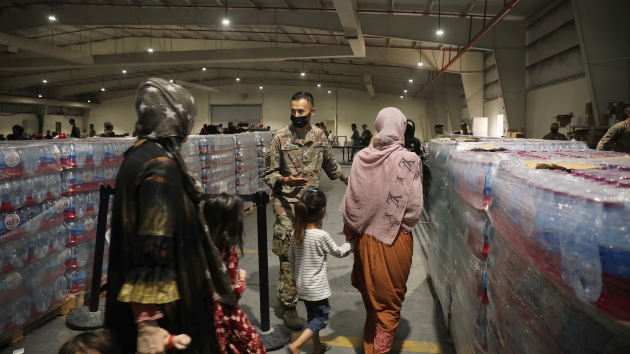
Sgt. Juan Miranda, culinary specialist, 155th Combat Sustainment Support Battalion, files in Afghan Special Immigrants into the dining facility, August 20, 2021 at Camp As Sayliyah, Qatar. (Sgt. Jimmie Baker/US Army via Getty Images)

(NEW YORK) — More than 1,100 Afghan refugees and family members of active duty U.S. military personnel are stranded on an unused Doha military base that has become a target since the start of the U.S.-Israel war with Iran, according to U.S. non-profit organization Afghan Evac.

Qatar Armed Forces have been intercepting incoming attacks from Iran, but residents at the facility, known as Camp As Sayliyah, told ABC News they have been hiding in buildings during the attacks and were not initially given bunkers or proper protections to take cover.

During those weeks, they said shrapnel would fall into their bedrooms, even locations where young children were. Since the war broke out, refugees sent ABC News recordings in secret, outlining what they say are the dire conditions at the camp. They asked for their faces to be hidden and their voices altered, due to their fear of being deported or reprimanded.

Three weeks later, ABC News received videos where residents show how the camp installed new concrete walling near the entrances and exits of buildings. They say workers urge residents to enter the bunkers in the “event of a duck and cover alert.”

In response to the residents’ claims of terrible conditions, a spokesperson for the a U.S. State Department, which administers the base, also told ABC News they are “addressing all related operational concerns” including “the safety and security of American citizens as well as the safety of residents at Camp As Sayliyah.”

Mahidewran, a young Afghan mother, told us that her child’s first steps were taken in the camp, where the family has been for more than a year, and that raising her child there has been difficult.

“I’m not always able to provide her with the foods she needs or the toys she loves,” she said.

Her daughter was about to turn 1 when they were initially brought to Camp As Sayliyah, and now she is turning 2.

Apart from raising a child on a former military base, she faces another unlikely challenge: war.

Mahidewran told ABC News sirens go off every few hours in the camp, warning residents to take cover in their buildings.

“I left [Afghanistan] through a legal process by the United States, and when they transferred me to Qatar, we were given safety, an opportunity to rebuild our lives,” she told ABC News.

Ahmad, who said he fought against terrorism alongside the U.S. as a member of the Afghan Command forces, told ABC News his son sleeps under the bed, fearing for his life as missiles continue to fire at the camp.

He said he’s been living at Camp As Sayliyah with his children for more than 18 months, and despite being brought to Doha by the U.S. government, his entire family remains in limbo, not knowing where they will go next. ABC News spoke to refugees who shared similar stories to Ahmad’s — saying they were promised a better life in return for risking theirs when working for the U.S. government.

From July to August 2021, the U.S. evacuated more than 100,000 people out of Afghanistan during Operation Allies Refuge, following the withdrawal of U.S. troops during the Biden-Harris administration.

Nearly five years later, the Trump administration has halted relocation and refugee resettlement efforts, impacting many of those who had already been vetted and cleared to travel to the U.S., according to AfghanEvac. The reports detailing the operation have since been deleted from the State Department website.

Refugees at Camp As Sayliyah said that the U.S. government’s promise of a better life on American soil was broken and that being caught in another war brings them back to the terrifying moments they experienced in Afghanistan.

“We came from a country that was under war for 48 years, before living here we were living in constant fear and anxiety,” Farishta, a teenager living on the base with her parents, told ABC News.

When ABC News spoke with Farishta, she said she was still living in a state of fear and that a worker at the camp threatened her with deportation to Afghanistan if she spoke to a journalist again.

Farishta said she has lived at Camp As Sayliyah for 15 months and often dreams of her future, hoping to further her education.

“I feel hopeless because I am a girl who has been deprived of education and whose future is uncertain,” she said.

“Afghan Nationals at the camp do not currently have a viable pathway to the United States,” the department said.

The plan is to relocate the population to a third country by March 31, according to the department. It said this “is a positive resolution that provides safety for these remaining people to start a new life outside of Afghanistan.”

The State Dept said the “Trump administration has no plans to send these” Afghan refugees back to their home country.

However, those people ABC News spoke to said they have not been told what country they would be going to or when.

Afghan Evac said it has been advocating for refugees at the camp, writing several letters to the State Department, urging the government not to leave the residents at Camp As Sayliyah behind.

According to Afghan Evac, 800 of the people at the camp are fully vetted and approved refugees who were cleared to travel to the U.S. The camp’s residents are mainly women and children, it said.

Shawn VanDiver, the president of Afghan Evac, claimed that there was a pathway and that the State Department closed it off.

“There is no structural or legal barrier preventing these individuals from coming from the United States. The absence of a ‘viable pathway’ is a policy choice, not an inevitability,” he told ABC News.

Copyright © 2026, ABC Audio. All rights reserved.
First lady Melania Trump enters White House summit with walking, talking humanoid robot

First lady Melania Trump enters White House summit with walking, talking humanoid robot
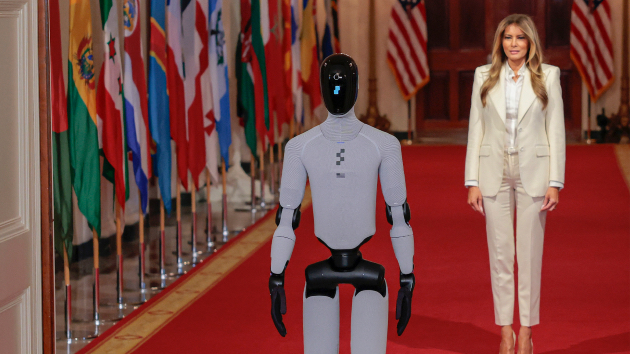
U.S. first lady Melania Trump enters the East Room with a humanoid robot during the Fostering the Future Together Global Coalition Summit at the White House. (Heather Diehl/Getty Images)

(WASHINGTON) — First lady Melania Trump was joined by a special guest at the White House on Wednesday: a walking, talking humanoid robot.

Named “Figure 03,” the shiny black and white robot strolled side by side with Mrs. Trump into the East Room for the second day of her international technology summit, where she is hosting spouses of leaders from 45 nations and representatives from 28 tech companies.

The robot, developed by the company Figure, welcomed guests in multiple languages and offered a wave.

“I’m Figure 03, a humanoid built in the United States of America,” it said. “I am grateful to be part of this historic movement to empower children with technology and education.”

The robot then turned and walked back down a White House corridor out of the room.

“It’s fair to state, you are my first American-made humanoid guest in the White House,” the first lady quipped after its exit.

The first lady launched her “Fostering the Future Together” initiative in September at the United Nations General Assembly.

She and other first spouses, like France’s first lady Brigitte Macron, spoke on Wednesday about the importance of balancing the use of tech with safety and the need for initiatives to equip young people with practical skills.

“Our mission to empower children through technology and education is achievable. I encourage each of you to take a proactive step after this inaugural summit. Pledge to host a regional meeting. Collaborate with the private sector. Unlock access to tech for those who require assistance, draft groundbreaking legislation to protect our children,” Mrs. Trump said. “Collaborate with another member nation. Form a committee and be a catalyst for discovery.”

“Indeed, our world is transforming, and through the use of AI, we can now access centuries worth of human humanities knowledge base. The future of AI is personified. It will be formed in the shape of humans,” she added.

The first lady kicked off the inaugural meeting of first spouses and dignitaries on Tuesday with remarks delivered at the State Department. A working session followed focused on the topics of artificial intelligence, education technology, digital literacy and skills, and safety and protection online.

Olena Zelenska, the first lady of Ukraine, and Sara Netanyahu, wife of Israeli Prime Minister Benjamin Netanyahu, are among the first spouses present.

Zelenska said she was joining Mrs. Trump’s initiative as a reliable partner, and spoke about Ukraine’s investment in digital infrastructure, education technologies and AI-enabled learning.

“For us, this is the matter of principle. No child, no adult, should lose access to education regardless of their circumstances. That is why we’re building a comprehensive digital education ecosystem,” Zelenska said. 

Copyright © 2026, ABC Audio. All rights reserved.

Jury finds YouTube, Meta negligent in landmark social media trial

Jury finds YouTube, Meta negligent in landmark social media trial
Two teenagers look at their iPhone screens displaying various social media and messaging apps. (Anna Barclay/Getty Images)

(LOS ANGELES) — In a landmark decision, a jury found Meta and YouTube negligent for designing apps that harmed kids and teens and failed to warn them about the dangers.

The jury awarded compensatory damages in the amount of $3 million. The jury also found punitive damages are warranted.

The lawsuit, brought by a 20-year-old woman identified as “Kaley,” alleges major social media companies intentionally designed their platforms to be addictive. The suit claims features like auto-scrolling got the plaintiff addicted to the platforms, ultimately leading to anxiety, depression and body image issues.

In a statement to ABC News, a Meta spokesperson said “We respectfully disagree with the verdict and are evaluating our legal options.”

The plaintiff’s attorney called the verdict “bigger than one case,” in a statement to ABC News.

In a statement to ABC News, a Meta spokesperson said “We respectfully disagree with the verdict and are evaluating our legal options.”

The plaintiff’s attorney called the verdict “bigger than one case,” in a statement to ABC News.

“For years, social media companies have profited from targeting children while concealing their addictive and dangerous design features,” the attorney continued. “Today’s verdict is a referendum — from a jury, to an entire industry — that accountability has arrived. We now move forward to the next phase of this trial focused on punitive damages.”

The damages were found to be 70 percent the responsibility of Meta and 30 percent the responsibility of YouTube.

The jury returned an answer of “Yes” to every question posed relating to negligence and failure to warn of dangers. Ten jurors were in favor of the plaintiff for every question, with two in favor of the defense in every question.

This is a developing story. Please check back for updates.

Copyright © 2026, ABC Audio. All rights reserved.
Venezuelan migrant sues Trump administration over deportation to notorious CECOT prison

Venezuelan migrant sues Trump administration over deportation to notorious CECOT prison
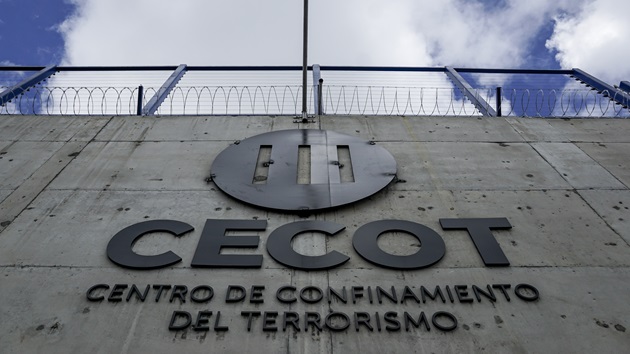
The entrance of the Terrorism Confinement Center (CECOT) that is located t the municipality of Tecoluca, in San Vicente, El Salvador, on October 12, 2023. (Alex Pena/Anadolu via Getty Images)

(NEW YORK) — A Venezuelan migrant who was deported from the United States to El Salvador’s CECOT mega-prison last year has filed a lawsuit against the Trump administration, alleging he was wrongfully removed without due process.

Attorneys for Neiyerver Adrián Leon Rengel say their client’s removal violated his rights.

“Through a series of unconstitutional and ultra vires acts by high-ranking federal officials and law enforcement officers, Plaintiff Neiyerver Adrián Leon Rengel was wrongly identified as a member of the gang Tren de Aragua, repeatedly denied due process, falsely imprisoned, intentionally deceived, and — ultimately — illegally sent to El Salvador in blatant violation of a court order,” the lawsuit filed on Tuesday states.

Rengel is one of more than 250 Venezuelan nationals released to their home country from CECOT in a prisoner swap last July, after being removed from the U.S. under the Alien Enemies Act, an 18th century wartime authority used to remove noncitizens with little-to-no due process.

The Trump administration deported two planeloads of alleged migrant gang members to the El Salvador prison by arguing that the Venezuelan gang Tren de Aragua is a “hybrid criminal state” that is invading the United States.

Rengel is seeking $1.3 million in damages.

According to the complaint, Rengel presented himself at a U.S. port of entry several years ago, complied with all immigration requirements, and was awaiting an immigration hearing that was set for 2028.

“On the morning of his birthday, March 13, 2025, while he was headed to work, Plaintiff was caught in the Administration’s scheme and would soon experience the full force of its unconstitutional and unlawful policies,” the complaint states. “At the time of his arrest, the only justification offered by ICE officers was that Plaintiff’s tattoos indicated his membership in TdA. Plaintiff immediately rebutted that identification, as he has never had any affiliation with TdA or any other gang.”

A spokesperson for the Department of Homeland Security disputed the allegations in the suit.

“Neiyerver Adrian Leon Rengel entered our country illegally in 2023 from Venezuela and is an associate of Tren De Aragua. This illegal alien was deemed a public safety threat as a confirmed associate of the Tren de Aragua gang and processed for removal from the U.S.,” the spokesperson said in a statement.

“We hear far too much about gang members and criminals’ false sob stories and not enough about their victims,” the statement said. “We are confident in our law enforcement’s intelligence, and we aren’t going to share intelligence reports and undermine national security every time a gang member denies he is one.”

Rengel was held at the Salvadoran prison for four months. During that time, he alleges he was beaten by guards, denied medical care, and held without contact with his family or legal counsel.

“These conditions and the physical abuse inflicted on Plaintiff were the direct, proximate result of the decisions of federal officials who placed and maintained him in constructive U.S. custody at CECOT, and they constitute cruel and unusual punishment in violation of the Eighth Amendment,” the complaint states.

Copyright © 2026, ABC Audio. All rights reserved.
Supreme Court deals blow to music industry fight against illegal downloads

Supreme Court deals blow to music industry fight against illegal downloads
U.S. Supreme Court building on Wednesday, March 18, 2026. (Bill Clark/CQ-Roll Call, Inc via Getty Images)

(WASHINGTON) — The Supreme Court on Wednesday ruled that internet service providers cannot be held liable for illegal downloads of copyrighted material like music, movies, and TV shows simply because some of their customers are known to engage in piracy.

The unanimous decision reversed a $1.5 billion damages award to Sony Music Entertainment in a suit against Cox Communications, the third largest broadband provider in the U.S., in a setback for the entertainment industry’s efforts to crack down on rampant, illicit distribution of copyrighted material online.

“Cox provided Internet service to its subscribers, but it did not intend for that service to be used to commit copyright infringement,” wrote Justice Clarence Thomas in the court’s opinion. “Holding Cox liable merely for failing to terminate Internet service to infringing accounts would expand secondary copyright liability beyond our precedents.”

Copyright owners had insisted that the risk of being sued creates an incentive for internet service providers to help root out online piracy and suspend the accounts of those suspected of dealing in protected material.

The victory for Cox effectively blunts entertainment industry efforts to root out online piracy by leveraging service providers. It had warned that a contrary ruling could have forced them into bankruptcy and potentially eliminated internet access entirely in some communities.

Federal law makes it a crime to directly infringe on a copyright, but secondary liability by another party involved in copyright infringement — such as internet service providers — remains an evolving area of law.

As a general rule, anyone who “materially contributes to the infringing conduct of another may be held liable as a contributory infringer,” lawyers for the Motion Picture Association of America (MPAA), an entertainment industry trade group, argued in a brief to the high court.

Thomas said the court rejects that view.

“The provider of a service is contributorily liable for the user’s infringement only if it intended that the provided service be used for infringement,” he wrote. “The intent required for contributory liability can be shown only if the party induced the infringement or the provided service is tailored to that infringement.”

Nearly 19 billion downloads of pirated movies and TV shows were made using online peer-to-peer software in 2023, according to the MPAA. The copyright violations cost the U.S. economy more than $29 billion and “hundreds of thousands of jobs,” the group estimates.

Justices Sonia Sotomayor and Ketanji Brown Jackson concurred in the judgment of the court but said they would not have imposed as stringent limits on liability.

“Instead of artificially limiting secondary liability, the Court should have examined whether some other rule of fault-based liability derived from the common law might hold Cox liable for copyright infringement committed on its network,” Sotomayor wrote.

Copyright © 2026, ABC Audio. All rights reserved.