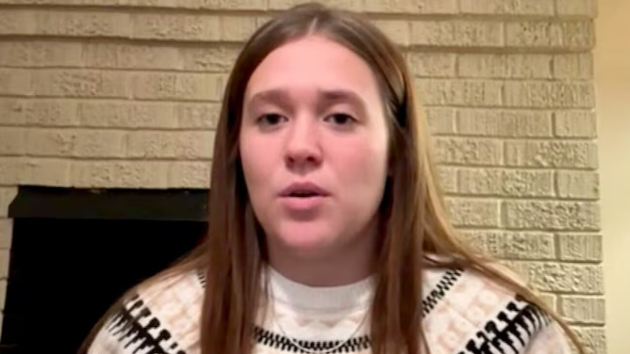
Andi Burns, 19, was pulled from freezing water after her truck crashed and first responders rescued her just in time. (ABC News)
(BATAVIA TOWNSHIP, Ohio) — A 19-year-old who crashed and became trapped upside down in a river in Batavia Township, Ohio, was pulled from her sinking pickup in a dramatic rescue captured on body camera footage.
The footage from the Clermont County Sheriff’s Office obtained by ABC News showed first responders on Feb. 22 working to safely rescue Andi Burns as rising, freezing water filled the truck and a dispatcher stayed on the line to keep her calm.
Burns was driving home from work on State Route 222 when she lost control of her vehicle on black ice, hit a tree and plunged off a steep embankment into the Little Miami River, according to a copy of the accident report from the Ohio State Highway Patrol.
Deputies and firefighters arrived on the scene to find the truck overturned in the river, according to the sheriff’s office.
According to Clermont County officials, Burns was wearing an Apple Watch that automatically called 911 using its crash detection feature.
“Please God please,” Burns was heard saying on the 911 call, telling dispatch that her head was “barely up” from the water.
In an interview with ABC News recalling the incident, Burns said she was “terrified.”
“It was completely black out, pitch black,” she said. “I didn’t think that anybody could hear me or knew what happened — I just was starting to freak out.”
Rescuers jumped into the water and shouted for tools to shatter a window and pop the door as they fought to reach her, according to the body camera footage.
“Grab my hand, grab both my hands,” one of the firefighters could be heard telling Burns in the footage.
Firefighter and EMT Tommy Jetter, who’s in his first year on the job, told ABC News that “the way that the car went in and flipped upside down altogether, that’s a very, very dangerous car accident wreck.”
He credited Burns for “being able to stay awake and find that air pocket and for her staying calm is very impressive.”
With the cab of the truck nearly filled with water and her head just inches from the water, crews were able to free Burns and pull her to safety, according to the footage.
“We got her!” the rescue team was heard shouting in the body cam footage.
Burns did not sustain any serious injuries and was able to walk away from the scene with just bruises, the accident report says.
“Surviving that car accident of one being in the water is very, very, very lucky, very fortunate, God was definitely on her side for that,” Jetter said.
Burns told ABC News she plans to become an EMT in Clermont County.
The sign of Department of Homeland Security is seen outside its headquarters on February 13, 2026 in Washington, DC. (Alex Wong/Getty Images)
(WASHINGTON) — Telesforo Cerero-Palacios isa home renovator in Minnesota who says he has no reported criminal history, so he was shocked to learn the Department of Homeland Security listed him as one of the “worst of the worst” detained immigrants in the U.S. who have serious offenses.
“What happened here? Why does their system say this about you?” Cerero-Palacios, 53, recalled after a relative saw him on the list.
The DHS website features thousands who the agency claims are the “worst” individuals, including a photo of Cerero-Palacios with his alleged crime, “dangerous drugs.”
However, a DHS government document showed that Cerero-Palacio has no criminal history. The document, reviewed by ABC News, is known as a “Record of Deportable/Inadmissible Alien,” which is created by the agency when individuals are detained.
Cerero-Palacios said he has never been accused of any drug-related offense and an ABC News review of criminal records in Minnesota found several traffic and parking tickets and one small claim case, but did not turn up any drug-related charges.
In an interview conducted in Spanish, Cerero-Palacios told ABC News that agents entered his home on April 7, 2025, looking to detain a relative, but that’s when he was asked about his immigration status. He said he told officials he was undocumented and was subsequently detained.
The DHS document appears to corroborate his account, stating that deportation officers working with the Drug Enforcement Agency were conducting fugitive operations at his address when they interviewed him about his immigration status.
“During the interview, CERERO freely admitted that he did not have any documents that would allow him to reside in the United States legally,” the document said.
It also states that in 1998, Cerero-Palacios was arrested for giving a police officer a false name, but the case was dismissed in 2000.
The document makes no mention that he’s ever been accused of any drug-related charges.
“CERERO claims and appears to be in good health and takes no medication. CERERO does not use narcotics,” the document says.
Despite an Immigration and Customs Enforcement spokesperson citing his 1998 arrest in a statement shared with ABC News, DHS appears to have issued him a non-immigrant visa three times, until 2015, the document showed.
“This illegal alien was previously arrested for giving a false name to a peace officer. The FBI number connected to this drug charge is linked to multiple aliases, including Telesforo Cerero-Palacios. We will give you more information on this case shortly,” the ICE spokesperson told ABC News.
It’s unclear what drug charge the spokesperson was referring to. Days after ABC News began asking questions about its inclusion of Cerero-Palacios on its “worst of the worst” database, DHS appears to have removed Cerero-Palacios from the list.
DHS did not respond when asked if he was erroneously placed on the list and has not followed up with any additional information, despite repeated attempts by ABC News to obtain one.
Cerero-Palacios spent 16 days in immigration detention last year and was released after posting a bond, Cerero-Palacios’ attorney, Gloria Contreras Edin said.
“What is interesting is we come to find that he’s on ‘worst of the worst’ so it’s like, why is he on there,” Contreras Edintold ABC News. “They would have never released him if he had been a drug dealer. They would have never let him out on a bond and then I wonder how many other people are they doing that to.”
Cerero-Palacios told ABC News that his inclusion on the website prompted him to stay at home except to go to work.
“I was afraid to leave the home thinking that they might detain me again,” Cerero-Palacios said.
Contreras Edin shared a letter with ABC News from the Minnesota Bureau of Criminal Apprehension that said a background search using her client’s fingerprints, name, and date of birth “indicates that no record was found.”
The letter says the search does not preclude any information being available at the county or city level.
“I have to believe in my heart that it was an error or a mistake, but it’s such a significant error and such a significant mistake that it worries me that they may be doing this to other people,” Contreras Edin said.
DHS launched the “worst of the worst” website in December, promising to allow users to “search through some of the hundreds of thousands of criminal illegal aliens who have been arrested across all 50 states,” the agency said in a press release.
Since then, the database has grown to include more than 30,000 people. DHS has used the information on the website to justify its expansion of immigration enforcement operations such as “Operation Metro Surge” in Minnesota, where two U.S. citizens were fatally shot by federal agents during immigration operations.
Meanwhile, Cerero-Palacios is still in immigration proceedings and has a hearing about his case in April. He says the government’s claims about him have affected him profoundly.
“Imagine how many others have seen my photo? My reputation is ruined, they’ll say ‘Oh, I thought he was a hard worker, but he’s involved with drugs,'” he said.
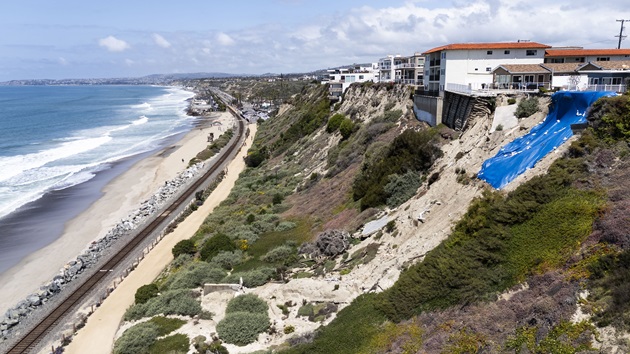
Houses are perched on a cliff at Buena Vista above the beach trail in San Clemente, CA on Monday, April 28, 2025. (Paul Bersebach/MediaNews Group/Orange County Register via Getty Images)
(NEW YORK) — Measurements of coastal sea-level height around the world may be higher than scientists previously thought, according to new research.
Past research may even have underestimated coastal sea level heights around the world by an average of .3 meters, or about 1 feet, a study published Wednesday in Nature found.
Sea levels in some areas in the Global South — regions such as Asia and the South Pacific — could be up to 3 feet higher than previously assumed, according to the paper.
The United Nations’ Intergovernmental Panel on Climate Change estimates that ocean levels may increase by between 0.28 meters and 1 meter by 2100. Human-amplified climate change is the primary cause for present-day rising sea levels, climate research shows.
However, assessments of coastal sea-level often assume overall sea levels rather than the direct measurements of sea-level height in specific regions, according to the paper.
Researchers from Wageningen University & Research in the Netherlands analyzed 385 pieces of peer-reviewed scientific literature on coastal exposure and hazard impact assessments published between 2009 and 2025 and calculated the difference between commonly assumed and actual measured coastal sea level.
They found that 90% of all studies relied on assumed sea levels based on gravitational models — or geoids — rather than using the measured sea level, according to the paper.
Earth’s gravitational models only account for gravity and Earth rotation and do not account for other factors that determine local sea levels, such as tides, current and winds.
Less than 9% of the existing studies combined land elevation measurements and sea level measurements, but those studies appeared to suffer from conversion errors and data alignment issues, Katharina Seeger a geographer studying flood hazards and risks at Wageningen University & Research in The Netherlands and co-author of the study, said during a press conference Tuesday.
Sea level was found to be underrepresented by .24 to .27 meters, depending on the model used. Some discrepancies were found to be as high as 5.5 meters to 7.6 meters, the researchers said.
The underrepresentations were particularly noteworthy in regions like Southeast Asia, and the South Pacific.
Coastal sea heights were also underrepresented in Latin America, the west coast of North America, the Caribbean, Africa, the Middle East and the Indo-Pacific.
The new estimates could put up to 37% more land below sea level, impacting 77 million to 132 million people globally, the researchers said.
Coastal subsidence is often underrepresented in flooding models, a 2024 study published in Nature found. The inundation coastal regions will experience due to rising sea levels may actually be worse than previously thought when factoring in how rapidly the land is sinking, according to the study.
Large cities surrounded by water — like Boston, New Orleans and San Francisco — will be among the regions that could experience flooding in the near future due to land elevation changes combined with sea level rise — about 4 millimeters per year, the 2024 study found.
The sinking is expected to cause structural damage to most existing properties, the authors said.
Parts of low-lying Florida, such as Miami, are already dealing with more frequent and impactful high tide flooding events. High tide flooding, the overflow or excess accumulation of water that covers typically dry coastal land during times of high tide, is happening more often in many coastal communities, even on generally quiet weather days, according to NOAA.
Miami showed the greatest share of exposure to flooding, with up to 122,000 people and up to 81,000 properties that could be at risk of flooding by 2050.
The latest research indicates that re-evaluation of the methodology of existing assessments for characterizing sea-level rise impact is needed, the paper noted. This could have implications for policymakers, climate finance and coastal adaption plans, the scientists said.
Signage outside the US Department of Justice (DOJ) headquarters in Washington, DC, US, on Friday, Feb. 17, 2023. (Ting Shen/Bloomberg via Getty Images)
(WASHINGTON) — The Justice Department is proposing a new policy that would seek to limit the ability of state bar associations to launch ethics probes into DOJ attorneys, according to a new document posted Wednesday in the Federal Register.
The proposal, which comes amid growing scrutiny of the department’s attorneys and whether they’re complying with ethical obligations in enforcing the Trump administration’s agenda, would seek to empower Attorney General Pam Bondi to request that state bar investigations be suspended pending a DOJ review of any originating complaint.
In the event the state bar authorities “refuse” to suspend their investigations, the proposal says, the Justice Department “shall take appropriate action to prevent the bar disciplinary authorities from interfering.”
It’s not immediately clear what “appropriate action” the department could take to influence state-level proceedings, and the proposed rule does not elaborate further.
The proposal argues that the bar complaint and investigation process has been “weaponized” by political activists in recent years to ensnare officials across DOJ’s ranks into costly and time-consuming proceedings.
“This unprecedented weaponization of the State bar complaint process risks chilling the zealous advocacy by Department attorneys on behalf of the United States, its agencies, and its officers,” the proposed rule said. “That chilling effect, in turn, would interfere with the broad statutory authority of the Attorney General to manage and supervise Department attorneys.”
A Justice Department spokesperson did not immediately respond to a request for comment from ABC News.
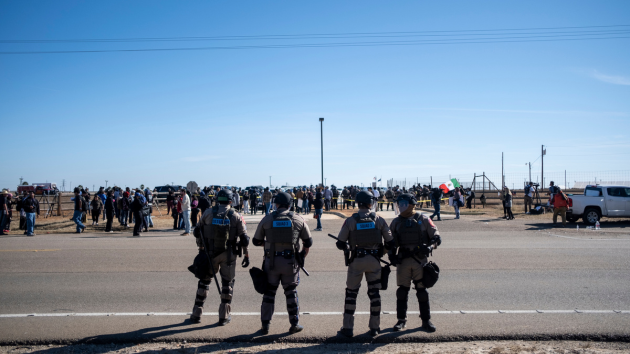
Texas State Troopers secure the area after dispersing a crowd protesting Immigration and Customs Enforcement at the South Texas Family Residential Center on January 28, 2026 in Dilley, Texas. (Joel Angel Juarez/Getty Images)
(DILLEY, Texas) — Emergency calls that were placed in recent months from a South Texas family detention center and obtained by ABC News reveal a series of medical emergencies involving pregnant women and young children that advocates say underscore their concerns about the sprawling ICE facility.
The 911 audio calls from Frio County, dating from October 2025 through February 2026, document medical staff at the South Texas Family Residential Center in Dilley requesting ambulances for migrant detainees experiencing seizures, fainting and respiratory distress.
In one call from January, a staff member requested assistance for a 17-month-old child.
“I’m calling for a little kid going through respiratory distress,” the caller told dispatchers.
In other calls, medical staff asked for ambulances for a 6-year-old boy with lethargy and a high fever, a 14-month-old in respiratory distress, and a 22-month-old with a fever and low oxygen levels.
“We need an ambulance,” one caller said. “We have a child with a high fever.”
Immigrant advocates, medical professionals and lawmakers have raised concerns in recent weeks about conditions at the South Texas facility.
ABC News recently interviewed a couple who said their 1-year-old daughter contracted COVID-19 and RSV during their 60-day detention. The family alleges medical staff at Dilley dismissed their daughter’s symptoms.
U.S. Rep. Joaquin Castro, who visited 5-year-old Liam Conejo Ramos while he was detained with his father at Dilley, also recently raised concerns about a 2-month-old infant before the child’s release. After Castro’s statements, detention center staffers made several calls to Frio County regarding the infant.
“Hi, I’m calling about a child that is at the detention center, a baby that is very sick, and I want to know if you guys can go do a child wellness check,” one caller said.
Last week, the Department of Homeland Security, which operates the nation’s migrant detention centers, disputed allegations made by detained families and advocates about Dilley. In a statement, DHS said that detainees have “ongoing access to on-site medical professionals, including physicians, pediatricians, nurses, and mental health care providers.”
“The truth is this facility provided proper medical care for all detainees including access to a pediatrician,” Deputy Assistant Secretary Lauren Bis said. “The fact is being in detention is a choice. We encourage all parents to take control of their departure by using the CBP Home app and receiving a free flight home and $2,600.
The 911 records also detail emergencies involving pregnant detainees. One call reports a woman experiencing a seizure, while another describes a woman three months pregnant who had lost consciousness.
“She is non-responsive. They found her on the ground,” a staff member told the dispatcher.
“We have a middle-aged woman pregnant and she’s seizing,” a medical staffer said in another call.
As of last month, there were about 1,400 people being held at Dilley, including children and parents, according to RAICES, an immigrant legal advocacy group. The facility was closed during the Biden administration and reopened last year as the Trump administration’s immigration enforcement measures increased.
Dr. Anita Patel, a board-certified pediatrician who recently sent a letter to DHS Secretary Kristi Noem calling for the release of all children at Dilley, said detained families “are not receiving the standard of care.”
“What is clearly evident is they have no ability to recognize potentially lethal or emergent situations, and they have no clinical acumen to say when something is a medical emergency,” Dr. Patel said of the calls.
“What I am hearing from families and what we are witnessing is a human rights catastrophe,” she told ABC News. “They don’t have access to medical care, they don’t have access to appropriate nutrition; all of these standard humanitarian policies stated by the U.N. all the way down to laws are not being followed.”
A spokesperson for the Department of Homeland Security did not immediately respond to a request for comment from ABC News regarding the 911 calls.
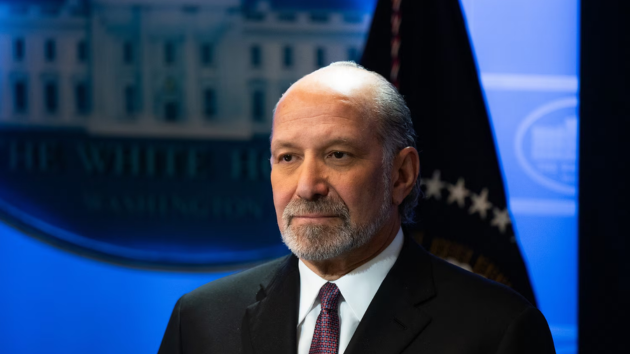
Howard Lutnick, commerce secretary during a news conference in the James S. Brady Press Briefing Room of the White House, Feb. 20, 2026. (Annabelle Gordon/Bloomberg via Getty Images)
(WASHINGTON) — Commerce Secretary Howard Lutnick has “agreed to appear voluntarily” before the House Oversight Committee as part of its investigation into the late sex offender Jeffrey Epstein, Committee Chairman James Comer announced Tuesday.
“I commend his demonstrated commitment to transparency and appreciate his willingness to engage with the Committee. I look forward to his testimony,” Comer said in a post on X.
Comer did not specify when the secretary’s appearance will occur.
Lutnick, who lived next door to Epstein for over a decade, previously suggested he had distanced himself from Epstein back in the mid-2000s prior to Epstein’s 2008 conviction for soliciting a minor for prostitution.
“So, I was never in the room with him socially, for business or even philanthropy. If that guy was there, I wasn’t going because he’s gross,” Lutnick said on the “Pod Force One” podcast in October.
The commerce secretary was grilled on Capitol Hill during an appearance last month before a Senate Appropriations subcommittee about his past denial following revelations that the two men remained in contact years after Lutnick suggested he had distanced himself from the convicted sex offender.
In his appearance before the appropriations subcommittee, Lutnick was asked repeatedly about his correspondence with Epstein, detailed in files recently released by the Justice Department, in which it was revealed that he visited Epstein’s Caribbean island in 2012 with his family and others.
Lutnick has denied any wrongdoing.
Tuesday’s announcement from Comer came a day after the House Oversight Committee released video of the appearances of former President Bill Clinton and former Secretary of State Hillary Clinton before the committee last week.
ABC News’ Fritz Farrow contributed to this report.
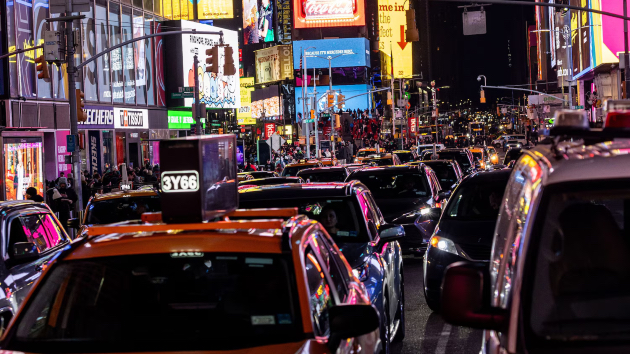
Traffic moves along midtown Manhattan on Feb. 19, 2025, in New York. (Alex Kent/Getty Images)
(NEW YORK) — A federal judge ruled that Manhattan’s congestion pricing program can continue and the Trump administration does not have the authority to kill the program, which is the first of its kind in the nation.
In a 149-page ruling, Judge Lewis Liman said the Trump administration’s attempt to revoke approval for the program was unlawful, handing a victory to the Metropolitan Transportation Authority following a monthslong legal battle.
“It is difficult to imagine more arbitrary and capricious decision-making than that at issue here,” Liman wrote.
The congestion pricing program went into effect last year in an effort to reduce traffic congestion during peak hours and to raise funds for the city’s public transit system. Passenger vehicles are charged $9 to access Manhattan below 60th Street during peak hours.
The extra per-ride surcharge is 75 cents for taxis and black car services, and $1.50 for Ubers and Lyfts. During peak hours, small trucks and charter buses will be charged $14.40, while large trucks and tour buses must pay $21.60.
The Trump administration moved to reverse approval of the program last year. Transportation Secretary Sean Duffy said at the time that the “scope of this pilot project as approved exceeds the authority authorized by Congress” under the Federal Highway Administration’s Value Pricing Pilot Program, calling it “backwards and unfair.”
New York lawmakers pushed back against the decision and challenged the federal government in court.
The federal judge reaffirmed an order from last May upholding the program, but stopped short of completely barring the Trump administration from challenging the program again.
“[Trump] is obviously free to continue to make public statements as well as to ask the Secretary of Transportation to look into whether there are lawful means to end the [Central Business District Tolling Program]. And, as to the Secretary’s statements, he has a right to continue to fight his case and to take an appeal of this Court’s orders,” Liman said.
Overall, the program was the “product of a democratic process” and cannot be arbitrarily revoked, Liman said.
“The [Value Pricing Pilot Program] was passed by Congress. The [Traffic Mobility Act] was passed by democratically elected legislators and signed by a Governor elected by the people of New York. The [Value Pricing Pilot Program] Agreement was authorized by a Secretary nominated by a duly elected President and confirmed by the Senate. The democratic process worked,” the judge wrote.
The program applies for Manhattan south of 60th Street, except for the FDR Drive, the West Side Highway and the Hugh L. Carey Tunnel.
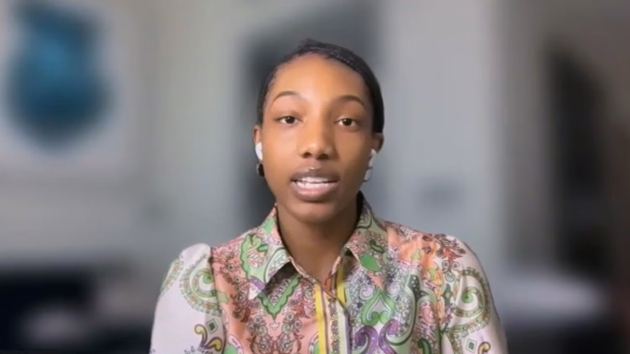
American travelers in the Middle East like Shekinah Lee are speaking out. Lee spoke with ABC News via video. (ABC News)
(NEW YORK) — American travelers are sharing their stories of being stranded in the Middle East after the joint U.S.-Israel attack against Iran triggered retaliatory strikes, impacting at least 11 countries in the region.
President Donald Trump announced “major combat operations” against Iran on Saturday, with strikes targeting military and government sites. Iran has since responded with missile and drone attacks targeting Israel, regional U.S. bases in Gulf nations and American diplomatic facilities.
Shekinah Lee, who lives in Chicago, told ABC News she and her boyfriend had been traveling in the United Arab Emirates and are now trying to return home.
“I’m anxious, I’m scared, and I’m desperate to get home,” Lee said Tuesday morning.
According to Lee, she hasn’t been able to get any answers from her airline about flights back to the U.S.
“We’re not getting any support from our airline. We’ve been trying to get in contact with them but due to the volume of the situation, they’re not able to field calls, so none of our questions are getting answered,” Lee said.
In a statement Tuesday on social media, a spokesperson for the U.S. State Department said the agency is in touch with thousands of Americans abroad and working to secure flights to help.
“Yes, the State Department is actively securing military aircraft and charter flights for American citizens who wish to leave the Middle East,” Dylan Johnson, assistant secretary of state for global public affairs, wrote on X in response to a reporter’s question. “We’ve been in direct contact with nearly 3,000 Americans abroad. American citizens should call [the State Department] for assistance with departure options.”
The State Department also issued instructions for travelers abroad on its own social media account Monday, urging Americans to contact the State Department.
While Lee and her boyfriend wait for a flight out of Dubai, she said they had to stay overnight in their hotel parking garage until they could find further accommodation.
“The parking garage was packed with families from all over the world, just desperate to know what’s going on,” Lee said. “Right now, our priority is getting a flight out of here.”
American citizen Alyssa Ramos is using social media to document her struggles returning to the U.S. Ramos shared on Instagram that she and a group of friends paid $1,200 for a nearly eight-hour journey over the land border from Kuwait City to Riyadh, Saudi Arabia.
On Tuesday, Ramos said in an Instagram story that her plane from Riyadh never left the airport.
“I’ve never been more happy and also more scared to be on a plane,” Ramos wrote in part. “There were attacks here in Riyadh earlier today and they usually strike more at night … please keep sending your positive energy and protective thoughts.”
The State Department is urging Americans to exercise caution worldwide “following the launch of U.S. combat operations in Iran.”
“Americans worldwide and especially in the Middle East should follow the guidance in the latest security alerts issued by the nearest U.S. embassy or consulate. They may experience travel disruptions due to periodic airspace closures,” the department advised.
For the United Arab Emirates, the State Department has set a level 3 travel advisory, ordered the “departure of non-emergency U.S. government personnel and family members of government personnel on March 2,” and is advising Americans to reconsider travel to the country “due to the threat of armed conflict and terrorism.”
The State Department has similar warnings for Americans in at least five other Middle Eastern countries.
In Beirut, Lebanon, drone strikes have been continuing in the capital city, according to Samer Bawab, an American citizen living in the city.
“I haven’t been able to sleep very well within the last three days, only a few hours per night,” Bawab told ABC News. “That’s because we’re getting awoken in the middle of the night sometimes by loud explosions and being caught off guard.”
Former Team USA basketball player Destiny Littleton said in an interview that aired Monday on “Good Morning America” that she is in Israel where she plays professionally.
Littleton said she could “hear the interceptor missiles … blow up the missiles coming towards us and that was very scary,” adding, “We’re in survival mode.”
American Kristy Ellmer told ABC News that she and her partner Matt Carwell were in Dubai on vacation when the strikes against Iran began. She said they’re uncertain when they will be able to return home to New Hampshire.
“It was definitely very destabilizing … you could actually feel it and you could hear it,” Ellmer said of the explosions.
The State Department recommends Americans check each country’s Travel Information Page for developing details and entry requirements and enroll in the Smart Traveler Enrollment Program, or STEP, for safety updates and information on how to get help in an emergency.
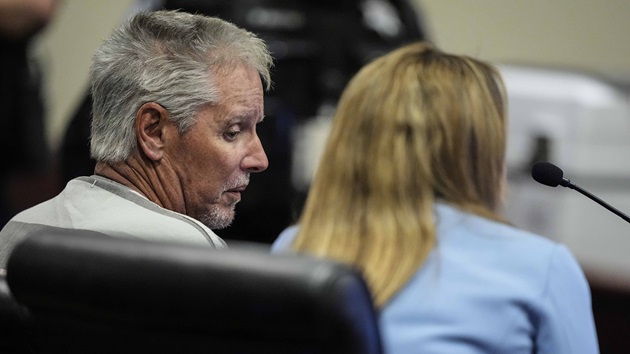
Colin Gray, the father of Apalachee High School shooting suspect Colt Gray, sits in the Barrow County courthouse for his first appearance, on September 6, 2024, in Winder, Georgia. (Brynn Anderson-Pool/Getty Images)
(ATLANTA) — A Georgia jury found Colin Gray guilty Tuesday on charges including second-degree murder and manslaughter, stemming from a 2024 mass shooting allegedly committed by his teenage son with a rifle he gifted him as a Christmas present.
The jury found the 55-year-old Gray guilty of 27 counts. Two other counts were dropped. The jury deliberated fewer than two hours before returning its verdicts.
Gray is the first parent in the United States convicted of murder due to the alleged acts of their child after prosecutors in various U.S. states in recent years have attempted to hold parents criminally liable in connection to their children’s deadly actions.
Colin Gray was charged with multiple counts of second-degree murder, involuntary manslaughter, reckless endangerment and cruelty to children. He pleaded not guilty to the charges.
Gray’s son, Colt Gray, now 16, allegedly killed two students and two teachers and injured eight students in a Sept. 4, 2024, mass shooting at Apalachee High School in Winder, Georgia, about 50 miles northeast of Atlanta.
Colt Gray has been charged as an adult and is awaiting a separate trial on multiple counts of felony murder and aggravated assault. He has pleaded not guilty.
During the two-week trial, Barrow County prosecutors presented evidence that Colin Gray had been warned that his son had an affinity for mass shooters and was aware that Colt kept a shrine in his bedroom dedicated to the shooter in the 2018 massacre at Marjory Stoneman Douglas High School in Parkland, Florida.
Instead of getting his son psychological help, Colin Gray allegedly gave the boy an AR-15-style weapon as a Christmas present that he ultimately used to carry out the mass shooting at Apalachee High School, prosecutors alleged.
On Friday, Colin Gray took the witness stand in his own defense and broke down while being questioned about whether he noticed any “red flags” that would have led him to believe the boy was capable of committing a mass shooting.
“I struggle with it every day,” Colin Gray testified. “He’s a good kid, you know? He wasn’t perfect, but to do something, uh, that heinous, like I don’t, I don’t know if anybody would see that type of evil.”
During his testimony, Gray confirmed that he gave his son the AR-15-style rifle as a Christmas present, telling jurors the gift came with rules.
“This is a weapon that I want you to shoot when we go to the range, and if you keep doing really good in school, going to school and doing all the things you should, you graduate and you’re 18, this will be your gun,” Colin Gray said he told his son.
The landmark guilty verdict comes after several parents across the country have been charged and convicted in connection with mass shootings carried out by their children.
In December 2023, Robert Crimo Jr. pleaded guilty to seven counts of misdemeanor reckless conduct – one count for each person killed by his son, Robert Crimo III – during a mass shooting at a Fourth of July Parade in the Chicago suburb of Highland Park. As part of a plea deal, Crimo Jr. was sentenced to 60 days in jail and two years of probation.
Crimo’s son, who was 19 at the time of the shooting, pleaded guilty to multiple counts of murder and attempted murder in April 2025 and was sentenced to life in prison without the possibility of parole.
In 2021, Jennifer and James Crumbley became the first parents convicted in the United States of charges stemming from a mass school shooting committed by their child. Ethan Crumbley, then 16, pleaded guilty in October 2022 to charges he murdered four students and injured several others in a November 2021 shooting at Oxford High School in Oxford Township, Michigan, and was sentenced to life in prison without parole.
Jennifer and James Crumbley were found guilty of involuntary manslaughter in separate trials after prosecutors presented evidence of an unsecured gun at their home and their indifference toward their son’s mental health. They were each sentenced to 10 to 15 years in prison.
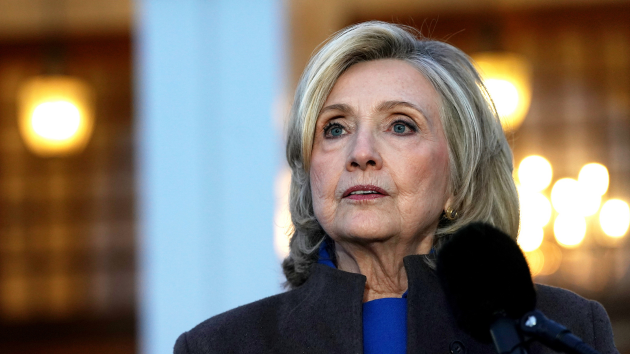
Former U.S. Secretary of State Hillary Clinton speaks to the press after testifying in a closed-door deposition with the House Oversight Committee at the Chappaqua Performing Arts Center on February 26, 2026 in Chappaqua, New York. (Photo by David Dee Delgado/Getty Images)
(WASHINGTON) — Videos of the closed-door depositions of ex-President Bill Clinton and former Secretary of State Hillary Clinton regarding the late sex offender Jeffrey Epstein were released on Monday by the House Committee on Oversight and Government Reform.
The Republican-led committee questioned each of the Clintons individually last week in their hometown of Chappaqua, New York, as part of an inquiry into the federal government’s handling of investigations into Epstein and his convicted co-conspirator Ghislaine Maxwell.
The deposition of Bill Clinton on Friday marked the first time a former president was compelled to testify before a congressional committee.
After being sworn in for his appearance, the former president acknowledged that the Oversight Committee’s desire to question him was justified while also distancing himself from Epstein.
“Through my brief acquaintance with Jeffrey Epstein, though it ended years before his crimes came to light, and though I never witnessed during our limited interactions any indication of what was going on, I’m here to offer what little I know so I can do my part to prevent something like this from happening again,” Bill Clinton said.
“I think you should have called me. I did take those plane trips with him and you have a right to ask those questions,” he added.
He also criticized the Oversight Committee for subpoenaing and questioning Hillary Clinton, arguing she had nothing to do with Epstein.
“I have to just say one personal thing. Since Hillary came in yesterday, she had nothing to do with Jeffrey Epstein. Nothing,” he said.
During her opening statement Thursday, Hillary Clinton argued that the committee was attempting to protect “one political party and one public official rather than to seek truth and justice for the victims.”
“You have made little effort to call the people who show up most prominently in the Epstein files. And when you did, not a single Republican member showed up for Les Wexner’s deposition,” she said of the former Epstein associate. “This institutional failure is designed to protect one political party and one public official rather than to seek truth and justice for the victims and survivors as well as inform the public who want to get to the bottom of this matter. ”
President Donald Trump has denied any wrongdoing related to Epstein.
“I don’t know how many times I had to say I did not know Jeffrey Epstein. I never went to his island. I never went to his homes, I never went to his offices. So it’s on the record numerous times,” Hillary Clinton told reporters after her closed-door session with the committee concluded Thursday.
In prepared opening remarks Clinton denied any knowledge of the crimes committed by Epstein, going on to say making his wife Hillary Clinton testify “was simply not right.”
In his statement as released, he stated that he would often say, “I do not recall” throughout his questioning because the events were “all a long time ago.”
“I saw nothing, and I did nothing wrong,” Clinton said, according to the statement.
Neither Bill Clinton nor Hillary Clinton has been accused of wrongdoing and both deny having any knowledge of Epstein’s crimes.
No Epstein survivor or associate has ever made a public allegation of wrongdoing or inappropriate behavior by the former president or his wife in connection with his prior relationship with Epstein.
Bill Clinton said in his opening statement that he had “no idea of the crimes Epstein was committing.”
Bill Clinton’s association with Epstein was first noted publicly in 2002 after reporters learned of the former president’s flight that year on Epstein’s jet for a humanitarian mission to multiple African nations.
In his statement as released, he stated that he would often say, “I do not recall” throughout his questioning because the events were “all a long time ago.”
“I saw nothing, and I did nothing wrong,” Clinton said, according to the statement.
Neither Bill Clinton nor Hillary Clinton has been accused of wrongdoing and both deny having any knowledge of Epstein’s crimes.
No Epstein survivor or associate has ever made a public allegation of wrongdoing or inappropriate behavior by the former president or his wife in connection with his prior relationship with Epstein.
Bill Clinton said in his opening statement that he had “no idea of the crimes Epstein was committing.”
Bill Clinton’s association with Epstein was first noted publicly in 2002 after reporters learned of the former president’s flight that year on Epstein’s jet for a humanitarian mission to multiple African nations.
None of the flight records from Epstein’s planes that have surfaced in litigation indicate that Clinton was ever aboard for a trip to Epstein’s island.
The Clintons were subpoenaed to appear under oath in front of the committee for a deposition in January, but failed to comply, arguing the subpoenas were without legal merit. Rather, they proposed a four-hour transcribed interview instead.
Following the Clintons’ refusal to appear, the Oversight Committee passed the contempt resolution with nine Democrats voting in favor of it, teeing it up for a full House vote.
At the last minute, just before the resolution was to be voted on in the House, the Clintons agreed to sit for a deposition, postponing further consideration of a contempt vote.