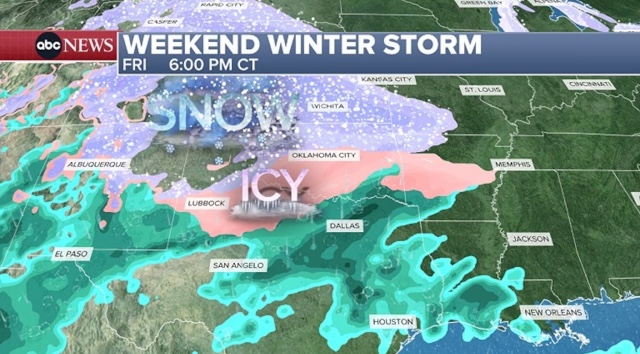
(NEW YORK) — The South is bracing for a potentially major winter storm this weekend, impacting Texas, Oklahoma, Louisiana, Arkansas, Mississippi, Alabama and Tennessee.
The storm is still several days away, so exact timing and locations are not yet clear. But as of now, more than 30 million people are under a winter storm watch, from Dallas to Little Rock, Arkansas, to Huntsville, Alabama, to Nashville, Tennessee.
Snow is expected to develop over the Plains on Friday and a wintry mix of sleet and freezing rain is forecast to the south. The storm will become more widespread Saturday morning.
Texas Gov. Greg Abbott said on Tuesday he was activating state emergency response resources ahead of the storm, saying the freezing rain, sleet and snow “could create hazardous travel conditions into the weekend and cause impacts to infrastructure.”
The system will reach the East Coast by Sunday and impacts could linger there into Monday. But the specific timing and what to expect is still unclear.
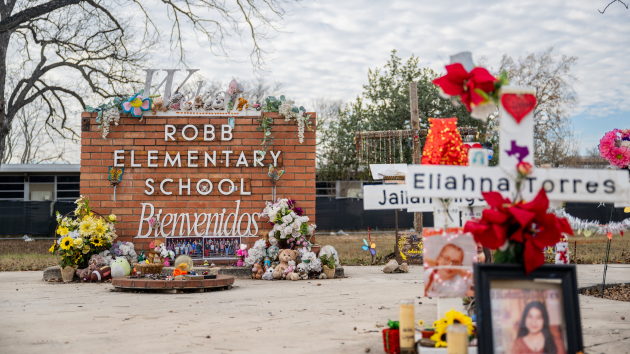
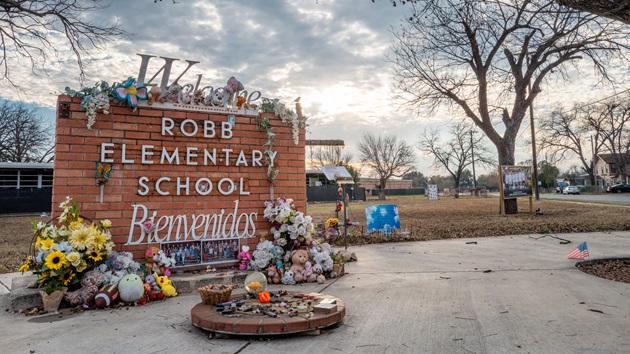
A memorial dedicated to the 19 children and two adults murdered on May 24, 2022 during a mass shooting at Robb Elementary School is seen on January 06, 2026 in Uvalde, Texas. (Brandon Bell/Getty Images)
(CORPUS CHRISTI, Texas) — As soon as Wednesday afternoon, a Texas jury will begin deliberating whether a law enforcement officer should be held criminally responsible for failing to act in the face of one of the worst mass shootings in U.S. history.
After nine days of testimony, prosecutors and defense lawyers in the trial of former Uvalde schools police officer Adrian Gonzales are scheduled to deliver their closing arguments in a Corpus Christi courtroom on Wednesday morning. Deliberations could begin as early as Wednesday afternoon.
At issue is whether Gonzales — one of the first officers to arrive at Robb Elementary on May 24, 2022 — ignored his training and endangered dozens of students when he responded to the shooting.
Prosecutors allege he “intentionally, knowingly, recklessly and with criminal negligence” put children in danger by failing to “engage, distract, and delay the shooter” in the critical first minutes of the shooting. If convicted on all 29 counts, Gonzales could spend the rest of his life in prison.
Nineteen students and two teachers died in the shooting nearly four years ago, with police officers waiting 77 minutes to confront the gunman as he was holed up inside a double classroom with students and teachers. While the shooting response has been the subject of hearings and investigations, the case against Gonzales marks the first criminal trial related to the shooting and the delayed police response.
What is he charged with? Gonzales was charged with 29 felony counts of abandoning/endangering children – one count for each of the 19 students who died in the shooting and the 10 children who survived in classroom 112.
Each count carries a maximum penalty of two years in prison, and Gonzales could spend the rest of his life in prison if he is convicted. While juries in Texas sometimes determine criminal sentences, Gonzales has opted to be sentenced by Judge Sid Harle if he is convicted.
What happened to the police chief’s case? Along with Gonzales, prosecutors also charged former Uvalde schools Police Chief Pete Arredondo, who was the scene commander during the Robb shooting. His case has been indefinitely delayed due to a pending civil lawsuit involving the tactical unit that ultimately breached the classroom and killed the shooter.
Why is the trial in Corpus Christi? Judge Sid Harle began overseeing the case after a local judge in Uvalde recused themselves from the matter.
Taking place 200 miles from Uvalde, the trial is being held in a Corpus Christi courtroom after Gonzales’ attorneys successfully argued he would be unable to have a fair trial in the county where the shooting took place.
Who is in the jury? While emotions flared during jury selection — with some now-disqualified jurors vocally criticizing the police response to cheers from other jurors — Harle was able to seat a jury in less than a day.
The jury and alternates included 11 women and five men, though one of the male jurors was excused last week due to a family emergency.
Are there any comparable cases? According to Phil Stinson — a professor at Bowling Green State University in Ohio who maintains a database of police officers who have been arrested — the case against Gonzales is uncommon but not unprecedented.
Prosecutors in Florida attempted to similarly charge a law enforcement officer for his response to the 2018 shooting at Marjory Stoneman Douglas High School in Parkland, Florida. Seventeen were killed when a gunman opened fire that day, Feb. 14, 2018, in Parkland.
A jury in 2023 acquitted Scot Peterson, a former Broward County sheriff’s deputy, after he was charged with child neglect and culpable negligence for his alleged inaction following the shooting.
How did prosecutors approach the case? Prosecutors called three dozen witnesses — including investigators, teachers, and the families of victims — over nine days of testimony to argue that Gonzales missed a critical opportunity to stop the shooter before he entered Robb Elementary. They allege he was one of the first to respond to the shooter, was explicitly told the location of the gunman before he entered the school but failed to act.
“I told him that he needed to get stopped before he went into the fourth-grade building. We needed to stop him,” teaching aide Melodye Flores testified.
“And what did he say?” prosecutor Bill Turner asked.
“He, just, nothing,” Flores said.
According to a Texas Ranger who testified for prosecutors, Gonzales had more than a minute to stop the shooter before he entered the school, and the gunman was able to fire more than a hundred rounds during a two-minute period while Gonzales was standing outside Robb Elementary.
How did defense lawyers approach the case? Defense lawyers spent less than three hours on Tuesday calling two witnesses before resting their case. Gonzales declined to testify in his own defense.
His lawyers have argued that Gonzales not only followed his training that day but also highlighted that other officers had similar — if not better — opportunities to stop the shooter.
They accused prosecutors of “Monday-morning quarterbacking” Gonzales’ actions that day and argued he acted appropriately based on the limited information he had in the moment. They also highlighted that Gonzales attempted to enter the building with other officers but was directed by his commanding officer to retreat to call in for SWAT support.
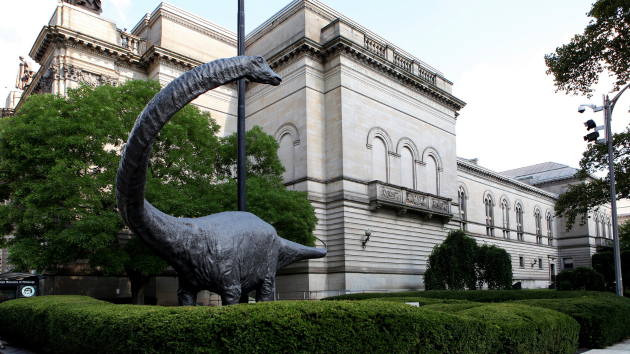
A huge dinosaur sits outside the Carnegie Museum of Natural History in Pittsburgh, Pennsylvania on August 26, 2016. (Raymond Boyd/Getty Images)
(PITTSBURGH) — The Carnegie Museum of Natural History has made the behind-the-scenes inventory of rare fossils and other ancient artifacts available for public viewing for the first time.
The exhibition, dubbed “The Stories We Keep,” features items from the Pittsburgh, Pennsylvania, museum’s inventory that are typically not displayed, chosen by the researchers and curators who work to preserve them.
Museum curators were inspired to create the exhibition in an effort to display items that wouldn’t otherwise be seen, Sarah Crawford, director of museum experience at Carnegie Museum of Natural History, told ABC News.
Museum staff cares for more than 22 million objects and specimens, less than 1% of which are on view at any given time, similar to other natural history museums around the country, Crawford said. The exhibition was designed in part by asking collection managers to choose objects and specimens to highlight.
“Every fossil, every animal and every object has a story that it can tell about our planet and the universe and our place in it,” Crawford said.
One of the most unique aspects of the exhibition is its Visible Collections display, which features a care lab in which visitors can watch as conservation staff work with fossils and other items in real time.
Guests even have the opportunity to speak with the scientists as they preserve and maintain the items, Crawford said.
When visitors walk in, the first thing they see behind the window is a 40-foot Egyptian funerary boat — the planks of which were all taken apart and individually restored, Crawford said.
Also within the Visible Collections are a cuneiform cylinder from King Nebuchadnezzar II that was made over 2,500 years ago, a fossilized bird feather that was found in Utah from about 48.5 million years ago and the lower jaw of a pygmy hippopotamus.
Currently on display within the Minerals and Earth Science Collection are toxic, radioactive specimens that could potentially kill people, as well as a meteorite that fell in Pennsylvania several years ago.
And a display named “Collecting So Many Bugs” features many of the museum’s 13 million invertebrate specimens, many of which are rare or from habitats that were previously lost.
Museums often do not have the space to display all of their items, or they are still in the process of being prepared and conserved, Crawford said.
The exhibition was unveiled in November and has since struck the curiosity and awe of new and repeat visitors alike.
“Because we have that visible lab, it means that the exhibition could be new every time you come,” Crawford said.
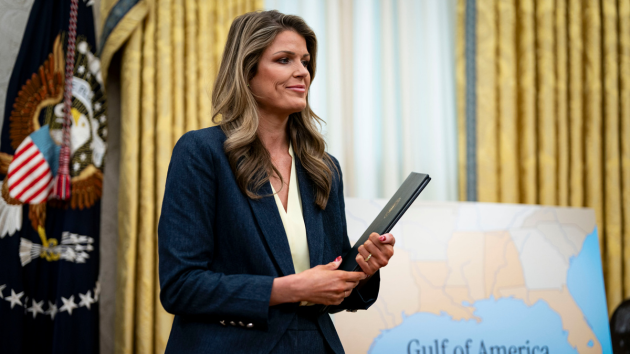
Lindsey Halligan, attorney for US President Donald Trump, holds ceremonial proclamations to be signed by US President Donald Trump, not pictured, in the Oval Office of the White House in Washington, DC, US, on Thursday, March 6, 2025. Trump exempted Canadian goods covered by the North American trade agreement known as USMCA from his 25% tariffs, offering major reprieves to the US’s two largest trading partners. (Photographer: Al Drago/Bloomberg via Getty Images)
(WASHINGTON) — A federal judge on Tuesday ordered that Lindsey Halligan, President Donald Trump’s appointee as interim U.S. attorney for the Eastern District of Virginia, must stop using that title before the court or face disciplinary action.
“Ms. Halligan’s continued identification of herself as the United States Attorney for this District ignores a binding court order and may not continue,” the order from U.S. District Judge David Novak stated.
Judge Novak earlier this month ordered Halligan to explain to the court why she was using the title of U.S. attorney after a judge in that district found that her appointment was improper and violated the Constitution.
The Justice Department’s fiery reply to that order, which included Attorney General Pam Bondi and Deputy Attorney General Todd Blanche as signatories, drew Judge Novak’s ire.
“Ms. Halligan’s response, in which she was joined by both the Attorney General and the Deputy Attorney General, contains a level of vitriol more appropriate for a cable news talk show and falls far beneath the level of advocacy expected from litigants in this Court, particularly the Department of Justice,” Novak wrote Tuesday.
Halligan, who was a White House aide before being appointed interim U.S. attorney by President Trump, secured indictments against former FBI Director James Comey and New York Attorney General Letitia James, only to have them thrown out when U.S. District Judge Cameron McGowan Currie determined in November that she had been unlawfully appointed without being either Senate confirmed or appointed by the federal judiciary.
“The Court finds it inconceivable that the Department of Justice, which holds a duty to faithfully execute the laws of the United States even those with which it may have disagreement would repeatedly ignore court orders, while simultaneously prosecuting citizens for breaking the law,” Judge Novak wrote in Tuesday’s order. “If the Court were to allow Ms. Halligan and the Department of Justice to pick and choose which orders that they will follow, the same would have to be true for other litigants and our system of justice would crumble.”
The judge warned that if Halligan continues to use the U.S. attorney title, she will be subject to disciplinary proceedings.
“Ms. Halligan and anyone who joins her on a pleading containing the improper moniker subjects themselves to potential disciplinary action in this Court pursuant to the Court’s Local Rules,” Tuesday’s order said.
The Eastern District of Virginia also issued a job posting to fill the vacancy left by Halligan’s improper appointment.
A spokesperson for the U.S. attorney’s office for the Eastern District of Virginia declined to comment when contacted by ABC News.
A memorial dedicated to the 19 children and two adults murdered on May 24,2022 during a mass shooting at Robb Elementary School is seen on January 05, 2026 in Uvalde, Texas. Brandon Bell/Getty Images
(CORPUS CHRISTI, Texas) — Former Uvalde, Texas, school police officer Adrian Gonzales could have suffered from “inattentive blindness” and “tunnel vision” when he responded to the Robb Elementary School shooting, a former officer testified for the defense on Tuesday.
Former San Antonio police officer Willie Cantu said the jurors are unlikely to “understand just how bad” the tunnel vision could be during an emergency response.
To describe “inattentive blindness,” Cantu compared the experience to struggling to find your car keys when you are running late for work.
“It’s like when you get stressed. I’m late for work and I need to find my keys to my car. I can’t find my keys, and you have them in your hand,” he said.
Cantu attempted to defend Gonzales’ actions on May 24, 2022 — citing the real-time challenges he faced as one of the first officers to respond — as defense lawyers pushed back on the prosecution’s allegation that Gonzales “intentionally, knowingly, recklessly and with criminal negligence” endangered students.
Cantu also tried to cast doubt on the reliability of teaching aide Melodye Flores, who testified for the prosecution that she tried to warn Gonzales about the location of the shooter.
“No disrespect to Flores at all, she was definitely there, experienced all the trauma that was going on, but people process that type of stuff differently,” Cantu said.
Cantu also attempted to highlight the inaction of other officers, including one who monitored the perimeter of the school when he arrived.
“It really surprised me that he was right there and just pretty much taken, I’d say a tertiary role,” he remarked.
The only other defense witness was Claudia Rodriguez, a secretary at the funeral home that neighbored Robb.
Rodriguez told jurors that she witnessed gunman Salvador Ramos exit his car with a rifle after crashing into a ditch, and she said Ramos ducked behind a nearby parked car when Gonzales drove by him. That move, defense lawyers allege, prevented Gonzales from being able to clearly spot the gunman when he first arrived at the school.
“And at the time you see the white car [driven by Gonzales], you see the figure, kind of ducking down between the cars. Is that how you remember seeing it?” defense attorney Jason Goss asked.
“Yes sir,” Rodriguez replied.
Rodriguez also testified that she tried to warn other arriving officers that the shooter entered the school, but they did not run in to stop him.
“Gilbert [Limones, another funeral home employee,] and I are yelling at them upon their arrival and after they exited their car that he’s already inside,” she said.
“Did those officers then go immediately to where you told them and run inside the building?” Goss asked.
“No. I believe, if I remember correctly, they got back into the car and went around the school towards the front of Robb,” she said.
Defense lawyers rested their case on Tuesday after testimony from Cantu and Rodriguez. Closing statements are set for Wednesday.
Prosecutors allege Gonzales, who is charged with 29 counts of child endangerment, did not follow his training and endangered the 19 students who died and an additional 10 surviving students.
Flores, the teaching aide, testified that she repeatedly urged Gonzales to intervene in the shooting, but said he did “nothing” in those crucial moments.
Gonzales has pleaded not guilty and his lawyers argue he is being unfairly blamed for a broader law enforcement failure that day. He could face the rest of his life in prison if convicted of all counts.
A memorial dedicated to the 19 children and two adults murdered on May 24,2022 during a mass shooting at Robb Elementary School is seen on January 05, 2026 in Uvalde, Texas. Brandon Bell/Getty Images
(CORPUS CHRISTI, Texas) — The Robb Elementary School gunman ducked behind a parked car when former Uvalde, Texas, school police officer Adrian Gonzales initially drove by him, an eyewitness told jurors on Tuesday.
That move, defense lawyers allege, prevented Gonzales from being able to clearly spot the gunman when he first arrived at the school on May 24, 2022.
Claudia Rodriguez, a secretary at the funeral home that neighbored Robb, was the first witness called by the defense, and she told jurors that she witnessed gunman Salvador Ramos exit his car with a rifle after crashing into a ditch.
Rodriguez said Ramos ducked behind a nearby parked car when Gonzales drove by him.
“And at the time you see the white car [driven by Gonzales], you see the figure, kind of ducking down between the cars. Is that how you remember seeing it?” defense attorney Jason Goss asked.
“Yes sir,” Rodriguez replied.
Rodriguez also testified that she tried to warn other arriving officers that the shooter entered the school, but they did not run in to stop him.
“Gilbert [Limones, another funeral home employee,] and I are yelling at them upon their arrival and after they exited their car that he’s already inside,” she said.
“Did those officers then go immediately to where you told them and run inside the building?” Goss asked.
“No. I believe, if I remember correctly, they got back into the car and went around the school towards the front of Robb,” she said.
Prosecutors allege Gonzales, who is charged with child endangerment, did not follow his training and endangered the 19 students who died and an additional 10 surviving students.
Defense attorneys have sought to highlight that other officers arrived within the same timeframe as Gonzales but failed to act.
Gonzales has pleaded not guilty and his lawyers argue he is being unfairly blamed for a broader law enforcement failure that day.
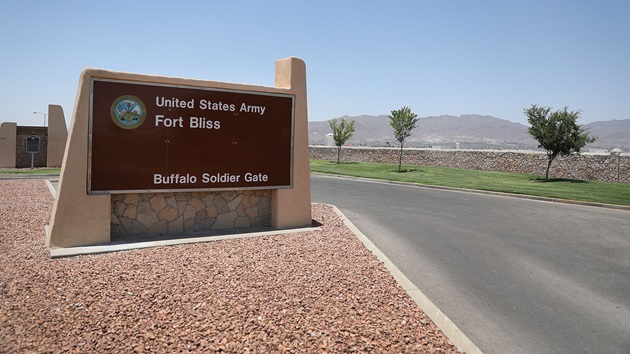
An entrance to Fort Bliss is shown on June 25, 2018 in Fort Bliss, Texas. Joe Raedle/Getty Images
(EL PASO, Texas) — An undocumented immigrant died while in custody at a U.S. Immigration and Customs Enforcement detention facility in Texas, federal authorities said.
Victor Manuel Diaz, 36, of Nicaragua, died of a “presumed suicide” on Jan. 14 at Camp East Montana, a sprawling tent complex at the U.S. Army’s Fort Bliss base in El Paso, ICE said Sunday. The official cause of death remains under investigation, the agency said.
ICE said Diaz illegally entered the U.S. in March 2024 and an immigration judge ordered him removed in absentia in August 2025.
Diaz had been in federal custody since Jan. 6, when ICE said its officers “encountered” him in Minneapolis amid the federal immigration crackdown in Minnesota. He was arrested for an immigration violation and ICE processed him as a final order of removal on Jan. 12, the agency said.
Two days later, security staff found Diaz unconscious and unresponsive in his room, ICE said. He was pronounced dead following life-saving measures by on-site medical staff and El Paso emergency medical services personnel, according to ICE.
“ICE is committed to ensuring that all those in custody reside in safe, secure and humane environments,” ICE said in a press release.
Diaz’s death is the second reported by ICE at the Camp East Montana detention facility this month.
On Jan. 3, Geraldo Lunas Campos, 55, of Cuba, was pronounced dead “after experiencing medical distress,” ICE said. His cause of death is under investigation, ICE said in a Jan. 9 press release.
The El Paso County medical examiner’s office said Tuesday that it does not have any record of Diaz, and the case and manner of death are pending for Lunas Campos.
If you are experiencing suicidal, substance use or other mental health crises, or are worried about a friend or loved one, please call or text the 988 Suicide & Crisis Lifeline. You will reach a trained crisis counselor for free, 24 hours a day, seven days a week. You can also go to 988lifeline.org.
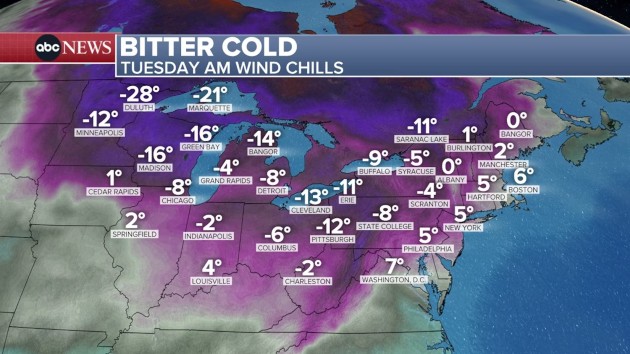
Bitter Cold – Tuesday AM Wind Chills Map. ABC News
(NEW YORK) — A major arctic blast is stretching from the Midwest to the Northeast, bringing dangerously cold weather to 43 million people.
On Monday morning, the wind chill — what temperature it feels like — plunged to minus 30 degrees in Minneapolis; minus 27 degrees in Cedar Rapids, Iowa; minus 22 degrees in Chicago; and minus 22 degrees in Green Bay, Wisconsin.
The brutal Midwest wind chill continued on Tuesday morning, hitting minus 13 degrees in Chicago; minus 23 in Green Bay; and minus 12 in Cleveland.
The freeze hit the Northeast on Tuesday morning, with the wind chill dropping to minus 11 degrees in Pittsburgh, Pennsylvania; 7 degrees in Washington, D.C.; and 5 degrees in New York City.
The Arctic blast is also bringing heavy lake effect snow to the Midwest and Northeast. The heaviest lake effect snow is expected in western Michigan and western and upstate New York where, 6 to 12 inches of snow is forecast.
Click here for what you need to know to stay safe in the cold.
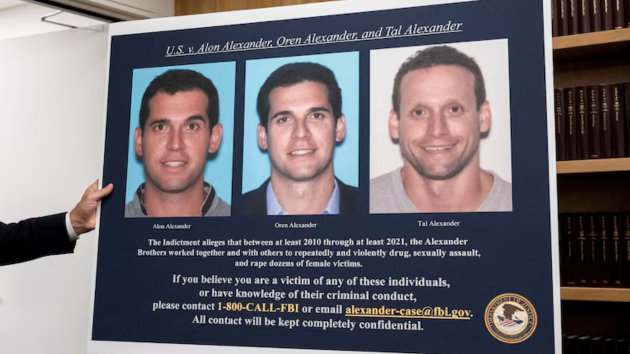
A display showing images of Alon, Oren, and Tal Alexander prior to a news conference in New York, Dec. 11, 2024. (Yuki Iwamura/Bloomberg via Getty Images)
(NEW YORK) — Their brand was ultra-lux real estate, and the lifestyle to match.
For more than a decade, brothers Oren and Tal Alexander built a rep of jetsetting glamour and partying at hot spots, flanked always by beautiful women.
What was actually going on behind the scenes, according to federal authorities, was criminal.
Along with a third brother, Alon, Oren and Tal Alexander were arrested in December 2024 on federal sex trafficking charges in a case that has splashed across the nation’s tabloids.
As the brothers prepare to go on trial, the case looms as a battle of he said, she said: whether, as their advocates say, their alleged behavior was simply boys partying hard — or, as authorities allege, something far more sinister.
In a 16-page indictment, the US Attorney’s Office in Manhattan says that for well over a decade, the Alexander brothers conspired to “repeatedly and violently drug, sexually assault and rape dozens of women,” using the “promise of luxury experiences, travel and accommodations” as a tool “to lure and entice” and ultimately force sex.
Prosecutors have assembled a chorus of women accusers whose accounts they hope will take a jury through a journey of rendezvous, drugs and booze in places like the Hamptons, Aspen, Las Vegas and the Bahamas.
Some of the accusations date to a time before the #MeToo reckoning. The brothers could face 15 years to life in prison, if convicted on all the federal charges. Oren and Alon also face state charges in Florida. And collectively, the three are staring at dozens of civil lawsuits that remain on hold while the criminal cases proceed.
The brothers’ parents, Orly and Shlomy Alexander, maintain their sons are innocent and insist that that will become clear from the testimony in the criminal case.
“We have been living with this ordeal since allegations first surfaced in civil lawsuits and were widely amplified long before any criminal charges were brought. The impact on our family has been profound and deeply painful,” the parents said in a statement to ABC News. “We believe our sons are innocent, and that if they are judged on the evidence presented at trial — free from speculation or public narrative — the truth will prevail. We ask only for a fair process, grounded in facts, where their voices can finally be heard.”
The sons of Israeli immigrants, Oren, 38, and Tal, 39, forged reputations as star brokers in the cutthroat world of New York luxury real estate, with a portfolio that includes some of the all-time most expensive home sales in the United States. As Oren and Tal in 2022 started their own brokerage, Oren’s twin Alon took a job as president of the family’s security firm.
Promiscuous and privileged though they may have been, the Alexander brothers’ lawyers argue they are not guilty of sexual violence. The men leveraged their success and used it to attract women, who, their lawyers insist, participated willingly. Defense attorneys insist the brothers’ did not commit the crimes they’re charged with and that their accusers’ accounts are dubious and “speculative,” motivated by hopes for windfalls.
“The Alexanders were interested in meeting women, and they met women in virtually any place a man could meet a woman: nightclubs, bars, restaurants, beach parties, pool parties, their own homes, the homes of friends, etc.,” their defense said in a November brief filed with the court.
“None of these women were drugged or raped or anything of the sort,” the defense submitted to US District Judge Valerie Caproni, overseeing the case. “Rather, those who engaged in sex with one or more of the Alexander brothers did so consensually. Years later, they either regretted their voluntary decision or, through communicating with other supposed victims, rewrote history or developed a perspective that was different from reality.”
The brothers’ spokesman, Juda Engelmayer, was more pointed: “Many of these began as late-filed civil claims, not criminal cases, and they surfaced without the objective evidence serious allegations would traditionally produce, no contemporaneous reports, medical documentation, or forensic findings,” he said, noting that the alleged victims did not come forward at the time of the alleged assaults. “At the time, the Alexander brothers were young and navigating adult social environments, but that is not criminal conduct and bears no resemblance to trafficking. These accusations exist only within litigation, where financial recovery is the incentive, not proof.”
Ensemble allegations In their filings, federal prosecutors alleged that the brothers employed a “pattern of behavior” of physical force and “drugged sexual assaults that were the hallmark of the defendants’ conspiracy.”
Prosecutors also point to a series of text message chats between the brothers and their friends about obtaining drugs, including Quaaludes, MDMA, cocaine, GHB and Ambien. The chemicals, federal authorities allege, were “to incapacitate women to further their sex trafficking scheme.”
The Alexanders’ defense challenged the prosecutors’ evidence, including chalking up those conversations as “idle chatter.”
“Even taking the Government’s factual allegations as true (which we do only for the purposes of this motion), there is not a single alleged instance of sex in exchange for something of value,” the defense said in a November filing. “In fact, the statements of the witnesses are precisely the opposite, specifically that they had sex against their will, either because they were drugged, drunk or forced.”
Prosecutors remain confident their case against the brothers is rock solid.
They have notified the court they plan to call seven alleged victims to prove the core of their charges, among them a woman who says she was only 16 years old when the sexual encounter occurred with Alon and Tal, who were 22 and 21 at the time.
Also expected to testify are other alleged victims, some of whom have filed civil lawsuits claiming assault by at least one of the brothers, and may also appear as witnesses in the state criminal case. Though their alleged assaults are not the subject of federal charges, the women may be called as witnesses to what prosecutors say illustrates a history of prior bad acts.
The federal judge has allowed one of the alleged victims in the Florida case to appear as a witness in New York. That woman, known in court papers as “M.G.,” says that in October 2021, she met Oren at a dinner, joined him and others on his boat, and a small group eventually went with him to his Miami home.
M.G. said her conversation with Oren was “flirty,” he gave her a drink, and it turned physical, according to her 2024 interview with a Miami Beach police detective. She alleged that it turned to unwanted and aggressive behavior, and he allegedly ripped her dress off.
When she ran downstairs and tried to open the backyard door, she said it “would not open,” and when she requested to be let out, she later told the detective, he sexually assaulted her with his fingers as she kept saying “no.” M.G. said when she could finally leave, she immediately told her friend what had happened, but that her friend “was pretty drunk.”
In her 2024 police interview, M.G.’s friend said she recalled being told Oren had “tried having sex with [M.G.] after she said no” but didn’t remember being told that Oren had penetrated M.G. in any way. The friend also did not recall the doors being locked when she texted M.G. and they decided to leave.
“I was like, ‘hey, where are you?’ And she said, ‘I think I’m in a room with Oren or something like that.’ And I was like, ‘I’m ready to leave. Let’s — let’s leave.’ And she’s like, ‘yes, please, let’s go.’ And then I just remember walking out of the house,” the friend said. She recalled M.G. seemed “distressed” and had told her “she didn’t want to sleep with him, and he was forcing it.”
In an October 2025 deposition with the Alexanders’ Florida attorneys, the friend reiterated Oren’s alleged advances and M.G.’s objections. But she also said there was nothing unusual about M.G.’s clothing when they left through the front door.
The Alexanders’ attorneys point to what they say are the women’s misaligned memories of the night as evidence the allegations cannot be proven in court.
“M.G’s story is like a C-grade Horror film,” Oren’s Florida defense attorneys Ed O’Donnell IV and Joel Denaro said in a statement to ABC News, adding “her best friend contradicts” several points of the alleged narrative.
“M.G.” did not respond to a request for comment from ABC News.
Other alleged victims in the federal case have offered similar stories of their own alleged assaults, according to court documents.
Two of the alleged victims in the federal case said in June 2009, they were “invited by party promoters to the Hamptons to celebrate Alon and Oren’s birthday.” Though taken to the club on a party bus, the women learned it would not return them to Manhattan.
Alon “told [one of the women] that he had a nice house” where “there would be a fun afterparty, and invited [her] to stay there,” according to court documents. Both women agreed to go to the house. The night allegedly became a blur of what they said were drugged and repeated group rapes by the brothers, though they said they could only be remembered in “flashes of memory” between the two.
Clash of the narratives A critical linchpin in each of the Alexanders’ cases will be the credibility of victims’ narratives, according to legal experts — a hallmark of sex-crimes cases.
“The prosecution of this type of case often comes with a unique set of challenges. As we saw during the prosecution of Sean Combs, consent can be a very complex issue,” said Matt Murphy, a former senior prosecutor in Orange County, Calif., referring to the recent case of hip-hop mogul Sean “Diddy” Combs.
“Jurors often struggle with things like continued contact, friendly text messages, alcohol use, and of course, pending civil suits,” said Murphy, now an ABC News legal contributor. “Prosecutorial success will depend heavily on victim credibility and solid corroboration. We’ll see.”
Some of the women who have come forward with their allegations have said they did so only after learning of others who said they had similar experiences with the brothers.
“Like, handfuls of girls … it was like everyone in Miami knew,” one of the alleged victims in the Florida case, identified in court papers as S.M., told a detective in August 2024, as seen in body-worn camera footage of the interview obtained by ABC News.
“Now I finally feel like, no one’s going to call me a liar ’cause I’m not the only one,” she told the detective.
S.M., who was a model at the time, said she went to an event where the group included Oren in October 2017. Afterward, she said she went with him to his apartment. Once there, she said, he gave her a glass of wine and a virtual reality headset to try, then led her to a bedroom, pushing her onto the bed, where she says he assaulted her as she told him, “no.”
The brothers’ attorneys have stressed that the real-time behavior from some of the alleged victims belies the narrative they have told prosecutors and the public.
The day after that alleged assault, S.M. posted a picture of herself in a bikini on social media with the caption, “Cloudy with a chance of awesome,” according to court filings. That night, the defense said, she went out with friends to a nightclub.
“I always am in a bikini and take pictures in bikinis because I’m a model,” S.M. explained to the defense during a September 2025 deposition in Florida, according to a transcript obtained by ABC News.
Days after her alleged assault, S.M. texted Oren a picture of them, together and smiling, taken at the event, according to court documents.
“You would acknowledge that by you sending him that picture three days later, it would indicate that you in no way thought that he sexually assaulted you back then,” the Alexanders’ Florida defense attorney Edward O’Donnell said during the deposition.
“I feel like I was in some sort of denial,” S.M. said. “I was hoping that it didn’t happen.”
Two weeks after her alleged assault, S.M. met up with Oren again. “I wanted him to make it right because I was — I didn’t want it to be true and I was hurting inside,” S.M. said during her deposition.
Their texts after the alleged assault tell a different story, O’Donnell argued.
“It would be nice to have dinner. Hopefully we can schedule something before you leave,” S.M. texted Oren on Nov. 2, 2017, according to court documents.
“Documented-wise, your actions, your photographs, your downloads, your videoing him, taking photographs of him, you sending him those pictures, all subsequent to you, the date you claim that you were sexually assaulted, all go against that your sex was non-consensual,” O’Donnell said.
S.M. insisted she did not consent to that encounter.
“I don’t have evidence of what happened in that room, but I know what happened in that room and how I chose to act afterwards,” S.M. responded during the deposition. “Whether it be naive or hopeful, doesn’t change that.”
S.M.’s attorney declined to comment to ABC News.
On Jan. 8, a grand jury returned one of several superseding indictments, adding an additional charge against Alon and Oren for allegedly drugging and assaulting a woman during a 2012 Bahamian cruise.
The two brothers had already been charged for allegedly slipping her a drugged drink and taking “turns raping” her; the additional count also charged them with allegedly engaging in sex with her “while she was physically incapable of declining participation.”
In a filing over the weekend, the Alexanders’ attorneys filed a motion to dismiss, arguing, among other things, that prosecutors have repeatedly made last-minute changes to the charges that have left insufficient time for the defense to fully investigate.
In particular, the defense cast doubt on the authenticity of a foreign birth certificate which would establish the alleged age of one of the females involved in some of the activity charged. Prosecutors allege that in 2009, Oren “recorded himself and another person engaging in sexual activity with a incapacitated 17-year-old girl in Manhattan.”
In their latest filing, the defense argued verifying such a birth certificate from a city “in an active war” is near-impossible, and more time is needed given the “central importance of the true birth date.” The judge has not yet weighed in.
The judge has scheduled jury selection to begin on Tuesday. The trial, which is scheduled to start on Jan. 26, is expected to last roughly a month.
Tippecanoe Superior Court 2 Judge Steve Meyer. (Tippecanoe County Government)
(LAFAYETTE, Ind.) — An Indiana judge and his wife were injured in a shooting at their home over the weekend, with a search underway for the suspected gunman, officials said.
Tippecanoe County Judge Steven Meyer and his wife, Kimberly Meyer, were shot in their home on Sunday, according to Indiana Supreme Court Chief Justice Loretta Rush.
Both are in stable condition, police said Monday.
Officers responded to the home in Lafayette around 2:17 p.m. Sunday and found both injured from the shooting, according to the Lafayette Police Department. Judge Meyer had an injury to one of his arms and his wife sustained an injury to her hip, police said.
Shell casings were recovered at the scene, according to police.
The investigation remains ongoing with multiple agencies, including the FBI, involved, police said. No arrests have been announced.
“I want to ensure the community that every available resource is being used to apprehend the individual(s) responsible for this senseless unacceptable act of violence,” Lafayette Mayor Tony Roswarski said in a statement. “I have tremendous confidence in the Lafayette Police Department and I want to thank all of the local, state, and federal agencies who are assisting in this investigation.”
In a statement issued on her and her husband’s behalf, Kimberly Meyer said, “I have great confidence in the Lafayette Police Department’s investigation and want to thank all the agencies involved for their work.”
“We are also incredibly grateful for the outpouring of support from the community; everyone has been so kind and compassionate,” she said. “We would also like to thank the medical personnel who provided care and assistance to us following the incident.”
Meyer is a judge in the Tippecanoe County Superior Court. He was first elected to the position in 2014. He has previously served as a public defender for Tippecanoe County and on the Lafayette City Council.
Tippecanoe County Judges said in a statement on Monday that cases in Meyer’s court “will continue to be heard in a timely manner.”
“There has been an overwhelming outpouring of support from judges throughout the state offering to assist in any way,” the statement said.
Chief Justice Rush urged other judges in Indiana to “remain vigilant in your own security” and to contact their local sheriff, noting in a statement on Sunday that “the shooter is purportedly still at large.”
“I worry about the safety of all our judges,” she said in the statement. “As you work to peacefully resolve more than 1 million cases a year, you must not only feel safe, you must also be safe. Any violence against a judge or a judge’s family is completely unacceptable. As public servants, you are dedicated to the rule of law.”