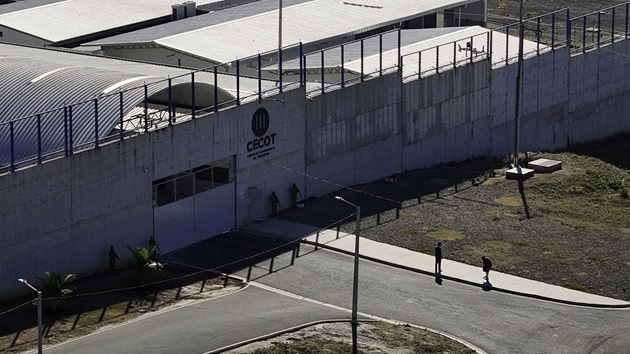
In an aerial view Salvadorian armed forces stand guard outside CECOT (Counter Terrorism Confinement Center) where thousands of accused gang members are imprisoned on December 15, 2025 in Tecoluca, El Salvador. John Moore/Getty Images
(WASHINGTON) — U.S. District Judge James Boasberg has ordered the Trump administration to facilitate the return of the Venezuelan migrants who were were deported to El Salvador’s CECOT prison last year in violation of a court order.
Boasberg on Thursday criticized the administration’s refusal to offer remedies for the deportees for what he called “flagrant” due-process violations.
“Our starting point is the Court’s prior finding that the deportees were denied due process,” Boasberg wrote. “Against this backdrop, and mindful of the flagrancy of the Government’s violations of the deportees’ due-process rights that landed Plaintiffs in this situation, the Court refuses to let them languish in the solution-less mire Defendants propose.”
The judge’s order requires the government to provide “boarding letters” and cover the financial cost of air travel for the Venezuelans currently in third countries who “so desire” to return to the U.S.
This is a developing story. Please check back for updates.
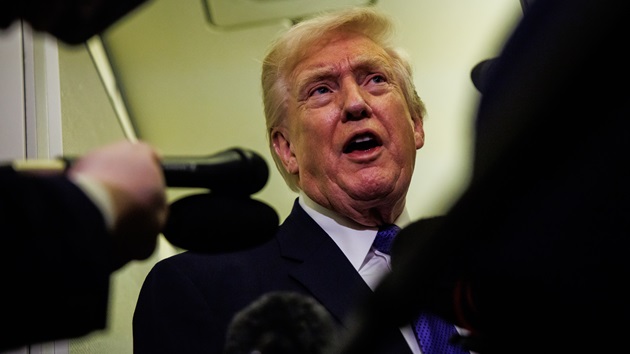
U.S. President Donald Trump gaggles with reporters while aboard Air Force One on February 6, 2026 en route to Palm Beach, Florida. Samuel Corum/Getty Images
(NEW YORK) — The fight over the Trump administration’s appointment of U.S. attorneys has taken another turn with the Justice Department’s firing of a newly appointed U.S. attorney in Northern New York.
After the DOJ’s appointment of acting U.S. Attorney John Sarcone III ran out, a court on Wednesday appointed Donald Kinsella to lead the U.S. attorney’s office in that district, according to a notice from the court.
But just hours after Kinsella’s appointment, Deputy Attorney General Todd Blanche fired him.
The ongoing battle centers on who has the right to select the prosecutors who lead the nation’s U.S. attorneys offices, with the Justice Department appointing a series of acting attorneys general despite laws that don’t allow those positions to be filled by consecutive interim nominees without either Senate confirmation or appointment by the federal judiciary.
“Judges don’t pick U.S. Attorneys. @POTUS does. See Article II of our Constitution. You are fired, Donald Kinsella,” Blanche tweeted Wednesday, hours after Kinsella’s appointment by the court.
The head of the White House Presidential Personnel Office, Dan Scavino, tweeted that Kinsella should “check your email.”
Last fall a court found that Lindsey Halligan, a former White House aide who was appointed by President Donald Trump as interim U.S. attorney for the Eastern District of Virginia, had been unlawfully appointed because the law doesn’t allow the position to be filled by two interim nominees in a row, in violation of the U.S. Constitution’s Appointments Clause.
After a federal judge threw out the indictments Halligan obtained against former FBI Director James Comey and New York Attorney General Letitia James, Attorney General Pam Bondi filed an appeal this week arguing that she has the authority to address U.S. attorney vacancies.
Trump’s former personal attorney, Alina Habba, was disqualified in December from serving as interim U.S. attorney in New Jersey after the Trump administration sought to extend her appointment, and courts in Nevada and California have made similar rulings involving the appointments of acting U.S. attorneys in those districts.
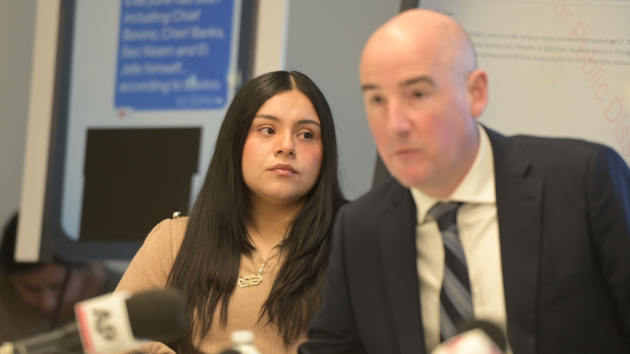
Marimar Martinez, a Chicago teacher’s assistant who survived being shot five times by a U.S. Border Patrol agent in October 2025, attends a press conference with her lawyers at the law offices of Cheronis & Parente LLC and Gallagher & Kosner Law LLC on February 11, 2026, in Chicago, Illinois, United States. (Jacek Boczarski/Anadolu via Getty Images)
(CHICAGO) — Last October, the Department of Homeland Security claimed that federal agents in Chicago were “forced to deploy their weapons and fire defensive shots at an armed US citizen” after their SUV was “rammed by vehicles and boxed in by 10 cars.”
But analysis of recently released body-camera footage of the shooting of Marimar Martinez and videos verified by nearby businesses and bystanders suggests that those claims were exaggerated — and that federal agents, knowing their actions were being recorded, appeared to coordinate with one another to explain their conduct that day.
Body camera footage and other evidence was released Tuesday after a federal judge last week granted a motion to permit the public release of the materials in the case.
The video shows that in the minute before the shooting, agents were being followed by two, not 10 vehicles. Agents stated they were “boxed in,” but at no time was their vehicle blocked from the front.
At no point in footage from an agent’s body-worn camera or from multiple surveillance cameras is a driver seen ramming the agents’ vehicle; instead, the video shows an agent appearing to steer toward the vehicle driven by Martinez, crashing into her, and then rapidly firing toward her.
Martinez, a U.S. citizen and teacher’s assistant, was shot five times during the incident. She’s now planning to sue DHS and the agent for allegedly making false claims about her following the shooting and labeling her a domestic terrorist.
While prosecutors originally alleged that Martinez “aggressively and erratically” pursued officers that day, a judge dismissed the criminal case against her with prejudice after a reversal by the Department of Justice, which sought to dismiss the case.
A U.S. Customs and Border Protection spokesperson said in a statement that the officer who shot Martinez was placed on administrative leave following the incident. The statement did not indicate the length of the administrative leave or when it began.
“CBP is committed to the highest standards of conduct, transparency, and accountability. All significant use-of-force incidents are thoroughly investigated, reviewed, and presented to the National Use of Force Review Board (NUFRB), an independent body comprised of senior CBP officials and representatives from DHS and DOJ, including the DOJ Civil Rights Division,” the statement said.
Below is a timeline of the incident based on the body camera footage and bystander video leading up to and after the shooting.
The lead-up 10:27:02 a.m.
Three federal agents are riding in an SUV in the first moments of video from an agent’s body-worn camera. Later, the video will reveal an Uber placard on the front of their SUV. One agent is seen speaking into the voice chat app on a nearby phone.
At the time, the Trump administration had surged federal resources for immigration enforcement in Chicago as part of “Operation Midway Blitz.”
According to a court filing, the agents were part of a protective detail assisting a nearby operation in Oaklawn. An FBI agent originally attested that the officers were being followed by multiple civilian vehicles.
10:28:17 a.m.
The agent’s body camera begins recording audio.
“Camera’s on,” the agent says.
The agent readies an assault rifle. With his finger on the trigger, one of the agents can be heard saying what sounds like either “do something, b—-,” or “hit something, b—-.”
10:28:35 a.m.
Another agent is seen pointing his handgun toward the right of the SUV.
A nearby driver repeatedly honks their horn, prompting one of the officers to remark, “Honk all you want.”
The agents’ vehicle is captured on a security camera on Kedzie Avenue. The SUV is flanked by Martinez, in a gray Nissan Rogue, to the agents’ left.
To their right is a GMC SUV, adorned with a Mexican flag on its hood, driven by Anthony Ruiz. Ahead of them are two cars: a sedan and a red pickup truck.
10:28:47 a.m.
Seconds later, the agent with the active body-worn camera says, “Alright, it’s time to get aggressive, get the f—- out. Because they’re trying to box us in.”
“If she hits us, it’s … ,” another agent can be heard saying.
10:28:57 a.m.
Charles Exum, the driver, appears to be the agent who says, “We’re going to make contact, we’re boxed in … we have got to get [inaudible] out of here. “
“We are boxed in,” the agent with the active body-worn camera repeats.
10:28:58 a.m.
The three vehicles briefly enter the frame of a security camera looking over a gas station parking lot.
Martinez, in the Nissan Rogue, is parallel with the agents to their left. Ruiz is behind them and to their right.
The pickup truck and the sedan, previously observed ahead of the agents’ vehicle, are also observed traveling several car lengths ahead of the agents.
10:29:01 a.m.
Exum appears to turn the car’s wheel to the left. A loud crash is heard, and the agents visibly react.
By this time, the two cars ahead of the agents have driven into the path of another security camera. The cars do not stop and drive out of view.
The shooting 10:29:04 a.m.
The agents’ vehicle comes to a stop. Their vehicle and Ruiz’s are seen stopped at the rightmost edge of the gas station security footage. The view of Martinez’s vehicle is blocked, and we do not see the agents’ vehicle make contact with hers.
Exum is seen holding a handgun in his right hand.
10:29:06 a.m.
“Out of the car,” the driver says, as he exits the car with his handgun drawn.
“Be advised, we’ve been struck, we’ve been struck,” the agent with the body-worn camera says.
A second later, five gunshots can be heard in rapid succession.
The agents’ SUV enters the field of view of another security camera. A drawing of the scene — made by one of the agents during their interview with the FBI, according to Martinez’s lawyers — indicated three vehicles were ahead of the agents’ SUV, but the footage shows that at the moment of the shooting, the agents’ vehicle has an unobstructed path forward.
10:29:09 a.m.
Martinez’s vehicle enters the frame of the security camera. She drives north, away from the scene.
10:29:11 a.m.
The agent with the body-worn camera points his rifle toward Ruiz’s vehicle, as it reverses and crashes into a parked car before turning to the left to drive away. Ruiz is later arrested at a gas station a half block away.
“Don’t you f—— move,” the officer says.
10:29:18 a.m.
As the agent turns around, his body camera shows that the SUV is not being blocked in front of it.
The aftermath 10:32:49 a.m.
Exum’s body-worn camera turns on about three minutes after firing his weapon.
10:39:19 a.m.
Exum tells a responding officer that he fired “five to seven shots” at Martinez.
“I don’t know if I hit her or not,” he says. “I [was] angled at the driver, I got five to seven rounds off at her.”
“It was a woman shooting?” the officer asked.
“No, I was shooting,” Exum said.
10:39:38 a.m.
Exum tells a responding officer that he “did the shooting” after Martinez hit his SUV.
“She already hit my vehicle, we got out to defend, she came forward, and that’s when I opened up on her,” he said. “We did not get shot at; we did the shooting.”
10:45:04 a.m.
As more officers arrive at the scene, Exum and the other agents begin to recount the incident and to ask whether his camera was on.
“We were getting out to defend because they already tried to box us in,” he said. “She was moving forward into me.”
“Camera on or no?” an officer said.
“No, I didn’t have it because we were [inaudible],” he said.
“That’s good, as long as you can justify it, bro,” the officer responds.
10:48:14 a.m.
As Exum prepares to light a cigarette, another officer acknowledges that their conversation is being recorded and advises him to “keep everything out.”
“So she hit you guys … You got boxed in?” an officer asked.
“We [were] getting boxed in, and I had to push left. She came in, she pulled over, stopped. I got out so we could defend,” Exum said.
“Hey, hey, just real quick though, since we’re recording, keep it [inaudible],” another officer says. “Keep everything out, you’re good man.”
10:50:30 a.m.
Another officer tells Exum to “keep [his] mouth shut” about the incident.
“Just so you know, you don’t give statements to anybody,” the officer says. “Absolutely no statements at all … You keep your mouth shut.”
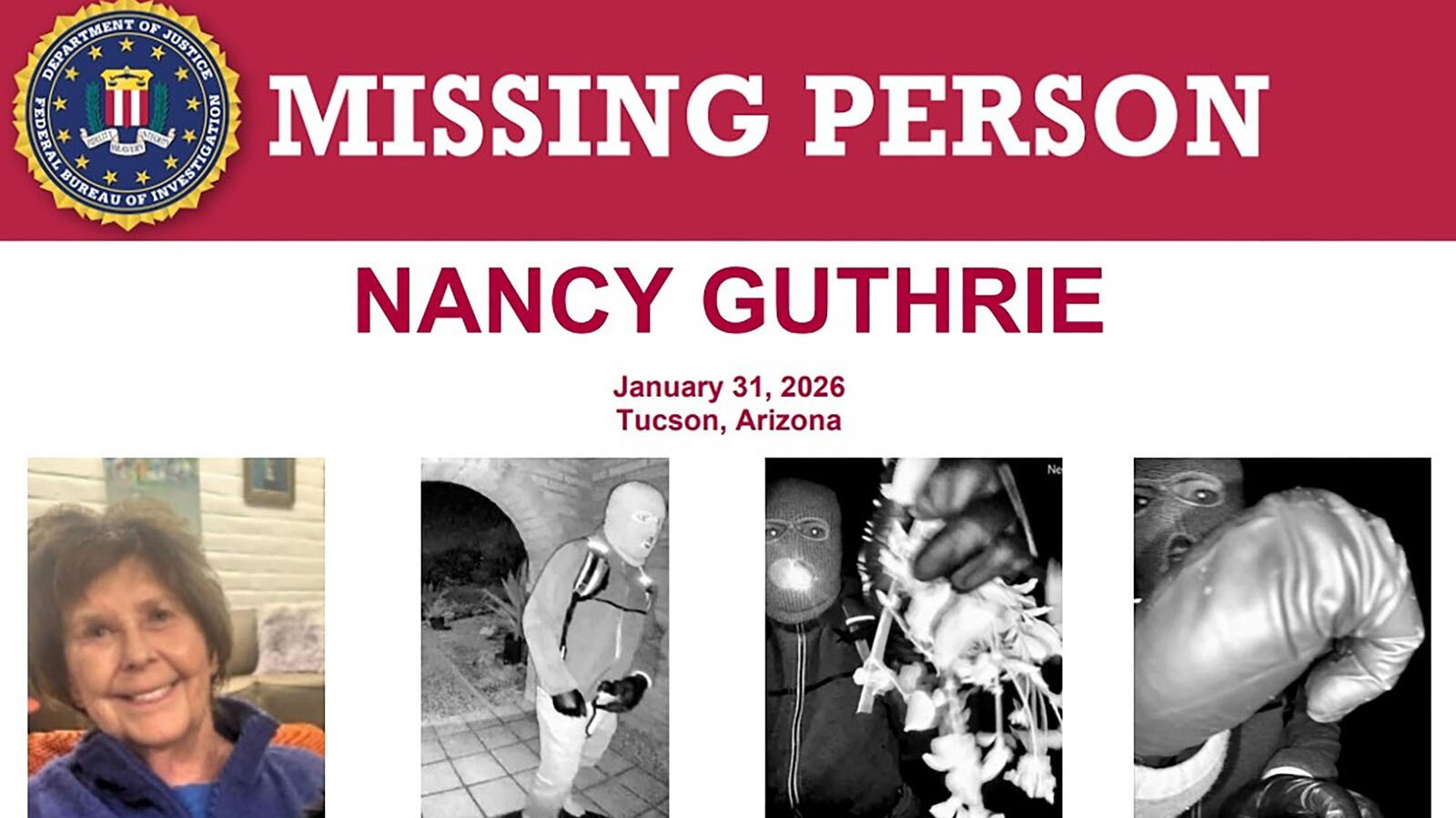
The FBI updated their missing person poster for Nancy Guthrie, Feb. 10, 2026. (FBI)
(PHOENIX, Ariz.) — The man who was detained and released after being questioned in connection with the abduction of Today show anchor Savannah Guthrie’s mother, Nancy Guthrie, says it was “terrifying.”
The man, who said he works in Tucson and delivers packages for a living, said he was detained in a traffic stop in Rio Rico, according to ABC Phoenix affiliate station KNXV, which spoke to him after his encounter with law enforcement.
The Pima County Sheriff’s Department said on Tuesday they had detained a “subject” in connection with the investigation.
When asked about what happened, the man who spoke with KNXV said it was a “terrifying” experience and that authorities “didn’t tell me anything at the beginning.”
When asked if he delivered a package to Nancy Guthrie’s home, the man said, “I don’t know. Might have been a possibility. I don’t know.”
“I was detained the whole time,” he told KNXV. “I was being questioned, but they only asked me for my first name, my last name, my date of birth and my social.”
The man whom officials detained had been on the radar of the FBI and Pima County Sheriff’s Department regarding Nancy Guthrie’s disappearance prior to the public release on Tuesday of the images of a masked subject at Nancy Guthrie’s front door, law enforcement sources told ABC News.
The individual, who identified himself as Carlos, was detained for questioning in Rio Rico after the FBI identified him using a series of electronic investigative tools, including cellphone usage information and traffic data, the sources said, without specifying the exact techniques.
A local judge from Santa Cruz County, Arizona, signed the warrant for the search of the man’s house, which was carried out overnight. He was questioned for several hours before being released without charge and is under no law enforcement restrictions, according to the sources.
Separately, investigators are studying every pixel of the new video the FBI released publicly on Tuesday to try to find any identifying feature, including the apparent weapon and characteristics of what the subject was wearing, according to the sources.
“In high-profile cases, these type of leads are typical,” retired FBI agent Brad Garrett told Good Morning AmericaWednesday. “It may happen again because it’s the type of tips you get. But having said that, it’s the type of tips that will resolve this case.”
Investigators also descended upon a home where a court-authorized search was conducted and a woman claiming to be the homeowner says someone called in a tip reporting Nancy Guthrie was there.
“You can go in and search my house. There’s nobody there. I have nothing to hide,” the woman told KNXV. “There’s nobody in my house and I don’t know what’s going on.”
She told reporters her son-in-law was the person detained by police but insisted he had nothing to do with Nancy Guthrie’s disappearance.
The developments followed the first images released of a masked man approaching Nancy Guthrie’s front door and as investigators continued to search in her neighborhood.
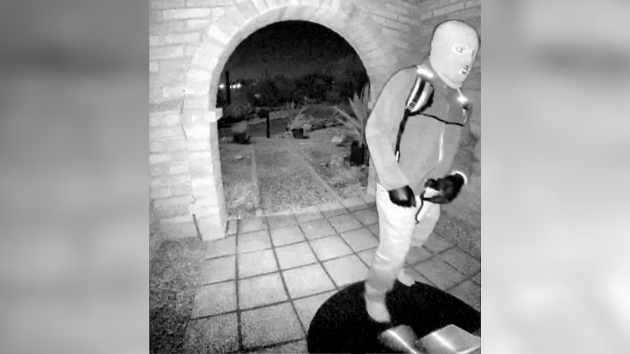
The images showed someone wearing a mask, gloves, a backpack and armed with a holstered handgun at the front door of Nancy Guthrie’s Tucson-area home around the time investigators suspect she was abducted on Feb. 1.
Savannah Guthrie later posted the images to her Instagram account, with the message, “We believe she is still alive. Bring her home.”
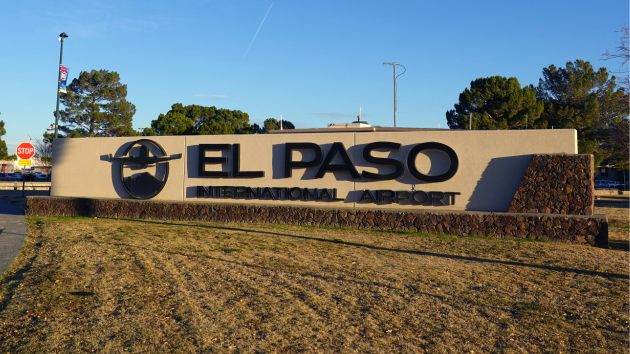
A sign at the El Paso International Airport (ELP) on December 25, 2025 in El Paso, Texas. (Kirby Lee/Getty Images)
(EL PASO, Texas) — Flight restrictions put in place and then lifted for El Paso, Texas, by the Federal Aviation Administration were taken as a preemptive measure by the agency amid a potential operation by military drones in the area, a source told ABC News.
The FAA said in a statement that there is no threat to commercial aviation. All flights will resume as normal.
Hours after issuing the flight restrictions, the FAA published an updated statement saying the temporary closure of airspace over El Paso had been lifted.
“Mexican cartel drones breached US airspace. The Department of War took action to disable the drones,” an administration official told ABC News. “The FAA and DOW have determined there is no threat to commercial travel.”
The earlier notice said no flights could operate beginning early Wednesday within a 10 nautical mile radius of El Paso Airport, including from the ground up to 17,999 feet. The restrictions will remain in effect until Feb. 21, the notice said. This excludes the Mexican airspace.
El Paso Airport authorities told ABC News in a statement, “The FAA, on short notice, issued a temporary flight restriction halting all flights to and from El Paso and our neighboring community, Santa Teresa, NM. The restriction prohibits all aircraft operations (including commercial, cargo and general aviation) and is effective from February 10 at 11:30 PM (MST) to February 20 at 11:30PM (MST). Airport staff has reached out to the FAA, and we are pending additional guidance.”
The airport says airlines have been advised of the restrictions, and travelers are encouraged to check with their airlines on the latest flight information.
Rep. Veronica Escobar, a Democrat whose district includes El Paso, described the notice as “unprecedented,” saying it “has resulted in significant concern within the community.”
“From what my office and I have been able to gather overnight and early this morning there is no immediate threat to the community or surrounding areas,” Escobar said in a statement. “There was no advance notice provided to my office, the City of El Paso, or anyone involved in airport operations.
The airspace has been defined as “national defense airspace,” according to the FAA. Pilots who violate these restrictions could be intercepted or detained for questioning by law enforcement.
Failure to comply with these restrictions could result in the FAA imposing a civil penalty or revoking the pilot’s license. The federal government can also pursue criminal charges or even use “deadly force” against an aircraft if it poses an imminent security threat, according to the notice.
ABC News has reached out to the FAA for additional information behind these restrictions as well as to airlines about disruptions to their operations.
El Paso is home to one of the largest cargo facilities near the border, so these restrictions could have a significant impact on shipments as well. ABC News has also contacted air cargo carriers for any information.
Escobar said her office has “urged the FAA to immediately lift the Temporary Flight Restrictions placed on the El Paso area.”
“I will continue to make information public as I learn it,” she said.
A sign at the El Paso International Airport (ELP) on December 25, 2025 in El Paso, Texas. (Kirby Lee/Getty Images)
(EL PASO, Texas) — The Federal Aviation Administration issued temporary flight restrictions over El Paso, Texas, and Santa Teresa, New Mexico, prohibiting all flight operations there for the next 10 days for “special security reasons,” according to a notice.
The notice said no flights could operate beginning early Wednesday within a 10 nautical mile radius of El Paso Airport, including from the ground up to 17,999 feet. The restrictions will remain in effect until Feb. 21, the notice said. This excludes the Mexican airspace.
El Paso Airport authorities told ABC News in a statement, “The FAA, on short notice, issued a temporary flight restriction halting all flights to and from El Paso and our neighboring community, Santa Teresa, NM. The restriction prohibits all aircraft operations (including commercial, cargo and general aviation) and is effective from February 10 at 11:30 PM (MST) to February 20 at 11:30PM (MST). Airport staff has reached out to the FAA, and we are pending additional guidance.”
The airport says airlines have been advised of the restrictions, and travelers are encouraged to check with their airlines on the latest flight information.
The airspace has been defined as “national defense airspace,” according to the FAA. Pilots who violate these restrictions could be intercepted or detained for questioning by law enforcement.
Failure to comply with these restrictions could result in the FAA imposing a civil penalty or revoking the pilot’s license. The federal government can also pursue criminal charges or even use “deadly force” against an aircraft if it poses an imminent security threat, according to the notice.
ABC News has reached out to the FAA for additional information behind these restrictions as well as to airlines about disruptions to their operations.
El Paso is home to one of the largest cargo facilities near the border, so these restrictions could have a significant impact on shipments as well. ABC News has also contacted air cargo carriers for any information.
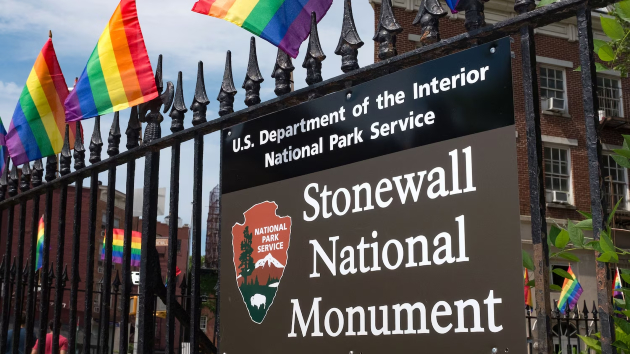
In this June 2, 2019, file photo, a sign marking the spot of the Stonewall National monument is shown in Greenwich Village neighborhood of New York. (Epics via Getty Images)
(NEW YORK) — The National Parks Service (NPS) removed the rainbow flag that sat on a flagpole inside the Stonewall National Monument near Christopher Park in New York City’s Greenwich Village.
The site was designated a national monument by President Barack Obama in June, 2016, becoming the first federal monument dedicated to LGBTQ+ rights.
The communications office for NPS, which is overseen by the Department of the Interior, confirmed the removal of the rainbow flag in a statement to ABC News on Tuesday morning. It said that, under federal guidance, “only the U.S. flag and other congressionally or departmentally authorized flags are flown on NPS-managed flagpoles, with limited exceptions.”
“Any changes to flag displays are made to ensure consistency with that guidance. Stonewall National Monument continues to preserve and interpret the site’s historic significance through exhibits and programs,” the statement continued.
The office of Interior Sec. Doug Burgum reiterated the sentiment in a statement to ABC News on Tuesday, saying that federal policy governing flag displays “has been in place for decades,” and “recent guidance clarifies how that longstanding policy is applied consistently across NPS-managed sites.”
The pride flag inside the monument was permanently installed by NPS in 2021, and was the first pride flag to be flown over federally-funded land.
Steven Love Menendez, a New York-based advocate for LGBTQ+ rights who launched the movement for the permanent pride flag to be installed at the site in 2017, questioned the timing of its removal.
“It’s a targeted attack on the community, right? Because the flag was there. It’s not that they never gave permission for it to be erected. They did give permission for it to be erected, and now they’re using some legal language to try to make an excuse for taking it down,” Menendez said. “Why now? That’s the question the administration needs to answer. Why now? It was already up, and my response is, it’s solely based on hate.”
The Stonewall National Monument is located near the Stonewall Inn, a historic gay bar in the neighborhood that was a safe haven for many in the LGBTQ+ community in the 1960s. The bar was raided by the NYPD in 1969, leading to riots that became known as the Stonewall Uprising, which is credited with kickstarting the modern LGBTQ+ movement. The NYPD publicly apologized for the raid in 2019.
“Stonewall will be our first national monument to tell the story of the struggle for LGBT rights. I believe our national parks should reflect the full story of our country, the richness and diversity and uniquely American spirit that has always defined us. That we are stronger together. That out of many, we are one,” Obama said in 2016.
Menendez said that, during Pride Month in 2017, he got a permit from NPS to install a pride flag inside the monument and his request was granted. Once the month was over, he noted that the flag was taken down. Menendez said he was “very passionate” about people being able to see the pride flag when they visited the monument, so he petitioned NPS in 2017 for the installation of a permanent flag.
According to ABC station in New York City, WABC, NPS was expected to participate in a dedication ceremony for a permanent rainbow flag inside the monument on National Coming Out Day on Oct. 11, 2017. But amid opposition from the Trump administration, NPS withdrew from the ceremony — a move that drew widespread criticism from LGBTQ+ advocates, WABC reported.
At the dedication ceremony, the city of New York flew their own rainbow flag on city land outside the Stonewall National Monument and it wasn’t until 2021 when the Biden administration approved the permanent installation of a pride flag inside the monument on federal land. The city flag has remained in place, but the flag on federal land was removed by NPS this week.
“For me, [the rainbow flag] is a sense of pride and joy and celebration and victory for our community. … This flag represents our victory and our triumphs,” Menendez, who attended the 2017 ceremony, told ABC News on Tuesday. “[Removing] it feels like a slap in the face to the community, you know, a punch in the gut. They’re taking away our symbol of pride.”
The removal of the flag comes after President Donald Trump directed Sec. Burgum in a March 2025 executive order to remove “divisive” and “anti-American” content from museums and national parks.
Asked if the removal of the pride flag was in response to Trump’s order, NPS did not comment.
In this June 2, 2019, file photo, a sign marking the spot of the Stonewall National monument is shown in Greenwich Village neighborhood of New York. (Epics via Getty Images)
(NEW YORK) — The National Parks Service (NPS) removed the rainbow flag that sat on a flagpole inside the Stonewall National Monument near Christopher Park in New York City’s Greenwich Village.
The site was designated a national monument by President Barack Obama in June, 2016, becoming the first federal monument dedicated to LGBTQ+ rights.
The communications office for NPS, which is overseen by the Department of the Interior, confirmed the removal of the rainbow flag in a statement to ABC News on Tuesday morning. It said that, under federal guidance, “only the U.S. flag and other congressionally or departmentally authorized flags are flown on NPS-managed flagpoles, with limited exceptions.”
“Any changes to flag displays are made to ensure consistency with that guidance. Stonewall National Monument continues to preserve and interpret the site’s historic significance through exhibits and programs,” the statement continued.
The office of Interior Sec. Doug Burgum reiterated the sentiment in a statement to ABC News on Tuesday, saying that federal policy governing flag displays “has been in place for decades,” and “recent guidance clarifies how that longstanding policy is applied consistently across NPS-managed sites.”
The pride flag inside the monument was permanently installed by NPS in 2021, and was the first pride flag to be flown over federally-funded land.
Steven Love Menendez, a New York-based advocate for LGBTQ+ rights who launched the movement for the permanent pride flag to be installed at the site in 2017, questioned the timing of its removal.
“It’s a targeted attack on the community, right? Because the flag was there. It’s not that they never gave permission for it to be erected. They did give permission for it to be erected, and now they’re using some legal language to try to make an excuse for taking it down,” Menendez said. “Why now? That’s the question the administration needs to answer. Why now? It was already up, and my response is, it’s solely based on hate.”
The Stonewall National Monument is located near the Stonewall Inn, a historic gay bar in the neighborhood that was a safe haven for many in the LGBTQ+ community in the 1960s. The bar was raided by the NYPD in 1969, leading to riots that became known as the Stonewall Uprising, which is credited with kickstarting the modern LGBTQ+ movement. The NYPD publicly apologized for the raid in 2019.
“Stonewall will be our first national monument to tell the story of the struggle for LGBT rights. I believe our national parks should reflect the full story of our country, the richness and diversity and uniquely American spirit that has always defined us. That we are stronger together. That out of many, we are one,” Obama said in 2016.
Menendez said that, during Pride Month in 2017, he got a permit from NPS to install a pride flag inside the monument and his request was granted. Once the month was over, he noted that the flag was taken down. Menendez said he was “very passionate” about people being able to see the pride flag when they visited the monument, so he petitioned NPS in 2017 for the installation of a permanent flag.
According to ABC station in New York City, WABC, NPS was expected to participate in a dedication ceremony for a permanent rainbow flag inside the monument on National Coming Out Day on Oct. 11, 2017. But amid opposition from the Trump administration, NPS withdrew from the ceremony — a move that drew widespread criticism from LGBTQ+ advocates, WABC reported.
At the dedication ceremony, the city of New York flew their own rainbow flag on city land outside the Stonewall National Monument and it wasn’t until 2021 when the Biden administration approved the permanent installation of a pride flag inside the monument on federal land. The city flag has remained in place, but the flag on federal land was removed by NPS this week.
“For me, [the rainbow flag] is a sense of pride and joy and celebration and victory for our community. … This flag represents our victory and our triumphs,” Menendez, who attended the 2017 ceremony, told ABC News on Tuesday. “[Removing] it feels like a slap in the face to the community, you know, a punch in the gut. They’re taking away our symbol of pride.”
The removal of the flag comes after President Donald Trump directed Sec. Burgum in a March 2025 executive order to remove “divisive” and “anti-American” content from museums and national parks.
Asked if the removal of the pride flag was in response to Trump’s order, NPS did not comment.
In this June 2, 2019, file photo, a sign marking the spot of the Stonewall National monument is shown in Greenwich Village neighborhood of New York. (Epics via Getty Images)
(NEW YORK) — The National Parks Service (NPS) removed the rainbow flag that sat on a flagpole inside the Stonewall National Monument near Christopher Park in New York City’s Greenwich Village.
The site was designated a national monument by President Barack Obama in June, 2016, becoming the first federal monument dedicated to LGBTQ+ rights.
The communications office for NPS, which is overseen by the Department of the Interior, confirmed the removal of the rainbow flag in a statement to ABC News on Tuesday morning. It said that, under federal guidance, “only the U.S. flag and other congressionally or departmentally authorized flags are flown on NPS-managed flagpoles, with limited exceptions.”
“Any changes to flag displays are made to ensure consistency with that guidance. Stonewall National Monument continues to preserve and interpret the site’s historic significance through exhibits and programs,” the statement continued.
The office of Interior Sec. Doug Burgum reiterated the sentiment in a statement to ABC News on Tuesday, saying that federal policy governing flag displays “has been in place for decades,” and “recent guidance clarifies how that longstanding policy is applied consistently across NPS-managed sites.”
The pride flag inside the monument was permanently installed by NPS in 2021, and was the first pride flag to be flown over federally-funded land.
Steven Love Menendez, a New York-based advocate for LGBTQ+ rights who launched the movement for the permanent pride flag to be installed at the site in 2017, questioned the timing of its removal.
“It’s a targeted attack on the community, right? Because the flag was there. It’s not that they never gave permission for it to be erected. They did give permission for it to be erected, and now they’re using some legal language to try to make an excuse for taking it down,” Menendez said. “Why now? That’s the question the administration needs to answer. Why now? It was already up, and my response is, it’s solely based on hate.”
The Stonewall National Monument is located near the Stonewall Inn, a historic gay bar in the neighborhood that was a safe haven for many in the LGBTQ+ community in the 1960s. The bar was raided by the NYPD in 1969, leading to riots that became known as the Stonewall Uprising, which is credited with kickstarting the modern LGBTQ+ movement. The NYPD publicly apologized for the raid in 2019.
“Stonewall will be our first national monument to tell the story of the struggle for LGBT rights. I believe our national parks should reflect the full story of our country, the richness and diversity and uniquely American spirit that has always defined us. That we are stronger together. That out of many, we are one,” Obama said in 2016.
Menendez said that, during Pride Month in 2017, he got a permit from NPS to install a pride flag inside the monument and his request was granted. Once the month was over, he noted that the flag was taken down. Menendez said he was “very passionate” about people being able to see the pride flag when they visited the monument, so he petitioned NPS in 2017 for the installation of a permanent flag.
According to ABC station in New York City, WABC, NPS was expected to participate in a dedication ceremony for a permanent rainbow flag inside the monument on National Coming Out Day on Oct. 11, 2017. But amid opposition from the Trump administration, NPS withdrew from the ceremony — a move that drew widespread criticism from LGBTQ+ advocates, WABC reported.
At the dedication ceremony, the city of New York flew their own rainbow flag on city land outside the Stonewall National Monument and it wasn’t until 2021 when the Biden administration approved the permanent installation of a pride flag inside the monument on federal land. The city flag has remained in place, but the flag on federal land was removed by NPS this week.
“For me, [the rainbow flag] is a sense of pride and joy and celebration and victory for our community. … This flag represents our victory and our triumphs,” Menendez, who attended the 2017 ceremony, told ABC News on Tuesday. “[Removing] it feels like a slap in the face to the community, you know, a punch in the gut. They’re taking away our symbol of pride.”
The removal of the flag comes after President Donald Trump directed Sec. Burgum in a March 2025 executive order to remove “divisive” and “anti-American” content from museums and national parks.
Asked if the removal of the pride flag was in response to Trump’s order, NPS did not comment.
FBI Director Kash Patel released a surveillance photo, Feb. 10, 2026 showing a potential subject in investigation of the disappearance of Nancy Guthrie in Tucson, AZ. (@FBIDirectorKash/X)
(TUCSON, Ariz.) — FBI Director Kash Patel has released images and video of an “armed individual” in connection with the disappearance of Nancy Guthrie, the 84-year-old mother of “Today” show host Savannah Guthrie.
“[L]aw enforcement has uncovered these previously inaccessible new images showing an armed individual appearing to have tampered with the camera at Nancy Guthrie’s front door the morning of her disappearance,” Patel said in his post.
Savannah Guthrie posted the images to her Instagram account, with the message, “We believe she is still alive. Bring her home.”
Nancy Guthrie was taken from her home in Tucson, Arizona, on Sunday, Feb. 1, according to authorities. A Monday ransom deadline by persons claiming to be Guthrie’s abductors passed as the search for her continues.
This is a developing story. Check back for updates.