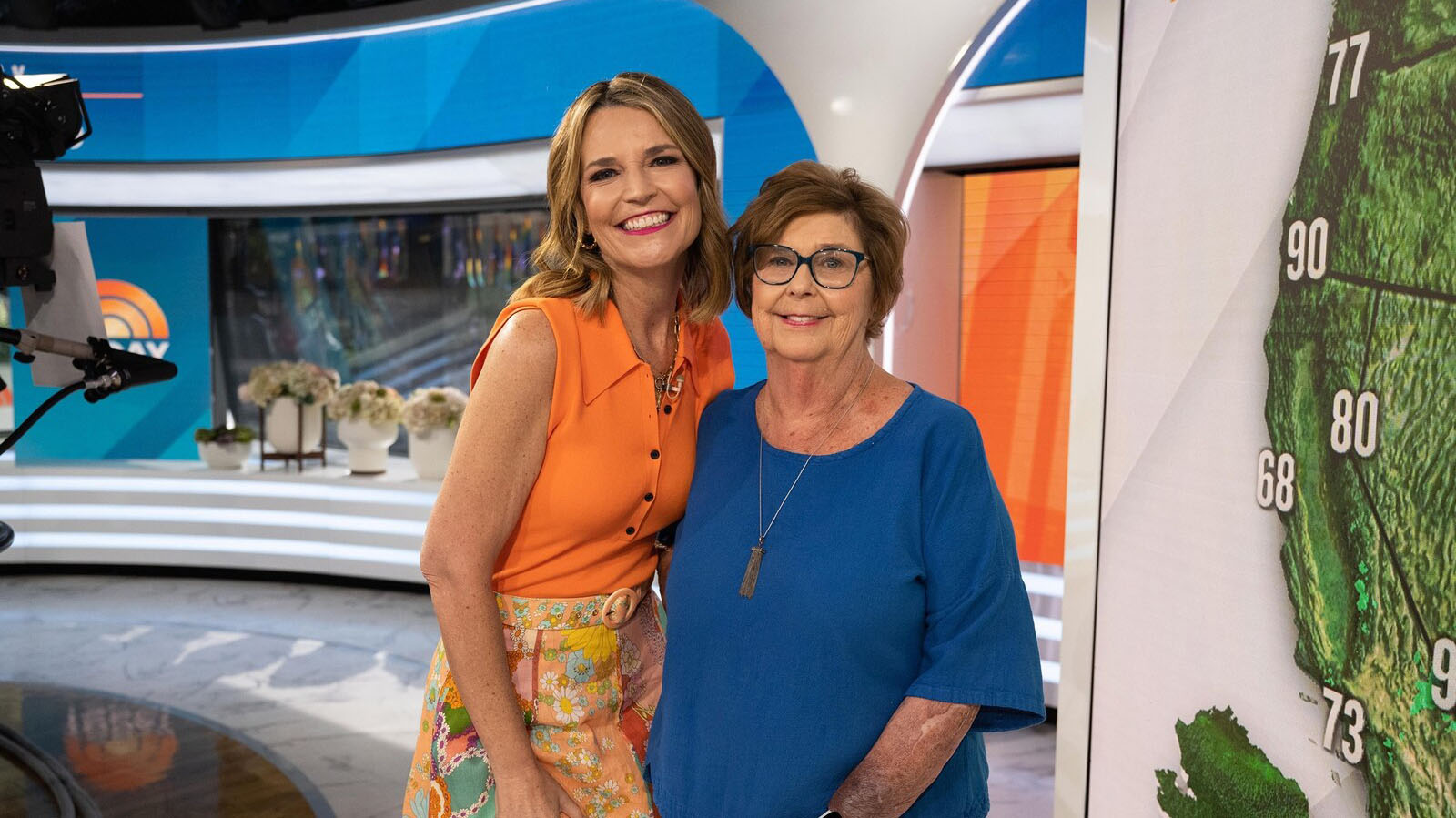
Savannah Guthrie and mother Nancy Guthrie, June 15, 2023. (Nathan Congleton/NBC via Getty Images)
(NEW YORK) — Testing on hair found at the home of “Today” show host Savannah Guthrie’s mother in the Tucson, Arizona, area is complete and does not point to a suspect in the 84-year-old’s abduction, Pima County Sheriff Chris Nanos told ABC News on Thursday.
“The hair was done … and there was nothing,” Nanos said in an interview.
That leaves a mixed sample of DNA retrieved from Nancy Guthrie’s home as the only known piece of biological evidence, and one that has so far not been affirmatively linked to a suspect.
The sample is a mix of as many as four people, the sheriff revealed. It’s not clear the technology even exists yet to untangle it, though the sheriff said multiple labs across the country are trying, including the FBI lab in Quantico, Virginia, and labs in Kansas, Florida, California and Arizona.
“My understanding is there are at least five, maybe six, labs across the country that are working on all of this,” Nanos said. “We have some of the brightest minds in the nation, if not the world, working on this.”
Investigators believe Guthrie was taken from her home in the early hours of Feb. 1 by a masked man captured on her doorbell camera. But six months later, Nanos is unable to say whether that masked man was working alone.
“I don’t think anybody’s here ready to say it’s one guy, it’s 10 guys,” Nanos said. “Did he have help? Could have.”
In an undated stock photo, a computer hacker is seen typing on a laptop. (STOCK PHOTO/Getty Images)
(WASHINGTON) — Federal and state authorities are investigating a series of coordinated cyberattacks at more than 30 water plants in Minnesota earlier this week. Authorities are looking into whether Iran or hackers associated with the country could be behind the attacks, multiple U.S. officials told ABC News Thursday.
This is a developing story. Please check back for updates.
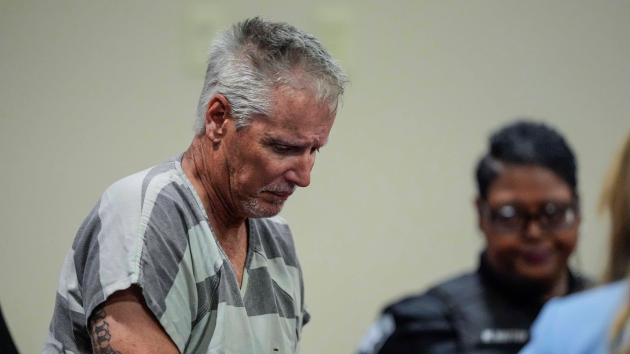
(NEW YORK) — The father of a Georgia teenager who carried out a deadly mass shooting at his high school was sentenced to 15 years in prison for second-degree murder and other charges after a jury found him criminally culpable for the attack.
Colin Gray, 55, admitted to providing the assault rifle used by his then-14-year-old son in the September 2024 shooting at Apalachee High School, which killed two students and two teachers.
His son, 16-year-old Colt Gray, pleaded guilty to all 55 counts against him, including murder and aggravated assault. Judge Nicholas Primm sentenced him to life in prison without parole on Tuesday.
The teen’s father appeared in the Barrow County Courthouse before the same judge on Thursday to learn his fate. He faced more than 100 years in prison after being found guilty of 27 counts, including second-degree murder, involuntary manslaughter, cruelty to children in the second degree, and reckless conduct. The jury deliberated for fewer than two hours before returning the guilty verdicts in March.
Colin Gray is the latest parent to be charged and convicted in the U.S. in connection with a mass shooting carried out by their child. Judge Primm noted the novelty of the school shooting case, saying it’s the first of its kind in Georgia and the second he’s aware of in the nation.
“What we’re really referencing is this new phenomenon of parents being charged in conjunction with crimes that their children are committing,” Primm said. “It’s a divisive case.”
Primm said the father was convicted because “the warning lights were flashing brighter and brighter” and he didn’t get his son help or remove his access to guns.
“No parent thinks that their child is going to be the next school shooter, but it became more and more obvious that something bad was going to happen,” Primm said.
The judge told Colin Gray that if he had used gun locks or removed the ammunition from his house, “you wouldn’t be here today.”
The defense asked for 10 years in prison in what attorney Chris Hobbs called the first case of its kind tried in Georgia, arguing that Colin Gray knew his son was struggling but misjudged the warning signs.
“We understand the gravity of this situation. Four people are gone, and nothing the court can do today can change that. But the question today is narrower, and in some ways harder — what does justice require when a father’s negligence and a son’s concealed intent meet on a single morning?” Hobbs said.
Prosecutors asked the judge that Colin Gray be sentenced to 80 years in prison, saying that he gave Colt Gray a gun months after law enforcement asked him to restrict his son’s access to guns, and that the risk was “staring him in the face every day” in the form of a shrine to the shooter in the Parkland high school massacre in his son’s bedroom.
“This was the risk he was ignoring, that there would be a mass shooting of children at a school, and he gave his son the exact tool he would need to accomplish this,” Barrow County District Attorney Brad Smith said during the sentencing hearing Thursday. “He is the reason four people are dead, seven are injured and countless others traumatized. And he is the reason a 16-year-old boy was sentenced two days ago to the rest of his life in prison.”
Several of the family members of those killed in the school shooting addressed the court on Thursday, speaking to the pain they continue to endure.
Colin Gray declined to address the court prior to his sentence.
During the two-week trial, prosecutors presented evidence that Colin Gray had been warned that his son had an affinity for mass shooters and was aware that the teen kept a shrine on his bedroom wall dedicated to the shooter in the 2018 massacre at Marjory Stoneman Douglas High School in Parkland, Florida.
Instead of getting his son psychological help, Colin Gray gave the boy an AR-15-style weapon as a Christmas present that the teen ultimately used to carry out the mass shooting at Apalachee High School, prosecutors said.
Colin Gray testified in his own defense during the trial, breaking down while being questioned about whether he noticed any “red flags” that would have led him to believe the boy was capable of committing a mass shooting.
“I struggle with it every day,” Colin Gray testified. “He’s a good kid, you know? He wasn’t perfect, but to do something, uh, that heinous, like I don’t, I don’t know if anybody would see that type of evil.”
During his testimony, Colin Gray confirmed that he gave his son the AR-15-style rifle as a Christmas present, telling jurors the gift came with rules.
“This is a weapon that I want you to shoot when we go to the range, and if you keep doing really good in school, going to school and doing all the things you should, you graduate and you’re 18, this will be your gun,” Colin Gray said he told his son.
Following the verdict, Smith said that evidence showed that there were “multiple warnings over a lengthy period of time.”
“You just had to do one thing — take that rifle away — and this would have been prevented,” Smith told reporters.
Several other parents have been convicted in the U.S. in connection with a mass shooting carried out by their children.
In 2024, Jennifer and James Crumbley were convicted of charges stemming from a deadly mass shooting at a Michigan high school committed by their then-15-year-old son, Ethan Crumbley. The parents were found guilty of involuntary manslaughter in separatetrials after prosecutors presented evidence of an unsecured gun at their home and their indifference toward their son’s mental health. They were each sentenced to 10 to 15 years in prison.
Their son pleaded guilty in October 2022 to murdering four students and injuring several others in the November 2021 shooting at Oxford High School and was sentenced to life in prison without parole.
In 2023, Robert Crimo Jr. pleaded guilty to seven counts of misdemeanor reckless conduct — one count for each person killed by his son, Robert Crimo III, during a mass shooting at a 2022 Fourth of July Parade in the Chicago suburb of Highland Park. As part of a plea deal, Crimo Jr. was sentenced to 60 days in jail and two years of probation.
His son, who was 19 at the time of the shooting, pleaded guilty to multiple counts of murder and attempted murder last year and was sentenced to life in prison without parole.
In an ongoing case, the father of a 15-year-old girl who shot and killed a student and teacher at a Wisconsin school in 2024 faces charges alleging he allowed his daughter access to guns used in the deadly shooting.
The father, Jeffrey Rupnow, was charged with two counts of intentionally giving a dangerous weapon to a minor and one count of contributing to the delinquency of a minor in connection with the shooting at the Abundant Life Christian School in Madison. His case is set to go to trial next year.
ABC News’ Bill Hutchinson contributed to this report.
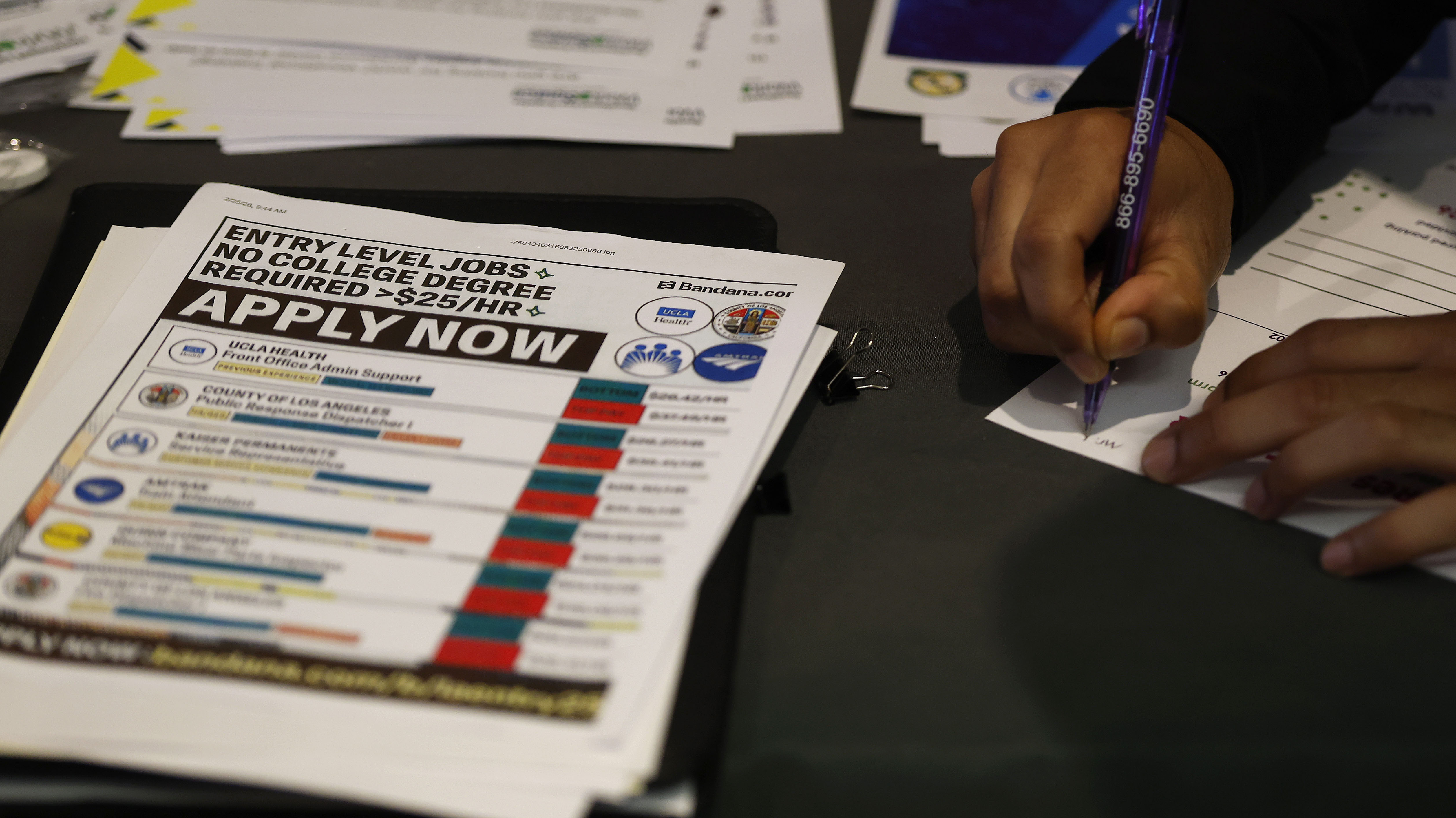
A job seeker fills out an application during the HIRE360 Diversity Hiring Expo on April 28, 2026, in Inglewood, California. (Photo by Justin Sullivan/Getty Images)
(WASHINGTON) — The United States economy slowed more than expected as an inflation surge took hold over the early months of the Iran war, a government report on Thursday showed.
The economy grew at an annualized rate of 1.5% over three months ending in June, marking a slight slowdown from 2.1% growth recorded in the previous quarter. The figure came in lower than economists’ expected.
Still, the latest data outperformed 0.5% annualized gross domestic product (GDP) recorded over final three months of 2025.
The period covered by the data release followed a historic global oil shock set off by the Middle East conflict.
The national average price for a gallon of gasoline soared to a price as high as $4.56 a gallon in May, AAA data showed, before easing somewhat after a preliminary peace agreement last month.
Annual inflation has climbed to 3.5%, putting it more than 1 percentage point higher than the Federal Reserve’s target rate of 2%.
Still, hiring has proven more resilient than many economists feared, despite elevated costs for businesses and shoppers.
In recent quarters, a burst of investment in artificial intelligence has accounted for a large share of the nation’s economic growth.
A surge of AI spending accounted for roughly two-thirds of gross domestic product growth over the first half of 2025, JPMorgan Asset Management found, outpacing the contribution made by hundreds of millions of U.S. consumers. Many of the nation’s largest companies have poured funds into the chips and data centers necessary to operate AI.
The combination of elevated inflation and a resilient labor market, meanwhile, has raised the chances of an interest rate hike, futures markets show. The prospect of a rate increase poses the risk of a slowdown in economic activity over the coming months as corporations face the prospect of higher borrowing costs.
The benchmark rate stands at a level between 3.5% and 3.75%. That figure marks a significant drop from a recent peak attained in 2023, but borrowing costs remain well above a 0% rate established at the outset of the COVID-19 pandemic.
Fed Chair Kevin Warsh, who took the helm of the central bank this summer, has vowed to dial back inflation.
“Persistently high prices are a burden for the American people,” Warsh told reporters in Washington, D.C., last month. “This committee will deliver price stability.”
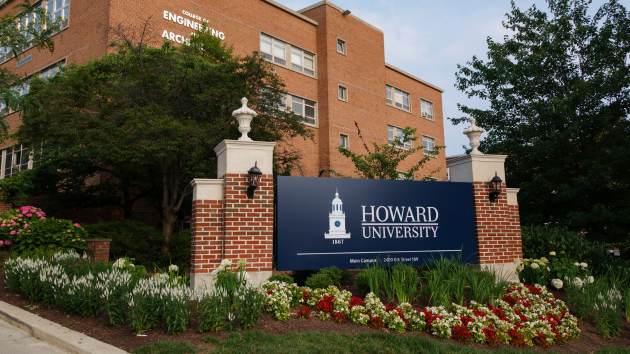
A sign greets people at the entrance to Howard University on June 5, 2025 in Washington, DC. (Photo by Kevin Carter/Getty Images)
(WASHINGTON) — After gaining national attention for unenrolling more than 500 incoming first-year students over missed tuition and financial-aid deadlines, Howard University has reinstated over 200 incoming students, according to the university’s interim president.
In an interview with Stephanie Ramos on ABC News Live on Wednesday, interim President Wayne A.I. Frederick offered new insight into the university’s perspective amid intense backlash from students.
“We looked at students who were able to give us the documentation we were asking for in the first place, such as evidence of an external scholarship, and also students were able to remit payment, and so we took that into consideration despite the fact that it was late,” Frederick said of the decision to re-enroll students.
“Having said that, we have now reviewed all 502 students, and so most of the decisions, if not all of them, have been made,” he continued.
Asked if overenrollment was a contributing factor in the university’s decision-making, Frederick told ABC News that all students who were unenrolled previously had housing assigned to them and that this was not a matter of “bed capacity.”
He said the reason for holding students to the payment deadline is that the university wants to avoid putting students in financial situations that would prevent them from finishing their degree, citing Howard’s four-year graduation rate at under 70%.
“We really are trying to do our best to make sure that when students start, they can finish. And this is part of what we must do on the front end because I think having them leave without a degree and with debt is not the right thing as well,” Frederick explained.
Multiple students who said they were unenrolled spoke with ABC News, saying they do not believe the university communicated with them effectively.
Dwayne Irvin, a 19-year-old from Missouri, told ABC News that he was blindsided by Howard’s decision to unenroll him. He said he had been communicating with the university’s financial aid office about pending outside scholarships and plans to enroll in a payment plan.
“They told me to wait to enroll into that payment plan until that scholarship has been deposited into my account, so my monthly payments could be cheaper. I said, OK, that makes sense. So I went with that route…A week later, I get the email saying I was out,” Irvin said.
Frederick expressed a willingness to improve the university’s communications but defended Howard’s actions.
“Over 2,200 students, families did exactly what we expected them to do and followed the policies and procedures and met the deadline, which means that I feel that our communication was pretty comprehensive,” Frederick said, adding, “We certainly need to recognize that we have to enhance our communications and really support our students even more.”
Nikiyah Clark, a 17-year-old from Ohio who was set to enroll at Howard as a first-year this fall, said she was told by the university that she was not permitted to re-enroll this year. She said she had missed a tuition payment deadline, but told ABC News that she had only received notice of the deadline the day it was due.
“I tried to hold back tears as I walked out of the building. I tried to compose myself, but I couldn’t. I was so sad. I was very hurt,” Clark said, adding “It was a very disheartening situation, considering the fact that I worked so incredibly hard to get to earn my place at the university.”
Frederick told ABC News that the university will hold enrollment space in next year’s class, and transfer and deferral opportunities for unenrolled students.
“We will still make every attempt to keep those students within the Howard family,” he said.
Those new enrollment processes have not yet been publicly detailed by Howard.
Irvin said he had been told about these options, but will not be re-enrolling. However, the family of Mason Farmer, another student who was unenrolled, told ABC News that the university had told them there was no more space for him to enroll this fall.
Colin Gray, 54, the father of Apalachee High School shooting suspect Colt Gray, 14, enters the Barrow County courthouse for his first appearance, on September 6, 2024, in Winder, Georgia. (Photo by Brynn Anderson-Pool/Getty Images)
(ATLANTA) — The father of a Georgia teenager who carried out a deadly mass shooting at his high school is set to be sentenced on more than two dozen charges, including second-degree murder, after a jury found him criminally culpable for the attack.
Colin Gray, 56, admitted to providing the assault rifle used by his then-14-year-old son in the September 2024 shooting at Apalachee High School, which killed two students and two teachers.
His son, 16-year-old Colt Gray, pleaded guilty to all 55 counts against him, including murder and aggravated assault. Judge Nicholas Primm sentenced him to life in prison without parole on Tuesday.
The teen’s father will appear in the Barrow County Courthouse before the same judge on Thursday to learn his fate. He faces more than 100 years in prison after being found guilty of 27 counts, including second-degree murder, involuntary manslaughter, cruelty to children in the second degree, and reckless conduct. The jury deliberated for fewer than two hours before returning the guilty verdicts in March.
Colin Gray marks the latest parent charged and convicted in the U.S. in connection with a mass shooting carried out by his child.
During the two-week trial, prosecutors presented evidence that Colin Gray had been warned that his son had an affinity for mass shooters and was aware that the teen kept a shrine in his bedroom dedicated to the shooter in the 2018 massacre at Marjory Stoneman Douglas High School in Parkland, Florida.
Instead of getting his son psychological help, Colin Gray gave the boy an AR-15-style weapon as a Christmas present that the teen ultimately used to carry out the mass shooting at Apalachee High School, prosecutors said.
Colin Gray testified in his own defense during the trial, breaking down while being questioned about whether he noticed any “red flags” that would have led him to believe the boy was capable of committing a mass shooting.
“I struggle with it every day,” Colin Gray testified. “He’s a good kid, you know? He wasn’t perfect, but to do something, uh, that heinous, like I don’t, I don’t know if anybody would see that type of evil.”
During his testimony, Colin Gray confirmed that he gave his son the AR-15-style rifle as a Christmas present, telling jurors the gift came with rules.
“This is a weapon that I want you to shoot when we go to the range, and if you keep doing really good in school, going to school and doing all the things you should, you graduate and you’re 18, this will be your gun,” Colin Gray said he told his son.
Following the verdict, Barrow County District Attorney Brad Smith said that evidence showed that there were “multiple warnings over a lengthy period of time.”
“You just had to do one thing — take that rifle away — and this would have been prevented,” Smith told reporters.
Several other parents have been convicted in the U.S. in connection with a mass shooting carried out by their children.
In 2024, Jennifer and James Crumbley were convicted of charges stemming from a deadly mass shooting at a Michigan high school committed by their then-15-year-old son, Ethan Crumbley. The parents were found guilty of involuntary manslaughter in separate trials after prosecutors presented evidence of an unsecured gun at their home and their indifference toward their son’s mental health. They were each sentenced to 10 to 15 years in prison.
Their son pleaded guilty in October 2022 to murdering four students and injuring several others in the November 2021 shooting at Oxford High School and was sentenced to life in prison without parole.
In 2023, Robert Crimo Jr. pleaded guilty to seven counts of misdemeanor reckless conduct — one count for each person killed by his son, Robert Crimo III, during a mass shooting at a 2022 Fourth of July Parade in the Chicago suburb of Highland Park. As part of a plea deal, Crimo Jr. was sentenced to 60 days in jail and two years of probation.
His son, who was 19 at the time of the shooting, pleaded guilty to multiple counts of murder and attempted murder last year and was sentenced to life in prison without parole.
In an ongoing case, the father of a 15-year-old girl who shot and killed a student and teacher at a Wisconsin school in 2024 faces charges alleging he allowed his daughter access to guns used in the deadly shooting.
The father, Jeffrey Rupnow, was charged with two counts of intentionally giving a dangerous weapon to a minor and one count of contributing to the delinquency of a minor in connection with the shooting at the Abundant Life Christian School in Madison. His case is set to go to trial next year.
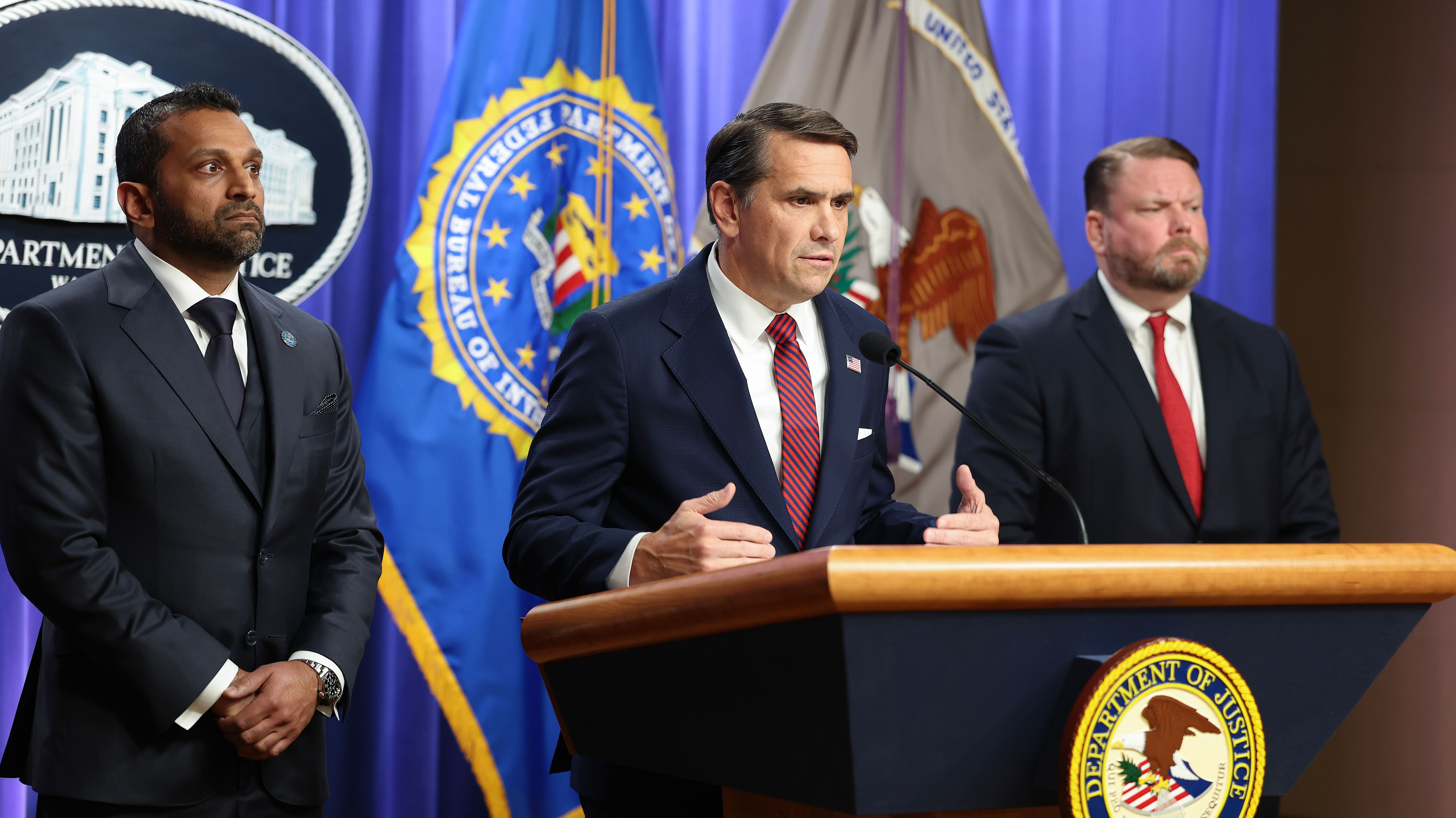
Acting Attorney General Todd Blanche, United States Attorney for the Eastern District of North Carolina Ellis Boyle (R) and FBI Director Kash Patel at a press conference on April 28, 2026, at the Department of Justice in Washington, D.C., after announcing charges against former FBI Director James Comey. (Photo by Tasos Katopodis/Getty Images)
(NEW YORK) — Less than a month after former FBI Director James Comey’s indictment earlier this year, prosecutors sought the assistance of the notorious gangster Sammy “The Bull” Gravano to build their case against him, his defense lawyers alleged in a court filing on Tuesday.
A prosecutor and FBI agent allegedly interviewed Gravano to understand if Comey’s experience prosecuting the Gambino crime family in the 1990s would have led him to believe the term “86” was a reference to murder or violence.
A federal grand jury indicted Comey on two charges in April for posting a picture on his Instagram account of seashells spelling out “8647,” which federal prosecutors say constituted a threat against the president’s life.
Gravano — who confessed to his involvement in 19 murders, including those of his best friend and his brother-in-law, before cooperating with prosecutors — told the prosecutor and FBI agent that he did not interpret Comey’s “8647” seashells post to be a personal threat to President Donald Trump, according to defense lawyers.
“While Mr. Gravano claimed that all law enforcement agents would be familiar with the term’s alternative organized crime meaning referring to murder, he also claimed that a ‘gangster would never use that term’ because they knew that law enforcement knew what the term meant,” the filing said. “Mr. Gravano did not indicate that he understood the seashells post to be a threat by Mr. Comey to carry out violence personally.”
The new claims about the case against Comey were included in court filings on Tuesday as part of Comey’s push to throw out evidence seized from Apple and Google through search warrants. Comey’s lawyers say the evidence should be tossed because agents knowingly omitted details in their search warrant applications that would have “eviscerated” their case theory about the meaning of Comey’s “8647” post.
“The Fourth Amendment safeguards all Americans’ privacy against arbitrary government invasions. It does so by generally requiring the government to obtain a warrant from a magistrate before conducting a search,” Comey’s lawyers wrote. “Here, the government upended that constitutionally-mandated process by misleading the issuing magistrates about fundamental facts of the case.”
According to defense lawyers, federal agents “spent months poring over records of Mr. Comey’s government service and interviewing people who worked on organized-crime cases more than thirty years ago” to try to find evidence that Comey would have interpreted “86” to have a violent meaning. They searched the records in the case, an FBI database, trial transcripts, the FBI file from the Gambino case, and AI search engines with no success, before turning to Gravano, according to the court filing.
However, neither Gravano nor two retired FBI agents who spent decades working organized crime cases recalled the term “86” being used to reference murder. That conclusion would undermine a central element of the case against Comey — that he would have believed “86” connoted violence because of his years of work in federal law enforcement, defense lawyers say.
“As the former Director of the FBI, he knew full well the attention and consequences of making such a post,” FBI Director Kash Patel said in a statement announcing the indictment.
Defense attorneys seek to paint witness as unreliable
In the filing that detailed alleged conversations with “The Bull,” defense attorneys claim that prosecutors not only omitted details about the lack of evidence linking “86” to violence, but also relied on the testimony of an unreliable witness who told them that they hope Comey “goes to jail” for the “crimes that he committed” as FBI director.
Defense lawyers did not identify the witness or their connection to Comey, but claimed the individual reached out to Comey’s wife shortly after he posted the seashells photo to Instagram. According to defense lawyers, Comey removed the photo after the individual raised concerns the post could be a “call for violence.” Agents later cited that witness’s account in a search warrant affidavit to claim he “immediately perceived the term ’86’ 47′ as a call to get rid of, in a violent way, or even to assassinate President Trump,” according to the filing.
However, defense lawyers allege that prosecutors failed to include critical information about that witness’s credibility, including his estrangement from Comey, his own assessment of Comey’s mental state as “speculation” and “conjecture,” and experience in rehab after ending their career.
“Person-1 admitted that they had been estranged from Mr. Comey and had not spoken to him for at least two years; Person-1 also made clear their intense bias against Mr. Comey, stating that they hoped Mr. Comey ‘goes to jail. for the ‘crimes that he committed’ as FBI Director,” defense lawyers wrote. “Although Person-1 indicated that they had left a prior career and entered ‘rehab,’ there were no follow-up questions about what issues led to the need to enter rehabilitation or whether those issues had been resolved.”
According to defense lawyers, the individual originally interpreted “86” through it’s “food service meaning,” but later believed the term “86” was associated with violence after listening to an episode of Rudy Giuliani’s podcast.
“Mr. Giuliani claimed that Mr. Comey had worked on organized crime cases in which mafia members used the term ’86’ to mean ‘kill,’ as reflected in tapes and transcripts,” the filing said. “Thus, in Person-1’s view, ‘there was no way [Mr. Comey] didn’t know how that was at least going to be interpreted.'”
Defense seeks case’s dismissal in separate filing
Comey’s lawyers in a separate motion filed late on Tuesday sought to use the statements of Trump and his allies to have the case against the former FBI director thrown out.
Comey’s defense lawyers argued that Trump’s repeated calls for Comey’s prosecution and criticism of his public statement “leave no doubt as to his genuine animus” and demonstrate that the case against him for allegedly threatening to kill Trump by posting photos of seashells on a beach is vindictive.
“The ensuing indictment is not based on a good faith application of the law to the facts; instead, it effectuates a yearslong campaign by the President to use the criminal process to punish Mr. Comey for his protected speech and because of the President’s deep-seated animosity,” Comey’s lawyers wrote.
Comey’s lawyers also pointed to allegedly violent statements about government officials made by Trump’s allies to argue that the Department of Justice is not evenly applying the law to prosecute similarly threatening statements.
“Several public figures have recently made statements about government officials that were comparable to, or far more violent than, Mr. Comey’s statement here. None was charged,” his lawyers wrote.
The motion follows a similar effort by Comey’s legal team to have his case tossed before trial on the basis that the Justice Department’s indictment fails to prove Comey’s post wasn’t within his First Amendment rights — while noting that immediately after he was notified the post was creating controversy, he deleted it and clarified it as non-threatening.
Regarding the specific “8647” phrase at the center of the government’s case, Comey’s lawyers noted that Amazon has listed 209,052 items that display the numbers “8645,” “8646,” or “8647,” and none of those items have led to similar prosecutions. Comey’s attorneys say that following his Instagram post of the seashells, the FBI “instituted a new policy, effective immediately, to treat the phrase ‘8647’ as coded language for threatening the President.”
“Mr. Comey’s prosecution appears to be the first indictment solely for publishing ’86’ in connection with a public official,” the motion said.
The filing includes dozens of pages of Trump’s own public statements dating back to 2016 of what Comey’s attorneys allege is an unrelenting campaign of harassment to target one of the former top law enforcement officials in the country.
“Ample objective evidence — much of which comes directly from government officials’ own public statements and admissions — establishes that the President’s animus toward Mr. Comey led to this vindictive and selective prosecution,” the filing said.
Defense lawyers also say former Attorney General Pam Bondi was fired in part because of her failure to prosecute Trump’s political opponents. They argued that the new case against Comey was an “audition” for Acting Attorney General Todd Blanche.
“Here, the inference is clear: the newly installed political officials in the DOJ strove to accomplish what their predecessors could not, namely, effectuating the President’s desire to punish Mr. Comey,” they wrote.
Trump, in announcing Bondi’s departure, lauded her as “a Great American Patriot and a loyal friend, who faithfully served as my Attorney General over the past year.”
In addition to their motion to dismiss for vindictive and selective prosecution, Comey’s lawyers also requested that prosecutors turn over the transcripts and recordings of grand jury proceedings in the case. They argued that “the government may have misstated key factual and legal issues to the grand jury” and mentioned the issues that came up in the other, now-dismissed case against Comey in Virginia. In that case. prosecutors acknowledged that the entire grand jury did not see the final indictment in the case.
“The record in this case raises a significant risk that irregularities in the grand jury process influenced the grand jury to return an indictment,” the motion said.
The Department of Justice has defended its work prosecuting Comey, arguing they are treating the case no differently than any other threat to a public official. The White House has also denied that Trump is using the Department of Justice to target his political adversaries, though Trump has repeatedly called for Comey to be prosecuted.
“Our office regularly pursues threat cases including those against public officials. The Grand Jury examined the evidence in this case and found probable cause to indict Mr. Comey. We will continue to pursue the case as we regularly do every day to protect the people of this District and the United States,” U.S. Attorney Ellis Boyle said when announcing the indictment in April.
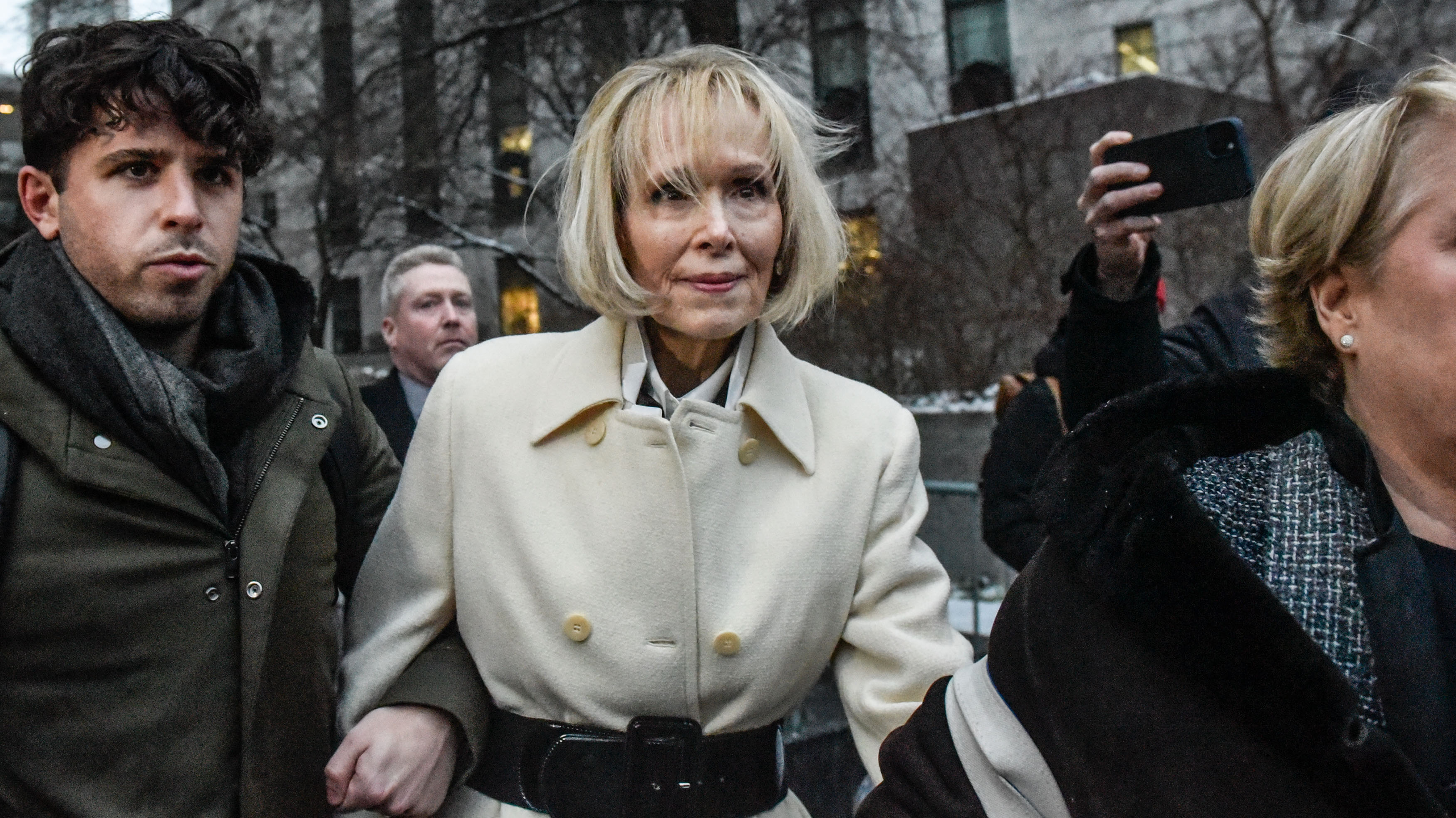
E. Jean Carroll departs from her defamation trial against former President Donald Trump at New York Federal Court on Jan. 16, 2024, in New York City. (Photo by Stephanie Keith/Getty Images)
(WASHINGTON) — President Donald Trump has asked the U.S. Supreme Court to overturn the $83 million judgment a federal jury awarded writer E. Jean Carroll after a separate jury held Trump liable for defaming her when he denied her sexual assault claims.
In his petition to the Supreme Court, Trump argued that he is immune from liability for statements he made while in office and accused a federal appeals court of refusing to recognize it.
“The Second Circuit instead engaged in procedural contortions to avoid addressing Presidential immunity,” Trump’s petition said.
In making the claim, Trump is invoking the Supreme Court’s controversial 2024 presidential immunity decision, which effectively shut down then-special counsel Jack Smith’s 2020 election probe and established sweeping protection from prosecution for “official acts.” Trump argues his public statements regarding Carroll’s claims were made in his “official” capacity as president.
The circuit court, in its ruling, blamed Trump for failing to raise his immunity argument in a timely fashion.
“Presidential immunity was not raised for the first three years of this case,” Judge Denny Chin said in the April opinion.
Last month, with no dissents, the U.S. Supreme Court declined to hear Trump’s appeal of a separate verdict that held Trump liable for sexually abusing and defaming Carroll and awarded her $5 million in damages. The money, plus interest, was subsequently transferred into her account, her lawyers said.
In his new pitch to the Supreme Court, Trump also asked the justices to find his statements denying Carroll’s claims were part of his job as president and to permit the United States government to swap as the defendant.
“Because accusations bearing on the President’s fitness for office are unquestionably matters of public concern, Presidential statements responding to press questions about such accusations are plainly official. This Court should say so,” the petition said.
The 2nd Circuit said Trump’s substitution request also came too long after the fact.
“The fact of the matter is that no other defendant would be permitted to move to substitute the United States in his place, fifteen months after trial and the entry of judgment against him,” Judge Chin’s opinion said.
A federal jury determined in 2023 that Trump was liable for sexually abusing Carroll in the dressing room of a Manhattan department store in the 1990s, and that he defamed her in a 2022 social media post by calling her allegations “a Hoax and a lie” and saying “This woman is not my type!”
In 2024, following a separate trial, Trump was ordered to pay $83 million in damages to Carroll for defaming her in 2019 when he denied her allegations of sexual abuse.
Carroll’s attorneys declined to comment on Trump’s latest petition to the Supreme Court.
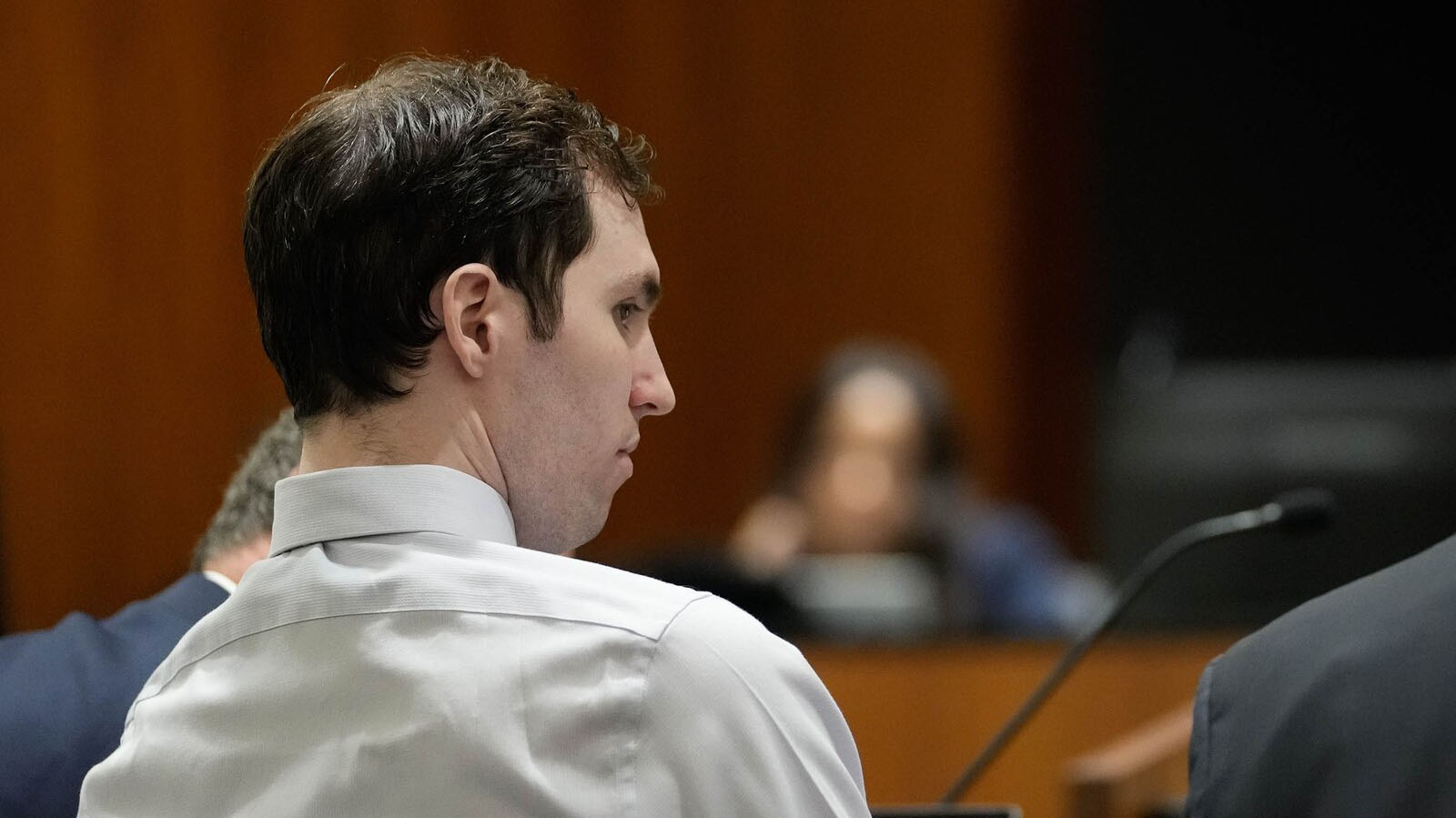
Tyler Robinson, accused in the fatal shooting of Charlie Kirk, appears during a hearing in 4th District Court on June 12, 2026, in Provo, Utah. (Photo by Francisco Kjolseth-Pool/Getty Images)
(NEW YORK) — As Tyler Robinson waits to hear whether he’ll stand trial on capital murder charges stemming from the fatal shooting of conservative activist Charlie Kirk, prosecutors told the presiding judge his decision to move the case to trial is “straightforward.”
“This isn’t a close case,” prosecutors said in a written argument to Judge Tony Graf.
The Utah County Attorney’s Office, which is prosecuting the high-profile case, filed its written argument in the 4th District Court in Provo, saying prosecutors have shown that there is enough probable cause to warrant a trial.
“This is likely as straightforward a bind-over decision as this Court will ever see,” prosecutors said in their written argument filed with the court on Tuesday and reviewed by ABC News.
The written argument from the prosecution came weeks before a Sept. 1 hearing, where both sides are scheduled to present final oral arguments before Graf makes his decision on whether to hold a trial.
Defense attorneys have until Aug. 11 to file their written argument in the case.
Robinson is accused of killing Kirk with a rifle shot fired from a building’s rooftop 200 feet from where the co‑founder of the conservative student organization Turning Point USA was speaking on Sept. 10, 2025, at an outdoor rally at Utah Valley University.
The 23-year-old Robinson is charged with aggravated murder, felony discharge of a firearm causing serious bodily injury, obstruction of justice, two counts of witness tampering and commission of a violent offense in the presence of a child.
Robinson has yet to enter a plea to the charges, and his attorneys have not issued any statements on his guilt or innocence.
Prosecutors have said they plan to seek the death penalty in the case.
During a weeklong preliminary hearing earlier this month, prosecutors called several law enforcement witnesses and presented a series of security videos allegedly placing Robinson at the scene of the shooting. One of the videos showed Robinson on the roof of the building where the fatal shot that killed Kirk was fired from, prosecutors allege.
Prosecutors also presented a video statement from Robinson’s roommate and romantic partner, Lance Twiggs, who claimed Robinson confessed to killing Kirk in a letter, text messages and in person.
“He didn’t go into detail. I just asked him in person what he said was true the night before, and he said it was,” Twiggs said in the video filmed in April 2026 at the Utah County Attorney’s Office. “He started crying a little bit, and he said he wishes he hadn’t done it, and kept going around just doing stuff, I think to keep himself busy or distracted, or something.”
In their filing on Tuesday, prosecutors alleged Robinson committed the homicide “in front of approximately 3,000 eyewitnesses” who attended the Kirk rally, and noted that Robinson surrendered to law enforcement after a massive manhunt for the shooter was launched.
“These admissions, along with others, establish probable cause to support most of the elements of the charges,” prosecutors said in their written argument. “DNA testing, surveillance video, and eyewitness testimony buttress those elements and demonstrate probable cause to support the remaining elements.”
Kirk’s widow, Erika Kirk, and his parents, Robert and Kathryn, attended the preliminary hearing, sometimes leaving the courtroom to avoid seeing graphic evidence of the shooting. President Donald Trump’s son Donald Trump Jr., a friend of Charlie Kirk, was also in the courtroom for the preliminary hearing.
During the hearing, the Kirk family issued a joint statement, saying, “Every court proceeding serves as a painful reminder of his death and the loss that has irrevocably impacted our lives and the lives of his children. We remain deeply grateful for the support, prayers, and kindness we have received. This outpouring has sustained us during the darkest days of our lives.”
Federal Reserve Chair Kevin Warsh speaks during a news conference at Federal Reserve Headquarters on July 29, 2026, in Washington, D.C. The press conference follows Federal Open Market Committee meetings where policymakers kept the interest rate unchanged. (Photo by Win McNamee/Getty Images)
(WASHINGTON) — The Federal Reserve held interest rates steady on Wednesday as the economy weathers resurgent inflation set off by the Iran war.
The policy decision arrived as oil prices surged and stock prices tumbled in response to a resumption of fighting in the Middle East, underscoring the challenge faced by central bankers tasked with containing price increases.
The Federal Open Market Committee, a 12-member policymaking body at the Fed, issued a statement describing “elevated” inflation attributed in part to “supply shocks that have driven price increases in certain sectors, including energy.”
Nine members voted in favor of maintaining interest rates at current levels while three members supported a quarter-point rate increase, the FOMC said.
The war triggered a historic oil shortage that drove up fuel costs and catapulted inflation to a three-year high.
A preliminary peace agreement in June offered up some relief, but a burst of on-again, off-again fighting in recent weeks has caused crude prices to rise.
Fed Chair Kevin Warsh, who took the helm of the central bank in May, has repeatedly vowed to slash inflation to the Fed’s desired level of 2%. The annual pace of price increases currently registers at 3.5%.
“Persistently high prices are a burden for the American people,” Warsh told reporters in Washington, D.C., last month. “This committee will deliver price stability.”
Odds stand in favor of a rate hike in September, the next time central bankers meet, according to the CME Group’s FedWatch Tool, a measure of investor sentiment.
Elevated price increases pose a challenge for central bankers eager to beat back price hikes. In theory, the Fed could raise interest rates in an effort to cool off prices, but the move risks a slowdown of hiring.
So far this year, hiring has proven largely resilient, despite increased costs borne by shoppers and businesses.
Over the first half of this year, the labor market added an average of 92,000 jobs each month, U.S. Bureau of Labor Statistics data showed. That pace marks an improvement from an average of about 7,000 jobs lost per month over the second half of 2025.
Oil prices, a key ingredient in overall price levels, have swung dramatically in recent weeks. Last month, oil prices briefly fell to their lowest level since before the late February outbreak of the Iran war on news that a preliminary agreement to end the war had been reached.
A resumption of large-scale fighting between the U.S. and Iran, however, cast doubt over the staying power of that deal.
Shipping traffic in the Strait of Hormuz declined sharply as the war escalated. The maritime trading route facilitates transport of about one-fifth of global oil supply. In turn, worldwide oil prices climbed above $100 a barrel last week.
By Monday, however, oil prices had plunged below $90 a barrel after the U.S. paused strikes on Iran in an apparent attempt at further negotiations. On Wednesday, surged back above $90 per barrel after fighting resumed.
Crude costs account for a large share of the price of auto gasoline. The average price of a gallon of gas currently stands at $4.09, according to AAA, which marks a 37% jump since the Iran war began in February.