(NASHVILLE, Tenn.) — Police are hailing a Nashville, Tennessee, pastor as a hero after he tackled a gunman at the church altar.
Dezire Baganda, 26, was sitting at the front of the Nashville Light Mission Pentecostal Church on Sunday when he allegedly took out a gun and headed to the altar where the pastor was praying with congregants, the Metropolitan Nashville Police Department said.
Surveillance video showed the suspect waving the gun and pointing it at worshippers. Police said Baganda told everyone to get up.
The pastor quickly tackled Baganda, police said, and several church members jumped in to help take away the gun.
No shots were fired, police said.
“The heroic actions of a local pastor and several of his parishioners saved a church from further violence,” police said in a statement.
Baganda was not a church member but had been to services there before, according to the pastor.
Baganda is charged with 15 counts of felony aggravated assault, police said, adding that more counts are expected.
(NEW YORK) — Pamela Wilson, a second grade teacher in Washington state, has been an educator for 18 years.
This year, amid the ongoing coronavirus pandemic that has disrupted three consecutive school years, Wilson said she is facing a level of burnout she never has before.
“I sit in my car and don’t want to go in,” Wilson told “Good Morning America.” “It’s not because of my students, it’s because of the broken system around them that’s been magnified by the pandemic.”
“The system is broken and we see that it’s broken, but everyone tries to go on like it’s normal,” she said.
Wilson, a public school teacher, said her school has a shortage of full-time teachers as well as a shortage of substitute teachers, which means teachers like herself are burdened with no time off and no time for planning, leading to 12-hour workdays.
“This is my passion and I love my job, but I’m struggling this year, wondering, if this is the new normal, can I do this job anymore?” said Wilson. “I keep waiting for it to get better and it gets worse.”
Charity Turpeau, the 2021-22 middle school teacher of the year in her Louisiana school district, said she too has never seen burnout among teachers at this level in her 16 years of teaching.
“I absolutely love what I do, but lately with the workload, demands from the state, pandemic restrictions, and lack of pay I feel as if I am doing less of what I love, which is teaching,” she said. “The paycheck does not match the amount of workload we are given and the overtime we work to try and complete it all.”
Schools across the country have faced a shortage of teachers in recent years, mainly due to low pay and stressful working conditions. The burnout among teachers this year though, amid the ongoing pandemic, has led to a shortage that teachers like Wilson describe as “unbearable to the system.”
Brittni, who asked that her last name not be used, quit her job as a kindergarten teacher in Tulsa, Oklahoma, this September, a few weeks into the school year.
“I was very overwhelmed with lots of responsibility and little support and long hours,” she said. “I don’t think people understand how hard it is to be a teacher,” she said. “We all love kids, that’s why we do it, but we have to have some kind of respect and some kind of support to keep it going.”
The state of Florida opened the school year with a shortage of 5,000 teachers, a number that by October had slightly increased, according to a spokesperson for the Florida Education Association.
And school districts across the country are reporting a triple whammy of not only a shortage of teachers but also substitutes and school support staff, like bus drivers.
“It’s just not teachers, but staff in general — custodial staff, support staff, administrative staff,” said Dr. Mark P. Holtzman, superintendent of McKeesport Area School District in Pennsylvania, which educates more than 3,000 students. “It’s been a gradual problem and obviously, the pandemic has not impacted it positively.”
Holtzman said his district, which employs around 300 teachers, has been hit hard by veteran teachers choosing to retire and a lack of new teachers entering the field.
“Now it has kind of hit the wall where we’re struggling to fill slots with quality candidates, and substitute teachers don’t exist, so trying to fill classrooms is almost impossible,” he said.
With a lack of substitute teachers to fill the holes, full-time teachers are being asked to do the impossible, teachers and advocates say.
“The burden of the workload has doubled and tripled,” said Katherine Bishop, a teacher for 23 years and current president of the Oklahoma Education Association. “Teachers don’t even have their preparation time anymore. They’re covering classes or taking double the students, and we’re still in a pandemic, teachers, kids, and support professionals are still getting sick.”
Added Turpeau, “Teachers are getting overwhelmed and they’re leaving, and teachers that are staying on are taking on additional challenges. They add stuff on us, and when they add one thing, they take away 15 minutes of our time.”
However, it remains unclear whether Congress will pass paid family leave, a measure that was promised by President Joe Biden on the 2020 campaign trail.
House Speaker Nancy Pelosi announced Wednesday that she would include four weeks of paid family leave and medical leave into the $1.85 trillion social spending bill. The decision came just days after the measure was put on the chopping block when top Democrats failed to come to a compromise with Sen. Joe Manchin (D-W.Va.).
While Manchin has not explicitly said he will oppose a plan with paid family leave included, he has expressed concerns about the cost of the program and disapproved of its placement in the reconciliation bill.
“I just think it’s the wrong place to put it because it is a social expansion,” Manchin told reporters on Nov. 3, adding it would mean “getting in more debt and basically putting more programs that we can’t pay for that we are having problems with now.”
Manchin’s concerns come as education advocates in his own home state of West Virginia urge him to pass federal paid leave.
“The sooner that we can tackle this and address this issue, the better,” said Dale Lee, president of the West Virginia Educators Association. “The conditions are only going to get worse with the mental stress that has been put on educators this year. More and more people are either going to retire or leave the profession altogether. We can’t fill the positions that we have right now. Almost every county in West Virginia has a teacher shortage, and every county has a substitute shortage because you don’t have enough subs on any given day to fill in for the educators that are out,” Lee added.
Teneshia Moore, a Southfield, Michigan, middle school science teacher, told ABC News that she would like Manchin and other lawmakers to consider how federal paid leave would dramatically impact the lives of educators like herself, who continued to have little recourse during the demanding times of the pandemic.
“I would ask him [Manchin] to put himself in our shoes,” Moore said. “Think about how it affects people that are here in the trenches. He has paid leave, what’s wrong with teachers having paid leave? What would be wrong with teachers having the same thing that he has.”
With 12 days of annual paid leave, Moore said she relied on her rollover sick days after not taking time off from previous years so she could care for her family members who were infected with COVID-19.
“I had to take care of my mother. She had COVID twice during the initial phase [of the pandemic]. I lost an aunt to COVID. I lost a stepfather to COVID,” she said. “I had to take care of all those people and I literally dwindled my sick days down to little or nothing.”
Erin Castillo, a high school teacher in Fremont, California, said her school started the year short 40 teachers, which has caused her workload to nearly triple.
She gets two paid personal days off per year, along with 10 sick days, but no paid maternity leave.
“If I need maternity leave, then that’s coming out of my sick leave, so often teachers are all saving those up for maternity leave so they can get paid, which means they’re left with two paid days off,” she said. “That’s really hard for teachers to get through.”
Describing the workload she and other teachers are facing this year, Castillo said, “I think it’s beyond the typical teacher burnout that people talk about. I describe it as trying to come up for air and there’s no chance to catch your breath because more and more just keeps coming at you.”
Shortage likely to continue without support, experts say
Education experts including Randi Weingarten, president of the American Federation of Teachers, say they worry what will happen to the education system long-term if teachers are not supported now.
A study conducted by the AFT with the Rand Corp. earlier this year found one in four teachers were considering leaving their job by the end of the school year. Teachers were also more likely to report experiencing frequent job-related stress and symptoms of depression than the general population, according to the study.
“What COVID has done is exacerbated all the inequalities and the inequities [of education], but teachers will always attempt to do what’s asked of them, which covers up some of the inequalities and some of the inequities,” said Weingarten. “We need to give them the conditions in which they can teach and kids can learn if we’re serious about having kids not only survive past COVID, but get their mojo back and thrive.”
Kim Anderson, executive director of the National Education Association, says the solution needs to start with better pay for teachers and go beyond that to offer better working conditions and more autonomy and respect for teachers.
“Delivering a world-class public education to every single student in America requires more than short-term Band-Aids,” she said. “It requires a unified, non-politicized, authentic attempt to address the reinforcement of and transformation of one of the most important institutions in our country, and that is our public education system.”
Anderson pointed to a survey of NEA members conducted in June, before the start of this school year, that found nearly one in three educators said the pandemic was likely to make them leave the profession earlier than expected.
She said now more than ever, America’s education system needs more investments in teacher recruitment, preparation, support and compensation.
“We need mentoring and professional learning communities that are led by educators, for all educators. We need strategic partnerships with teacher preparation programs for new educators, as well,” she said. “We need teacher residency programs within school districts to build a long-term pipeline.”
Nieka Richard, a California teacher who went viral when she posted on TikTok about quitting her role, said she wants people to know how important teachers are and warns what may happen if teachers aren’t supported.
“If teachers are stretched really thin, then the education cannot be as robust as it should be,” said Richard. “And we as a country are going toward even more detrimental times because people are not properly educated and it starts in the classroom. It starts with the teachers.”
ABC News’ Kaila Nichols contributed to this report.
(HENRY COUNTY, Ga.) — Investigators in Georgia and NBA Hall of Famer Shaquille O’Neal are offering a $30,000 reward for any information regarding a suspect who shot and wounded a police officer last week.
Henry County Police Officer Paramhans Desai, 38, was responding to a domestic disturbance on Thursday and was attempting to make an arrest, the Henry County Police Department said in a statement. Jordan Jackson, 22, of McDonough, Georgia, allegedly shot Desai and fled the scene in a 2016 Honda Civic, according to the police.
Desai was taken to Grady Medical Center and was listed in critical, but stable condition Sunday, the police said. Desai, who is married and has two children, has been with the Henry County PD for two years and previously worked for the Georgia Department of Corrections and DeKalb County Police, the police said.
On Sunday, a reward for information on Jackson’s whereabouts was announced and the money came from several sources.
The Harris County Sheriff’s office and the U.S. Marshals Office each offered $10,000, Crime Stoppers Atlanta offered $5,000, the Henry County PD said.
O’Neal, who lives in Henry County and is an honorary deputy in Clayton County, Georgia, also offered $5,000.
Anyone with tips can call Crime Stoppers Atlanta at 800-597-TIPS (8477).
(NEW YORK) — Three Ivy League school campuses issued temporary evacuations Sunday afternoon after receiving bomb threats.
The incidents at Cornell, Columbia and Brown universities came two days after a similar threat took place at Yale University Friday.
The New York Police Department was called to Columbia’s campus around 2:30 p.m. and students and visitors were told to avoid the area, the school said on Twitter. About two hours later, the school announced that the threats “were deemed not credible by the NYPD and the campus buildings have been cleared for reoccupancy.”
Brown University’s officials said in a statement that officers were called in after a bomb threat was made over the phone. Then, at around 5:45 p.m., the school announced that investigators found no evidence of a credible threat.
“Buildings that had been evacuated are now reopened, and university operations have resumed as normal,” the school said in a statement.
Cornell University officials said a security perimeter was put into place around 4:10 p.m. as officers investigated the threats. Around 7:34, the school said there was no credible threat and reopened the campus.
“We are relieved to report that this threat appears to have been a hoax. A cruel hoax; but, thankfully, just a hoax,” Cornell representatives said in a statement.
Police closed down Yale’s campus and some local businesses for over four hours before they gave an all clear, ABC affiliate WTNH reported.
Police officers were still investigated the threats at Cornell and Brown Sunday evening.
Later Sunday night, the NYPD tweeted that the ordeal at Columbia was a “swatting incident,” and they will continue to investigate.
No devices have been found at any of the schools and investigators have not made any arrests.
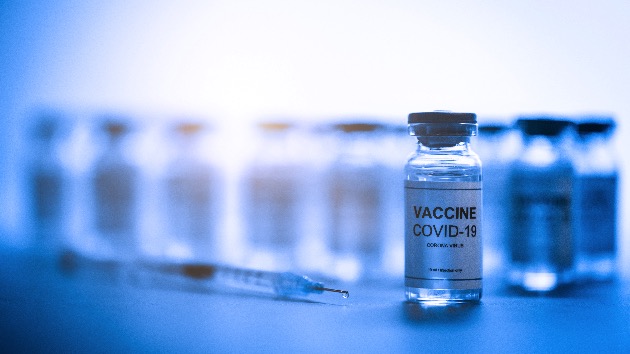
(NEW YORK) — As the COVID-19 pandemic has swept the globe, more than 5 million people have died from the disease worldwide, including over 754,000 Americans, according to real-time data compiled by Johns Hopkins University’s Center for Systems Science and Engineering.
Just 68.3% of Americans ages 12 and up are fully vaccinated against COVID-19, according to data from the U.S. Centers for Disease Control and Prevention.
Here’s how the news is developing. All times Eastern:
Nov 08, 8:52 am
US reopens borders to vaccinated travelers
The U.S. reopened borders to vaccinated travelers on Monday after 20 months of being closed to many countries, including the United Kingdom, Brazil, China, India, South Africa and most of Europe.
In January, as the vaccine was distributed on both sides of the Atlantic, the ban was kept in place, with the Biden administration stating concerns about the delta variant.
On Oct. 20, the Biden administration announced it was lifting the ban on vaccinated travelers.
The ban, which only applies to vaccinated travelers, still excludes many countries where the vaccine is not yet easily available or recognized by the U.S.
Nov 08, 8:04 am
Global COVID-19 cases top 250 million in under 2 years
The worldwide number of people who have been diagnosed with COVID-19 surpassed 250 million on Monday, according to a count kept by Johns Hopkins University.
The United States, India and Brazil account for about a third of the recorded cases, Johns Hopkins data shows.
The grim milestone came as some countries in Eastern Europe, including Russia, Ukraine and Greece, grapple with record levels of newly reported cases.
The pandemic began less than two years ago after the virus was first detected in Wuhan, China, in December 2019.
Nov 08, 6:46 am
Biden administration urges schools to provide COVID-19 shots, info
The Biden administration sent letters to superintendents and principals across the United States on Monday, urging them to set up COVID-19 vaccination clinics inside their elementary schools.
“Parents rely on their children’s teachers, principals, school nurses, and other school personnel to help keep their students safe and healthy every school year,” U.S. Secretary of Health and Human Services Xavier Becerra and U.S. Secretary of Education Miguel Cardona wrote in the letters. “We need your help now more than ever to continue to protect our communities and our children.”
They also asked the school leaders to distribute information “from trusted sources” about COVID-19 vaccines to all families with children ages 5 to 11, and to host community engagements with parents in partnership with local pediatricians and “other trusted medical voices” in the community.
“The communications you issue — in languages accessible to your parents — will be critical in helping families learn more about the vaccine,” Becerra and Cardona wrote.
The letters went out on the same day that first lady Jill Biden and U.S. Surgeon General Vivek Murthy plan to visit an elementary school in McLean, Virginia, that was used as one of the first sites in the country to begin administering the polio vaccine in 1954.
School officials would not be responsible for handling COVID-19 vaccines or giving shots to students. Instead, they would partner with a local vaccine provider already administering shots, such as a pharmacy or community health clinic.
The schools would be allowed to use federal dollars through the American Rescue Plan to offset any costs with providing the space and organizing the vaccine drive.
(HOUSTON) — At least eight people are dead, including two teenagers, after a crowd surged toward the stage at a massive Houston concert, causing panic and chaos, authorities said.
Over 50,000 people were at the first night of this weekend’s sold-out Astroworld music festival at NRG Stadium when, around 9:30 p.m. local time, “the crowd began to compress toward the front of the stage,” Houston Fire Chief Sam Pena told reporters Friday night.
“That caused some panic, and it started causing some injuries,” Pena said.
Twenty-five people, including one as young as 10, were transported to the hospital, authorities said. Eleven people were transported in cardiac arrest, Pena added.
As of Saturday afternoon,13 people were still hospitalized, including five under the age of 18, Houston Mayor Sylvester Turner told reporters during a briefing.
Those who died ranged in age from 14 to 27. One was 14, another 16, two were 21, two were 23 and one was 27, the mayor said. One has yet to be identified.
“Nothing of this magnitude that any of us can recall, and certainly that I can recall, has taken place in this city,” Turner said.
The cause of death of the eight individuals won’t be known until the medical examiner completes the investigation, Pena said.
Some of the deceased individuals didn’t have identification on them, Houston Police Chief Troy Finner told reporters Friday.
A command post for information on missing persons was set up at a nearby hotel. As of Saturday afternoon, no one has been reported missing, officials said.
The festival ended early Friday night and has been canceled for Saturday.
Pena described the chaotic scene in an interview with ABC News’ Gio Benitez on “Good Morning America” Saturday.
“As soon as the crowd began to surge … those people began to be trapped, essentially up at the front, and they began to be trampled and they actually had people falling down and passing out,” Pena said.
One concertgoer said she was pushed “very aggressively.”
“It was intense, it was intense,” the concertgoer told “Good Morning America.” “We were seeing people getting pulled out of the crowd, and we would see some of these people unconscious.”
Madeline Eskins, who attended the concert with her boyfriend, told ABC News they tried to leave when they started getting pushed from all sides toward the front of the stage but couldn’t move.
“I remember I was about to tell him to tell my son that I love him because at that point I was like, ‘I’m going to die,'” Eskins said. “I really didn’t think I was going to see him again. And then I fainted.”
Amid the chaotic scene and mass of people it was difficult to disperse the crowd and reach those who needed medical attention, Pena said. The festival organizer, Live Nation, had set up a field hospital of sorts to treat minor injuries during the festival, but that was “quickly overwhelmed.”
Eskins, an ICU nurse, said once she recovered she started helping the on-site medical staff treat unconscious concertgoers and delegate tasks, though medical supplies, including defibrillators, were limited.
“I was trying to control the chaos as much as I can,” she said. “Nothing could have prepared them for this.”
The cause of the incident is currently unknown, according to Finner, who said Live Nation is cooperating with police in reviewing video footage of the concert.
“Nobody has all the answers tonight,” he said Friday. “There’s a lot of rumors going around. We don’t have facts, we don’t have evidence.
“We’ve got to do an investigation and find out because it’s not fair to the producers, to anybody else involved, until we determine what happened, what caused the surge. We don’t know. We will find out.”
Concertgoers knew something was amiss during a set by headliner Travis Scott. During the middle of his performance, the rapper stopped and told the crowd, “Somebody passed out right here,” as captured by an Apple Music livestream of the event.
“I’m absolutely devastated by what took place last night,” Scott, a Houston native, said in a statement on Twitter Saturday. “My prayers go out to the families and all those impacted by what happened at Astroworld Festival.”
Scott said the Houston Police Department has his “total support” during the investigation, and that he is “committed to working together with the Houston community to heal and support the families in need.”
Festival organizers also said they are “focused on supporting local officials,” and urged anyone with information to contact the police.
Live Nation also released a statement Friday saying it was “heartbroken for those lost and impacted at Astroworld last night,” and is “working to provide as much information and assistance as possible” to local authorities.
Investigations will be speaking with concert promoters and witnesses and reviewing videos from the event and venue on Saturday, according to Turner.
“I have called for a detailed briefing from all stakeholders, including Live Nation, Harris County, NRG Park, Police, Fire, Office of Emergency Management, and other agencies, explaining how the event got out of control leading to the deaths and injuries of several attendees,” he said in an earlier statement.
Gov. Greg Abbott said he has ordered the Texas Department of Public Safety to make state resources available to support the investigation.
“What happened at Astroworld Festival last night was tragic, and our hearts are with those who lost their lives and those who were injured in the terrifying crowd surge,” Abbott said in a statement. “Thank you to the first responders and good Samaritans who were on site and immediately tended to those who were injured in the crowd.”
This isn’t the first time there have been crowd control issues at Astroworld. There was a “similar incident” at the 2019 festival, where there was a “breaching of barricades,” according to Harris County Judge Lina Hidalgo.
“Actions were taken after that experience. There were stronger fencing more and more robust barricades, more personnel and more security personnel,” Hidalgo told reporters Saturday.
The number of Houston Police Department officers on hand increased from 47 in 2019 to 76 at this year’s festival, she said. There was also additional space for crowd control, she said.
“But I want to know, the community deserves to know, if more needed to have been done,” she said, calling for an independent investigation into the tragedy. “The public has a role here, too. If you have any information as to what took place, let us know.”
ABC News’ Frank Elaridi contributed to this report.
(HOUSTON) — At least eight people are dead after a crowd surged toward the stage at a massive Houston concert, causing panic and chaos, authorities said.
Over 50,000 people were at the first night of this weekend’s sold-out Astroworld music festival at NRG Stadium when, around 9:30 p.m. local time, “the crowd began to compress toward the front of the stage,” Houston Fire Chief Sam Pena told reporters Friday night.
“That caused some panic, and it started causing some injuries,” Pena said.
Pena described the chaotic scene in an interview with ABC News’ Gio Benitez on “Good Morning America” Saturday.
“As soon as the crowd began to surge … those people began to be trapped, essentially up at the front, and they began to be trampled and they actually had people falling down and passing out,” Pena said.
One concertgoer said she was pushed “very aggressively.”
“It was intense, it was intense,” the concertgoer told “Good Morning America.” “We were seeing people getting pulled out of the crowd, and we would see some of these people unconscious.”
Amid the chaotic scene and mass of people it was difficult to disperse the crowd and reach those who needed medical attention, Pena said. The festival organizer, Live Nation, had set up a field hospital of sorts to treat minor injuries during the festival, but that was “quickly overwhelmed.”
Twenty-three people, including one as young as 10, were transported to the hospital, authorities said. Eleven people were transported in cardiac arrest, Pena added.
The cause of death of the eight individuals won’t be known until the medical examiner completes the investigation, Pena said.
No further details have been released on the deceased victims. Some didn’t have identification on them, Houston Police Chief Troy Finner told reporters Friday.
A command post for information on missing persons was set up at a nearby hotel. The festival ended early Friday night and has been canceled for Saturday.
The cause of the incident is currently unknown, according to Finner, who said Live Nation is cooperating with police in reviewing video footage of the concert.
“Nobody has all the answers tonight,” he said Friday. “There’s a lot of rumors going around. We don’t have facts, we don’t have evidence.
“We’ve got to do an investigation and find out because it’s not fair to the producers, to anybody else involved, until we determine what happened, what caused the surge. We don’t know. We will find out.”
The Houston Fire Department has scheduled an update on the investigation for 3 p.m. local time Saturday.
Concertgoers knew something was amiss during a set by headliner Travis Scott. During the middle of his performance, the rapper stopped and told the crowd, “Somebody passed out right here,” as captured by an Apple Music livestream of the event.
“I’m absolutely devastated by what took palace last night,” Scott, a Houston native, said in a statement on Twitter Saturday. “My prayers go out to the families and all those impacted by what happened at Astroworld Festival.”
Scott said the Houston Police Department has his “total support” during the investigation, and that he is “committed to working together with the Houston community to heal and support the families in need.”
Festival organizers also said they are “focused on supporting local officials,” and urged anyone with information to contact the police.
Investigations will be speaking with concert promoters and witnesses and reviewing videos from the event and venue on Saturday, according to Houston Mayor Sylvester Turner.
“I have called for a detailed briefing from all stakeholders, including Live Nation, Harris County, NRG Park, Police, Fire, Office of Emergency Management, and other agencies, explaining how the event got out of control leading to the deaths and injuries of several attendees,” he said in a statement.
Gov. Greg Abbott said he has ordered the Texas Department of Public Safety to make state resources available to support the investigation.
“What happened at Astroworld Festival last night was tragic, and our hearts are with those who lost their lives and those who were injured in the terrifying crowd surge,” Abbott said in a statement. “Thank you to the first responders and good Samaritans who were on site and immediately tended to those who were injured in the crowd.”
(NEW YORK) — Across the small town of Gloster, Mississippi, passersby can still see remnants of the damage caused by Tropical Storm Claudette and Hurricane Ida: tarps on roofs, fallen trees, damaged cars and homes hit hard by rain, debris and strong winds.
Both of the storms tore through the area in quick succession over the summer — Claudette in June and Ida in August, leaving a trail of damage and power outages.
Jimmy Brown, an activist who works with the local NAACP, says that when the power goes out in Gloster as it did for half of Amite County during Ida, it can stay out for days or weeks — and help can be hard to come by.
In the last five years, Gloster has had at least 774 outages and extreme weather events are the main culprits, according to Entergy Mississippi representatives.
Brown, who has lived in this impoverished small town all of his life, says his community members are finding it more difficult to manage as the effects of climate change continue to intensify.
“I call us the forgotten communities,” Brown said in an interview with ABC News. “This is heartbreaking when you really sit down and think about it. But you have to, in order to make some changes, you’ve got to go out and do something to try to help try to make it better.”
Experts say climate change causes hurricanes and other storms to intensify, and with that, those most frequently in their path, particularly the Gulf states, such as Mississippi, are faced with an uncertain future.
For the poor, the effects are particularly acute.
Research suggests that the impoverished are impacted in several ways: they are less prepared for the effects of extreme weather events and then don’t have the resources to either recover or move.
On top of that, as in the case of Gloster and other impoverished places, the effects of climate change on vulnerable populations are compounded — in this case by poor air quality from local industry.
Only getting worse
Gloster, a small majority-Black town of only 869 people, has a poverty rate of more than 50%, with a median household income of about $17,000, according to the U.S. Census Bureau.
Data from the National Hurricane Center shows that at least 14 storms have affected Mississippians in the last four years, resulting in floods, strong winds and heavy downpours.
After Hurricane Ida in August, Gloster was one of several places in Mississippi to qualify for public and individual assistance to recover from the disasters. FEMA often provides temporary housing, funds for disaster-caused expenses and more for natural disaster victims.
“I’ve met quite a few individuals who had been affected by Hurricane Harvey and they were displaced from their homes, and I heard stories about mobile homes being wrapped around trees,” Erniko Brown, an activist with the environmental advocacy group Dogwood Alliance said about residents she’s helped in Gloster. She is unrelated to Jimmy Brown.
For those living in vulnerable populations in vulnerable areas, climate change is another expense that many can’t bear. And it’s only going to get worse for the people of Gloster and towns all across the country just like it, according to the Fourth National Climate Assessment, which is a congressionally mandated report from the U.S. Global Change Research Program.
Existing inequalities in poor communities will only be exacerbated due to climate change, the Fourth National Climate Assessment shows.
According to a 2018 study published in Cambridge University Press, natural disasters reduce household income, destroy homes, and force families to give up a larger fraction of their wealth.
The study reports that natural disasters are a “key factor for pushing vulnerable households into poverty and keeping households poor.”
Poor property owners can’t afford to modify their homes to withstand strong winds, erosion, or flooding, the Fourth National Climate Assessment shows. Instead, the repairs only make them financially tied to houses that are at greater risk of damage.
“People were just trying to live in what they had left of a home,” Erniko Brown said. “One woman told me about her mother and father living in their mobile home although it had mold in it, and they felt like calling FEMA, but there’s so much red tape.”
Impoverished communities are often composed of renters and people who do not own their property, the report says, which makes it harder to advocate and invest in better climate-prepared housing. Poverty also makes it harder for people to evacuate or relocate during or following a major natural disaster.
This research found that impoverished communities are more likely to be exposed to the negative environmental impacts of climate change, like intensified storms, and will often take longer to recover from natural disasters.
Hits keep on coming
When one storm hits Gloster, the blue tarps, fallen trees and home damage are often still in sight when the next storm creeps up on the small rural town, according to Jimmy Brown.
He says that the community has taken a lot of hits in recent years — businesses have slowly closed, there is no longer a school in the town, and they rely on many outside emergency services to get assistance.
Representatives from the Red Cross say that in the last five years alone, it has helped more than 28,000 people affected by tornadoes, floods, hurricanes and home fires in Mississippi. Overall, they say it’s helped 767,100 people across the U.S
“This increasing rate of climate-driven disasters has become an unsustainable burden on those most vulnerable, notably low-income populations and low-income communities of color, the elderly and people with disabilities,” Jennifer Pipa, vice president of American Red Cross Disaster Programs, told ABC News.
Of the U.S. households the Red Cross provided assistance to following disasters in 2020, the Red Cross reported that 63% had incomes at or below federal poverty levels.
“Until recently, what was an episodic series of acute events has now become a chronic condition of devastating climate impact, leaving families and neighborhoods without the opportunity or time to prepare or recover effectively on their own,” Pipa added.
Storms often leave lasting destruction and damage in their wake: the total cost for the 2020 hurricane season almost reached $47 billion, the Center for Disaster Philanthropy reports. The research shows 2020 was the seventh most expensive hurricane season in history.
Nine of the 10 costliest hurricane seasons in the Atlantic have occurred since 2004, according to the Center for Disaster Philanthropy.
Hurricanes and flood-related events cause more economic damage than other types of natural disasters, according to NOAA.
Between 2010 and 2018, flood damage has cost the U.S. $17 billion annually, according to Federal Emergency Management Agency representative Michael Grimm in House testimony.
Since 1980, the total amount of damage has surpassed $1 trillion, according to research from the flood research organization First Street Foundation.
It was estimated that flood damage would cause $20 billion of damage in 2021 to homes with a substantial risk of flooding. First Street Foundation also found that this amount is expected to rise to $32 billion annually by 2051.
Compounded by other injustices
Like many injustices, environmental tragedies are affecting Gloster from many different angles.
In February, following action taken by the Mississippi Department of Environment Quality the wood pellet manufacturer Drax Biomass agreed to pay $2.5 million to settle allegations that its facilities emitted three times more air pollution than permitted over Gloster. The company did not admit to wrongdoing and a Drax spokesperson at the time said that the company had monitored the emissions and notified MDEQ of its breach.
Local environmental advocacy organizations say they have heard reports of asthma, rashes, throat irritation and more impacting the people of Gloster since the factory arrived in 2016.
“My first time experiencing it — the air was so thick,” Erniko Brown said. “My eyes and my nose were burning and I couldn’t be out there. I think I was out there for maybe five minutes.”
“We take our environmental responsibilities seriously, are committed to complying with all local and federal regulations and have worked with the local authorities in Mississippi to install equipment at our plant, which ensures we are operating within the permitted emissions limits,” a Drax spokesperson said in a statement to ABC News.
“We monitor our emissions regularly and report them to the state environment agency – the Mississippi Department for Environmental Quality,” the statement read.
In rural, impoverished areas like Gloster, the Fourth National Climate Assessment reports that there is an increased risk of exposure to extreme heat and poor air quality, lack of access to basic necessities and fewer job opportunities.
With environmental injustices compounding, activists in the South have pleaded with legislators to come and survey the damage and the impact on the livelihoods of those who feel they’ve been forgotten in the conversations about climate change and environmentalism.
“Please come to a rural community and see what kind of effect it is having on us,” Jimmy Brown said.
Erniko Brown called on legislators to remember the smaller communities, who she says are suffering while lawmakers wait patiently for solutions as climate injustices worsen.
“If we are the richest nation in the world, then we need to be able to provide some of the resources to the people in the communities that are being left behind,” she said.
ABC News’ Julia Jacobo and Ayushi Agarwal contributed to this report.
(NEW YORK) — As the COVID-19 pandemic has swept the globe, more than 5 million people have died from the disease worldwide, including over 751,000 Americans, according to real-time data compiled by Johns Hopkins University’s Center for Systems Science and Engineering.
Just 68% of Americans ages 12 and up are fully vaccinated against COVID-19, according to data from the U.S. Centers for Disease Control and Prevention.
Here’s how the news is developing. All times Eastern:
Nov 05, 9:49 am
Hospital admissions on the rise in 9 states from Alaska to New Hampshire
The U.S. has seen a drop of nearly 60,000 COVID-19 patients in hospitals over the last two months. Many of those patients come from large Southern states, including Florida, Georgia, Louisiana and Mississippi, according to federal data.
But nine states — Alaska, Arizona, Colorado, Michigan, Minnesota, Nebraska, New Hampshire, New Mexico and Utah — have seen a major increase in hospital admissions over the last two weeks.
Daily infections are trending up in what the Department of Health and Human Services classifies as Region 1 (Connecticut, Maine, Massachusetts, New Hampshire, Rhode Island and Vermont) and Region 2 (New Jersey, New York, Puerto Rico and the U.S. Virgin Islands), according to federal data.
Nov 05, 8:02 am
Pfizer pill reduces risk of being hospitalized or dying by 89%: Company
A course of pills developed by Pfizer called PAXLOVID can slash the risk of being hospitalized or dying from COVID-19 by 89% if taken within three days of developing symptoms, according to results released Friday by the pharmaceutical company.
In a study of more than 1,200 COVID-19 patients with a higher risk of developing serious illness, people who took Pfizer’s pills were far less likely to end up in the hospital compared to people who got placebo pills.
None of the people who got the real pills died, but 10 people who got placebo pills died, according to results summarized in a Pfizer press release.
Infectious disease experts cautioned these results are preliminary — only described in a press release and not in a peer-reviewed medical journal — but they represent another promising development in the search for effective and easy-to-administer COVID-19 pills.
Nov 04, 7:20 pm
US at ‘inflection point’ heading into winter months
The U.S. is at an “inflection point” heading into the colder winter months, the PolicyLab at Children’s Hospital of Philadelphia said this week in its latest COVID-19 forecast.
Throughout the fall, increases in case incidence were mostly concentrated in areas with poor vaccination rates, such as in communities across Alaska, Idaho, Michigan, Montana, Utah and Wyoming. However, there is growing concern among experts that both colder weather and an increase in indoor gatherings, such as over Halloween weekend, will “further drive increases in COVID-19 transmission over the next couple of weeks.”
The U.S. is likely at a critical moment for more highly vaccinated areas with colder weather and holiday gatherings approaching, according to the group.
“The coming weeks will reveal whether other highly vaccinated regions in the West, Midwest, and Northeast can maintain steady incidence rates — and more importantly stable or declining hospitalizations — amidst the increasing pressure of even colder weather and more gatherings,” experts wrote.
Nov 04, 3:21 pm
Alaska, Montana lead US infection rate
Despite boasting high vaccination rates, several Northern states, particularly in the Upper Midwest and the Northeast, continue to see their case numbers tick up as the weather gets colder, according to federal data.
Alaska currently has the country’s highest infection rate, followed by Montana, North Dakota and Wyoming.
The U.S. daily death average, though down from 1,800 deaths reported each day in September, remains around 1,100 — which is nearly six-times higher than mid-June, according to federal data.
Nov 04, 2:49 pm
Indiana governor plans on lawsuit challenging federal vaccine mandate
Indiana Gov. Eric Holcomb said he’s directing the state’s labor department to “work with the Attorney General on a lawsuit challenging the federal government” in the wake of the Biden administration’s announcement that large businesses must begin enforcing a vaccine-or-test mandate Jan. 4.
Holcomb in a statement Thursday called Biden’s plan “an overreach of the government’s role.”
“While I agree that the vaccine is the tool that will best protect against COVID-19, this federal government approach is unprecedented and will bring about harmful, unintended consequences in the supply chain and the workforce,” he said.
Nebraska Gov. Pete Ricketts also said he’d “fight” the mandate.
“If this rule is allowed to take effect, many Nebraskans will be at risk of losing their jobs over something that should remain a personal health choice,” Ricketts said in a statement. “I have been in communication with the Attorney General today, who will be taking the lead on Nebraska’s legal review of the potentially illegal federal vaccine mandate. We will fight back.”
The vaccine mandates for businesses with 100 or more workers is a part of a sweeping new federal plan that identifies COVID-19 as an occupational hazard in the workplace. Industry groups had pressed the administration to give businesses extra time, warning that imposing any mandates now would exacerbate the nation’s worker shortage. The plan gives federal contractors an extra month to comply, sliding back the previously-set Dec. 8 deadline.
(BRUNSWICK, Ga.) — The murder trial of three white Georgia men charged in the 2020 killing of Ahmaud Arbery, a 25-year-old Black man prosecutors allege was “hunted down” and shot to death while out for a Sunday jog, has begun.
The evidence portion of the high-profile case kicked off just after 9 a.m. in Glynn County Superior Court in Brunswick, Georgia.
“I do feel like we’re getting closer to justice for Ahmaud day by day,” Arbery’s mother, Wanda Cooper-Jones, said in an interview scheduled to be broadcast Friday night on ABC’s Nightline.
The trial started under a cloud of controversy after a jury comprised of 11 white people and one Black person was selected on Wednesday, prompting an objection from prosecutors that the selection process, which took nearly three weeks, ended up racially biased.
On Thursday afternoon, one of the seated jurors, a white woman in her 40s or 50s, was dismissed from the panel for undisclosed medical issues. One of the alternate jurors, a white person, replaced her, bringing the number of alternates to three. All of the alternates are white.
The three defendants are Gregory McMichael, 65, a retired police officer; his son, Travis McMichael, 35; and their neighbor, William “Roddie” Bryan, 52.
The men have pleaded not guilty to charges of murder, aggravated assault and criminal attempt to commit false imprisonment.
The McMichaels and Bryan were also indicted on federal hate crime charges in April and have all pleaded not guilty.
Arbery was out jogging on Feb. 23, 2020, through the Satilla Shores neighborhood near Brunswick when he was killed.
Nov 05, 3:59 pm
Bryan’s attorney defers opening statement
Kevin Gough, the defense attorney for William “Roddie” Bryan, told the judge that he wants to wait to give his opening statement until after the prosecution presents its case.
While Judge Timothy Walmsley described the strategy as unusual and one that he’s never encountered in his decade on the bench, he granted Gough’s request.
Nov 05, 3:53 pm
Gregory McMichael’s attorney gives opening statement
Franklin Hogue, an attorney for Gregory McMichael, told jurors that when his client saw Arbery running past his home on Feb. 23, 2020, he was certain it was the same man he saw in videos shown to him by neighbors of a suspected burglar targeting the Satilla Shores community.
“Greg was absolutely sure, he was absolutely certain, and his suspicions were well-founded,” Hogue said.
He agreed with Travis McMichael’s attorney, Rubin, that the elder McMichael feared that the man he and his son were chasing was armed with a gun.
He said that while in the rear bed of his son’s pickup on the phone with police, Greg McMichael saw Arbery running in his direction away from Bryan’s truck.
“Then you hear him yell, ‘Stop right there, damn it! Stop,'” Hogue said, referring to the recorded 911 call Gregory McMichael was on. “Then the last word you hear was him saying is ‘Travis.’
He’s in abject fear that he is about to witness his only son shot and killed in front of his very eyes,” Hogue said.
Hogue said that following the shooting, Gregory McMichael had a lengthy interview with police in which he said, “My intention was to stop this guy so he could be arrested or identified.”
“The truth of this case is that Greg McMichael is not guilty of any of these crimes,” Hogue said.
Nov 05, 3:36 pm
Travis McMichael was attempting to ‘de-escalate’ when he shot Arbery: Attorney
Rubin said that on the day of the shooting, a neighbor saw Arbery go into the house under construction and make eye contact with the man.
He said Arbery bolted from the house and ran at the pace of a 6-minute mile. Rubin said Gregory McMichael saw Arbery and recognized him from videos neighbors shared of the unidentified man who had been seen multiple times at the home construction site.
Rubin said the older McMichael went into the house and told his son that the man they had been on alert for just ran by. He said Travis McMichael grabbed his shotgun because he feared the man might be armed because of what occurred on his previous encounter with him.
He said that when the McMichaels caught up to Arbery in their truck, Travis McMichael told the man they just wanted to talk to him to find out what he was doing in the neighborhood, but that Arbery said nothing and continued to run.
Rubin said the McMichaels had every right under the state’s citizen’s arrest law to detain Arbery for the police, adding, “When seconds count, police are often minutes away.”
He acknowledged that Travis McMichael parked his truck and got out with his shotgun when he saw Arbery running away from Bryan’s truck and back toward him. He said Travis McMichael called 911 on his cellphone and handed it to his father as Arbery charged toward him, ignoring orders to stop.
“Before the first shot is fired they called the police. That is not intent to commit murder,” Rubin said.
He said Travis McMichael raised his gun at Arbery from 20 yards away because “that is how you de-escalate violence.”
“If he wanted to kill him this is an open shot,” Rubin said.
Rubin said Arbery moved to the opposite side of the pickup away from Travis McMichael and then came around the front of the truck and lunged at the armed man, trying to take his gun. That’s when Travis McMichael fired the first of three shots at Arbery.
“It’s tragic that Ahmaud Arbery lost his life, but at that point, Travis McMichael is acting in self-defense,” Rubin said. “He did not want to encounter Ahmaud Arbery physically. He was only trying to stop him for the police.”
He asked the jury to find Travis not guilty on all charges.
Nov 05, 2:35 pm
Travis McMichael’s previous encounter with Arbery
Rubin claimed that on Feb. 11, 2020, 12 days before the slaying, Travis McMichael had an encounter with Arbery outside the home that was under construction in his neighborhood.
He said the younger McMichael was going to get gas when he saw a Black male dart across his path and start “lurking in the shadows” 20 to 30 feet from the street.
Rubin alleged that when Travis McMichael got out of his car and approached, the man, who turned out to be Arbery, reached for something in a waistband leading McMichael to believe he was reaching for a gun. He said the man ran into the unfinished home while Travis McMichael went home and called 911.
By the time Travis McMichael and his father went back to the construction site armed, the Black man was nowhere to be found, Rubin said.
Nov 05, 2:00 pm
Travis McMichael’s attorney gives opening statement
The first defense attorney to give an opening statement was Bob Rubin for Travis McMichael.
“This is about duty and responsibility,” Rubin said of the case. “It’s about Travis McMichael’s duty and responsibility to himself, his family and his neighborhood.”
Months before the Arbery killing, the neighborhood of Satilla Shores was “on edge” due to a series of burglaries, Rubin explained.
He showed the jury a list of complaints lodged on online posts from neighbors saying, “This is ridiculous,” “I’m nervous” and “lock your cars.”
“People were on alert to suspicious behavior,” Rubin said, describing the neighborhood of Satilla Shores as a quiet, middle-class neighborhood where parents allow their children to play outside after dark.
He said Travis McMichael was a former U.S. Coast Guard border officer working in security. He said the younger McMichael was trained and authorized to make arrests, conduct investigations and searches and “use his weapon when appropriate.”
Travis McMichael was trained so well, Rubin noted, that his training became part of his muscle memory, adding, “Split seconds are often the difference between life and death.”
Nov 05, 1:57 pm
Defense objects to prosecutor’s opening statement
A defense attorney for Gregory McMichael objected to a part of Dunikoski’s opening statement in which the prosecutor mentioned that the investigation was “stalled” after Arbery’s killing and that the defendants were “sent home.”
Laura Hogue, a lawyer for Gregory McMichael, accused Dunikoski of violating a pre-trial agreement to not mention the more than two-month time lapse between the shooting and when the McMichaels and Bryan were arrested.
Hogue suggested that Dunikoski’s statement could mislead the jury into believing the delay had something to do with the defendants.
Dunikoski denied that she violated the agreement and noted that she didn’t mention that two district attorneys recused themselves from the case and former Brunswick District Attorney Jackie Johnson was indicted on a felony charge stemming from her handling of the case.
Johnson, the first prosecutor to get the case and who once had a working relationship with Gregory McMichael, was indicted in September on a felony count of violating her oath of office by allegedly “showing favor and affection” to Gregory McMichael and a misdemeanor count of hindering a law enforcement officer. Johnson, who lost a reelection bid in November 2020, has pleaded not guilty to the charges.
Bryan’s attorney, Kevin Gough, said in court that Walmsley should declare a mistrial, which he refused.
Nov 05, 12:10 pm
Arbery’s mother breaks down as death video played
Dunikoski methodically went through the events of Feb. 23, 2020, the day Arbery was killed.
She said it started around 1 p.m. when Gregory McMichael saw Arbery run past his home and allegedly assumed Arbery was a burglar seen in security videos a neighbor showed him. Dunikoski said at no time did Gregory McMichael ever see Arbery at the house under construction or had any reason to believe Arbery had committed a felony, grounds for making a citizens’ arrest.
Dunikoski said Gregory McMichael ran into his home, armed himself with a handgun and got his son, Travis. She said Travis armed himself with a Remington 12-gauge pump-action shotgun and that he and his father got into his pickup truck and chased after Arbery.
She said that Bryan joined the chase with his pickup truck, not knowing why the McMichaels were chasing Arbery. Dunikoski said that during the five-minute chase of Arbery, Bryan attempted to strike the man with his pickup on four different occasions and admitted to running Arbery off the road and into a ditch.
Dunikoski played a cellphone video of the moment Arbery was cornered between the McMichaels’ pickup and Bryan’s truck and when Travis McMichael got out of his vehicle and shot Arbery.
As the video was played, Arbery’s mother, Wanda Cooper-Jones, who was sitting at the rear of the courtroom, broke down in tears.
Dunikoski also played a 911 call Gregory McMichael made at 1:14 p.m. and described an emergency: “I’m here in Satilla Shores. A Black male is running down the street.”
“This was an attack on Mr. Arbery for five minutes and the only thing Mr. Arbery did was try to run away,” Dunikoski said.
Nov 05, 10:47 am
Videos of Arbery in home under construction shown
Dunikoski said the evidence will show that the defendants wrongly assumed Arbery was burglarizing a home under construction in their neighborhood.
The prosecutor played multiple videos of Arbery inside the unfinished home dating back to Oct. 25, 2019, to show that Arbery had a routine of running through the Satilla Shores neighborhood where the defendants lived.
But Dunikoski said none of the videos showed Arbery stealing or damaging anything. She said that after Arbery was captured on surveillance video on Feb. 11, 2020, the owner of the home under construction, Larry English, told the McMichaels through a sheriff’s deputy that the unidentified Black man had been seen on security video at the home before and that he never stole anything.
Dunikoski also played a body-camera video of a sheriff’s deputy speaking to the McMicheals outside the home under construction.
“At no time on this video do you hear the words burglary or attempted burglary,” she said, referring to the reasons the McMichaels claimed they were attempting to make a citizen’s arrest of Arbery.
Nov 05, 12:37 pm
Prosecutor gives opening statement
Dunikoski, the lead prosecutor in the case, began her opening statement by telling the jurors why they were there.
“We are here because of assumptions and driveway decisions,” Dunikoski said.
“A very wise person once said do not assume the worst of another person’s intentions until you actually know what’s going on with them.”
Dunikoski went on, “And in this case, all three of these defendants did everything that they did based on assumptions. And they made decisions in their driveways based on assumptions that took a young man’s life and that’s why we are here.”
Nov 05, 9:52 am
Jury sworn in
The jury of 11 white people and one Black person was sworn in by Judge Walmsley.
The judge acknowledged that many of the jurors have never served on a jury before. During his instructions, he went over the charges against the three defendants and told jurors the men have all pleaded not guilty to the charges.
“The charges and the plea of not guilty are of evidence of guilt,” Walmsley told the panel, which sat socially distant, divided between the jury box and one side of the courtroom gallery.
“The defendants are presumed innocent until each is proven guilty. Each defendant enters upon the trial of the case with a presumption of innocence in his favor,” he said.
Nov 05, 9:48 am
Judge makes last-minute rulings
Judge Timothy Walmsley, who is presiding over the murder trial, made his final rulings on motions before the jury was expected to be sworn in to hear opening statements.
Walmsley denied a defense motion to blur out a Confederate flag vanity plate that was on the front of Travis McMichael’s pickup truck that was used to chase down Arbery on the day he was killed. Walmsley declared the vanity plate was relevant to the case after prosecutor Linda Dunikoski argued at a recent hearing that there was circumstantial evidence that Arbery saw the license plate as the truck came toward him and prompted him to reverse course.
“He put this on his truck. He wanted the world to see it,” Dunikoski alleged of Travis McMichael, accusing the defense of being “disingenuous” for asking that the plate be blurred out.
The judge also denied a request from the defense to allow the jury to hear that Arbery was on probation at the time of his death.