
Epstein hid trove of evidence from investigators for more than a decade, documents suggest

Epstein hid trove of evidence from investigators for more than a decade, documents suggest
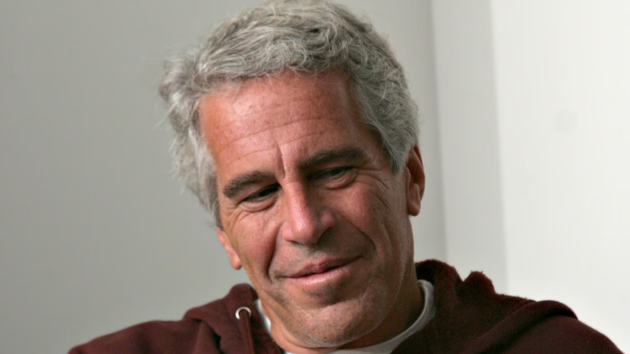
Jeffrey Epstein in Cambridge, Ma., Sept 8, 2004. (Rick Friedman/Corbis via Getty Images)

(WASHINGTON) — The late sex offender Jeffrey Epstein appears to have successfully hidden a trove of potential evidence of his crimes from investigators for more than a decade, according to documents released this month by the Department of Justice. 

Internal correspondence between Epstein’s attorneys and private investigators, as well as previously sealed court filings, suggest that the disgraced financier went to extreme lengths to hide the potential evidence during the critical three-year period when local and federal law enforcement began investigating him before he secured a lenient plea deal that allowed him to avoid a lengthy prison sentence. 

Less than two weeks before the Palm Beach Police Department raided Epstein’s mansion in October 2005, a private investigator retained by Roy Black, a criminal defense lawyer for the disgraced financier, removed a trove of evidence from the home, including multiple computers, more than two dozen phone directories, and sexually explicit material, according to documents released by the DOJ.

State and federal prosecutors appeared to have never accessed the materials while they investigated Epstein, potentially shielding Epstein from criminal exposure and contributing to how he was able to evade justice for more than a decade. 

A 2020 report from the DOJ’s Office of Professional Responsibility about the issues with the investigation later concluded that the computers contained “potentially critical” evidence that could have changed the trajectory of the case. 

“There was good reason to believe the computers contained relevant — and potentially critical — information; and it was clear Epstein did not want the contents of his computers disclosed,” the report said. 

In the two decades that have followed — despite multiple investigations into Epstein’s criminal actions — the boxes of sensitive evidence appear to have been passed between representatives of Epstein but never fully recovered by law enforcement. 

While law enforcement has long been aware of the removed computers, documents released earlier this month by the Department of Justice for the first time shed light on the evidence removed from the home and the ill-fated effort to retrieve them by law enforcement. 

The documents outlining the trove of removed evidence were first reported by The Telegraph

‘Items of potential evidentiary value’

According to a 2005 memo from private investigator William Riley to Black, another private investigator, Paul Lavery, visited Epstein’s Palm Beach home at Black’s direction to remove “items of potential evidentiary value” from the home. 

Attempts by ABC News to contact Lavery and Riley Wednesday about the developments were unsuccessful. Riley’s partner in his private investigative firm Steve Kiraly declined to comment.

Black died last year, and an attorney at his former firm said he was occupied with an ongoing trial on Wednesday and unavailable.  

Searching Epstein’s home less than two weeks before police would raid it, Lavery removed more than a hundred pieces of potential evidence, including three computers, 29 bound telephone directories, a three-page listing of nearby masseuses, and at least ten photos of nude or partially nude women, according to the memo. At least two of the photos had handwritten messages on them, including from a woman who wrote, “You better never forget about me” before signing her name and ending the note “Class of 2005,” the memo said.  

Lavery also removed more than dozen items of sexual paraphernalia, five pieces of women’s underwear, Epstein’s concealed carry permit, an Epstein identification card for Harvard University, and more than $2,000 in cash, according to the memo. Among the removed items was also more than forty mainly pornographic VHS tapes and books titled “‘Compleat Slave’ — creating and living an erotic dominant/submissive lifestyle” and “‘Training with Miss Abernathy’ — a workbook for erotic slaves and their owners,” the memo said.  

The detective with the Palm Beach Police Department who was in charge of the investigation noted in a court filing that several items in Epstein’s home “were conspicuously absent” when they arrived to execute the search warrant. 

“For example, there were several hanging file folders that had their contents removed, and the pre-existing security cameras that I had observed during my last visit to Mr. Epstein’s residence were in place but were not connected to recording equipment,” he said in the filing. “In addition, at each location where a computer had been present, computer monitors, printers, and other peripheral devices were present but the computers (CPU-Central processing unit) themselves were removed.”

A FBI later agent attested in a then-sealed court filing that the items “were purposely removed from Mr. Epstein’s home in anticipation of an execution of a search warrant” and may contain vital evidence. 

“A review of Mr. Epstein’s computers may provide additional electronically stored message logs which could be further evidence of Mr. Epstein’s intent to travel to engage in sexual activity with teenagers he recruited from five Palm Beach County high schools,” the court filing said. 

According to the filing, one of the computers potentially contained critical surveillance camera footage because it previously was hard-wired to the home’s surveillance system. 

“The FBI investigation has determined that Mr. Epstein was actively involved in lewd and lascivious conduct with minor females as early as March 2004. To the extent that Mr. Epstein tries to deny that any or all of the victims ever visited his home, video footage of them at the house would rebut such a claim,” the filing said. 

A review of the Department of Justice’s Epstein library and an index of evidence released last year by the Trump administration earlier this year suggests the materials were never fully recovered by law enforcement. Testimony from an FBI analyst during the 2021 trial of Epstein co-conspirator Ghislaine Maxwell suggested that investigators recovered a copy of at least one of the computers, though the original computers and physical documents appear to have never been located. 

‘She needed to gather the stuff from the house’

The removal of the computers and other items was memorialized in multiple interviews conducted by law enforcement in the following two decades. 

A woman who worked as a personal assistant for Epstein told the FBI in 2021 that she was instructed by the disgraced financier to gather his items so an unidentified man could collect them from Epstein’s Palm Beach Home. 

“[She] recalled the conversation she had with EPSTEIN was where he told her that something happened to his detriment and she needed to gather the stuff from the house,” an FBI agent wrote in a report summarizing her account. 

While the assistant said she believed she would likely be meeting with a member of law enforcement, she said she arrived at the home, gathered the material, and provided it to an unknown man. The assistant said she similarly removed items from Epstein’s island. 

Epstein’s property manager also recounted the handover in his interview with federal agents, describing that Lavery retrieved the computers in the fall of 2005. 

In the following years, law enforcement unsuccessfully made multiple attempts to retrieve the items, though court documents suggest that their attempt to recover the evidence was largely focused on the three computers, rather than the trove of physical evidence — such as dozens of address books and sexual paraphernalia — that were also removed from the home. 

‘Never seen the equipment again’

As the investigation into Epstein heightened in the months following the search, Epstein’s lawyers fought to keep the materials out of the hands of law enforcement, arguing in previously sealed grand jury materials that the attempt to recover the materials were “simply the most recent of a series of highly intrusive and unusual attempts to acquire highly personal and/or privileged information” about Epstein. 

In court filings, Epstein’s attorneys appeared to acknowledge that the items were removed from the home prior to the search but argued the materials were irrelevant to the investigation and protected by attorney-client privilege. 

“Without disclosing any work done by Mr. Riley or his firm on Mr. Epstein’s behalf and at my direction, any actions thereafter taken by him or the firm were taken in connection with the legal representation of Mr. Epstein,” Epstein’s attorney Roy Black told the court in a then-sealed motion. 

The exact location of the materials in the months following the search is not clear, though recently released documents suggest that the materials quickly changed hands. According to notes taken by federal agents in 2007, Lavery claims that he promptly delivered the items to Riley, another private investigator who worked for Epstein and managed multiple storage units for the financier, the Telegraph first reported. 

“I took the items that were given to me,” Lavery said, according to notes. “Never seen the equipment again.”

Riley was subpoenaed for the information but appears to never have handed over the material, objecting to the requests with the help of Epstein’s lawyers. During the critical three-year period when Epstein was investigated by law enforcement before reaching a plea deal that allowed him to avoid a lengthy prison sentence, the trove of evidence was never accessed by law enforcement. 

When Epstein fulfilled his objection to plead guilty in state court pursuant to his non-prosecution agreement, the grand jury subpoena was withdrawn. When victims suing Epstein began seeking the materials in 2009, lawyers for the convicted sex offender appeared to spring into action to further ensure the materials would not be disclosed, citing the terms of the non-prosecution agreement. 

“Over the weekend I learned that plaintiff’s counsel are looking to get from me the computers and paperwork I took from Jeff’s house prior to the Search Warrant. I have them locked in storage and would like to know what to do with them,” Riley told an attorney for Epstein. “They are no longer needed in the criminal case, I assume.” 

Riley later confirmed in a letter to Epstein’s attorney Robert Critton that he would continue storing the materials in a “safe and secure location.”

“If at any time, you are unable to maintain possession of those materials or have any concern whatsoever that Mr. Epstein’s possession may be compromised in any manner, please advise me immediately such that we can take the necessary actions to protect and preserve those materials as is required in the Non-Prosecution Agreement,” Critton wrote in a letter memorializing their conservation. Critton died in 2020. 

Email correspondence between Riley and Epstein suggest that the disgraced financier was paying to keep the materials in a storage unit as late as 2010, though their location in the following decade — when investigators in New York opened a new investigation into Epstein and charged him with sex crimes before his 2019 death by suicide — appears to still be a mystery. 

Copyright © 2026, ABC Audio. All rights reserved.
Larry Summers to step down from Harvard amid Epstein scrutiny

Larry Summers to step down from Harvard amid Epstein scrutiny
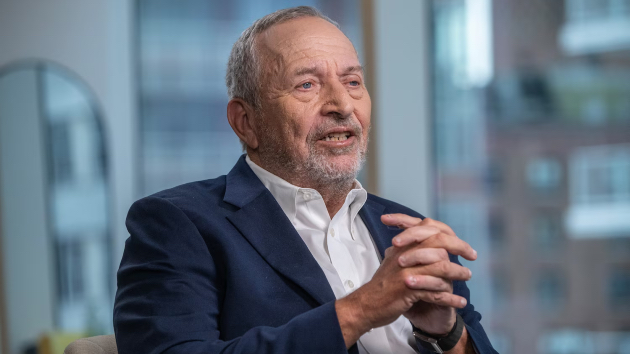
Larry Summers, president emeritus and professor at Harvard University, during an interview in New York City, Sept. 17, 2025. (Victor J. Blue/Bloomberg via Getty Images)

(NEW YORK) — Former Treasury Secretary Larry Summers announced on Wednesday that he would resign from his academic and faculty appointments at Harvard University at the end of the academic year.

Summers — who has been on leave from the university since November — also resigned from his role as the co-director of the Mossavar-Rahmani Center for Business and Government, according to a Harvard spokesperson.

The resignation was made “in connection with the ongoing review by the University of documents related to Jeffrey Epstein that were recently released by the government,” the spokesperson said.

“I have made the difficult decision to retire from my Harvard professorship at the end of this academic year,” Summers, a former Harvard president, said in a statement. “I will always be grateful to the thousands of students and colleagues I have been privileged to teach and work with since coming to Harvard as a graduate student 50 years ago.”

He added, “Free of formal responsibility, as President Emeritus and a retired professor, I look forward in time to engaging in research, analysis, and commentary on a range of global economic issues.”

The news was first reported by the Harvard Crimson.

Summers announced in November he was stepping back from public life after his apparent conversations with Epstein, the late sex offender who died by suicide in a Manhattan jail in 2019, were released by the House Oversight Committee.

“I am deeply ashamed of my actions and recognize the pain they have caused. I take full responsibility for my misguided decision to continue communicating with Mr. Epstein,” Summers said in a statement at the time.

ABC News previously reported that Summers maintained a relationship with Epstein for many years, particularly during Summers’ term as president of Harvard from 2001 to 2006.

He flew at least four times on Epstein’s aircraft, according to flight records made public during litigation against Epstein and he was the top official at Harvard during a time when the university received millions in gifts from the disgraced financier.

All of those gifts were received prior to Epstein’s guilty plea in Florida in 2008 to charges of solicitation of prostitution with a minor, according to the university’s review of its Epstein connections.

No Epstein survivor has alleged wrongdoing by Summers and there is no public record evidence to suggest Summers was involved in any of Epstein’s crimes.

Summers served as U.S. treasury secretary under President Bill Clinton from 1999 to 2001.

This is a developing story. Check back for updates.

Copyright © 2026, ABC Audio. All rights reserved.
How climate change is impacting drinking water in the US

How climate change is impacting drinking water in the US
Stock photo of a child filling a glass of tap water. (Cavan Images/STOCK PHOTO/Getty Images)

(NEW YORK) — Turning on the tap for a glass of water or to wash produce may become significantly less predictable because of climate change.

According to a study published in Communications Earth & Environment, climate change is making access to drinkable water more difficult in the United States.

Hazards intensified by climate change, like drought and flooding, threaten both the quantity and quality of drinking water across the U.S., according to the study.

As a result, water utilities serving 67 million customers across the U.S. are at high risk from climate hazards, roughly a fifth of the entire U.S. population.

Looking at 1,500 municipal water utilities across the country, researchers found that water utilities in every U.S. region are vulnerable to climate hazards. While drought impacts water utilities in the Western states more directly, saltwater from coastal flooding worsens groundwater quality, and extreme cold can wear on pipes. Additionally, water utilities in the upper Midwest and Northeast are particularly vulnerable to climate hazards due to older infrastructure.

“Much of our infrastructure was built many decades ago,” Costa Samaras, professor of civil environmental engineering at Carnegie Mellon University and co-author of the study, told ABC News. “It was built not for the climate that we’re experiencing now.”

Given the age of existing infrastructure and lack of adaptive capacities, water utilities are less likely to quickly recover from increasingly common climate hazards. According to the study, water utilities are already experiencing higher operating expenses and more revenue lost from hazards.

The study found that some of the largest water utilities in the country are also some of the most vulnerable to climate hazards. In Texas, where the most vulnerable utilities serve a growing number of customers, more investments in water utility infrastructure are key to keeping up with the increasing population.

To make matters worse, most drinking water utilities in the U.S. are not financially planning for future climate risks. As water utility companies try to keep their costs down, short-term emergency fixes are prioritized in order to resume service while investments to prevent more extreme future hazards get put on the back burner.

“When you’re not thinking strategically about asset management and long-term planning, it’s really easy to become stuck in a negative financial loop,” said Zia Lyle, postdoctoral researcher at the University of North Carolina at Chapel Hill and co-author of the study. Intensifying climate risks create larger financial burdens on utility companies to maintain service, limiting investments in future resilient infrastructure.

In addition to poor asset management, the study found that bond disclosures for the municipal water utilities do not typically include information on climate risks.

“The lack of disclosure here indicates a real systematic lack of climate risk assessments,” said Lyle. “When we interviewed drinking water utility managers, some of them were just unaware of how this range of hazards can affect all the different aspects of their system.”

Though it is becoming more common, only 30% of utilities discussed climate change in their bond statements in 2024. Without disclosure, those buying municipal bonds are left unaware of the risks their drinking water utilities face. In six states alone — Michigan, Illinois, California, Massachusetts, Virginia, and Texas — bond debt is currently around $500 million. Paired with decreased funding from the federal government, the lack of assessment and disclosure only increases the financial strain on drinking water utilities.

As climate hazards intensify, the financial risk combined with climate risks puts millions of customers and water utilities in a vulnerable position.

Some states are addressing the risks their drinking water utilities face. In Colorado, Denver Water is currently assessing the risks drought poses to their utilities so that they can plan appropriately and ensure water for their customers in the future.

Between appropriate risk assessment and increased investment from the state and federal governments, ensuring future access to drinking water is still possible.

“Now is the time for systems to invest,” said Dr. Zyle. “Overall, capital is more affordable now, and they can make these investments before it becomes too expensive.”

Copyright © 2026, ABC Audio. All rights reserved.
Law enforcement searches home of LA schools superintendent Alberto Carvalho

Law enforcement searches home of LA schools superintendent Alberto Carvalho
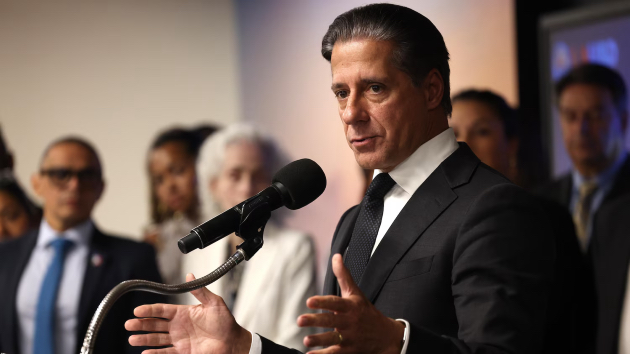
In this Oct. 30, 2025, file photo, superintendent Alberto Carvalho speaks at the LAUSD headquarters in downtown Los Angeles. (Genaro Molina/Los Angeles Times via Getty Images, FILE)

(LOS ANGELES) — Law enforcement is executing a court-approved search warrant at the home of Alberto Carvalho, the superintendent of the Los Angeles Unified School District, the nation’s second-largest school district, according to the U.S. Attorney’s Office in LA.

Sources told ABC News that the allegations, while under court seal, are not violent in nature, and the search was conducted quickly.

Carvalho has been the district superintendent since 2022, the longest-serving LAUSD superintendent in over two decades.

This is a developing story. Please check back for updates.

Copyright © 2026, ABC Audio. All rights reserved.
Snowstorm pushes through Northeast with days of melting expected to follow

Snowstorm pushes through Northeast with days of melting expected to follow
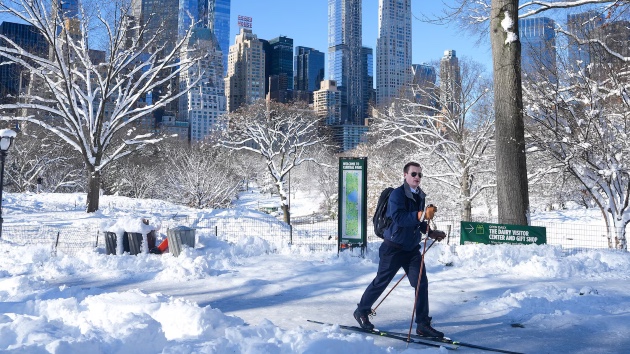
A man on cross-country skis travels through Central Park after a historic blizzard hit parts of the East Coast, on February 24, 2026 in New York City. (Ryan Murphy/Getty Images)

(NEW YORK) — Snow is moving through the Northeast Wednesday morning, though much of the snow is light with heavier bands of precipitation further inland and higher elevations.

In New York City, snow is expected to last a few hours before ending in the late morning with less than an inch of snow accumulation anticipated.

In Boston, snow should end by midday with less than an inch of snow expected and, in Portland, Maine, snow totals could be up to 2 to 3 inches.

There is a chance for lingering snow showers scattered across New England through the evening but without much additional accumulation expected.

Meanwhile, temperatures the rest of the week will likely reach above freezing each day from New York City to Boston, meaning there should be some daily melting and then an overnight re-freeze that could create black ice in areas.

The chance for heavy snow across the Northeast is dwindling as the storm looks to stay farther south and temperatures too warm for snow, meaning it is much more likely this will be a rain event for the South with little to no snow for areas north of there.

While there may be thunderstorms accompanying some of the rain, no flood or severe weather threat is anticipated.

Elsewhere, on Saturday there is a chance for snow from Bismarck, North Dakota, to Milwaukee, Wisconsin and through southern Michigan that should move quickly and dump a couple of inches of snow in these regions.

Some of that snow may linger into the Northeast on Sunday but, overall, it is looking weaker and light with about an inch or less expected for those experiencing the snow.

On Sunday and Monday nights, there is a chance for snow over parts of the Midwest and Mid-Atlantic but it is currently too soon to know how this storm will develop with another round of rain and snow possible on Tuesday for the East and Northeast.

Copyright © 2026, ABC Audio. All rights reserved.
Johnny Gaudreau’s widow speaks out about USA hockey’s emotional tribute at Olympics

Johnny Gaudreau’s widow speaks out about USA hockey’s emotional tribute at Olympics
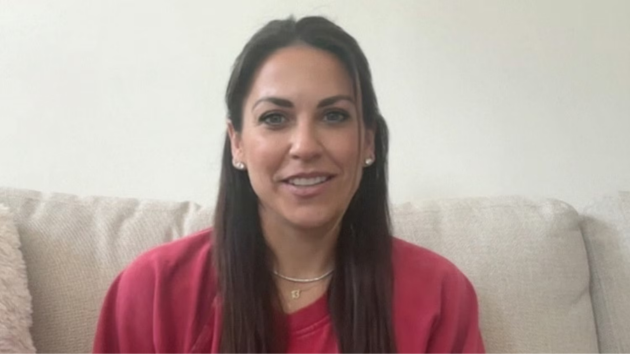
Meredith Gaudreau, widow of former Columbus Blue Jackets hockey player, Johnny Gaudreau speaks with ABC News, Feb. 24, 2026. (ABC News)

(NEW YORK) — Meredith Gaudreau, the widow of professional hockey player Johnny Gaudreau, is speaking out about the emotional moment the U.S. men’s hockey team celebrated her husband and their children at the 2026 Milan Cortina Olympics.

As soon as USA beat Canada 2-1 in the gold medal game on Sunday, the players brought two of Johnny Gaudreau’s kids onto the ice. Three-year-old Noa and Johnny Jr. — who turned 2 that same day — posed with their dad’s number 13 jersey as they sat in the arms of the new Olympic champions.

“They didn’t have to do that,” Meredith Gaudreau told ABC News Live on Tuesday.

“I was just very, very proud, and I’m very thankful to them for including my kids in it, and just honoring my husband the way they do,” she said. “It’s the classiest thing. They do all these really kind gestures and include our kids in everything, because I know that’s exactly what John would want.”

Meredith Gaudreau said she told her daughter, “Daddy’s friends want to take a picture with you and Johnny. … You get to do this because of daddy and they love and they miss him, too.”

“She was really excited,” she said. “… She’s started to put things together and she’s very, very proud.”

Johnny Gaudreau’s parents were also in the crowd to witness the special moment.

Johnny Gaudreau, a 31-year-old Columbus Blue Jackets star known as “Johnny Hockey,” died on Aug. 29, 2024, alongside his brother, Matthew Gaudreau, 29, a former pro hockey player.

The brothers were riding bikes in New Jersey on the eve of their sister’s wedding when they were struck by a driver suspected of being under the influence of alcohol, according to police. The suspected driver was arrested and has pleaded not guilty to charges of aggravated manslaughter, vehicular homicide, evidence tampering and leaving the scene of an accident. He’s not yet gone to trial.

“Still every day is kind of a gut punch,” Meredith Gaudreau said. “So when the guys do what they can to still include John and our kids, it just means everything to me. You know, these guys are really good people, really good friends of ours. And I just consider them really great role models.”

She added that it shows “how much they love John and all the respect they have for him. … I am really proud of John for having that type of impact.”

Meredith Gaudreau said her third baby, Carter — who was born about seven months after his father died — didn’t travel with them to the Olympics, but watched the game from home.

“He doesn’t have a passport yet cause he’s only, almost 11 months old. So I felt so bad, but he watched along and he looks pretty good wearing number 13!” she said.

Matthew Gaudreau also left behind a wife, Madeline Gaudreau, who was pregnant at the time of his death. Their son, Tripp, was born four months after the crash.

Madeline Gaudreau told ABC News last year she wants her husband to be remembered as “a good soul. He was just a pure, happy, good soul, fearless.”

ABC News’ Kyra Phillips, Olivia Osteen, Drew Millhon, KellyMarie Braun and Bridget Perry contributed to this report.

Copyright © 2026, ABC Audio. All rights reserved.

NASA targets Wednesday for rollback of Artemis II rocket and spacecraft

NASA targets Wednesday for rollback of Artemis II rocket and spacecraft
Artemis II: the Space Launch System rocket and Orion spacecraft at Launch Pad 39B, on Friday, Jan. 30, 2026. (Ricardo Ramirez Buxeda/Orlando Sentinel/Tribune News Service via Getty Images)

(MERRITT ISLAND, Fla.) — Weather conditions have again delayed operations leading to the launch of the Artemis II rocket mission to the moon.

The rollback of the Artemis II rocket and spacecraft at the Kennedy Space Center in Florida was originally scheduled for Tuesday afternoon. Due to high winds in the area, NASA said its plans to move the rocket and Orion spacecraft for Artemis II off the launch pad and back to the vehicle assembly building were pushed to Wednesday morning.

The 4-mile trek is expected to take 12 hours, the space agency said.

The move was deemed necessary after crews detected an interrupted flow of helium to the Artemis II rocket’s upper stage on Saturday. Helium did not flow properly during normal operations and reconfigurations that followed the wet dress rehearsal that concluded on Thursday.

The upper stage uses helium to maintain the proper environmental conditions for its engine and to pressurize liquid hydrogen and liquid oxygen propellant tanks, according to NASA. Essentially, helium is a critical element that ensures the proper flow of fuel into the rocket.

Once back in the vehicle assembly building, teams will install platforms to access the helium flow issue, NASA said. Teams will review potential causes of the issue as well as data from the 2022 Artemis I mission, in which teams had to troubleshoot helium-related pressurization of the upper stage before launch.

The Artemis II mission is a test flight that will send four astronauts on a more than 600,000-mile journey around the moon to test critical spacecraft systems, according to NASA. The crew will fly over the far side of the moon — passing between 4,000 and 6,000 miles above it — and spend a day observing and photographing the region.

After the lunar flyby, the astronauts will circle the moon for a return to Earth, in which the Earth-moon gravity field will help pull the spacecraft back to Earth over the course of its three-day return trip.

The Orion will then splashdown off the coast of San Diego after re-entering the Earth’s atmosphere, and the U.S. Navy will recover the astronauts from the Pacific Ocean.

The journey is expected to take 10 days total.

The mission sets the stage for the future Artemis III, which aims to someday land astronauts near the moon’s South Pole. The region has never been explored by humans before.

Artemis II will mark the first time humans have traveled beyond low Earth orbit since Apollo 17 in 1972.

In January, NASA delayed the Artemis moonshot due to near-freezing temperatures at the launch site.

Heaters were deployed to keep the Orion capsule on top of the rocket warm, while rocket-purging systems were adapted to the cold.

The rollback of Artemis II means it will not launch during the March launch window, NASA said.

The quick preparations will potentially preserve the April launch window, pending the outcome of data findings and repair efforts, according to the agency.

ABC News’ Briana Alvarado and Matthew Glasser contributed to this report.

Copyright © 2026, ABC Audio. All rights reserved.
American tourist says violence over Mexican drug lord’s killing came without warning

American tourist says violence over Mexican drug lord’s killing came without warning
American Tourist Yoni Pizer speaks of getting caught in the violence that erupted in Puerto Vallarta, Mexico, February 22, 2026, after the Mexican government killed the cartel leader Nemesio Oseguera Cervantes, also known as El Mencho. (ABC News)

(NEW YORK) — In harrowing detail, an American tourist described the violence that he, his husband and two friends were caught in on Sunday in the vacation mecca of Puerto Vallarta, Mexico, when armed criminals responded to the killing of a notorious cartel boss.

Yoni Pizer of Chicago told ABC News that he and his husband, who own a vacation condo in Puerto Vallarta, were driving their friends to a whale-watching expedition around 8:30 a.m. local time on Sunday when chaos suddenly erupted.

Pizer said they were just west of Puerto Vallarta, approaching an intersection, when they first noticed trouble and soon realized their lives were in jeopardy.

“We suddenly noticed a man running at us with a gun in his hand and one of my friends who was in the backseat shouted, ‘He’s got a gun! He’s got a gun!'” Pizer said.

He said the man was part of the group of armed assailants who were stopping cars and pulling the occupants out.

Pizer said the man banged on his car window and pointed the gun at his head. He said at first he thought it was just a carjacking, but later noticed other armed assailants stopping cars and pulling the occupants out.

He said the armed man ordered him and the others with him to get out of the car.

“At that point, he got into the car and drove it just a few yards into the intersection, and then threw an incendiary device in it, which exploded, and the car was quickly engulfed in flames,” Pizer said.

Widespread cartel-organized violence erupted following a Mexican Special Forces operation on Sunday that killed Nemesio Oseguera Cervantes, the leader of the Jalisco New Generation Cartel, who is also known as “El Mencho.”

Oseguera Cervantes was one of the most wanted criminals in both Mexico and the United States. He was one of the top traffickers of fentanyl into the U.S. Last year President Donald Trump designated the Jalisco New Generation Cartel as a Foreign Terrorist Organization.

When Mexican forces moved in to arrest him on Sunday in another part of the state of Jalisco, “El Mencho’s security detail opened fire,” Mexico’s Secretary of National Defense Ricardo Trevilla Trejo said Monday. More than 30 cartel members were killed in the firefight, which also left 25 members of the Mexican National Guard dead, Mexican officials said.

Oseguera Cervantes initially got away, but government forces tracked him down in the town of Tapalpa, about 180 miles southeast of Puerto Vallarta, where he and his two bodyguards were gravely wounded in a gun battle, Mexican authorities said.

El Mencho and his bodyguards died during an evacuation flight to a medical facility, Trevilla Trejo said.

In response, cartel members fanned out across the country, setting fire to vehicles and buildings, authorities said.

Among the other cartel members killed was a “principal confidant” of El Mencho in Jalisco who was “coordinating road blockades, vehicle burnings, and attacks on military and government facilities,” Trevilla said.

“Their goal was clearly to block all main roads in Puerto Vallarta. And, clearly, it wasn’t to kill people, because they easily could have killed all of us,” Pizer said.

He said that after his car was taken and set on fire, he and his party ran for their lives as they heard gunshots and saw numerous vehicles being torched.

“Then a city bus came up and they went onto the bus and started shooting their guns to make sure people understood that they meant business,” Pizer said, adding that the assailants blocked a road with the bus and set it on fire.

Pizer said at one point during their escape, he was separated from his husband and one of their friends, who both ended up sheltering in a church orphanage for more than eight hours.

Pizer said that a good Samaritan stopped and gave him and his other guest a ride back into Puerto Vallarta.

“We ran to the beach and turned around and saw black columns of smoke throughout the city,” Pizer said.

The U.S. State Department is advising American tourists to continue sheltering in place until tensions subside.

Mexican President Claudia Sheinbaum said there is a “greater calm” in Mexico as government forces worked to quell the violence.

Pizer said he fears the attack will wreck Puerto Vallarta’s top industry — tourism — at least for the short term.

“This all makes me very, very sad,” Pizer said. “Puerto Vallarta is such a wonderful, special place. Obviously, that’s why so many people come here.”

Copyright © 2026, ABC Audio. All rights reserved.

Savannah Guthrie announces new $1M reward for recovery of mom Nancy Guthrie

Savannah Guthrie announces new M reward for recovery of mom Nancy Guthrie
Savannah Guthrie announces new $1M reward for recovery of mom Nancy Guthrie
Australian-born presenter, Savannah Guthrie poses alongside her mother Nancy Guthrie during a production break whilst hosting NBC’s “Today Show” live from Australia at Sydney Opera House on May 4, 2015 in Sydney, Australia. (Photo by Don Arnold/WireImage)

(NEW YORK) —   “Today” show host Savannah Guthrie announced on Tuesday a new $1 million reward for the recovery of her mom, Nancy Guthrie, who has been missing since Feb. 1.

The combined reward between the family and law enforcement now stands at $1.2 million.

Sources familiar with the family’s decision told ABC News the family was prepared to fund the reward from the start but waited until now because they were initially advised against it.

Separately, the Guthrie family is donating $500,000 to the Center for Missing and Exploited Children to shine a light on other missing persons cases.

Nancy Guthrie, 84, was abducted from her Tucson, Arizona, home by an unknown suspect in the early hours of Sunday, Feb. 1.

“Every hour and minute and second and every long night has been agony,” Savannah Guthrie said in her Tuesday morning Instagram post.

“We still believe in a miracle,” Savannah Guthrie said. “We also know she may be lost. She may be gone.”

Savannah Guthrie said in the video that her mom may be “dancing in heaven,” and “If this is what is to be, then we will accept it. But we need to know where she is.”

“Somebody knows,” Savannah Guthrie said. “And we are begging you to come forward now.”

Savannah Guthrie wrote in the caption that anyone with information can anonymously call the FBI or “reach out to me.”

The FBI has released photos and videos of the unknown armed suspect in front of Nancy Guthrie’s home, appearing to tamper with a security camera.

The FBI in Phoenix said in a statement on Tuesday, “If you have firsthand knowledge of Nancy’s whereabouts or any information about where she may be located, please contact the FBI tip line at 1-800-CALL-FBI (1-800-225-5324).”

“To help keep the tip line available for actionable investigative law enforcement leads, please submit only serious and detailed fact-based information – no well-wishes or case theories,” the FBI added. “The tip line is not for personal messages to the Guthrie family.”

Anyone with information is urged to call 911, the FBI at 1-800-CALL-FBI, or the Pima County Sheriff’s Department at 520-351-4900.

Copyright © 2026, ABC Audio. All rights reserved.
‘This is going too far boss’: Texas Rep. Tony Gonzales appears to pursue late staffer in explicit text messages

‘This is going too far boss’: Texas Rep. Tony Gonzales appears to pursue late staffer in explicit text messages
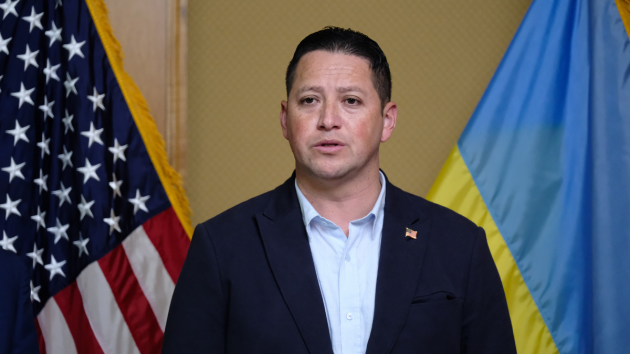
Rep. Tony Gonzalez, R-TX, speaks during press conference of members of US Congress delegation on July 1, 2024 in Kyiv, Ukraine. (Vitalii Nosach/Global Images Ukraine via Getty Images)

(WASHINGTON) — Text messages appear to show Texas Rep. Tony Gonzales pursuing a relationship with his former staffer, Regina Santos-Aviles — more than a year before she died by suicide.

The messages were provided to ABC News by Santos-Aviles’ widower.

In a series of texts from May of 2024, Gonzales, a married father of six, repeatedly requests “sexy” photos from Santos-Aviles. The aide seems initially hesitant, writing, “you don’t really want a hot picture of me.”

Gonzales continues, saying, “I’m just such a visual person” and “Sorry.”

He also appears to ask Santos-Aviles about her sexual preferences. Santos-Aviles replies to the request by saying, “This is going too far boss,” but appears to engage in flirtation, saying, “how long have you thought I was this hot?”

A final text dates from June of 2024 in which Santos-Aviles’ husband, Adrian Aviles, texts Gonzales and several staffers from Regina’s phone, telling them that he is filing for divorce due to the discovery of her messages with Gonzales, texting the group thread: “[S]he’s been having an affair on [him] with your boss Tony Gonzales.” The recipients of those texts include several current staffers, though ABC News has redacted their names and contact information.

The Gonzales campaign has not responded to ABC News’ requests for comment regarding the newly obtained text messages.

Gonzales has denied allegations he engaged in an extramarital affair with a congressional aide who died by suicide last fall — calling on the Uvalde police department to release its report on her death despite objections from her family.

Santos-Aviles, 35, died on Sept. 14, 2025, after she doused herself with an accelerant and set herself ablaze at her home in Uvalde, Texas, Bexar County officials determined.

Adrian Aviles’ lawyer Bobby Barrera told ABC News that his client did not share the text messages with congressional investigators, who are prepared to send a report to the House Ethics Committee as soon as next week.

ABC News has confirmed that Gonzales has been under investigation by the Office of Congressional Conduct, which has already completed its probe. Due to its rules, the OCC may not transmit a report against a member of Congress 60 days prior to an election. Gonzales is in a primary contest on March 3, so the report is expected to be transmitted to the House Ethics Committee the following day. 

Last week, Gonzales told ABC News that “Ms. Santos-Aviles was a kind soul who devoted her life to making the community a better place.”

The controversy is now attracting the attention of Gonzales’ Republican colleagues. This afternoon, Colorado GOP Rep. Lauren Boebert called on Gonzales to resign. She was later joined by Republican Congresswoman Nancy Mace of South Carolina. Texas Republican Brandon Gill and Florida Republican Anna Paulina Luna called on Gonzales to drop his bid for reelection.

When asked about their statements by reporters, House Speaker Mike Johnson said that he doesn’t think “it’s time to call for resignation” and that “you have to allow investigations to play out and all the facts to come out.” The Speaker currently has a one-vote majority.

Copyright © 2026, ABC Audio. All rights reserved.