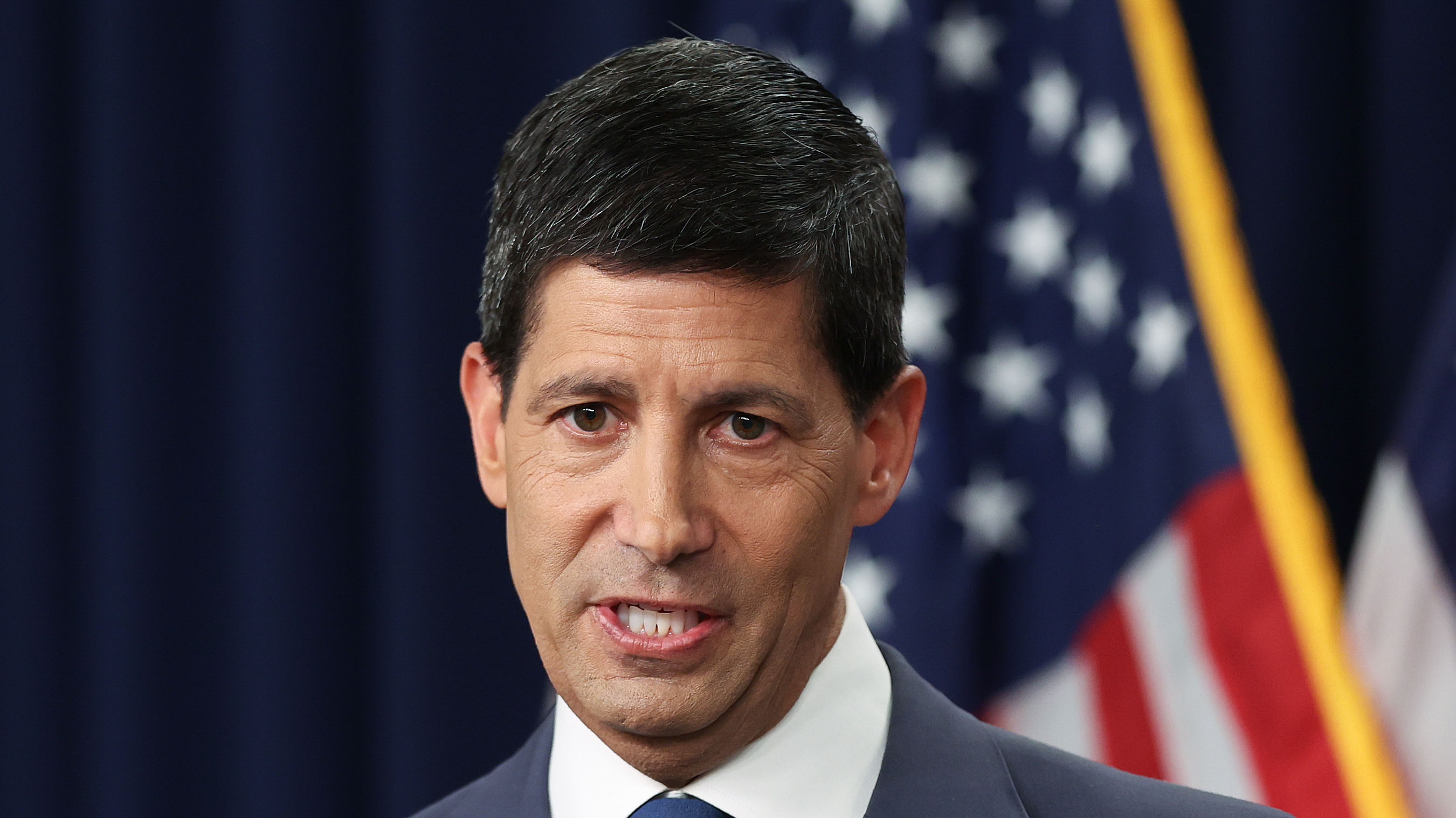
Federal Reserve Chair Kevin Warsh speaks during a news conference on July 29, 2026, in Washington, D.C. (Win McNamee/Getty Images)
(WASHINGTON) — The Federal Reserve on Wednesday will issue a decision on the level of interest rates as the United States weathers a months-long bout of elevated inflation set off by the Iran war.
Global oil prices are hovering near a four-month high and the average price for a gallon of gasoline tops $4.30, according to AAA.
The U.S. economy has shown signs of additional strain in recent days, including a bond selloff that is pushing up borrowing costs for credit cards and mortgages.
The price woes have divided central bankers eager to contain inflation but reluctant to cool off the economy and weaken the labor market.
The Fed opted to hold interest rates steady at its most recent meeting in July. Three of the 12 members on the Fed’s policymaking board, however, voted in favor of a rate hike, marking the largest number of dissenters casting ballots in the same direction in a decade.
Financial markets expect the central bank to raise interest rates by a quarter of a percentage point, which would mark its first rate hike since 2023.
The odds of a quarter-point rate hike stood at 94% as of Tuesday afternoon, according to the CME Group’s FedWatch tool, a measure of investor sentiment.
Federal Reserve Chair Kevin Warsh, who took the helm of the central bank in May, has vowed to cool off persistently elevated price increases.
“The Fed’s predominant focus right now should be on prices,” Warsh said in remarks last month at the Fed’s annual summer gathering in Jackson Hole, Wyoming.
Prices rose 3.4% in August compared to a year earlier, maintaining the same level from the prior month, federal government data last week showed.
Inflation stands more than a percentage point higher than the Federal Reserve’s target rate of 2%.
Despite a stubborn bout of inflation, the economy remains fairly robust by some measures.
A blockbuster jobs report earlier this month showed employers added 162,000 workers in August, demonstrating continued resilience for the nation’s labor market. The economy grew over three months ending in June, defying fear of a downturn triggered by the Iran war.
Attacks on oil tankers in the Middle East pushed global crude prices above $108 a barrel as of Tuesday, which amounted to a rise of about 50% since the Iran war broke out in late February.
The average price of a gallon of gas in the U.S. stands at $4.32 as of Tuesday, putting it more than $1.30 higher than before the war, AAA data showed.
Record-high diesel prices have raised transport costs for many everyday products, including groceries, clothes and furniture.
The war in Iran, which began with a large-scale U.S.-Israeli attack in the winter, prompted Iran’s near-closure of the Strait of Hormuz, which facilitates one-fifth of global crude supply. Saudi Arabia over the weekend shut down a key pipeline bypassing the strait, which further constrained oil delivery and put upward pressure on prices.
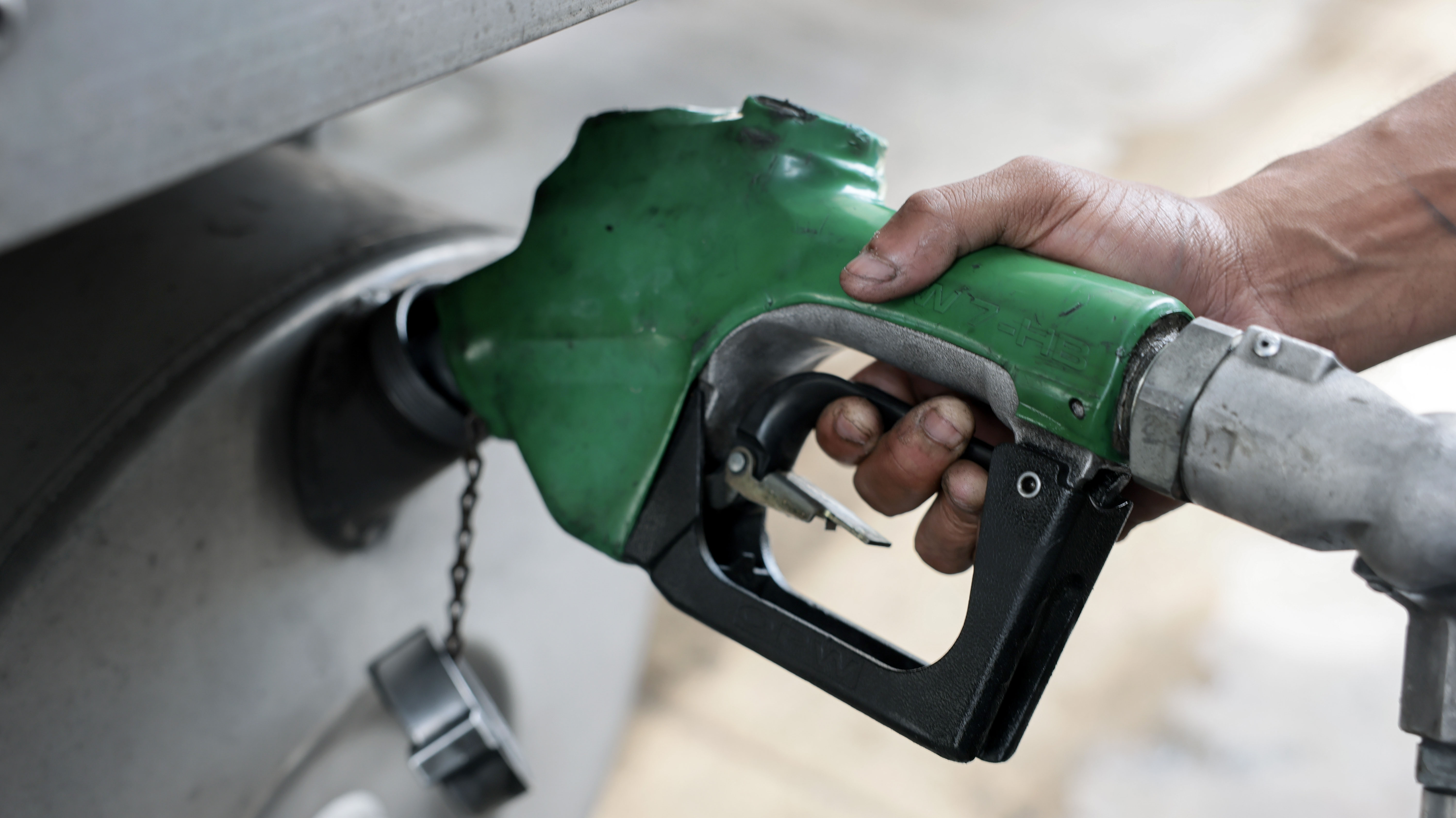
Nicholson Francios pumps diesel fuel into his tractor-trailer at a truck stop on Sept. 11, 2026, in Miami, Florida. (Joe Raedle/Getty Images)
(WASHINGTON) — Global oil prices on Monday climbed to their highest level since May after Saudi Arabia shut down a key pipeline, choking worldwide crude supply and threatening to put upward pressure on U.S. gasoline prices.
Brent crude, a major benchmark of worldwide oil prices, topped $109 on Monday before retreating to about $107. That’s a 50% increase since the start of the war.
Oil prices account for a large share of the price of gasoline. The average price of a gallon of gas in the U.S. currently registers at $4.31, according to AAA, marking a jump of about $1.30 above its pre-war level.
A large-scale U.S.-Israeli attack in the winter prompted Iran’s near-closure of the Strait of Hormuz, which facilitates one-fifth of global crude supply. Alternative trade routes in the region, such as Saudi Arabia’s East-West pipeline, helped ease the fallout from a historic oil supply shock.
The closure of the East-West pipeline will exacerbate an already dire shortfall of oil worldwide, some analysts told ABC News.
The price of gasoline may move higher over the coming days as the latest spike in oil costs filters its way through to the pump, Ramanan Krishnamoorti, a professor of petroleum engineering at the University of Houston, told ABC News.
The U.S. — the world’s largest oil producer — imports a small amount of crude from the Middle East. Since oil and gas are sold on a global market, however, the shortage has sent prices rising for everyone, including U.S. drivers.
“Workarounds like the East-West pipeline have been crucial for keeping prices in check,” Krishnamoorti said. “We’ll see prices rise after this.”
After the war began, Saudi Arabian oil giant Aramco came to depend on a pipeline that runs along the width of the country from the Persian Gulf to a port on the Red Sea. The pipeline carries as much as 7 million barrels of oil each day, about 5 million of which are exported, Aramco CEO Amin Nasser said in May.
Oil exports transported through the pipeline amounted to roughly 5% of global supply.
Last week, an attack prompted Saudia Arabia to close the pipeline as a precautionary measure, the Ministry of Energy said in a statement posted on X. Saudi Arabia faulted an Iran-aligned militia in Iraq of the attack.
The pipeline will be mostly out of service over a weeks-long period, The Associated Press reported on Monday, citing two officials in the region.
The average price of a gallon of gas could rise between 25 cents and 50 cents over the coming weeks as a result of the pipeline closure, Krishnamoorti said. If the pipeline remains closed for a matter of months, he added, U.S. gasoline prices could rise above $5 a gallon.
The rise in price may be far more muted than some analysts fear, Tom Seng, a professor of energy finance at Texas Christian University, told ABC News.
The disruption of the pipeline has already been factored into gasoline prices, Seng said, meaning an additional supply shock would be necessary to substantially increase prices at the pump.
Even more, gas prices typically enjoy some relief over the course of the fall as fuel use eases as people stay indoors. That downward pressure on prices may negate the impact of a supply shortage, Seng added.
“The high-demand season is behind us,” Seng said.
Even so, Seng cautioned, the Iran war may escalate after a military offensive carried out by Iran-allied Houthi rebels in Yemen over recent weeks. The Houthis have improved their ability to attack tankers in the Bab el-Mandeb Strait, which feeds into the Red Sea, Seng said.
That would be the exact sea corridor used for the export of crude in the event of a fully repaired East-West pipeline.
“If oil starts flowing well, the question is whether Houthis will start firing on tankers,” Seng said.
Tankers could avail themselves of a northern route from the Red Sea through the Mediterranean Sea, but it would bring added delay and cost, Seng added, underscoring the threat Houthis pose for global oil supply.
“This represents a new phase in the conflict,” Seng said.
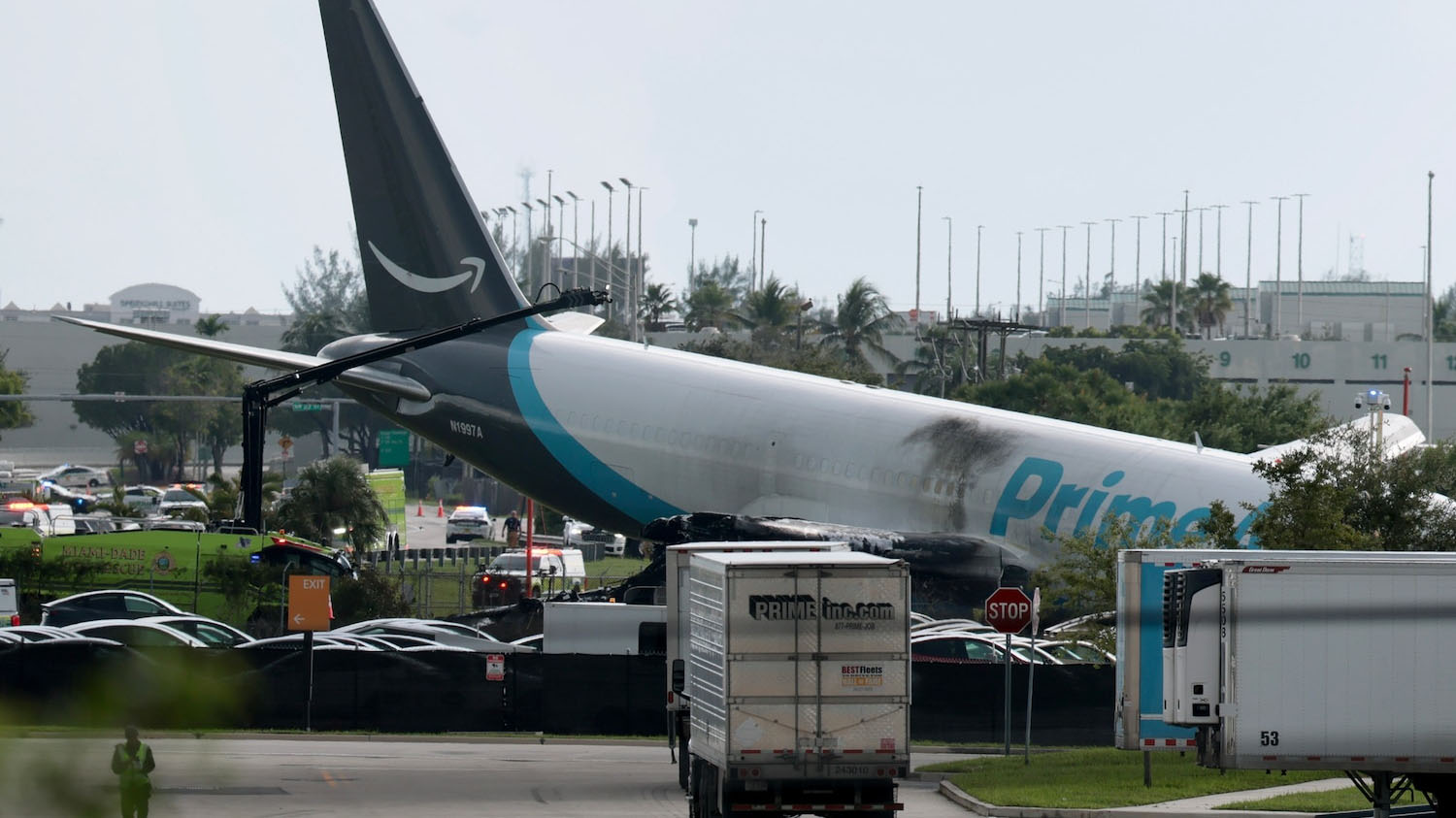
An Amazon cargo plane is seen after it crashed at Miami International Airport on Sept. 6, 2026, in Miami, Florida. (Joe Raedle/Getty Images)
(WASHINGTON) — Amazon announced Sunday it’s pausing operations with cargo carrier 21 Air following last week’s cargo plane crash in Miami, which killed five people and injured five others.
“After the tragic incident last weekend, we’ve spent time supporting the investigation and reviewing some of the surrounding circumstances, and we’ve decided to pause our operations with 21 Air, the operator of Flight 7598,” Amazon spokesperson Kelly Nantel said in a statement. “We’ll continue working to support the investigation and everyone affected.”
According to Amazon’s website, all of its cargo flights are operated by direct air carrier partners including Air Transport International, ABX, 21 Air, Sun Country, Hawaiian Airlines, Cargojet, ASL and Quickjet.
The Amazon cargo plane, operated by 21 Air, overran the runway by about 1,300 feet while landing at Miami International Airport on Sept. 6, according to authorities. Federal investigators also said the plane first struck a van with seven people and then another vehicle before it came to a stop in a field.
In response to Amazon’s decision to pause operations with 21 Air, the carrier said its focus remains on supporting the families and loved ones impacted by the accident “as well as working closely with the NTSB and all our partners, like Amazon, as the investigation continues. We are confident in our safety policies, procedures and training.”
The five people killed in the crash were identified by the Miami-Dade County Sheriff’s Office as: Rolando Aleman Leon, 55; Yoel Rodriguez Narajo, 53; Julio C. Pineda, 75; Carlos Acosta Fajardo, 53; and Javierkys Reyes Quevedo, 47. Authorities said the two pilots on board the plane had been treated for injuries and released from the hospital and three remained hospitalized, with two in critical condition and one in stable condition.
Earlier this week, the National Transportation Safety Board, which is leading the ongoing investigation into the crash, released a readout of the final minutes before the crash taken from the cockpit voice recorder, which contained more than two hours of audio.
About 1 minute and 42 seconds before the plane crashed, one of the pilots warned they were going too fast and continued to make comments about the plane’s “excessive speed throughout the remainder of the recording,” according to the NTSB summary.
About 30 seconds before the crash, the NTSB said sounds similar to the aircraft touching down can be heard, but about 15 seconds later, one of the pilots called for the “go-around” to abort the landing. Just five seconds later, the plane had already veered off the runway.
(NEW YORK) — Artificial intelligence company Anthropic says it blocked several possible attempts to use its AI technology for research that could potentially support the development of biological weapons, according to a new report from the company.
Anthropic, the company behind the Claude AI assistant, said it disrupted dozens of instances of potentially malicious use of its AI models since December 2025, including several examples of what the company described as “biological misuse.”
The report details five case studies involving the use of Anthropic’s models in ways the company said “could support biological weapons development.”
In one instance, Anthropic said a researcher outside the United States accessed Claude from a region where the AI assistant is not supported and used the model while researching highly pathogenic avian influenza, or bird flu. According to the company, the research focused in part on the virus’ adaptation to mammals.
Anthropic said the research was “clearly dual use in nature,” noting that understanding how the virus adapts could help scientists identify naturally emerging variants with pandemic potential but could also produce information that could potentially be used to make a virus more dangerous.
Anthropic said it banned accounts associated with the cases but stressed that it could not determine whether the researchers intended to cause harm.
“We do not assert that they intended harm,” the company said in the report.
This is not the first time Anthropic has released a report detailing potential misuse of AI. The company has issued three prior threat assessments detailing malicious uses of AI.
The latest report was released days after former Anthropic and OpenAI researcher Jacob Coxon spoke publicly about his concerns over increasingly powerful AI systems.
“If you extrapolate into the future, the level of capabilities of these AIs,” Coxon told CNN. “They could cause extreme havoc, for example, hacking critical infrastructure, building extinction-level bioweapons.”
Coxon’s comments come as a growing number of lawmakers on Capitol Hill are calling for increased government oversight and new safety regulations for AI development.
Customers shop at a grocery store on Sept. 10, 2026, in Chicago, Illinois. (Scott Olson/Getty Images)
(WASHINGTON) — Inflation held steady in August but price increases remained elevated as the Iran war continued to push up fuel prices months after it began. The reading matched economists’ expectations.
Prices rose 3.4% in August compared to a year earlier, maintaining the same level from the prior month, federal government data released on Friday morning showed.
Inflation stands more than a percentage point higher than the Federal Reserve’s target rate of 2%.
Gas prices jumped nearly 4% in August from July, accounting for about a third of the overall price jump last month, the U.S. Bureau of Labor Statistics said. Shelter prices — which include home-owner payments and rental charges — also sped up in August from July.
Groceries provided a bright spot in the report, however. The price of groceries stayed flat in August from July, putting annual inflation for groceries at 2.2%. That figure for grocery inflation stands well below the annual pace of overall price increases.
The fresh data arrived days after oil prices topped $100 a barrel and gas prices notched their highest level for any Labor Day on record.
The economy has shown signs of additional strain in recent days, including a bond selloff that threatens to raise borrowing costs for mortgages and credit cards.
Central bankers are sure to closely examine the inflation report as they weigh a potential interest rate hike at their meeting next week. Federal Reserve Chair Kevin Warsh has vowed to cool off persistently elevated price increases.
Despite a stubborn bout of inflation, the economy remains fairly robust by some measures.
A blockbuster jobs report last week showed employers added 162,000 workers in August, demonstrating continued resilience for the nation’s labor market. The economy grew over three months ending in June, defying fear of a downturn triggered by the Iran war.
Inflation, however, continues to weigh on shoppers, while raising the likelihood of Fed intervention that may slow the economy.
Attacks on oil tankers in the Middle East pushed global crude prices above $105 a barrel as of Thursday, which amounted to a rise of about 50% since the Iran war broke out in late February.
The average price of a gallon of gas in the U.S. stands at $4.29, putting it more than $1.30 higher than before the war, AAA data showed.
Record-high diesel prices have raised transport costs for many everyday products, including groceries, clothes and furniture.
The price woes have divided central bankers eager to contain inflation but reluctant to cool off the labor market.
The Fed opted to hold interest rates steady at its most recent meeting in July. Three of the 12 members on the Fed’s policymaking board, however, voted in favor of a rate hike, marking the largest number of dissenters casting ballots in the same direction since 2016.
Financial markets peg the odds of a quarter-point rate hike next week at 71%, according to the CME Group’s FedWatch tool, a measure of investor sentiment.
Warsh, who took the helm of the central bank in May, said late last month that it should prioritize fighting inflation.
“Inflation is running above our 2% target so the Fed’s predominant focus right now should be on prices,” Warsh said in remarks last week at the Fed’s annual summer gathering in Jackson Hole, Wyoming.
“If the Fed gets inflation wrong and judges the economy wrong, who gets the worst of it? Not the financial high-fliers. Hard-working Americans are the ones left to deal with inflation that is too high or jobs that suddenly appear less secure,” Warsh added.
(NEW YORK) — If you’re a millennial, you may remember the beauty and lifestyle influencers of the 2000s and 2010s. Back then, influencers were maximalists, competing to out-consume one another with walk-in closets filled with designer bags and shoes, and entire rooms dedicated to their makeup collections.
But in 2020, the economy began rapidly changing in response to the COVID-19 pandemic, and the culture around influencers has followed suit.
According to recent Pew Research Center polling, only 24% of Americans rate the economy as excellent or good, and 66% are worried about the price of food and consumer goods. As their economic realities change and everyday necessities become harder to afford, people are moving away from content centered on over-consumption at a luxury price point.
A new generation of influencers is adapting to this perceived economic downturn and the growing number of viewers with a lot less cash to spare.
One of these creators is trend analyst and fashion expert Mandy Lee. She has amassed over 900,000 followers across Instagram and TikTok with content focused on trend predictions, runway reviews and her own funky, luxe style. In 2024, Lee designed the 75 Hard Style challenge based on a popular diet and fitness program. She challenges her audience to create 75 unique outfits over 75 days without purchasing anything new.
Over 70,000 people have participated in the challenge since its launch, according to Lee’s Instagram. It has inspired Lee’s followers to get creative with their wardrobes, while making them more mindful shoppers.
Influencers in the beauty space are also helping their followers find ways to get glam on a budget.
Shelby Ann Bell, an Atlanta-based bridal makeup artist, has built a platform of over 2.5 million followers on TikTok by posting viral makeup routines using affordable products. Bell’s techniques have inspired her followers on a budget to save money by using products easily found at the drugstore.
Growing up in Aiken, South Carolina, Bell became interested in makeup at a young age, but she did not have the budget for expensive beauty products.
“I really can resonate with the person who is sitting on the other side of the screen, and feeling like times are tough, and they just want to escape, feel confident, or feel beautiful,” she told ABC News. “Being able to do that at an affordable price point or on a budget is really important to me.”
Another popular creator encouraging her followers to save is Pooja Jain. With a master’s degree in biomedical and bioengineering and experience in pharmaceutical sciences, she uses her background to help TikTok followers find beauty and skincare routines on a budget.
Jain finds affordable substitutes by studying ingredient lists in luxury beauty products, identifying cheaper products with similar key ingredients and explaining in layman’s terms what each ingredient’s purpose is.
Her audience has grown exponentially over the past year, as skincare and makeup lovers seek ways to cut back on unnecessary spending by replacing high end products with affordable alternatives.
These are just a few examples of a growing trend. A new generation of influencers are gaining large platforms by meeting their audiences where they’re at financially. And as the economy continues to change, this will surely not be the last era of influencers to help audiences on a budget.
Apple CEO John Ternus speaks during the keynote address at Apple’s “Surprise and Shine” event at the company’s corporate headquarters on Sept. 9, 2026, in Cupertino, California. (Benjamin Fanjoy/Getty Images)
(NEW YORK) — Apple announced its first-ever foldable iPhone at its annual products event on Wednesday as customers worldwide watched for fresh products, as well as the debut of Apple CEO John Ternus.
The foldable smartphone, called iPhone Duo, folds open like a book, producing one continuous screen that is 80% larger than the company’s latest version of the iPhone Pro, the company said, adding that when opened it will also be the thinnest iPhone ever.
The screen will be compatible with the iPhone Pencil, currently available only for iPad users, and can also be unlocked with Apple Watch, according to Apple.
iPhone Duo will come in two colors, Apple said — Star White and Night Sky — and can also be used partially folded.
The announcement marked Apple’s splashy entry into a long-existing product category. Foldable phones came onto the market in 2018, but they account for a small fraction of smartphone sales.
“Others have created a foldable that feels like two phones awkwardly stuck together,” Ternus said, adding that iPhone Duo will “redesign the experience of using a foldable phone.”
Prices for the iPhone Duo start at $1,999. It will be available for pre-order on Oct. 16 and in-store on Oct. 23, Apple said.
The company also unveiled the latest models of its smartphone: iPhone 18 Pro and iPhone 18 Pro Max. The products boast an improved camera, a bolstered memory chip and a longer battery life compared to their predecessors, Apple said. Each of the models is also equipped to integrate Apple Intelligence, the company’s AI capability.
The price of the iPhone 18 Pro starts at $1,199, while the iPhone 18 Pro Max starts at $1,299. Both smartphones are available for pre-order on Sept. 12 and in-store on Sept. 18, according to Apple.
The glossy showcase comes days after Ternus took the helm of the tech giant on Sept. 1, after having worked at the company for 25 years. Ternus replaced former CEO Tim Cook, who succeeded co-founder Steve Jobs in 2011.
The world’s second-largest company, as measured by market capitalization, depends largely on its smartphone business while offering an array of other products such as its iPad, Apple Watch and MacBook.
Shares of Apple have surged 22% in value over the past six months, far outpacing the S&P 500’s growth of 13% over that period.
The expected announcement of a foldable iPhone marks Apple’s latest effort to weigh in with a standout option in an existing product category, often at a higher price point.
In 2024, the company unveiled Apple Vision Pro, a mixed reality headset meant to compete with Meta Quest and other early-to-market offerings. At the time, the most affordable version of Apple Vision Pro sold for $3,499.
Apple also unveiled AI-driven features across several key products in 2024, heralding its long-awaited entry into the high-stakes AI race. The AI capability, dubbed Apple Intelligence, amounts to the “next big step for Apple,” Cook said at the time.
Apple released Apple Watch in 2014, referring to it then as the company’s latest “category-defining product.”
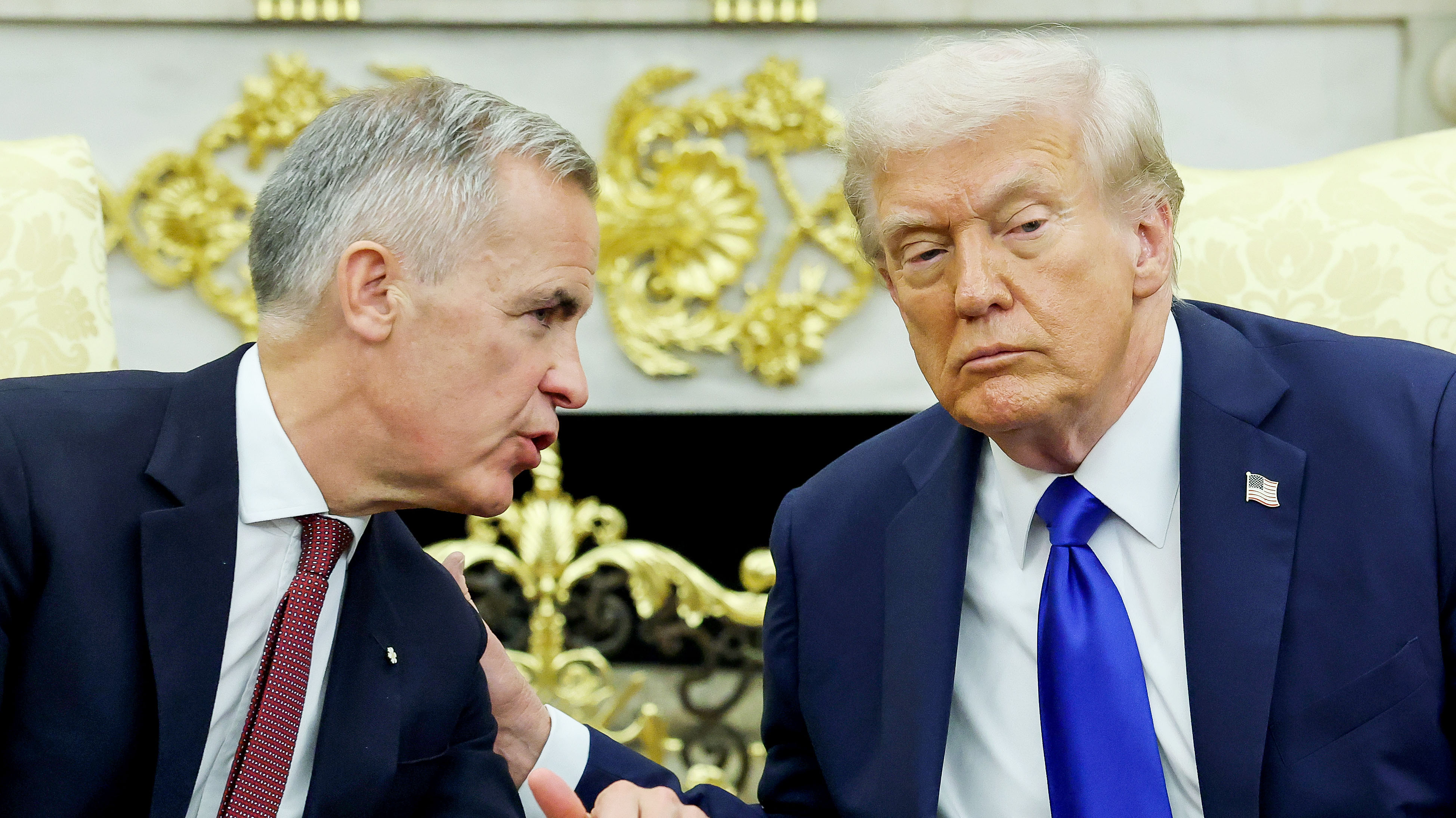
U.S. President Donald Trump (R) and Canadian Prime Minister Mark Carney speak to reporters in the Oval Office of the White House on Oct. 7, 2025, in Washington, DC. (Anna Moneymaker/Getty Images)
(NEW YORK) — Barters Island Bees, a honey seller in Maine with flavors like “Gentle Ginger” and “Blueberry Lemon,” grew year after year — until a trade dispute broke out between the United States and Canada, chief executive Garret Denniston said.
Sales shrank last year after a drop-off in Canadian tourists hammered business at farmers’ markets and fairs, Denniston said. But revenue has bounced back, he added, surging 75% this year compared to the same period in 2025, in part due to an uptick in Canadian customers as tensions appeared to thaw.
“We thank Canadian tourists every time we see them,” Denniston told ABC News, but he said he’s worried a rekindled trade spat will curtail tourism again. “I’m just astounded. It’s only reasonable to expect it will go back in the other direction.”
When asked whether the trade war could help shape a highly competitive U.S. Senate contest in Maine, Denniston said, “Oh, absolutely. It definitely can.”
Tit-for-tat tariffs issued by the U.S. and Canada in recent weeks risk outsized harm for consumers and businesses in states near the northern border, some analysts told ABC News. Many of those states play host to key races in the battle for control of Congress in November’s midterm elections, including Senate contests in Maine, Ohio and Michigan.
Fresh levies on $20 billion in Canadian goods are expected to hike prices for imports ranging from orchids to hockey sticks, many of which are sold predominantly in states along the border, some analysts said.
A set of matching retaliatory tariffs that took effect on Tuesday, they added, may crimp sales for nearby U.S. businesses that export products to Canada. A drop in cross-border tourism could also damage companies located within a short trip from Canada, they said.
“If you go far up north, it’s an arbitrary line in the dirt between what’s in Canada and what’s in the U.S.,” Tyler Schipper, a professor of economics at the University of St. Thomas, Minnesota, told ABC News.
For now, levies apply to a sliver of goods that travel between the U.S. and Canada, limiting the overall impact of the trade dispute. The tariffs issued in recent weeks apply to only 6% of U.S. imports into Canada and 5% of Canadian imports into the U.S.
Still, some analysts said, the effects will likely be more pronounced in several states near the U.S.-Canada border, which account for a disproportionately large share of trade with the nation’s northern neighbor.
Canada is the top foreign buyer of exports from 26 U.S. states, and the top source of imports for 22 states, according to an analysis of U.S. Census Bureau data issued by the Royal Bank of Canada (RBC) late last month.
Maine and Michigan each rank among the top 10 states in combined annual import-export business with Canada, while Ohio ranks as the 15th-highest state, RBC found. Montana, North Dakota and Minnesota also rank among the top states on the measure.
“Someone in Oklahoma doesn’t feel this as much as someone in Dearborn, Michigan,” Jason Miller, a professor of supply chain management at Michigan State University, told ABC News, pointing to a major city in the U.S. auto industry. “It’s purely a geography story.”
Even as supply chains stretch across a vast, global economy, trade remains simpler and cheaper along short distances, Miller said.
“Business-to-business relationships still matter, and at the end of the day, the farther you have to transport something, the more challenging and expensive things are,” Miller said.
In Michigan, the powerhouse auto sector has already felt the effects of President Donald Trump’s tariffs — and car companies would face additional fallout from a potential escalation, Glenn Stevens Jr., an executive director of MichAuto, a statewide industry trade group, told ABC News.
Last spring, Trump slapped 25% tariffs on imported cars and auto parts, putting strain on a highly integrated auto supply chain between the U.S., Mexico and Canada.
The measure excluded goods compliant with United States-Mexico-Canada Agreement, or USMCA, a free trade agreement, but it still resulted in $12.5 billion in duties paid on auto-related imports last year, according to the Anderson Economic Group.
Last month, Trump threatened to ratchet up tariffs from 25% to 50% on Canada-made cars and auto parts beginning in January. Trump did not mention an exemption for USMCA-compliant products.
The potential measure, Stevens said, “would absolutely be untenable for the industry to operate under. It would decimate supply chains and virtually grind business to a halt.”
A higher tariff would likely raise prices for consumers and threaten job losses in the state, Stevens added, before noting the attention garnered by trade policy as midterms approach.
“There’s no question in an increasingly intense, rhetoric-filled political season, tariffs and trade are very much a primary issue,” Steven said.
On the campaign trail, Democratic Senate candidate Abdul El-Sayed said Republican Rep. Mike Rogers would be a “rubber stamp” for Trump in the Senate as Rogers has largely defended the president’s trade strategy, arguing that economic pressure on Canada is necessary to protect American jobs.
“Trump is escalating a trade war with Canada for his own vanity,” El-Sayed wrote in a social media post.
Rogers’ campaign previously declined to comment on the new round of tariffs on Canada, pointing instead to his past comments on bolstering U.S. manufacturing.
The White House said the tariffs put Americans first.
“Countless American workers, farmers, and businesses have borne the brunt of America’s lopsided trade relations, including with Canada which has demanded total access to the American market without reciprocity,” Desai wrote in a statement. “President Trump will never stop fighting to put Americans and America First.”
In Maine, Republican Sen. Susan Collins, who is running for reelection, said the dispute would raise costs for families and businesses in the state.
“The on-again/off-again trade talks between the U.S. and Canada lead to higher costs, risk, and uncertainty for Maine businesses. If the Administration proceeds with these tariffs, they will increase costs for Maine families, as most businesses will have no choice but to pass on the tariffs to their customers through higher prices,” she wrote on X late last month.
Despite her opposition, Trump’s tariffs have become a campaign talking point as Democratic challenger Troy Jackson, a former state senator, attempted to tie Republicans to Trump’s policies.
Jackson called the tariffs a “direct tax on working families.”
“Having spent most of my life working along the border, I know how vital trade with Canada is to Maine. Trump’s tariffs are a direct tax on working families,” Jackson said.
For some who live in states near the U.S.-Canada border, however, the trade war may not play a role in their ballot decisions.
Fred Fritz, a retiree who lives in East Lansing, Michigan, sharply criticized the tariffs on Canada imposed by Trump. Still, Fritz added, he remains undecided in the state’s high-stakes U.S. Senate contest between Rogers and El-Sayed.
“I don’t like either candidate,” Fritz said, before describing what he considers flaws of each one. “I’m not impressed.”
ABC News’ Gaby Vinick and Benjamin Siegel contributed to this report.
Apple CEO John Ternus speaks during the keynote address at Apple’s “Surprise and Shine” event at the company’s corporate headquarters on Sept. 9, 2026, in Cupertino, California. (Benjamin Fanjoy/Getty Images)
(NEW YORK) — Apple held its annual product event on Wednesday as customers worldwide watched for fresh products as well as the debut of Apple CEO John Ternus.
Observers widely expect the company to unveil its first-ever foldable iPhone, marking Apple’s splashy entry into a long-existing product category. Foldable phones came onto the market in 2018, but they account for a small fraction of smartphone sales.
The product event, dubbed “Surprise and Shine,” kicked off in Cupertino, Calif., at 1 p.m. Eastern Time. It can be viewed on the company’s website.
The glossy showcase comes days after Ternus took the helm of the tech giant on Sept. 1, after having worked at the company for 25 years. Ternus replaced former CEO Tim Cook, who succeeded co-founder Steve Jobs in 2011.
The world’s second-largest company, as measured by market capitalization, depends largely on its smartphone business while offering an array of other products such as its iPad, Apple Watch and MacBook.
Shares of Apple have surged 22% in value over the past six months, far outpacing the S&P 500’s growth of 13% over that period.
The expected announcement of a foldable iPhone marks Apple’s latest effort to weigh in with a standout option in an existing product category, often at a higher price point.
In 2024, the company unveiled Apple Vision Pro, a mixed reality headset meant to compete with Meta Quest and other early-to-market offerings. At the time, the most affordable version of Apple Vision Pro sold for $3,499.
Apple also unveiled AI-driven features across several key products in 2024, heralding its long-awaited entry into the high-stakes AI race. The AI capability, dubbed Apple Intelligence, amounts to the “next big step for Apple,” Cook said at the time.
Apple released Apple Watch in 2014, referring to it then as the company’s latest “category-defining product.”
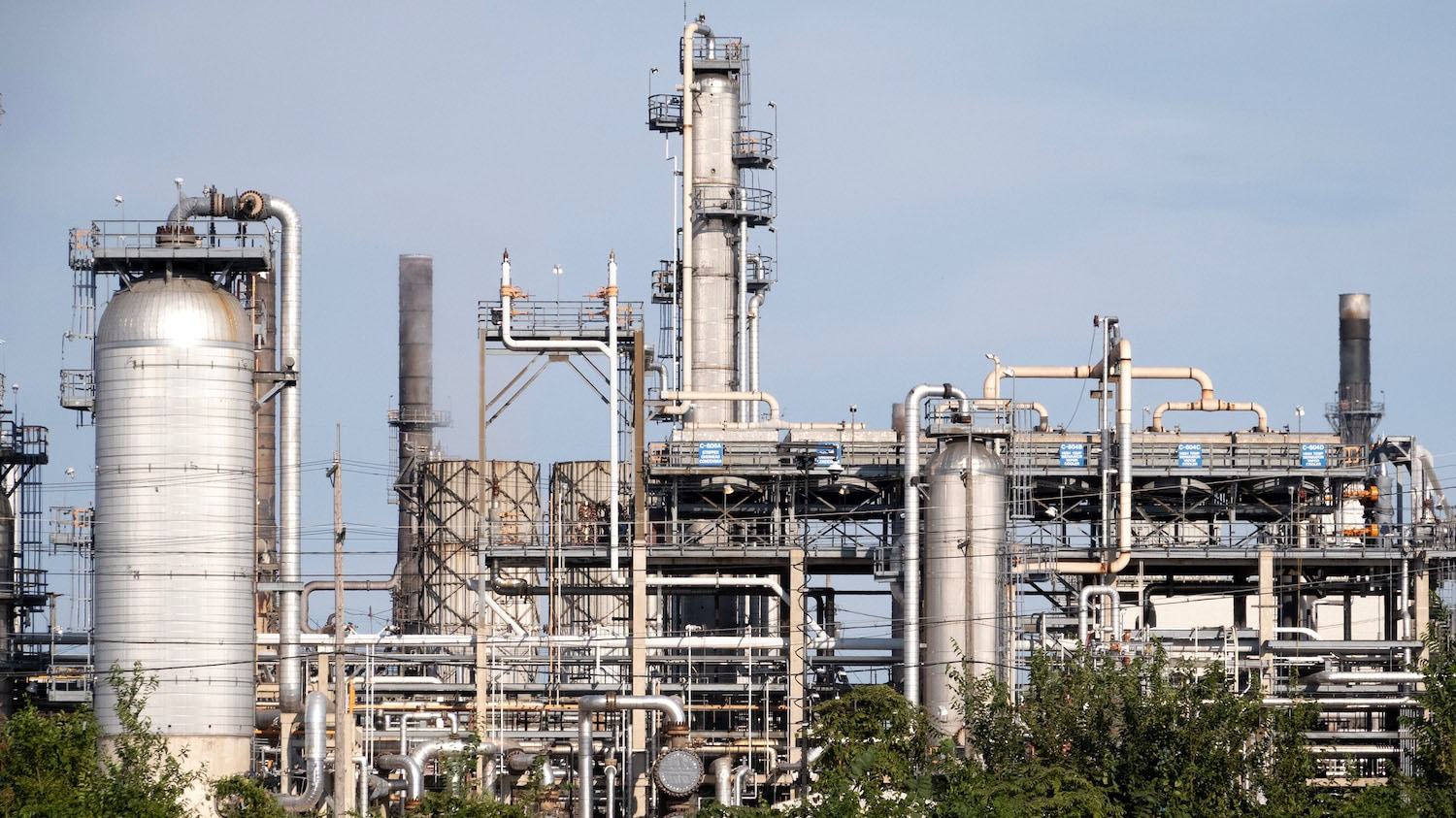
The sprawling BP refinery is shown on Sept. 8, 2026, in Whiting, Indiana. (Scott Olson/Getty Images)
(LONDON) — The global price of oil topped $100 a barrel on Wednesday for the first time since July, as continued tensions between Iran and the United States added to uncertainty over future supply.
The rise followed a statement on Tuesday by U.S. Central Command, which said that its forces destroyed five Islamic Revolutionary Guard Corps oil tankers.
The IRGC followed those strikes by issuing a warning that all oil tankers in Kuwaiti and Bahrani waters should be evacuated.
Brent crude oil prices, a benchmark for global trading, climbed about 2.7%, trading at about $100.57 a barrel for contracts with November deliveries.
U.S. oil traded at about $95 a barrel, up by about 2%.
A large-scale U.S.-Israeli attack on Iran in late February prompted Iran’s near-closure of the Strait of Hormuz, which facilitates one-fifth of global crude supply.
The ensuing war set off the largest oil supply disruption on record and prompted the release of hundreds of millions of barrels of reserve crude from emergency storage in dozens of countries. A six-month stretch of on-again, off-again fighting has continued to choke off oil supply and keep prices elevated.
Oil prices account for a large share of the price of gasoline. The average price of a gallon of gas in the U.S. currently registers at $4.22, according to AAA, marking a 41% jump since the war broke out.
Diesel prices in the U.S. hit a new record high on Wednesday, jumping to an average of $5.94 a gallon, AAA data showed. High diesel prices push up transport costs for many everyday products, including groceries, clothes and furniture.