(NEW YORK) — The recent tensions between Russia and Ukraine are affecting Americans at the pump.
Prices for oil are now at their highest level in eight years.
“Russia still supplies some of the oil to the United States, and prices for oil are now above $90 a barrel for the first time since 2014,” ABC News’ Rebecca Jarvis explains. “And you’re seeing that at the pump — prices up overnight another penny, $3.45 a gallon.”
In the past week, prices for gas have shot up an average of 8 cents a gallon across the country, with some states seeing even bigger increases.
“Nowhere in the country, at this point, is paying less than $3 a gallon for gas, on average, according to Gas Buddy’s Patrick Dehaan,” Jarvis says.
She adds that Dehaan forecasts that in the coming days and weeks, “we will continue to see this price pressure rise” and that prices for gas could climb to $4 a gallon as tensions between both countries escalate.
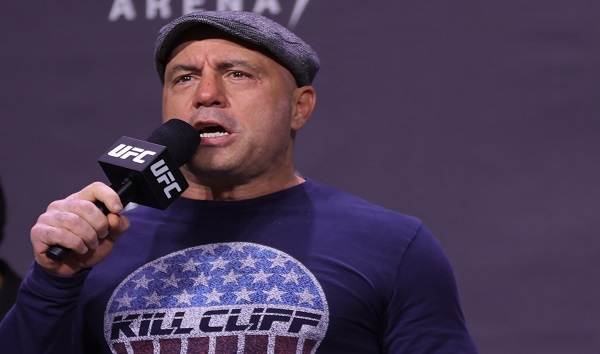
(NEW YORK) — Even in the face of mounting backlash, streaming giant Spotify is standing by embattled podcast host Joe Rogan.
While the controversy initially centered around the spread of COVID-19 misinformation emanating from Rogan’s namesake podcast, “The Joe Rogan Experience,” a viral video of the host using a racial slur dozens of times has intensified calls for action in recent days. The video was posted by Grammy award-winning musician India.Arie, who said she was joining fellow musicians in seeking to remove her music from Spotify because of Rogan. Spotify made headlines back in 2020 for reportedly licensing a $100 million deal to exclusively host Rogan’s often controversial digital talk show.
In the wake of the ever-evolving saga and immense social media backlash against Rogan, Spotify CEO Daniel Ek apologized to staffers in a memo Sunday obtained by ABC News. Ek said Rogan chose to remove several episodes from Spotify, but made clear that: “I do not believe that silencing Joe is the answer.”
“There are no words I can say to adequately convey how deeply sorry I am for the way The Joe Rogan Experience controversy continues to impact each of you,” Ek wrote. “Not only are some of Joe Rogan’s comments incredibly hurtful — I want to make clear that they do not represent the values of this company. I know this situation leaves many of you feeling drained, frustrated and unheard.”
Ek said Spotify has had conversations with Rogan and his team about his “history of using some racially insensitive language,” and that Rogan made the choice to remove some past episodes from the streaming platform.
“While I strongly condemn what Joe has said and I agree with his decision to remove past episodes from our platform, I realize some will want more,” Ek added. “And I want to make one point very clear — I do not believe that silencing Joe is the answer. We should have clear lines around content and take action when they are crossed, but canceling voices is a slippery slope.”
Ek said that one of the company’s core values is having an open platform, and because of this, they “must also believe in elevating all types of creators, including those from underrepresented communities and a diversity of backgrounds.”
The chief executive also said the company is committing to an “incremental investment of $100 million” for the licensing, development and marketing of music and audio content from historically marginalized groups.
“While some might want us to pursue a different path, I believe that more speech on more issues can be highly effective in improving the status quo and enhancing the conversation altogether,” Ek wrote.
In a video posted to Instagram on Saturday, Rogan said his past use of racial slurs is “the most regretful and shameful thing that I’ve ever had to talk about publicly.” He said the video compilation of him using a certain racial slur is “made of clips taken out of context” from 12 years of conversations on his podcast.
“Now I know that to most people, there’s no context where a white person is ever allowed to say that word, never mind publicly on a podcast, and I agree with that,” Rogan said. He added that he hasn’t used the racial slur “in years” and “never used it to be racist,” though he acknowledged that “I clearly have f—– up.”
“I can’t go back in time and change what I’ve said, I wish I could, obviously that’s not possible,” Rogan added. “But I do hope that this can be a teachable moment. For anybody that doesn’t realize how offensive that word can be coming out of a white person’s mouth, in context or out of context.”
Spotify previously responded to backlash over Rogan’s COVID-19 misinformation last week by saying it will add a “content advisory” label to any podcast episode that includes a discussion about COVID-19 and directs listeners to its “COVID-19 Hub” for up-to-date information on the virus as shared by public health authorities. Rogan also promised to add more guests with “differing opinions.”
While Spotify has managed to avoid the same level of scrutiny as fellow tech giants such as Facebook and Twitter for years, the firestorm of controversy surrounding Rogan has put the streaming giant at the center of a renewed public debate over the platform companies give to characters like Rogan.
(DENVER) — Low-cost carriers Frontier Airlines and Spirit Airlines announced plans on Monday to merge, which would create the fifth-largest U.S. airline by revenue passenger miles.
The deal, which is valued at more than $6 billion, leaves Frontier controlling 51.5% of the combined airline and Spirit with 48.5%.
Together the two airlines offer more than 1,000 daily flights to over 145 destinations in 19 countries with their all-Airbus fleets.
In a joint release, Spirit and Frontier said they expect the deal will allow them to add 10,000 direct jobs by 2026 without the need for layoffs.
The airlines estimate it will create $1 billion in annual savings for consumers.
“Together, Frontier and Spirit expect to change the industry for the benefit of consumers, bringing more ultra-low fares to more travelers in more destinations across the United States, Latin America and the Caribbean, including major cities as well as underserved communities,” the airlines said.
The merger is expected to close in the second half of the year with William A. Franke, chair of Frontier’s board, serving as the chairman of the combined company.
“We worked jointly with the Board of Directors and senior management team across both carriers to arrive at a combination of two complementary businesses that together will create America’s most competitive ultra-low fare airline for the benefit of consumers,” Franke said in the announcement.
Combined, the company would have annual revenues of approximately $5.3 billion based on 2021 results.
They have yet to make an announcement on specifics such as the name of the new combined airline, the CEO, or where it will be based.
(NEW YORK) — Rupert Murdoch-owned media conglomerate NewsCorp was hit with a cyberattack, and a leading cybersecurity firm, Mandient, brought in to investigate concluded the activity was likely from China, NewsCorp said Friday.
In an email to all NewsCorp employees, David Kline, NewsCorp’s chief technology officer and Billy O’Brien, its chief information security officer, said “attack activity” was discovered Jan. 20 on a system used by several of the company’s business units.
They said they believe the activity affected a “limited number of business email accounts and documents from NewsCorp headquarters, News Technology Services, Dow Jones, News UK, and New York Post.”
The company said the threat, however, is contained and “the systems housing customer and financial data were not affected. In addition, we have not experienced related interruptions to our business operations.”
They said they have also notified federal authorities.
NewsCorp said that some data was taken by a foreign government. Mandient is alleging China is involved.
“Mandiant assesses that those behind this activity have a China nexus, and we believe they are likely involved in espionage activities to collect intelligence to benefit China’s interests,” said Dave Wong, vice president, incident response at Mandiant.
NewsCorp said its “highest concern” is the protection of journalists and their sources.
A person familiar with the situation said journalists were among the targets of the alleged attack.
“We will not tolerate attacks on our journalism, nor will we be deterred from our reporting, which provides readers everywhere with the news that matters. We believe it is important that other media organizations be made aware of this threat in order to take appropriate precautions, and we are providing technical details of the attack to the Media Information Sharing and Analysis Organization,” Kline and O’Brien wrote to employees.
FBI Director Christopher Wray warned this week of the dangers of China stealing U.S. innovation — a topic he has continued to beat the drum on since becoming the agency’s director.
“The Chinese government steals staggering volumes of information and causes deep, job-destroying damage across a wide range of industries—so much so that, as you heard, we’re constantly opening new cases to counter their intelligence operations, about every 12 hours or so,” Wray said in a speech at the Ronald Reagan Presidential Library on Monday.
“Here in the U.S., they unleash a massive, sophisticated hacking program that is bigger than those of every other major nation combined,” he said without directly speaking about the NewsCorp hack. “Operating from pretty much every major city in China, with a lot of funding and sophisticated tools, and often joining forces with cyber criminals, in effect, cyber mercenaries. In just one case, one example, a group of MSS-associated criminal hackers stole terabytes of data from hundreds of companies.”
(NEW YORK) — In the United States, Black families have an estimated one-eighth of the wealth that white families have, according to research from the McKinsey Institute of Black Economic Mobility.
Federal policies, such as the Homestead Act of 1862, the 1935 Social Security Act and redlining by the Federal Housing Administration, have in part contributed to the wealth gap, according to Kezia Williams, founder of The Black upStart, an initiative to train African American entrepreneurs across the country.
Williams is now on a mission to change the statistics and help Black families build their wealth between generations.
“It’s not that Black people are not working hard. It’s not that we’re not earning income. It’s not that we’re disinterested in wealth acquisition,” Williams explained on “Good Morning America.” “But it’s just that there are laws and policies that have provided head starts for some families, but not Black families.”
Teach financial literacy and support Black-owned businesses
To overcome such barriers, Williams emphasizes the need to learn about financial literacy and teach children and young people early on. “We need to teach things like investing credit and also entrepreneurship,” Williams said.
In addition to building a knowledge base, Williams emphasizes “making a daily practice” of supporting Black-owned businesses, which have been heavily impacted by the pandemic.
“We need to make sure that we keep Black business doors open because Black entrepreneurs are more likely to create black jobs and also give back to Black communities,” Williams said.
If you have kids, the earlier you plan for their futures, the better off they could be in terms of financial success. Williams recommends considering opening up accounts such as a custodial Roth IRA and a 529 college savings plan when children are young so any funds can grow over time through interest.
It may seem extremely early to think about a child’s future retirement but it’s a smart way to think. A custodial Roth IRA lets a parent or custodian add money to an individual retirement account on behalf of a minor and manage it until the child becomes an adult. Investing funds early in this type of account means a child can benefit from compound interest and when they go to take money out of the account in the future, the funds may not be taxed. For custodial Roth IRAs, Williams suggests researching small-, mid- and large-cap funds to include in the account.
Putting money into a 529 college savings plan lets families and kids sock away funds that will grow tax-free. Other family members could contribute to a college savings plan and in some cases, the plan can also be transferred to other children.
Middle school and high school students get an early lessons in finance: What kids need to know about money and debt
Boost your income
Another way to build wealth over time is to look for ways to increase income streams outside a traditional 9-to-5 job. Williams suggests clients invest their “free” time and sell their skills during evenings or weekends whenever possible to take advantage of the rise of the gig economy.
In a recent Caring.com study, more than 70% of Blacks surveyed say they haven’t started the estate planning process. Lynn Richardson, a financial coach and author of “Estate Planning Made Simple,” recommends everyone who doesn’t have a will or plan in place to get started immediately.
“Everybody has an estate plan. It is not just for the wealthy. Your clothing, your furniture, your jewelry, your real estate, your automobiles, your electronics, your bank accounts — all of that is a part of your estate plan,” Richardson said. “And with proper planning, we can ensure that our loved ones can live the lives that we see for them even when we are not here.”
So how should people get started with estate planning? Experts recommend discussing the topic with family members and Portia M. Wood, an estate planning lawyer, suggests asking yourself these three questions too.
In addition, Wood recommends preparing these documents in order to ensure the estate planning process goes smoothly: a financial power of attorney form, an advance health care directive and a living will.
Richardson also recommends that everyone should consider life insurance policies. “GoFundMe is not a substitute for life insurance. As early as the age of 18, if you have enough life insurance, you can then put that life insurance into an annuity. That annuity can then pay your heirs a trust for the rest of their lives and then that income can pass onto their children and so on and so forth,” Richardson said.
At the end of the day, Richardson emphasized, “Time is of the essence and every single one of us has the ability to create an estate plan for ourselves and our loved ones so we can have peace at night when we go to sleep.”
(WASHINGTON) — After the worst year in history for unruly airline passengers, Delta’s CEO is asking the Department of Justice to help create a national “no-fly” list for anyone convicted of federal offenses related to an on-board disruption.
CEO Ed Bastian wrote to U.S. Attorney General Merrick Garland on Thursday asking for his support in banning unruly passengers from all commercial carriers.
Bastian believes banning unruly passengers from all commercial flights will send a strong signal to the flying public that not following crew member instructions comes with severe consequences.
“This action will help prevent future incidents and serve as a strong symbol of the consequences of not complying with crew member instructions on commercial aircraft,” he wrote.
Unruly passenger incidents onboard Delta planes have increased nearly 100% since 2019, according to Bastian.
To date the airline has placed almost 2,000 people on Delta’s internal no-fly list for refusing to wear a mask and has submitted around 1,000 banned names to the Transportation Security Administration to pursue civil penalties.
Delta has previously asked other U.S. airlines to share their internal no-fly lists so that people who endangered their crew can’t do so on another airline.
The Federal Aviation Administration (FAA) has seen a troubling spike in unruly passenger incidents with airlines reporting a staggering 6,304 reports of misconduct since January 2021. The agency is still enforcing its zero-tolerance policy for in-flight disruptions which could lead to fines as high as $52,500 and up to 20 years in prison.
In November, the FAA revealed some unruly passengers could start to face criminal prosecution after establishing an information-sharing protocol with the Department of Justice.
Last month, federal charges were brought against three passengers who allegedly “viciously assaulted” a Delta security officer at John F. Kennedy Airport by “beating him to the floor with his radio and then kicking and punching him in the face and body while he was down,” according to Breon Peace, U.S. Attorney for the Eastern District of New York.
All three pleaded not guilty, and were released on $25,000 bond.
“This is one of four incidents that have resulted in federal charges against abusive customers in the last 30 days,” Bastian said.
The Department of Justice declined to comment.
ABC News’ Luke Barr and Sam Sweeney contributed to this report.
(NEW YORK) — Southwest flight attendants are “outraged” after the airline announced on Thursday that it is planning to resume on-board alcohol sales in two weeks.
The airline had postponed the return of alcohol sales in late May citing the uptick in unruly passenger incidents.
The decision to pause alcohol sales came less than a week after a Southwest flight attendant got her two front teeth knocked out by an unruly passenger on a flight from Sacramento to San Diego.
“It tops the chart of the most egregious things I’ve ever heard of,” Lyn Montgomery, a spokesperson for the union that represents Southwest flight attendants, told ABC News at the time. “It’s unbelievable and really hard to understand the level of aggression that has been exhibited towards our flight crews.”
Montgomery said that many flight attendants felt “leery about beginning to sell alcohol onboard the aircraft again because alcohol always intensifies an event.”
The uinion says it still feels it is too soon to begin serving alcohol again eight months later.
“TWU Local 556 is outraged at Southwest Airlines’ resumption of alcohol sales, a move we consider to be both unsafe and irresponsible,” Montgomery said in a statement. “We have adamantly and unequivocally informed management that resuming sales of alcohol while the mask mandate is in place has the great potential to increase customer non-compliance and misconduct issues.”
The Federal Aviation Administration has seen a record spike in unruly behavior on board since the start of 2021. The agency’s investigations into the surge in aggressive behavior on-board has shown that alcohol is often a contributing factor.
In July, the FAA urged airport bars and restaurants to stop serving alcoholic drinks to go.
American Airlines is now the only major U.S. airline that is still holding out on resuming alcohol sales.
“We haven’t established a specific date for the return of onboard alcohol in the main cabin of our aircrafts,” an American spokesperson told ABC News. “We will continue to evaluate the situation and work closely with the union that represents our flight attendants, the Association of Professional Flight Attendants, and medical experts on this process to determine when we will return to full service in the main cabin.”
In an effort to prevent more unruly passenger incidents, the FAA has established an information-sharing protocol with the Department of Justice.
A FAA spokesperson confirmed to ABC News in November that the agency had referred 37 of the “most egregious cases” to the FBI out of the 227 unruly passenger cases it had initiated enforcement action on.
Delta CEO Ed Bastian wants the U.S. government to go a step further and place convicted unruly passengers on a no-fly list that would bar them from flying on other airlines.
Bastian wrote a letter yesterday to U.S. Attorney General Merrick Garland asking for his support.
“This action will help prevent future incidents and serve as a strong symbol of the consequences of not complying with crew member instructions on commercial aircraft,” he wrote.
(NEW YORK) — It was dubbed a watershed moment for the withering organized labor movement when the first-ever union election at an Amazon warehouse took place last spring in Alabama.
Workers seeking collective bargaining rights at a fulfillment outpost of the e-commerce giant in Bessemer — a rural, predominantly Black suburb of Birmingham — garnered international headlines and even backing from the White House ahead of last year’s landmark vote.
Despite the high-profile support, hopes of forming Amazon’s first labor union were ultimately crushed last year when less than 16% of some 5,000 eligible workers voted in favor it, per the National Labor Relations Board’s tally.
The saga in the South, however, did not end there for the nation’s second-largest employer.
After objections alleging union-busting conduct from Amazon filed by the Retail, Wholesale and Department Store Union, which sought to represent the workers, the NLRB ordered a do-over of the entire election.
Now, approximately a year since the first showdown, the NLRB is set to mail ballots out Friday for a second union vote at the same Bessemer Amazon facility. The rerun comes amid the backdrop of an American labor market still scarred by pandemic shocks, giving new leverage to workers, and in the wake of a tidal wave of workplace activism marked by strikes and collective actions at major companies from John Deere to Starbucks.
With all eyes back on Bessemer, here is what some economists and workers say the failed first unionizing attempt reveals about the climate of labor in the U.S., and the implications this could carry for the second vote.
“Our employees have always had the choice of whether or not to join a union, and they overwhelmingly chose not to join the RWDSU last year,” Amazon spokeswoman Barbara Agrait told ABC News in a statement. “We look forward to our team in BHM1 having their voices heard again.”
First vote ‘revealed the David versus Goliath nature of our labor laws’
Economists and labor researchers say the tossed-out results of the first union election at Amazon in Alabama is indicative of the uphill battle workers face in trying to form a union under current labor laws, despite the vocal support from lawmakers, and the power employers have in potentially influencing the vote.
“The first election in Bessemer was very revealing of how the odds are stacked up against workers trying to organize in this country, and particularly in a place like Amazon,” Molly Kinder, a fellow at the Brookings Institution whose research focuses on the present and future of work, especially for low-wage workers, told ABC News. She referenced how the NLRB ultimately found Amazon’s actions during the first vote may have influenced the results and thus ordered the do-over.
“The big sort of takeaway from that first experience in Bessemer was, yes, there was a lot of attention and excitement and this thought that if this worked, it would be this massive victory for labor, and ultimately it wasn’t successful,” Kinder said. “I think it opened up a lot of people’s eyes to just how imbalanced our labor laws are in this country.”
“It sort of revealed the David versus Goliath nature of our labor laws,” Kinder added. “We don’t have an even playing field in this country for workers who are trying to organize.”
Data similarly indicates a gulf between the growing number of Americans who support labor unions and dwindling rates of membership.
A majority of Americans approve of labor unions (68%), according to Gallup data released last September, marking the highest support levels for unions in nearly 60 years. Union membership, meanwhile, has fallen sharply over the past few decades. Just 10.3% of workers belonged to a union in 2021, per Bureau of Labor Statistics data, approximately half the 20.1% figure seen the first year data was collected in 1983.
“A major reason why you have this huge gap between support for unions and actual participation in unions is that the United States makes it extremely hard for workers to form a union,” Kinder said. “That interest in unions or desire for a union often dissipates because the obstacles to actually form one are just so great, and the playing field is so tipped in favor of the employer versus the worker when it comes to forming a union.”
Alex Colvin, dean of Cornell’s Industrial and Labor Relations School, told ABC News that this divide between workers wanting unions yet not joining them is referred to as “the representation gap.”
“The reality is we do not see workers who want representation being able to get it, and it’s really striking,” Colvin said. “There’s nowhere where you see such a big difference as you do in the United States in those numbers.”
“What I think it says is that our current labor law system isn’t functioning effectively,” Colvin added.
Rather than lending support via Twitter or hosting rallies, Colvin said the best thing lawmakers can do to support workers seeking to unionize is changing the laws so that it isn’t so difficult for them to create a union — such as putting in more protections for workers trying to organize and stiffer penalties for employers that attempt to influence the vote.
“The most important thing would be if there was passage of labor law reform,” Colvin said. “That would be the thing that would have the biggest impact.”
Brooking’s Kinder added that sputtering labor law reform has emerged as the major stumbling block impeding the post-pandemic labor movement from translating into long-term change for workers.
“We’ve heard a lot in the news about stories like the Starbucks workers in Buffalo, or workers going on strike, or workers quitting, and so there’s been a lot of sorts of unrest and quitting and workers dissatisfied, but it hasn’t necessarily been harnessed into longer-term change through more union membership,” she added. “A lot of that is because of our labor laws.”
‘There’s a really important element of racial justice in here’: Spotlight back on Bessemer
As the central Alabama community found itself at the center of a national labor movement showdown, some activists say out-of-town politicians and union organizers may have lost touch with day-to-day realities faced by the workers they sought to support.
Some 72.4% of Bessemer’s 26,000 residents are Black, according to Census data, and more than 25% of Bessemer’s population lives in poverty. The decadeslong decline of the mining and steel industry that historically built Bessemer’s economy evaporated jobs for many local laborers and their children and grandchildren. When Amazon brought its first Alabama fulfillment center to Bessemer in 2018, it was touted by one local business leader as “a big win for the Birmingham region,” because of its promise to bring thousands of well-paying jobs with benefits starting on day one.
With the federal minimum wage — and Alabama’s — unchanged for decades at $7.25 per hour, Amazon’s starting pay of at least $15 an hour makes it a relatively lucrative option for many.
Labor activist Chris Smalls, a former Amazon worker who is spearheading efforts to unionize at a fulfillment center in Staten Island, New York, told ABC News that he visited Bessemer to lend his support last year and witnessed how local labor market conditions apparently left workers feeling like they have little power in the jobs market.
“I’ve seen how decimated that city was down there; it was like a time warp back into the 1950s,” Smalls said of the economy in Bessemer. “There’s nothing down there but major corporations like Walmart, Amazon, like Dollar General, but other than that these workers have nowhere else to turn [for jobs].”
Smalls added that the state’s historically unfriendly attitude toward labor also meant many of the workers he spoke to in Alabama were unfamiliar with how a union works or could benefit them, especially in an area where good job opportunities felt sparse.
Smalls, who is Black, sees unionizing Amazon’s workers as a racial justice issue both in the South, where Black workers have historically been oppressed by anti-labor policies, and at Amazon facilities in predominantly Black and Brown communities across the country.
“Black and brown workers make up the majority of these facilities no matter where they’re at,” Smalls said. “Amazon sets up shop specifically in these neighborhoods, just to hire from these communities.”
One area where labor activists may have made a misstep last year, according to Smalls, is by losing sight of the needs and hopes of the workers on the ground in Bessemer. He thinks this may have contributed in part to the dismal local turnout and support during last year’s union election.
“It’s the workers that are the most important thing. If you lose sight of the workers and drown out the workers’ stories and their voices and politicize it, that doesn’t help at all,” Smalls told ABC News.
“Bringing politicians into it, I don’t care if it’s Bernie Sanders or the president, that’s not going to resonate with the workers,” he said of the national messages of support. “You’ve got to be there on the ground, you’ve got to connect with them. You’ve got to build your own relationship and trust with them.”
Research from Kinder and her colleagues at Brookings back up Smalls’ sentiments.
“Amazon’s workforce is disproportionately Black,” Kinder told ABC News. “The percentages of Amazon’s workforce that’s Black is about twice what you find in the economy overall, and in Bessemer, you know, upwards of 85% of Amazon employees are Black.”
“There’s a really important element of racial justice in here,” she said. “When you take a step back and you think about Amazon, I mean very few companies have had the kind of financial success and in a pandemic that Amazon has had.”
Pointing to their skyrocketing profits and stock prices, Kinder said the company has created billions of dollars in wealth for its shareholders, but most of this has gone not to the Black and brown workers who contributed to this financial success during a pandemic but to the often wealthier, whiter shareholders. Income inequality at Amazon was also put under a harsh spotlight last summer when founder Jeff Bezos, then the world’s wealthiest man, took a trip to the edge of space via his own private company Blue Origin — and then thanked Amazon workers for paying for it.
Cornell’s Colvin added that more so than national attention, local labor market conditions play a major factor in unionization efforts. While factors at the national level — including struggles of major companies to find staff and record-high levels of workers quitting their jobs — may have given workers an upper hand at negotiating with employees elsewhere, this momentum doesn’t mean much to those in Bessemer if local conditions are not improving.
“There’s certainly a strong national labor market, but it’s what your actual day-to-day local terms are that matters,” Colvin said.
“The local labor market condition and the relative attractiveness of the Amazon jobs is something that you have to take into account and that’s, to be honest, something that goes into location decisions,” he said. “There’s a reason that non-American auto companies locating plants in the United States tend to be located in areas like Bessemer, in places that are low unionization generally.”
‘A change, it’s coming’: Excitement builds for 2nd vote
Colvin told ABC News that there is some precedent for the NLRB ordering do-overs for union elections, but that historically second votes have not had as high success rates as first votes.
Kinder added that Amazon’s famously high turnover rate could have some impact on the second election, telling ABC News, “I think it could go either way.”
“There is an opportunity for some new people who might not have voted for the union in the last election that might now do it now,” she said. “But it also means that the work of organizers to try to organize support for the union is also challenged because turnover is so high. Frankly, I think it’s a little unpredictable.”
The voter list this time around is 6,143 workers, according to the RWDSU, which estimates more than half of the workers remain from the invalidated vote.
Kristina Bell, an Amazon worker at the Bessemer facility who is supporting the union drive, said during a press conference organized by the RWDSU that she feels the exuberance among workers is different this time around.
“A lot of people went through the first election and is still there and they understand that nothing has changed,” Bell said. “The loss was a blessing — that loss making us motivated to win even more.”
Bell added that a lot of younger employees didn’t vote the first time around, saying, “A lot of young people didn’t understand the importance of the union.”
“But after we lost that vote, you know how many people said, ‘I should have voted?'” she added. “It’s a lot of mind-changing, they went home and talked to their parents and their grandparents. … They come to me and I tell them, ‘Get educated, talk to your family.'”
“My community is excited and I’m from Bessemer, born and raised,” Bell said. “A change, it’s coming.”
(NEW YORK) — Starbucks will continue to raise prices in 2022 due to a combination of labor costs and supply chain disruptions.
The Seattle-based coffee giant announced Tuesday that between a rising cost of goods, employee pay amid the ongoing COVID-19 pandemic and inflation, all paired with customer demand, the company has reevaluated its pricing strategy.
Starbucks executives said that more price increases are coming after it first raised them in October 2021 and again in January 2022.
“We have already taken pricing actions this fiscal year, one in October of 2021, and another in January of 2022, and we have additional pricing actions planned through the balance of this year, which play an important role to mitigate cost pressures, including inflation, as we position our business for the future,” CEO Kevin Johnson said on the company’s first quarter earnings call earlier this week.
“There are many factors that contribute to our thoughtful pricing strategy, including: The increasing US inflation rate currently running at 7% or perhaps greater, as well as wage, customer demand and other costs,” he explained.
Starbucks reported a 31% profit increase during the last three months of 2021 with a total of $816 million on the quarterly earnings report. The coffee chain’s revenue which has grown to $8.1 billion boasted an overall 19% increase compared to the same quarter the year prior.
“The rapid spread of Omicron through the US required us to quickly adapt store protocols,” Johnson continued. “Our COVID vaccination pay has supported thousands of partners in the broader efforts in helping get more people vaccinated. And with the highly transmissible Omicron variant, we had more partners leverage our COVID isolation benefits as they were either home sick or home isolating after being exposed to the virus, which led to significantly higher COVID-related benefits pay than expected.”
Hours after the earnings announcement, the New York Times reported that Starbucks shares “fell as much as 5% in after-hours trading.”
(DALLAS) — A monster winter storm is fueling the worst travel day of the year — with more than 4,000 flights canceled Thursday morning as of 10 a.m. per FlightAware. This is the most flight cancellations in a single day this year.
Dallas Fort Worth International Airport was forced to suspend all departing and arriving flights on Thursday for at least a few hours due to ice and snow, according to the FAA.
“DFW confirms our runways are not operational while being treated for snow and ice,” the airport tweeted Thursday morning. “We anticipate reopening the first runway within the next hour.”
The airport currently holds the No. 1 spot for flight cancellations out of any airport in the world, with around 1,000 flights canceled Thursday.
Major U.S. airline hubs such as Chicago O’Hare International, Austin-Bergstrom International, and Dallas Love Field are also getting slammed by the arctic blast.
Austin-Bergstrom International and Dallas Love Field have already canceled more than 70% of their operations.
“Heavy snow and freezing rain is forecast today from Texas to New England,” the FAA warned. “Severe weather could impact parts of the South. Check with your airline for flight status.”
Southwest and American fliers are expected to see the most disruptions, with the airlines canceling almost 30% and 20% of their flights, respectively.
They have both issued winter weather waivers that allow passengers to change their flight with no penalty as the storm barrels across the nation.
Airports in the Northeast are bracing for flight disruptions Friday as the storm makes its way into the I-95 corridor.
This week’s storm is the latest travel nightmare in just a few weeks.
Last weekend thousands of fliers dealt with more than 5,000 flight cancellations as strong winds and heavy snow pummeled the East Coast.
At the start of the year, winter weather and the surge in omicron cases left many holiday-goers stranded for days.