(NEW YORK) — The parent company of department store chain T.J. Maxx has agreed to pay a $13 million fine for the sale of roughly 1,200 recalled products over a five-year period, including products determined to have put infants at risk of suffocation and death, a federal agency said on Tuesday.
TJX Companies Inc., which also oversees retail chains Marshalls and HomeGoods, sold the recalled products at brick-and-mortar stores belonging to the three subsidiary brands from 2014 to 2019, the U.S. Consumer Product Safety Commission, or CPSC, said.
Sales of the recalled products also took place online, the agency said.
In addition to paying the fine, TJX will maintain a set of internal controls to ensure that the company complies with law that prohibits the sale of recalled products, the CPSC said. TJX has agreed to file annual reports on its compliance program for five years, the agency added.
Most of the recalled products sold by TJX were recalled due to the risk of infant suffocation and death, including the Kids II Rocking Sleepers, Fisher-Price Rock ‘n Play Sleepers and Fisher-Price Inclined Sleeper Accessory for Ultra-Lite Day & Night Play Yards, the CPSC said.
“At TJX, product safety is very important to us and we prohibit the sale of recalled items in our stores,” TJX said in a statement. “We deeply regret that in some instances between 2014 and 2019, recalled products were not properly removed from our sales floors despite the recall processes that we had in place.”
“We have made a significant investment in people, processes, and technology to strengthen our processes, and have cooperated fully with the Consumer Product Safety Commission,” the company added.
In 2019, CPSC and TJX jointly announced that TJX had sold 19 separate recalled products. After the announcement, TJX reported to staff that it subsequently discovered previous sales of three additional recalled products, CPSC said.
TJX reported $11.4 billion in revenue over a three-month period that ended on April 30, which amounted to an increase of 13% over the same three-month period a year prior. The company reported $587 million in profit over the three-month period that ended in April.
(NEW YORK) — It may be hot dog season, but one condiment company made a tangy new twist on the popular yellow spread by turning it into a confection.
Ahead of National Mustard Day on Aug. 6, French’s teamed up with New York bakery Dough Doughnuts to create a one-of-a-kind yeast doughnut with a yellow mustard icing and a cake crumb topping.
Although it may sound alarming, Steve Klein, the co-owner of Dough, told ABC News’ Good Morning America to trust their expertise when it comes to the fluffy, sweet and zingy new flavor.
“We take a lot of pride in our doughnuts and we don’t put something out that doesn’t taste good, look good or matches what the customer wants. So we put a lot of effort into it,” he said. “We did a bunch of tastings and created a product we all liked with our brioche dough, adding the mustard to our glaze and came up with a product that looks and tastes excellent.”
Klein added that while it was “a challenge,” all those who have had an early taste test “have enjoyed it.”
The limited-time offering will be available on Saturday for mustard enthusiasts who visit any New York City Dough location, each adorned with vibrant yellow decor and pop art, to get a free mustard donut. For fans outside of New York, visit the Dough website on Saturday morning to reserve a complimentary order of the donuts, which are available for nationwide shipping.
“Most people have never heard of something like this — it’s different but we spent a lot of time blending the mustard into the glaze so that it looks good and tastes good,” Klein said.
Dough has previously partnered with other brands to concoct savory and sweet options, including most recently debuting a fried chicken sandwich-inspired doughnut in tandem with David Chang’s hit sandwich spot Fuku.
Klein said they “loved the challenge because French’s is a great brand and their yellow mustard is iconic. We wouldn’t do it if we didn’t think we could make a great doughnut.”
(WASHINGTON) — Airline passengers hoping for a little more leg room or space on plane seats can tell the federal government how they feel for the next 90 days.
The Federal Aviation Administration (FAA) is asking for comment from the public for the next few months. It will then use that feedback to create a new standard minimum for airplane seat sizes.
This comes years after Congress ordered the FAA to create new minimum dimensions for airplane seats in its funding renewal in 2018. During that reauthorization, Congress mandated that the agency must issue a standard seat pitch, width and length. Some advocates said a change in minimum seat size could impact much of the flying public.
“Only about 50% of the population can fit in the seats and for men, only about 13% have shoulders that are narrower than the seats,” Paul Hudson, the president of FlyersRights.org and a member of the FAA Aviation Rulemaking Advisory Committee, said. “And you’ve got many people with various health conditions that are not flying because of these really cramped seats, so if the seats become more reasonable, that will open up a lot more customers for the airlines.”
And while the result might mean more comfortable travel for flyers, it could also mean safer skies. Hudson says that cramped legroom can lead to conditions such as clotting or deep-vein thrombosis during travel.
“Well, what we believe should happen is there should be minimum state standards that allow for 95% of the population to fit in the seats,” Hudson said. “And for the other 5%, there should be larger seats available with a proportional additional cost, but nothing excessive.”
A minimum seat size and amount of leg room could make it easier for passengers to evacuate during an emergency.
“Federal officials want to make sure that there is enough room on airplanes that in the event of an emergency, folks are able to quickly and safely get off of that airplane,” Scott Keyes, the founder of Scott’s Cheap Flights, said. “And if seats are too cramped together, if there’s so little leg room that it’s near impossible to squeeze out of your seat, that is going to make it especially difficult to evacuate in case of emergency.”
Keyes said that over the past decades, the size of many airplane seats has gotten smaller.
“Americans, in general, have been getting a bit larger and seats on airplanes have been getting a bit smaller,” Keyes said. “And so that mismatch, I think, is reasonable for critics to say, ‘Well, do the current seats, [does] the current setup of airlines really reflect what the flying public can expect these days and what their needs are?'”
The FAA has been conducting airplane evacuation tests at its facilities in Oklahoma, but critics say those drills might not paint an accurate picture of what a real-world emergency would entail.
In that report, more than 60% of participants thought it would be difficult or very difficult to get out of a middle row and middle seat quickly. The conclusion of those drills found that “while airplane seat size may remain unchanged,” a larger and heavier U.S. population might impact safety.
The drills have drawn some criticism because the participants were limited to able-bodied participants whose ages range from 18 to 60. Hudson also said that people weighing more than 250 pounds and people with other conditions who would be on a normal flight were not part of the tests.
In its request for public comment, the FAA said it is seeking input on seat dimensions from groups who were not part of the drills, including “children, people over 60 and individuals with disabilities.”
But, the FAA emphasized that for the agency, this change is about safety, and it is asking for data and information that is “helpful.” It is not requesting comments about “passenger comfort or convenience,” the FAA said.
(ST. LOUIS) — Nearly 2,500 Boeing workers at three St. Louis-area facilities will vote Wednesday on a contract offer from the plane manufacturer after calling off a strike planned for earlier this week.
The International Association of Machinists and Aerospace Workers, or IAMAW, is recommending that workers approve the new offer and expects the contract to be ratified, Jody Bennett, chief of staff of the IAMAW Aerospace Department, told ABC News
“We didn’t get everything we wanted where we wanted it but I believe we got everything out of Boeing that we could,” Bennett said. “It’s time to live to fight another day.”
Workers last Sunday rejected an offer that insufficiently compensated them through its retirement plan, Bennett said.
Upon ratification, the new contract provides workers with a $8,000 cash bonus, which would be subject to tax withholdings. Alternatively, under the terms of the proposed contract, workers can opt to place the total amount in a 401(k) account, Boeing said.
Under the proposal, the company will automatically put an amount equivalent to 4% of a worker’s pay into the 401(k) each year, the company and Bennett said.
But the new proposal removes the company’s 401(k) match, which featured a dollar-for-dollar company match on 10% of a worker’s pay, the union said. Instead, the company will match 75% on the first 8% of employee contributions.
“This new offer builds on our previous strong, highly competitive one and directly addresses the issues raised by our employees,” Boeing said in a statement. “We are hopeful they will vote yes on Wednesday.”
The contract includes a $2 per hour increase in the base wage for all employees, which equates to an average 7.2% wage hike, Boeing said. Workers at the three St. Louis-area locations make an average of $29.42 per hour, the union said.
In 2014, Boeing stopped offering a traditional pension plan for new hires, replacing it with a 401(k) that fails to adequately compensate workers, Bennett said.
The Arlington, Virginia-based company reported $160 million in profit in the second quarter of this year, which marked a 72% decline from the same quarter a year prior.
The company brought in $62.2 billion in revenue in 2021 after a resurgence in sales of its 737 Max, which was grounded in 2019 after two crashes left 346 people dead. The Federal Aviation Agency lifted the grounding order in November 2020.
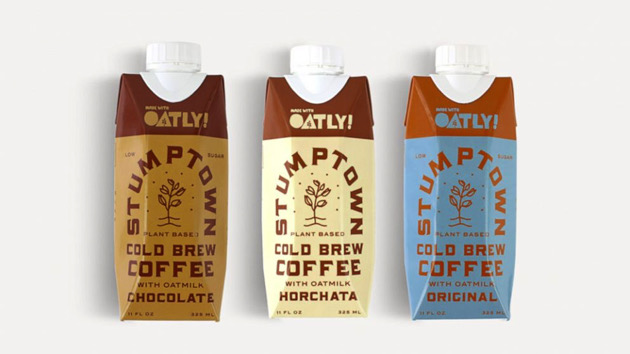
(NEW YORK) — From oat lattes to plant-based protein drinks, a new recall has had a sweeping impact on more than 50 nutrition drink products distributed across the country.
Lyons Magnus LLC has voluntarily recalled 53 of its nutritional and beverage products due to the potential for microbial contamination, including from the organism Cronobacter sakazakii, according to a recent company announcement.
Impacted brands included popular items like the plant-based Oatly Barista Edition oat milk, Premier Protein drinks, prepackaged Stumptown coffee cartons and more.
The company announced the recall — which was also posted on the U.S. Food and Drug Administration website — on July 28.
It confirmed that “the list of recalled products does not include products intended for infants (i.e. under the age of one).”
According to the recall announcement, the preliminary root cause analysis showed that the products were not up to “commercial sterility specifications.”
“Anyone who has a recalled product in his or her possession should dispose of it immediately or return it to the place of purchase for a refund,” the company wrote. “Consumers in all time zones with questions may contact the Lyons Recall Support Center 24/7 at 1-800-627-0557, or visit its website at www.lyonsmagnus.com.”
According to the company, the recall was “conducted in cooperation with” the FDA.
The Centers for Disease Control and Prevention states that Cronobacter infection is rare but can cause “several kinds of infections, and symptoms vary with the patient’s age and what part of the body is infected.”
“Cronobacter infections are often reported among infants who have been fed powdered infant formula,” the CDC website states. “In some cases, Cronobacter has been found in powdered infant formula that was likely contaminated in the factory. In other cases, Cronobacter likely contaminated the powdered infant formula after it was opened at home or elsewhere.”
Cronobacter infections are diagnosed by a laboratory culture, according to the CDC.
At the time of publication, no illnesses or complaints related to the recalled products had been reported.
(NEW YORK) — After a near-historic decline over the first half of the year, the S&P 500 — a popular index to which many 401(k) accounts are pegged — bounced back in July with its strongest month since November 2020. The other major indices, the tech-heavy Nasdaq and the Dow Industrial Average, reversed their performance, too.
The sudden shift arrived despite little change in the economy. In keeping with recent months, the government released mixed economic data and the Federal Reserve escalated a series of borrowing cost increases meant to slow economic activity, slash demand and dial back inflation.
The explanation behind the bounce back, investment strategists told ABC News, is the reason why investors should not expect it to endure: expectations.
It hardly sounds like the makings of a stock boom, which relies on investor optimism about the outlook for corporate profits.
Over the first half of the year, as the market plummeted and pessimism reigned, investors lowered their expectations, the strategists said. Last month, when the Federal Reserve signaled it would someday ratchet down rate increases and many corporations reported better-than-anticipated earnings, investors saw a reason for a turnabout in sentiment, they added.
The strong returns in July raise expectations, however, the market is setting up for underperformance amid persistent economic challenges, such as inflation, the Russia-Ukraine war, and the pandemic-induced supply chain disruptions, the strategists said.
“It’s not about good or bad,” Ryan Detrick, the chief market strategist at Carson Group, told ABC News. “It’s about better or worse.”
“Expectations were so low — the wick was there,” he said. “We needed anything to light that fire.”
Sameer Samana, senior global market strategist at Wells Fargo Investment Institute, said it will prove difficult to keep that fire lit.
“Unfortunately, along with rising stock prices, you have rising expectations as well,” he said.
For months, market sentiment has strained under the weight of an economy beset by a stark imbalance between supply and demand. A surge in demand followed a pandemic-induced flood of economic stimulus that combined with a widespread shift toward goods instead of services. Meanwhile, that stimulus brought about a speedy economic recovery from the March 2020 downturn, triggering a hiring blitz.
But the surge in demand for goods and labor far outpaced supply. COVID-related bottlenecks in China and elsewhere slowed delivery times and infection fears kept workers on the sidelines. In turn, prices and wages skyrocketed, ultimately prompting sky-high inflation that had not only endured for many months but had also gotten worse, even as economic growth slowed and recession fears grew.
Taken together, the near-historic inflation and sluggish economic activity drove away stock market investors over the first half of the year, said Samana, the senior global market strategist at the Wells Fargo Investment Institute.
“People, to a certain extent, had been throwing in the towel on equities. They were worried about the Fed, worried about China, worried about commodity prices, worried about a recession,” he said. “There was no shortage of worries.”
“What often happens when you get that level of concern is that everybody is on one side of the boat,” he added. “Then what happens is you get a piece of data that isn’t as bad as feared, and people shift to the other side. It causes a herd mentality.”
Market strategists largely attributed the July turnaround to the Federal Reserve signaling it would raise its benchmark interest rate 0.75%, which it ultimately did on Wednesday — a significant hike but less than the 1% increase that some observers had originally feared. Plus, investors seized on comments made by Fed Chair Jerome Powell on Wednesday that the pace of rate hikes would eventually slow.
“People think the Fed will have to change its mindset sooner rather than later,” Mike O’Rourke, chief market strategist at JonesTrading, told ABC News.
Over the first six months of the year, the S&P 500 plummeted 20.6%, marking its worst first-half performance of any year since 1970. But the index added back 9.1% last month alone.
The blistering pace from July isn’t sustainable, the strategists said. Further, investors should expect volatile highs and lows for the remainder of the year, they added.
O’Rourke said investors should expect a volatile market for the next six to 12 months. Other strategists echoed that view, including Detrick, who warned that investors shouldn’t treat July as a turning point. That said, he urged them to stay the course.
“This year has been historically volatile and disappointing for investors,” Detrick said. “To panic and sell when everything is darkest, that’s the worst time to do it. Hopefully this bounce back in July reminds investors of that.”
“But the truth is, we’re not out of the woods,” he said.
(WASHINGTON) — More than 60 major American companies that employ tens of thousands of U.S. workers are asking the Supreme Court to uphold the use of race as a factor in college admissions, calling affirmative action critical to building diverse workforces and, in turn, growing profits.
The businesses — some of the most high-profile and successful in the U.S. economy — outlined their position in legal briefs filed Monday ahead of oral arguments this fall in a pair of cases expected to determine the future of the race-based policy.
The companies told the court they rely on universities to cultivate racially diverse student bodies which in turn yield pools of diverse, highly educated job candidates that can meet their business and customer needs.
“The government’s interest in promoting student-body diversity on university campuses remains compelling from a business perspective,” the companies wrote in an amicus, or friend-of-the-court, brief. “The interest in promoting student-body diversity at America’s universities has, if anything, grown in importance.”
Among the signatories are American Express, United and American Airlines, Apple, Intel, Bayer, General Electric, Kraft Heinz, Microsoft, Verizon, Procter & Gamble and Starbucks.
Citing data and research on a rapidly diversifying America, the companies said race-based diversity initiatives are about more than what many call a moral imperative and critical to their bottom lines.
“Prohibiting universities nationwide from considering race among other factors in composing student bodies would undermine businesses’ efforts to build diverse workforces,” they said.
Eight of the top U.S. science and technology companies, including DuPont and Gilead Sciences, filed a separate brief stressing their view on the importance of racially diverse campuses for cultivating the best future innovators.
“If universities are not educating a diverse student body, then they are not educating many of the best,” they wrote, urging the court not to strike down affirmative action. “Today’s markets require capitalizing on the racial and other diversity among us … Those efforts, in turn, contribute to the broader health of our nation’s economy.”
In a series of decisions beginning in 1978, the high court has found that race can be used as one factor among many when considering college admissions applications but that a school cannot use quotas or mathematical formulas to diversify a class.
“In order to cultivate a set of leaders with legitimacy in the eyes of the citizenry, it is necessary that the path to leadership be visibly open to talented and qualified individuals of every race and ethnicity,” Justice Sandra Day O’Connor wrote in her 2003 opinion in Grutter v. Bollinger.
A conservative student group challenging the use of race as a factor in undergraduate admissions at Harvard University, the nation’s oldest private college, and the University of North Carolina, the nation’s oldest public state university, is asking the court to overturn that precedent.
The group, Students for Fair Admissions, alleges that Asian-American applicants have been illegally targeted by Harvard and rejected at a disproportionately higher rate in violation of Supreme Court precedent and the students’ constitutional rights.
Two lower federal courts have rejected those claims.
That the Supreme Court has agreed to hear the cases is widely seen as an indication that the justices could be willing to revisit their precedents on affirmative action and end the use of racial classifications in admissions altogether.
It will be the first test on the issue for the court’s six-to-three conservative-leaning majority, following the retirement of Justice Anthony Kennedy and the death of Justice Ruth Bader Ginsburg, both of whom defended race-conscious admissions.
(NEW YORK) — One sole winning jackpot ticket was sold in a Speedway convenience store in Des Plaines, Illinois, in a historic $1.34 billion drawing, according to Mega Millions.
One ticket matched all six numbers in Friday night’s drawing. The winning numbers were 67, 45, 57, 36, 13 and the mega ball was 14.
The jackpot was initially estimated to be $1.28 billion, but had officially grown to $1.34 billion due to last-minute sales, Illinois lottery director Harold Mays said at a press briefing on Saturday.
The prize is the equivalent of $780 million in cash, he said.
Mega Millions has yet to hear from the winner, Mays said.
“We don’t know whether they even know that they won a prize. So I encourage everybody to check your ticket,” he said, noting that it could take a few weeks for a winner to come forward to “get their affairs in order.”
The winner can opt to remain anonymous, he said.
The Speedway will receive $500,000 for selling the winning ticket, according to Mays.
For only the third time in the 20-year history of the American lottery game, the big prize has reached the billion-dollar mark. The jackpot has grown to an estimated $1.28 billion — a cash value of $648.2 million — after no ticket matched all six numbers drawn Tuesday night, according to a press release from Mega Millions.
This is the second-largest jackpot in Mega Millions history, behind only the record $1.537 billion won in South Carolina on Oct. 23, 2018 — the world’s largest lottery prize ever won on a single ticket.
“We are thrilled to have witnessed one of the biggest jackpot wins in Mega Millions history. We’re eager to find out who won and look forward to congratulating the winner soon!” Ohio lottery director Pat McDonald, currently serving as lead director for the Mega Millions Consortium, said in a press release.
The jackpot has reset to $20 million for Tuesday’s drawing.
Friday night’s Mega Millions drawing marked the 30th in this jackpot run, which began on April 19.
In the 29 drawings since the Mega Millions jackpot was last won in Tennessee on April 15, there have been over 28.1 million winning tickets at all prize levels, including 42 worth $1 million or more in 17 states across the country. Four Mega Millions jackpots have been won so far this year — in California, New York, Minnesota and Tennessee.
Mega Millions jackpots start at $20 million and grow based on game sales and interest rates. Despite a surge in ticket sales, the odds of winning the big prize remain the same — 1 in 303 million.
Mega Millions tickets are $2 and can be purchased in 45 U.S. states, Washington, D.C., and the U.S. Virgin Islands. Drawings are conducted at 11 p.m. ET every Tuesday and Friday at the studios of Atlanta ABC affiliate WSB-TV, supervised by the Georgia Lottery.
Winners can either take the money as an immediate cash lump sum or in 30 annual payments over 29 years.
(NEW YORK) — For decades, the aviation industry has carried the reputation of being overtly male and white. At least 95% of the roughly 158,000 pilots employed in the United States are men, according to the Bureau of Labor Statistics.
“This is a very male-dominated industry,” said Dana Donati, a former pilot with Republic Airways.
Donati recalls being one of two females in her college aviation courses and during her early officer training.
At the height of summer travel, as airlines brace for a pilot shortage on one side and recent protests from current pilots on the other, some airlines are making efforts to attract the next generation of pilots who have been historically excluded from the industry — women and people of color.
Donati, who now serves as the CEO of United Aviate Academy, is one of those aviation professionals trying to change the system. Founded by United Airlines, the academy is a 12-month program in Phoenix, Arizona, that aims to diversify the cockpit.
The program offers a 12-month training footprint, in which students complete several certificates on private piloting, commercial piloting, instrument operations and more.
“It’s about time the industry looks at how they have historically operated,” added Donati.
The figures are stark — there are only about 200 Black women pilots in the U.S., accounting for less than 1 percent of the profession, according to Sisters of the Skies, an organization advocating for Black women pilots.
Flying has traditionally been an “elitist” profession, according to Theresa Claiborne, the first Black woman pilot in the U.S. Air Force and a United Airlines pilot.
“They did not make any provisions. So, it’s been perpetuated,” said Claiborne, who holds the rank of captain, the highest rank for commercial pilots.
Claiborne attributes flight costs and generational and economic disadvantages as significant contributors to the lack of pilots of color.
Adding the total costs for an aspiring pilot to obtain all licenses and complete 1,500 hours of flight training required by the FAA to become an airline pilot are estimated to cost nearly $100,000.
“That’s a lot of money. And financial institutions are not jumping at the bit to loan that kind of money to an aviation student,” Claiborne said. “We don’t have these long generations of pilots in the family.”
Other commercial airlines are also pushing efforts toward diversity, including Delta Airlines, which launched the Delta Propel Career Path Program. The program offers an accelerated path to the flight deck for selected students across 13 universities around the US.
“Delta’s commitment to developing a diverse workforce that is reflective of the communities we serve domestically and around the world is unwavering. This includes removing barriers and broadening recruiting funnels to help create a diverse pipeline for qualified and talented pilots to join us,” a Delta airlines spokesperson told ABC News.
In 2008, JetBlue launched Gateway University, the airline’s first pilot development program for prospective pilots and aircraft maintenance technicians.
“JetBlue is addressing the uncertainty that prevent many from pursuing their dreams and can very well meet the growing need for aviation professionals while also opening the door to underrepresented communities, including women and people of color,” a JetBlue spokesperson added.
Donati said the makeup of pilots hasn’t changed in over 20 years. “It’s time that we think differently about how we’re approaching our communities and supporting students entering this career,” she said.
Eighty percent of the inaugural class of future pilots at United Aviate Academy identify as women or people of color. In that number is Abby Awosanya, a 25-year-old first-generation Nigerian-American from Maryland. Awosanya recently obtained her private pilot license and is working to become a 787 captain for United Airlines.
“I probably would have gotten involved in aviation sooner if there was some sort of representation,” Awosanya told ABC News.
After completing her first solo flight in April, Awosanya says she’s proud to be part of the inaugural class. She says she looks forward to “changing the way the flight deck looks to better reflect the passengers who are in the cabin.”
(NEW YORK) — As JetBlue prepares to begin its takeover of Spirit Airlines in a $3.8 billion deal, many are left wondering what the future holds for both airlines and their loyal customers.
The JetBlue-Spirit agreement still faces a shareholder vote and regulatory approval, which could prove difficult if federal officials believe the deal would reduce competition and increase fares. Spirit is known for its barebones and deeply discounted fares, while JetBlue is more of a full-service airline.
“I think it’s bad news for travelers,” Scott Keyes, founder of Scott’s Cheap Flights, said in an interview with ABC News. “Competition between airlines is the single biggest determinant of how many cheap flights you see on any given route.”
Keyes said Spirit is an “anchor” in the airfare market and its low fares tend to drive down ticket prices offered by mainline carriers.
“Your Delta fares, your American fares are actually cheaper if they’re on a route where they’re competing with Spirit, because they need to drop those fares to try to compete and get more customers,” Keyes said.
JetBlue’s CEO Robin Hayes said the acquisition could be a “solution to the lack of competition” in the U.S. airline industry, saying in a press release, “Spirit and JetBlue will continue to advance our shared goal of disrupting the industry to bring down fares from the Big Four airlines.”
While experts say the Spirit shareholder vote should pass, JetBlue is expected to face regulatory hurdles.
“[The Department of Justice] will try to model what will happen with one fewer airline. What will that do to route structure, to load factors, capacity and fares,” Ravi Sarathy, professor of International Business and Strategy at Northeastern University’s D’Amore-McKim School of Business, told ABC News. “And they’ll also try to model whether this will improve overall air quality and flight service quality.”
Sarathy said the merger could help improve JetBlue’s product. With the $3.8 billion purchase, JetBlue would also gain Spirit’s Airbus fleet and its pilot staffing – both in high demand as airlines face the ongoing pilot shortage and delayed aircraft deliveries amid supply chain disruptions.
“The question will be, do Spirit passengers want better service, or are they really more concerned about the lowest possible cost of flying?” Sarathy said. “That remains to be seen.”
JetBlue offers lie-flat seats on some transcontinental routes and to London, while Spirit does not have a first/business class cabin. JetBlue also offers free, seatback in-flight entertainment and snacks; Spirit does not have inflight televisions or free food. It’s unclear how the two airlines would blend their products if a merger is approved.
Spirit shareholders are expected to vote next month on the merger. If that vote passes, a review from the federal government could take months if not years.