(NEW YORK) — In an effort to help families fight inflation, New York Gov. Kathy Hochul announced last month that New Yorkers would receive an average payment of $270 through the state tax credit program.
As part of the 2022-2023 New York state budget, eligible New York taxpayers could receive a check for two different payments under the Empire State Child Credit and the Earned Income Credit.
According to the governor and the state legislature, the payments will offer up to $475 million in tax relief for those eligible.
“With this relief package, we’re making good on our commitment to helping hardworking New Yorkers through the nationwide affordability crisis,” Hochul said at the time of the announcement.
While the payments will come as a relief for many, most of the state’s nearly 20 million residents aren’t eligible.
Around 1.75 million low-income New Yorkers and families are eligible for payments, Hochul said.
“This program will put money back in the pockets of nearly two million New York families struggling to make ends meet in the face of the pandemic, inflation, and other rising costs,” the governor said.
New Yorkers who filed their 2021 state tax returns and received the Empire State Child Credit and/or the Earned Income Tax Credit are eligible.
“My administration remains laser-focused on improving affordability statewide, and I thank the legislature for its partnership in ensuring that New York families get this much-needed financial assistance,” Hochul said in her announcement.
Eligible taxpayers don’t need to apply since the state automatically sends the payments.
(NEW YORK) — Americans are expected to see higher energy bills when it comes to heating their homes this winter, according to a new analysis from the U.S. Energy Information Agency released this week.
The independent agency within the Department of Energy found that homes heated with natural gas could see prices 28% higher than last winter, while homes heated by electricity will see a 10% increase and propane heat will see a 5% increase. At least 90% of homes in the U.S. use natural gas or electricity for heat.
EIA said the supplies of fuels like natural gas, propane, or heating oil are low and could struggle to meet demand if temperatures are especially cold or supply chain issues make it difficult to deliver to where the fuels are needed.
Rusty Braziel, CEO & Principal Energy Markets Consultant for RBN Energy, said energy prices are dealing with several factors that are putting pressure on the market.
“It’s a whole different kind of market turmoil than we’ve ever seen before,” he said in a briefing with reporters.
“We’ve got a hot war in Europe, we’ve got sky-high prices, we got Russia’s use of energy as a weapon. We’re still recovering from a global pandemic. Our markets are absorbing a massive new energy transition and this economy is shaky, recession could be just around the corner. National politics are wacky, and producer discipline has basically reset the shale supply curve. So if that ain’t wild, I don’t know what is,” Braziel said.
The EIA report factors in the National Oceanic and Atmospheric Administration’s forecast for a colder-than-average winter in some parts of the country. Officials said demand for energy could change if temperatures dip colder than predicted.
Energy costs are another factor that could lead to difficulty for many families dealing with the cost of living amid rising inflation. In 2020, 34 million U.S. households, about 27% of the country, reported having difficulty paying their energy bills or keeping their home at an unsafe temperature to avoid higher bills, according to an EIA survey.
The Department of Energy said there are multiple ways that households can reduce energy bills by switching to more energy-efficient appliances or lighting and making homes better at keeping heat in and cold air out by sealing air leaks around windows or other points where heat could escape. The Biden administration has launched programs that include more than $3 billion to help low-income homeowners “weatherize” or retrofit their homes to be more energy efficient.
The Inflation Reduction Act offers some tax credits to help with the up-front cost of installing more energy-efficient appliances or heaters. The advocacy group Rewiring America has a calculator where homeowners or renters can calculate what benefits they may be eligible to receive.
(WASHINGTON) — Social Security and Supplemental Security Income benefits for approximately 70 million Americans will increase 8.7% in 2023 as Americans deal with the highest inflation rates in decades.
The 8.7% cost-of-living adjustment will begin with benefits payable to more than 65 million Social Security beneficiaries in January 2023. Increased payments to more than seven million SSI beneficiaries will begin on Dec. 30, 2022.
This is the biggest increase since 1981, because this number is based on the 40-year highs the U.S. has seen in inflation.
(WASHINGTON) — The consumer price index rose 0.4% in September on a seasonally adjusted basis after rising 0.1% in August, the Labor Department said Thursday.
Prices rose 8.2% over the last 12 months, the department said. Increases in the shelter, food, and medical care indexes were the largest contributors. The food index jumped 0.8% over the month while the energy index fell 2.1%.
Thursday’s CPI numbers were slightly higher than anticipated; economists had predicted a rise of 8.1% in prices. Core-CPI prices increased 6.6% compared to a year ago — a new 40-year-high.
Stock futures fell after the CPI report was released at 8:30 a.m. ET.
The latest data arrives weeks after the Federal Reserve escalated its fight against inflation with a third consecutive rate increase.
The Fed has put forward a string of aggressive interest rate hikes in recent months as it tries to slash price increases by slowing the economy and choking off demand. But the approach risks tipping the U.S. into a recession.
Federal Reserve Chair Jerome Powell last month reasserted the central bank’s commitment to bring inflation down to a target rate of 2%, saying the Fed expects to put forward “ongoing increases” to its benchmark interest rate.
Lately, evidence has mounted that the Fed’s moves have put the brakes on some economic activity.
While the labor market remains robust, hiring has cooled. U.S. employers added 263,000 jobs in September and the unemployment rate fell slightly to 3.5% from 3.7%, according to government data released last Friday.
The September hiring total falls well below the average monthly jobs added of 420,000 so far this year and 562,000 per month in 2021, according to the Department of Labor.
Meanwhile, rent increases have sent mortgage rates higher and slowed the construction of new homes.
Current economic trends are sending mixed signals, said Amit Batabyal, an economics professor at the Rochester Institute of Technology.
“On the one hand, inflation is high by historical standards and that’s having a negative impact on people’s wallets,” Batabyal told ABC News. “On the other hand, the employment picture is generally positive.”
A further economic slowdown risks putting millions of employees out of work.
Rate increases will cause the unemployment rate to rise nearly a percentage point by the end of next year, according to the Fed.
Still, Powell has argued that the pain of an economic slowdown exceeds that of persistent inflation.
In a sign that consumers may be growing more optimistic about inflation, New York Federal Reserve data on Tuesday showed one-year-ahead inflation expectations fell last month by 0.3 percentage points to 5.4%. The figure marks the lowest reading for the measure since September 2021, according to the New York Fed.
Expectations for long-term inflation increased last month, though. Median five-year-ahead inflation expectations rose by 0.2 percentage points to 2.2%, the data showed.
The inflation rate will remain largely unchanged over the next year, even as the Fed pursues additional rate hikes, Batabyal said, adding that he doesn’t expect a recession “anytime soon.”
(WASHINGTON) — Consumers on Main Street and investors on Wall Street will closely watch the release of inflation data on Thursday. The latest data arrives weeks after the Federal Reserve escalated its fight against inflation with a third consecutive rate increase.
The median forecast in a Bloomberg survey of economists predicts consumer price inflation for the year ending in September declined to 8.1%. While that figure remains elevated, it would mark a decline from 8.3% in August and 8.5% in July.
The Fed has put forward a string of aggressive interest rate hikes in recent months as it tries to slash price increases by slowing the economy and choking off demand. But the approach risks tipping the U.S. into a recession.
Federal Reserve Chair Jerome Powell last month reasserted the central bank’s commitment to bring inflation down to a target rate of 2%, saying the Fed expects to put forward “ongoing increases” to its benchmark interest rate.
Lately, evidence has mounted that the Fed’s moves have put the brakes on some economic activity.
While the labor market remains robust, hiring has cooled. U.S. employers added 263,000 jobs in September and the unemployment rate fell slightly to 3.5% from 3.7%, according to government data released last Friday.
The September hiring total falls well below the average monthly jobs added of 420,000 so far this year and 562,000 per month in 2021, according to the Department of Labor.
Meanwhile, rent increases have sent mortgage rates higher and slowed the construction of new homes.
Current economic trends are sending mixed signals, said Amit Batabyal, an economics professor at the Rochester Institute of Technology.
“On the one hand, inflation is high by historical standards and that’s having a negative impact on people’s wallets,” Batabyal told ABC News. “On the other hand, the employment picture is generally positive.”
A further economic slowdown risks putting millions of employees out of work.
Rate increases will cause the unemployment rate to rise nearly a percentage point by the end of next year, according to the Fed.
Still, Powell has argued that the pain of an economic slowdown exceeds that of persistent inflation.
In a sign that consumers may be growing more optimistic about inflation, New York Federal Reserve data on Tuesday showed one-year-ahead inflation expectations fell last month by 0.3 percentage points to 5.4%. The figure marks the lowest reading for the measure since September 2021, according to the New York Fed.
Expectations for long-term inflation increased last month, though. Median five-year-ahead inflation expectations rose by 0.2 percentage points to 2.2%, the data showed.
The inflation rate will remain largely unchanged over the next year, even as the Fed pursues additional rate hikes, Batabyal said, adding that he doesn’t expect a recession “anytime soon.”
(NEW YORK) — A union representing about 12,000 rail workers on Monday voted down a tentative contract that was brokered by the White House last month ahead of a possible rail strike.
This vote will force the two sides back to the negotiating table and creates the possibility of a nationwide strike. The potential work stoppage could paralyze the nation’s supply chain and transportation rail service later this fall as the U.S. enters peak holiday season.
Four unions have ratified contracts based on the agreement brokered by the White House, while seven have votes pending on the deal. The 11 unions represent about 115,000 rail workers.
The two largest rail unions — the Brotherhood of Locomotive Engineers Trainmen, or BLET, and the SMART Transportation Division, or SMART-TD, which make up roughly half of all rail workers — are set to finish voting in the middle of next month.
The Brotherhood of Maintenance of Way Employes Division of the Teamsters, or BMWED, rejected the tentative contract due to frustration with compensation and working conditions, particularly a lack of paid sick days, BMWED President Tony Cardell said in a statement on Monday.
“Railroaders do not feel valued,” Cardell said. “They resent the fact that management holds no regard for their quality of life.”
The National Carriers’ Conference Committee, or NCCC, the group representing the freight railroad companies, said in a statement that there is no risk of immediate operational impacts due to this vote. But the NCCC expressed “disappointment” in the decision to reject the contract.
The tentative contract included a 24% compounded wage increase and $5,000 in lump sum payments, as well as “significant increases” to the reimbursements for travel and away-from-home expenses for the roughly 50% of BMWED members employed in traveling roles, the NCCC said.
American railway companies and unions reached a tentative labor agreement last month amid the threat of strikes. That agreement came after 20 consecutive hours of negotiations led by U.S. Secretary of Labor Marty Walsh at his office in Washington, D.C., Walsh said last month.
The agreement improved the time-off policies at the rail companies, which made up a key sticking point in the negotiations, BLET and SMART-TD said in a statement last month.
A potential strike could lead to $2 billion a day in lost economic output, according to the Association of American Railroads, which lobbies on behalf of railway companies.
Rail is critical to the entire goods side of the economy, including agriculture, manufacturing, retail and warehousing. Freight railroads are responsible for transporting 40% of the nation’s long-haul freight and a work stoppage could endanger those shipments.
“The artery of the U.S. economy is the rail system. It’s one of the ways we get everything around. One-third of everything gets around this way. And when you cut it, you have a stroke,” Diane Swonk, chief economist at global tax firm KPMG, told ABC News last month.
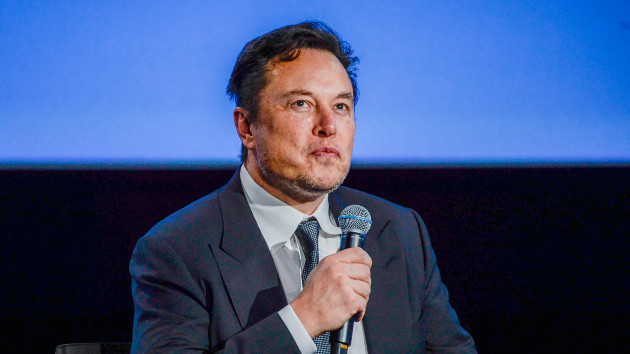
(NEW YORK) — After a monthslong saga cast Tesla CEO Elon Musk as suitor, critic and legal adversary of Twitter, the wealthiest person in the world appears poised to take ownership of the social media company.
A renewed offer at Musk’s original asking price from April has prompted anticipation of massive changes on the platform under his leadership, which could take hold within days or weeks.
The judge paused the acquisition case last week, giving the two sides an opportunity to reach a deal before Oct. 28. Under a potential agreement, Musk would pay $54.20 a share or roughly $44 billion to purchase Twitter, he said last week.
The acquisition would bring nearly immediate and dramatic changes to the platform, altering the user experience in a manner heartening for some and infuriating for others, experts told ABC News.
In the long term, over a timeline of several years, Twitter could prove unrecognizable, carrying additional subscription fees but offering a slew of services that touch everything from person-to-person payments to travel reservations, they added.
“The easy thing is buying Twitter; the hard thing is fixing it,” Dan Ives, a managing director of equity research at Wedbush, an investment firm, who closely follows the tech sector, told ABC News.
Here’s how Twitter will change under Elon Musk, according to experts:
Relaxed content moderation rules
In recent months, Elon Musk has emphasized his commitment to the principle of free speech, suggesting that Twitter should permit all speech that stops short of violating the law.
“My preference is to hew close to the laws of countries in which Twitter operates,” he said in May. “If the citizens want something banned, then pass a law to do so, otherwise it should be allowed.”
Currently, the platform imposes limits on a range of speech, including hate speech, targeted harassment and media that features graphic violence.
The content policing rules will relax almost immediately, some analysts said.
“There are some big changes that would be in the offing,” Bill Mann, a senior analyst at Motley Fool, told ABC News. “He wants to reduce their content moderation.”
Sinan Aral, a venture capitalist and professor of management at the Massachusetts Institute of Technology, said users should expect a more permissive approach to conservative views, including those expressed by former President Donald Trump. According to Aral, Trump would be “reinstated almost immediately” after a Musk acquisition, considering previous statements from Musk assuring the move.
But Musk’s commitment to free speech would conflict with the company’s business strategy, which depends on advertising revenue tied to the number of users on the platform, said Ives, of Wedbush. The presence of offensive or hateful views on the platform could drive away many users, causing Musk to moderate his approach, Ives added.
“Musk says ‘freedom of speech’ but if it becomes a cesspool on Twitter, that goes against the monetization of the platform,” Ives said.
‘Everything app’
Musk, who also runs space-flight company SpaceX, holds an ambitious long term vision for Twitter that extends far beyond its current function as a social media and messaging platform. Last week, he made a bold comment about his aspirations for the site: “Buying Twitter is an accelerant to creating X, the everything app,” he said.
The best example of what Musk means by an “everything app” is WeChat, a highly popular app in China that serves not only as a messaging and media-sharing platform but also a versatile tool in which users pay friends, purchase products and book reservations, among other uses, analysts said.
“You could understand why any company would want this,” said Mann, of Motley Fool, citing platforms like Meta-owned Facebook and Snapchat that have pursued the all-in-one app strategy.
He described Musk’s vision for person-to-person payment on the platform as “the holy grail for any app.”
However, U.S.-based platforms face greater challenges than WeChat, including stiff competition on each of the functionalities that Musk would try to roll into one service, said Aral, of MIT.
“There are numerous competitors that Twitter would have to fight through,” he said.
Still, Aral described the goal as “not farfetched.”
“There is historical precedent for that,” he added.
Ives, of Wedbush, put the likelihood of success for the “everything app” at no more than 20%.
“That will take years and a lot of challenges ahead,” Ives said. “Then again, there’s a reason he’s the richest person in the world. His back has been against the wall again and again, and he’s massively succeeded, as we see with Tesla and SpaceX.”
(NEW YORK) — The Nobel Prize in economics was awarded to Ben Bernanke, Douglas Diamond and Philip Dybvig on Monday for their research on banks and financial crises.
Bernanke, of The Brookings Institute, served as chair of the Federal Reserve from 2006 to 2014, where he oversaw the central bank’s response to the Great Recession. Diamond is a professor at The University of Chicago. Dybvig is a professor at Washington University in St. Louis.
“The laureates’ insights have improved our ability to avoid both serious crises and expensive bailouts,” Tore Ellingsen, Chair of the Committee for the Prize in Economic Sciences, said in a statement.
Winners receive 10 million Swedish kronor, about $911,765, which is usually split between winners when the prize is shared. In addition to the prize money, each of the winners will receive an 18-karat gold medal.
The previous Nobel Prize in economics, for 2021, went to two sets of winners: David Card as well as Joseph Angrist and Guido Imbens.
Card, an economist at the University of California, Berkeley, received the honor for “his empirical contributions to labour economics,” including research showing that an increase in the minimum wage does not necessarily lead to fewer jobs, the Nobel Prize organization said.
Meanwhile, a pair of economists — Angrist, a professor of economics at the Massachusetts Institute of Technology; and Imbens, a professor of economics at Stanford University — won the prize for advances in the study of cause and effect, the Nobel Prize organization said.
The winners of this year’s prizes will be invited to receive them in Stockholm, Sweden on December 10, which marks the anniversary of Nobel’s death in 1896.
Nobel, a Swedish chemist best known for inventing dynamite, left some of his fortune to endow of annual prizes in a host of disciplines.
The first Nobel Prize was given out in 1901, nearly 70 years before the first Nobel Prize in economics.
(NEW YORK) — Wall Street will closely watch the release of new jobs data on Friday that will reveal whether U.S. hiring has cooled as the Federal Reserve aims to slow the economy in its fight against inflation.
Economists are predicting a gain of 250,000 jobs in September. That figure would mark the lowest number of jobs added in any month since December 2020.
The September jobs data arrives less than two weeks after the Federal Reserve imposed a 0.75% hike in interest rates, the same hike percentage at its previous two meetings.
The Fed has instituted a series of aggressive borrowing cost increases in recent months as it tries to slash near-historic inflation by slowing the economy and choking off demand. But the approach risks tipping the U.S. into an economic downturn and putting millions out of work.
So far this year, however, the U.S. labor market has defied expectations of a slowdown.
Advertisement
U.S. hiring has slowed from its breakneck pace but remained robust in August, with the economy adding 315,000 jobs and the unemployment rate rising to 3.7%.
The hiring marked a significant drop from the 528,000 jobs added over the previous month, suggesting that the Fed’s rate hikes may have begun to cool off the labor market.
“This is an inflection point,” Erica Groshen, an economist at Cornell University, told ABC News. “I expect we’re going to see some signs of loosening in the labor market. Do I think we’re going to drop off a cliff? Probably not.”
Data released this week buttressed predictions of a hiring slowdown.
Job openings plummeted by over 1 million in August, marking a 10% drop from 11.1 million openings recorded in July, according to a government report released on Tuesday.
Meanwhile, unemployment insurance claims jumped by 29,000 to 219,000 in the week ending Oct. 1, Labor Department data on Thursday showed.
After announcing the rate hike last month, Federal Reserve Chair Jerome Powell reasserted the central bank’s commitment to bring inflation down to a target rate of 2%, saying the Fed expects to put forward “ongoing increases” to its benchmark interest rate.
The Fed forecasted that its rate hikes would raise the unemployment rate to 4.4% by the end of 2023.
“I am confident that the labor market won’t be as tight in the coming months,” said Groshen. “The question is how much will the unemployment rate go up and how quickly?”
“This is the pain that the Federal Reserve has reluctantly felt it has to cause,” she added.
(WASHINGTON) — U.S. employers added 263,000 jobs in September and the unemployment rate fell slightly to 3.5% from 3.7%.
Economists were predicting a gain of 250,000 jobs last month.
Notable job gains occurred in leisure and hospitality and in health care, according to the Department of Labor.
The number of long-term unemployed (those who are jobless for 27 weeks or more) was little changed at 1.1 million in September, the department said. The labor force participation rate was 62.3%.
Monthly job growth has averaged 420,000 so far this year versus 562,000 per month in 2021, according to the Department of Labor.
The new jobs data arrives less than two weeks after the Federal Reserve imposed a 0.75% hike in interest rates, the same hike percentage at its previous two meetings.
The Fed has instituted a series of aggressive borrowing cost increases in recent months as it tries to slash near-historic inflation by slowing the economy and choking off demand. But the approach risks tipping the U.S. into an economic downturn and putting millions out of work.
So far this year, however, the U.S. labor market has defied expectations of a slowdown.
U.S. hiring has slowed from its breakneck pace but remained robust in August, with the economy adding 315,000 jobs and the unemployment rate rising to 3.7%.
The hiring marked a significant drop from the 528,000 jobs added over the previous month, suggesting that the Fed’s rate hikes may have begun to cool off the labor market.
“This is an inflection point,” Erica Groshen, an economist at Cornell University, told ABC News. “I expect we’re going to see some signs of loosening in the labor market. Do I think we’re going to drop off a cliff? Probably not.”
Data released this week buttressed predictions of a hiring slowdown.
Job openings plummeted by over 1 million in August, marking a 10% drop from 11.1 million openings recorded in July, according to a government report released on Tuesday.
Meanwhile, unemployment insurance claims jumped by 29,000 to 219,000 in the week ending Oct. 1, Labor Department data on Thursday showed.
After announcing the rate hike last month, Federal Reserve Chair Jerome Powell reasserted the central bank’s commitment to bring inflation down to a target rate of 2%, saying the Fed expects to put forward “ongoing increases” to its benchmark interest rate.
The Fed forecasted that its rate hikes would raise the unemployment rate to 4.4% by the end of 2023.
“I am confident that the labor market won’t be as tight in the coming months,” said Groshen. “The question is how much will the unemployment rate go up and how quickly?”
“This is the pain that the Federal Reserve has reluctantly felt it has to cause,” she added.