The U.K.’s Download Festival is heading to Germany, and Metallica will be along for the ride.
The metal legends are headlining the inaugural Download Germany, set to take place June 24, 2022. The lineup will also include Five Finger Death Punch and Sabaton, with more artists being announced at a later date.
The U.K. version of Download was founded in 2003, and is held in England’s Donington Park. However, it hasn’t taken place since 2019 due to the COVID-19 pandemic, though a smaller, downsized version, deemed Download Pilot, was held this past June.
Download is set to return in 2022 with headliners Iron Maiden, KISS and Biffy Clyro.
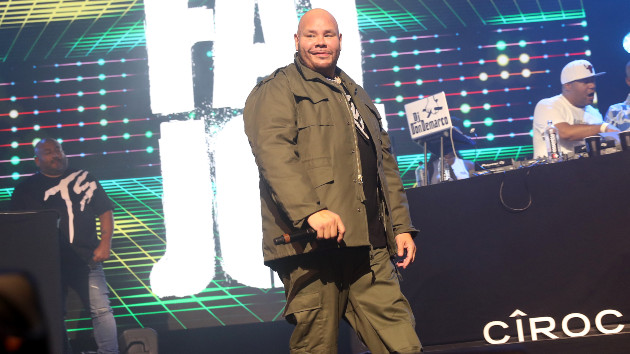
It’s safe to say things got a bit heated Tuesday night during the Verzuz battle between New York rappers Fat Joe and Ja Rule.
During the livestreamed music event, held at New York’s Madison Square Garden, Joe and Ja brought out some of their famous friends and collaborators — including Nelly, Ashanti, Jadakiss, and Remy Ma — to assist them on some of their hit songs. While the music competition remained mostly friendly, things became a bit tense when Ja Rule asked his “Put It On Me” collaborators Lil Mo and Vita to come on stage and sing.
“Oh, them dusty b******,” said Fat Joe, referring to Lil Mo and Vita. “You had to go to the crack house to find them b******.”
Fans were quick to slam Joe’s comments, with Lil Mo responding in an online post that she was “disappointed” in him. Joe apparently received the message, apologizing on Twitter early Wednesday morning.
“Shout out to the ladies very sorry if i disrespected i love vida and lil Moe,” he tweeted. “I’m super sorry love my sisters.”
Neither Mo nor Vida have publicly responded to Joe’s apology as of late Wednesday morning.
Following a New York Times report that Kelly Clarkson is prepping a Christmas album for release later this year, Kelly’s announced a brand-new holiday single — with an amazing title.
“Christmas Isn’t Canceled (Just You)” will be released September 23. “You’re gonna love it!” Kelly promises in a new Instagram video.
The single is described as the first release from Kelly’s ninth studio album, which her label confirms will be her second holiday release since 2013’s Wrapped in Red. Overall, it’ll be her first album since 2017’s Meaning of Life.
This week, Kelly kicked off the third season of her Emmy-winning talk show and on Monday, she’ll return for the 21st season of The Voice.
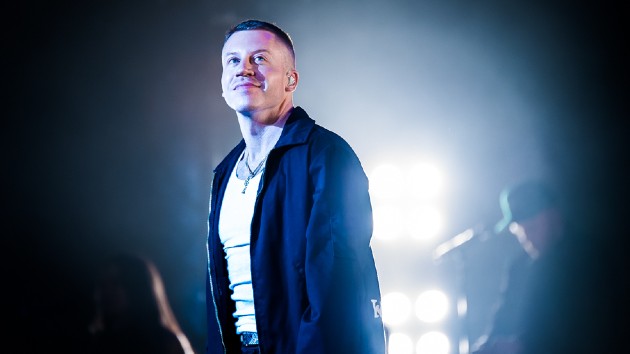
The rapper welcomed his third child with wife Tricia Davis six weeks ago. Davis announced the birth of their son on Instagram.
“Six weeks ago in the shadow of the Buck Moon this beautiful human came into our lives,” she wrote, alongside a selfie with the newborn. “He arrived rooted and calm, mostly just observing the two whirling dervishes around him.”
“Welcome home Hugo,” she continued. “May you crush the distorted masculine and awaken the divine.”
Macklemore and Davis, who married in 2015, are also parents to two daughters: six-year-old Sloane Ava Simone and three-year-old Colette Koala.
An early, pre-ParachutesColdplay performance is now streaming via Amazon Prime’s Coda Collection.
The set, titled Amsterdam Sessions, was recorded at a Netherlands studio in June 2000, just a month before the U.K. band’s debut album dropped. It marked one of Coldplay’s first performances outside of their home country and has never before been released outside of Holland.
You can watch a preview of Amsterdam Sessions, featuring a rendition of the future hit “Yellow,” now on YouTube.
Since that humble performance, Chris Martin and company have since become worldwide superstars. Their upcoming ninth album, Music of the Spheres, featuring the lead single “Higher Power” and the much-anticipated BTS collaboration “My Universe,” arrives October 15.
(NEW ORLEANS) — As Hurricane Ida wreaked havoc in New Orleans, it swept away a historic jazz landmark that Louis Armstrong once considered a second home.
“The message that boosting might soon be needed, if not justified by robust data and analysis, could adversely affect confidence in vaccines and undermine messaging about the value of primary vaccination,” the officials wrote, backed by other worldwide organizations.
For their part, the Biden administration has emphasized that science will lead and federal regulators will have the final say — and that their call to push out booster shots is motivated by wanting to “stay ahead” of the virus.
“You don’t want to find yourself behind playing catch up,” Dr. Anthony Fauci said when announcing the plan. “Better stay ahead of it than chasing after it.”
The Karnofsky Tailor Shop and Residence, which was built in 1913, collapsed after water pooled on its roof. According to the National Park Service, a young Armstrong worked for the family who owned the shop and loaned the future jazz legend money to buy his first cornet — a brass instrument that resembles a small trumpet.
“That is another devastating blow to the community, so much history there [that] once again, a hurricane has come in and just kind of washed away,” Kia Robinson, the director of programs and marketing at the New Orleans Jazz and Heritage Foundation, told ABC News.
Ida destroyed homes and businesses, knocked out power to more than 1 million residents and left at least 82 people dead. It hit Louisiana as a Category 4 hurricane on Aug. 29 — almost exactly 16 years after Hurricane Katrina ravaged the city that is known as the birthplace of jazz.
‘Insult to injury’
Before Ida, the jazz community was already reeling from the ongoing pandemic, which has shut down music venues, canceled shows and left many in the music community without an income or a lifeline.
“New Orleans is very much so a gig town, you know, people work performance to performance, gig to gig, so a lot of our musicians don’t have a safety net,” Robinson said.
When the pandemic hit in March 2020, Robin Barnes Casey, known as the Songbird of New Orleans, lost all of her bookings, and all of her international tours as a cultural ambassador to the city were canceled.
At the time, she and her husband, musician Pat Casey, who perform as the duo LoveBirds, had just become new parents to baby Riley.
“All of a sudden, everything we could do financially [to support our family] was just stopped,” Barnes Casey said.
“It was definitely mentally, emotionally an exhausting time and then also being brand new parents, we had a challenge and a blessing,” she added.
As COVID-19 vaccines became widely available this spring, some musicians were able to book some gigs again. But amid a surge in cases in Louisiana and the emergence of the delta variant, the city again had to take a step back.
Gov. John Bel Edwards reinstated the mask mandate in August, and large gatherings like the New Orleans Jazz and Heritage Festival, which was scheduled to run in October, were canceled again this year.
For New Orleans saxophonist Derek Douget, Ida has added “insult to injury.”
“COVID took away all the gigs, [and] then the hurricane comes in, not only taking the gigs or prospects of gigs away, but it’s destroyed your property,” Douget told ABC News as he helped his parents deal with hurricane damage to their home.
The Jazz Foundation of America deployed teams of volunteers to assess needs and provided financial assistance to thousands of musicians — from direct payments to fulfilling need-based requests, most recently providing those who lost power during Ida with generators and fuel tanks.
“We have a long history, a long and painful one, of working with musicians in Louisiana and throughout the South during these natural disasters,””Jazz Foundation of America executive director Joseph Petrucelli told ABC News.
The Jazz Foundation of America raised over $2 million for its COVID-19 relief fund, while the New Orleans Jazz and Heritage Foundation supported more than 2,500 in the Louisiana jazz community through grants.
“During 2020 we assisted more musicians and more families across the country than we did in any year previous,” Petrucelli said. “This was because we’re dealing with such widespread deprivation and devastation and loss of work that the need was really universal.”
‘We celebrate life’
When Katrina struck New Orleans in 2005, Barnes Casey was 17, and as she left her home in New Orleans amid the destruction, she found hope in music.
“Music has always been my salvation and my therapy and my happiness,” she said. “I survived mentally through Katrina because I listened to music all the time.”
This is why, despite all of the roadblocks before them, the Caseys — along with thousands of other musicians — were determined to keep the music going, despite the pandemic and despite Ida, through uplifting virtual performances.
And according to Petrucelli, many were able to raise relief funds to support the music community through their efforts. “There’s just been so much, so much goodwill and kindness,” he said.
“It was such a blessing for us, because we were able to still do what we loved, we were able to still perform and make people happy,” Barnes Casey said. “[Music] can make people mentally check out and think about the beauty of the world and forget the sorrows of the world.”
And the sorrows for the jazz community amid the pandemic have been immense. The human toll of the virus touched every corner of the jazz world as dozens of jazz musicians and producers died of COVID-19, including New Orleans jazz legend Ellis Marsalis.
For Douget, Marsalis’ death in April 2020 was particularly painful.
Douget was a member of the Ellis Marsalis Quintet for 25 years and first met Marsalis when he was 17. He considered him a mentor and a friend.
“He was a true intellectual, just intellectually curious all the way to the end of his life. Losing him was devastating,” Douget said. “He was like a father figure to me and to a lot of the musicians, particularly the ones that played in his band.”
Just last week, prominent New Orleans musician Bennie Pete, a founding member of the Hot 8 Brass Band, became the latest member of the city’s jazz community to die of COVID-19.
Even amid great loss, Barnes Casey said the resilient spirit of New Orleans and its music community continues to uplift.
“Despite that’s all going on, [New Orleans] is such a unique place, because we celebrate life so much. We even, you know, we celebrate funerals, but it’s more about celebrating the life that we’re sending off,” she said.
And in that spirit, Douget continues to teach the next generation of musicians, carrying on the legacy of greats like Marsalis who dedicated their lives to jazz education.
“They had a profound influence on my life,” Douget said. “They showed me that, of course, learning your instrument and learning the craft, all that is important, but it’s just as important to pass it along to the next generation of young people. And that’s what their lives were about. That’s what they did. And I tried to basically model my life on theirs.”
Rolling Stone has published a brand-new list of the 500 Greatest Songs of All Time — it’s first since 2004 — and among the top 100 tracks on the list are hits by Taylor Swift, Kelly Clarkson, Adele, Madonna and Whitney Houston.
Highest-ranked is Madonna’s “Like a Prayer,” at number 55. Taylor’s “All Too Well,” a fan favorite from her album Red, is number 69 — in fact, it has a higher ranking than The Beatles‘ iconic song, “Yesterday.” Adele’s “Rolling in the Deep” is number 82, Kelly’s “Since U Been Gone” is number 93, and Whitney’s version of Dolly Parton‘s “I Will Always Love You” is 94.
The number-one song on the list is Aretha Franklin‘s 1967 classic version of Otis Redding‘s “Respect.”
The top 50 includes such crowd-pleasers as Elton John‘s “Tiny Dancer,” Fleetwood Mac‘s “Dreams,” Michael Jackson’s “Billie Jean,” Prince‘s “When Doves Cry” and “Purple Rain,” Lorde‘s “Royals,” Beyoncé‘s “Crazy In Love,” Bruce Springsteen‘s “Born to Run,” Queen‘s “Bohemian Rhapsody,” and Nirvana‘s “Smells Like Teen Spirit.”
Rolling Stone‘s ranking was determined by more than 250 artists, musicians, producers, music industry figures, critics and journalists, who all submitted in their top 50 choices, which Rolling Stone then tabulated. More than half of the songs on the new list weren’t present on the 2004 list.
In case you’re wondering, the song that’s ranked #500 is “Stronger,” by Kanye West.
Last year, Dion DiMucci released a collaborative album titled Blues with Friends that featured contributions from a jaw-dropping cast of music legends. Now the doo-wop and rock ‘n’ roll great has announced plans for a similarly star-studded follow-up project.
The album, titled Stomping Ground, will be released November 5, and features Bruce Springsteen and wife Patti Scialfa, Eric Clapton, Mark Knopfler, Peter Frampton, ZZ Top‘s Billy Gibbons, Boz Scaggs, Rickie Lee Jones and more. In addition, the record’s liner notes were penned by The Who‘s Pete Townshend.
In his own album notes, Dion writes, “To make music with friends, and to make friends through music: I can’t imagine a better life than this. I am grateful to my friends who made Stomping Ground with me — and my new friends who are listening.”
Stomping Ground features 14 tracks: 13 originals, plus a cover of Jimi Hendrix‘s “Red House” that Dion recorded with folk-blues artist Keb’ Mo’. You can pre-order the album now.
Last month, Dion released one of the new songs as an advance single — “I’ve Got to Get to You,” which features Scaggs and the father-son guitar duo Joe and Mike Menza.
The album’s lead track, “Take It Back,” which features blues-rock guitarist Joe Bonamassa, has just debuted, along with a companion video. A third advance song, “Angel in the Alleyway,” featuring Springsteen on guitar and harmonica and Scialfa on vocals, is due out October 13.
Townshend writes about Stomping Ground, “This one will blow those little white things in our ears right into your brain.”
In other news, a stage musical based on Dion’s life and music, titled The Wanderer, will premiere next March at the Paper Mill Playhouse in Millburn, New Jersey.
Here’s Stomping Ground‘s full track list:
“Take It Back” — with Joe Bonamassa
“Hey Diddle Diddle ” — with G.E. Smith
“Dancing Girl ” — with Mark Knopfler
“If You Wanna Rock ‘n’ Roll ” — with Eric Clapton
“There Was a Time ” — with Peter Frampton
“Cryin’ Shame ” — with Sonny Landreth
“The Night Is Young ” — with Joe Menza and Wayne Hood
“That’s What The Doctor Said ” — with Steve Conn
“My Stomping Ground ” — with Billy F Gibbons
“Angel in the Alleyways ” — with Patti Scialfa and Bruce Springsteen
“I’ve Got to Get to You ” — with Boz Scaggs, Joe Menza and Mike Menza
“Red House ” — with Keb’ Mo’
“I Got My Eyes on You Baby ” — with Marcia Ball and Jimmy Vivino
“I’ve Been Watching ” — with Rickie Lee Jones and Wayne Hood
(WASHINGTON) — The Food and Drug Administration on Wednesday released new data from Pfizer’s submitted application to approve booster doses of its Covid-19 vaccine. In it, Pfizer demonstrates what it sees as proof that third shot will be both safe and necessary for most Americans to take, arguing that immunity wanes over time — regardless of any new variant of concern.
It comes two days ahead of a critical juncture in the COVID-19 vaccine booster approval process: Friday, the Food and Drug Administration’s independent advisory committee (VRBPAC) is set to convene to review and discuss the latest data on potential booster doses of the Pfizer vaccine. The committee will be asked to vote on whether a booster dose is safe enough for widespread use — and whether it’s necessary and effective at improving protection levels.
In mid-August, the FDA authorized boosters of Moderna and Pfizer for the roughly 7 million immunocompromised Americans who didn’t get an optimal immune response to their initial vaccine doses.
Pfizer/BioNTech, which partnered to develop the nation’s first fully approved vaccine, has said it has early data suggesting a booster dose anywhere from six to 12 months after the second dose will help maintain a high level of protection; Pfizer asked the FDA to approve booster doses of its vaccine in late August by submitting an application and data. On Wednesday morning, the FDA made that data public.
While the independent members of the VRBPAC’s votes are not binding, the agency takes its recommendations under serious advisement in deciding whether to grant vaccines new authorization or approval. If and when a recommendation does come to green light booster shots, several additional steps must follow before it’s time for more Americans to role up their sleeves a third time.
First, the FDA would need to formally amend its current vaccine approval for Pfizer; then the Centers for Disease Control and Prevention’s advisory committee (ACIP) will weigh to whom, and when, expanded booster shots should begin. Then, the CDC director must formally sign off on whether to recommend the vaccine to the public, including who it will be recommended for and at what time period. It’s expected to be authorized for anyone eight months after their second dose. Authorization for Moderna and Johnson & Johnson may not be far behind.
The new data — and proximate committee vote — also come days before the Sept. 20 date set by the White House as the target to begin deploying booster shots for a wider pool of Americans.
The question of whether America’s immunity is waning has become an urgent question in recent months with the rise of the delta variant and large pockets of the country still unvaccinated.
FDA acting Commissioner Janet Woodcock and CDC Director Rochelle Walensky — both White House appointees — endorsed President Joe Biden’s Sept. 20 plan.
However, it has been getting some pushback, with health experts criticizing the Sept. 20 boosters-for-all timeline as premature and prior to any ruling from their advisory groups.
Two top FDA officials who are leaving the agency later this year publicly waded into the booster debate on Monday, splitting from the agency and arguing in a scientific journal that it was too soon to give booster shots to the general public since the vaccines still offer strong protection against serious disease.
One of them is scheduled to attend Friday’s VRBPAC discussion.
“The message that boosting might soon be needed, if not justified by robust data and analysis, could adversely affect confidence in vaccines and undermine messaging about the value of primary vaccination,” the officials wrote, backed by other worldwide organizations.
For their part, the Biden administration has emphasized that science will lead and federal regulators will have the final say — and that their call to push out booster shots is motivated by wanting to “stay ahead” of the virus.
“You don’t want to find yourself behind playing catch up,” Dr. Anthony Fauci said when announcing the plan. “Better stay ahead of it than chasing after it.”
(WASHINGTON) — U.S. elite gymnasts Simone Biles, McKayla Maroney, Maggie Nichols and Aly Raisman are testifying before Congress Wednesday about what they say were failures in FBI’s handling of the sexual abuse case against Larry Nassar, a former USA Gymnastics team doctor.
Nassar, a former doctor, was sentenced in 2018 to up to 175 years in prison for sexually assaulting hundreds of girls and women.
“We have been failed and we deserve answers,” Biles said Wednesday, fighting back tears during parts of her testimony. “Nassar is where he belongs, but those who enabled him deserve to be held accountable. If they are not, I am convinced that this will continue to happen to others across Olympic sports.”
The Senate Judiciary Committee is now investigating the FBI’s handling of the Nassar case.
A Justice Department inspector general report released this July found the FBI made “fundamental errors” in its response to allegations against Nassar, which were first brought to the agency in July 2015.
The scathing report accuses FBI field offices in Indianapolis and Los Angeles of failing to respond thoroughly to allegations against Nassar, which allowed him to continue to work with gymnasts at Michigan State University as well as a high school and a gymnastics club in Michigan.
During the 15 months of alleged inaction by the FBI, Nassar sexually abused at least 70 young athletes, Sen. Dick Durbin (D-IL), chair of the Senate Judiciary Committee, said at Wednesday’s hearing, citing information from the inspector general’s report.
“In reviewing the inspector general’s report, it truly feels like the FBI turned a blind eye to us and went out of its way to help protect USAG (USA Gymnastics) and USOPC (United States Olympic & Paralympic Committee),” Biles said before Congress. “A message needs to be sent. If you allow a predator to harm children, the consequences will be swift and severe. Enough is enough.”
The FBI responded to the inspector general’s report by saying the inaction by the FBI field offices “should not have happened.”
“The actions and inactions of certain FBI employees described in the Report are inexcusable and a discredit to this organization,” the agency said in a statement at the time, according to the Associated Press.
Current FBI Director Christopher Wray is also testifying in Wednesday’s hearing, as is Michael Horowitz, the Justice Department inspector general.
During Nassar’s trial, more than 150 people provided victim impact statements, including Raisman and Maroney. Biles first publicly said she was sexually abused by Nassar in a statement on Twitter in January 2018, writing, “I am not afraid to tell my story anymore.”
The gymnasts have also spoken out publicly about how the Nassar case impacted their mental health.
Raisman has said she has post-traumatic stress disorder from being sexually abused by Nassar. She opened up last year about the intense therapy she receives as a result, writing after one therapy session, “My body aches.”
Biles said she experienced depression as a result of the abuse by Nassar and takes anxiety medication and undergoes therapy to cope.
“I have my ups and downs,” Biles told “Good Morning America” in 2018, the same year she went public with her allegations.
Biles, a four-time Olympic gold medalist, is the only gymnast among the four who testified Wednesday who continues to compete in elite gymnastics.
She won a silver medal and a bronze medal at the 2020 Tokyo Olympics in July after dropping out of several competitions because of a mental health issue.
Biles said Wednesday she believes the Nassar scandal played a role in her mental health struggle during the Olympics, saying, I can assure you that the impacts of this man’s abuse are not ever over or forgotten.”
“The announcement in the spring of 2020 that the Tokyo Games were to be postponed for a year meant that I would be going to the gym, to training, to therapy, living daily among the reminders of this story for another 365 days,” Biles testified. “As I have stated in the past, one thing that helped me push each and every day was the goal of not allowing this crisis to be ignored.
“I worked incredibly hard to make sure that my presence could maintain a connection between the failures and the competition at Tokyo 2020,” she said. “That has proven to be an exceptionally difficult burden for me to carry, particularly when required to travel to Tokyo without the support of any of my family.”
“I am a strong individual and I will persevere but I never should have been left alone to suffer the abuse of Larry Nassar, and the only reason I did was because of the failures that lie at the heart of the abuse that you are now asked to investigate,” Biles told senators.