Thirty years ago today, September 17, Guns N’ Roses simultaneously released their third and fourth studio albums, Use Your Illusion I and Use Your Illusion II.
With the band riding high after the massive success of its 1987 debut, Appetite for Destruction, and its popular 1988 follow-up, G N’ R Lies, Use Your Illusion I and II debuted at #2 and #1 on the Billboard 200 chart.
Former GN’R drummer Matt Sorum, who joined the group just as they were starting to record the albums, tells ABC Audio that most of the band initially thought they were going to make a single record featuring 12 or 13 songs.
“We ended up recording 34, I believe,” Sorum recalls. “When we did that…[frontman] Axl [Rose] was the one that came in and said, ‘Let’s put it all out. I want to release it all.’ And we’re like, ‘What?!'”
Sorum says it also was Rose’s idea for the two albums to have identical covers, with the only difference being the color schemes — Use Your Illusion I is red and yellow and II is blue and purple.
Use Your Illusion I features two top-10 hits on the Billboard Hot 100, “Don’t Cry” and “November Rain,” which reached #3 and #10, respectively. Use Your Illusion II includes one Hot 100 hit, “You Could Be Mine,” which peaked at #29.
Each album features a well-known cover song — Paul McCartney & Wings‘ “Live and Let Die” and Bob Dylan‘s “Knockin’ on Heaven’s Door” appear on I and II, respectively. GN’R’s version of “Live and Let Die” peaked at #33 on the Hot 100.
The albums both have gone on to be certified seven-times platinum by the RIAA for amassing seven million sales units.
Here’s the Use Your Illusion I track list:
“Right Next Door to Hell”
“Dust N’ Bones”
“Live and Let Die”
“Don’t Cry” (Original)
“Perfect Crime”
“You Ain’t the First”
“Bad Obsession”
“Back Off Bitch”
“Double Talkin’ Jive”
“November Rain”
“The Garden” — featuring Alice Cooper
“Garden of Eden”
“Don’t Damn Me”
“Bad Apples”
“Dead Horse”
“Coma”
And here’s the Use Your Illusion II track list:
“Civil War”
“14 Years”
“Yesterdays”
“Knockin’ on Heaven’s Door”
“Get in the Ring”
“Shotgun Blues”
“Breakdown”
“Pretty Tied Up” (“The Perils of Rock n’ Roll Decadence”)
“Locomotive” (“Complicity”)
“So Fine”
“Estranged”
“You Could Be Mine”
“Don’t Cry” (Alternate Lyrics)
“My World”
(NEW YORK) — Nicholas is stalling over the Gulf Coast, dropping dangerous amounts of rain over areas still recovering from previous storms.
Flash flood watches are in effect through Friday in Louisiana, Mississippi, Alabama and Florida.
Ten to 11 inches of rain has already inundated Alabama and Mississippi with more rain on the way.
The heaviest rain will be from Mississippi to Alabama to Florida over the next 24 hours.
New Orleans will continue to see showers and a few thunderstorms with another 1 to 2 inches of rain possible.
Slow-moving Nicholas is an especially dangerous threat for Louisiana, which is still recovering from deadly Hurricane Ida and other devastating storms in 2021 and 2020.
As of Tuesday, about 87,000 customers in Louisiana were still without power from Hurricane Ida, Louisiana Gov. John Bel Edwards said.
Double state of emergency looks like THIS… a flash flood watch from #Nicholas on top of 17 day old #Ida damage here in LaPlace, Louisiana… pic.twitter.com/K5nu6FEuri
Over 1,000 Louisiana residents remain at shelters in the wake of Ida, he said Tuesday.
The governor requested an emergency federal declaration, which was granted by President Joe Biden.
Before heading to Louisiana, Nicholas first struck the Houston area with over 6 inches of rain, shuttering schools.
In the Houston area, 460,000 customers were without power at the height of the storm early Tuesday, according to CenterPoint Energy. About 300,000 customers saw their power return by Tuesday evening.
(MINNEAPOLIS, Minn.) — Derek Chauvin, the former Minneapolis police officer convicted of murder in George Floyd’s death, pleaded not guilty Thursday for allegedly violating the civil rights of a 14-year-old in 2017.
This indictment alleges that Chauvin deprived the teenager of his right to be free of unreasonable force. The indictment claims that Chauvin held the teen by his throat, hit him on the head with a flashlight and then kneeled on his neck and upper back as the teen was handcuffed and no longer resisting.
The restraint was similar to the one he used on Floyd and resulted in bodily injury for the teen, according to the indictment.
This teenager, like Floyd, is Black.
At least 18 complaints had been filed against Chauvin during his 19-year tenure with the Minneapolis police department, according to department records.
Floyd was killed in May 2020 after he was placed under arrest on the suspicion that he was using a counterfeit $20 bill to buy cigarettes at a convenience store.
In the Floyd murder trial, prosecutors presented evidence of Chauvin’s history of restraining people by kneeling on their neck or upper back — highlighting eight different incidences to the judge.
In Floyd’s death, Chauvin was found guilty of second-degree unintentional murder, third-degree murder and second-degree manslaughter for pressing his knee against Floyd’s neck for more than nine minutes. He was sentenced to 22 and-a-half-years in prison.
Judge Peter Cahill rejected Chauvin’s request for a new trial in June.
Chauvin and his fellow former officers Thomas Lane, J. Alexander Kueng and Tou Thao have also been charged with violating Floyd’s constitutional rights in ways that “resulted in bodily injury to, and the death of, George Floyd,” according to the federal grand jury indictment.
They all pleaded not guilty.
Lane, Kueng and Thao also face a state trial on charges of aiding and abetting second-degree murder and aiding and abetting second-degree manslaughter. They have also entered not guilty pleas on these charges.
(NEW YORK) — Thursday marks two years since 5-year-old Dulce Maria Alavez mysteriously vanished at a New Jersey park.
The National Center for Missing and Exploited Children has worked with investigators to create this age-progression image showing what Dulce may look like today as a 7-year-old.
“Law enforcement continues to pursue all leads” to find Dulce, Cumberland County Prosecutor Jennifer Webb-McRae and Bridgeton Police Chief Michael Gaimari said in a joint statement Wednesday.
Authorities — including state, local and federal — are working “to determine those who are responsible” for her disappearance, the statement said.
Dulce was last seen on Sept. 16, 2019, while playing with her 3-year-old brother at the Bridgeton City Park behind Bridgeton High School.
Her mother, Noema Alavez Perez, was sitting in her car 30 yards away helping Dulce’s 8-year-old sister with homework.
“She was a sweet girl. Nice, loving,” Perez told ABC News this year. “She likes to pretend that she was always a princess. She likes to be around like smaller kids. She always like to give hugs and kisses.”
Police and prosecutors said Wednesday there’s no evidence of the little girl’s death and they “hold out hope that Dulce is alive.”
(LONDON) — French officials announced overnight that their military forces had killed the top ISIS leader in Africa, a terrorist for whom the United States had offered a $5 million reward due to his connection to the deadly attack on a team of Green Berets in Niger four years ago.
French President Emmanuel Macron announced on Twitter that Adnan Abou Walid al-Sahrawi, the leader of the Islamic State in the Greater Sahara, was “neutralized by French forces.”
“This is another major success in our fight against terrorist groups in the Sahel,” Macron said of the region in northwest Africa.
The drone strike occurred in late August but al-Sahrawi’s death was confirmed this month, French and U.S. counterterrorism officials told ABC News.
Al-Sahrawi was wanted by the U.S. for leading the group of more than 100 militants responsible for attacking Operational Detachment-Alpha 3212, a team of soldiers from 3rd Special Forces Group on Oct. 4, 2017, leaving four Americans and at least six Nigerien soldiers dead outside the tiny village of Tongo Tongo.
The 2017 ambush is the subject of a four-year ABC News investigation and an ABC Documentaries film set for release on Hulu in November, “3212 UN-REDACTED: An Ambush In Africa. The Pentagon’s Betrayal.”
Macron did not explicitly say that France’s anti-insurgent Task Force Barkhane in Mali had been assisted by U.S. intelligence, but sources in Paris and in Africa confirmed that was the case. American intelligence had previously assisted in numerous raids carried out by French Special Forces in 2018 that killed many of the Tongo Tongo attackers and recovered American weapons and one vehicle from the Green Beret team attacked in 2017.
The parents of U.S. Army Sgt. 1st Class Jeremiah Johnson, who was killed in action in the 2017 attack and decorated with the Bronze Star Medal with “V” for Valor, praised the French but said the U.S. should have taken the lead on al-Sahrawi’s capture or killing.
“We are profoundly grateful to the French Armed Forces for removing this threat to West Africa. At the same time, we are disappointed that the United States did not exert the effort to bring this individual to justice,” Johnson’s mother and stepfather, Debbie and Ray Gannon, told ABC News in a statement. “We should have made the effort to either kill or capture the individuals who were responsible for the ambush of ODA 3212 ourselves, instead of relying on other countries.”
Also killed in the 2017 attack were Staff Sgt. Dustin Wright of Lyons, Georgia, Sgt. LaDavid Johnson of Miami, and Staff Sgt. Bryan Black of Puyallup, Washington.
“More death does not make losing Bryan any better. But knowing there is one less evil man in this world brings me peace,” said Michelle Black, who authored the book “Sacrifice: A Gold Star Widow’s Fight For The Truth,” about her husband and the Tongo Tongo gunfight. “Perhaps it will prevent other families from suffering terror at his hands and for me that is enough.”
Bryan Black’s parents, Henry and Karen Black, also were grateful for the French operation, she said.
In a ceremony for all four families of the fallen soldiers in July, LaDavid Johnson and Jeremiah Johnson, both support soldiers who were killed with the Green Beret team, were posthumously inducted into the Green Berets.
“Although nothing can take away the pain of losing our four fallen heroes, there is comfort in knowing that justice has been served,” said former Green Beret Maj. Alan Van Saun, who was company commander of the ambushed detachment ODA 3212, and who appears in the ABC documentary film.
“I am grateful for our French and African partners who worked tirelessly to bring this chapter to an end, but I know there is still a lot of work to be done to bring stability to the Sahel,” Van Saun told ABC News.
The French Defense Ministry said that the operation was conducted between Aug. 17-22, in partnership with the Malian armed forces, against ISIS fighters in the dangerous forest area south of the village of In Delimane in Mali’s Liptako region.
A senior French commander told ABC News that al-Sahrawi was “weakened after the loss of two of his logistics commanders in the same period,” after the French neutralized Rhissa al-Sarhaoui and the commander known as Ikarey.
The French commander told ABC News that, based on U.S. intelligence, “we understood al-Sahrawi left Menaka on a motorbike and was about to cross the Nigerien border.”
Al-Sahrawi was then targeted by a drone airstrike that killed the ISIS leader and resulted in the captured of ten of his men, French and U.S. officials said.
“This zone is a red one. Almost a stateless area. This is a huge get and could rebalance the power at least for the Malian Liptako,” said the French commander, who added that confirming al-Sahrawi’s death “took several weeks.”
“The killing of al-Sahrawi follows a series of tactical successes by the French, who recently killed or captured several senior ISGS [Islamic State in the Greater Sahara] commanders,” said Sahel expert Heni Nsaibia of the risk consultancy firm Menastream. “It appears that these events and the question of who will succeed al-Sahrawi have created serious tensions within ISGS. We are talking about numerous No. 1- and 2-ranking commanders eliminated in just months. This means that it will be difficult for the group to effectively restructure and reorganize at this point.”
In a statement, Macron paid tribute to France’s fallen troops in northwest Africa.
“The Nation is thinking this evening of all its heroes who died for France in the Sahel … of the bereaved families, of all of its wounded,” Macron said. “Their sacrifice is not in vain. With our African, European and American partners, we will continue this fight.”
(NEW YORK) — The United States is facing a COVID-19 surge this summer as the more contagious delta variant spreads.
More than 666,000 Americans have died from COVID-19 while over 4.6 million people have died from the disease worldwide, according to real-time data compiled by the Center for Systems Science and Engineering at Johns Hopkins University.
Just 63.3% of Americans ages 12 and up are fully vaccinated against COVID-19, according to data from the Centers for Disease Control and Prevention.
Here’s how the news is developing. All times Eastern:
Sep 16, 7:39 pm
Seattle to require proof of vaccination or negative test for indoor recreation, large outdoor events
The most populous county in Washington state will implement COVID-19 vaccine and testing requirements for indoor dining, large outdoor events and other activities.
Starting Oct. 25, proof of COVID-19 vaccination will be required for everyone ages 12 and up to enter indoor establishments, including restaurants, bars, gyms and movie theaters, and attend outdoor events with more than 500 people in King County, home to Seattle, officials announced Thursday.
Those who are not vaccinated must show proof of a negative PCR COVID-19 test in the last 72 hours or take a rapid test on site prior to entry.
“We are at a critical point in this pandemic, with high levels of new COVID-19 cases and hospitalizations, and no certainty as to what will follow the Delta variant,” King County Executive Dow Constantine said in a statement. “Vaccination is our best shield against this deadly virus.”
Over 85% of King County residents have received at least their first dose of the COVID-19 vaccine, according to Constantine.
Lumen Field, home of the NFL’s Seattle Seahawks, already required vaccination or a negative test, while the MLB’s Seattle Mariners said last week they would institute the same guidelines should they make the playoffs.
Sep 16, 6:53 pm
24 state attorneys general warn Biden of potential legal action over vaccine mandate
Two dozen state attorneys general are threatening legal action against the federal government over a COVID-19 vaccine mandate for private businesses.
A week after President Joe Biden announced that the Occupational Safety and Health Administration will create a rule that will require roughly 80 million workers nationwide to be vaccinated or undergo weekly testing, 24 Republican state attorneys general warned in a [letter addressed to the president] () that they “will seek every available legal option” if the mandate is implemented.
The letter, which called the plan “disastrous and counterproductive” and debated its legality, was signed by the attorneys general of Alabama, Alaska, Arizona, Arkansas, Florida, Georgia, Indiana, Kansas, Kentucky, Louisiana, Mississippi, Missouri, Montana, Nebraska, New Hampshire, North Dakota, Ohio, Oklahoma, South Carolina, South Dakota, Texas, Utah, West Virginia and Wyoming.
Earlier this week, U.S. Surgeon General Vivek Murthy defended Biden’s vaccine plan in an interview with “This Week” anchor George Stephanopoulos.
“The requirements that he announced are not sweeping requirements for the entire nation,” Murthy said. “These are focused on areas where the federal government has legal authority to act.”
Sep 16, 5:05 pm
CDC predicts hospitalizations will drop this month
The Centers for Disease Control and Prevention’s weekly ensemble forecast, an average of several models, predicts that the number of new daily hospital admissions will likely drop.
The ensemble forecast predicts “5,000 to 15,300 new confirmed COVID-19 hospital admissions likely reported on October 11.” The current seven-day average is 11,165 new hospitalizations per day.
-ABC News’ Brian Hartman
Sep 16, 3:59 pm
Pfizer CEO pens letter making the case for boosters
In an open letter, Pfizer CEO Albert Bourla is making the case for his company’s vaccine booster shot, one day before an FDA advisory committee meets to debate and vote on the issue.
Bourla underscored the “strong immune response after the booster dose” and vowed that Pfizer has “stayed true to our commitment of full transparency without selectively cherry-picking data.”
Bourla also addressed international concerns over boosters for all potentially detracting from access to first doses in developing countries.
“Some people and organizations have raised concerns that the approval of boosters will divert doses dedicated to the low- and middle-income countries and redirect them to the high-income countries. And they use this argument to claim that boosters should not be approved. I disagree,” Bourla wrote.
“No commitments already made by Pfizer to a country will change if boosters are approved,” he wrote.
-ABC News’ Sasha Pezenik
Sep 16, 3:20 pm
US reports highest daily death toll in nearly 7 months
The U.S. reported a staggering 2,000 COVID-19 related fatalities overnight, marking the highest single-day death total in nearly seven months, according to federal data. Although that large number could be partially due to data backlogs, it’s still significant given that the pandemic has been ongoing for 18 months.
In the last five weeks, the U.S. has not seen a single day with less than 100,000 new cases, according to federal data. This is a massive step back in the fight against COVID-19; between Feb. 7 and July 29, 2021, there was never a day with 100,000 or more new cases.
Tennessee has the country’s highest case rate followed by West Virginia, Wyoming, South Carolina, Alaska, Montana and Kentucky.
Nine states now have more patients in hospitals than at any point in the pandemic: Alaska, Georgia, Idaho, Kentucky, Oregon, South Carolina, Tennessee, Washington and West Virginia.
-ABC News’ Arielle Mitropoulos
Sep 16, 2:47 pm
Idaho expands crisis standards of care statewide
Idaho is expanding its crisis standards of care plan to the entire state due to a surge in hospitalized patients that’s exhausting resources.
“The situation is dire,” Dave Jeppesen, director of the Idaho Department of Health and Welfare, said in a statement Thursday. “We don’t have enough resources to adequately treat the patients in our hospitals, whether you are there for COVID-19 or a heart attack or because of a car accident.”
Crisis standards of care was first activated Sept. 6 in North Idaho.
“When crisis standards of care are in effect, people who need medical care may experience care that is different from what they expect,” state officials said. “For example, patients admitted to the hospital may find that hospital beds are not available or are in repurposed rooms (such as a conference room) or that needed equipment is not available.”
“Not all hospitals will move to that standard of care,” state officials said Thursday. “Hospitals will implement as needed and according to their own CSC policies.”
Sep 16, 2:25 pm
Italy votes to mandate COVID health pass for workplaces
A COVID Green Pass will be required for all workers in Italy, in both private and public sectors, beginning Oct. 15, the government announced Thursday.
The Green Pass proves a person is vaccinated, has recovered from COVID-19 or has had a negative test in the last two days.
Employees who go to work without the pass face a five-day suspension without pay.
-ABC News’ Christine Theodorou
Sep 16, 12:20 pm
What to expect at Friday’s panel on Pfizer booster shots
An FDA advisory panel will convene in open session Friday to debate the latest booster shot data submitted by Pfizer, and following a non-binding vote, the FDA is expected to formally amend its current vaccine approval for Pfizer.
Opening remarks are set for 8:30 a.m. ET. That’s followed by introductions by the FDA, presentations from CDC representatives, discussion of booster protection and a presentation from Pfizer.
After a public hearing portion in the afternoon and a Q&A on the Pfizer and FDA presentations, the committee is expected to debate the issue for about two hours. A vote is expected at about 4:45 p.m. ET.
Next week, the matter heads to the CDC’s independent advisory panel whose members will discuss who should get a booster and when.
-ABC News’ Sasha Pezenik
Sep 16, 10:46 am
Booster shots begin in England
Booster shots are now being administered in England.
Eligible people must be six months out from their last shot and include: adults ages 50 and over; people in residential care homes; frontline health care workers; social workers; people who are immunocompromised; and caregivers for the immunocompromised.
About 4.5 million people will be eligible for a booster in the next few weeks.
Sep 16, 9:01 am
Pope Francis discusses vaccine hesitancy
Pope Francis said Wednesday he found it “ironic” that a cardinal who was not vaccinated against COVID-19 had been hospitalized with the virus.
Speaking to reporters on his plane while returning to Rome after visiting Hungary and Slovakia, Francis discussed the hesitancy against COVID-19 vaccines and how it has divided people.
“It’s strange because humanity has a friendly relationship with vaccines,” the pope said. “As children, we got them for measles, for other things, for polio. All the children were vaccinated, and no one said anything. Then this happened.”
“Even in the College of Cardinals, there are some anti-vaxxers,” he added, “and one of them, poor man, is in hospital with the virus. But life is ironic.”
Although Francis didn’t identify the man by name, it appeared he was referring to American Cardinal Raymond Burke, one of the Catholic church’s most outspoken conservatives who eschewed the COVID-19 vaccine and spent days on a ventilator after contracting the virus in August.
Francis noted that everyone in the Vatican, “except for a small group,” has been vaccinated against COVID-19.
Sep 16, 7:17 am
China says it has vaccinated over 1 billion people
China said Thursday that it has vaccinated more than 1 billion people against COVID-19.
According to the Chinese National Health Commission, 2.16 billion doses of COVID-19 vaccines have been administered in the country so far, fully vaccinating 1.01 billion people. That accounts for more than 70% of China’s population.
China’s COVID-19 vaccination rate is now among the highest in the world, above the United States and Europe. The inoculation drive, however, only used domestically-made vaccines, including Sinopharm and Sinovac Biotech, both of which were approved for emergency use by the World Health Organization but have faced growing scrutiny that they may not be very effective at curbing the spread of the virus, particularly the new variants.
Despite chasing zero cases with the strictest of suppression methods, China still suffers the occasional COVID-19 outbreak. A fresh outbreak of the more contagious delta variant has been growing in the southeastern province of Fujian. Chinese authorities said the source of the outbreak there was a father who returned from Singapore in early August and transmitted the virus to his child after quarantining. The father didn’t test positive for COVID-19 until 38 days after he had returned to China.
Painting the threat of the virus coming in from abroad, China has no plans to reopen its borders for the foreseeable future. Even the 2022 Winter Olympics in Beijing in February Feb is expected to be held within a very strict bubble that will make the recent Tokyo Games seem lax.
Sep 15, 6:58 pm
NYC health officials investigating cases linked to Labor Day concert
New York City’s Heath Department announced Wednesday it is investigating a cluster of COVID-19 cases that were linked to a Labor Day weekend concert.
At least 16 people have been identified as part of the cluster linked to the Electric Zoo music festival on Randall’s Island, which is located in the East River, the department said.
Eight people have been also been identified who “though likely exposed prior to attending the concert,” were in attendance while potentially contagious, according to the health department.
“Anyone who attended this festival should get tested immediately, regardless of whether or not they have been vaccinated. This is especially urgent if attendees are experiencing symptoms,” New York City’s health commissioner, Dr. Dave Chokshi, said in a statement.
The concert’s organizers had strict rules for entrance.
Attendees had to show proof of vaccination that matched their photo ID. Unvaccinated ticket holders were allowed in if they showed proof of a negative test “no more than 3 days prior to each day of attendance,” according to the concert’s website.
The U.S. Centers for Disease Control and Prevention’s Advisory Committee on Immunization Practices (ACIP) is planning to meet on Sept. 22 and 23 and is prepared to discuss COVID-19 vaccine boosters.
This will delay the potential start date of boosters until at least late next week, past the president’s planned start date for boosters on Sept. 20.
The White House acknowledged that the start date is ultimately up to the CDC and Food and Drug Administration.
The FDA advisory panel is currently scheduled to hold a public hearing on boosters for the Pfizer vaccine and will have a non-binding vote later that day.
If the FDA approves, the ACIP will discuss and vote on recommendations, such as who should get the boosters and when.
The CDC director will make the ultimate decision on the boosters following the ACIP recommendations.
(WASHINGTON) — A lawyer whose firm represented Hillary Clinton’s campaign during the 2016 presidential election was indicted Thursday by special counsel John Durham on a single charge of making a false statement to the FBI.
Michael Sussmann, an attorney for the Perkins Coie law firm who previously represented the Democratic National Committee following the hacking of its servers by Russia during the 2016 campaign, is accused of lying “about the capacity in which he was providing allegations to the FBI” when he met with a top lawyer from the bureau in September 2016 and provided him information about potential ties between a Russian bank and computer servers in the Trump Organization.
“Specifically, SUSSMANN state falsely that he was not doing his work on the aforementioned allegations “for any client,” which led the FBI General Counsel (James A. Baker) to understand that SUSSMANN was acting as a good citizen merely passing along information, not as a paid advocate or political operative,” prosecutors write in the indictment.
They allege instead that Sussmamn intentionally misled the FBI general counsel because he was acting at the time on behalf of an unnamed tech executive, an “U.S. internet company” and Hillary Clinton’s Presidential Campaign.
Prior to his indictment Thursday, Sussmann’s attorneys provided a statement to ABC News maintaining his innocence.
“Mr. Sussmann has committed no crime,” attorneys Sean Berkowitz and Michael Bosworth of the law firm Latham and Watkins said. “Any prosecution here would be baseless, unprecedented, and an unwarranted deviation from the apolitical and principled way in which the Department of Justice is supposed to do its work.”
“We are confident that if Mr. Sussmann is charged, he will prevail at trial and vindicate his good name,” they added.
Durham was appointed by former Attorney General William Barr in May 2019 to investigate allegations of misconduct by members of the FBI and the intelligence community in their investigation of potential ties between Russia and former President Donald Trump’s 2016 campaign for the presidency. Before his resignation, Barr appointed Durham as special counsel extending his tenure into the Biden administration.
While Durham’s probe has long since lapsed the total duration of former special counsel Robert Mueller’s investigation, prior to Thursday he had yielded only one indictment against a lower-level FBI lawyer who admitted to doctoring an email used in seeking surveillance against a former aide to Trump’s campaign. That lawyer, Kevin Clinesmith, was sentenced to probation earlier this year.
Durham has been tasked with creating a report outlining his findings, though it will be up to Attorney General Merrick Garland to determine whether to make those findings public. Garland has said publicly he has no intention of interfering in Durham’s work.
The indictment alleges Sussmann began in 2016 working with a U.S. tech executive and other cyber researchers in coordination with the Clinton campaign to assemble “white papers” on a potential communications channel between the Trump Organization and Russian-owned Alfa Bank. Sussmann later provided Baker with the documents in a Sept. 19, 2016 meeting where he is alleged to have made the false statement about who he was acting on behalf of at the time.
The connections were later examined by the FBI, but not substantiated.
In a 2017 deposition with House lawmakers, Sussmann said that he requested the meeting on behalf of a client who was a cybersecurity expert that held data he said showed ties between Alfa Bank and the Trump Organization. According to a source familiar with the matter, his legal team denied in meetings with Durham’s team that his meeting with Baker was coordinated or on behalf of members of Clinton’s campaign.
The meeting between Sussman and Baker occurred more than a month after the FBI’s “Crossfire Hurricane” investigation — looking into whether people associated with the Trump campaign were coordinating, wittingly or unwittingly, with the Russian government’s efforts to interfere with the 2016 campaign — was opened on July 31.
Days earlier, on July 27, 2016, then-candidate Trump said publicly at a campaign event, “Russia, if you’re listening, I hope you’re able to find the more than 30,000 emails that are missing.” This was an apparent reference to Clinton emails that had been stored on a private server during the time she had served as secretary of state.
In the spring of 2016, Russian military intelligence had hacked into the computer networks of the Democratic Congressional Campaign Committee and the Democratic National Committee. Emails and documents stolen by the Russians had already been leaked in June and July of 2016 and Trump continued to encourage more leaks as they continued throughout the campaign.
The New York Times, which first reported news of Durham’s plans to seek an indictment against Sussmann, also reported that Garland has declined to overrule Durham’s decision.
Sussmann’s legal team has communicated to Durham’s team that they believe his case will fall apart under scrutiny for several different reasons, a source said. They have noted that Sussmann’s alleged statement to Baker was made nearly five years ago and in a private meeting with no witnesses. And they argue the statements identified by Durham are immaterial in that they likely had no significant impact on any actual investigation being conducted by the FBI at the time.
In the indictment, however, prosecutors contend the statement was material “because, among other reasons, Sussmann’s false statement misled the FBI general counsel and other FBI personnel concerning the political nature of his work and deprived the FBI of information that might have permitted it more fully to assess and uncover the origins of the relevant data and technical analysis, including the identities and motivations of Sussmann’s clients.”
(WASHINGTON) — Customs and Border Protection encountered over 200,000 attempted crossings in August, fewer than the two-decade high seen in July, but still far more than in past years.
While the Biden administration has asked for patience, some Republican lawmakers are sounding the alarm over what they consider a continuing crisis.
The 208,887 of apprehensions in August were fewer than in July, when 212,672 people were encountered crossing the border — eclipsing every year since 2000. But last year, CBP made 50,014 apprehensions, just a fraction of this August’s number. In 2019, there were 62,707 apprehensions and the number was even smaller — 46,719 — in 2018.
According to the data released by CBP on Wednesday, 25% of the crossings were made by people who had already been encountered — leaving 156,641 unique encounters last month.
The number of unaccompanied minors has remained steady since July, at nearly 19,000 each month. In August, more than 1,400 unaccompanied children a day, on average, were in CBP custody — up 100 from July.
CBP says fentanyl seizures rose 34%, along with a 36% increase in pounds of cocaine seized from July to August. Fentanyl seizures are also up 50% so far this year, with more than 10,000 pounds confiscated, according to the data.
Secretary of Homeland Security Alejandro Mayorkas on Monday downplayed the numbers.
“Once again, we have a plan and we’re executing it. The situation doesn’t change with a flick of a switch, it requires a tremendous amount of work,” he said during a fireside chat with ABC News at the Homeland Security Enterprise Forum.
But ranking member on the Senate Homeland and Governmental Affairs Committee, Sen. Rob Portman, R-Ohio, was not so optimistic.
“Once again, CBP operational statistics show that we are seeing the worst unlawful migration crisis in more than twenty years,” Portman said in a statement on Wednesday night. “The Border Patrol has now made more than a million apprehensions of unlawful migrants since President Biden took office. CBP reported more than 208,000 total encounters at the border in August, quadrupling the number from last August.”
Former President Donald Trump’s Acting Homeland Security Secretary Chad Wolf warned that Border Patrol agents will soon reach their breaking point if crossings continue at the current rate.
“President Biden’s failed border-security policies are simply unsustainable. The men and women of federal law enforcement cannot continue to deal with these crisis-level numbers. They are already overwhelmed and overburdened. The breakdown is coming,” Wolf said in a statement
The administration, however, has framed the drop in encounters since July as a sign things are moving in the right direction.
“The men and women at CBP continue to step up to meet the demands of high numbers of encounters at our southern border. CBP recorded 2 percent fewer encounters in August than July,” Acting CBP Commissioner Troy Miller said in a release. “The vast majority of single adults encountered in August, along with a substantial share of families, continued to be expelled under the CDC’s Title 42 authority.”
A special Queen-themed pop-up store celebrating the band’s five-decade history will open later this month on London’s famed Carnaby Street.
The shop, called Queen The Greatest, will open its doors on Tuesday, September 28, and will close in January 2022. The store will feature variety of limited-edition music releases, apparel collaborations, lifestyle products, jewelry and more, with new items made available and special events scheduled each week.
The two-floor shop will feature areas reflecting different eras in Queen history, including ’70s thrift store, ’80s concert performances and tours, ’90s record store, 2000s DVD tribute and 2010s technological concepts.
The fashion collaborations include unisex T-shirts and sweatshirts from Champion, denim items from Wrangler, and silver and gold jewelry from U.K. jewelry designer Johnny Hoxton.
Proceeds from an exclusive Freddie Mercury T-shirt sold at the store will benefit the Mercury Phoenix Trust AIDS charity founded by Brian May, Roger Taylor and Queen manager Jim Beach.
After September, each upcoming month that the shop is open in 2021 will have a theme reflecting special merch that will go on sale. October is Music Month, November is Art & Design Month, and December is Magic Month.
During October, limited-edition music releases be available at the store, including an exclusive vinyl version of Queen’s Greatest Hits compilation, as well as both new and recent solo releases from May and Taylor.
In November, the shop will be selling special items from Japanese designer Tokolo and a teddy bear from Steiff, as well as offering a first look at an upcoming Queen pinball machine.
December will see the arrival of some magical Queen-themed Christmas items, including a Rubik’s Cube, holiday apparel, cards, wrapping paper and more.
Items from the store also will be available for purchase online.
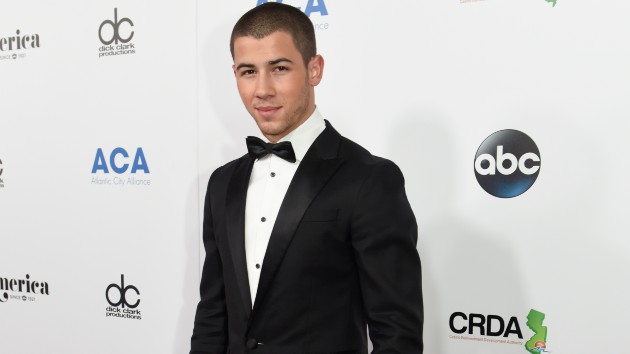
In celebration of his 29th birthday on Thursday, Nick Jonas decided to give his fans a gift.
The singer and his tequila company Villa One are giving away a signed, custom Gibson Villa One guitar.
“Being on the road and performing with my brothers again has been amazing,” Nick tells People. “I have been feeling really grateful, so for my birthday, I wanted to do something special for my fans and give them the chance to win an item that represents a couple of things that bring me joy — music and tequila.”
In order to enter, follow Villa One on Instagram and click the link in their bio. The winner will be announced on Tuesday, September 21.
Meanwhile, the Jonas Brothers are set to release their new song, “Who’s in Your Head,” on Friday.