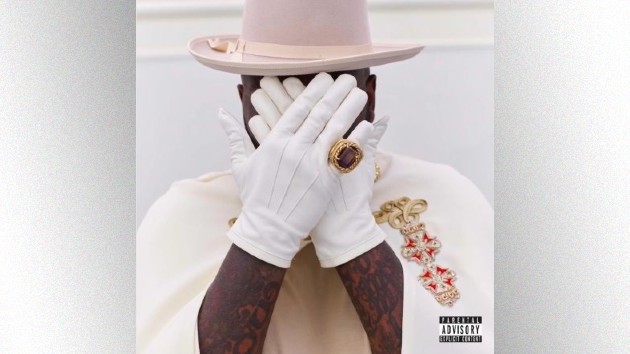
Drake to help curate music for ESPN’s Monday Night Football games

Mike Marsland/WireImage

Drake has a brand-new seasonal gig with sports giant ESPN.  Fresh off the success of his new album, Certified Lover Boy, the rapper will now work closely with the sports network throughout the NFL season.

Variety reports that Drizzy will help curate the playlist fans will hear during certain Monday Night Football games, selecting music that “encapsulates both the energy and mood” of the stadium.  He will chose music from his catalogue as well as songs from artists he admires or that have influenced his craft.

Drake’s picks will play during promo spots, pre-game shows and live telecasts, with his first batch slated to fire this week.

ESPN’s vice president of sports marketing, Emeka Ofodile, said in a statement, “Now we are here…the kickoff of the football season. And who better to curate music for Monday Night Football than Drake, who sits firmly at the intersection of music and sports…The music curator role has been a big hit with our fans with Diplo and DJ Khaled in previous years….and this season, we will be living inside the moment with Drake as our NFL on ESPN soundtrack.”

Drake is a major sports fan and is the official ambassador of his hometown NBA team, the Toronto Raptors.

Copyright © 2021, ABC Audio. All rights reserved.

Abortion rights take center stage in California’s recall election after Texas’ historic ban

slobo/iStock

(NEW YORK) — Reproductive rights are taking center stage in California’s recall election, in a bid to nationalize the stakes of next week’s special election.

Last week, Texas passed the strictest anti-abortion legislation in the nation, effectively nulling Roe v. Wade. The law blocks abortions if a fetal heartbeat can be detected, which can happen as early as six weeks into a pregnancy. It also empowers whistleblowers to report and sue anyone aiding an abortion, including doctors and Uber drivers who may have no knowledge of the situation.

Much of the discourse from candidates over the course of this campaign cycle has focused on COVID-19, homelessness and climate change. Though Republican challengers have offered dramatically different approaches to handling these crises, their responses haven’t energized voters as much as Democrats had hoped.

Now, following Texas’ abortion ban, Democrats are turning their focus to the issue, sending a stark warning to voters: California could be next if Gov. Gavin Newsom loses.

“The fight that’s going on nationally, has come to California,” Massachusetts Sen. Elizabeth Warren said in an exclusive interview with ABC News’ Zohreen Shah during a campaign stop with Newsom. “That’s why this is the moment to vote no on the recall.”

Newsom added, “Imagine the judges a Republican governor will appoint. Imagine the ability to use the line item veto to cut expansions of reproductive rights and health care for women. Imagine a governor from the state of California joining Republican governors on amicus brief supporting overturning Roe v. Wade or using the bully pulpit nationally to advance that cause I think it could be profoundly consequential.”

A reality check on California politics might prove otherwise, though. California has some of the strongest abortion protections in the nation, so if Newsom were to be recalled, his successor would face a variety of obstacles trying to enact a major consequential anti-abortion legislation. Notably, the legislation would have to go up against a heavy Democratic majority in the state legislature and the governor would only have until the end of the term in 2022 to do it.

However, that has not stopped some Republican candidates from taking stances about stripping funding from health services that provide abortions and trying to overturn Roe v. Wade.

During an appearance on CNN’s New Day this week, former Olympian and TV personality Caitlyn Jenner said she supports Texas’ decision because she believes states should have the ability to make their own laws — but she still thinks women should have the right to choose whether or not to give birth.

As it relates to California, Jenner said, “I don’t see any changes in our laws in California in the future.”

Others, aware of California’s political landscape, are calling out Newsom’s alleged strategy of using the issue of abortion to vilify his Republican opponents.

“It’s not that big of an issue in California because California, you know, has constitutional protection,” businessman John Cox told ABC News. “So the politicians are using it. Mr. Newsom is using it to scare people right now.”

Some Republicans, like former San Diego Mayor Kevin Faulconer, have complicated Newsom’s alleged efforts to try to paint his Republican challengers as anti-abortion. Faulconer told ABC News, “I’ve been pro-choice … I’ve always been and I will continue to be that way.”

While the effectiveness of Newsom’s strategy will play out at the ballot box on Sept. 14, one thing is for certain: The fight for access to reproductive rights is far from over. Each party appears determined to use the controversial issue to energize their base as the 2022 midterms quickly approach.

Copyright © 2021, ABC Audio. All rights reserved.

Twenty years after 9/11 attacks, just half call US more secure: POLL

Charles Sagad/iStock

(NEW YORK) — Just 49% of Americans see the United States as safer from terrorism than it was before the terrorist attacks of Sept. 11, 2001, down from 64% a decade ago, according to a new ABC News/Washington Post poll.

Forty-one percent instead say the United States has become less safe since 9/11, reflecting both renewed partisan divisions and the tumultuous withdrawal of American forces from Afghanistan.

A vast 86% in this poll, produced for ABC News by Langer Research Associates, also say the events of Sept. 11 had a lasting effect on the United States. But underscoring the public’s sour mood on this issue, 46%, a new high, say it’s been a change for the worse. That easily exceeds the 33% who see a change for the better, half as many as said so in spring 2002.

See PDF for full results, charts, and tables.

Shifts

Views of the country’s security from terrorism have shifted sharply across the years, given both international developments and partisan U.S. politics. Confidence peaked in 2003 and 2004, fell steeply in 2005 after the London transit bombings, held especially high among Republicans during the Bush administration, plummeted among Republicans two years later under the Obama administration, then rose sharply across groups after the killing of Osama bin Laden in 2011.

Ten years later, the latest decline may reflect multiple factors, including pessimism after the fall of Afghanistan and Republican-led dissatisfaction with the Biden administration.

Specifically, compared with 2011, the sense that the country is safer from terrorism now than it was before 9/11 is down 28 percentage points among Republicans, to 41%, compared with a slight 9-point decrease among Democrats, to 57%. It’s down 12 points among independents, to 52%.

The see-saws have been dramatic:

These patterns are mirrored in terms of political ideology, with 59% of moderates and 55% of liberals currently seeing improved safety, versus just 39% of conservatives.

Just 16% of Americans overall say the country is “much” safer from terrorism, again near all-time lows. An additional 33% of Americans call it safer, but just somewhat so. Those who see the country as less safe divide evenly, 21% somewhat less safe, 20% much less. There’s another partisan split here, with 36% of Republicans saying the country is much less safe from terrorism than before 9/11, versus 15% of independents and 11% of Democrats.

Another result shows that 9/11 isn’t unique in its perceived impact. About as many Americans, 82%, say the coronavirus pandemic will change the country in a lasting way as say this about 9/11. And, also similar to current views on 9/11, 50% call it a change for the worse.

Partisan differences narrow when considering the lasting effects of the 9/11 attacks. Thirty-one to 36% of Republicans, Democrats and independents alike say the country has changed for the better, while 43% to 49% say it’s changed for the worse.

But these gaps widen by ideology, with liberals most likely to say the country has changed for the worse, 59%, versus 44% of moderates and 45% of conservatives.

Beyond partisan and ideological differences, 57% of older Americans say the country is less safe from terrorism post 9/11, versus 37% of those younger than 65. Men are more likely than women to say the country has changed for the worse, 53% versus 40%, as are college graduates compared with those without a degree, 55% to 41%.

Methodology

This ABC News/Washington Post poll was conducted by landline and cellular telephone Aug. 29-Sept. 1, 2021, in English and Spanish, among a random national sample of 1,006 adults. Results have a margin of sampling error of 3.5 percentage points, including the design effect. Partisan divisions are 30-24-36%, Democrats-Republicans-independents.

The survey was produced for ABC News by Langer Research Associates with sampling and data collection by Abt Associates of Rockville, Maryland. See details on the survey’s methodology here.

Copyright © 2021, ABC Audio. All rights reserved.

Women speak out to break eating disorder stereotypes amid pandemic surge

NSA Digital Archive/iStock

(NEW YORK) — When plus-sized supermodel Tess Holliday opened up this spring about her struggle with anorexia, she also spoke about the backlash she received, saying, “I understand that people look at me and I don’t fit what we have seen presented as the diagnosis for anorexia.”

“I’ve had a lot of messages from folks that are anorexic that are livid and angry because they feel like I’m lying,” Holliday also said.

The negative comments slung Holliday’s way hit close to home for Susie Sebastian, 30, who says she too does not fit the typical stereotype of anorexia.

“The reactions kind of proved my biggest fear in advocating for myself and for the eating disorder community,” Sebastian, of Parkville, Maryland, told Good Morning America. “A big fear I have is that if I speak out about [my eating disorder], people will think this is not real.”

Sebastian’s reaction was also one that rang true for Aja Pryor, 29, of Florence, New Jersey.

“I’ve had the same experience every single time where I was just kind of looked at like there’s really nothing wrong with you because you don’t fit the type for having an eating disorder,” said Pryor. “Because I’m not skinny I’m deemed as atypical, and that’s actually made it harder to recover.”

“It’s made it actually extremely hard to recover, and my story is not uncommon,” she said.

Nearly 30 million Americans will have an eating disorder in their lifetime, according to the National Association of Anorexia Nervosa and Associated Disorders (NADA).

Many of them are medically overweight, or fat as society would call them, yet their weight loss is encouraged, even as it’s caused by the eating disorder.

While less than 6% of people with eating disorders are medically diagnosed as “underweight,” those people are twice as likely to be diagnosed with an eating disorder than people in larger bodies, according to NADA.

Pryor said she started showing signs of an eating disorder at age 12, but did not receive treatment for it for years because of her size.

When she did finally enter an inpatient treatment center, after losing weight and suffering medically because of it, Pryor said she was congratulated on her weight loss.

“Before you go into residential treatment, you have to get medical work done, and the doctor that I saw congratulated me on my weight loss,” she said, adding that at other points in her life when she also lost weight and suffered symptoms like hair loss and low blood pressure, people, including doctors, would tell her, “You’ve lost so much weight. I’m so proud of you.”

Pryor said the cultural stereotypes around eating disorders have even affected the way she thought about herself and her own recovery.

Describing her reaction when she was told she would need residential treatment, Pryor said, “I was shocked because in my mind, I was still over a certain number of pounds. I thought I’m still in a larger body, I’m not skinny by any means, so it just was weird to me.”

Pryor and Sebastian both said they are speaking out now at a time when they know many more people are struggling with eating disorders, the most common of which are anorexia nervosa, bulimia nervosa and binge-eating disorder.

The coronavirus pandemic has brought on a mental health crisis in the U.S., of which eating disorders are a major part.

Throughout the pandemic, the National Eating Disorder Association (NEDA) has seen a spike of more than 70% in the number of calls and online chat inquiries to its hotline compared to the same time period last year.

The Emily Program, a national network of eating disorder treatment centers, has seen inquiries both online and by phone “fly off the charts” during the pandemic, Jillian Lampert, Ph.D., Emily Program’s chief strategy officer, told GMA earlier this year.

Throughout the pandemic, eating disorders have remained second only to opioid overdose as the deadliest mental illness, with eating disorders responsible for one death every 52 minutes in the U.S., according to data shared by the NADA.

Sebastian said she has had to work hard to overcome the stigma of being overweight and not being able to focus on losing weight because she has an eating disorder.

“Still to this day, I have to remind myself, ‘You were diagnosed with an eating disorder,'” she said. “I know for me mentally that intentional weight loss is not a healthy goal for me, so it is definitely a hard balance to strike.”

Research shows that not only do people who are in larger bodies have eating disorders at high rates, they also suffer similar medical consequences as people who are considered underweight.

Patients with what’s classified as atypical anorexia nervosa are as likely as underweight patients to suffer from bradycardia, or slow heart rate, which can lead to other complications, according to researchers at the University of California San Francisco (UCSF).

Their study also found that patients with atypical anorexia nervosa may carry a heavier psychological burden than those who are underweight, with researchers attributed to “heightened preoccupations with food avoidance and more negative feelings about body shape and weight.”

Anorexia nervosa’s seriousness as a mental disorder shatters another common misconception about eating disorders that they are a lifestyle choice. The misconception is one that is particularly damaging to people who are in larger bodies.

“Society teaches us that if you’re not skinny, you’re bad and you need to lose weight,” said Pryor. “I go through periods still where I don’t think I qualify for an eating disorder just because of the way that I look.”

People who are struggling should be looked at through the lens of their symptoms, and not their body size, according to Samantha DeCaro, PsyD, director of clinical outreach and education at The Renfrew Center, an organization of residential and outpatient eating disorder treatment programs across the country.

“We do a lot of work trying to educate the public but also providers that you cannot look at someone and know what kind of eating disorder they have and you cannot look at someone and know the severity of the eating disorder,” she said. “For people in larger bodies, the eating disorder can get minimized and it can get missed entirely.”

Behaviors to look for in people with eating disorders include isolating, feeling depressed and anxious, eating alone, avoiding events where there is food, avoiding entire food groups, talking excessively about food, calories and weight, exercising even when tired or injured, using the bathroom after every meal or spending excessive time in the bathroom and weighing multiple times a day, according to DeCaro.

In addition to weight loss, physical symptoms for eating disorders can include thinning hair and swollen glands in the face, explained DeCaro.

“There are so many people who have the ability to catch an eating disorder — school counselors, teachers, parents, caregivers, doctors, nurses, dentists, therapists and dietitians,” she said. “We need to focus on the signs and symptoms of eating disorders outside of size and appearance.”

The misdiagnoses and stigma that can accompany people with eating disorders can lead them to not seek medical help, which can delay critical treatment, according to DeCaro.

“People can recover at any stage of an eating disorder and any age, but the longer an eating disorder goes on, the more difficult it can be to treat,” she said. “There are many folks in larger bodies who are just avoiding seeking out medical and mental health treatment because of the fear they will continue to be prescribed that treatment plan.”

If you or someone you know is battling an eating disorder, contact the National Eating Disorders Association (NEDA) at 1-800-931-2237 or NationalEatingDisorders.org.

Copyright © 2021, ABC Audio. All rights reserved.

Selena Gomez owned up to her self-tanning fail at the 2018 Met Gala

Neilson Barnard/Getty Images

Selena Gomez hilariously reacted to her infamous Met Gala look from three years ago, when she was a little too enthusiastic with the self-tanner.

Speaking to Vogue, the “Lose You to Love Me” singer reflected on her 2018 look, calling it “a funny story.”

The actress, who was 26 at the time, was gearing up for the Met’s 2018 theme, “Heavenly Bodies: Fashion and the Catholic Imagination,” so she wanted to embody a warm, glowing vibe.

“I was getting ready and we wanted to add some color, so I put on some of this tanning lotion, and it looked really beautiful and very even,” she dished. “As the evening kept going on, it was getting a little darker and darker and I didn’t notice it.”

Gomez admits she was blissfully unaware of her color-changing skin until she arrived at her seat — which meant she had already run the press gamut, rubbed elbows with fellow celebrities and walked the red carpet.

“I’m walking, trying to look all beautiful, and I look at a photo of myself when I sit down and I’m completely orange,” the Only Murders in the Building star lamented. “I was like, ‘This is gonna be terrible because I’m gonna get eaten alive about this.'”

To avoid becoming late night fodder, Gomez decided to get in on the joke and roped in her security detail to help turn her faux pas into a meme.

“So, I had my security take a video of me because my first reaction was just to get the hell out of there,” she laughed. “And so, I’m running to my car. I’m literally just hauling a** to get to my car and then I put it online. I was saying ‘This is my reaction after seeing my Met Gala photos.'”

Copyright © 2021, ABC Audio. All rights reserved.

Kylie Jenner confirms she and Travis Scott are expecting baby no. 2

Tommaso Boddi/Getty Images for Netflix

After weeks of reports and rumors, Kylie Jenner confirmed late Tuesday that she and her partner, Travis Scott, are adding another bundle of joy to their growing family.

Taking to Instagram, the beauty mogul shared an adorable video announcing her pregnancy — which starts with her rushing to Scott to reveal the good news.  This will be the second child for Kylie, 24, and Scott, 30.

Other highlights from the video reel include their three-year-old daughter, Stormi, accompanying her parents to a checkup appointment and the little one telling her grandma, Kris Jenner, the wonderful news.

“You’re pregnant?,” the momager exclaimed while flipping through photos of the ultrasound, “This is one of the happiest days of my life!”

Stormi appears to be ecstatic that she’s about to become a big sister, with the video also showing the toddler dancing around and excitedly listening to her soon-to-be sibling’s heartbeat.

The video ends with Stormi wrapping her arms around Kylie and planting a sweet kiss on her mother’s stomach before sweetly telling the camera, “Baby.”

Kylie’s family expressed their joy in the comment section, with sister Kourtney Kardashian gushing, “Crying this is so beautiful my blessed angel sister.”

“Crying all over again [heart eyes, red heart and praying hands emojis] what a special and amazing Blessing and gift God has given you,” Kris commented.

Also taking to Instagram to congratulate their sibling well was Kim and Khloe Kardashian as well as Kendall Jenner.  

It is unknown how far along Kylie is into her pregnancy and when the baby is due.


A post shared by Kylie ?? (@kyliejenner)

Copyright © 2021, ABC Audio. All rights reserved.

‘Dancing with the Stars’ 2021: Season 30’s celebrity cast includes Mel C, Olivia Jade and more

ABC

Back to the ballroom! Dancing with the Stars returns for season 30 on September 20, and ABC’s Good Morning America just revealed which celebrities will compete for the coveted Mirror Ball trophy.

Celebs taking part in the series’ milestone season include Olivia Jade — the social media influencer daughter of Massimo Giannulli and Lori Loughlin, who were both jailed as part of the Varsity Blues college cheating scandal — as well as Spice Girl Melanie ‘Mel C’ ChisholmReal Housewives of Atlanta star Kenya Moore, country singer Jimmie Allen and talk show host Amanda Kloots.

Previously announced additions to the cast include Olympian Suni Lee, the Team USA gymnast fresh off winning gold in Tokyo, and YouTuber JoJo Siwa, who will make history as the first celeb to be paired with a pro of the same sex.

The cast also includes Bling Empire star Christine Chiu, Emmy-nominated The Office actress Melora Hardin, The Karate Kid and Cobra Kai actor Martin Kove, professional wrestler Mike “The Miz” Mizanin, Peloton cycling director Cody RigsbyBeverly Hills 90210 actor Brian Austin Green, and NBA star Iman Shumpert.

America will find out which pros the celebs have been paired with for their DWTS journey during the season 30 premiere.

The judging panel for this landmark season consists of Len GoodmanCarrie Ann InabaBruno Tonioli and former DWTS pro Derek HoughTyra Banks returns as host and executive producer, having joined the show last season as the first Black female host, and solo host, in franchise history.

Here’s the full celebrity cast: 

Country singer Jimmie Allen
Spice Girl Melanie
Christine Chiu — Bling Empire
Brian Austin Green — Beverly Hills, 90210
Melora Hardin — The Office
Social media star Olivia Jade
Matt James — The Bachelor
Amanda Kloots — The Talk
Martin Kove — Cobra Kai
Gold medal Olympian Suni Lee
WWE Superstar Mike “The Miz” Mizanin
Kenya Moore — The Real Housewives of Atlanta
Peloton star instructor Cody Rigsby
NBA star Iman Shumpert
Pop star JoJo Siwa

Professional dancers:

Brandon Armstrong
Lindsay Arnold
Alan Bersten
Sharna Burgess
Cheryl Burke
Witney Carson
Artem Chigvintsev
Val Chmerkovskiy
Sasha Farber
Jenna Johnson
Daniella Karagach
Pasha Pashkov
Gleb Savchenko
Emma Slater
Britt Stewart

Dancing with the Stars kicks off season 30 on Monday, Sept. 20 at 8 p.m. on ABC.


Copyright © 2021, ABC Audio. All rights reserved.

Steve from ‘Blue’s Clues’ leaves inspiring message to show’s grown-up fans

SGranitz/WireImage

Blue’s Clues turned 25 on Tuesday and, to celebrate, Steve Burns returned to share a sweet message to the show’s original fans, who are now full grown.

Steve donned the familiar green-striped polo to speak directly to those who once watched him find clues with the playful puppy named Blue.

“Hi, you got a second?,” he started the sentimental clip that was shared on Nick Jr.’s Twitter. “You remember how when we were younger we used to run around and hang out with Blue and find clues and talk to Mr. Salt and freak out about the mail and do all the fun stuff?”

“And then one day, I was like, ‘Oh hey, guess what? Big news, I’m leaving’… And we didn’t see each other for a really long time,” Steve continued. “Can we just talk about that?”

Burns left the series in 2002 and handed the reins over to his “brother,” Joe, played by Donovan Patton. Steve explained how thankful he is to have gone to college because it allowed him to achieve “many of the things that I wanted to do!”

He then told his fans how proud he is of their growth.

“Look at all you have done and all you have accomplished,” he praised. “We started out with clues and now it’s what? Student loans, and jobs, and families…and some of that has been kind of hard.”

“I really couldn’t have done all of that without your help,” Steve declared, noting that he’s still inspired by his time on the Nick Jr. show. “I guess I just wanted to say that after all these years I never forgot you… Ever. And I’m super glad we’re still friends.”

The video has amassed over 16.6 million views and over one million likes as of Wednesday morning.

Copyright © 2021, ABC Audio. All rights reserved.

Virginia removes 12-ton Robert E. Lee statue from Richmond’s Monument Avenue

Getty Images/Bill Tompkins

(RICHMOND, Va.) — A giant statue of Confederate Gen. Robert E. Lee was removed in Richmond, Virginia, Wednesday, more than a year after the order from Virginia Gov. Ralph Northam.

The 12-ton, six-story monument on Monument Avenue, erected in the state capital in 1890, was deconstructed nearly one week after the Supreme Court of Virginia cleared the way for the removal following several legal battles.

Northam ordered the removal of the state-owned statue in June 2020, amid nationwide protests against symbols of racism and oppression that erupted following the murder of George Floyd in Minneapolis while in police custody.

“This is an important step in showing who we are and what we value as a Commonwealth,” Northam said in a statement.

Last week, the Supreme Court of Virginia denied or dissolved injunctive relief sought in two lawsuits challenging the statue’s removal — one filed by a descendant of the former owners of the land where the monument stands, the other by several owners and a trustee of property in the area’s historic district — allowing the state to move forward with its plans.

The removal is “extremely complex,” the state’s Department of General Services said, requiring “coordination with multiple entities to ensure the safety of everyone involved.” The removal process began Tuesday evening with crews installing protective fencing on the streets near the monument.

On Thursday, crews will remove plaques from the base of the monument. The 40-foot granite pedestal will remain for now, with its future still to be determined, the state said.

The statue itself will be held “in secure storage at a state-owned facility until a decision is made as to its disposition,” the state said.

This is the sixth and final Confederate statue to be removed from Monument Avenue.

“We are taking an important step this week to embrace the righteous cause and put the ‘Lost Cause’ behind us,” Richmond Mayor Levar Stoney said in a statement. “Richmond is no longer the capital of the Confederacy. We are a diverse, open and welcoming city, and our symbols need to reflect this reality.”

Last year, the busts of Lee and eight other Confederate leaders were removed from the Old House Chamber in the Virginia State Capitol building in Richmond. The Fairfax County School Board has also changed the name of the Robert E. Lee High School in Springfield to the John R. Lewis High School, in honor of the late Georgia congressman and civil rights leader.

A great-great-great-nephew of Lee has previously said that taking down Confederate symbols in public spaces is a “no brainer.”

“I see them as idolatries,” Rev. Robert Lee IV told ABC News last year. “They have been created into idols of white supremacy and racism.”

Over 160 Confederate symbols were renamed or removed from public spaces in 2020, according to the Southern Poverty Law Center.

Copyright © 2021, ABC Audio. All rights reserved.

France’s ‘trial of the century’ begins over Bataclan terror attacks that killed 130

Guillaume Louyot/iStock

(PARIS) — France’s long-awaited “trial of the century” began Wednesday in Paris as more than a dozen people tied to the November 2015 terror attacks — the deadliest in the country since World War II — face a panel of judges.

In a matter of hours, nine suicide bombers committed a series of attacks across Paris that killed 130 people and wounded over 400 more. The simultaneous attacks outside the Stade de France during a soccer match, on a number of Parisian cafés and restaurants and inside the Bataclan concert hall during a packed performance were later claimed by the Islamic State of Iraq and the Levant, or ISIL. At the Bataclan alone, 90 people were killed by terrorists with machine guns after being taken hostage.

Six years after the terror attacks of Nov. 13, 2015, the landmark trial opened Wednesday and will last about nine months. With 1,800 plaintiffs and 330 lawyers, the trial is taking place in front of a specially composed panel of professional judges, instead of a jury of peers.

A historic event and a logistical challenge for the Paris courts, the trial is extraordinary in more ways than one.

For the occasion, the French government spent $9 million on a courtroom specially built in the former courthouse of Paris. The work was completed this summer, making it the largest criminal courtroom ever built in France, able to accommodate up to 550 people.

“All parties wanted the attacks that took place in the heart of Paris to be judged in a unique place, in the heart of Paris,” the French Ministry of Justice said in a statement.

Twenty defendants are being tried, including 14 who will appear before the court. Salah Abdeslam, the only one directly involved in the planning who’s still alive, is among those who will be tried. Of the nine terrorists involved in the attack itself, seven of those died during the attacks and another two were killed in a police raid five days later.

Six defendants will be tried in absentia, including five ISIS officials presumed dead in the Iraqi-Syrian zone.

The witness list is up to par with this historic moment, with a number of high-profile witnesses set to testify, including former French President Francois Hollande — who was inside the stadium when three suicide bombers blew themselves up outside — and a number of his ministers, and the former Paris prosecutor, Francois Molins. Several convicted terrorists will testify via videoconference.

Footage of the trial itself won’t be available for years, as hearings will be filmed only for posterity by the courts themselves. Like the trials of the Charlie Hebdo and Hyper Cacher attacks, which took place in January 2015, the archival video will become available to the public and the media when a final judgment has been made and the full course of justice has taken place.

Unlike in the United States, trials are not usually filmed. This is the 13th trial filmed in France since 1985, when the method was authorized by law for historic trials.

The defendants face sentences ranging from six years in prison to life imprisonment. The main defendant, Abdeslam, is appearing for organized murder in connection with a terrorist enterprise and could be sentenced to the life imprisonment. This is also the case for 10 of the other defendants who are on trial for complicity in the murders. France does not have the death penalty.

The verdict is expected at the end of May 2022.

Copyright © 2021, ABC Audio. All rights reserved.