Chelsea Handler is “in love” and she wants everyone to know.
“Just sitting here in Mallorca thinking about how grateful I am to have so many people that I love in my life, to live the life I do and to be going on tour doing what I love,” the 46-year-old comedian captioned a photo of herself on Instagram, adding “And that I’m finally in love, with the best kind of guy there is.”
“There is hope for everyone! That kind of stuff,” the post concluded.
So who’s the lucky guy? Chelsea didn’t say, but a source tells the New York Post that it’s fellow comedian Jo Koy.
Koy, 50, is featured in several of Handler’s Instagram Stories, razzing her about her appearance.
“@jokoy this is my life now. Being called out all day long,” Handler captioned the series of videos.
Uma Thurman is protesting Texas’ restrictive new anti-abortion law by opening up for the first time about the abortion she obtained when she was a teenager.
In a Washington Postop-ed, the actress said the legislation fills her “with great sadness, and something akin to horror.”
“I am sharing my own experience,” Thurman, 51, continued, saying it was her “responsibility” to speak out and “stand up in their shoes.”
“In my late teens, I was accidentally impregnated by a much older man,” she disclosed, adding that she originally wanted to keep the pregnancy until her parents “warned me how difficult it would be to raise a baby as a teen on my own.”
“My childish fantasy of motherhood was soundly corrected as I weighed answers to their very precise questions. I was just starting out in my career and didn’t have the means to provide a stable home, even for myself,” Thurman admitted. “We decided as a family that I couldn’t go through with the pregnancy, and agreed that termination was the right choice. My heart was broken nonetheless.”
“There is so much pain in this story. It has been my darkest secret until now,” Thurman closed. “The abortion I had as a teenager was the hardest decision of my life, one that caused me anguish then and that saddens me even now, but it was the path to the life full of joy and love that I have experienced. Choosing not to keep that early pregnancy allowed me to grow up and become the mother I wanted and needed to be.”
Thurman is the mother of three children: Luna, nine, Levon, 19, and Maya, 23. She shares Maya and Levon with ex-husband Ethan Hawke and Luna with former fiancé Arpad Busson.
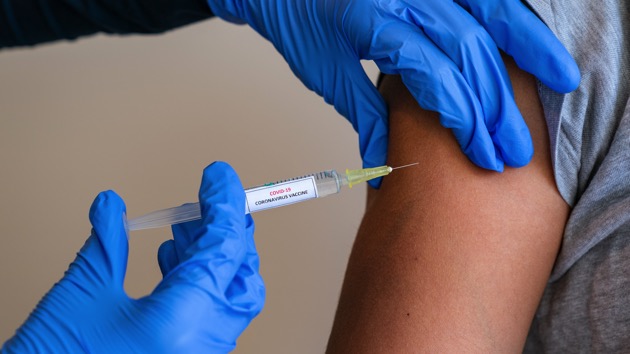
(NEW YORK) — Pfizer just released its first safety data about COVID-19 vaccines for children ages 5 to 11, reassuring parents that a safe and effective vaccine soon could be available for those younger than 12.
A trial of 2,268 children showed that a smaller dose of Pfizer vaccine — one-third the amount given to adults and adolescents — provided robust and adequate immune responses among those ages 5 to 11.
If the FDA agrees with Pfizer’s assessment, finally those younger than 12 can get vaccinated — in this case, if authorized, with the smaller dosage.
But that smaller dosage has led some parents to question the vaccine’s effectiveness compared with a larger dose.
“You’ve got to have a cutoff point and do something that’s logistically feasible,” Dr. Anthony Fauci said Monday, speaking on CNN. “Parents should not be confused or concerned about that.”
Other experts have stressed that size isn’t everything. Because the lower dose still mounts a strong and sufficient antibody response to COVID-19, even an 11-year-old who’s taller or weighs more than a kid over 12 should be protected.
And experts involved in the Pfizer trial strongly recommend adhering to available dosage data for 5-to-11-year-olds because clinical research shows doing so is safe and effective — a different dose would just be an educated guess.
“This is clearly an important — very important — first step,” said Dr. Evan Anderson, a professor of pediatrics and medicine at Emory University School of Medicine and one of the principal investigators of the Pfizer trial for children.
At this point in the pandemic, more than 5 million American children — most not eligible for vaccination — have tested positive for COVID-19. Children make up 22.2% of the U.S. population but accounted for almost 30% of new COVID-19 cases in a single week, based on early September data compiled by the American Academy of Pediatrics.
Prior clinical trials in adults and teens sought to identify a rough measure of vaccine efficacy, but because scientists already know vaccines are safe and effective, trials in younger children worked differently. Instead, this latest clinical trial focused on assessing children’s immune response based on analysis of their blood. These so-called immuno-bridging studies provide important information about the vaccine’s ability to mount immune responses for this group of children, none of whom could be vaccinated.
The Pfizer data showed that the smaller dose in younger children generated antibody levels comparable to 16-to-25 year-olds who received the standard 30-microgram doses.
“Despite the smaller dose, in the smaller children, the antibody response is as vigorous as what we find in older age groups. We’re seeing a robust antibody response meeting [a] protective threshold,” said Dr. Frank Esper, an infectious disease specialist at Cleveland Clinic Children’s.
In fact, researchers discovered that when 5-to-11-year-old children in the trial received the 30-microgram dose, they had more side effects. With the lower dosage, side effects mirrored those seen in teens and adults — pain at the injection site, headaches and fatigue.
Regardless of weight and size, children still should receive vaccine doses according to recommendations based on data, experts agreed, arguing it is better to stick to evidence rather than make an educated guess outside parameters of trials.
Dr. Robert Frenck, director of the Gamble Vaccine Research Center at Cincinnati Children’s and a principal investigator for the Pfizer trial, said the vaccine should not be given off-label with higher-than-recommended doses, citing the American Academy of Pediatrics and the Pediatric Infectious Diseases Society.
“I would stick with what the recommendation is for under 12 years of age,” he said. “I think it will be safe. I think it will be effective.”
Seventy Hollywood celebrities, including Anne Hathaway, Ciara and Debbie Allen, have signed an open letter to world leaders, urging them to help stymie the spread of COVID-19.
Other signatories include Jordana Brewster, Connie Britton, Yvette Nicole Brown, Peter Dinklage, Annie Lennox, Joel McHale, Idina Menzel, Debra Messing, Alyssa Milano, Tamera Mowry-Housley, Edward James Olmos and Michelle Williams.
The letter, published by model Iman‘s global nonprofit CARE on Tuesday, calls on global leaders “to make 7 billion vaccine doses available before the end of 2021, and an additional 7 billion doses by mid-2022 to fully vaccinate 70% of the world by next summer.”
“To get this done,” suggests the letter, “the world community must also invest in last-mile delivery systems, public education and frontline health care workers to get vaccines from tarmacs into arms. Millions of doses could go to waste because low-income countries don’t have the support they need to get vaccines to vulnerable people.”
“We can save millions of lives — and trillions in further economic damage — by meeting this moment with the resources and political will needed to end COVID-19 for everyone, everywhere. Because none of us are safe until all of us are safe,” the letter concludes.
(NEW YORK) — In the early days of the pandemic, experts kept a close watch on the number of new cases — one of the key metrics signaling success or failure of public health measures. But with new variants leading to more frequent breakthrough infections, mild COVID-19 cases will likely still persist, even if every person in the country is fully vaccinated.
“Even before any vaccines were authorized … we knew that this was going to be an issue,” said Dr. Lynn Goldman, dean of the George Washington University’s Milken Institute of Public Health.
“No vaccine is 100% effective at preventing infection,” added Dr. Kimberly Fisher, professor of medicine at University of Massachusetts Chan Medical School.
Now, public health and infectious disease experts are shifting their metric of success.
With vaccines still highly protective against severe illness, experts said we should focus less on cases, and instead on how many people are being hospitalized or dying.
“I think in some ways, the strong data around vaccines out of the gate created this illusion of perfection, which never was the case,” said John Brownstein, Ph.D., an epidemiologist and chief innovation officer at Boston Children’s Hospital and a contributor to ABC News.
“The major goalposts should have always been the hospitalizations and deaths,” he said.
Many experts point to countries like Singapore as an example of living “with” the virus, rather than eradicating it completely. With more than 80% of the population fully vaccinated, the island nation is still seeing more than 1,000 cases on average per day, but very few deaths due to COVID-19.
Although there may be “increases in cases,” Brownstein said, “that is not resulting in real impact in hospitalizations and deaths. … That sort of divergence is super important.”
In the U.S., a peek into COVID-19 intensive care units around the country reveals an important and recurring theme: ICU cases and deaths are overwhelmingly among the unvaccinated. A study by the health department in North Carolina found unvaccinated individuals are 15 times more likely to die from COVID-19 than the vaccinated. Washington state’s King County, which includes Seattle, tracks the numbers daily with unvaccinated people being 42 times more likely to die over the past 30 days.
Emerging data from the post-COVID-19 vaccine era underscored vaccine success will not necessarily be measured in prevention of COVID-19, but overwhelming success at keeping people alive if they do.
“It makes sense to focus on rates of hospitalization and death for COVID-19 — both of which the vaccine is very effective at reducing,” said Kathleen Mazor, a professor of medicine at University of Massachusetts Chan Medical School.
Public health experts hope that by focusing on this new metric for success, the nation can start prioritizing what’s important and readjust to the “new normal.”
Meanwhile, the overarching message to the vaccine-eligible population is clear: The vaccine is not simply intended to stop you from getting COVID, it’s so you live to talk about it if you do.
(WASHINGTON) — The U.S. Food and Drug Administration is expected to greenlight Pfizer booster shots Wednesday for seniors and other high-risk Americans, a step that would pave the way for third doses to be offered as early as the end of the week.
The deliberation follows a recommendation last week by the FDA’s independent scientific advisers that, while protection from vaccination is strong, immunity probably wanes after six months and is important to replenish for certain high-risk groups.
The advisory panel, called the Vaccines and Related Biological Products Advisory Committee, said there wasn’t enough evidence yet to recommend every vaccinated adult get a third dose.
Instead, the panel recommended the extra shot for those 65 and older or at high risk of severe COVID-19. The panel also supported boosters for health care and other front-line workers, like teachers, who are at higher risk for occupational exposure.
The FDA’s vaccine chief, Dr. Peter Marks, framed the booster debate as one “based on complex data sets evolving in front of our eyes,” but with key information still incoming on how boosters will impact a wider age group, the panel ultimately indicated current data has yet to mature enough to recommend boosters for all.
“We need safety data for younger populations and we need to really know what the benefit is,” Dr. Jeremy Faust, an emergency physician at Brigham and Women’s Hospital and an instructor at Harvard Medical School, told ABC News Friday. “So far we’ve got some reasonable data for older people, but I really think that there are too many questions on the younger populations.”
Currently, only immunocompromised Americans are eligible for a third dose of the Pfizer or Moderna vaccine. An estimated 2 million people have received a third mRNA based vaccine from the two manufacturers. Moderna and Johnson & Johnson have also asked the government to agree to booster shots for a larger population, and those requests are pending FDA review. FDA decisions are expected within the coming weeks.
If and when the career scientists at the FDA decide to sign off on boosters, the Pfizer vaccine can be labeled and administered as a three-dose vaccine for certain groups.
But before delivering the shots, the Centers for Disease Control and Prevention will need to issue official recommendations.
A separate independent panel that advises the CDC is set to meet Wednesday for presentations and then again on Thursday to discuss the data in more granular detail before a vote.
CDC Director Rochelle Walensky is then expected to weigh in by the end of the week with an official recommendation for who exactly should get the shots.
Among the recommendations by the CDC will be a decision on who qualifies as “high risk” and which “front-line” workers are at highest risk of exposure.
Experts say it’s possible the FDA will endorse the idea of booster shots for people under 65 without conditions that put them at higher risk of severe illness as new data comes in.
“The story is not over because more and more data is coming in,” White House chief medical adviser Dr. Anthony Fauci told ABC’s Martha Raddatz on This Week Sunday.
“I think we really do need to test the water with one foot as we move forward,” Dr. Paul Offit, an FDA advisory panel member and director of the Vaccine Education Center at Children’s Hospital of Philadelphia, told ABC News following the panel’s vote last week.
“By the end of this week I think we’ll learn more about exactly what the recommendations are,” he said.
Lil Nas X‘s hit song “Industry Baby” as we know it features Jack Harlow, but in an alternate universe it could have sounded a bit different.
Lil Nas, who released his debut studio album Montero last week, hosted a Q&A session on Twitter on Tuesday and revealed that he attempted to get his idol on the track.
When a fan on Twitter asked, “Which song did u send Nicki Minaj,” the 22-year-old responded, “industry baby.” No further explanation was given on why a Lil Nas X and Nicki collaboration failed to come to fruition.
Although the song with Nicki didn’t happen, Montero is full of collaborations with other talented artists like Megan Thee Stallion, Miley Cyrus, Doja Cat and Elton John.
During the Q&A, the “Old Town Road” crooner also dished that he also wanted to team up with Lady Gaga on a record for his album “but [he] never finished writing to it & sending it to her.”
While Lil Nas clearly has no problem getting an assist from other artists on his songs, he surprisingly hasn’t done any features himself. Something he offers a simple explanation for when a fan inquired about it.
“[I] havent found the right song yet,” he replied. “i want it to feel like a moment.”
(WASHINGTON) — A relentless drought and wildfire season in America’s West and a tense standoff over federal leases for oil and gas drilling have been early tests for the Biden administration’s climate policy and Interior Secretary Deb Haaland, the first Native American to hold the job and first indigenous member of a White House Cabinet.
“I can’t speak for every tribe or even my tribe, but I can make sure that tribal leaders have a seat at the table,” Haaland said in an interview with ABC News Live Prime. “Certainly, in this time of climate change bearing down upon us, that indigenous knowledge about our natural world will be extremely valuable and important to all of us.”
“Indian tribes have been on this continent for millennia, for tens of thousands of years,” she added. “They know how to take care of the land … that’s knowledge that’s been passed down for generations and generations.”
Haaland, a former U.S. representative from New Mexico and one of the first two native women to serve in Congress, is leaning in on her experience as a member of the Laguna Pueblo tribe to confront the historic impacts of climate change on communities nationwide.
She leads the agency which manages more than 480 million acres of public lands and a government leasing program that has allowed private energy businesses to tap into valuable natural resources situated on federal property.
Early in his term, President Joe Biden ordered a moratorium of new leases — with an eye toward discontinuing the program altogether — in an effort to curb greenhouse gas emissions from fossil fuels. The move has made Haaland, who’s now conducting a formal review of the program, a target of criticism from the energy industry and Republican lawmakers from states dependent on oil and gas production.
“You said that if you had it your way, and I quote, you’d stop oil and gas leasing on public lands. As secretary, you will get to have it your way,” Sen. Steve Daines of Montana charged during Haaland’s confirmation hearing earlier this year. The Republican later voted against her nomination.
“It’s a pause on just new leases, not existing, valid leases,” Haaland responded, explaining the moratorium. Last month, a federal court ordered the Interior Department to resume the leasing program while legal challenges continue.
“It has the potential to cost jobs here in the United States, good-paying energy jobs,” Frank Macchiarola, an energy industry lobbyist at the American Petroleum Institute told ABC News. “It has the potential to increase costs for consumers.”
Most U.S. oil and gas production occurs on private land, according to the Congressional Research Service. Roughly 9% of American output came from federal lands in 2019, the agency said.
Haaland is also helping to lead the federal government’s response to historic drought and wildfires fueled by climate change.
Ninety percent of the American West is experiencing “severe” or “exceptional” drought, according to the U.S. Drought Monitor. The conditions have ravaged the agricultural industry in nearly a dozen states and forced several to enact mandatory water cutbacks for residents. California, Arizona and New Mexico have also been battling some of the largest and most destructive wildfires in years.
“Drought doesn’t just impact one community. It affects all of us, from farmers and ranchers to city dwellers and Indian tribes,” Haaland said on a visit to Denver in July. “We all have a role to use water wisely, manage our resources with every community in mind, work collaboratively and respect each other during this challenging time.”
The Interior Department has deployed millions of dollars in federal relief funds and sped recruitment of government firefighters. Last month, Haaland announced a pay raise for those on the front lines.
“We need to think about, you know, does that come down to management? Is that something that we need to reinvestigate how some of these forested lands are being managed? And is there a better way to prepare those forested lands for the next fire season?” said Brian Fuchs, a climatologist at the National Drought Mitigation Center, who hopes the worsening drought will lead to a greater review of how federal lands are managed and can best combat drought.
Haaland is also overseeing a multi-billion dollar renovation plan for the National Park System; a renewed campaign to improve access to the parks for communities of color; and steps to address longstanding protests by some tribal groups demanding greater control over federal parklands.
“You have to understand that for there to be any justice or repair on these lands, it has to go back to the roots. And for indigenous peoples on these lands — it goes back to land theft,” said Krystal Two Bulls, director of the Landback movement, which calls for all federal lands to be returned to their original tribes. “This entire so-called country was built on top of — stolen land by stolen people.”
Two Bulls and other Landback organizers argue that tribes are best suited to care for these lands given their deep history and knowledge of the natural world.
“Whoever’s currently in charge is not protecting these lands, indigenous peoples, that’s not what we’re about, we’re about that relationship to the land,” Two Bulls told ABC News. “Native peoples knew how to manage and work with the fire, as a natural element, we knew how to do that.”
Haaland has said she wants to use that knowledge in her tenure at the Interior Department and to make clear that “those voices are heard.”
“Well, we absolutely are listening,” she said.
During official travel, she regularly pays homage to her roots; she was known to wear traditional moccasins in the House and donned ceremonial tribal garb for her swearing in with Vice President Kamala Harris. She even addressed senators in the native language of the Laguna Pueblo during her confirmation hearing in the spring.
She also brings a legacy of service to her country; her father served as a Marine for three decades and her mother served in the Navy. Haaland said that she has always had a connection with the outdoors, and recalls spending time outside often with her father, who was an avid fisherman.
“I worked hard, and you know I followed a path, but I also stand on the shoulders of … so many tribal leaders who have come before me,” Haaland said. “And so I feel very confident that if it weren’t for those people that I wouldn’t have had that path to follow.”
Haaland was confirmed as secretary of the interior by a 51-40 vote in the Senate in March. Once sworn in, she took over the reins at an agency that less than two centuries earlier had a mission to “civilize or exterminate” indigenous people and led the oppressive relocation of Native Americans.
She says that history gave her no hesitation.
“This is our ancestral homeland, this is Native Americans’, this is our ancestral homeland. We’re not going anywhere,” Haaland said. “This is land we love and care about.”
(NEW YORK) — The United States has been facing a COVID-19 surge as the more contagious delta variant continues to spread.
More than 677,000 Americans have died from COVID-19 while over 4.7 million people have died from the disease worldwide, according to real-time data compiled by the Center for Systems Science and Engineering at Johns Hopkins University. The average number of daily deaths in the U.S. has risen about 20% in the last week, according to data from the CDC and the U.S. Department of Health and Human Services.
The U.S. is continuing to sink on the list of global vaccination rates, currently ranking No. 45, according to data compiled by the Financial Times. Just 64% of Americans ages 12 and up are fully vaccinated against COVID-19, according to data from the U.S. Centers for Disease Control and Prevention.
Here’s how the news is developing. All times Eastern:
Sep 22, 7:01 am
UK and South Korea agree to swap COVID-19 vaccine doses
The United Kingdom and South Korea have agreed to share COVID-19 vaccine doses to mutually support the rollout of shots in each nation.
The U.K. will send 1 million of the Pfizer-BioNTech vaccine doses to South Korea to enhance their vaccination program, with the first batch of shots expected to arrive in the coming weeks. South Korea will return the same volume by the end of the year, as the U.K. presses ahead with its vaccine rollout and booster shot program over the winter months, according to a press release from the U.K. Department of Health and Social Care.
The swapping initiative, similar to the arrangement between the U.K. and Australia, will help South Korea toward hitting its target of administering a second dose to 70% of its population by the end of October.
“The Republic of Korea is a strategic partner for the UK and the sharing of one million vaccines benefits both countries as we help build resistance against COVID-19 and save lives,” British Foreign Secretary Liz Truss said in a statement Tuesday.
The deal will have no impact on the U.K.’s ongoing vaccine rollout or booster shot program, nor will it effect the doses the country has already pledged to give to the global vaccine-sharing initiative COVAX. Almost 90% of people over the age of 16 in the U.K. are fully vaccinated against COVID-19, and Pfizer-BioNTech vaccine doses are not immediately required in the U.K. due to robust supply management, according to the U.K. Department of Health and Social Care.
Sep 22, 6:20 am
Brazil’s health minister tests positive for COVID-19 at UNGA
Brazilian Minister of Health Marcelo Queiroga said Tuesday that he has tested positive for COVID-19 while in New York City for the United Nations General Assembly.
Queiroga, who accompanied Brazilian President Jair Bolsonaro to the event, announced his diagnosis on Twitter and said he will quarantine.
Sep 22, 6:06 am
US to donate another 500 million vaccine doses abroad: White House
The Biden administration is ordering another 500 million doses of Pfizer’s COVID-19 vaccine to donate to countries around the globe, the White House said.
President Joe Biden is set to announce the commitment at a virtual COVID-19 summit on Wednesday, held amid the United Nations General Assembly.
Biden is also poised to call on world leaders, the nonprofit sector and private industry to commit to certain goals, including a 70% global vaccination rate by the end of 2022, during his remarks at the summit, a senior White House administration official told reporters Tuesday.
MORE: Millions of vaccine doses shipped globally, Biden announced, as NGOs call for more
Biden announced an initial 500-million-dose commitment in June. This second purchase, which the president had teased during his remarks to the U.N. General Assembly on Tuesday, would bring the administration’s total donated doses to 1.1 billion.
The new batch of doses will be purchased from Pfizer at a not-for-profit price, manufactured in the U.S. and begin shipping out in January 2022, the White House official said.
The U.S. has so far sent more than 160 million doses to 100 other countries, Biden said.
The latest announcement comes as the World Health Organization has criticized the U.S. for pushing booster doses while much of the world has yet to receive a single shot.
Sep 21, 11:12 pm
US Department of Education investigating Texas schools over mask mandate ban
In a letter to the Texas Education Agency, the U.S. Department of Education on Tuesday said it is beginning an investigation into Texas schools’ ban on mask mandates, and how that could potential be an infringement of students’ civil rights.
The investigation will focus on “whether, in light of this policy, students with disabilities who are at heightened risk for severe illness from COVID-19 are prevented from safely returning to in-person education, in violation of Federal law,” the letter states.
The Department of Education’s acting assistant secretary for civil rights, Suzanne Goldberg, laid out the process of the investigation in the letter, but also made clear that it could be resolved at any time if masks in schools are reinstated.
“OCR’s Case Processing Manual provides several ways for this investigation to be resolved, including an option to reach a voluntary resolution agreement prior to the completion of an investigation,” the letter reads. “If TEA expresses an interest in resolving the investigation in this way and OCR determines this form of resolution is appropriate based on the investigation, we will follow the steps set out in Section 302 of the Case Processing Manual.”
Sep 21, 3:35 pm
Texas, Georgia, Alabama account for about one-third of last week’s deaths
The U.S. daily death average has now climbed over 1,400 despite skewed reporting from the weekend, according to federal data.
About one-third of the nearly 9,500 virus-related deaths in the last week came from just three states: Texas, Georgia and Alabama.
About 90,000 Americans are currently hospitalized with COVID-19, compared to more than 100,000 patients about three weeks ago, according to federal data. But in the past month, at least 10 states — Alaska, Idaho, Kansas, Maine, North Carolina, Oregon, South Carolina, Tennessee, Washington and West Virginia — have reported record hospitalizations.
West Virginia is leading the nation in cases, followed by Alaska, Montana, Idaho, Alabama, Wyoming, Kentucky, North Dakota, Tennessee and Ohio, according to federal data.
(NEW YORK) — Here are the scores from Tuesday’s sports events:
MAJOR LEAGUE BASEBALL
INTERLEAGUE
Philadelphia 3, Baltimore 2
Boston 6, NY Mets 3
Minnesota 9, Chi Cubs 5
AMERICAN LEAGUE
Detroit 5, Chi White Sox 3
Cleveland 4, Kansas City 1
NY Yankees 7, Texas 1
Toronto 4, Tampa Bay 2
Seattle 5, Oakland 2
Houston 10, L.A. Angels 5
NATIONAL LEAGUE
Washington 7, Miami 1
Pittsburgh 6, Cincinnati 2
St. Louis 2, Milwaukee 1
LA Dodgers 5, Colorado 4
Atlanta 6, Arizona 1
San Francisco 6, San Diego 5