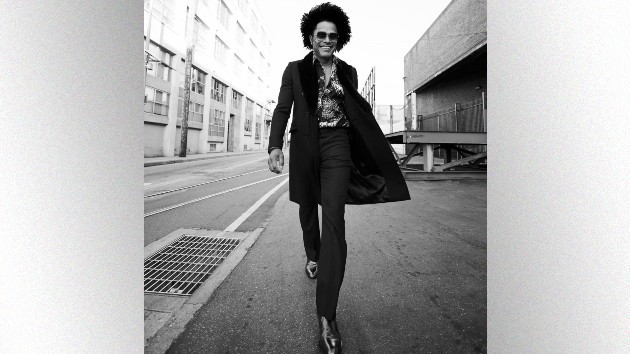
The three-time Grammy winner will receive the Legend award at the 2021 Soul Train Awards.
“It’s an honor to be presented with the Legend award by a community that’s been growing with me throughout my career,” Maxwell said in a statement Tuesday. “I’m so grateful to be sharing this moment with everyone and returning to the Apollo for an evening of excellence.”
Ashanti will also receive a special award.
“I’m honored to be recognized as this year’s Lady of Soul honoree,” said the “Rain on Me” singer, who will also receive a star on the Hollywood Walk of Fame in April 2022. “This is a full circle moment for me because I received the Aretha Franklin Entertainer of the Year Award at the Lady of Soul Awards in 2002. As we commemorate 50 years of Soul Train, I’m proud to be a part of this legacy and to return to the Apollo to celebrate.”
The Soul Train Awards nominations were also announced Tuesday, and H.E.R. leads with eight nods. The Oscar and Grammy winner is up for Best R&B/Soul Female Artist, Song of the Year, Album of the Year and Video of the Year, and she also scored two nominations for the Ashford and Simpson Songwriter’s Award, and two more nods for Best Collaboration.
Jazmine Sullivan and Chris Brown each received six nominations, followed by Wiz Kid and TEMS who received five nods each.
As previously announced, Martin stars Tisha Campbell and Tichina Arnold will return to host the show for the fourth year in a row.
The 2021 Soul Train Awards, which will be held at the iconic Apollo Theater in New York City, airs Sunday, November 28, at 8 p.m. ET/PT on BET and BET Her.
Lady Gaga throws herself 100% into everything she does, and her starring role in the upcoming movie House of Gucci is no exception. Gaga tells British Vogue that while portraying Patrizia Reggiani — who was convicted of putting a hit on her ex, Maurizio Gucci — she went so deep into the character that she had a hard time coming back out again.
“I lived as [Reggiani] for a year and a half,” Gaga tells the magazine. “And I spoke with an accent for nine months of that…[even] off-camera. I never broke. I stayed with her.”
“It was nearly impossible for me to speak in the accent as a blonde,” she continues. “I instantly had to dye my hair, and I started to live in a way whereby anything that I looked at, anything that I touched, I started to take notice of where and when I could see money.”
However, Gaga admits, “I had some psychological difficulty at one point towards the end of filming. I was either in my hotel room, living and speaking as Reggiani, or I was on set, living and speaking as her. I remember I went out into Italy one day…to take a walk…and I panicked. I thought I was on a movie set.”
But throughout the experience, Gaga says, “Every minute of every day, I thought of my ancestors in Italy and what they had to do so that I could have a better life.”
She adds, “I just wanted to make them proud, which is why I made the decision to make the performance about a real woman and not about the idea of a bad woman.”
House of Gucci opens November 24. Gaga’s cover story is on newsstands Friday.
Machine Gun Kelly just wrapped up his Tickets to My Downfall tour over the weekend, but he’s already reminiscing.
In a tweet Tuesday, Kelly writes, “The best tour I’ve ever had is over and now I’m an emotional wreck.”
The tour, which concluded on Halloween night in Connecticut, featured Kelly playing nearly the entirety of Tickets, his 2020 Travis Barker-produced album that found the former rapper’s music transitioning to a pop-punk sound.
With many shows selling out, it’s easy to see why MGK would declare the tour to be his best. However, the run wasn’t without a few bumps in the road. During his set at Chicago’s Riot Fest, Kelly dissed beloved metal institution Slipknot as “old weird dudes with masks,” which led to the crowds at a subsequent rock festival to boo him.
Kelly is set to return to the live stage later this year for a homecoming Cleveland concert on December 18. He’s also working on a new album called Born with Horns, which will again be produced by Barker.
the best tour ive ever had is over and now i’m an emotional wreck.
(HOUSTON) — It’s been almost 30 years since the Atlanta Braves won a World Series and, on Tuesday night, the drought officially ended — hammering the Houston Astros 7-0 in Game 6 at Minute Maid Park.
The start of the Braves’ season looked rough, with the team dropping their first four games and being plagued by injuries. There were also moments where the team didn’t spend a day over .500.
Despite the rocky start, the Braves turned the season around and the team, assisted by Jorge Soler and Freddie Freeman took home their first WS in 26 years.
Max Fried’s dominant pitching took over six innings, with Soler smashing his third homer against the Astros, with one resulting in a monster three-run shot.
Freeman and Dansby Swanson also homered, bringing the score to 7 – nothing.
And, while the Braves now head into a mighty victory parade — as they are the only team to bring TWO championship titles to the city of Atlanta — the Astros now have spring training to think about, which starts February 26.
To date, the Atlanta Falcons have yet to take home a Super Bowl trophy while the Hawks have yet to declare victory in the NBA championships — not to mention the college football scene.
(NEW YORK) — Here are the scores from Tuesday’s sports events:
MAJOR LEAGUE BASEBALL PLAYOFFS
Atlanta 7, Houston 0 (Atlanta wins series 4-2)
NATIONAL BASKETBALL ASSOCIATION
Milwaukee 117, Detroit 89
Miami 125, Dallas 110
Utah 119, Sacramento 113
Phoenix 112, New Orleans 100
LA Lakers 119, Houston 117
NATIONAL HOCKEY LEAGUE
Toronto 4, Vegas 0
Philadelphia 3, Arizona 0
Montreal 3, Detroit 0
Minnesota 5, Ottawa 4 (OT)
Winnipeg 4, Dallas 3 (SO)
Nashville 3, Calgary 2 (OT)
Vancouver 3, NY Rangers 2 (OT)
Anaheim 4, New Jersey 0
San Jose 5, Buffalo 2 (In progress)
MAJOR LEAGUE SOCCER
Vancouver 1, Los Angeles FC 1 (Tie)
(NEW YORK) — Republican Glenn Youngkin, a former private equity executive running his first campaign for political office, will be the next governor of Virginia, ABC News has projected.
ABC News has yet to project the winners in the races for lieutenant governor or attorney general.
Around 10 p.m., Democrat Terry McAuliffe spoke at his election night event, but did not concede defeat.
“We still got a lot of votes to count, we got about 18% of the vote out, so we’re gonna continue to count the votes because every single Virginian deserves to have their vote counted,” McAuliffe said.
Youngkin’s projected win over McAuliffe, a longtime fixture in Democratic politics and a former governor of the commonwealth, marks the first time a Republican has won the gubernatorial election since 2009 and the end to Democrats’ trifecta government control in Richmond.
It’s also a warning shot to Democrats one year out from the 2022 midterm elections.
The race, nationalized by the candidates themselves, was viewed by most as a referendum on President Joe Biden and a bellwether for next year’s contests, when Democrats have to defend their slim majorities in the House and Senate with history already against them.
Poll after poll showed Republican voters felt more enthusiastic about participating in this election than Democratic voters, and in the lead up to the election, Youngkin was able to turn the race into a dead heat.
He centered his closing message around parents’ rights to have a say in their child’s education, accusing McAuliffe of wanting to “put government in between parents and our children” after he said during the final debate that he doesn’t “think parents should be telling schools what to teach.”
Youngkin also pledged to raise the standard in schools, keep them open to in-person instruction amid the pandemic and ban critical race theory from being taught in K-12 schools, even though it’s not in the curriculum.
McAuliffe called Youngkin’s closing message around education divisive, saying, “He has pitted parents against parents. He’s got parents against teachers, and he’s bringing his personal culture wars into our classrooms.”
But according to exit polls, Youngkin’s message appears to have resonated with Virginia voters — about half say parents should have “a lot” of say in what their child’s school teaches — and now can serve as a blueprint for Republican candidates competing in bluer areas of the country.
Essentially running as the incumbent in the race, McAuliffe promised to build on Democrats’ accomplishments over the last eight years, beginning first under his administration. He made promises like increasing the minimum wage and teacher pay, making health care more affordable and requiring vaccinations for nurses, doctors and teachers.
But his campaign against Youngkin focused more on a Republican who was not on the ballot — Donald Trump — and painting a dire picture of what Virginia would look like under a Youngkin administration by asserting that Youngkin’s agenda is Trump’s agenda.
At every opportunity, McAuliffe and his allies tied Youngkin to the former president, who Virginia voters rejected by a 10-point margin in 2020. Trump endorsed Youngkin after he won the nomination and never campaigned with him directly, but that didn’t stop McAuliffe from linking them as one in the same.
The former president took partial credit for Youngkin’s projected victory, saying in a statement, “I would like to thank my BASE for coming out in force and voting for Glenn Youngkin. Without you, he would not have been close to winning.”
He mocked McAuliffe’s strategy of connecting Youngkin to Trump.
“It is looking like Terry McAuliffe’s campaign against a certain person named “Trump” has very much helped Glenn Youngkin. All McAuliffe did was talk Trump, Trump, Trump and he lost!” Trump said in a second statement. “I didn’t even have to go rally for Youngkin, because McAuliffe did it for me.”
McAuliffe’s apparent defeat Tuesday is the latest indication that trying to tap into voters’ disapproval of Trump may not be a winning strategy for Democrats — especially when they’re facing headwinds from an unpopular president and stalled agenda in Washington. According to exit polls, 54% of voters disapprove of Biden’s job performance, and nearly twice as many “strongly” disapprove of his work in office than strongly approve.
(NEW YORK) — Members of the United Auto Workers Union voted Tuesday against a tentative agreement that would have ended the ongoing strike of more than 10,000 John Deere workers.
The vote came up 55% against and 45% in favor, according to the UAW. This is the second time the union has rejected a tentative contract offer.
“The strike against John Deere and company will continue as we discuss next steps with the company,” the UAW said in a statement. “Pickets will continue and any updates will be provided through the local union.”
Earlier news of a tentative deal, which would have given approximately double the wage increase compared the previously rejected offer that kicked off the strike on Oct. 14, came as unique labor market conditions have resulted in workers wielding new power as the pandemic wanes.
An apparent shortage of workers accepting low-wage jobs has left many major companies reeling for staff and has been linked to the spate of strikes that have rocked the private sector in recent weeks. The labor crunch — combined with recent record-high rates of people quitting their jobs and record-high job openings, per Bureau of Labor Statistics data — have resulted in workers gaining new leverage as they seek to bargain for better pay or working conditions.
(NEW YORK) — Democrat Eric Adams is projected by ABC News to win the New York City mayoral race.
The win, while expected in a city with many more registered Democrats than Republicans, makes some history as Adams is only the second Black mayor in the history of the city.
Curtis Sliwa, who founded the Guardian Angels as a response to crime in the subway in the 1970s and was later a political commentator, was the Republican nominee.
“This is is an amazing day, to reach this point,” Adams told reporters Tuesday morning as he took to the polls. “Back in 1977, my mom brought me into that polling place. Every little boy or little girl who was ever told they’ll never amount to anything — every child with a learning disability, every inmate sitting in Rikers, every dishwasher, every child in a homeless shelter — this is for all of you. I only have three words: I am you.”
Sliwa made his own headlines at the poll, trying to bring one of his rescue cats into his voting location. The passionate animal rescue activist was told his feline friend had to stay outside.
But even once he got inside, his ballot got jammed in the scanner and technicians were needed to fix it.
“There will be safe streets, safe parks, safe subways,” he said, later reunited with one of his 17 cats, Gizmo, outside the polling spot. “There will be safe schools. That’s what I’ve been doing as head of Guardian Angels for 42 years.”
Adams currently serves as Brooklyn borough president –first elected in 2013 and reelected in 2017 — and is a former captain in the New York City Police Department. He was also in the New York state Senate from 2006 to 2013 representing Brooklyn.
David Dinkins, who died last year at 93, was the first Black mayor in New York City history, serving from 1990 to 1993 before losing to Rudy Giuliani in a heated reelection campaign.
Adams, considered a moderate Democrat after the progressive Bill de Blasio spent two terms in office, won out for the nominee in a crowded field in June. Adams separated himself from a pack that included former presidential candidate Andrew Yang and second- and third-place finishers Kathryn Garcia, the former Department of Sanitation commissioner, and Maya Wiley, who was favored by progressives like Rep. Alexandria Ocasio-Cortez.
In the city’s first use of ranked choice voting, Adams crept over the 50% mark with Garcia at 49.6%. A snafu from the city elections board caused confusion in the weeks after the June 22 voting date before Adams was eventually declared the nominee.
De Blasio was term-limited out of office and previously explored a presidential run during his second term. Sliwa often attempted to tie Adams to the unfavorable opinion many hold for the current mayor.
(RICHMOND, Va.) — A more closely divided electorate than a year ago, underwater ratings for President Joe Biden and former President Donald Trump alike and a popularity deficit for the Democratic candidate define the hard-fought, off-year contest for Virginia governor in preliminary exit poll results.
Among challenges for the Democrats — who’ve won all statewide races in Virginia dating to 2013 — is the lack of personal appeal of their candidate: former Gov. Terry McAuliffe. Just 45% see him favorably, versus 52% unfavorably, in exit poll results so far. Republican Glenn Youngkin does better on this score, 53-43%, favorable-unfavorable.
Compounding McAuliffe’s challenges are negative views of Biden’s job performance; more Virginia voters disapprove than approve, 54-45%. Intensity, which can influence turnout, is particularly poor for Biden: Nearly twice as many “strongly” disapprove of his work in office, 45%, than strongly approve, 24%.
Given those views, turnout has shifted from a year ago. Virginia voters report having split evenly between Biden and Trump in 2020, 46-46% — indicating that many Biden supporters were sitting this contest out, since he won the state by a 10-point margin.
Trump, for his part, is no more of an attraction: He’s seen favorably by 42% in these preliminary results, unfavorably by 53%, an 11-point negative score. Youngkin kept Trump at arm’s length in the campaign, as did McAuliffe with Biden (save two joint campaign rallies), for reasons that seem evident.
These are preliminary exit poll results, including early voters, and can change as data are updated throughout the evening.
The race is being watched as an early test of Democratic vulnerabilities under Biden, with an eye toward the 2022 midterm elections. More Virginia voters say a reason for their vote was to show opposition to Biden (29%) than support for him (21%). Still many more, 47%, say he wasn’t a factor in their choice for governor.
In terms of preliminary exit poll estimates among voter groups:
The suburbs are a key battleground in Virginia, as elsewhere. A big group — they account for more than six in 10 voters — suburbanites are tipping slightly toward Youngkin in preliminary exit poll results, 53-47%.
Robust turnout by college-educated voters is one factor for McAuliffe. College graduates account for 49% of voters in preliminary exit poll results, up 6 points from last year’s presidential election, and McAuliffe is winning 58% of this group. Youngkin, for his part, does strongly among those without a college degree, outperforming Trump a year ago.
Youngkin may have done himself a favor by keeping Trump at a distance. Among the majority of Virginia voters who hold an unfavorable opinion of Trump, 2 in 10 are voting for Youngkin regardless. About half as many Biden disapprovers are backing McAuliffe, 9% percent.
Youngkin made education a centerpiece of his campaign, arguing for parental input and against critical race theory. Just fewer than a quarter of voters pick education as the top issue in their vote — second only to the economy — and Youngkin is winning them by 56-44% in these preliminary results.
This is the first election in which Virginia has offered early in-person voting, from mid-September through Saturday, and the exit poll estimates that 27% voters availed themselves of it — a group in which McAuliffe won 57%, countered by strong results for Youngkin among Election Day voters.
Youngkin is winning 87% of white evangelical voters, the largest share of white evangelicals for a Republican in Virginia in exit poll data in gubernatorial or presidential elections dating to 2008. They make up more than a quarter of the electorate.
Voters’ criticisms extend to the major parties overall, indicating more vulnerability for the Democratic Party — 52% call it too liberal — than for the Republican Party, called too conservative by fewer, 43%.
On specific issues, though, the electorate itself is not so easily categorized. Fifty-eight percent in these preliminary results favor legal abortion and 54% support employer mandates for coronavirus vaccines, both closer to McAuliffe’s views than to Youngkin’s. On the other hand, 54% say monuments to Confederate leaders on government property should be left in place.
Youngkin sought to make parental involvement in school curricula a key issue, striking a chord; 53% of voters say parents should have “a lot” of say in what their child’s school teaches.
Voters divide in choosing the most important of five issues facing Virginia: the economy and jobs (33%), education (23%), taxes (15%), the pandemic (14%) and abortion (9%). It’s notable that the economy finishes as the top issue even as 56% rate it positively — and also that the pandemic trails as a top concern.
Youngkin, a former private equity executive, and McAuliffe run closely in trust to handle the economy, 42-40% in these preliminary results. Youngkin opens a 4-point edge in trust to handle crime, 42-38%; McAuliffe counters with a 7-point lead in trust to handle the pandemic, 43-36%. Neither approaches majority preference on any of these, given the numbers who trust both or neither.
The poll, conducted for ABC News and its media partners, includes interviews conducted both in advance of Election Day, to capture the views of early and absentee voters, and among in-person voters today. Results will be adjusted to reflect the official results after votes are counted.
In an additional potentially key measure of turnout, white Virginians account for 74% of voters in exit poll results so far, compared with 67% in 2020, when Trump won them by 8 percentage points. Members of racial and ethnic minority groups are 26% of voters in these data, vs. 33%last year, when Biden won them by a vast 53 points. That said, minority voters accounted for about the same share of turnout, 28%, when McAuliffe won the governorship in 2013.
Preliminary data indicate a dearth of young voters and a surfeit of those age 65 and older. Still, another shift suggests potentially higher turnout in the more Republican-leaning central and mountain regions of the state. And one region flipped — Richmond/Southside, from +14 for Biden in 2020 to +6 for Youngkin in these results.
In partisan preferences, Democrats and Republicans are evenly matched, 35-35% in these preliminary results, with independents — likely the decisive group — making up the rest.
(RICHMOND, Va.) — Virginia voters had a choice: They could continue the commonwealth’s more than a decade-long streak of backing Democratic candidates at the statewide level, or they could reestablish Virginia as a battleground where Republicans can not only compete — but win.
Tuesday’s election determines three statewide officeholders and which party controls the state legislature’s lower chamber. The stakes, as defined by the candidates at the top of the ticket, extend far beyond one state.
“The eyes of the nation are on us. Why? … We all know that as Virginia goes, so goes the nation,” Glenn Youngkin, the Republican nominee for governor, said at a rally over the weekend. “We are going to send a shockwave across this country, and there’s not going to be a Democrat in any seat anywhere in this nation who’s going to think that his or her seat is safe.”
The gubernatorial race was the marquee race of the year. It was the first competitive contest since Joe Biden replaced Donald Trump in the Oval Office, and both men loom large over the race.
Months ago, it looked like Terry McAuliffe, the Democratic nominee who first served as Virginia’s governor between 2014 and 2018, was on his way to a comfortable win in a state that trended blue under Trump’s presidency and delivered Biden a win by a 10-point margin. But going into Election Day, the matchup is a dead heat.
McAuliffe, who has pledged to build on Democrats’ progress over the last eight years, told ABC News’ Jonathan Karl in October that he hopes his race will “set the tone” for the Democratic Party heading into the midterms when its members have to defend their slim majorities in the House and Senate.
Rather than trying to divorce its fate from the off-year election, the national party has gone all in for the Democratic ticket, investing a record $5 million and sending top surrogates to campaign with McAuliffe. Those surrogates, which include President Joe Biden and first lady Jill Biden, Vice President Kamala Harris and former President Barack Obama, have made it clear: Virginia is a political bellwether.
“What happens in Virginia will, in large part, determine what happens in 2022, 2024 and on,” Harris said, stumping for McAuliffe on Friday. “Don’t let Virginia be an experiment.”
Youngkin, a former private equity executive who ran as a political outsider, opted for a different strategy, mocking his opponent for bringing in “fellow career politicians” as he mostly campaigned alone.
Mark Rozell, the dean of the Schar School of Policy and Government at George Mason University, said McAuliffe’s strategy is indicative of the enthusiasm gap polls have consistently shown exists between Republican and Democratic voters.
“The McAuliffe campaign is bringing in all these big-name national figures to try to drive up the Democratic turnout,” Rozell said in an interview. “(They’re) worried that the Democratic base is asleep right now.”
State Sen. Creigh Deeds, who beat McAuliffe in the 2009 gubernatorial primary, told ABC News that Tuesday’s contest is “a turnout election.”
“Terry was an energetic and effective governor for four years. He left office popular. I think it’s still his race to lose,” Deeds said. “It’s just about our turning people out. The votes are out there. If they get them out, he’ll win, but it’s on all of us to make sure that it happens.”
Former Del. Jennifer Carroll Foy lost to McAuliffe in the June Democratic primary, but she’s since rallied around McAuliffe’s campaign and through her political action committee, Virginia For Everyone, has contributed to the Democrats’ voter engagement efforts.
“Running for office, it’s all about the ground game,” she said in an interview. “We are mobilizing a multiracial, multigenerational coalition of supporters and voters. … We all are committed to making sure that we get the Democratic ticket statewide and down ballot races elected because failure is not an option.”
Youngkin, however, was banking on Democratic failure.
His campaign’s momentum can be traced back to the final debate in September when McAuliffe said, “I don’t think parents should be telling schools what they should teach.” Youngkin pounced, launching a “Parents Matter” mobilization effort and centering his closing message around this issue by defining himself as an advocate for parents and McAuliffe as someone who isn’t.
Sarah Isgur, a GOP strategist and ABC News contributor, said the schools issue is an enthusiasm driver for voters, and even if Youngkin doesn’t win, Republicans have already learned it’s an effective message going into the midterms.
McAuliffe has pushed back on Youngkin’s narrative of him on this issue, accusing his opponent of using education “to divide Virginia” and using students as “political pawns.”
Painting Youngkin as a divisive and extreme candidate has been central to McAuliffe’s attacks against Youngkin. He’s done that by linking the GOP nominee to Trump, who’s deeply unpopular in Virginia, and warning he will bring Trump’s policies to the commonwealth.
The tactic forced Youngkin to perform a delicate dance of embracing Trump enough so as not to alienate the former president’s base, but not so much that he turned off moderates and independents. Trump endorsed Youngkin after he secured the nomination, but he never appeared with the nominee on the trail. While Youngkin campaigned heavily on “election integrity” — an issue inextricably tied to Trump — during the primary, he’s since pivoted to other issues with appeal beyond the base.
“Unfortunately for McAuliffe, I suppose, Donald Trump is a somewhat diminished figure. … he isn’t the threat that he was the previous four years in which Democratic turnout in Virginia was off the charts,” Rozell said.
Rozell said Youngkin has also benefited from an amenable Trump base: “They’re not pushing him to go all in 100%, 100% of the time on their issues.”
Trump’s willingness to mostly sit this race out, has “unquestionably allowed Youngkin to consolidate the Republican vote and focus on the independents — something that a lot of other Republicans haven’t had the luxury to do,” Isgur said.
If McAuliffe’s strategy of tying Youngkin to Trump fails, she added, the silver lining for Democrats is that they have the opportunity to rethink messaging ahead of the midterms.