Millions of Americans are already in the kitchen, getting things together for the big Thanksgiving feast, but actress Kim Fields isn’t among them.
The former Facts of Life and Living Single star has been busy promoting her upcoming VH1 movie, Adventures in Christmasing, which debuts Monday. But promo or no, she’s not letting her personal holiday tradition change this year: getting all her food from the good folks at the Honey Baked Ham company.
“My specialty is driving to Honey Baked to get everything I need for the holidays,” Kim says by phone. “There is no shame in my game. I am woman enough to say so and I enjoy it!”
She adds with a big laugh, “That’s the thing, you know: Be thankful for other people in business!”
Co-written by Fields, Adventures in Christmasing also stars Kel Mitchell, Jonathan Silverman and Eva Marcille. It airs at 9 p.m. Monday on VH1.
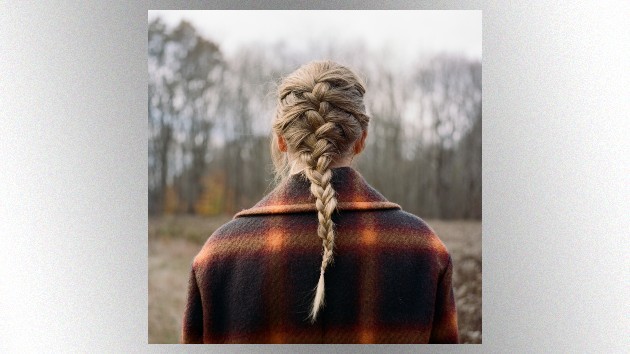
Taylor Swift is celebrating evermore‘s Grammy nomination for Album of the Year by dressing fancy and drinking champagne.
Taking to Twitter once the nominations were announced, Taylor shared a black and white video of her sitting at the bottom of a spiral staircase and singing “Champagne Problems” as collaborator Aaron Dessner accompanies her on the piano. The singer is wearing the same lavish white dress she wore in the “I Bet You Think About Me” music video. The clip, which was shot overhead, presents an alternative angle of the gown and shows even more details about it, including its massive train.
“NO PROBLEMS TODAY JUST CHAMPAGNE,” Taylor wrote. “I wanted to share this video with you from when @aaron_dessner and I were doing our fittings for the video and there was a piano, so ofc this happened. SO stoked evermore has been honored like this. Congrats to all our fellow nominees.”
Aaron reposted the video and jokingly added, along with three red heart emojis, “well folkmore….the piano did seem a little lonely just sitting there.”
Taylor is against some stiff competition for Album of the Year: expanded field of nominees includes her protégé, Olivia Rodrigo, as well as Billie Eilish, Justin Bieber, Lady Gaga and Tony Bennett, Lil Nas X, H.E.R., Doja Cat, Kanye West and the Grammy’s most-nominated act, Jon Batiste.
Find out if Taylor takes home yet another golden gramophone trophy when the 64th annual Grammy Awards airs January 31 starting at 8 p.m. ET on CBS.
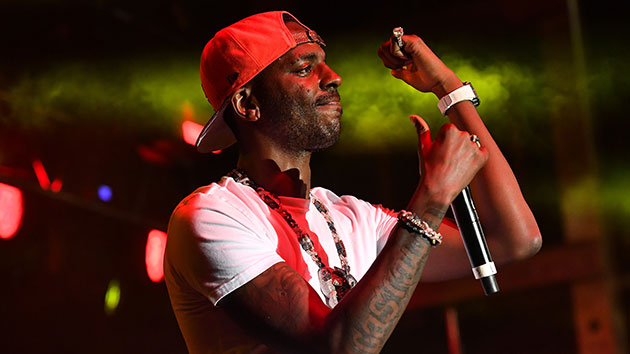
The late Young Dolph was fatally shot a week ago at Makeda’s Homemade Cookies in Memphis, Tennessee. Now the business is honoring his memory in a special way.
The shop in South Memphis closed following the shooting and became the location for a memorial for Dolph as fans left flowers, balloons, stuffed animals and messages of love. Now the separate downtown Makeda’s location is naming Dolph’s favorite cookie, chocolate chip, after him, according to The Blast.
The South Memphis shop on Airways Blvd., where the shooting took place, created a GoFundMe account to raise money to reopen, and nearly $87,000 had been donated toward a $150,000 goal as of noon Wednesday. A message on the page reads, “The store that was just repaired after burglaries will now have to begin again. Young Dolph was helping them attract more customers by frequently visiting and posting to help increase revenue. Unfortunately, this black owned business is now being forced to repair once more while hurting. The message adds that the owners hope “the legacy of Young Dolph will continue to inspire us to love life and give back.”
As previously reported, Young Dolph held an annual Thanksgiving dinner giveaway in Memphis, and after his death on November 17, the event was held on Friday. His organizations, Paper Route Empire and the Ida Mae Family Foundation, hosted the holiday celebration in the Castalia Heights neighborhood in the city.
Jimmie Allen spoke out during a scary medical crisis on Tuesday night, saying that his five-week-old baby girl, Zara, had trouble breathing — and the medical staff working with his family did little to help her.
“Attention Doctors, if the parent of your one month old patient tells you the child [is] having a hard time breathing and the only thing your lazy self wants to do is check [her] heart and temperature, find another career,” he wrote on Twitter. “Your job is to save lives so do it.”
Jimmie and his wife, Alexis, who welcomed baby Zara in mid-October, were sent home from one hospital, only to rush to another later that same night, he goes on to say.
“Now thanks to the lazy doctors at a hospital in TN that just sent our daughter home, our daughter Zara lost color, stopped breathing and is being rushed to another hospital,” he explained in another tweet. “Thanks to the amazing EMT team that brought back Zara’s color, she can breathe again. Gonna be a rough night.”
Five-week-old Zara is Jimmie and Alexis’ second daughter together; they’re also parents to 20-month-old Naomi. Jimmie has a seven-year-old son, Aadyn, from a previous relationship.
While it’s been a difficult week in the singer’s personal life, he also hit a big career milestone Tuesday when he was nominated in the all-genre category of Best New Artist at the 2022 Grammy Awards.
Attention Doctors , if the parent of your one month old patient tells you the child having a hard time breathing and the only thing your lazy self wants to do is check heart heart and temperature find another career. Your job is to save lives so do it.
Tai Verdes: @franzmars photographer; Rob Thomas: Jim Trocchio
This year’s Macy’s Thanksgiving Day Parade will feature established stars like Andy Grammer, Rob Thomas, Kelly Rowland, Sara Bareilles and Nelly, as well as rising artists like Zoe Wees and Tai Verdes. Tai’s happy for the opportunity to get in front of viewers who don’t know him from TikTok or the radio.
“It’s always really awesome to see the different steps that you can take to be exposed to more people,” he tells ABC Audio. “Especially with something like the Macy’s Day Parade, it’s kind of cool to see something that I’ve seen for like years and be a part of that.”
Tai will sing his hit “A-O-K” while riding on the Jennie-O float, but he laughs, “Honestly, they could put me on any float, and I’d be happy.” He doesn’t even mind that he’ll miss Thanksgiving dinner with his folks back in California.
“My family would usually just eat dinner together, we don’t have any crazy traditions, so it’s not like I’m missing out a lot,” he says. “But I’m also going back and having, like, a ‘Thanksgiving dinner’ after — on, like, Saturday and Sunday.”
Rob Thomas is also a first-timer when it come to the Macy’s Thanksgiving Day Parade. He’ll be singing a song from his new holiday album, Something About Christmas Time, while riding aboard the Hallmark Channel float, and he and his wife are equally thrilled.
“I’m stoked…my wife, growing up in Queens, [NY], that’s been her entire life,” he tells ABC Audio. “Christmas starts when Santa Claus goes past Macy’s, then, from that moment on for her, it’s the holidays.”
“I’m excited about doing it and I’m excited about doing it on the Hallmark float,” he adds. “That’s huge! That’s serious Christmas, right there. I am knee-deep in Christmas at that point!”
Stop us if you’ve heard this one before: Ozzy Osbourne has postponed his European tour.
The seemingly snakebit run, which also features Judas Priest on the bill, has now been delayed to 2023, four years after it was originally supposed to kick off.
You may recall that the tour was first scheduled to begin all the way back in January 2019, but was postponed to early 2020 after Ozzy came down with a particularly nasty case of the flu. In the spring of 2019, the now 72-year-old metal legend suffered a fall in his home and required surgery, the extended recovery from which forced him to push back the tour again to the fall of 2020.
Then, of course, came the COVID-19 pandemic, which delayed the tour once more, to 2022. Now, as a result of “ongoing uncertainty with full capacity events and travel logistics in much of Europe” stemming from the continued pandemic, Ozzy is set to finally hit Europe beginning May 2023.
Should you still have your ticket from any of the previously scheduled shows, that will be valid at the 2023 dates. For the full list of dates and all ticket info, visit Ozzy.com.
(NOTE LANGUAGE) In his latest bit of cinematic “get off my lawn!”, legendary filmmaker Ridley Scott says millennials are to blame for his film The Last Duel fizzling at the box office.
Just days after he dissed superhero movies to Deadline as “boring as sh**,” Scott chatted with Marc Maron on his WTF podcast, and let millennials have it over the tepid theatrical performance of the Ben Affleck/Matt Damon medieval movie.
“I think what it boils down to — what we’ve got today [are] the audiences who were brought up on these f**king cell phones,” the director said. “The millennian do not ever want to be taught anything unless you are told it on the cell phone. This is a broad stroke, but I think we’re dealing with it right now with Facebook. There is a misdirection that has happened where it’s given the wrong kind of confidence to this latest generation, I think.”
He added, “We all thought it was a terrific script, and we made it,” allowing, “You can’t win all the time.”
Scott commented, “I’ve never had one regret on any movie I’ve ever made. Nothing. I learned very early on to be your own critic….Walk away. Make sure you’re happy. And don’t look back. That’s me.”
For the record, Scott believes he’s made three great superhero movies — but just not the comic book kind.
“One would be Alien with Sigourney Weaver,” he told Deadine. “One would be f***ing Gladiator, and one would be Harrison Ford [in Blade Runner]. They’re superhero movies. So, why don’t the superhero movies have better stories?”
Scott’s latest film, House of Gucci, is now in theaters.
If you wanted to know how BTS feels about securing their second career Grammy nod, for Pop Duo or Group Performance, they’re giving themselves “Permission to Dance.”
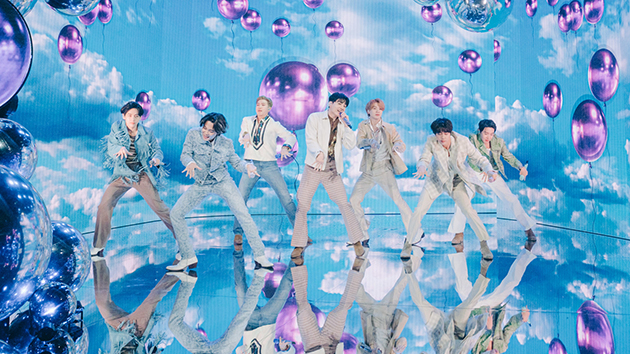
The K-pop sensations took over The Late Late Show with James Corden Tuesday and poured their hearts into performing their summertime hit. The septet, comprised of members Jimin, Jin, J-Hope, Jungkook, RM, Suga and V, broke out the balloons and energetically danced in front of a digital backdrop of rolling clouds — a possible hint they were on cloud nine.
BTS also helped James with his perennial bit, Crosswalk Concert, which saw them take over West Hollywood’s Beverly Boulevard to perform “Dynamite” and “Butter” while traffic waited at the red light.
This marked the group’s first in-person appearance on Late Late Show in two years. The guys were excited to make their grand return during an already amazing week for them. On top of their Grammy nod, they took home three awards at the fan-voted American Music Awards on Sunday. RM said they’re “flattered” by the honor, while Suga also shouted-out their loyal fan base — the ARMY — when discussing the effects of the pandemic, which derailed many of their plans.
“At first, we were very bitter about this whole situation. It was very difficult,” he confessed, but said that initial disappointment showed BTS “how precious everything is.” V added the experience “made us work together even better.”
Other highlights from their Late Late Show appearance included the boys ratting out Jungkook as the person who gets the most nervous before a show, and Jimin flexing his muscles as RM pressured James to touch those “concrete” thighs.
CBS 2021 CBS Broadcasting, Inc. All Rights Reserved.
Several of the Grammy nominees in the rock, alternative and metal categories have shared their reactions to being included in the upcoming 2022 ceremony, taking place January 31.
Chris Cornell‘s widow, Vicky Cornell, shared an Instagram post celebrating her late husband’s nods for Best Rock Album for his posthumous album, No One Sings Like You Anymore Vol. 1, and Best Rock Performance for his cover of “Nothing Compares 2 U.”
“While Chris lives on in our children and me daily, knowing he lives on in all of you through his music means the world,” Vicky writes. “Huge thank you to his devoted fans for helping us keep his memory and legacy alive and to the @recordingacademy — we are overwhelmed with gratitude.”
Double nominee Deftones — who will compete for Best Rock Performance with “Ohms” and Best Metal Performance with “Genesis” — feels “honored to have [those songs] be recognized.”
“They were released during a very uncertain time with music and the world alike, so to have them resonate the way they did is really special for us,” the band says. Defones also congratulated Linkin Park‘s Mike Shinoda for his “amazing” remix of their song, “Passenger,” which is nominated for Best Remixed Recording.
Despite the fact they’ve been releasing music since 2012, Glass Animals is nominated for Best New Artist. Frontman Dave Bayley says, “When starting this little project a Grammy nomination was beyond our wildest dreams.”
Here are a few other reactions from the rock, alternative and metal nominees:
AC/DC (Best Rock Album, Power Up; Best Rock Performance, “Shot in the Dark”; Best Music Video, “Shot in the Dark”): “#PWRUP the GRAMMYS”
St. Vincent (Best Alternative Music Album, Daddy’s Home): “!!!”
Black Pumas (Best Rock Performance, “Know You Better (Live from Capitol Studio A)”; Best Rock Album, Capitol Cuts — Live From Studio A): “What an incredible honor to be nominated by the @RecordingAcad for Best Rock Album and Best Rock Performance for our Capitol Cuts Album!”
Dream Theater (Best Metal Performance, “The Alien”): “We are so honored to be nominated for a GRAMMY this year in the Best Metal Performance category!”
Mastodon (Best Metal Performance, “Pushing the Tides”): “Our song ‘Pushing the Tides’ has been Nominated for a Grammy! Thank you very much.”
Rob Zombie(Best Metal Performance, “The Triumph of King Freak (A Crypt of Preservation and Superstition)): “Well, this latest nomination today was certainly a surprise. It is my eighth nomination… so who knows?”
Halsey (Best Alternative Music Album, If I Can’t Have Love, I Want Power): “Really wasn’t expecting that! It was an honor to work with some of my heroes, Trent [Reznor] and Atticus [Ross], and I am so proud of this album and hope that you guys continue to love it for years to come. Here’s to taking risks.”
FINNEAS (Best New Artist): “Congratulations to all the Grammy nominees! I feel so lucky to be in your company!”
Today marks the 30th anniversary of the passing of one of rock’s greatest champions, Queen singer Freddie Mercury.
Mercury died from complications of AIDS at age 45 on November 23, 1991, just one day after announcing to the world that he’d been diagnosed with the disease.
Widely regarded as one of the all-time great rock singers and frontmen, Freddie used his powerful vocals, flamboyant persona and dynamic performing style to help Queen become among the most popular and successful bands in the world.
Mercury was born Farrokh Bulsara in 1946 on the African island of Zanzibar, where his family lived until 1964, when they moved to the U.K. In 1970, Mercury teamed up with guitarist Brian May and drummer Roger Taylor in a band called Smile, and after the addition of bassist John Deacon, the group changed its name to Queen.
The band blended a variety of genres to create a unique sound that captivated a wide variety of music fans. Mercury wrote many of Queen’s biggest hits, including “Killer Queen,” “Somebody to Love,” “We Are the Champions,” “Don’t Stop Me Now,” “Bicycle Race,” “Crazy Little Thing Called Love,” “Play the Game” and, of course, the enduring rock anthem “Bohemian Rhapsody.”
Freddie also co-wrote Queen’s classic 1981 collaboration with David Bowie, “Under Pressure.” Mercury’s performance with Queen at London’s Wembley Stadium at the 1985 Live Aid festival is considered one of the highlights of that historic event.
Mercury also released a pair of solo albums during the 1980s.
Following Freddie’s death, May, Taylor and Queen manager Jim Beach co-founded the Mercury Phoenix Trust in his honor. The charity supports AIDS-related causes.
Mercury was inducted into the Rock & Roll Hall of Fame with Queen in 2001. His legacy continues to make its mark on the rock and pop world.