If there was ever the ultimate Black Veil Brides album, The Phantom Tomorrow might be it.
The band’s sixth studio effort, due out this Friday, is a conceptually driven piece that will be accompanied by action figures and comic books. And that’s not to mention the epic, cinematic music itself.
“Being six records into our career, it was extremely important to all of us that we make a record that felt like it was an evolution for us musically, but also honored the parts of our past that have gotten us to this point,” frontman Andy Biersack tells ABC Audio.
The Phantom Tomorrow is BVB’s third concept album, following 2013’s Wretched and Divine: The Story of the Wild Ones and 2018’s Vale. However, it’s a shorter, punchier listen than its predecessors, and, according to Biersack, is more interested in a “musical interpretation of an idea” than “beating you over the head with such an overt narrative.”
“You want to make a record that…stands on its own merits, but you also don’t want to make a record that the concept is impossible to understand,” Biersack says.
There still is the story to The Phantom Tomorrow, which follows a character known as Blackbird and what is essentially a personification of the supposed guaranteed existence of a tomorrow, something that might be upended by, say, a global pandemic. Basically, it’s like if Little Orphan Annie was having an existential crisis.
“[The album’s about] the idea that tomorrow is this kind of ever-present, omnipotent feeling of it’s gonna happen, it’s gonna be there, it’s always there, but the darkness that lives beneath that and the ideas that lie beneath that of, ‘But something could happen,'” Biersack says. “What bad or good could happen before that tomorrow comes has always interested me.”
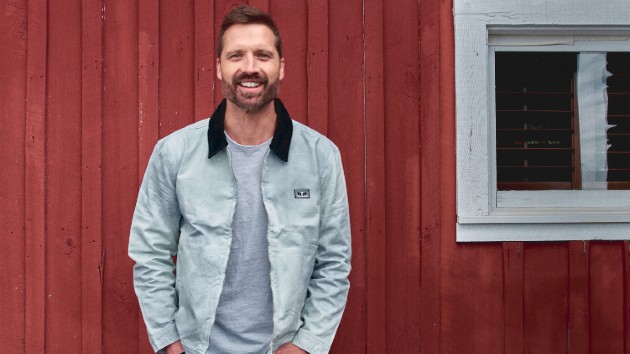
Walker Hayes‘ viral hit “Fancy Like” is known as the “Applebee’s song” because in the lyrics, he not only mentions eating at the chain restaurant, but also name checks specific menu items like Bourbon Street Steak. But Walker says he didn’t mention those things because he hoped Applebee’s would use the song in an ad or anything — he was simply describing something he and his wife Lainey have been doing for decades.
“Lainey and I have been going to Applebee’s since we were 17,” Walker tells ABC Audio. “I was stealing my dad’s credit card in high school all the time, going to Applebee’s, getting steak against his wishes!”
“Steak was up there, the price tag on the Bourbon Street Steak,” he recalls. “Dad wasn’t likin’ that. But it was so good!”
Of course, since that Applebee’s did end up using the song in an ad — which Walker claims he never saw coming — he and his family can now eat all the Bourbon Street Steak they ever wanted.
“Lainey and I love Applebee’s. We’re so grateful that Applebee’s is winning from this song,” he tells ABC Audio. “It sounds silly…but I had no idea that Applebee’s would benefit from a silly song like this. But I love that they are, and I love that they’re making us feel, y’know, a part of the family.”
This week marks the 40th anniversary of the release of The J.Geils Band‘s chart-topping album, Freeze-Frame.
Released on October 26, 1981, Freeze-Frame saw the veteran blues/R&B-influenced rock band finally enjoy major commercial success after years of critical acclaim and moderate popularity.
The album spent four weeks at #1 on the Billboard 200 in February of 1982, while the song “Centerfold” became the group’s only single to top the Billboard Hot 100, enjoying a six-week run at the pinnacle of the chart around the same time.
Freeze-Frame also yielded a #4 Hot 100 hit with its title track, while a third single, the ballad “Angel in Blue,” peaked at #40.
The popularity of “Centerfold” and “Freeze-Frame” were bolstered by music videos for the tunes that went into heavy rotation on MTV.
Keyboardist Seth Justman wrote or co-wrote all of Freeze-Frame‘s nine tracks, and he produced and arranged the record. Four of the songs were co-penned by frontman Peter Wolf, among them “Freeze-Frame.”
Freeze-Frame, which was The J. Geils Band’s 10th studio effort, went on to sell more than one million copies in the U.S., making it the group’s only album to be certified Platinum by the RIAA.
Wolf left The J. Geils Band in 1983 because of disagreements over the group’s musical direction, and began solo career. The band released just one more studio album, 1984’s You’re Gettin’ Even While I’m Gettin’ Odd, which featured Justman taking over lead vocals. The band broke up in ’85.
Over the years, J. Geils Band members have participated in various full or partial reunions, most recently in 2015. Band leader and guitarist John “J.” Geils died in 2017 at age 71.
Here’s the full Freeze-Frame track list:
“Freeze-Frame”
“Rage in the Cage”
“Centerfold”
“Do You Remember When”
“Insane, Insane Again”
“Flamethrower”
“River Blindness”
“Angel in Blue”
“P*** on the Wall”
(NEW YORK) — COVID-19 vaccine shots for kids ages 5 to 11 may be available as soon as November after a Food and Drug Administration advisory panel voted Tuesday in support of the Pfizer vaccine for kids.
The vote is the first step in the authorization process that would make the Pfizer/BioNTech vaccine available for the approximately 28 million children in the United States ages 5 to 11.
Dr. Francis Collins, director of the National Institutes of Health, said on “Good Morning America” Tuesday that getting more kids vaccinated will be key to ending the pandemic in the U.S.
“If we can create a situation where more of these kids are not getting infected, we should be able to drive this pandemic down, which is what we really hope to do, even as we face the cold [weather] and other concerns about whether we might see another surge,” said Collins. “We don’t want that, and this would be one significant step forward in getting our country really in a better place.”
As the countdown begins, here are five things parents should know about COVID-19 vaccines and kids under the age of 12.
1. Kids ages 5 to 11 are still not yet eligible for a COVID-19 vaccine.
The FDA panel’s approval Tuesday does not mean that children ages 5 to 11 will immediately be eligible to get a COVID-19 vaccine.
The leaders of the FDA need to sign off on the advisory panel’s decision, and then the decision will move to the Centers for Disease Control and Prevention’s vaccine advisory group.
That group, the Advisory Committee on Immunization Practices, is scheduled to meet next Tuesday to review the same data reviewed by the FDA advisers.
Then, once the ACIP recommends the vaccine, the CDC director must sign off on it, the final step in the authorization process.
Once that decision is made, the vaccine would be able to be administered relatively quickly to children across the country.
At the same time, the FDA will continue to review data to decide whether to grant full FDA approval for the vaccine in kids ages 5 to 11.
The FDA approved the Pfizer vaccine for people ages 16 and older in August. It is currently authorized for emergency use in children ages 12 to 15.
The two other vaccines currently available in the U.S., Moderna and Johnson & Johnson, are currently available only for people 18 years and older.
Moderna said Monday it plans to submit data to the FDA soon showing its vaccine for children ages 6 to 11 produces a strong immune response and appears safe.
2. The Pfizer dose is different for kids under age 12.
In Pfizer and BioNTech’s clinical trial of more than 2,200 children, the COVID-19 vaccine was administered in two doses, but the doses were one-third the amount given to adults.
The clinical trial results, which have not yet been peer-reviewed, showed the antibody response in children at that dose was at least as strong as the full adult dose in patients ages 16 to 25.
Pfizer and BioNTech say the vaccine produced minimal side effects in children ages 5 to 11, and the side effects were similar to those experienced by adults and older children.
For 12- to 15-year-olds, the FDA has authorized the same dosing as adults with the Pfizer two-dose vaccine.
3. The vaccine’s focus is on kids’ immune systems.
Children have different immune systems than adults, so it should be reassuring for parents that the Pfizer/BioNTech vaccine has been shown to be safe in kids.
Differing immune systems among people of different ages also help explain why the cutoffs for vaccine eligibility rest on age and not body size.
In addition to the COVID-19 vaccine, other immunizations are also scheduled and administered based on age and not weight. This is partially due to the fact that the body’s immune responses to vaccinations and infection are known to be different based on age.
4. The vaccine will be distributed to kids through pediatricians, pharmacies, health clinics and more.
Once greenlighted, the pediatric doses of the vaccine will be sent to thousands of sites across the country, including more than 25,000 pediatricians’ offices, more than 100 children’s hospitals, tens of thousands of pharmacies and hundreds of school- and community-based clinics, the White House announced Oct. 20.
Within days, more than 15 million doses are set to begin distribution across the country.
Though the White House has purchased 65 million Pfizer pediatric vaccine doses — more than enough to fully vaccine all children ages 5 to 11 in America — the first launch will dole out doses in waves based on states’ eligible population of kids. Shipments can be recalibrated based on shifting demand.
The distribution plan will also include a national public education campaign to “reach parents and guardians with accurate and culturally-responsive information about the vaccine and the risks that COVID-19 poses to children,” according to the White House.
White House officials told the nation’s governors on Oct. 12 that it has enough pediatric doses on hand for the 28 million children ages 5 through 11 expected to become eligible once the CDC gives the green light.
To troubleshoot any confusion in distribution, federal health officials are outlining a new color-coded cap system for each formulation of the vaccine, though still “preliminary.” Purple-capped vials will contain doses for adult and older adolescents, a chart offered to states said; orange-capped vials will contain doses for kids aged 5 to 11.
5. Families need to remain vigilant against COVID-19.
While there is a light at the end of the tunnel with younger kids having access to a COVID-19 vaccine, families need to stay vigilant against the virus as they wait for authorization.
Unvaccinated children can not only become ill from COVID-19 themselves, but they can also spread the virus to more vulnerable family members and other adults with whom they interact.
Both the CDC and the American Academy of Pediatrics recommend universal mask-wearing in schools to help slow the spread of COVID-19.
Experts said that in addition to unvaccinated children wearing face masks, parents and siblings who are vaccinated should also continue to wear face masks indoors because of the rates of breakthrough infections in the U.S.
Families should also continue to follow other safety guidelines shared throughout the pandemic, including social distancing and hand-washing.
(HOUSTON) — The boyfriend of the mother of an 8-year-old boy has been charged with murder after the child’s remains were discovered in a Houston home along with his three abandoned siblings, authorities said.
One of the children, a 15-year-old, called the authorities and said his brother had been dead for one year and his body was in the room next to his, Harris County Sheriff Ed Gonzalez said Monday.
The Harris County Medical Examiner’s Office said the boy’s manner of death was a homicide, according to Houston ABC station KTRK.
His mother, Gloria Williams, 35, now faces multiple charges, including injury to a child by omission and tampering with evidence (human corpse), Gonzalez announced Tuesday night.
Her boyfriend, Brian Coulter, 31, has been charged in the murder of her son, who was 8 years old at the time of his death in 2020, the sheriff said.
Both Williams and Coulter are in custody and additional charges are expected, he said.
The 15-year-old and the other two children — boys under the age of 10 — were found home alone on Sunday, the sheriff said.
Both younger kids “appeared malnourished and showed signs of physical injury,” he tweeted.
Deputies also “found skeletal remains of a small child,” the sheriff said.
All three children were taken to the hospital, he said. Their conditions were not released.
Authorities believe the parents hadn’t lived in the home for several months, Gonzalez said.
Prior to their arrest, the children’s mother and her boyfriend were found late Sunday night and had been interviewed and released, Gonzalez said Monday.
The investigation is ongoing, the sheriff said.
At a news conference Sunday, Gonzalez called it a “horrific situation.”
“I have been in this business for a long time and I had never heard of a scenario like this,” he said.
(WASHINGTON) — “I don’t know where in the hell I belong,” Sen. Joe Manchin, the West Virginia Democrat, said Tuesday when when asked about possibly switching parties amid his stubborn bargaining with frustrated fellow Democrats and President Joe Biden.
Manchin said people approach him “every day” about doing so, and that it would be an easy decision. But he insisted he won’t, speaking out in a revealing interview with Economic Club for Growth Chairman David Rubenstein.
“Is that the purpose of being involved in public service? Because it’s easy?” Manchin asked. “Do you think by having a “D” or an “R” or an “I” is going to change who I am?” he said, adding he didn’t believe Republicans would be any more pleased with him than Democrats are right now.
He called being the only statewide Democratic public official in his home state “very lonely,” but said he understands why his constituents mostly vote for Republicans.
“My little state has never complained. We’ve done all the heavy lifting — we’ve done the mining, we’ve made the steel, we’ve done everything it took for this country to be a the superpower of the world,” Manchin said. “And all of a sudden they took a breath and looked back and we’re not good enough, we’re not clean enough, we’re not green enough, we’re not smart enough, so to hell with you. So, they said, ‘Well, to hell with you, too.'”
With Democrats holding onto a razor-thin margin in the Senate, Manchin has emerged as a pivotal player in Democratic efforts to pass the president’s agenda.
He said he doesn’t think there is anything “fun” about being the decisive vote in the Senate — but it’s led to breakfast meetings at Biden’s Delaware home and given him the upper hand in driving the direction of the massive social spending package, including what amounts to a veto power over provisions he doesn’t like.
That includes sticking to a much lower $1.5 top-line price tag for the social spending package he set at the start — something Democrats and Biden are still negotiating with him about this week, months later.
He commented on Majority Leader Chuck Schumer’s decision in June to use the fast-track budget process known as reconciliation to bypass Republican blocking efforts.
“I don’t think we should be running the government through reconciliation, because it’s not lasting,” Manchin said he told Schumer.
He also reaffirmed Tuesday that he’s opposed to changing the Senate’s filibuster rule — just days after Biden himself suggested he could support exceptions for fundamental Democratic priorities such as voting rights and election reform — and maybe more.
While that would give Democrats breathing room to pass key agenda items, without Republicans keeping the measures from even getting a vote, Manchin said it’s important that the minority party retains some political power and that all sides pursue bipartisanship.
And he offered some behind-the-scenes color about how he’s been bargaining with Biden, who’s eager to secured his support.
“The president and I had this conversation, I said, ‘Mister President, I don’t know who put this out, but that’s screwed up,'” Manchin said, speaking about a proposal to help pay for his spending plan by having the IRS track annual transactions of $600 or more from individual bank accounts. After GOP backlash, the administration last week backed off the idea to catch tax evaders, raising the triggering amount to more than $10,000.
Manchin wasn’t happy.
“Do you understand how messed up that is?” he said he told the president. “This cannot happen. It’s screwed up.”
“He says, ‘I think Joe’s right on that,’ Manchin told Rubenstein. “So, I think that one’s going to be gone.”
(WASHINGTON) — Three of President Joe Biden’s major nominees were confirmed to ambassadorships by the Senate on Tuesday.
Former Sen. Jeff Flake, an Arizona Republican who left office in 2019, was confirmed as ambassador to Turkey, while former Democratic Sen. Tom Udall of New Mexico was confirmed to be ambassador to New Zealand.
Cindy McCain, the wife of late GOP Sen. John McCain, was confirmed to the rank of ambassador during her tenure of service as U.S. Representative to the United Nations Agencies for Food and Agriculture.
All three nominees were confirmed unanimously.
Arizona Sen. Mark Kelly, a Democrat, asked for unanimous consent to confirm Cindy McCain. Kelly was mentored by John McCain prior to his death in 2018 and won his Senate seat last year. Democratic Sen. Kyrsten Sinema, also of Arizona, was presiding over the Senate when the nomination was confirmed and was visibly excited.
Flake and McCain were some of Biden’s most ardent Republican supporters during the 2020 presidential election. They were censured by the Arizona Republican Party in January for their staunch criticism of former President Donald Trump.
“When I began in the Republican Party officially, the Republican party was the party of inclusion. It was the party of generosity. It was the party of ‘country first,'” Cindy McCain said of the censure. “We have lost our way and it’s time that we get back on track.”
“I truly hope that as things progress on, and we get further away from this mess that occurred, that we can do just that,” she added. “We can get back on track and remind everyone that we are here for the country and not our party.”
(WASHINGTON) — The U.S. Border Patrol agents at the center of a controversy stemming from their use of horses to block Haitian migrants from entering the U.S. have not yet been questioned more than a month after the incident took place, according to a law enforcement official.
Images of mounted patrol agents using their horses to push back migrants, mostly Haitian, stirred national controversy as an unprecedented number attempted to cross the Rio Grande into the small border town of Del Rio, Texas, in September. The Department of Homeland Security launched an internal investigation into the matter shortly after the images came out.
Homeland Security Secretary Alejandro Mayorkas promised a swift investigation into the horse patrol over a month ago, assuring lawmakers it would yield findings days later. As of publication, and despite multiple requests for comment from ABC News, the administration has not publicly announced any findings.
Preliminary findings from Customs and Border Protection’s Office of Professional Responsibility have been handed over to the Justice Department to determine if criminal charges are warranted, according to two officials who were not authorized to speak publicly.
One law enforcement official said the internal investigation could not proceed, and the agents directly involved could not be interviewed, until the U.S. attorney makes a determination.
Referrals to U.S. attorneys are common in federal law enforcement personnel matters and do not necessarily indicate that criminal charges are being considered. The U.S. Attorney’s Office for the Western District of Texas, which includes Del Rio, declined to comment.
“The investigation is ongoing,” a DHS spokesperson said in a statement to ABC News. “The Department is committed to a thorough, independent, and objective process. We are also committed to transparency and will release the results of the investigation once it is complete.”
Advocates for both migrants and the agents have been frustrated with the pace of the investigation so far.
Karen Tumlin, founder of the Justice Action Center, said a central concern is that the government has deported potential witnesses to federal police brutality in the time it has taken to conduct the investigation.
“[The delay] creates an ‘out of sight, out of mind’ issue,” Tumlin said. “That was their intention.”
Over the two-week period that migrants surged into Del Rio, border officials stopped about 29,000 of them, according to the Department of Homeland Security. More than 15,000 either returned to Mexico on their own or were sent to Haiti on rapid expulsion flights. About 1,800 were placed in U.S. Immigration and Customs Enforcement detention and some 13,000 were released on conditions to report back to authorities.
Jon Anfinsen, a Border Patrol agent and union leader, confirmed the mounted patrol agents remain on administrative duties, which he said has impacted the unit’s ability to perform their normal patrol work.
The horse patrol appears to be back up and running in Del Rio, Texas, despite silence from the Biden administration on the results of the internal probe. Use of the horse patrol was stopped at the Del Rio International Bridge in the days following the confrontations.
White House press secretary Jen Psaki was unequivocal in announcing the end to the use of Border Patrol horses in Del Rio last month, calling it a “policy change.” DHS officials clarified at the time that it was only a temporary suspension.
“The secretary also conveyed to civil rights leaders earlier this morning that we would no longer be using horses in Del Rio,” Psaki said at a Sept. 23 White House press briefing. “So that is something — a policy change that has been made in response.”
A CBP official who was not authorized to discuss the matter publicly disputed Psaki’s characterization.
“They pulled all horse patrol agents for maybe a day or so to process,” the official said referring to the administrative duties agents are required to perform when migrants flood the area. “Then it was right back to normal sector-wide, with the exception of a couple more agents under scrutiny.”
A photo posted to the USBP Del Rio Sector’s Facebook page on Oct. 7 shows Border Patrol agents on horseback detaining a group of men huddled on the ground.
Grandson has announced a new song called “Drop Dead.”
The track, which is being released in honor of the “Blood//Water” rocker’s birthday this week, will feature Blink-182 drummer Travis Barker and pop star Kesha.
You can hear exactly what that sounds like when “Drop Dead,” well, drops, this Friday, October 29.
“Drop Dead” follows grandson’s single “Rain” with Jessie Reyez, which was recorded for the movie The Suicide Squad. You can also hear him on Tom Morello‘s “Hold the Line,” a track off the Rage Against the Machine guitarist’s new solo album, The Atlas Underground Fire.
Grandson released his debut album, Death of an Optimist, last December.
Longtime Kansas violinist and vocalist Robby Steinhardt sadly passed away in July of this year, but not before recording his debut solo album, a star-studded collection of songs titled Not in Kansas Anymore, which was released posthumously this week.
Described as a “Prog Rock Opera,” the album features guest appearances by Jethro Tull‘s Ian Anderson, Deep Purple/Dixie Dregs guitarist Steve Morse, former Toto singer Bobby Kimball, Rolling Stones touring keyboardist Chuck Leavell, Pat Travers, longtime Billy Joel drummer Liberty DeVitto, former Rolling Stones backing singer Lisa Fischer, acclaimed jazz drummer Bill Cobham, and many others.
Not in Kansas Anymore includes a new rendition of Kansas’ classic 1978 hit “Dust in the Wind.” The album was produced by Michael Franklin, who also worked on former Yes singer Jon Anderson‘s similarly star-packed 2019 solo effort, 1000 Hands: Chapter One.
Not in Kansas Anymore is available for purchase now on CD and digital formats at RobbySteinhardtOfficial.com or SolarMusic.com. You also can pre-order a vinyl LP version of the record, which is due out in December.
In the only interview he gave about Not in Kansas Anymore, Robby explained to PBS about the album’s title, “It’s no slight against the band, no never! My time with Kansas defined a big part of my life, of which I am very proud of. Ever since The Wizard of Oz, those words have become an American axiom for moving forward, you can never go back etc. I guess it has a special meaning when it is fixed to me.”
Steinhardt died on July 17 from complications of pancreatitis. He was 71.
Here’s the full Not in Kansas Anymore track list:
“Tempest”
“Truth 2 Power”
“Mother Earth”
“Rise of the Phoenix”
“The Phoenix”
“Prelude
“Dust in the Wind”
“Pizzacato”
“Tuck Tuck”
“Not in Kansas Anymore”
“A Prayer for Peace”