Are you ready to rock ‘n’ roll with Ringo Starr? The famed ex-Beatles drummer has debuted a music video for his new cover of the Bill Haley and His Comets classic “Rock Around the Clock,” which appears on Starr’s recently released Change the World EP.
The tune features Ringo’s brother-in-law, Eagles guitarist Joe Walsh, ripping through a couple of wailing solos.
The video, which you can check out on YouTube, features footage shot at Starr’s Roccabella West home studio of Ringo singing and playing drums, as well as Walsh doing his thing on guitar.
Session bassist Nathan East and Starr’s frequent studio collaborator Bruce Sugar also appear in the clip. The track also features backing vocals from Amy Keys and Windy Wagner.
Ringo says he decided to record his own version of “Rock Around the Clock” because he was reminiscing about the impression the song had on him when he first heard it on his 15th birthday. His grandparents took him to see the movie Blackboard Jungle in a theater then while he was recovering from tuberculosis.
Starr recalls that when the song came on, the audience “ripped up the cinema!!! They just threw the chairs and went crazy. I thought, ‘WOW this is great!’ I remember that moment like it was yesterday, it was incredible. And the song just rocks.”
“Rock Around the Clock” is one of four songs featured on Change the World, along with “Let’s Change the World,” “Coming Undone” and “Just That Way.” The EP is available now on CD, cassette and digitally. A 10-inch vinyl version will be released on November 16, and can be pre-ordered now.
(NEW YORK) — Robert Durst has been charged in Westchester County with the murder of his former wife, Kathie, who disappeared in 1982, according to the district attorney’s office.
A criminal complaint was filed Tuesday of this week.
“The Westchester County District Attorney’s Office can confirm that a complaint charging Robert Durst with the murder of Kathleen Durst was filed in Lewisboro Town Court on Oct. 19, 2021. We have no further comment at this time,” a statement from a spokeswoman for Westchester DA Mimi Rocah said.
This is a developing story. Please check back for updates.
For many years, Doors guitarist Robby Krieger and his friend, sports artist Scott Medlock, teamed up to organize an annual celebrity golf tournament and all-star concert to benefit the St. Jude’s Children’s Hospital. However, with Medlock himself battling cancer, this year’s edition of the event will feature Krieger joined by various musical friends at a special show to raise money for Scott’s medical bills.
The event, dubbed the “Celebration of Friendship” All-Star Concert — Scotty, Robby & Friends, takes place this Sunday, October 24, at Bogie’s Bar in the Los Angeles suburb of Westlake Village, California.
“Unfortunately, Scotty has got cancer and it’s gotten…bad,” Krieger tells ABC Audio. “So we’re just doing it for him and his family this year, trying to raise some money for them, because it’s amazing how much drug companies will charge for chemotherapy.”
While an official lineup for the show hasn’t been announced, Krieger reveals that the event will feature performances by “a lot of cool people,” including ex-Chicago drummer Danny Seraphine and his current group, a couple of members of Boston, and former Bon Jovi guitarist Richie Sambora and his collaborator and one-time girlfriend Orianthi.
“It should be fun,” Robby says.
You can check out the various tickets and VIP packages that are available for the benefit concert by visiting TheMedlockKrieger.org and Eventbrite.com.
Guns N’ Roses are cashing another major paycheck after wrapping the U.S. leg of their 2021 Tour.
Billboardreports that the hard-rock legends sold a whopping 363,000 tickets during their rescheduled tour, which was postponed last year when COVID-19 shut down the entertainment industry. That number of tickets sold amounts to a $50 million payday for GN’R.
Originally called the 2020 Tour, the outing started on Super Bowl Weekend in January of last year at American Airlines Arena in Miami. About 11,200 tickets were sold for the event, which translated into $2.7 million in cold hard cash.
GN’R eventually pumped the brakes as the pandemic worsened and the tour was moved to summer 2021. However, the delay did little to dampen the cash flow because when the tour picked up again on July 31 at Pennsylvania’s Hersheypark Stadium, the outing made history at the time for becoming the concert with the best single-night earnings during the pandemic-era. That summer concert earned a resounding $2.3 million in ticket sales.
As the tour went on, that record was continually broken — for example, the band raked in $4.5 million at New Jersey’s Metlife Stadium on August 5.
Now, with their U.S. leg in the rearview mirror, the band is taking a breather before hitting the road again next year for the third leg of their tour, which kicks off in Lisbon, Portugal on June 4.
The tour is slated to wrap December 10, 2022 in Auckland, New Zealand.
That said, it’ll be awhile before we find out how their pandemic-era trek measures up to their previous Not in This Lifetime… Tour, which ran for four years and earned $584.2 million in ticket sales — making it the third highest-grossing concert tour in history.
Courtesy Warner Bros. Pictures and Legendary Pictures
Cast members of Warner Bros. highly anticipated remake of Dune are weighing in on the original 1984 film and why the two should not be compared.
For Dune star Dave Bautista, who plays Baron Harkonnen’s nephew Glossu Rabban, the first Dune had a special appeal.
“I was a fan,” Bautista says of the David Lynch-directed adaptation. “It’s so odd, because it’s become one of those cult classics and it’s so different from the novel…It’s so different from what we’ve done. The performances are so over the top, so big, but there’s just something… great about the movie.'”
Sharon Duncan-Brewster, who portrays Imperial ecologist Dr. Liet-Kynes, has a different take on the original film, explaining that the 1984 version was hard to watch.
“I remembered watching the original and thinking, ‘This is weird,'” she laughs. “But still, there was something within it that kept pulling me in the saying, ‘Actually, you want to watch this from the beginning. Don’t watch it halfway through.’ [But, when] I found out I was about to play the role of Kynes, I started to then go back and watch it in its entirety.”
Meanwhile, Stellan Skarsgård, who takes on the role of villainous Baron Vladimir Harkonnen, says its best not to compare the two projects.
“When [a film is] made out of a book, it has to be…filtered through the filmmaker’s psyche and his personality,” he explains. “And David Lynch makes one thing out of it. And then Denis Villeneuve does something totally different, because it’s a Denis Villeneuve film. It’s like…20 different kinds of Hamlet performances and they’re all different because they’re filtered through different personalities. So I don’t even compare them.”
Dune, also starring Timothée Chalamet and Zendaya, is now available in theaters and on HBO Max.
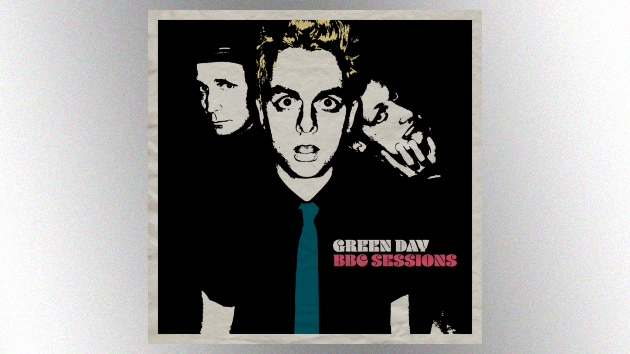
Green Day has announced a new live album, The BBC Sessions.
The 16-track set collects each of the punk trio’s four performances at the BBC’s Maida Vale Studios, recorded in 1994, 1996, 1998 and 2001, together for the first time on one album. It’ll be released December 10.
Leading up to the record’s arrival, Green Day will be dropping one song from The BBC Sessions each week. The first selection is the 1994 rendition of the song “2000 Light Years Away,” which you can download now via digital outlets.
Last month, Green Day wrapped their Hella Mega stadium tour alongside Weezer and Fall Out Boy. The band’s most recent album is 2020’s Father of All…
Here’s the track list for The BBC Sessions:
“She” (Live at the BBC June 8 1994)
“When I Come Around” (Live at the BBC June 8 1994)
“Basket Case” (Live at the BBC June 8 1994)
“2000 Light Years Away” (Live at the BBC June 8 1994)
“Geek Stink Breath” (Live at the BBC November 3 1996)
“Brain Stew/Jaded” (Live at the BBC November 3 1996)
“Walking Contradiction” (Live at the BBC November 3 1996)
“Stuck with Me” (Live at the BBC November 3 1996)
“Hitchin’ a Ride” (Live at the BBC February 12 1998)
“Nice Guys Finish Last” (Live at the BBC February 12 1998)
“Prosthetic Head” (Live at the BBC February 12 1998)
“Redundant” (Live at the BBC February 12 1998)
“Castaway” (Live at the BBC August 28 2001)
“Church on Sunday” (Live at the BBC August 28 2001)
“Minority” (Live at the BBC August 28 2001)
“Waiting” (Live at the BBC August 28 2001)
(ATLANTA) — A infant who was born at 25 weeks, after his mom was stabbed while walking on a trail in Atlanta, went home this month after spending nearly five months in the neonatal intensive care unit (NICU).
The baby, Theodore Jude, was released from the Children’s Hospital of Atlanta at Egleston on Oct. 8 with a farewell parade from nurses, who lined the halls with rattles to say goodbye.
“We’re obviously super grateful and praising that he’s alive and with us,” said Theodore’s mom, Valerie Kasper. “It’s been a long journey and it’s already been exhausting and like a rollercoaster, and now that he is home, this is the start of a new thing.”
Kasper, 34, was walking near her car with her 3-year-old son, Benjamin, on June 5, when she was stabbed multiple times by a homeless man who later admitted to the stabbing, according to the Associated Press. Police said they believe “mental illness played a role” in the case.
While Benjamin sustained no physical injuries in the attack, Kasper was transported to a local hospital, where she underwent an emergency C-section.
“The trauma of the attack was pretty intense obviously and the moment of going into surgery was just as scary,” said Kasper. “When I went into surgery I was crying, saying, ‘Save my baby and save my uterus,’ because I thought if he didn’t make it, I would want to have another baby.”
Theodore weighed just two pounds when he was born, and was immediately whisked away to the NICU, according to Kasper.
While they were performing the C-section, doctors also repaired Kasper’s colon and liver, which she said were both damaged in the attack.
She was not able to see her newborn son until 24 hours after giving birth, when she went in a wheelchair to visit him in the NICU.
“I was in so much pain that I couldn’t handle sitting in the wheelchair and I almost passed out in the NICU,” recalled Kasper, who was also not able to hold her son because he was still so fragile. “It was really hard.”
Kasper spent the next week in the hospital recovering from her injuries and from giving birth. Shortly after she was discharged on June 12, Kasper received a call from the NICU that Theodore was not doing well and would have to be transferred to another hospital for surgery.
“That was devastating,” she said. “I was thinking, ‘This is it. This is the life of the NICU. How am I ever going to fall asleep waiting for these phone calls?'”
Theodore survived what would be the first of four surgeries following his birth.
Kasper and her partner, Steven Barkdoll, both teachers, spent the next several months traveling back and forth between the NICU and their home, where they stayed with Benjamin.
Kasper was only able to hold Theodore for the first time during a visit to the NICU on June 28, three weeks after his birth.
“It took like three people to help me into the chair, to help the baby in my arms, and he was still intubated so it was just extremely fragile moving him,” she said. “I was sitting there kind of in pain, wanting to enjoy the moment but also having to be aware of my own limitations.”
After several more months of treatment, doctors discharged Theodore from the NICU on Oct. 8.
It was then that he met his older brother, Benjamin, for the first time.
“Benjamin just like ran over to the stroller, so excited to see his brother,” Kasper said of the meeting, five months in the making. “That was a big day.”
Though the family is now home under one roof for the first time in months, the recovery continues for both Theodore and Kasper, who still has limited mobility and pain from her wounds.
Theodore remains on oxygen and a feeding tube, as well as a heart monitor, according to Kasper. He also takes several medications and has frequent appointments with doctors and specialists.
“It’s like bringing home a newborn baby that needs lots of attention, and he needs a little even more attention,” said Kasper. “He’s a cutie pie and we love all the snuggles, but it’s still a stressful situation to be in.”
“We’re just monitoring him as he grows and supporting him the best we can to try to get him off all the machines and let him be a big boy,” she said of Theodore, who now weighs 11 pounds.
Kasper said she and her family have been touched by the outpouring of support they have received, from a GoFundMe account that has raised over $100,000 to friends and family offering support and the nurses and doctors who helped she and Theodore recover.
“It’s definitely a big motivator and relief, in a way, to know that evil can happen, or bad things can happen, and the love shines through,” she said. “I just get overwhelmed by that.”
“I feel that once we’re back on our feet, we’re going to have to be giving back for sure,” Kasper added.
It’s one year down for Megan Thee Stallion and Pardison Fontaine, who recently celebrated their anniversary — and that celebration came a major piece of bling for the “hot girl.”
Taking to social media on Wednesday, the couple shared snippets of how they spent the day together, which included lots of rose petals, matching pajamas, good food and drinks. They also showed off the iced-out chain Pardi gifted his beau that bears Megan’s name underneath a fire emoji.
Pardi captioned the post, “VYBE RECAP !! I don’t know who bought all the iPhone 13s but baby was mad as hell I couldn’t find her one. Thank you @luxe_vvsjewelers for helping me get out the dog house and putting the icing on the cake for the special day.”
Megan and Pardi began dating on October 18, 2020 but the “Savage” rapper didn’t confirm the relationship until February during an Instagram Live, where she candidly said, “Yeah, he my boyfriend.”
Khalid has dropped a new song, which is our first taste of an EP he plans to release in December.
The song is called “Present,” and in a statement, Khalid explains “My mom raised me on R&B and whether it’s the harmonies or melodies, it will always be a part of my music. ‘Present’ is just the beginning and I love that it has a dual meaning.”
“It feels good to be more ‘present’ after such a trying year in the pandemic,” he goes on. “And it’s also a ‘present’ for my fans that have been with me every step of the way.”
“Present” is a song from a new EP Khalid plans to release on December 3. Scenic Drive, which he describes as a “tape,” is meant to be a companion piece to his 2018 EP, Sun City.
Speaking to Apple Music’s Zane Lowe, Khalid says he’s also made a new album, but decided to release the EP first.
“There’s two projects. They’re related. They’re related but it’s like the more mature cousin. And then the album is like its own thing, it’s like this new-born baby,” he explains. It’s named after a real-life place in his hometown of El Paso: “It’s this drive up this mountain side,” Khalid notes.
Scenic Drive features eight songs, six of which are collaborations with R&B or hip hop artists, including Ari Lennox, Lucky Daye, 6lack and Kiana Ledé.
“Those are artists that I listen to, that I love,” Khalid tells Lowe. “Everybody that I collaborated with, we’re friends, and we love each other. We respect each other as artists
“Present” is Khalid’s second new song of 2021, following “New Normal.”
Mark Sagliocco/Getty Images for National Geographic
Hollywood is shaken after the death Thursday of Halyna Hutchins, a cinematographer who was working on the Western Rust when a firearm was discharged on the set by star Alec Baldwin, with an unknown projectile striking and killing Hutchins.
It had been reported the film’s writer and director, Joel Souza, was critically wounded in the incident, but actress and co-star Frances Fisher says that’s not the case.
In a tweet early Friday morning ET, Fisher said Souza is “out of the hospital,” and that quotes regarding Baldwin that ran in the Daily Beast “are incorrect.” The publication claimed the actor fired a prop gun believing it was loaded with blanks, and “did not know the prop contained live rounds.”
The Daily Beast also reported: “Although there were early reports that the gun contained live ammunition, the movie’s production company later said it contained blank rounds.”
An investigation into the incident is underway, and neither Baldwin nor anyone else involved has been criminally charged with any wrongdoing.
A firearm loaded with blank ammunition is still potentially deadly. One of the most notorious mishaps involving a weapon loaded with blanks happened on March 31, 1993, on the set of the film The Crow, where a rushed production led to the death of star Brandon Lee. A revolver was being used for a close-up, so prop bullets were needed to be seen in the pistol’s cylinder. One had broken off and stayed there, and when the pistol was chambered with a blank round, that force ejected the dummy slug, causing a mortal wound to Lee’s abdomen.
In 1984, actor Jon-Erik Hexum fatally shot himself on the set of the CBS series Cover Up when he playfully put a gun loaded with blanks to his own head and fired. The blank’s wadding — material that helps seal a charge inside of a round — ejected with enough force to penetrate Hexum’s skull.
In 2008, a Utah teen named Tucker Thayer fatally shot himself with a .38 loaded with blanks for a high school production.
For safety and budgetary reasons, many filmmakers have now switched to digital muzzle flashes, which are added in post-production.