The “Cut Your Hair” outfit has announced a U.S. tour for 2022, running from September 7 in San Diego to October 11 in Austin. Tickets go on sale beginning this Friday, November 5.
For the full list of dates and all ticket info, visit PavementBand.com.
Along with the U.S. shows, Pavement will play a run of European dates in the summer and fall of next year. The tour marks Pavement’s first full live outing since their 2010 reunion, which came 11 years after the band initially broke up in 1999.
Jessica Simpson celebrated being four years sober on Monday by sharing an unflinching look at her battle with alcoholism.
To mark the milestone, the fashion mogul shared a haunting throwback photo where she looks almost unrecognizable and explained it was taken on the day she vowed to stop drinking. Simpson’s face is red, puffy and streaked with tears as she sits in what appears to be her living room.
“This person in the early morning of Nov 1, 2017 is an unrecognizable version of myself,” the singer writes. “I had so much self discovery to unlock and explore. I knew in this very moment I would allow myself to take back my light, show victory over my internal battle of self respect, and brave this world with piercing clarity. Personally, to do this I needed to stop drinking alcohol.”
Simpson said she knew in that moment that drinking “kept my mind and heart circling in the same direction” and that she “was exhausted” from the pain.
“I wanted to live as a leader,” she continued, noting that in order to do so, she had to never look back “with regret and remorse over any choice I have made and would make.”
Simpson then opened up about the “stigma around the word alcoholism” and explained what it means to commit to a sober lifestyle.
“The real work that needed to be done in my life was to actually accept failure, pain, brokenness, and self sabotage. The drinking wasn’t the issue. I was,” she said. “I didn’t love myself. I didn’t respect my own power. Today I do.”
Simpson says she now embraces every part of herself, including the “parts of my life that are just sad,” and that makes her “free.”
When Peacock’s Saved by the Bell reboot returns for its upcoming second season on November 24, the show will pay tribute to original cast member Dustin Diamond, who died of lung cancer in February at the age of 44.
Diamond, who played Samuel “Screech” Powers from the show’s inception in 1989, through its College Years and New Class spinoffs — 12 years in all — was referenced in the first season of the reboot, though he was not invited onto it as a guest star.
Executive producer Franco Bario, who also produced the original series, tells Variety he spoke with Diamond ahead of the season one premiere to “fill him in on the Screech mentions in the first season and how those may lead us to possible stories that would include him in season two.” However, after learning of Diamond’s death, Bario and showrunner Tracey Wigfield decided to celebrate Dustin as an actor and Screech as a character in season two.
“I didn’t know him and I hadn’t met him,” Wigfield tells Variety. “Just thinking about it as a fan, I knew we wanted to do more than just putting a picture of him up at the end.”
After pitching the idea to original cast members Elizabeth Berkley Lauren, Mario Lopez, Mark-Paul Gosselaar, Tiffani Thiessen and Lark Voorhies, who appear on the show in different capacities, Wigfield and Bario wrote a scene in which the five OG cast members would reunite at the group’s favorite hangout, The Max, to remember their friend.
The tribute to Diamond also includes clips of him in the original series, to demonstrate that he was not just “an outrageous character” or “the butt of a joke,” but “to show how important he was to the show the other characters.”
Glamour announced Tuesday that Megan Thee Stallion and Amanda Gorman are being honored on the magazine’s Women of the Year list.
Megan Thee Stallion has won three Grammys, two MTV Video Music Awards, and one American Music Award. As her career continues to rise, she is about to graduate with a bachelor’s degree in heath administration from Texas Southern University.
“The bigger my platform gets, I start realizing that I’m not the only woman that goes through what I go through, and it doesn’t matter what scale it’s on,” she tells Glamour. “Mine is just public because I’m a public figure. I want to bring things to light so other women don’t feel like they have to continue to be silent.”
Beyond music, Megan’s becoming a powerful entrepreneur in fashion, as well as owner of a a Popeyes franchise.
“The sky not even the limit,” Megan says. “It can go past that.”
Writer and poet Amanda Gorman, 23, became an international figure when she read her poem, “The Hill We Climb,” at President Joe Biden‘s inauguration in January. The next month, she performed at the Super Bowl, and was included on TIME magazine’s 100 Next list under the category of Phenoms.
“I see so many students who are reading me in the classroom, or dressing up as me, or amazing artists that are creating cello compositions or ice skating routines based on my poem,” Gorman says. “That just makes my heart swell.”
Gorman has become a global role model, and she advises young women to embrace their individuality. “We need new, diverse, different voices, and the world isn’t served if people imitate me,” Amanda says. “The more that we have people who are excellent at doing what they do, I think the brighter and bolder we’ll all be for it.”
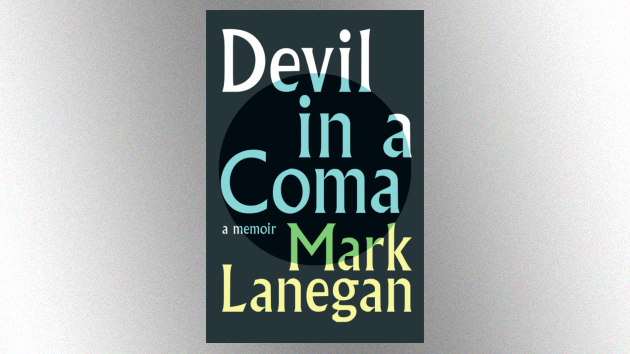
Screaming Trees frontman and frequent Queens of the Stone Age collaborator Mark Lanegan will recount his “terrifying” bout with COVID-19 in an upcoming memoir, Devil in a Coma.
According to the publisher’s description of the book, Lanegan awoke one morning in March 2021 “breathless, fatigued beyond belief, his body burdened with a gigantic dose of COVID-19.”
Lanegan was admitted to a hospital in Ireland, where he was living at the time, where he’d be “slipping in and out of a coma, unable to walk or function for several months and fearing for his life.”
“As his situation becomes more intolerable over the course of that bleakest of springs he is assaulted by nightmares, visions and regrets about a life lived on the edge of chaos and disorder,” the description reads.
That apparently inspired what would become Devil in a Coma, which uses “vignettes of prose and poetry” to tell a “terrifying account of illness and the remorse that comes with it.”
Back in 2016, John Mayer partnered with the upscale laundry and fabric care company The Laundress to release a capsule collection of laundry detergent called Out West. Now, he’s indulging his love for laundry once again with another Laundress capsule collection called Way Out West.
Today at 4 p.m. ET, you can chat with John live on Instagram and be among the first to shop the new collection live — just reserve a spot over at TheLaundress.com.
People reports that the new Way Out West collection, which officially launches Wednesday, includes a laundry detergent and a fabric spray, priced at $20 and $16, respectively. In a statement via People, Jon says, “I first discovered The Laundress products over six years ago, and we aligned so organically on the philosophy that if you love fashion, you should be into fabric care.”
“I find something so meditative about the process, which makes laundry day a very soothing ritual for me,” he adds. “Way Out West is an extension and embodiment of that passion, and I am so proud to introduce everyone to the new collection.”
Way Out West, inspired by John’s current home in Montana, is designed to “smell like home,” no matter where your home is. It features notes of black pepper, neroli, amyris, cedar, sandalwood and musk. The bottles feature a pink and blue motif that matches one of John’s favorite articles of clothing, and all of the packaging is made of recycled plastic.
Jimmie Allen meets a “Señorita” in a pulsing new song.
The track is a diversion from the Delaware native’s country sound, leaning more into the pop and hip-hop realm that also infuses a flamenco vibe into the music, whisking the listener off to a tropical beach for romance with an island lover.
“I’m waiting patiently/But baby don’t you make me wait too long/I’ve got it bad/My fantasy/You’re everything wrapped up and I’ve been waiting on ya/So let’s say/My little señorita/My little sugar at the bottom of a margarita that I’m sipping on a beach,” Jimmie sings over a Spanish-influenced beat.
“Something Different,” Jimmie notes in the caption accompanying the song.
When not working on new music, Jimmie is competing on Dancing with the Stars, and made it through another elimination round Monday night. He’ll return next Monday night when Dancing with the Stars airs on ABC at 8 p.m. ET.
Now that Mariah Carey has officially declared it to be the start of the Christmas season, what better time for her to announce her latest holiday project?
For the second year in a row, the Queen of Christmas will have her own Apple TV+ special. Mariah’s Christmas: The Magic Continues will debut in December and will feature R&B/pop star Khalid and gospel music legend Kirk Franklin. All three artists will perform their new single, “Fall In Love at Christmas,” which is available for pre-order now.
The single officially drops on Friday but you can hear a snippet now on Instagram.
You can also stream last year’s presentation, Mariah Carey’s Magical Christmas Special, which featured Ariana Grande, Jennifer Hudson, Tiffany Haddish, Billy Eichner, Snoop Dogg and ballerina Misty Copeland.
In other Mariah news, her best-selling memoir, The Meaning of Mariah Carey, is out today in paperback.
Thomas Rhett is dropping new music, but he can’t wait to share it with fans.
On Tuesday, the superstar shared a snippet of a new track, “Slow Down Summer,” that will be released on Friday. Set in a small country town, the song captures a sweet summer love that the young couple at the forefront hopes doesn’t fade with the season.
“Falling fast in a one lane town/Tangled up with your lips on mine/Never seen a brighter green than those eyes/And I put my jacket on your shoulder/Wishing the weather wasn’t getting colder/Letting you go/Holding onto each other/Closing our eyes sayin’/Slow down summer,” Thomas sings in the chorus, lip-syncing to the recording as he walks down a hallway.
“New song dropping Friday. Anyone else wish they could Slow Down Summer?” Thomas ponders in the caption.
“Omg I am so excited!!!!” writes one enthusiastic fan, with another calling it, “straight fire.”
Recently, Thomas celebrated his 18th #1 hit with “Country Again,” the title track of his latest album, Country Again: Side A. He’s working on Side B, which is expected to be released later this year.
ZZ Top has partnered with the Waco, Texas-based Balcones Distilling company to create the band’s own unique brand of whiskey, Tres Hombres, named after the Rock & Roll Hall of Fame trios 1973 studio album.
In celebration of ZZ Top’s legacy, the liquor is made using three different grains — roasted blue corn, barley and rye.
Tres Hombres whiskey is available for pre-order now at BalconesDistilling.com and can be ordered soon at KegNBottle.com. The spirits will be available at liquor stores throughout Texas and in select other states starting in mid-November.
“ZZ Top’s love of Texas runs deep and we can’t think of a better way to celebrate that than by creating something together with Balcones — The Original Texas Whisky,” says the band’s manager, Carl Stubner, about the new collaboration. “Tres Hombres exemplifies what can be achieved when brands care deeply about their respective products and legacy.”
Adds Balcones Distilling’s head distiller, Jared Himstedt, “It was incredible to collaborate with the ZZ Top team to develop an exclusive whisky that celebrates ZZ Top’s and Balcones’ shared Texas roots. To actually get to taste through the blending process with ZZ Top and make a whisky that synthesizes our joint vision for Tres Hombres was an honor.”
In other news, ZZ Top’s 2021 U.S. tour continues this Saturday, November 6, in Key West, Florida. The trek winds down December 12 in Midland, Texas.