Cardi B is not feeling the current state of hip hop, and she’s blasting rappers for having a death wish and making boring, depressing music.
“I feel like we keep hearing the same song over and over and over again. These rappers nowadays, all of them wanna die,” she said Monday during an Instagram Live session. She also declared that rappers “need to stop doing lean and smoking weed, adding, “You know, this the thing about these rappers, right? They got money and they start buying too much motherf***ing weed, and too much lean and they make that slow s***.”
The Grammy winner, who was announced Tuesday as the host of the American Music Awards, says that club DJs need her to drop hot, new tracks.
“They missing me. They missing my music,” she said.
Also on Monday night, the “WAP” rapper displayed a special gift from DJ Khaled, a multi-layered diamond bracelet from Pristine Jewelers that she described as a “chandelier.”
“I am so surprised, so in shock so in awe. I can’t believe it…I am so thankful and so grateful,” she said. “I just want to give DJ Khaled a big hug.
(LOS ANGELES) — Following nearly two years of reported sightings of a man flying at relatively high altitudes around aircrafts landing at Los Angeles International Airport, the police department released a new theory — there may not have been a man after all.
A helicopter crew captured images of a life-sized balloon flying over Century City last November, near where earlier sightings had been reported, according to the Los Angeles Police Department.
The balloon reportedly resembles the fictional character “Jack Skellington” from Tim Burton’s 1993 movie “A Nightmare Before Christmas.”
The first reported sighting of a possible jetpack flier was made on Aug. 30, 2020, after two different commercial airline pilots reported seeing a man in a jet pack hovering near LAX, ABC News reported.
The second report was made on Oct. 14, 2020, and the third was made on July 28, 2021, all in the same surrounding area as the first.
Federal authorities said that none of the theories surrounding the sightings have been confirmed, and they are continuing to investigate the situation with the Federal Aviation Administration.
“The FBI has worked closely with the FAA to investigate reported jetpack sightings in the Los Angeles area, none of which have been verified,” the FBI said in a statement to ABC News on Tuesday. “One working theory is that pilots might have seen balloons.”
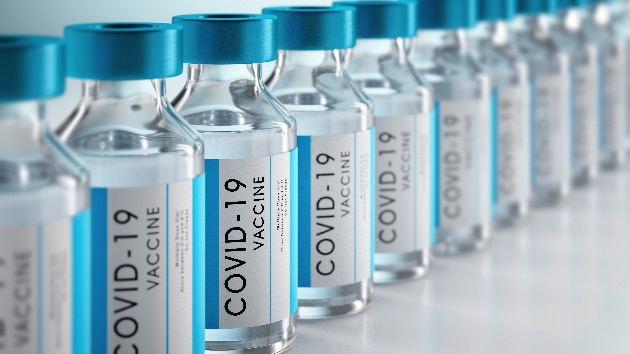
(ATLANTA) — A committee of independent experts advising the Centers for Disease Control and Prevention voted unanimously on Tuesday to recommend the Pfizer vaccine for children 5-11, checking off one of the last boxes in the authorization process.
CDC Director Rochelle Walensky is expected to issue the final recommendation as soon as Tuesday evening, capping off the process and allowing the first shots to be administered by Wednesday morning.
But vaccinations are not expected to kick into high-gear until Nov. 8, when the White House says Pfizer’s pediatric vaccines will be more widely accessible across the nation.
About 15 million doses are expected to ship out over the next week. The majority, about 10 million, will be available at pediatrician’s offices, children’s hospitals, community centers and mass vaccination sites. About 5 million doses will go to pharmacies.
Many parents are anxious to protect their children after the delta surge over the summer led to increased cases and hospitalizations among kids. Though the variant is not more deadlier, it is more transmissible — and because kids are unvaccinated, the variant rocketed through schools and camps.
The most recent data from Pfizer’s clinical trials found that the vaccine for children ages 5-11 was nearly 91% effective against symptomatic illness.
For kids, the vaccine will be given at a smaller, one-third dose.
The vaccine also appears safe. The company says none of the children in clinical trials experienced a rare heart inflammation side effect known as myocarditis, which has been associated with the mRNA vaccines in very rare cases, mostly among young men.
The CDC’s expert on myocarditis, Dr. Matt Oster, a pediatric cardiologist at Children’s Healthcare of Atlanta, said unequivocally at Tuesday’s meeting that he believes the benefits of the vaccine for 5-11 year-olds outweighs the potential risks of vaccine-related myocarditis.
“The bottom line is getting COVID I think is much riskier to the heart than getting this vaccine, no matter what age or sex you have,” Oster told the committee.
Meanwhile, the risks of not getting vaccinated loom far larger than the rare and mostly mild vaccine side effects seen in some adolescents, CDC’s Dr. Sarah Oliver said.
For every million pediatric vaccinations, more than 18,500 COVID cases and 80 hospitalizations could be prevented, Oliver estimated, using a model based on cases throughout the pandemic so far. If cases returned to the peak seen during the delta variant, over 58,200 COVID cases and over 220 hospitalizations could be prevented.
“There could also be possible prevention of transmission and a greater confidence in a safer return to school and social interactions,” Oliver said. “Wide use of an effective vaccine would reduce the public health burden of COVID in children five through 11 years of age.”
Other CDC committee members agreed.
“I think the data supports that we have one more vaccine that saves lives of children and that we should be very confident to employ it to the maximum,” said Dr. Sarah Long, a member of the CDC’s committee and professor of pediatrics at Drexel University.
Last week, all of the efficacy and safety data was reviewed by a panel of experts at the Food and Drug Administration, which then voted nearly unanimously to authorize the vaccine.
Then, last Friday, the vaccine was authorized by FDA acting commissioner Janet Woodcock.
Whether parents will embrace the vaccine for their kids is still a question. In an October poll, the Kaiser Family Foundation found that about a third of parents with kids ages 5-11 were willing to vaccinate their kids right away, while another third wanted to “wait and see.” The figures represented a slight uptick in vaccine acceptance among parents of elementary-school-aged kids since July, but they have stayed steady since September.
Woodcock told reporters on Friday that she hoped parents would quickly see the benefits.
“We certainly hope that as people see children getting vaccinated and being protected, being able to participate in activities without concern, that more and more people will get their kids vaccinated,” she said.
And she emphasized the urgency of preventing the conditions that can come with COVID diagnoses in kids.
“As a parent, if I had young children this age group I would get them vaccinated now. I would not want to take the risk that they would be one of the ones who would develop long COVID, who would develop multi-system inflammatory syndrome or have to be hospitalized from from the virus,” Woodcock said.
ABC News’ Anne Flaherty contributed to this report.
(NEW YORK) — As the COVID-19 pandemic has swept the globe, more than 5 million people have died from the disease worldwide, including over 747,000 Americans, according to real-time data compiled by Johns Hopkins University’s Center for Systems Science and Engineering.
Just 67.9% of Americans ages 12 and up are fully vaccinated against COVID-19, according to data from the U.S. Centers for Disease Control and Prevention.
Here’s how the news is developing. All times Eastern:
Nov 02, 5:08 pm
CDC panel votes ‘yes’ on Pfizer vaccine for young kids
An independent CDC advisory panel voted “yes” Tuesday to recommend the Pfizer vaccine for the roughly 28 million children ages 5 to 11 in the U.S.
The vote was unanimous.
“The data supports that we have one more vaccine that that saves lives of children and that we should be very confident to employ it to the maximum,” panel member Dr. Sarah Long said.
“I think we I feel that I have a responsibility to make the vaccine available. If I had a grandchild, I would certainly get that grandchild vaccinated as soon as possible,” said panel member Dr. Beth Bell.
Next, CDC Director Rochelle Walensky must sign off; no pediatric vaccinations will start until Walensky gives the green light. If that happens Tuesday evening, shots could start going into younger children’s arms beginning Wednesday.
Nov 02, 3:58 pm
COVID more risky to heart than vaccine: Expert
The CDC’s expert on myocarditis, a rare heart inflammation condition that’s been linked to the vaccine, said Tuesday that he believes the benefits of the vaccine for 5- to 11-year-olds outweighs the potential risks of myocarditis.
“The bottom line is: getting COVID, I think, is much riskier to the heart than getting this vaccine, no matter what age or sex,” Dr. Matt Oster said.
None of the more than 3,000 children in the age 5 to 11 clinical trials developed myocarditis from the vaccine, which has been seen in a rare number of cases, mostly among young men.
Oster said, “I believe it’s less likely that the 5- to 11-year-olds will have myocarditis. Although we will watch and see for sure, and they may have some, but I don’t think it’s going to be nearly to the extent of the older adolescents and young adults.”
-ABC News’ Cheyenne Haslett
Nov 02, 1:51 pm
New study reaffirms need for additional vaccine shots for immune-compromised people
A new study finds mRNA COVID-19 vaccines are 77% effective against hospitalizations among people with immune compromised conditions, compared to 90% effective among hospitalizations among people without such conditions.
This study — a multistate analysis of nearly 90,000 hospitalizations from January to September 2021 — adds more evidence that vaccines don’t work as well among people with compromised immune systems. Also, people with certain immune compromised conditions are more at-risk than others.
-ABC News’ Sony Salzman
Nov 02, 1:27 pm
Daily case average rising, hospitalizations declining
The daily case average in the U.S. has jumped by 13.3% in the last week, according to federal data.
Alaska currently has the country’s highest infection rate, followed by Montana, North Dakota and Wyoming. Puerto Rico, Florida and Hawaii have the lowest infection rate.
Hospitalizations are declining. About 48,000 patients are currently hospitalized with COVID-19 in the U.S., down by nearly 104,000 patients from eight weeks ago.
Hospital admissions are also down by 11.7% in the last week, according to federal data.
-ABC News’ Arielle Mitropoulos
Nov 01, 8:28 pm
Major pharmacy chains to offer Pfizer vaccine to children 5-11
Several major pharmacy chains told ABC News they are gearing up to offer the Pfizer vaccine to 5- to 11-year-olds within days of its approval by the U.S. Centers for Disease Control and Prevention.
The agency is expected to give the green light as early as Tuesday night. If approved, roughly 28 million children would be eligible for the mRNA vaccine.
“We expect to be able to provide vaccinations for this age group shortly after November 3,” Rite Aid said in a statement.
Walgreens said in a statement that, “appointments will open as we receive supply to stores, beginning this week.”
A spokesperson for CVS said the chain will share more specifics about its vaccine rollout once the authorization is made, and will provide customers with information on its website.
“We have played a prominent role in administering third doses to the immunocompromised and authorized booster shots, and are prepared to expand vaccine eligibility to ages 5-11 as soon as authorized to do so by public health agencies,” CVS said in a statement.
Nov 01, 4:33 pm
Details on vaccine mandates for businesses expected in coming days
A federal rule on vaccine mandates for businesses will be released this week, according to the Labor Department.
The rule will require employers with 100 employers or more to mandate the vaccine or weekly testing. It also will require large businesses to provide paid time off to workers to get the shot and recover from side effects from the vaccine.
The department said in a statement, “On November 1, the Office of Management and Budget completed its regulatory review of the emergency temporary standard. The Federal Register will publish the emergency temporary standard in the coming days.”
It’s not clear when the rule will take effect.
President Joe Biden first announced the rule in September and it’s since been making its way through the regulatory process.
Nov 01, 3:52 pm
Pediatric cases continue to decline
The U.S. reported about 101,000 child COVID-19 cases last week, marking the eighth consecutive week of declines in pediatric infections since the pandemic peak of nearly 252,000 cases in early September, according to the American Academy of Pediatrics and the Children’s Hospital Association.
The rate of pediatric hospital admissions is also declining.
Approximately 45.3% of adolescents ages 12 to 17 have been fully vaccinated against COVID-19, according to federal data.
Severe illness due to COVID-19 remains “uncommon” among children, AAP and CHA said. However, AAP and CHA continue to warn that there is an urgent need to collect more data on the long-term consequences of the pandemic on children, “including ways the virus may harm the long-term physical health of infected children, as well as its emotional and mental health effects.”
Nov 01, 3:15 pm
What to expect at Tuesday’s CDC panel meeting on vaccinating young kids
An independent CDC advisory panel will convene at 11 a.m. Tuesday to debate and hold a nonbinding vote on whether to recommend the Pfizer vaccine for the roughly 28 million kids ages 5 to 11 in the U.S.
The CDC panel is expected to vote around 4:15 p.m.
If the panel decides to move ahead, CDC Director Rochelle Walensky must sign off on those specific recommendations, which would likely happen Tuesday evening.
No pediatric vaccinations will start until Walensky gives the green light. If that happens Tuesday evening, shots could start going into younger children’s arms beginning Wednesday.
The White House has purchased 65 million Pfizer pediatric vaccine doses — more than enough to fully vaccine all American children in this age group.
For her latest video, “Fallen Fruit,” Lorde returns to the same beach where she filmed the clip for “Solar Power,” but this time, things aren’t quite so idyllic.
The video shows Lorde, wearing a two-piece, strapless beige gown, walking slowly through pathways lined with flowers and fruit, and daytime beach scenes where people seem to be working or playing. That’s intercut with scenes of her in the same outfit, walking through those same scenes at night — except now, everything seems to be wrecked, strewn about or set on fire.
At the end of the clip, Lorde walks down to an empty beach, intercut with her walking on the beach at night. At night, there’s a car waiting for her, and a driver who slips a coat around her shoulders and hands her a bottle of water before driving her away.
It’s all very metaphorical, and in a newsletter to fans, quoted by Uproxx, Lorde explains, “In the ‘Solar Power’ video, you were introduced to the island as a lush paradise — glistening water, blue skies, not a grain of sand out of place…Cut to: humans doing as they do, getting greedy, treating the land with disrespect and stripping it of its beauty. There’ll always another pristine place to start again, right?”
She adds, “The gardens that were once lush and fruitful are now on fire. The fishing boats are busted up and overturned. All that’s left of the peaches are their pits. Amid all that, my character makes a choice.”
“Fallen Fruit” is from Lorde’s latest album, Solar Power.
Summer Walker revealed a star-studded lineup for her upcoming album, Still Over It, Tuesday on Instagram, including Cardi B, Pharrell Williams, SZA and Ciara.
The 20-track project, which will released Friday, also features Omarion, Lil Durk and Ari Lennox, plus JT from CityGirls, who teamed with Summer for the first single, “Ex for a Reason.”
Cardi narrates the first song, “Bitterness,” and the album closes with Ciara narrating “Ciara’s Prayer.” Still OverIt is the follow-up to Walker’s 2019 number one, RIAA-Platinum debut album, Over It.
This week, the 25-year-old singer, who is a native of the A-T-L, will host an album listening session at the Atlanta University Center, open exclusively to the women of Spelman College and Clark Atlanta University.
(KENOSHA, Wisc.) — A jury heard two wildly different scenarios of how two men were killed and another was wounded allegedly by teenager Kyle Rittenhouse during a chaotic 2020 protest in Kenosha, Wisconsin.
In opening statements presented Tuesday morning to the Kenosha County Circuit Court panel, a prosecutor said the evidence will show Rittenhouse, 18, was an “active shooter” whose reckless behavior led to the deadly incident. But a defense attorney countered that the same evidence indicates that it was “reasonable” for the teenager to use deadly force to defend himself from what he claims was a mob attacking him.
Rittenhouse has pleaded not guilty to felony charges of first-degree reckless homicide, first-degree intentional homicide and attempted first-degree intentional homicide. He has also pleaded not guilty to a misdemeanor charge of possession of a firearm by an individual under the age of 18, and an infraction of violating a curfew that was imposed on the city at the time.
‘The only person who killed anyone was the defendant’
“Out of the hundreds of people that came to Kenosha during that week, the hundreds of people that were out on the streets that week, the evidence will show that the only person who killed anyone was the defendant, Kyle Rittenhouse,” Thomas Binger, a Kenosha County assistant district attorney, told the jury multiple times during his presentation.
The chaos unfolded on Aug. 25, 2020, after protests erupted in Kenosha over a police officer shooting Jacob Black, a 29-year-old Black man, paralyzing him. Riots, vandalism and looting broke out, prompting an online call for armed “patriots” to come to the city to protect lives and property.
Rittenhouse, who was then 17, answered the call to help, his attorney, Mark Richards, told the jury. Richards used a series of photos and videos in his statement appearing to show Rittenhouse being kicked, hit in the head with a skateboard and having a gun aimed near his head when he shot and killed one man, Anthony Huber, 26, and severely wounded another, Gaige Grosskreutz, 27.
But Binger told the jurors that the fatal face-off started minutes earlier when Rittenhouse chased an unarmed protester, Joseph Rosenbaum, 36, and shot him four times, including a fatal shot to the back, in a used car lot Rittenhouse claimed to have been protecting.
Binger argued there was nothing reasonable about the behavior of Rittenhouse that night and suggested that the teenager from Antioch, Illinois, who was armed with an AR-style semiautomatic rifle with a 30-round clip, was the aggressor who sparked the deadly confrontation.
“Based on all of that evidence, I think you will agree with me that the defendant is guilty of all of these charges,” Binger told the 11 women and nine men of the jury.
‘Privileged under the law of self-defense’
Richards, who gave his statement after Binger, blamed Rosenbaum for escalating the violence that led to his death as well as the killing of Huber and the wounding of Grosskreutz, who is expected to testify at the high-profile trial.
“Mr. Rosenbaum is ultimately the individual who lit the fuse that night,” said Richards, who — during a hearing out of the presence of the jury — claimed Rosenbaum was discharged from a hospital that day after allegedly attempting suicide.
Richards said the evidence will show Rosenbaum had threatened to kill Rittenhouse and others who were attempting to protect property earlier in the evening. He claimed Rosenbaum, who was allegedly setting garbage cans on fire, seized on his promise when he found Rittenhouse isolated from his cohorts and that he attempted to “steal” the teenager’s gun and use it on him.
He said the case “isn’t a whodunit” and that Rittenhouse’s actions were “privileged under the law of self-defense.”
Richards displayed photos and video that he said show Rittenhouse using restraint from shooting people approaching him with their hands up, including Grosskreutz when he initially approached Rittenhouse after he had been knocked to the ground and kicked. He claimed Rittenhouse only shot Grosskreutz when the man aimed a gun near his head.
He then said Rittenhouse fatally shot Huber after Huber allegedly hit him in the head with a skateboard twice, the second time after the teen was on the ground and kicked in the face by an unidentified individual he referred to as the “jump-kick man.”
“The defendant believes that the amount of force which he used or threatened to use was necessary to prevent or terminate interference and that his belief was reasonable,” Richards told the jury. “You as jurors will end up looking at it from the standpoint of a 17-year old under the circumstances as they existed on Aug. 25.”
First prosecution witness
The prosecution called its first witness, Dominick Black, the boyfriend of Rittenhouse’s sister, who allegedly purchased the rifle for Rittenhouse and joined Rittenhouse in Kenosha on the night of the killings.
Under questioning from both Binger and Richards, Black said that during the protest he was positioned on the roof of the car dealership they were protecting. He claimed protesters were throwing rocks and at least one gas bomb at him, but he said neither he nor anyone on the roof with him retaliated.
“Did you feel that by these people throwing rocks at you or throwing a gas bomb at you that you were in danger?” Binger asked.
Black, 20, replied, “I mean pain, yes, but not danger. I knew it wasn’t going to kill me.”
“So, you felt like it wasn’t enough to use deadly force?” Binger asked.
“Correct,” answered Black, who has pleaded not guilty to two counts of intentionally giving a dangerous weapon to a person under the age of 18, causing death, and is scheduled to go on trial in January.
Under cross-examination from Richards, Black said that during the protest he witnessed Rittenhouse providing first aid to injured protesters and confirmed that he told investigators “the only person I saw helping anyone was Kyle.”
The trial is scheduled to last a little over two weeks. Twenty jurors were chosen to hear the case, and 12 will be picked at the end of the evidence portion of the trial to decide Rittenhouse’s fate.
Ted Lasso Emmy winner Jason Sudeikis, The Mandalorian‘s Rosario Dawson, and Star Wars star Mark Hamill are taking part in an all-star virtual reading of the holiday classic It’s a Wonderful Life, benefitingThe Ed Asner Family Center (TEAFC), a charity dedicated to helping people with special needs and their families.
This year, Sudeikis will play Jimmy Stewart‘s role of George Bailey, while his real-life uncle, Cheers alum George Wendt, will play George’s forgetful Uncle Billy.
Asner, who died in August, participated in last year’s event, which featured SNL‘s Pete Davidson as George Bailey.
This year’s one-night-only event, hosted again by Tom Bergeron, also features Martin Sheen, Mandy Patinkin, Lou Diamond Phillips, Futurama‘s Phil Lamarr, Ron Funches, Ed Harris and more.
The event, in partnership with Turner Classic Movies and sponsored by MeTV, takes place Sunday, December 5, 2021, at 8 a.m. Eastern time. For a minimum donation of $25, you can stream the virtual table read performance, but commemorative artwork and will also be available at TEAFC.org/wonderful.
Matt Asner, son of Ed Asner & Co-Founder of The Ed Asner Family Center, said of the event, “My father’s passing has left an indescribable hole in my heart. For our annual fundraising gala this year, I want to honor my father’s legacy as both a legendary actor and a staunch advocate for people of all abilities.”
Jonathan Majors, who stars in Netflix’s critically-acclaimed Black cowboy drama The Harder They Fall, is taking his talents to Saturday Night Live.
NBC announced on Tuesday that they’ve tapped Majors, along with Shang-Chi and the Legend of the Ten Rings star Simu Liu, for upcoming SNL hosting duties. Majors will host the series on November 13 with Taylor Swift as the musical guest. Meanwhile, Liu will host on November 20, with rapper Saweetie to perform. This will be the SNL hosting debut for both Majors and Liu.
In other news, Gugu Mbatha-Raw is joining Edgar Ramírez for the upcoming romantic drama Nobody’s Heart, Variety has learned. Directed by Isabel Coixet, the film is an adaption of William Boyd’s best-selling short story, Cork, which is based on the life of celebrated Portuguese poet Fernando Pessoa. It follows a new widow named Lily, who inherits her husband’s cork factory and begins an unexpected relationship with one of his workers. Nobody’s Heart is set to begin filming in Portugal in January.
Finally, ICYMI, Warner Media has added season two of the Peabody Award–winning drama David Makes Man to its streaming site, HBO Max. This comes after they’ve recently added a new lineup of Black content, including the sitcoms Hangin’ with Mr. Cooper, In the House, The Jamie Foxx Show, Martin and The Parent ’Hood.
The Grammy-winning star will release a children’s picture book, The Curly Girl Blues, in January. Tori incorporated elements of her own childhood, themes and characters from her personal life and lessons she’s learned in her career into the story.
“As someone who always felt like I was different from everyone else growing up I wanted to encourage young kids to embrace their individuality and characteristics that make them unique,” Tori explains. “This book isn’t just about loving yourself, it’s also about celebrating the different cultures around us. My hope is to inspire the next generation and show how beautifully diverse this world is.”
The book’s description declares, “Everybody looks different, and we often get caught in the trap of comparing ourselves to the appearance of others instead of celebrating ourselves. Follow along as Emma comes down with a case of The Curly Girl Blues.”
The book is the first one released by Lumilly, a publishing house dedicated to releasing “meaningful” children’s picture books.
Tori will reprise her role as Meena in Sing 2, the sequel to the 2016 animated hit Sing, which opens December 22. Also in the cast: Halsey and U2‘s Bono.