(NEW YORK) — Summer Zervos, a former contestant on “The Apprentice,” has agreed to end her defamation lawsuit against former President Donald Trump.
The The joint stipulation said the case is “dismissed and discontinued.”
Zervos’ attorneys and attorneys for Trump filed a stipulation of discontinuance that offered no explanation for the decision.
“Today the parties have ended Zervos v. Trump,” Zervos’ attorney, Beth Wilkinson, said in a statement. “After five years, Ms. Zervos no longer wishes to litigate against the defendant and has secured the right to speak freely about her experience. Ms. Zervos stands by the allegations in her complaint and has accepted no compensation.”
Zervos had claimed Trump groped her in 2007 at a hotel in Beverly Hills, California, and then defamed her when he denied it during the campaign.
In a statement Friday that called the allegations “made up … for publicity or money,” Trump said: “It is so sad when things like this can happen, but so incredibly important to fight for the truth and justice. Only victory can restore one’s reputation!”
Trump’s attorney, Alina Habba, said Friday the decision to end the case belonged to Zervos.
“She had no choice but to do so as the facts unearthed in this matter made it abundantly clear that our client did nothing wrong,” Habba said in a statement to ABC News. “It is a privilege to defend President Trump, who has been relentlessly attacked and viciously hounded by bad faith actors.”
Habba also said Trump did not pay Zervos.
The former president had recently been ordered to sit for a deposition before Christmas.
In a statement last month abut the deposition, Zervos’ attorney, Moira Penza, said: “We just don’t believe our client can be further prejudiced in delaying this litigation any longer. We do not believe there are any outstanding issues that would prohibit the parties from engaging in depositions.”
As Letitia Wright recovers at home in London from an injury suffered on the set of Black Panther: Wakanda Forever, her vaccination status may determine if she can return to work in America. CDC’s new guidelines released Monday demand that “non-citizen, non-immigrant air travelers must show proof of full vaccination to fly into the United States.” Wright, who portrays Shuri, the sister of Black Panther T’Challa, who was played by the late Chadwick Boseman, is not a U.S. citizen. Sources tell The Hollywood Reporter that the 28-year-old actress is not vaccinated against COVID-19.
Because of her injury, production on the sequel is being shut down Thanksgiving week until the early part of 2022.
Wesley Snipes is giving the thumbs-up to Mahershala Ali, who is replacing him as the star of the Blade franchise. When a person tweeted that the two-time Oscar winner is going to “have a hard time outdoing” Snipes as the MCU superhero vampire, the New Jack City star came to his defense. “He will do great,” Snipes tweeted, along with a prayer hands emoji. The 59-year-old actor played Blade in the 1998 film, as well as in sequels released in 2002 and 2004. In 2019, it was announced that Moonlight actor Ali was cast in an upcoming reboot film, which is now in pre-production.
Finally, Deadline reports that Offset‘s streetwear competition series The Hype has been renewed by HBO Max for a second season. Season one featured special guest appearances from his wife, Cardi B, as well as by A$AP Ferg, Dapper Dan and Wiz Khalifa. The winning designs from the first season were featured on the e-commerce website StockX.
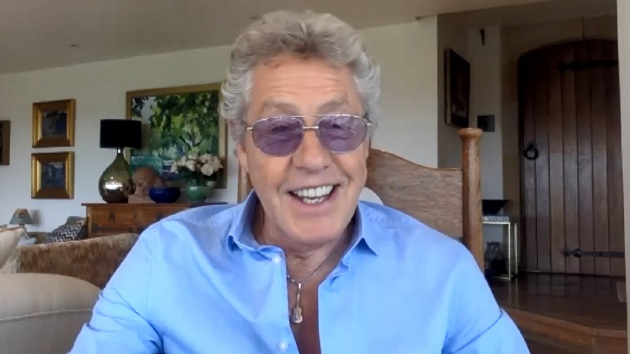
In a new video interview posted at the Coda Collection website, Who frontman Roger Daltrey discusses a wide range of topics, including how he his feels about the possibility of the U.K. rock legends making another album.
Daltrey admits that he isn’t enthusiastic about a new album project because he doesn’t think it would make any money. “There’s no point in making any music if you can’t earn a living out of it. For me anyway…[W]hat’s the point,” he declares. “On the last record [2019’s WHO], it cost me money to make it. I don’t see the point in doing much of that, you know? I’m too working class for that.”
Roger continues, “I don’t know whether we will ever make any more new music, but I never say never. Let’s put it that way.”
Daltrey then comments that he only speaks to Who band mate Pete Townshend “once a year.” He adds, “I haven’t seen him for two years. I miss him, seeing him. Always enjoy seeing him. But we’re not that kind of friend. We don’t need to be. We know we’re there for each other. I’ve always been a bit of a loner anyway.”
Daltrey also shares his opinion about Paul McCartney‘s recent comment labeling The Rolling Stones “a blues cover band.”
“I know what he means, but The Stones have written some great songs,” Roger maintains. “But they are in the blues…format. It’s like comparing cheese and apples. They’re both very tasty, but the cheese does one thing and the apple does another.”
He also praises Mick Jagger, saying he’s “still the number-one rock ‘n’ roll showman.”
Check out the full Q&A at CodaCollection.co, which is the companion website for Amazon Prime’s music-themed pay streaming service, The Coda Collection.
(GLASGOW, Scotland) — Leaders from nearly every country in the world have converged upon Glasgow, Scotland, for COP26, the United Nations Climate Change Conference that experts are touting as the most important environmental summit in history.
The conference, delayed by a year due to the COVID-19 pandemic, was designed as the check-in for the progress countries are making after entering the Paris Agreement, which aims to limit global warming to well below 2 degrees Celsius, a value that would be disastrous to exceed, according to climate scientists. More ambitious efforts aim to limit warming to 1.5 degrees Celsius.
Not one country is going into COP26 on track to meeting the goals of the Paris Agreement, according to experts. They will need to work together to find collective solutions that will drastically cut down on greenhouse gas emissions.
“We need to move from commitments into action,” Jim Harmon, chairman of the World Resources Institute, told ABC News. “The path to a better future is still possible, but time is running out.”
All eyes will be on the biggest emitters: China, the U.S. and India. While China is responsible for about 26% of the world’s greenhouse gas emissions, more than all other developed countries combined, the cumulative emissions from the U.S. over the past century are likely twice that of China’s, David Sandalow, a senior research scholar at Columbia University’s Center on Global Energy Policy, told ABC News.
Latest headlines:
-US, China announce joint statement addressing climate crisis
-America ‘ready to take on the challenge,’ Pelosi says
-Obama addresses COP26, endorses Biden’s ‘Build Back Better’ bill
-American agriculture is ready to tackle climate change, agriculture secretary says
-US needs to ‘get in the game’ on clean energy transitions, energy secretary say
-Biden, world leaders push to conserve global forests
Here’s how the conference is developing. All times Eastern.
Nov 12, 5:10 pm
Final Glasgow deal yet to come as negotiations continue on last day
Despite being the last stipulated date for the COP26, country representatives continue to work on finalizing the draft of the Glasgow deal. The negotiations are expected to continue into the night.
Countries continue to dispute who bears the financial burden of climate action and the deadlines for carbon emissions reductions. Some disagreements also took place over the semantics of the draft as representatives argued over whether “requests” or “urges” was a better fit when talking about climate goals.
The final day also witnessed walkouts and protests from climate activists around the world who claimed their voices were not being heard.
Crowds outside chanted: “Fighting for justice, and for liberation.”
Nov 11, 4:33 pm
Developing, vulnerable countries point fingers at rich countries, COP26 draft letter
Developing countries, including top emitters China and India, are asking for changes to the COP26 draft letter focusing more on reparations from established countries.
On Wednesday, Diego Pacheco Balanza, the head of Bolivia’s delegation and spokesman for the Like-Minded Developing Countries group, along with 21 other countries released an opposition to the draft agreement.
They say it is unfair for rich countries who built their economies on fossil fuels to tell developing countries what to do without recognizing that historical responsibility.
“We will never achieve the targets they are putting forward for the entire world. So we need to fight — the developing world — against this carbon colonialism,” Balanza said at a press conference Friday.
The statement comes amid rising concerns from vulnerable countries in the Global South, which claim that COP26 isn’t focusing enough on their needs.
Uganda’s Vanessa Nakate emphasized that any additional global temperature warming could lead to more suffering in her country.
“A 2.4-degree [warmer] world is a death sentence for communities like mine; 1.2 degrees is already hell for us,” Nakate told reporters Wednesday night.
Similarly, Elizabeth Wathuti from Kenya spoke about climate-related starvation in her country, urging leaders to keep those affected by it at the front of their minds.
“The big question is, are the leaders here going to step up to do what must be done to save those lives and livelihoods that are at stake?” Wathuti asked. “I come from Kenya where over 2 million Kenyans are facing climate-related starvation and I need answers when I go back to my communities to my country. What are we going to tell these people whose lives and livelihoods are at stake when we go back?”
Nov 10, 3:29 pm
US, China announce joint statement addressing climate crisis
Top carbon emitters U.S. and China have committed to working together on reducing emissions and transitioning to renewable energy over the next decade, according to U.S. Special Envoy for Climate John Kerry.
Kerry said it’s important that the countries work together on climate issues.
“And as I’ve said many times, the United States and China have no shortage of differences. But on climate, cooperation is the only way to get things done,” he told reporters Wednesday.
ABC News’ Stephanie Ebbs
Nov 09, 1:39 pm
America ‘ready to take on the challenge,’ Pelosi says
House Speaker Nancy Pelosi focused on the domestic political success of the Build Back Better plan and its investment in climate change while speaking to reporters at COP26, continuing the message that America is back on the international climate stage.
“We come here equipped, ready to take on the challenge to meet the moment,” Pelosi said.
Pelosi said she still plans to pass the reconciliation bill the week of Nov. 15 and backed up remarks made by former President Barack Obama on Monday — that both he and President Biden could take more aggressive action on climate change if it wasn’t for near Republican control on Capitol Hill.
“Let me just say that when President Obama was president and we had majority in the first term … we did pass in the House a very strong climate bill,” she said.
“Sixty votes in the Senate is an obstacle that is very hard to overcome and is another subject for another day.”
Rep. Alexandria Ocasio-Cortez also declared that “America is back” but was more critical, saying that leaders will need to “actually deliver.”
“We’re here to say that we’re not just back, we’re different … and we are more open, I think, to questioning prior assumptions about what is politically possible and that is what is exciting about this time,” she said.
In an L.A. courtroom Friday, Britney Spears‘ 13-year-long conservatorship was terminated “in its entirety, effective immediately.” Britney was not present in the courtroom, but she was made aware of the decision.
There were no objections.
Posting footage of her fans cheering outside the courthouse,” Britney wrote on Instagram, “Good God I love my fans so much it’s crazy !!! I think I’m gonna cry the rest of the day !!!! Best day ever … praise the Lord … can I get an Amen!”
Outside the courthouse, Britney’s attorney Mathew Rosengart said his client was aware of the decision and told reporters, “Judge [Brenda] Penny today, after the hearing, decided to agree with Britney Spears and as of today, effective immediately, the conservatorship has been terminated as to both the person and the estate. This is a monumental day for Britney Spears.”
This means Britney will finally have control both over her money and her body. So what happens now? Rosengart said that “a financial safety net” has been set up for Britney, and all her assets will be transferred there by the existing conservator of the estate, who took over after Britney’s father James P. Spears was suspended from that role.
“We believe it was the right result,” Rosengart continued. “Britney specifically requested that there be no mental evaluation [required for the termination of the conservatorship] and the judge did not require it, and we think it was the right result.”
“What’s next for Britney, and this is the first time this could be said for about a decade, is up to one person: Britney,” he added.
However, Rosengart said that it was also a “somber day,” adding, “This conservatorship was corrupted by James P. Spears.“ Rosengart went on to say that according to public records, Mr. Spears took “anywhere from three to four million dollars from the estate,” as “a salary and a percentage of his daughter’s earnings.”
“Many people have asked about whether we will continue to investigate Mr. Spears,” he continued. “The answer is ultimately up to my client Britney, and I’m not going to get into it beyond that.”
Rosengart also said Mr. Spears was served two notices of deposition to testify under oath, but “he refused to appear” each time.
“If Britney wants it…we will pursue James Spears’ deposition, we will pursue the discovery that we served on him in the form of…document requests and other information we’re seeking both in regard to financial information, alleged financial misconduct and the electronic surveillance,” added Rosengart.
In an L.A. courtroom moments ago, Britney Spears‘ 13-year-long conservatorship was terminated “in its entirety, effective immediately.” Britney was not present in the courtroom.
There were no objections.
(This is a developing story…please check back for updates)
The Kevin Costner-led Paramount+ Western drama Yellowstone found its posse last week, snaring three of the top 20 slots on Digital Entertainment Group‘s weekly chart of the “Most Watched at Home” movies and TV shows.
While Ryan Reynolds‘ blockbuster Free Guy topped the new chart again for movies in the week ending November 6, the brand-new fourth-season premiere of Yellowstone ranked at #2. Furthermore, Yellowstone season 1 made #11 on the list, and its third season ranked at #19.
Aside from being sought-after by viewers, the drama surprised industry insiders as the only TV series on the weekly list, which last week was otherwise filled by movies.
Yellowstone also ranked second behind Free Guy on Fandango’s Vudu streaming service last week.
Yellowstone, in which Costner plays John Dutton, a rancher whose interests seem to constantly be under attack, also stars Kelly Reilly, Cole Hauser, Luke Grimes and Wes Bentley.
(NEW YORK) — The mother of Jashyah Moore, a 14-year-old from New Jersey who had been missing for about a month, has been charged with two counts of second-degree endangering the welfare of a child.
The charges against 39-year-old Jamie Moore were announced in a press release Friday from acting Essex County prosecutor Theodore N. Stephens and East Orange Police Chief Phyllis Bindi, who added that the charges include allegations of physical abuse and neglect.
Moore was arrested early Friday and is being held at the Essex County Correctional Facility.
Jashyah — who was found safe in New York City on Thursday after a weekslong search by local officials since her disappearance on Oct. 14 — and her 3-year-old brother were removed from Moore’s custody by the New Jersey Division of Child Protection and Permanency (DCPP).
At a press conference Friday, police said Jashyah had run away from home and did not want to return.
The teen “is currently safe and is being provided all appropriate services,” Stephens said in a statement. Authorities believe Jashyah was alone when she was found. She is said to have found shelter in Brooklyn, but the details of her time in New York are still being uncovered by investigators.
A reward for finding Jashyah had reached $20,000 this week.
“Jashyah is one of our own,” East Orange Mayor Ted Green said. “We’re asking this community, as we have been asking from Day 1, to help us in locating this young lady.”
Jashyah’s family had pleaded with the community to help bring her daughter home.
She had last been seen around 10 a.m. at Poppie’s Deli Store in East Orange after her mother, Jamie Moore, asked her to go to the store for groceries. According to police, surveillance footage shows Jashyah entering the store with an older male who paid for her items. The footage, however, does not appear to show them leaving the store together, police said. The man has cooperated with investigators and was helpful in the search, according to police.
Jashyah initially returned from the store and told her mom she had lost the card the family uses for groceries, police said. Moore said she told Jashyah to retrace her steps to find it.
Moore said that was the last time she saw her daughter.
“I cannot imagine what she might be going through just being away from us this long, being away from her family who loves her very much,” her mother said through tears at a press conference last Friday. “If anybody knows anything, please, please come forward.”
East Orange Police, the FBI and the New Jersey State Police worked in collaboration to help find Jashyah. Anyone who knows about her disappearance should call the East Orange Police at (973) 266-5041.
(NEW YORK) — A defense attorney in the Ahmaud Arbery murder trial apologized a day after he said there shouldn’t be “any more Black pastors” in the Glynn County, Georgia, courtroom, as a representative for Arbery’s family called for his removal from the case.
Addressing Superior Court Judge Timothy Walmsley Thursday while the jury wasn’t present, defense attorney Kevin Gough said he took major offense to learning after the fact that Rev. Al Sharpton had been in the courtroom with the Arbery family Wednesday. Gough called Sharpton’s presence “improper,” “intimidating to the jury” and “an attempt to influence.”
“We have all kinds of pastors in this town, over 100. And the idea that we’re going to be serially bringing these people in to sit with the victim’s family, one after another, obviously there’s only so many pastors they can have,” Gough said. “If their pastor’s Al Sharpton right now, that’s fine. But then that’s it. We don’t want any more Black pastors coming in here.”
Walmsley told Gough to “not overstate what’s going on here” because “this will become a distraction that we’re going to waste a bunch of time on.”
The trial resumed Friday with a brief apology from Gough, who said his statements had been “overly broad.”
“My apologies to anyone who might’ve been inadvertently offended,” he said.
Gough said he had been asked to address the issue, to which Walmsley responded that it wasn’t the court that had asked that.
Gough is representing William “Roddie” Bryan, who filmed Gregory McMichael and his son, Travis McMichael, chasing down Arbery while the 25-year-old Black man was out for a jog last year. Arbery was fatally shot during the confrontation.
In response to Gough’s comments, Sharpton is calling on clergy to join him and Arbery’s family outside the courthouse on Nov. 18.
“The arrogant insensitivity of attorney Kevin Gough in asking a judge to bar me or any minister of the family’s choice underscores the disregard for the value of the human life lost and the grieving of a family in need [of] spiritual and community support,” Sharpton said in a statement Friday.
Ben Crump, an attorney for Arbery’s family, tweeted Friday morning that “we are going to bring 100 Black pastors to pray with the family next week.”
“It is not illegal for Black pastors to support the parents of Ahmaud Arbery or any other Black victims,” he said.
Barbara Arnwine, a representative for Arbery’s family, called the comments “absolutely inappropriate” and “horrible behavior” from a lawyer.
“He really should not be part of this case, it’s very, very disturbing,” she told reporters outside the courtroom Friday.
“We’re gonna bring a whole lot of Black pastors over the week. Get ready,” she added.
Defense attorney Jason Sheffield, who is representing Travis McMichael, also called Gough’s comments “asinine.”
“Everyone is welcome, come one, come all,” he told reporters during lunch recess.
The trial started last Friday under a cloud of controversy after a jury comprised of 11 white people and one Black person was selected, prompting an objection from prosecutors that the selection process, which took nearly three weeks, ended up racially biased.
The high-profile trial is expected to last into Thanksgiving week, Sheffield said.
The three defendants have pleaded not guilty to charges of murder, aggravated assault and criminal attempt to commit false imprisonment.
ABC News’ Bill Hutchinson, Janice McDonald and Alex Presha contributed to this report.
Silk Sonic, consisting of Bruno Mars and Anderson .Paak, dropped their debut album full of smooth soul, An Evening with Silk Sonic, on Friday The nine-track project features Bootsy Collins and Thundercat. Wednesday night, the multiple Grammy winners turned Hollywood’s Peppermint Lounge into The Silk Room, and performed songs from the album at an invitation-only party attended by Janelle Monae, Ella Mai and Ty Dolla $ign. They also reached back to 2016 for Mars’ five-times RIAA-Platinum hit, “24K Magic.” The 70s-themed event featured disco balls and servers on skates.
Lil Wayne continued his celebration of the 10th anniversary of his 2011, five-times RIAA-Platinum Tha Carter IV album with part one of Tha Carter IV visual album. Weezy released a video for “She Will” early Friday, and “Blunt Blowin” goes live at 5 p.m ET/ 2 p.m. PT Friday. Visuals for “Nightmares on the Bottom” and “President Carter” will be released on Saturday. Tha Carter Singles Collection 7” vinyl box was also released Friday featuring 19 of Wayne’s biggest “Tha Carter” series hits on 45 for the first time.
John Legend is celebrating the holidays with new music and a new record label. After 17 years with Columbia Records, the EGOT winner has moved to Republic Records, and he released a new Christmas song, “You Deserve It All.”
Finally, Rick Ross returns with “Outlawz” featuring Jazmine Sullivan & 21 Savage. It’s the first single from his eleventh studio album, Richer Than I Ever Been, dropping December 10. The Boss made the album announcement in unique fashion on November 4 during the Miami Heat home game against the Boston Celtics at the American Airlines Arena.