(NEW YORK) — A segment of a SpaceX rocket that launched seven years ago is currently on course to crash into the moon.
The booster was part of the Falcon 9 rocket that lifted off from SpaceX’s Launch Complex 40 at Cape Canaveral Air Force Station in Florida in February 2015 as part of a mission to send a space-weather satellite more than a million miles from Earth.
However, after a long burn to release the satellite at a specific position in space, the booster didn’t have enough fuel to return to Earth’s atmosphere, meteorologist Eric Berger explained in Ars Technica.
Additionally, its orbit was not high enough to escape the gravity pull between Earth and the moon, leaving the booster in a “chaotic orbit.”
Bill Gray, creator of Project Pluto, which supplies astronomical software that tracks objects near Earth to amateur and professional astronomers, wrote in a blog post that he’s calculated the impact likely will occur on the far side of the moon on March 4 around 7:25 a.m. ET.
“It’s been up there — just an inert piece of space junk — for the past seven years,” Jonathan McDowell, an astronomer working at the Harvard-Smithsonian Center for Astrophysics, told ABC News. “Because of its orbit, it keeps coming somewhat close to the moon and that changes its orbit unpredictably, and so the moon keeps tugging on it and changes it orbit.”
He explained that the “last tug” the booster got from the moon in January set it on a path that it will come back near the Earth in early February, go beyond the moon in late February and then start falling back toward it in early March, causing the crash.
It’s not clear exactly where the booster will hit because sunlight can “push” it to slightly change course, but the four-ton segment is going to crash at 5,600 mph, likely creating a crater with a diameter several feet wide.
However, McDowell, who publishes a regularspace report, said the collision is nothing to worry about.
“This is not the the first time that we’ve smashed rocket stages into the moon,” he said. “We used to do it deliberately back in the days of Project Apollo to actually do scientific experiments to basically ring the moon like a bell and look for the interior structure with seismometers — sort of an artificial earthquake if you like — and that didn’t do any damage to the moon.”
Additionally, in 2009, NASA’s LCROSS spacecraft purposely slammed into the moon to collect data about the impact.
The impending crash also should have positive implications for science — it will offer researchers a rare opportunity to study and observe how craters are formed on the moon.
“The advantage you have of smashing a rocket into the moon and creating an artificial crater, instead of letting nature throw a rock at the moon and making an actual one, is that you know exactly what you’re throwing at the moon, you know what it’s made of and how heavy it is,” McDowell said. “If you know a four-ton aluminum rocket stage makes this big a crater, then that gives you a sense of how big a rock must have made this other crater.”
He added that the new crater created by the booster may uncover material and give a better idea of the composition of that part of the moon.
SpaceX did not immediately respond to ABC News’ request for comment.
After Kanye West said that he personally delivered a second sex tape to his estranged wife, Kim Kardashian, Kim claims that the video does not contains any sexual content.
The first video, titled Kim Kardashian, Superstar, featuring Ray J, was recorded in 2002 while Ray and Kim were celebrating her 23rd birthday in Mexico. It was released in 2007 by Vivid Entertainment. Kardashian filed a lawsuit against the company, then later dropped the suit and settled for a reported $5 million. Last year, Ray’s former manager, Wack 100, claimed in September he had possession of a second sex video that “was more graphic and better than the first one.”
Kanye said in an interview with Hollywood Unlocked with Jason Lee Uncensored that he retrieved a second sex tape and gave it to Kim. “I went and got the laptop from Ray J myself,” West said. “Got on the red-eye and met this man at the airport, then got on the red-eye, came back, delivered it to her at 8 a.m. in the morning.”
“She cried when she saw it,” Yeezy continued. “You know why she cried when she seen the laptop? It represents how much she’s been used. It represents how much people didn’t love her and they just saw her as a commodity.”
“After review, there was nothing sexual unseen, only footage on the plane on the way to Mexico and footage at a club and restaurant on the same trip,” Kardashian’s representative tells Entertainment Tonight. “Kim remains firm in her belief that there is no new second tape that exists. After 20 years, she truly wishes to move on from this chapter with focus instead on the positive things she continues to do as a mother, entrepreneur and advocate for justice reform.”
Fans can go behind the scenes on a late 2021 stop on Old Dominion’s We Are Old Dominion Tour, thanks to a new episode of CMT’s digital series, On the Road.
The cameras follow along as Old Dominion heads to St. Augustine, Florida for back-to-back sold-out shows. The concerts took place last December, and were the last two stops on the band’s tour.
In the episode, Old Dominion share what goes on when they’re not onstage, too: Viewers can watch the band mates golfing, riding motorcycles and spending time with their road family.
It’s the return of CMT’s On the Road series, which pivoted to an Off the Road spinoff during the COVID-19 pandemic. Normally, the show follows artists for a day in the life on tour, but amid pandemic-related shutdowns, it showed how touring artists were navigating the pandemic and life at home.
Old Dominion’s On the Road episode airs Wednesday at 5 p.m. ET. You can watch it on CMT’s social channels. Before it airs, check out the trailer on Facebook.
Madonna has always been a big supporter of Britney Spears, and now she’s floated the idea of the two actually touring together, — despite the fact that Britney has said she’s not interested in performing.
During an Instagram Live session on Tuesday, Madonna is told by someone off camera that fans are asking if she’ll ever do a world tour again. “Hell yeah! Got to! Stadium, baby!” she responds.
“Me and Britney, what about that?” she continues. “Yeah, I’m not sure she’d be into it, but it’d be really cool. We could re-enact, like, the original kiss.”
Madonna was referring to the controversial smooch she planted on Britney during the 2003 MTV Video Music Awards while performing Madonna’s song “Hollywood.” Madonna also kissed Christina Aguilera during that performance, but nobody seems to remember that part.
Two months after that, Madonna and Britney released their collaboration “Me Against the Music.” In 2008, Britney joined Madonna onstage for “Human Nature” during the Queen of Pop’s Sticky & Sweet tour.
In November, a source told Page Six that Madonna had been in contact with Britney “multiple times” as Britney fought to end her conservatorship.
In other Britney news, she’s shared an Instagram post in which she claims that during her conservatorship, she was forced to “wear two layers of tights every night” while performing in Las Vegas, and was “never allowed to go to the spa,” or even drink coffee or tea.
“My friends from home would show up, going to the spas, drinking champagne, no lie, and I was the loser working and entertaining them at night,” she adds. “Doesn’t sound like a good deal to me either…I’m here to remind them all that being treated like an equal individual doesn’t require much … just RESPECT.”
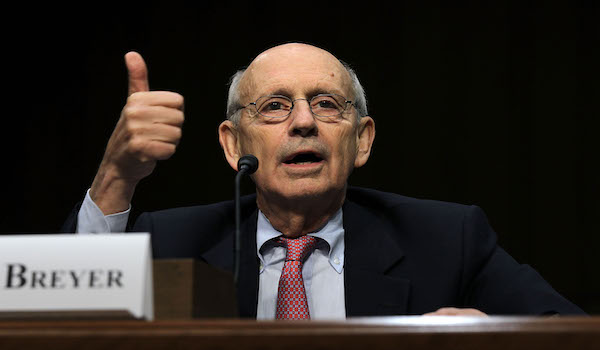
(WASHINGTON) — Justice Stephen G. Breyer, the most senior member of the U.S. Supreme Court’s liberal wing and staunch defender of a nonpartisan judiciary, is retiring from the bench, fulfilling the wish of Democrats who lobbied for his exit and clearing the way for President Joe Biden’s first high court appointment.
Breyer, the court’s oldest member at 83, will step down despite apparent good health, deep passion for the job and active involvement in cases. This term he authored major opinions upholding the Affordable Care Act, affirming free speech rights of students off-campus and resolving a multi-billion dollar copyright dispute between two titans of American technology, Google and Oracle.
“He has been operating at the peak of his powers,” said Jeffrey Rosen, law professor and president of the National Constitution Center. “It was so inspiring that this term his pragmatic vision of compromise and moderation were ascendant and all of the unanimous decisions were a moving tribute to his inspiring legacy.”
While Breyer has disavowed political considerations, many will see them in his decision to leave now. Stepping down early in the Biden presidency and while Democrats retain a razor-thin majority in the U.S. Senate will help ensure his seat is filled with someone who shares his judicial philosophy.
“It’s a highly personal decision,” Breyer told ABC News of retirement in a 2015 interview.
Progressive activists had imposed unprecedented public pressure on Breyer, who was nominated in 1994 by President Bill Clinton, to retire quickly. Senate Republican Leader Mitch McConnell said in June that the GOP may block a Democratic appointment to the court if the party retakes control of the Senate next year and a vacancy occurs in 2023 or 2024.
Many Democrats remain haunted by Republican obstruction of President Barack Obama’s nominee to the court in 2016 and the rushed confirmation of Justice Amy Coney Barrett last year, just weeks before the 2020 election and after the sudden death of Justice Ruth Bader Ginsburg.
In the lead up to his retirement, Breyer distanced himself from partisan politics.
“It is wrong to think of the court as another political institution,” he said in an April speech at Harvard Law School. “And it is doubly wrong to think of its members as junior league politicians.”
He added, justices “are loyal to the rule of law, not to the political party that helped to secure their appointment.”
“He’s very savvy,” said Rosen. “He understands that democracy is fragile and people in the past have not obeyed the court and the court doesn’t have any ability to enforce its decisions. That’s why being attentive to its legitimacy is so important to him.”
The vacancy now clears the way for Biden to nominate an African American woman to the court, a historic first and something he promised during the 2020 campaign.
There have been five female justices in Supreme Court history; three are currently serving — Justices Barrett, Elena Kagan and Sonia Sotomayor, the first and only woman of color confirmed to the high court.
U.S. Appeals Court Judge Ketanji Brown Jackson, a former Breyer clerk, public defender and Biden appointee who won three Senate Republican votes in confirmation, is considered a top contender for nomination along with Judge Leondra Kruger of the California Supreme Court, a former deputy solicitor general in the Obama administration who has argued a dozen cases before the high court.
“We are putting together a list of a group of African American women who are qualified and have the experience to be on the court,” Biden said in June 2020. “I am not going to release that until we go further down the line in vetting them.”
While Breyer never enjoyed the rock-star status held by Ginsburg, he has long been revered and celebrated as a consensus-seeker and happy warrior throughout his 27 years on the court.
“He is not a dogmatist, generating rules from some high-level theory. He is in search of workable results,” former federal appeals court Judge Richard Posner said of Breyer in the Yale Law Journal.
As a devout institutionalist, Breyer has passionately defended the Supreme Court’s reputation as an impartial and apolitical branch of American government. Later this year, he will publish a book on the subject, “The Authority of the Court and the Peril of Politics.”
“A judge has to do his best not to have an opinion on a political matter,” he told ABC News in 2015. “And if I have an opinion, I might talk to my wife about it but I’m not going to talk to you.”
He has described differences among the justices as contrasts in “philosophical outlook” rather than differences of politics and chaffed at the labeling of justices as “liberal” or “conservative.”
“Politics to me is who’s got the votes. Are you Republican or Democrat? I don’t find any of that here,” he told ABC News Chief Washington Correspondent Jonathan Karl.
Breyer has been one of the few justices to be a regular attendee at State of the Union addresses before a joint session of Congress.
“I think it is very, very, very, important — very important — for us to show up at that State of the Union,” the justice told Fox News in 2010. “Because people today, as you know, are more and more visual … and I would like them to see the judges too, because federal judges are also part of that government.”
In recent years, as the court was repeatedly thrust into an uncomfortable spotlight during the Donald Trump presidency, Breyer joined with Chief Justice John Roberts to help steer the institution away from the headlines.
“The more the political fray is hot and intense, the more we stay out of it,” Breyer explained during a 2020 interview with the Kennedy Institute.
The nine justices have handed down more unanimous opinions in 2021 than any time in at least the last seven years. Court analysts credit a narrow focus on common ground rather than sweeping, more divisive pronouncements. Some see a vindication of Breyer’s longtime approach in the results.
During oral arguments, Breyer is frequently one to lean in, animatedly challenging lawyers on both sides of a debate to address the real life consequences of a case. He has earned the moniker “king of hypotheticals” for his creative use of the technique.
“You have to have the imagination to understand how those words will affect those lives,” Breyer said in a 2017 interview with NYU School of Law. “That means you understand something about the lives of other people.”
Breyer has cultivated a reputation for pragmatism and compromise in his opinions, which have been praised for their colloquial language and avoidance of jargon.
“My job … is to write opinions,” Breyer told Fox News Sunday in 2010. “The job of 307 million Americans is to criticize those opinions. And what they say is up to them. And the words I write are carrying out my job under the law as best I see it.”
In 2014, Breyer wrote for an unanimous court to limit the scope of a president’s power to make recess appointments.
“Pro forma sessions (of Congress) count as sessions, not as periods of recess,” he said, dealing a rebuke to Obama who had tried to force appointments to the National Labor Relations Board. “The Senate is in session when it says it is.”
He has twice authored significant majority opinions on the issue of abortion.
In 2000, Breyer wrote a 5-4 decision striking down a Nebraska law criminalizing “partial-birth abortions” as “an undue burden upon a woman’s right to make an abortion decision.” Two decades later, his opinion in June Medical Services v. Russo cast a Louisiana law requiring hospital admitting privileges for abortion doctors as a “substantial obstacle” to women that violates the Constitution.
On the First Amendment, Breyer was the pivotal vote in a pair of 5-4 decisions in 2005 involving public displays of the Ten Commandments. He voted to uphold a longstanding monument at the Texas state capitol, while opposing placement of framed copies of the commandments inside Kentucky courthouses. He was the only justice to agree with both decisions.
“The government must avoid excessive interference with, or promotion of, religion. But the Establishment Clause does not compel the government to purge from the public sphere all that in any way partakes of the religious,” Breyer wrote in a concurring opinion in the Texas case. “Such absolutism is not only inconsistent with our national traditions, but would also tend to promote the kind of social conflict the Establishment Clause seeks to avoid.”
Breyer frequently championed “six basic tools” that judges should use when deciding a case — text, history, tradition, purpose, precedent and consequences. He has also urged consideration of international law.
“When you’re talking about the Constitution, different judges emphasize different ones of those,” he said in a 2017 interview, “but nobody leaves any of those out completely.”
When Breyer’s analysis put him at odds with his colleagues, he frequently wrote in dissent, defending the use of race as a factor in school admissions; pushing for deference to legislatures on gun control laws; and, opposing partisan gerrymandering.
“The use of purely political considerations in drawing district boundaries is not a necessary evil that, for lack of judicially manageable standards, the Constitution inevitably must tolerate,” Breyer wrote in a 2004 case.
In the hotly contested 2000 election, Breyer lamented the court’s decision to get involved in the dispute between George W. Bush and Al Gore.
“The Court was wrong to take this case. It was wrong to grant a stay,” he wrote at the time. “We do risk a self-inflicted wound — a wound that may harm not just the Court, but the Nation.”
Breyer has been a staunch critic of the death penalty and what he sees as unacceptably lengthy delays between sentences and executions.
In a famous 40-page dissent in 2015, Breyer urged the court to reconsider whether capital punishment violates the Eighth Amendment.
“Lack of reliability, the arbitrary application of a serious and irreversible punishment, individual suffering caused by long delays, and lack of penological purpose are quintessentially judicial matters,” he wrote.
“They concern the infliction — indeed the unfair, cruel, and unusual infliction — of a serious punishment upon an individual,” he continued. “The Eighth Amendment sets forth the relevant law, and we must interpret that law.”
Breyer’s career on the high court caps a lifetime of public service.
He grew up in San Francisco, where he attended public schools and earned the rank of Eagle Scout. In 1957, Breyer joined the U.S. Army Reserves and served a tour of active duty in the Army Strategic Intelligence during his six-year career.
He studied philosophy at Stanford University and became a Marshall Scholar at Oxford University. In 1964, he earned his law degree from Harvard University and went on to clerk for justice Arthur Goldberg on the U.S. Supreme Court.
“I’m sure they wanted me to be a lawyer,” Breyer said of his parents in a 2017 oral history. “I thought, well I’d like to be a lawyer. I sort of always knew I would be.”
After a short stint in the Justice Department antitrust division, Breyer joined the faculty at Harvard Law School in 1967, specializing in administrative law. That same year he married Joanna Hare, a member of the British aristocracy and a pediatric psychologist at the Dana-Farber Cancer Institute.
In the mid-1970s, he cut his teeth in politics, serving as an assistant special prosecutor in the Watergate investigation and later as special counsel to the Senate Judiciary Committee working alongside Sen. Ted Kennedy.
“A few lessons I learned from Kennedy. One of them: the best is the enemy of the good,” Breyer said in 2017. “If you could get an inch, it’s much better to get that inch then to complain about not getting a mile.”
He was first appointed to the federal bench in 1980 by President Jimmy Carter, going on to serve 13 years as an appellate judge until Clinton elevated him to replace Justice Harry Blackmun on the Supreme Court in 1994. The Senate confirmed Breyer 87-9.
Asked in 2017 how he would like to be remembered, Breyer told an interviewer: “You play the hand you’re dealt. You’re dealt one. And you do the best with what you have. If people say yes, he did, he tried, he did his best and was a decent person, good.”
Lady Gaga is further breaking down House of Gucci and how she channeled PatriziaReggiani, the woman who was famously convicted of arranging the murder of her ex-husband, Italian fashion heir Maurizio Gucci. The “Applause” singer also revealed why she turned to acting in the first place, saying it allowed her to escape a traumatic childhood.
Speaking to Jake Gyllenhaal for Variety’s “Actors on Actors” segment, Gaga admitted she wanted to become an actress long before she wanted to pursue singing. “Since I was a little girl, I was so mercilessly bullied, and I had a really strict upbringing. So acting for me was a way to totally escape who I was,” she revealed. “And I think I’ve done it my whole career with taking on the artistic persona of whatever music I’m writing and living inside my art. And for films, it’s different, but it’s not.”
Part of that escape, she says, is becoming the characters she plays. The Oscar winner revealed new information about how she transformed into Patrizia, saying she studied animals.
“I studied a house cat for the beginning of the film. And then at the funeral, when she sees Al Pacino’s character, she suddenly turns into a fox because she’s hunting now,” she described. “I watched foxes hunt and they’re really funny, because they hunt mice in the snow and they leap up and they burrow. I actually did exercises in my hotel room where I would be the animal.”
The Grammy winner studied one more animal to complete Patrizia’s transformation — the panther. “It was because the panther moves slowly, but then when it kills its prey, it is really violent and it’s really ugly, and then after, it cries,” she revealed.
“I chose these animals as a way to map the physicality of the character,” said Gaga.
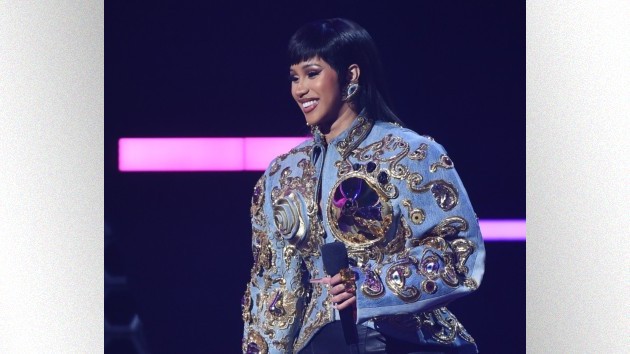
After being awarded $4 million in her defamation lawsuit against YouTube blogger Tasha K, Cardi B hopes her victory will help bring an end to lies about celebrities on social media.
After a jury ordered the blogger, born Tasha Kebe, to pay $1.25 million on Monday to Cardi for posting false rumors, $1.5 million more in punitive damages was added Tuesday. Plus, she was ordered to pay the “I Like It” rapper’s $1.3 million legal bill.
The Grammy winner accused Kebe of making false claims that she was a prostitute, had contracted herpes, used drugs, and performed a sex act with a beer bottle, among other accusations.
In responding to the verdict, Cardi said in a statement to People, “We can no longer be a society that turns a blind eye to blatant lies. The unchecked behavior and provably false content on platforms like YouTube have to be addressed and removed.”
“The constant harassment and lies that are reported as factual from journalists and bloggers have to end.” She added, “We’ve also seen countless stories of children and adults deciding to take their own lives due to cyberbullying and intentional attacks.”
During the trial, the Hustlers star testified that Kebe’s remarks caused her to be “extremely suicidal.”
Cardi said in her statement that fans have “learned about the darkest time in my life,” writing that it was “fueled by the vile, disgusting, and completely false narratives that were repeatedly and relentlessly being shared online.”
“I thought I would never be heard or vindicated and I felt completely helpless and vulnerable,” Cardi continued.
The 29-year-old entertainer shared that she didn’t want “justice” solely for herself, noting that “the intentional harm that was done to me, is done to countless others every day.”
ustin Lubin/NBCU Photo Bank/NBCUniversal via Getty Images via Getty Images
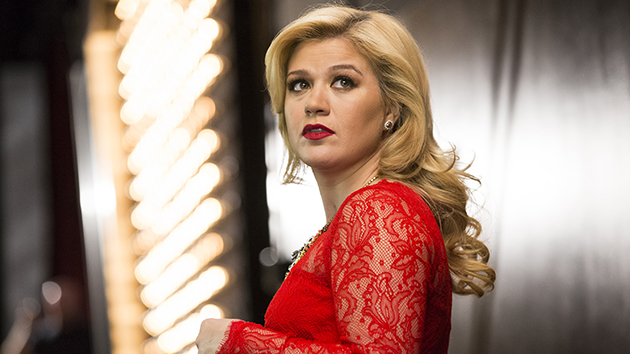
Kelly Clarkson is not backing down in her ongoing divorce battle with ex Brandon Blackstock and is pouring all of her spare time into making sure she comes out on top.
A source spoke with US Weekly about Kelly’s legal drama and they dished, “She is devoting 100 percent of any free time she has preparing for the trial. When not filming her talk show, she is hunkered down with [attorney] Laura Wasser.” They continued, “She will not even entertain the idea of settling with Brandon.”
Kelly filed for divorce in 2020, citing “irreconcilable differences” and she was declared legally single in 2021. Since then, the two have been locked in an intense legal battle over finances. Most recently, she surrendered about five percent of their hotly contested ranch in Montana to her ex-spouse after failing to legally evict him from the property.
But, that appears to be all the “Piece by Piece” singer is willing to part with, as the spy continued, “He will not get one penny from her that isn’t ordered by the judge. It’s going to be nasty.”
Kelly and Brandon wed in 2013 and share two children, seven-year-old River and five-year-old Remington.
Post Malone made waves in the music scene thanks to his singles “Sunflower” and “Circles.” But, in an intimate new interview, the hitmaker admits he had been quietly struggling against burnout.
Speaking to Billboard, Posty revealed he almost crashed and burned at the start of the pandemic. The singer says he threw himself into his work following the release of his debut single, “White Iverson,” in 2015 and spent the next four years racing to get a song to top the Hot 100.
“You think about everything at the same time, and it’s f***ing overload,” he recalled. “There’s a lot riding on the music. There’s a lot riding on just being able to keep making songs. And that’s hard to do because you’re like, ‘F*** — I already talked about everything.’ And you kind of run out of ideas, and that’s scary s***.”
Posty says that anxiety ballooned at the start of the pandemic and he fell into a creative slump. “I used to love playing the guitar — I hardly play the guitar anymore. I used to love making beats… I lost that, and the hardest part is getting it back,” he said, adding that he retreated to Utah to reignite his spark.
Finding solitude in the Beehive State worked like a charm, he says, and he began working on the followup to his third studio album, Hollywood’s Bleeding. He has since released two singles off his forthcoming effort, twelve carat toothache — “One Right Now,” a collab with The Weeknd, and “Motley Crew.”
Posty says the goal of his new music is to “speak more to how I’m feeling at the moment: the ups and downs and the disarray and the bipolar aspect of being an artist in the mainstream.”
After a tumultuous couple of years of pandemic-related shutdowns and uncertain touring conditions, Miranda Lambert is getting back into the swing of her live show with the return of The Bandwagon Tour, a co-headlining run with Little Big Town.
The singer knows that another COVID-19 surge could affect those plans, but she’s ready to get back to doing what she does best, she explains in an interview with Rolling Stone.
“There’s constant changes. I’m constantly Googling things,” Miranda notes. “…The biggest point is, we’re in control of nothing. For all those people who are planners like me, I have to really find my inner Zen.”
She’s not downplaying the severity of the pandemic. In fact, the singer reveals, she’s had a bout with the virus herself. “I know [COVID is] a real thing; I’ve had it,” she explains. Still, she adds, she’s “ready to move ahead.”
“All the conversations and all the battles and all of that, it comes down to I want to do my job and I want to just live my life,” Miranda goes on to say. “I’m proceeding as if that’s happening.”