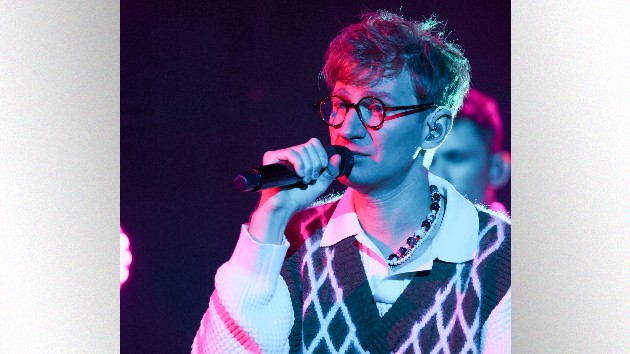
Another member of Korn has tested positive for COVID-19.
The “Freak on a Leash” metallers revealed Thursday that guitarist James “Munky” Shaffer has contracted the virus. The news comes after frontman Jonathan Davis tested positive in August.
According to Korn’s statement, Munky is “doing OK,” but will miss some of the band’s upcoming tour dates.
“The tour is going on as scheduled despite these circumstances,” Korn wrote. “We are anticipating a speedy recovery.”
Korn’s tour will continue Thursday in West Valley City, Utah.
Davis, meanwhile, has recovered from his COVID bout, although as of last week he was still battling some lingering effects. As such, he’s been using a throne on stage to rest on during the show.
(TEXAS) — Just one week after a law took effect in Texas that bans nearly all abortions after six weeks of pregnancy, the state is close to enacting another restriction on abortion.
A bill that would shorten the time in which a pregnant person could have a medication abortion is now on the desk of Texas Gov. Greg Abbott, a Republican who has defended his state’s new law that bans most abortions, including in cases of incest and rape.
The bill awaiting Abbott’s signature, Senate Bill 4, would limit the time window for physicians to offer abortion-inducing medication to seven weeks of pregnancy instead of 10 weeks of pregnancy. This would mean that if a person misses the six-week window for a procedure-based abortion, they would have one more additional week to have access to medication abortion.
Access to medication abortion — the use of oral medications mifepristone and misoprostol to end a pregnancy — has become a major focus point since Texas’ controversial law went into effect. The law, and the U.S. Supreme Court’s decision to not block it amid legal challenges, marked a significant moment in the United States’ history of reproductive rights, experts say.
And now, many experts are keeping their eyes on Texas — a state with a long history of debating abortion rights — to see if its actions encourage other states to impose more restrictions on medication abortion with the goal of limiting abortion access overall.
“Texas looms so large when it comes to abortion rights and access and what we’re really seeing is this coordinated strategy of layering bans and restrictions to very nearly ban abortion,” said Elizabeth Nash, interim associate director of state issues at the Guttmacher institute, a reproductive rights organization. “Medication abortion has been a very high priority in state legislatures in 2021.”
In South Dakota this week, Gov. Kristi Noem, a Republican, issued an executive order directing the state’s Department of Health to establish rules requiring that abortion-inducing drugs only be prescribed and dispensed by a state-licensed physician after an in-person examination. Noem said she also plans to pass legislation next year that makes “these and other protocols permanent.”
Across the country, more than 30 states require clinicians who administer medication abortion to be physicians, while 19 states require the clinician providing a medication abortion to be physically present when the medication is administered, according to the Guttmacher Institute.
The rising restrictions, which began to increase about a decade ago, according to Nash, come as more people are turning to medication abortion.
Medication abortion is now the most common method used for abortions in the first 10 weeks of pregnancy, and accounted for almost 40% of all abortions in 2017, according to the Guttmacher Institute.
Medication abortions were first approved by the U.S. Food and Drug Administration (FDA) in 2000. FDA guidelines advise that abortion-inducing pills are safe to use up to 70 days, or 10 weeks, after conception, though evidence shows it can be safe even later in pregnancy, according to the American College of Obstetricians and Gynecologists (ACOG).
In most cases in a medication abortion, mifepristone is taken first to stop the pregnancy from growing. Then, a second pill, misoprostol, is then taken to empty the uterus.
Of the two medications, mifepristone is more restricted by the FDA. Since 2011, the agency has applied a risk evaluation and mitigation strategy (REMS) to mifepristone, preventing it from being distributed at pharmacies or delivered by mail like other prescription drugs.
It must be ordered, prescribed and dispensed by a health care provider who meets certain qualifications, and may only be distributed in clinics, medical offices, and hospitals by a certified health care provider, according to FDA guidelines.
The FDA’s rules, combined with state restrictions like the one that appears close to becoming a law in Texas, have the effect of not only limiting when, where and how people can get abortions, but also potentially misguiding people on the safety of medication abortion, according to Dr. Jamila Perritt, an OBGYN based in Washington, D.C., and president and CEO of Physicians for Reproductive Health.
“The important thing to know about mifepristone is that it’s regulated as if it were a highly unsafe medication, which is the opposite of the truth,” said Perritt. “It’s actually a very, very safe medication and we have decades of medical evidence that shows people can use it on their own.”
“None of this is about safety,” she said. “It’s all about limiting access to abortion.”
The restrictions around medication abortion also limit the use of telemedicine, which is effectively banned in 19 states, according to the Guttmacher Institute.
Complications from at-home medication abortions are rare, happening in less than 1% of cases in one study of nearly 20,000 medication abortions, according to ACOG, which says medication abortion “can be provided safely and effectively by telemedicine.”
Last year, during the height of the coronavirus pandemic, and amid a rise in telemedicine, ACOG, an organization that counts more than 60,000 obstetrician–gynecologists as members, joined other groups to urge the FDA to suspend the requirement that mifepristone be dispensed in a medical clinic.
The request for the FDA to temporarily suspend the mifepristone requirement was upheld last year in lower courts. In January, the U.S. Supreme Court ruled 6-3 to reinstate the restrictions.
In April, the FDA, under the Biden administration, said it would stop enforcing the in-person dispensing requirement during the pandemic. States though can still set laws about dispensing mifepristone within their state.
Proponents of the FDA’s decision say that allowing greater access to medication abortion, including via telemedicine, gives more options to the people who need them the most.
Around 75% of abortion patients are low-income residents, and nearly 60% of U.S. women of reproductive age live in states where access to abortion is restricted, according to the Guttmacher Institute.
“Restrictions shape who is able to access [abortion],” said Perritt, noting that people of color, young people, immigrants and people living on low-income communities are the most affected, and adding, “We’re going to continue to see a worsening outcome for them because of it.”
ABC News’ Alexandra Svokos contributed to this report.
Kings of Leon are sending NFTs to a new frontier. The final frontier, in fact.
Earlier this year, the “Use Somebody” rockers made headlines when they offered their new album, When You See Yourself, as a non-fungible token, back when we had to Google what that meant. Now, as revealed by People, KoL is creating a new music NFT that will be the first one ever to go to outer space.
People reports that the NFT — which features the When You See Yourself song “Time in Disguise,” as well as original artwork and live performance footage of the track — will be sent up into the stars as part of Inspiration4, the first-ever space flight with an all-civilian crew. The mission, scheduled to launch September 15, aims to raise awareness and funds for St. Jude Children’s Research Hospital.
The NFT will be uploaded onto an iPhone given to crew member Hayley Arceneaux, a pediatric cancer survivor who now works at St. Jude, who will then play the song while in orbit. It will then be auctioned off with a starting bid at $50,000 to further support St. Jude.
“It means so much to us to be a part of this historic moment,” Kings of Leon tell People. “When we wrote and recorded ‘Time in Disguise’ in the studio, we always thought it had a spacey feel to it and then the visuals from our live show have that vibe, as well.”
They add, “To now have that song and those images be a part of something as historic as this is really cool, and having it raise money for a cause we’ve always cared so much about, makes it even better.”
The auction winner will also get to meet KoL and attend an upcoming Los Angeles concert.
Dan + Shay are looking back on their humble beginnings ahead of their arena tour launch.
As the Grammy-winning duo of Dan Smyers and Shay Mooney prepares to embark on the new leg of The (Arena) Tour, they’re sharing a throwback video from their debut show as a duo. The video shows them performing at a venue in Austin, Texas, Dan on guitar and Shay taking lead vocals, revealing in the caption that the audience contained fewer than five people.
“We were just two songwriters who loved country music and wanted to sing for whoever would listen, so we hopped in a car and drove through the night to get there. Almost 10 years later and we still feel the exact same passion and excitement for what we get to do,” they say in the caption.
“We’re so grateful that y’all have stuck with us on the journey and gotten us where we are today. Playing arenas has always been a dream of ours, and after a slight year-and-a-half detour, IT’S FINALLY HERE,” they add. “We’re infinitely grateful for each and every one of you and can’t wait to say thank you in person.”
The (Arena) Tour was originally scheduled to take place in 2020. Dan + Shay performed three shows before the tour was postponed due to the COVID-19 pandemic. The tour resumes tonight in Greenville, South Carolina and continues until December.
(NOTE LANGUAGE) Andrew Garfield has gone on the record again, dispelling rumors that he will be joining another supposed star, former Spider-Man Tobey Maguire, in Tom Holland‘s upcoming Spider-Man: No Way Home.
In a chat with Variety, the British Oscar nominee and lifelong Spidey fan said, “I understand why people are freaking out about the concept of that, because I’m a fan as well. You can’t help but imagine scenes and moments of ‘Oh, my God, how f****** cool would it be if they did that?'”
He added, “But it’s important for me to say on the record that this is not something I’m aware I am involved in. But I know I’m not going to be able to say anything that will convince anyone…It’s either going to be really disappointing for people or it’s going to be really exciting.”
That said, the 38-year-old actor has no regrets about his time as ‘Ol Web-Head. “It was only beautiful,” Garfield tells the trade. “I got to meet Emma [Stone]and work with her and Sally Field.”
Stone and Garfield played on-screen couple Gwen Stacey and Peter Parker, respectively, in the 2012 and 2014 installments. The two also dated for four years before going their separate ways in 2015.
Garfield also revealed how special the iconic red and blue Spider-Man suit was to him. When he was three, his late mother, Lynn, sewed him a Spider-Man costume out of felt. Twenty-five years later, she watched him portray Spidey on the big screen. Lynn passed away in 2019 from cancer.
Spider-Man: No Way Home hits theaters on December 17 from Sony Pictures and Marvel Studios.
Marvel is owned by Disney, the parent company of ABC News.
(POLK COUNTY, Fla.)A young girl who was “tortured” and shot multiple times when a former Marine sharpshooter allegedly invaded her home and killed four members of her family, including her baby brother, told investigators she survived by playing dead, authorities said on Thursday.
The 11-year-old is expected to recover from her injuries, but authorities said what she experienced may haunt her for the rest of her life.
Polk County, Florida, authorities said the girl witnessed Bryan Riley, 33, allegedly shoot her father, Justice Gleason, 40; her dad’s girlfriend, Theresa Lanham, 33; and her 3-month-old brother in the Sunday morning massacre near Lakeland, 35 miles east of Tampa. Riley is also accused of killing Lanham’s 62-year-old mother, Catherine Delgado.
Riley allegedly shot and killed the family’s dog, too, officials said.
Polk County Sheriff Grady Judd said Gleason’s daughter, the sole survivor of the attack, told investigators how she avoided being killed, after allegedly being tortured and shot by the stranger who had zero connection to her family.
“This 11-year-old was very brave and very smart, and she out-thought him. She said, ‘I played dead and I prayed,'” Judd said at a news conference Thursday.
Riley is charged with four counts of first-degree murder, one count of attempted first-degree murder, seven counts of attempted first-degree murder on a law enforcement officer, shooting into an occupied dwelling, two counts of armed burglary with battery, arson and cruelty to an animal. He is being held without bond.
The sheriff said Riley has shown no remorse. “He’s evil,” Judd said.
Judd said Riley first showed up at the home around 7 p.m. Saturday after picking up a first-aid kit from a friend who lives nearby, which he claimed he planned to donate to a Hurricane Ida relief organization.
Upon leaving his friend’s home, he saw Gleason mowing his front yard and stopped. He allegedly told Gleason that God sent him to speak to a girl named Amber, who he claimed was suicidal and being held as a sex-trafficking victim, Judd said. He was told no one by that name lived at the address and was ordered to leave.
The family called deputies, but they could not find Riley, Judd said. He said Riley returned to the home about 4:30 a.m. Sunday armed with three guns and in full-body armor.
Judd said Riley, who as a Marine was deployed to Afghanistan and Iraq, allegedly told investigators that he “created an ops plan.'”
“In his confession, he said, ‘You know what that means? You have to kill everybody,'” said Judd, adding that Riley’s girlfriend told investigators he suffered from post-traumatic stress disorder.
He said the suspect broke into an in-law unit behind the main house and killed Delgado. Riley allegedly shot his way into the main house and found Gleason, Lanham, her baby and the girl hiding in a bathroom, according to the sheriff.
After allegedly killing Gleason, Lanham and the baby, Judd said, Riley took the girl into the living room and questioned her about the whereabouts of Amber, Judd said. When the girl told him she didn’t know Amber, he allegedly counted down, “three, two, one” and shot her in the stomach, Judd said. When she again denied knowing Amber, Riley allegedly shot her in the hand and legs before firing what he wrongly believed to be the fatal shot, Judd said.
When deputies arrived, a shootout ensued. Riley was hit in the stomach and surrendered, Judd said.
Judd said the sheriff’s department is collecting donations to help the family with funeral costs and the young survivor’s hospital bills. He said his agency has established an online page to accept contributions.
In celebration of today’s 50th anniversary of the release of John Lennon‘s classic solo album, Imagine, and his enduring peace anthem of the same name, a segment of the song’s lyrics has been projected digitally on buildings and structures in select cities around the world.
The lyrical phrase “IMAGINE ALL THE PEOPLE LIVING LIFE IN PEACE” has appeared as a digital projection in London on the Houses of Parliament and St. Paul’s Cathedral; in Lennon’s hometown of Liverpool, U.K., on the Liver Building and the Museum of Liverpool; and on remnants of the Berlin Wall in Germany.
The lyrics also have been posted on billboards in New York City’s Times Square, and in Tokyo near the historic Nihonbashi bridge.
Lennon’s widow, Yoko Ono, whom John credited with co-writing the song’s lyrics, said about the projections, “John would have loved this. ‘Imagine’ embodied what we believed together at the time. We are still together now and we still believe this. The sentiment is just as important now as when it was written and released 50 years ago.”
As previously reported, a number of events and activities have been planned today to commemorate the 50th anniversary of the Imagine album and song. As part of the celebration, John and Yoko’s experimental 1971 film Imagine will be screened today at 2:30 p.m. ET at select theaters or online for free. Fans also will be able to check out the movie, which was restored and re-released in 2018, at Amazon Prime’s music-themed streaming service The Coda Collection.
Also, U.K. radio presenter Tim Burgess will host a special edition of his popular Tim’s Twitter Listening Party at the same time as the Imagine film screenings.
Visit JohnLennon.com to find out more details about the various planned commemorations.
The biggest hip-hop tour of the year is kicking off at the end of September. featuring Rick Ross, Jeezy, Gucci Mane and 2 Chainz.
The Legendz of the Streetz tour begins September 30 in August, GA with special guests Fabolous, Lil Kim, Trina and Boosie Badazz. Eleven dates were announced Wednesday through October 22 in Memphis. Tour cities include Atlanta, Houston, Miami, New Orleans and Baltimore, with more dates to be announced later.
“You don’t want to miss out on the most anticipated hip-hop tour in HISTORY #LegendzoftheStreetzTour ft. me and industry heavyweights,” Ross wrote on Instagram. “Get your tickets and meet us in the building. We about to go crazy with this one!!”
The Boss also posted a photo of him with Gucci laughing and carrying bottles of champagne, with the comment, “Funny how we came up @laflare1017. Now it’s 7 figure tours to FEED THE STREETS #LegendzoftheStreetz Tour.”
La Flare wrote, “The most important tour in rap history #LegendsOfTheStreets get ya tix and make sure you pull up on Wop and the Gang.”
Ticket for all shows are now on sale on the We Are Live Entertainment website.
Papa Roach has premiered a new single called “Kill the Noise.”
The track, which is available now for digital download, is accompanied by a rowdy video that finds Jacoby Shaddix and company rocking out while confined by a wire fence. You can watch that streaming now on YouTube.
“It’s easy to get caught up in some of that static inside your mind — we all tangle with that demon,” Shaddix says. “For us, ‘Kill the Noise’ brings some straight-up heavy music catharsis, a reminder to find that moment of peace from the noise.”
“Kill the Noise” follows the August premiere of the single “Swerve,” which features FEVER 333‘s Jason Aalon Butler and rapper Sueco. Both tracks are set to appear on the upcoming new Papa Roach album, the follow-up to 2019’s Who Do You Trust?
Meanwhile, you can catch Papa Roach live this fall playing headlining shows, festivals and opening for Breaking Benjamin.
(NEW YORK) — Brehanna Daniels says she thinks about how much her life has changed in just five years.
During college, the Norfolk State women’s basketball point guard said she never once thought about NASCAR as a sport, let alone a career.
But here she is, at 27 years old, on the NASCAR pit road, changing tires on race cars and breaking barriers for women and people of color along the way.
“Girl, you are crazy…” she told ABC News about what the person she was at 17 would think about her now, a NASCAR pit crew member.
“Especially, you know, a little black girl like myself at that time. [I] definitely was like, I’m never getting into NASCAR. It wasn’t even a thought in my mind,” she said.
That was until recruiters from NASCAR’s Drive for Diversity program showed up on her college campus in 2016 and introduced her to the sport. Her skills on the court were an easy fit for the fast-paced needs in a NASCAR pit crew.
“Brehanna was one of those who embraced it, came through the program, excelled,” said Max Siegel, the manager of NASCAR’s Drive for Diversity program.
After months of training, in 2017, Daniels became the first Black woman, over-the-wall tire changer in NASCAR’s history. By the end of the year, Daniels would make history again, as part of the first female duo in a NASCAR pit crew.
“I could not be more proud of what she’s accomplished both as an athlete, but she’s been amazing with her brand and social media and creating awareness and really getting people excited about the fact that if she can do it, there are other people that can do it,” Siegel told ABC News.
That success is what Siegel said he wants for all his recruits who come through the Drive for Diversity program. For the last twelve years, Siegel and his team have worked to recruit, train and support minorities like Daniels to increase diversity in all areas of NASCAR.
Siegel himself was NASCAR’s first highest-ranking Black executive. In a little over a decade, more than 60 of NASCAR’s women and minority drivers have come through the Drive for Diversity program, he said. Since 2009, the program has trained 75 gender and ethnically diverse candidates for NASCAR’s pit crews.
This year, at the Daytona 500, Siegel said he watched proudly when alumni of the program made up 10% of the field, including NASCAR stars like Bubba Wallace, Kyle Larsen and Daniel Suarez.
“I feel like for the first time since I’ve been involved, a lot of those things are starting to be addressed head on and progress is being made,” Siegel said.
While the Drive for Diversity program is keen to celebrate progress, Siegel said that success requires much more work. He said he has faced a lot of resistance in his efforts to bring more diversity to NASCAR but says he remains committed to the mission.
Daniels said she has had to tune out a lot of negativity even while some celebrate her achievements in the sport.
“People were like, ‘oh, she sucks,’ ‘what does it matter that she’s Black?’ It’s like, why wouldn’t that matter? You don’t see that every day in NASCAR. Why wouldn’t that be talked about?,” Daniels said.
Historically, NASCAR hasn’t been a welcoming space for black people. Dr. Ketra Armstrong, a professor of race and inclusion in sports at the University of Michigan, told ABC News.
“NASCAR hasn’t had very much success with the African American community at large because of NASCAR’s association with the Confederate flag,” Armstrong said. “You see that symbol, you know that it evokes these feelings of hatred and racial denigration. If you’re a Black consumer, it’s hard to enjoy the sports or the leisure or the activity when you’re surrounded by this ambiance or this effervescence that’s racially discriminating.”
NASCAR did not respond to a request for comment about Armstrong’s comments.
However, last year, the organization banned Confederate flags at its races.
Over the years, some of NASCAR’s drivers have also been embroiled in controversies about race. Larson, a NASCAR cup series driver and an alumni of the Drive for Diversity program, found himself in the pit fire and was suspended after using a racial slur at a virtual race last year.
Larson, who is half-Japanese, later apologized and said, “I wasn’t raised that way.”
In June 2020, Wallace, another NASCAR driver who also broke racial barriers in the sport, spoke out about racism after one of his crew members reported what looked like a noose hanging in the team’s garage stall. After investigating, the FBI concluded that the rope was a garage door pull rope and did not file any charges.
There are few women and minorities represented across the sport. It wasn’t until 2012, 64 years after NASCAR was founded, that it signed its first female pit crew member, Christmas Abbott.
Since then, only 15 pit crew members have been women, according to NASCAR. Only three have been women of color.
The NASCAR fan base is also overwhelmingly white. Based on NASCAR’s own data, provided to The Associated Press, 25% of fans identify as multicultural, only 9% as Black.
“It is very low. I think that you will get an honest admission from everyone in the sport that there is a ton of work to be done,” Siegel said.
Recently, celebrities like basketball Hall of Famer Michael Jordan and rapper Pitbull have invested in the sport, helping diversify the face of NASCAR’s team ownership — investments that could help drive new interest.
“There was a time where when you think about race and sport, NASCAR would be on the not-so-positive end of the spectrum,” Armstrong said. “I think it’s really becoming more intentional in addressing its past, its racist past and things that they can do better to respond to this multicultural generation in this multicultural market in which it operates.”
As for what success looks like decades from now, the Drive for Diversity program is still writing that chapter but Daniels said she already likes where NASCAR going.
“There’s always room for improvement. But like I said, I’m very proud of NASCAR and for all the progress it’s made … yeah, I love to see it,” she said.