Andrew Lipovsky/NBC/NBCU Photo Bank via Getty Images
Janet Jackson‘s Lifetime/A&E documentary took “Control” of a lot of people’s TV screens this past weekend.
The two-part doc scored the best ratings for a non-fiction premiere on cable since ESPN’s The Last Dance in 2020, and the best ratings for a Lifetime non-fiction show since 2019’s Surviving R. Kelly. It was also the most social program for Lifetime since Surviving R. Kelly, sparking 1.1 million social media interactions.
And the documentary sent viewers rushing to download her music, too. Three of her albums — Control, Design of a Decade and Rhythm Nation — hit the top 10 on the iTunes U.S. chart, and she had a total of eight albums in the chart’s top 20 overall. Janet’s music videos took all top 10 spots on the U.S. Pop Videos iTunes download charts as well.
Lifetime will re-air the documentary this Friday, February 4 at 8 p.m. ET/PT. You can also watch it on VOD, aetv.com and mylifetime.com.
(WASHINGTON) — Pfizer asked the Food and Drug Administration on Tuesday for emergency use authorization for its vaccine for children under the age of 5.
The move puts the process in motion for the FDA to review the data, bring it before its independent advisers and potentially authorize the vaccine in the coming weeks. The FDA independent advisers are already slated to have a public hearing on Feb. 15.
The data would then be brought before the Centers for Disease Control and Prevention’s independent advisers for another review, and finally, a potential recommendation by CDC Director Rochelle Walensky — all potentially within the month.
As of now, Pfizer’s two-dose vaccine is available to anyone over 5 years old. A booster shot after five months is available to anyone over 12 years old. Moderna and Johnson & Johnson are available to adults.
Pfizer announced it had safety and efficacy for its vaccine for kids under 5 in December, but determined that the two-dose regimen wasn’t as effective for children 2, 3 and 4 years-old as it was for adults. The dose for kids under 5 is one-tenth the dose for adults.
On Tuesday, Pfizer again submitted data on two doses of the vaccine, but with the expectation that data will soon be available to make it a three-dose vaccine, which will likely be more effective at preventing illness.
Pfizer is expected to have more information on the efficacy of a three-dose regimen in March or April, but authorizing the first two doses in February would start the immunization process earlier.
The third dose would be given at least eight weeks after the second dose.
“As hospitalizations of children under 5 due to COVID-19 have soared, our mutual goal with the FDA is to prepare for future variant surges and provide parents with an option to help protect their children from this virus,” Albert Bourla, Chairman and Chief Executive Officer of Pfizer, said in a press release Tuesday.
“Ultimately, we believe that three doses of the vaccine will be needed for children 6 months through 4 years of age to achieve high levels of protection against current and potential future variants. If two doses are authorized, parents will have the opportunity to begin a COVID-19 vaccination series for their children while awaiting potential authorization of a third dose.”
Some parents of young kids have been desperate for a shot to be authorized so they can protect their children against severe disease. Kids under the age of 5 have now spent nearly half of their lives in the pandemic, and for many parents their unvaccinated status has been a huge stressor.
Last week, about 808,000 children tested positive for COVID-19, down from the peak level of 1,150,000 reported the week ending Jan. 20, according to a new weekly report by the American Academy of Pediatrics (AAP) and the Children’s Hospital Association (CHA).
However, the organizations warn that pediatric infections remain “extremely high,” still triple the peak level of the summer delta surge in 2021.
A total of 11.4 million children have tested positive for the virus since the onset of the pandemic. Child COVID-19 cases have “spiked dramatically” during the omicron variant surge, with more than 3.5 million child cases reported in January.
Still, because kids are less likely to get seriously sick from COVID-19, many parents have opted not to vaccinate them even when they become eligible.
Nearly 70% of eligible kids ages 5 to 11 have yet to get a shot, according to a January survey from KFF, a nonpartisan health nonprofit. It’s unclear how many parents will opt to vaccinate their children under 5, when the vaccine becomes available.
But experts point to many reasons to get children vaccinated, including their own health and the health of the community around them.
According to the CDC, unvaccinated 12 to 17-year-olds had an 11 times higher risk of hospitalization than fully vaccinated adolescents.
And while young kids are less likely to end up in the hospital, it’s still possible. They can also be vectors for spread, infecting other, higher-risk adults in their community.
Both the delta and omicron surges saw full pediatric wards in hospitals, often with doctors pleading for communities to increase their vaccination rates.
This is a developing story. Please check back for updates.
Today is the 40th anniversary of the first episode of Late Night with David Letterman, which debuted on this day in 1982 on NBC.
Letterman’s show inspired a generation of comedy writers, from his successors Conan O’Brien and Seth Meyers to Peacemaker star Steve Agee, who used to write for O’Brien and later, for another Dave fan, Jimmy Kimmel.
“’82, oh my God,” Agee reminisced to ABC Audio. “Letterman changed everything for me, it was like, finally, there was a late-night host that like I really appreciated their…abstract sense of humor.”
He adds with a laugh, “It was, you know, way more different, you know, than Carson.”
Agee recalled, laughing, “There was an episode of Late Night with David Letterman, I think they called it ‘The 360 Show,’ where over the course of an hour, the camera rotated 360 degrees, so at 30 minutes you’re looking at a show completely upside down — and they never address it. This is just like, ‘OK, why not? Why not put on a Velcro suit and jump onto a Velcro wall?'”
Agee explained that even long after Dave left NBC for his CBS show, Late Night‘s shadow still loomed over the format. “In the early 2000s, I was working at Jimmy Kimmel Live! and our head writer…was Steve O’Donnell, who was Dave Letterman’s head writer. Steve O’Donnell created the Top Ten list — like that was Steve…He was legendary…”
Letterman hosted Late Night for 11 seasons before moving to CBS in 1993, after Jay Leno took over as host of The Tonight Show — a job many expected would go to Letterman, including outgoing host Johnny Carson. Meyers came aboard Late Night in 2014 after Jimmy Fallon moved to The Tonight Show.
Tonight, Seth Meyers will welcome Letterman back to Late Night, to celebrate the milestone anniversary.
Several television networks and streaming platforms are celebrating Black History Month, which begins Tuesday, February 1, with special programming. Here are a few highlights:
Black History, Black Freedom, and Black Love — February 1 on Masterclass: A three-part, 54-lesson class examining the past, present and future of race in America, featuring Angela Davis, Cornel West and more.
Barbara Lee: Speaking Truth to Power — February 1 on Starz: A documentary on California congresswoman Barbara Lee, who is known for her racial justice activism and work with the Black Panther Party.
Screen Queens Rising — February 3 on ABC: A special exploring the rise of Black actresses in entertainment, featuring Halle Berry, Tessa Thompson, Debbie Allen and more.
X/onerated – The Murder of Malcolm X and 55 Years to Justice — February 3 on ABC: A profile of Muhammad Abdul Aziz, who was wrongfully convicted of assassinating Malcolm X in 1965.
One Thousand Years of Slavery – The Untold Story — February 7 on Smithsonian Channel: Docuseries executive-produced by Angela Bassett and Courtney B. Vance examining the legacy of slavery around the world.
American Masters: Marian Anderson: The Whole World in Her Hands — February 8 on PBS: Two-hour special honoring the life of trailblazing opera singer Marian Anderson.
Everything’s Gonna Be All White — February 11 on Showtime: Three-part docuseries about the history of race in the United States from the perspective of people of color.
Fannie Lou Hamer’s America: An America Reframed Special — February 22 on PBS: Special telling the story of Fannie Lou Hamer, a Mississippi-born sharecropper who became a leader in the Civil Rights Movement and co-founder of the Freedom Democratic Party.
(WASHINGTON) — Nearly two years into the coronavirus pandemic, children ages 5 and under are one step closer to being eligible to be vaccinated against COVID-19.
Pfizer on Tuesday asked the U.S. Food and Drug Administration for emergency use authorization of its COVID-19 vaccine for kids ages 6 months to 5 years old.
The FDA will now review the data, bring it before its expert advisers and potentially authorize the vaccine in the coming weeks before sending it to the Centers for Disease Control and Prevention for final approval.
“Ultimately, we believe that three doses of the vaccine will be needed for children 6 months through 4 years of age to achieve high levels of protection against current and potential future variants,” Pfizer CEO Albert Bourla said in a statement. “If two doses are authorized, parents will have the opportunity to begin a COVID-19 vaccination series for their children while awaiting potential authorization of a third dose.”
Here are nine questions answered about the COVID-19 vaccines and kids as families seek to make the best decisions.
1. What is the science behind the COVID-19 vaccine?
Both the Pfizer and Moderna vaccines use mRNA technology, which does not enter the nucleus of the cells and doesn’t alter human DNA. Instead, it sends a genetic “instruction manual” that prompts cells to create proteins that look like the outside of the virus — a way for the body to learn and develop defenses against future infection.
The Johnson & Johnson vaccine uses an inactivated adenovirus vector, Ad26, that cannot replicate. The Ad26 vector carries a piece of DNA with instructions to make the SARS-CoV-2 spike protein that triggers an immune response.
This same type of vaccine has been authorized for Ebola and has been studied extensively for other illnesses and for how it affects women who are pregnant or breastfeeding.
Neither of these vaccine platforms can cause COVID-19.
2. What is the status of vaccine eligibility for kids?
Children ages 5 and older are now eligible to receive Pfizer’s two-dose vaccine.
Children ages 12 to 15 are also eligible to receive a Pfizer vaccine booster shot.
Pfizer has submitted data to the FDA for a two-dose vaccine for kids under five, with the expectation that data will soon be available to make it a three-dose vaccine, which will likely be more effective. The company announced in December that it would amend its ongoing clinical trials for children under age 5 to add a third dose.
The two other vaccines currently available in the U.S., Moderna and Johnson & Johnson, are currently available only for people 18 years and older.
Moderna filed for emergency use authorization with the FDA for its vaccine in adolescents in June but is still awaiting a decision.
Johnson & Johnson announced in April that it had begun vaccinating a “small number of adolescents aged 16-17 years” in a Phase 2a clinical trial.
As of April, the trial was enrolling participants only in Spain and the United Kingdom, with plans to expand enrollment to the U.S., the Netherlands and Canada, followed by Brazil and Argentina.
3. Why do kids need to be vaccinated against COVID-19?
While there have not been as many deaths from COVID-19 among children as adults, particularly adults in high-risk categories, kids can still get the virus and they can also transmit the virus to adults.
A total of 11.4 million children have tested positive for the virus since the onset of the pandemic. Child COVID-19 cases have “spiked dramatically” during the omicron variant surge, with more than 3.5 million child cases reported in January.
According to the CDC, unvaccinated 12- to 17-year-olds had an 11 times higher risk of hospitalization than fully vaccinated adolescents.
“We know that COVID does not spare kids,” ABC News medical contributor Dr. John Brownstein, an epidemiologist and chief innovation officer at Boston Children’s Hospital, said in December. “Maybe it’s less severe than their adult counterparts but we also know that the virus has had real significant impacts on morbidity and mortality in kids.”
“We also know that kids play an important role as vectors of spread,” he said. “And especially in light of increases we’re seeing right now, with increases of cases in kids in record numbers, infections among kids further perpetuate community transmission and further create risks for those who would be the most vulnerable of the virus.”
4. Do kids experience the same vaccine side effects as adults?
Adolescents experienced a similar range of side effects to Pfizer’s vaccine as seen in older teens and young adults — generally seen as cold-like symptoms in the two to three days after the second dose — and had an “excellent safety profile,” Peter Marks, director of the FDA’s Center for Biologics Evaluation and Research, said in August.
None of the children in Pfizer’s clinical trials of kids ages 5-11 experienced a rare heart inflammation side effect known as myocarditis, which has been associated with the mRNA vaccines in very rare cases, mostly among young men.
5. Is there data showing COVID-19 vaccines are safe for kids?
The CDC released three studies in December showing COVID-19 vaccines are safe and effective for children.
One study, which evaluated the safety reports of more than 42,000 children ages 5 to 11 who received a Pfizer shot, found the side effects from the Pfizer vaccine were mostly mild and temporary. It also found that myocarditis, a heart inflammation side effect that has been associated with the mRNA vaccines in very rare cases, does not appear to be a risk.
A second study, which looked at data from 243 children ages 12 to 17 in Arizona, found the Pfizer vaccine was 92% effective at preventing infection. The study, conducted between July and December when delta was the dominant variant in the U.S., also found that adolescents who developed COVID-19 reported a lower percentage of time masked in school and time masked in the community.
The third study, also conducted when delta was dominant, found that among children ages 5 to 17 hospitalized due to COVID-19, less than 1% were fully vaccinated against the virus.
6. How effective are the vaccines in children?
Pfizer announced in late March that its clinical trials showed the vaccine was safe and 100% effective in children ages 12-15, similar to the 95% efficacy among adult clinical trial participants.
Marks confirmed on May 10 that after a trial with more than 2,000 children, Pfizer found no cases of infection among the children who had been given the vaccine and 16 cases of infection among the children who received a placebo.
No cases of COVID occurred in the 1,005 adolescents that received the vaccine, while there were 16 cases of COVID among the 978 kids who received the placebo, “thus indicating the vaccine was 100% effective in preventing COVID-19 In this trial,” said Marks.
7. Do kids get the same dose of the vaccines as adults?
In Pfizer’s clinical trial, children between 6 months and 5-years-old received two doses of 3-microgram shots, a tenth of the dose given to adults, three weeks apart.
Kids ages 5 to 11 are given a 10-micrograms dose of the Pfizer vaccine, one-third of the adolescent and adult dose. Like with adults and adolescents, the pediatric vaccine is delivered in two doses, three weeks apart.
For 12-to-15-year-olds, the FDA has authorized the same dosing as adults with the Pfizer two-dose vaccine.
The FDA and CDC have recommended the Pfizer booster shots now available for kids ages 12 and older be administered five months after the primary vaccine series.
8. Could COVID-19 vaccines impact puberty and menstruation?
There is currently no clinical evidence to suggest any of the COVID-19 vaccines can have long-term effects on puberty or fertility.
9. Where can kids get vaccinated against COVID-19?
Vaccines are accessible at pediatricians’ offices, children’s hospitals, pharmacies like CVS, Walgreens and Rite-Aid and school and community-based clinics.
Parents can search for appointments at Vaccines.gov to find a local provider.
ABC News’ Sasha Pezenik, Anne Flaherty, Eric Strauss, Cheyenne Haslett and Jade A. Cobern, MD, a member of the ABC News Medical Unit, contributed to this report.
(RICHFIELD, Minn.) — One student is dead and another is critically injured after being shot on the sidewalk outside of a school Tuesday in Richfield, Minnesota, according to police.
Police said the incident took place around noon outside the South Education Center, but the suspects fled the scene, Jay Henthorne, chief of Richfield Police, told reporters.
The cause of the shooting is still under investigation.
The U.S. Bureau of Alcohol, Tobacco, Firearms and Explosives is on the scene and assisting with the investigation.
Erica Barlow, who is the principal at nearby Richfield Middle School, sent a letter to parents informing them of the incident.
“The officers had weapons drawn and were in bullet-proof vests. It is unlikely that many students witnessed the event, as they were in class at the time,” she wrote. “However, it is important that you are aware of the incident in the event that your child hears about it, as some children may be deeply impacted by this type of news.”
This is a developing story. Please check back for updates.
(NEW YORK) — During the omicron wave, unvaccinated Americans had much higher rates of COVID-19 cases and hospitalization than fully vaccinated people — especially those who received a booster shot, officials said Tuesday.
In a new report published by the Centers for Disease Control and Prevention, researchers from the Los Angeles County Department of Public Health looked at county-level COVID data between Nov. 7, 2021 and Jan. 8, 2022.
They found that in the 14-day period ending Dec. 11 — the last period in which the delta variant was dominant — COVID case rates in Los Angeles were 12.3 times higher among the unvaccinated compared to boosted individuals. Hospitalization rates were 83 times higher.
By the time the omicron variant became dominant, the rate ratios were lower, but still showed that vaccinated people are much more protected.
During the week ending Jan. 8, unvaccinated people had infection rates 3.6 times higher than people who had received boosters and hospitalization rates were 23 times higher.
Additionally, fully vaccinated people in Los Angeles who had not received a booster had COVID case rates that were twice as low and hospitalization rates 5.3 times lower than the unvaccinated group.
The report found that, over the course of the two-month study period, nearly 423,000 COVID-19 cases were reported in Los Angeles County residents aged 18 and older.
Of the cases, 33.6% were among the unvaccinated, 53.2% were among the fully vaccinated without a booster and 13.3% were among fully vaccinated people who had received a booster.
It’s worth noting that, as of Jan. 8, 71% of county residents were fully vaccinated, according to county health department data. This means there will be a higher risk of breakthrough infections due to the higher absolute number of people being vaccinated.
Nearly 3% of unvaccinated individuals were hospitalized, 0.5% were admitted to the ICUs and 0.3% died of the virus, according to the report.
By comparison, 1% of fully vaccinated people without a booster and 0.7% of people with a booster were hospitalized.
Additionally, 0.12% of unboosted people and 0.08% of boosted people were admitted to ICUs and 0.05% and 0.03% died, respectively.
The report found that, during the omicron wave 6,743.5 per 100,000 unvaccinated people were contracting COVID-19 and 187.8 per 100,000 were hospitalized.
Among fully vaccinated people without a booster, rates were lower at 3,355.5 per 100,000 for COVID-19 cases and 35.4 per 100,000 for hospitalizations.
Rates were lowest among fully vaccinated people with a booster at 1,889 per 100,000 for infections and and 8.2 per 100,00 for hospitalizations.
“These findings align with those from recent studies, indicating that COVID-19 vaccination protects against severe COVID-19 caused by … variants, including omicron,” the authors wrote in the report. “Efforts to promote COVID-19 vaccination and boosters are critical to preventing COVID-19–associated hospitalizations and severe outcomes.
The CDC has previously released similar estimates on the high risks for the unvaccinated when it comes to the omicron variant.
A report published last month from the agency found unvaccinated adults had a three times higher risk of infection than fully vaccinated adults and five times higher risk than those who had also been boosted.
(NEW YORK) — Former Miami Dolphins head coach Brian Flores is suing the NFL over alleged racial discrimination.
Flores is suing the NFL, alleging that the league has a painful history of racism that continues through the present day — particularly when it comes to the hiring and retention of Black head coaches.
The complaint includes text messages from New England Patriots’ head coach Bill Belichick, who congratulated Flores on getting hired by the New York Giants when he hadn’t yet interviewed. The job actually ended up going to former Buffalo Bills offensive coordinator Brian Daboll.
Belichick informed Flores, three days before his interview with the Giants, that Daboll had already been selected for the job.
“Sorry – I f—– this up. I double checked and misread the text. I think they are naming Brian Daboll. I’m sorry about that. BB,” the complaint quoted Belichick.
This is a developing story. Check back for updates.
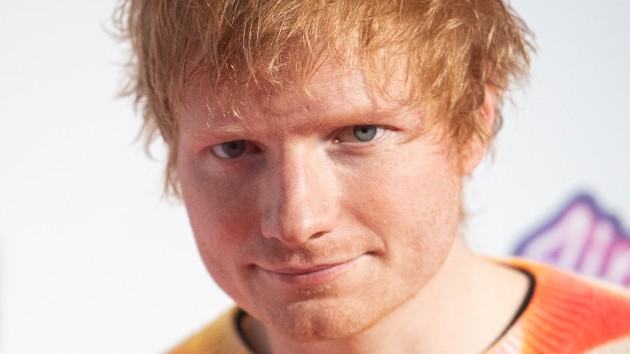
Ed Sheeran‘s set another chart record thanks to his latest hit, “Shivers.”
The song has topped Billboard‘s Adult Pop Airplay chart, becoming his seventh one to do so. That makes him the solo male artist with the most number ones on this chart, which has been around for 25 years. The record was previously held by Shawn Mendes, who had six.
The only other artists who’ve had more number ones on the chart than Ed are a band and three women: Maroon 5 is tops, with 15, followed by Pink with 10 and Katy Perry and Taylor Swift, with eight each.
Shawn, meanwhile, is now tied with Adele, whose latest hit “Easy on Me” was her sixth chart-topper on Adult Pop Airplay.
So far, each of Ed’s last three solo studio albums have spun off two Adult Pop Airplay chart-toppers. X (multiply) gave us “Thinking Out Loud” and “Photograph,” while ÷ (Divide) gave us “Shape of You” and “Perfect.” Ed’s current album, = (Equals), includes “Shivers” and “Bad Habits.”
As for Ed’s seventh, it’s “I Don’t Care,” his duet with Justin Bieber from his 2019 album No.6 Collaborations Project.
(NEW YORK) — Johnson & Johnson and the nation’s three largest drug distributors agreed Tuesday to settle opioids-related claims by Native American tribes for nearly $600 million.
The settlement, announced in a filing with the U.S. District Court for the Northern District of Ohio, is tentative until hundreds of tribes sign on, which is expected.
“The Native American population has suffered some of the worst consequences of the opioid epidemic of any population in the United States. Indeed, American Indians have suffered the highest per capita rate of opioid overdoses,” the tribal leadership committee said in a statement filed with the court. “American Indians and Alaska Natives had the highest drug overdose death rates in 2015 and the largest percentage increase in the number of deaths over time from 1999-2015 compared to other racial and ethnic groups.”
Johnson & Johnson agreed to pay $150 million over the next two years while not admitting liability or wrongdoing. The company defended its promotion of the medications.
“The Company’s actions relating to the marketing and promotion of important prescription opioid medications were appropriate and responsible,” Johnson & Johnson said in a statement. “DURAGESIC®, NUCYNTA® and NUCYNTA® ER accounted for less than one percent of total opioid prescriptions in the U.S. since launch. The Company no longer sells prescription opioid medications in the United States as part of our ongoing efforts to focus on transformational innovation and serving unmet patient needs.”
The drug distributors — AmerisourceBergen Corp., McKesson Corp., and Cardinal Health, Inc. — agreed to pay $440 million over the next seven years.
The tribal leadership committee said the money would help offset the “considerable” funds tribes have had to spend to cover the costs of the opioid crisis.
“The burden of paying these increased costs has diverted scarce tribal funds from other needs and has imposed severe financial burdens on the Tribal Plaintiffs, which will continue to bear significant costs related to abatement of the opioid addiction problem in their communities,” the tribal leadership committee said in its statement.
“This is a monumentally historic settlement that goes a small but very important distance toward addressing a killing epidemic that devastated tribal communities,” said Lloyd Miller, one of the lead tribal attorneys.
“Tribes are sovereign governments and must be able to vindicate their own interests to protect the health and welfare of their tribal communities,” Miller added.
The settlement puts Native American tribes on equal footing with states and cities as they try to abate the opioid crisis.
“The tribes have established in this case that they can play a major litigation role along with the state and local governments,” fellow tribal attorney Steve Skikos said. “The focus should be on the tribes themselves and how this settlement can help continue their efforts to address the opioid crisis.”
Tuesday’s result is different than Big Tobacco litigation, in which tribes were relegated to the sidelines and given only a share of what states received to address the consequences of tobacco and nicotine.