Kerry Washington is celebrating Black History Month by transforming herself into several trailblazing Black women. “Black History is about more than just slavery and Jim Crow. Our history is a tapestry of beauty, culture, power, community, resilience, & strength. And through it all — the pain and the joy — Black women have held it down,” the Scandal star wrote in an Instagram post.
Throughout February, Washington has used wigs, makeup and props to bring awareness to historic Black women on her Instagram page. She’s honored Rosa Parks, the iconic woman whose refusal to give up her seat on a bus inspired Dr. Martin Luther King Jr. to lead the Montgomery, Alabama bus boycott in 1955. The Emmy winner has also portrayed Olympic gold medal winning track star Wilma Rudolph, and supermodel Beverly Johnson, with a social media series she calls “Black HERstory.”
In other news, Gabrielle Union is launching a content series with LinkedIn that will focus on uplifting Black and other underrepresented entrepreneurs through topics including gender equity and mental health in the workplace. The three-month series, called Getting Real with Gabrielle Union, will include videos and posts on Union’s LinkedIn profile. The series is part of LinkedIn’s ongoing #IAmProfessional campaign.
Finally, Issa Rae was among the winners Tuesday on the second night of the non-televised portion of the NAACP Image Awards. The 37-year-old actress was honored for Outstanding Writing in a Comedy Series for Insecure. The show received a total of 12 nominations, including Outstanding Comedy Series, and Rae is also up for Outstanding Actress in a Comedy Series . The 53rd NAACP Image Awards,hosted by Anthony Anderson, will air Saturday, February 26 at 8 p.m. on BET.
In a year that saw Andrew Garfield nominated for an Oscar for playing Rent playwright Jonathan Larsontick…tick…Boom!,and winning praise for playing both televangelist Jim Bakker in The Eyes of Tammy Faye, and Peter Parker No 3. in the blockbuster Spider-Man: No Way Home, comes the teaser for his latest project.
The versatile British actor will play a religiously devout Mormon detective on the hunt for a double murderer in the series Under the Banner of Heaven, coming to Hulu from FX and Oscar-winning Milk screenwriter Dustin Lance Black, and Academy Award-winning producers Ron Howard and Brian Grazer.
Detective Pyre, played by Garfield, is an elder in the Church of Latter Day Saints “who is committed to his Church and family, but begins to question some of the Church’s teachings through his contact with a suspected murderer,” according to the network.
“The evidence points to things and beliefs that I’ve only ever heard whisperings about,” Garfield says, the only voice heard in the spooky snippet. “I wonder how something so horrific could have come to pass.”
Also starring Daisy Edgar-Jones, Sam Worthington, Wyatt Russell, Billy Howle and Rory Culkin, among others,the true crime thriller series will be available exclusively on Hulu in 2022.
(NEW YORK) — Two prosecutors leading the criminal investigation into former President Donald Trump and his family real estate business have resigned, the Manhattan District Attorney’s Office said, casting doubt about the likelihood the former president would face any criminal charges.
Carey Dunne and Mark Pomerantz submitted their resignations to Manhattan District Attorney Alvin Bragg, who inherited the Trump investigation from his predecessor, Cyrus Vance.
“We are grateful for their service,” a spokesperson for Bragg told ABC News regarding Dunne and Pomerantz. “The investigation is ongoing.”
The resignations could be a sign that Bragg has doubts about whether to continue a case that has already seen charges filed against the Trump Organization and its long-serving chief financial officer, Allen Weisselberg.
Both have pleaded not guilty.
The investigation has centered on how the former president and his company valued their holdings depending on whether they were seeking loans or trying to pay lower taxes.
New York Attorney General Letitia James is conducting a parallel civil investigation and has successfully gone to court to force Trump and two of his children to sit for depositions in the coming days.
The $4,750 black Armani dress Duchess of Sussex Meghan Markle wore during her sit-down with husband Prince Harry and Oprah Winfrey is being touted as 2021’s Dress of the Year by Bath, England’s Fashion Museum.
Specifically, it’s not the “screen-used” garment, to use movie industry parlance, but a version of the “triple silk georgette dress” donated by Armani that matches the one Markle wore during the headline-grabbing interview.
The piece will become a part of Fashion Museum Bath’s “A History of Fashion in 100 Objects” exhibition.
The “Dress of the Year” honor was bestowed upon the garment by last year’s winners, Dazed magazine’s Ibrahim Kamara and Gareth Wrighton. Their “Dress of Hope” snagged the honor for the pandemic year 2020.
On the museum’s website, the designers called the Oprah interview “the definitive anti-establishment moment that will forever endure in the British collective consciousness.”
And in case you don’t think headlines about the so-called “runaway royals” are already hyperbolic enough, the designers continued about the enshrined ensemble: “Meghan’s wrap dress by Armani, worn to showcase a divine pregnancy, framed the Duchess in black against the bountiful landscaping of Tyler Perry‘s Hollywood garden. This look now, through sheer association with a viral television moment, is firmly engrained in our pop culture psyche.”
Rosemary Harden, Fashion Museum Bath’s manager, added, “…There are moments in history that are all about the dress…The softly structured Armani dress with beautiful appliquéd lotus flower motif was part of a carefully curated look, guaranteed to send messages, and to imprint itself in our consciousness time and time again.”
(LOUISVILLE, Ky.) — Wednesday marked the start of the trial for the sole Louisville, Kentucky, police officer charged in connection to the “no-knock” search warrant raid that killed Breonna Taylor.
Brett Hankison — who is expected to testify — is charged with three counts of first-degree wanton endangerment of Taylor’s neighbors.
Prosecutors say he fired shots that endangered three people who were inside a neighboring apartment: Cody Etherton, his pregnant partner Chelsey Napper and their 5-year-old son.
Hankison was fired from the Louisville Police Department after the March 2020 shooting and is the only officer charged in connection with the incident. No officers have been charged with shooting Taylor.
The deadly shooting took place shortly after midnight on March 13, 2020. Taylor, a 26-year-old Black medical worker, was asleep at home with her boyfriend, Kenneth Walker.
Officers arrived and executed a “no-knock” search warrant as part of an investigation into a suspected drug operation, allegedly linked to Taylor’s ex-boyfriend.
Walker, who claims he thought the officers were intruders, fired one shot from his handgun, striking an officer in the leg. In response, police opened fire, and Taylor was shot multiple times. No drugs were found in Taylor’s apartment.
Etherton, the first witness, testified that the gunshots were “inches away from hitting me.”
“Literally, like, one or two more inches and I would have been shot,” he said. “I think about it all the time … I would never even got to meet my son,” he added, referring to his son Bryson.
On cross-examination, Mathews asked Etherton if the situation was chaotic.
“Yeah, the whole thing was chaotic,” Etherton said. “From the time that I got woke up to a loud boom, gunfire coming through my wall and nearly killing me, could have struck my girlfriend. It was chaos.”
Matthews also called attention to the lawsuit that Etherson filed against Hankison and the city of Louisville.
Second on the stand was Louisville Police Sgt. Kyle Meany, who was investigating drug trafficking and looking into Taylor’s ex-boyfriend. Meany was not involved in serving the search warrant.
Meany said a number of search warrants were obtained for different addresses, including Taylor’s. The affidavit attached to the search warrant for Taylor’s apartment was designated as a “no-knock warrant” request, he said, adding that the physical search warrant related to the affidavit was signed by the judge.
Meany said police conducted surveillance of the apartment prior to obtaining the warrant and had photos of Taylor’s ex-boyfriend at her apartment.
On March 12, 2020, police held a briefing for executing the search warrant, he said. Meany confirmed there was a white board with various addresses that were subjects of the search warrants, including Taylor’s address. Above the address, the words “knock and announce” were written, he said.
In opening statements Wednesday, Assistant Attorney General Barbara Whaley said Hankison fired five bullets into Taylor’s apartment, three of which reached Etherton’s apartment.
Whaley said when officers breached Taylor’s apartment, the officer who fatally shot Taylor moved up to cover the officer with the battering ram, putting himself in the line of fire. Hankison was supposed to be in this role but was telling a person who was leaving a neighboring apartment to go back inside, Whaley said.
Whaley said Hankison had been engaging with that person when shots rang out. She said Hankison fired perpendicular to where the shot came from inside of Taylor’s apartment.
The prosecutor said Etherton jumped up when he heard the ram at Taylor’s apartment and walked toward his front door to see what was going on.
“A bullet whizzed close to his head that he heard, and then saw debris, drywall dust, where that bullet had come through,” Whaley said.
Whaley also said that Hankison gave a statement to investigators claiming he saw a shooter with an AR-15-style rifle in a combat position. No AR-15-style rifle was recovered from Taylor’s apartment, Whaley said.
Hankison’s defense attorney, Stew Matthews, said in his opening statement that he didn’t plan to dispute the evidence presented by the prosecution, but the “issue is what was the reasoning behind his [Hankison] firing the shots.”
Matthews focused on the chaos of the situation and said that Hankison will testify.
Matthews said the prosecution doesn’t know whether or not Hankison could see what was going on into the doorway and that it was “not accurate” to say that he couldn’t see into the hallway when the door was breached.
Matthews said that Hankison saw the muzzle flash from the gun that was fired at officers and that “his perception of it was that it was an AR-15 rifle.”
Matthews said that when Hankison fired his gun, he was “attempting to defend and save the lives of his brother officers.” He said that under the operating procedures of the police department, officers are obligated to defend other officers and citizens, and “that’s exactly what Brett Hankison was doing in this situation.”
“His actions were reasonable and justified given the chaotic situation he was in,” Matthews said.
Hankison has pleaded not guilty. If convicted, he faces up to five years in prison.
Two other officers involved were also fired from the police department: the officer who fired the shot that killed Taylor per a ballistics analysis and the officer who prepared the search warrant.
ABC News’ Kendall Ross and Kiara Alfonseca contributed to this report.
(WASHINGTON) — Ivanka Trump, the eldest daughter of former President Donald Trump, is in active conversations with the House Select Committee on Jan. 6 about meeting for a voluntary interview, ABC News has confirmed, marking the first time a member of the Trump family has engaged in voluntary negotiations outside of a subpoena.
“Ivanka Trump is in discussions with the committee to voluntarily appear for an interview,” a spokeswoman for Trump confirmed in a statement Wednesday.
Ivanka Trump was one of a small handful of aides with the president inside the West Wing as the Capitol was under attack the president after his speech on the morning of Jan. 6.
Ivanka’s possible cooperation comes as ABC News has previously reported the committee is in active negotiations with Trump lawyer Rudy Giuliani about also appearing for an interview with the committee.
This is a developing story. Check back for updates.
Jeff Kravitz/FilmMagic for Life is Beautiful Music & Art Festival
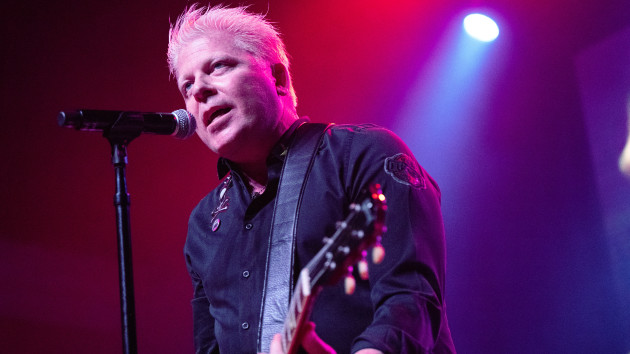
Green Day is continuing to tease new music.
Over the last few months, the punk trio has uploaded various videos showing them in a recording studio, each with the year 1972 prominently featured. That trend continued Tuesday with a new clip, once again with a focus on 1972.
Notably, all three Green Day members — Billie Joe Armstrong, Mike Dirnt and Tré Cool — were born in 1972. In fact, Armstrong just celebrated his 50th birthday last week.
No official details about whatever Green Day’s been teasing have been announced, so stay tuned.
Green Day released three new singles in 2021: “Here Comes the Shock,” “Holy Toledo!” and “Pollyanna.” Their most recent album is 2020’s Father of All…
Thiago Prudencio/SOPA Images/LightRocket via Getty Images
(WASHINGTON) — Drugmakers Sanofi and GlaxoSmithKline announced Wednesday they are planning to ask regulators to authorize their new COVID-19 vaccine candidate.
The companies said data shows the shot works either as a primary vaccine, with 100% effectiveness against severe disease and hospitalization, or as a booster shot to raise antibody levels.
Although they are submitting a request for authorization more than a year after Pfizer-BioNTech, Moderna and Johnson & Johnson were approved in the U.S., Sanofi and GSK are hoping to differentiate their vaccine because it is based on a more conventional protein-based vaccine technology.
Known as a recombinant protein vaccine, it uses the spike protein — which COVID uses to enter and infect cells — to help the body recognize the virus so it can fight it off if a person becomes infected.
This is different from messenger RNA, or mRNA, technology, which is used by Pfizer and Moderna and teaches the body’s cells how to make proteins that trigger immune responses.
It’s also different from Johnson & Johnson’s vaccine, which is a viral vector vaccine and combines COVID genetic material with genes from the common cold-causing adenovirus to trigger an immune response.
“The evolving epidemiology of COVID-19 demonstrates the need for a variety of vaccines,” Roger Connor, president of GSK Vaccines, said in a statement. “Our … protein-based vaccine candidate uses a well-established approach that has been applied widely to prevent infection with other viruses including pandemic flu. We are confident that this vaccine can play an important role as we continue to address this pandemic and prepare for the post-pandemic period.”
The companies said their data from Phase 3 clinical trials showed two doses of their candidate, called VAT08, was 100% effective against severe disease and hospitalization from COVID-19, according to a company statement.
The vaccine was also 75% effective against moderate-to-severe disease and about 58% effective against symptomatic disease.
Early data also indicated the vaccine was 77% effective against symptoms linked to the delta variant.
When used as a booster shot for an already-approved vaccine, the Sanofi-GSK vaccine increased antibody levels 18- to 30-fold, according to the company.
Additionally, when trial participants were given two doses of the vaccine candidate and then a booster shot, antibody levels rose 84- to 153-fold.
“We’re very pleased with these data, which confirm our strong science and the benefits of our COVID-19 vaccine,” Thomas Triomphe, executive vice president of Sanofi Vaccines, said in a statement. “The Sanofi-GSK vaccine demonstrates a universal ability to boost all platforms and across all ages.”
The study also showed no severe reactions or safety concerns from the vaccine in any age group.
The drugmakers are currently in discussions with the U.S. Food and Drug Administration and European regulators and plan to submit their data soon.2
It comes just one month after another pharmaceutical company, Novavax, asked the FDA to authorize its COVID-19 vaccine candidate, which also uses protein-based technology.
ABC News’ Sony Salzman contributed to this report.
The event will mark a return to USC for Holland, who graduated from the college in 2017 with a PhD in molecular biology.
“Clearly, Dr. Holland has a passion for both music and science,” says Peggy Farnham, PhD, vice dean for health and biomedical science education. “I hope that his experiences will demonstrate to our students, and to our community, that science can be an integral part of all lives.”
Kevin Mazur/Getty Images for The Recording Academy
Lizzo teased her long-awaited second studio album in a new interview and said she is “proud” of it.
Speaking with Variety, the Grammy winner revealed that she’d been working on her sophomore record since before her debut, Cuz I LoveYou, hit shelves in April 2019.
“Broadly, I’ve been working on this album since the summer of 2018,” said Lizzo. “It has evolved to a place where I’m proud. It’s one of the most musically bada**, daring and sophisticated bodies of work I’ve done to date.”
The “Rumors” singer revealed that, although she has been working on her labor of love for about four years now, she is still deciding when to release it. “I am not done. I’m still pushing out the hits, baby. And I hope that it is some of the most useful pieces of music to ever exist,” she explained. “All I want to do is help people through my music.”
And while Lizzo is autobiographical with her hits, the singer revealed that her upcoming work is a little different than what fans have come to expect of her. “It is a love album. I’m shocked,” she dished. Lizzo also let it slip that this album is “personal” as well, because she will “never be the kind of artist that’s like, ‘This album is about a story I wrote; it’s not real.'”
Does that mean that Lizzo has a new man in her life? The “Juice” singer didn’t share any names — quipping “I ain’t talking about this” — but she did admit that she’s “a little bit” in love. That said, whether or not the album is about her new flame, Lizzo teased that we will just “have to wait and see.”