Kevin Mazur/MTV VMAs 2021/Getty Images for MTV/ ViacomCBS
Nick Lachey is looking forward to celebrating 98 Degrees‘ 25th anniversary this summer but, ahead of the milestone celebration, he entertained the possibility of doing a “massive” tour with the Backstreet Boys and *NSYNC.
BSB first floated the idea in July, which Brian Littrell dubbed “the boys of summer” tour. Does Nick see that happening?
“If we’re able to ever come together, I think it would be a massive, massive, massive success,” Nick told ABC Audio. “I think people would love to see that line up, and I think it would be certainly a once in a lifetime tour.”
While “The Hardest Thing” singer said his band mates would be “thrilled and honored to be part of that,” he cryptically added “there’s always a chance” of that mega-tour happening. As for when that’ll be, Nick mused, “We’ll see… One of these days.”
What is certain is a massive celebration ahead to mark 98 Degrees’ eponymous debut studio album, which was released on July 29, 1997. “This is our 25th anniversary year,” Nick proclaimed, adding, “We’re going to celebrate that anniversary with new projects.”
He confirms a new EP is on the way and said, “We’re actually working in the studio on that right now.” Nick expects the EP to drop “by early summer. That’s the goal.”
Nick also took a moment to reflect on his storied career, saying he is “blessed to still have amazing fans” because they’re the reason “we still get to do this.” 98 Degrees surprised fans last summer by releasing the single, “Where Do You Wanna Go.“.
The Grammy-nominated artist says, “It is truly shocking to us and amazing to us” they are still performing 25 years later, and vowed, “We’ll keep doing it as long as people are there to listen.”
That’s right — the show dedicated to finding the next singing superstar returned Sunday night with judges Katy Perry, Luke Bryan, and Lionel Richie along with host Ryan Seacrest.
This isn’t just your average season of American Idol though, it’s the 20th season, and, as part of the milestone year, they’ve introduced the coveted Platinum ticket.
“We all know the Golden Ticket gets you to Hollywood Week but this year, this is historic, for the first time, we have the Platinum Ticket,” Seacrest said in a short video. “There are only three of these for the entire season, and if the judges vote unanimously for you to get this as a contestant, then you bypass the first round of Hollywood Week. I mean, it is, it’s a game-changer.”
With a ticket to Hollywood on the line, there was some serious talent that came across the judges’ paths. Here are some of the night’s highlights.
Kentucky’s Noah Thompson was one of those gifted people and thanks to his friend, who signed him up for the show, the 19-year-old was able to show off his skills and earn a ticket to Hollywood after singing Kameron Marlowe‘s “Giving You Up.”
Tyler Allen, 24, from Alabama, brought Katy to tears after sharing the tragedy he and his family experienced when his sister and barely one-year-old nephew were killed after being struck by an 18 wheeler. He sang Whitney Houston‘s “I Believe In You And Me,” the song he used to sing to his nephew, and made his way through to the next round.
Normandy, 29, from Maryland took the judges by surprise when her cartoonishly high-pitched talking voice turned into a deep singing voice. After having a go at Tina Turner‘s “Proud Mary” and Adele‘s “Rolling In The Deep” she earned herself a ticket to Hollywood.
Unfortunately, not everyone shown on Sunday night’s episode scored a trip to Hollywood. Grace, a 15-year-old from Michigan, who also happens to be the granddaughter of the late, great Aretha Franklin, didn’t make it to the next round of competition, but Lionel urged her to “put in the work” and come back.
Last up, was 23-year-old Huntergirl, real name Hunter Wolkonowski, from Tennessee, who earned a standing ovation from the judges and even had Luke ranking her in the Top 10 and calling her the “new-age” Miranda Lambert. Later in the episode, after performing at Luke’s Nashville bar, the judges bestowed the first Platinum ticket of the season to her.
Who else will score a Platinum ticket? Find out when the American Idol auditions continue Monday, March 6 at 8 p.m. ET on ABC.
It’s been a bit since we’ve heard new music from Highly Suspect, but that’s set to change in the coming months.
In an Instagram post, the “Lydia” rockers tease that they plan to put out fresh material in time for their recently announced three-show run with Papa Roach, set to kick off May 22 in Springfield, Missouri.
“These shows will be dope,” the post reads. “We’ll have new music out by then too.”
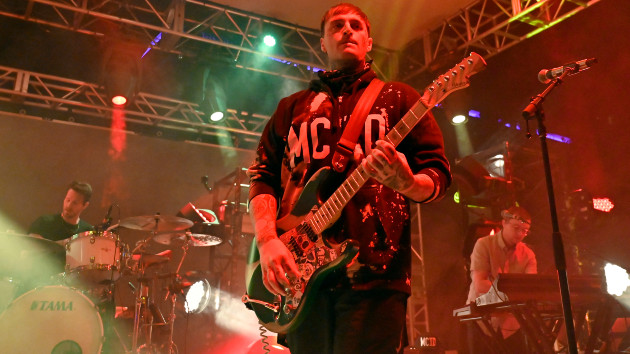
Highly Suspect hasn’t released any new tunes since their most recent album, MCID, dropped in 2019. That record spawned the singles “16” and “These Days.”
Ahead of the Papa Roach shows, Highly Suspect will be playing Tampa, Florida’s Innings Festival in March, and Atlanta’s Shaky Knees in April.
Last week, Journey kicked off their Freedom Tour 2022 with opening act Toto, marking the first time the two bands have hit the road together.
Toto frontman Joseph Williams tells ABC Audio that he’s “insanely excited” to be touring with Journey, noting that not only is he a “huge fan” of that band, but that the trek also is giving his own group the opportunity to play larger venues than they usually do in the U.S.
The 41-date U.S. leg of the 2022 Freedom Tour is scheduled through a May 11 concert in Hartford, Connecticut. Toto initially planned to launch its own headlining trek dubbed The Dogz of Oz Tour in late February, and then were supposed to have joined Journey’s outing in April, but things changed when Billy Idol was forced to drop off the February-to-April opening slot with Journey because of a sinus ailment.
Williams says the set Toto is playing as opening act on the Journey tour obviously is shorter than the one they showcase as a headliner, but notes, “[I]t’s still a great show. And it’s…mostly just sort of hit, hit, hit that way.”
Meanwhile, Toto announced last year that founding keyboardist/singer David Paich — who had retired from full-time touring in 2020 because of health reasons — “could pop in any time for a show as a special surprise” during the band’s 2022 trek.
Regarding how often Paich might perform with Toto this year, Williams says, “The frequency of his appearances…we still don’t know. What I can tell you is that he’s looking great, sounding great.”
Joseph adds, “We will invite him and try and coax him to…all of the concerts, as many as he wants to go to.”
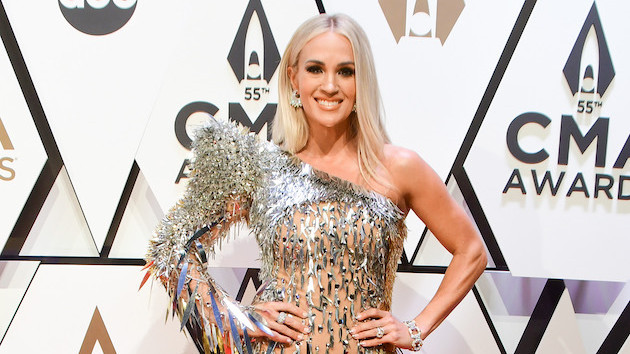
Carrie Underwood fans have come to know and love her for her dazzling onstage outfits and jaw-dropping mid-show costume changes, so the country superstar knew right off the bat that she wanted to turn up the bling for her Reflection Las Vegas residency, which opened last December.
“For Reflection, it is all about more rhinestones and more fringe,” Carrie explains to People, offering a peek at the 20-outfit ensemble she assembled for the residency, with help from stylist Emma Trask.
To that end, one of her favorite looks is the outfit she wears to open her show: a rhinestone-and-pearl-drenched white number with ankle-length fringe.
“I’m always inspired by Dolly Parton, and we had one of her associates that’s worked with her on our team,” Carrie says. “With all the white and the fringe and rhinestones, I immediately thought of Dolly.”
Emma says that the “Nash Vegas” concept was a major theme she drew from in assembling every look — and the creative team took that direction literally with one bedazzled denim jacket, which reads “Nash Vegas” on the back along with Carrie’s name.
For behind-the-scenes shots of all of Carrie’s Vegas residency looks, head over to People.
As many artists release ultra expensive NFTs, Cordae is making sure his NFTS are affordable for his fans.
Last week, the “Gifted” rapper debuted his first NFT collection titled “IDENTITY,” a collaboration with designer Shaylin Wallace, which sold out in less than a minute.
“In general, I like to think into the future,” Cordae tells Hypebeast. “Learning and doing research, NFTs were definitely something that caught my interest.”
The two-time Grammy nominee wanted to keep the price reasonable. Each of the 5,555 IDENTITY NFTs is priced at $55.
“I’m not one of these people that’s trying to just come in and, you know, bleed out the community,” Cordae said. “The NFT space has its own ecosystem, its own community. To be a part of that is something that’s huge for me. To just enter into space with open arms.”
With Wallace, he created a series of graphic pop-art images inspired by his fashion style, with each NFT featuring a faceless rendering of Cordae in a different outfit.
“A lot of these NFTs are based upon my earlier style, around The Lost Boy era,” Cordae explained, referencing his 2019 debut album. “Like the OG hair colors and the things I used to wear, like vests all of the time.”
Cordae is considering releasing new music as NFTs.
“There are so many different aspects and possibilities in NFT space that are really exciting,” he says.
Cordae is continuing his concert tour promoting his new album, From a Bird’s Eye View. He will perform Monday in Chicago, Tuesday in Minneapolis, and the tour continues through March 19 in Sacramento, CA.
(NEW YORK) — Sen. Tom Cotton, R-Ark., has refused to condemn former President Donald Trump’s praise of Russian President Vladimir Putin amid his invasion of Ukraine.
“George, if you want to know what Donald Trump thinks about Vladimir Putin or any other topic, I’d encourage you to invite him on your show,” Cotton told ABC “This Week” anchor George Stephanopoulos on Sunday. “I don’t speak on behalf of other politicians. They can speak for themselves.”
Trump called the actions of the Russian president “genius” and “savvy” during an interview with the conservative radio program “The Clay Travis & Buck Sexton Show” on Tuesday. And on Saturday night at the Conservative Political Action Conference, Trump finally condemned the invasion but also said, “The problem is not that Putin is smart, which of course he’s smart. But the real problem is that our leaders are dumb.”
Stephanopoulos pressed Cotton, who he noted has been steadfast in his opposition to Putin, to condemn the comments.
“You’re a senior member of the Republican Party. Donald Trump is the leader of the Republican Party,” he said, noting that Trump “suggested” Saturday night he would run for president again. “When Fox News asked him if he had a message for Vladimir Putin, he said he has no message.”
“Why can’t you condemn that? I feel quite confident that if Donald — that if Barack Obama or Joe Biden said something like that, you’d be first in line to criticize them,” Stephanopoulos said.
Cotton, who sits on the Senate Intelligence and Armed Services committees, doubled down.
“Again, George, if you want to talk to the former president about his views or his message, you can have him on your show,” Cotton said. “My message to Vladimir Putin is quite clear: He needs to leave Ukraine unless he wants to face moms and teenagers with Molotov cocktails and grandmothers and grandfathers with AK-47s for years to come.”
Stephanopoulos followed up again.
“I simply don’t understand why you can’t condemn his praise of Vladimir Putin,” he said.
“George, again, I don’t speak on behalf of other politicians, they can all speak for themselves,” Cotton responded, again dodging Stephanopoulos’ question. “I’m delivering my message to you, which I said has been clear, whether Barack Obama was president, whether Donald Trump was president, and now whether Joe Biden was president, that Vladimir Putin has been a ruthless dictator for years. Too many people have not taken the threat seriously. And that’s why you see the images we see in Ukraine now. And where we need to focus is on stopping that aggression, supporting the Ukrainians as best we can.”
In an earlier interview on “This Week,” Oksana Markarova, the Ukrainian ambassador to the U.S., pleaded for American businesses to stop backing Russian-owned enterprises both at home and abroad.
Cotton agreed with the ambassador, encouraging “every American company to scrub all of their operations to provide no support whatsoever to Vladimir Putin’s regime” while Russia continues carrying out an “unprovoked war of aggression.”
“But we can do more than prayers and hashtags and lighting up buildings, George. It’s time for the president and some of our European partners to quit pussyfooting around,” Cotton later added. “The financial sanctions announced last night are riddled with loopholes.”
The United States and other Western nations announced Saturday they would significantly escalate restrictions against Russia’s financial system. Sanctions against major Russian banks, members of the Russian elite and Putin had already been imposed by the United States and its allies. The U.S. and other nations have also stepped up military aid to Ukraine. The countries, however, have yet to launch crippling sanctions against Russia’s oil and gas industry, which Cotton has been advocating for. Russia provides more than a third of Europe’s natural gas.
Putin announced Sunday he had ordered his military to put Russia’s nuclear deterrent forces in a state of heightened readiness in response to what he called “aggressive statements” from NATO countries.
“It’s time to remove all Russian financial institutions from the international payment system. It’s time to impose sanctions on his oil and gas exports which he uses as his primary means of financial support,” Cotton said. “We need to rush those weapons that were announced for delivery yesterday to the front: anti-tank, anti-aircraft missiles, sniper rifles ammunition, fuel supplies, it should have been done weeks ago so better later than never but the Ukrainians have no time.”
ABC News’ Ben Gittleson and Lucien Bruggeman contributed to this report.
(GAINESVILLE, Fla.) — When Murray was released from prison in July, he didn’t have a source of income. The 54-year-old, whose last name is being withheld because he fears for his safety, is no stranger to struggling financially; he grew up poor in Gainesville, Florida, and resorted to stealing or shoplifting in the past.
“When you live with something in your life for so long, such as criminal activity, you always have this lingering thought in your mind: ‘I know a way to get some money and it wouldn’t take me long to get it,’ Murray said.
He was “down and out” after prison, he said, and doing his best to make a new life for himself, but money was hard to come by.
Struggling to maintain financial stability after incarceration is something that many formerly incarcerated people face; 27% of formerly incarcerated people are unemployed and are 10 times more likely than the general population to be homeless, according to the non-profit criminal justice research organization Prison Policy Initiative.
A new guaranteed income program in Gainesville aims to solve this issue.
Guaranteed income programs across the country give direct cash payments to recipients in order to address poverty or economic inequality, They can be targeted toward a specific population or be universal.
Some critics say these initiatives have to be multifaceted to address the nuances of poverty. Others argue they will stop people from working — though such claims have been debunked — or be too expensive to maintain.
This effort is a collaboration between the guaranteed income pilot program Just Income GNV and Mayors for a Guaranteed Income, a national network of mayors and researchers spearheading these kinds of programs. They have selected formerly incarcerated individuals who live in the city to receive $1,000 in January, followed by $600 each month for a year.
Their spending is monitored for research purposes, but the recipients are not told how to spend their money.
One month after his first cash assistance check, Murray said he is already seeing the effects an extra monthly boost can have on his well-being and stability.
He’s disabled and needs assistance with walking, so he plans on using the money to help get a scooter and a car to make transportation and mobility easier.
“It’s a relief, which is amazing. I can plan things now and guarantee they’re gonna happen,” Murray said. “I’ve been able to help out some of my relatives with money for gas and got a couple more other relatives who were low on food and I was able to help with that. And just so many great things that this program has really introduced into my life.”
How it works
The program seeks to address the cycle of financial inequality that often affects people impacted by the criminal justice system, especially in Florida which, according to the Prison Policy Initiative, outpaces the overall U.S. incarceration rate. Florida has a rate of 795 incarcerated people per 100,000 compared to 664 in the U.S. as a whole.
Research has also shown that incarceration disproportionately creates a lasting impact on Black and brown communities, as well as impoverished people.
When people come out of prison, they can face discrimination and barriers to economic opportunities, criminal fines, debt, fees and parole that can haunt them long after their sentence is over, according to Kevin Scott, the director of Just Income GNV who is also formerly incarcerated.
For some, the experience can lead them back into the criminal justice system.
When someone can’t/won’t pay a fee or fine and can’t/won’t show up to a court date regarding the fee, it could result in more jail time or additional debt for them, according to the Brennan Center for Justice.
Researchers at the National Research Council Committee on Law and Justice also found links between high incarceration rates and the criminalization of poverty through policy changes.
“I see it so many times when I was in prison guys coming back to prison over and over and over again because they didn’t have enough money to stay on the street and us as a society need a better system,” said David, 54, who has asked that his name be withheld out of safety concerns. He is another formerly incarcerated man and Vietnam veteran who is receiving cash assistance.
David finished a 45-year sentence in the summer and said the monthly income has been a saving grace. He said there have been family emergencies that the money has allowed him to handle, including getting his daughter out of a dangerous domestic situation.
“Had not that money been there, I don’t know what would have happened,” said David.
David said the money has given him the extra step up that he needed to succeed coming out of a long prison sentence.
“It’s sad that it boils down to that because I’ve got a lot of education under my belt for jobs,” David said. “But if you don’t have the initial step or a little way to get moving … what it all boils down to is the almighty dollar.”
Tracking the spending
Steady, the technology firm and app that helps Mayors for Guaranteed Income programs distribute money to recipients, said it can track what recipients spend their funds as part of the research and advocacy for this project.
Adam Roseman, the CEO and co-founder of Steady, said that it’s a harmful stereotype that low-income earners spend their money irresponsibly or that guaranteed income recipients may not be financially literate with their funds.
The data the company has seen so far has disproved that, he says: “They’re spending the money on things that are important to their daily lives, food, housing, paying down debt payments, acquiring new skills through career programs.”
Cash assistance, according to Roseman and Sukhi Samra, the director of Mayors for a Guaranteed Income, has been extremely helpful in getting people back on track — pointing to other forms of help like the federal Child Tax credit.
“We’ve actually seen income lifts as sizable as 40 or 50% for those individuals that received emergency cash or universal basic income,” Roseman said. “You alleviate some of that major financial stress” that is holding them back from solving bigger challenges.
She says these types of programs have changed lives.
She says she’s seen people escape abusive marriages, address their mental health and well-being, or have offered them a lifeline during times of unemployment or have given them the tools needed to find work.
The ultimate goal: “a federal policy. We are investing in pilots like the one in Gainesville to build the evidence base for a federal guaranteed income,” Samra said.
David and Murray are busy making plans for their families and futures, now that they have some relief knowing they won’t be scrounging for cash to take care of themselves.
In honor of Murray’s mother’s upcoming 75th birthday celebration in March, he says he wants to give back now that he’s got some cash to support himself.
He plans on putting together 100 bagged lunches and drinks for the homeless and for the community, knowing that he was once where they were.
“I appreciate what’s happened in my life and I want to give back and I want to share and give hope to other people,” Murray said.
(TULSA, Oklahoma) — A community of Black entrepreneurs are shaking up the tech and innovation ecosystem and forming a new hub for digital creators, developers and investors based in Tulsa, Oklahoma.
Founders building companies from the city say it boasts a pipeline of fresh and diverse talent, an enterprising yet collegial support system, and offers a cost of living that will make any Bay Area or New York-based startup envious.
For some, there is also the importance of building back the storied “Black Wall Street” that was violently taken from people that looked like them, in Tulsa, just a century ago. Some 300 people were killed and thousands wounded when a mob of white vigilantes, harboring resentment towards their thriving Black neighbors, eviscerated the well-to-do Greenwood district and burned down 35 acres of commercial and residential property.
The legacy of the Tulsa Race Massacre, erased from many history books for generations, still looms large over Black business leaders choosing to rebuild along the streets that haunt survivors every day over what “could have been.”
“The Tulsa Race Massacre isn’t a footnote in a history book for us. We live with it every day and the thought of what Greenwood was and what it could have been,” massacre survivor and World War II veteran Hughes Van Ellis told lawmakers when testifying last May over the debt that America owes.
Carrying the weight of this history, a new generation of Black entrepreneurs are also looking toward the future — and seeking to build up new generational wealth.
Here are the stories of nine Black entrepreneurs reimagining the future of Tulsa through investments in tech, solving problems for consumers through innovation and blazing a trail for the next generation of Black business executives.
‘Don’t give up’: Chandler Malone, CEO, Bootup
Malone helms an app and website that launched in December 2020 called Bootup and has lived in Tulsa since December 2019.
“We do two things, we help companies solve their talent pipeline gaps by giving them access to the fastest growing talent pool of tech talent right now, and that’s the non-traditionally trained talent market,” Malone told ABC News. “But then we also help individuals increase their access to economic mobility, through access to jobs in tech, even if they don’t have a college degree or certifications like that.”
To date, Malone said they have placed over 320 people in their first jobs in tech. This is important for the community, he said, because, “At the end of the day, tech provides the most upside, economically.”
“The racial wealth gap has not gotten any better,” he said. “And there’s really no industry where someone can start a company, and have a multi-billion dollar business in just a couple years outside of tech.”
The history and spirit of “Black entrepreneurship is incredibly strong” in Tulsa specifically, according to Malone, which is why it has been so important for him and his team to show “what can be accomplished” for the next generation.
‘It’s a full community effort’: Edna Martinson, co-founder, Boddle
Martinson, the co-founder of game-ified education platform Boddle, said she hopes to use her company to “address the issues of learning gaps in elementary classrooms” and get more children “inspired to love learning.”
“I’ve seen personally, what a good education can do to help propel you in life,” Martinson said. “And I want to help kids also be inspired to learn and get that good quality education.”
Martinson moved to Tulsa in August 2020, saying she was inspired by the people she met during visits and “not only the history, but what is being done to rebuild in Tulsa, especially around resources for Black entrepreneurs.”
“I love how it’s a full community effort, from all these different organizations and entrepreneurial support systems,” she added. “Being a part of that is pretty special — when you’re in a place where there is alignment and mission, and everybody’s on the same page and realizes how a thriving Black community can help Tulsa as a whole community thrive as well.”
‘You cannot do it alone’: Chantelle Lott, CEO, Bounceless
Lott, who has been based in Tulsa for some 20 years now, creates patented activewear and sport bras for fuller-busted women — a subset of consumers often overlooked by the athletic wear industry.
“Right now, there’s not a lot on the market for us,” Lott told ABC News. “So our mission is really just to make sure that women have the support that they need, and to know that bust size is not a barrier to their physical fitness.”
“Rebuilding Tulsa, rebuilding Greenwood, that was a passion of mine since I got here,” Lott said of building her company in Tulsa. “It’s a great experience to really contribute to the history and those who came before us, and to also pass it on to future generations.”
As one of the few Black woman business leaders in the tech sector, Lott says she sees representation as crucially important.
“Because if you can’t see it, you don’t believe it, you don’t see yourself in it,” she said of representation in tech. “So I do believe that is important for Black founders or individuals, even youth, to make sure that they can see themselves in the places that they normally don’t.”
‘We still have that spirit, and it still lives on’: Jayvin Washington, founder and CEO, BiteWay
Washington, founder of the nutrition science-driven meal prep firm BiteWay, told ABC News that she grew up in Tulsa and considers it home — which is why she says it is so important for her to stay and build her business there.
“It’s important to have my business in Tulsa because of, of course, the history and the spirit of entrepreneurship that lies here,” Washington said.
“Black Wall Street was a phenomenal, like extraordinary time and place that we had here in Tulsa. And it was destroyed, but it wasn’t taken from us,” she said. “We still have that spirit, and it still lives on. We’re able to use that energy, and to rebuild and reconstruct what was always here in the first place.”
While she was initially interested in pursuing a career in the pharmaceutical industry, Washington said she felt called to the food industry as an easier way to help people in her community lead healthy lifestyles through nutrient-packed meals.
Lastly, Washington said she hopes that she can open doors for the next generation just by showing them that someone who looks like them can be a leader in corporate America.
“For me, it’s very important to be that role model or be the representation for little Black girls and Black boys that aspire to be an entrepreneur or just, even if they want to work in the corporate world,” she told ABC News. “They are able to do it, they have it in their bloodline.”
‘Access is incredible here’: Kene Onuorah, co-founder and CEO, Comme Homme
Onuorah hails from Raleigh, North Carolina, and his parents are from Nigeria. He founded Comme Homme as a tech-oriented service for men experiencing hair loss something he said he has dealt with at a relatively young age.
“We’re building Comme Homme for the two-thirds of all American men that deal with hair loss, about 50 million men to help them embrace their natural evolution,” he said.
In addition to creating an online community for men experiencing hair loss, “We use augmented reality technology to actually help men who were dealing with hair loss, visualize themselves in an authentic manner with a shaved head,” Onuorah said.
Being in Tulsa, “really helped us to continue to be revitalized and reinvigorated,” based on the city’s past, he said.
He said the city also provides resources he needs for his startup.
“It’s really easy to get access to network, it’s really easy to get access to capital, and really easy to talk to the people that can really push your business forward. There’s something special about Tulsa, the access is just incredible here,” he said.
‘Great to be in the midst’ of Tulsa’s ‘revival’: Chris Davis, founder and CEO, Fansub
After receiving a full scholarship to Duke University where he played football for four years, Davis said he pursued a professional football career before co-founding FanSub — a platform that allows creators and entertainers to engage with fans through livestream activations, marketing campaigns and other high-tech ways.
The Atlanta native said that his interest in the tech startup scene there led to his collaboration with former Miami Dolphins player Brandon King on FanSub.
He said that he, King and FanSub’s two other co-founders, Cameron Williams and Michael Lombardi were looking for a “network to help us grow the business,” and they found out about the Tulsa startup accelerator program.
“The caveat was that we would have to move to Tulsa,” to participate in the program, Davis said. Once they arrived, he said they began to learn more about the city’s history. It’s “really great to be right in the midst of history in a revival of this city,” Davis said. “There’s more to this opportunity than the accelerator program, it’s also a way for us to be a part of … this rejuvenation of Tulsa, Black Wall Street in Greenwood,” he added.
‘Get back what was taken’: Carlanda McKinney, founder and CEO, Bodify
McKinney comes from an “entrepreneurial family,” she said. So when she became frustrated after constantly receiving incorrectly sized clothes purchased online, then having to go through the hassle of sending them back, she went into “problem solver” mode, she said, and launched Bodify, a tech platform for finding the right clothes online for one’s body type and size.
And she said Tulsa is the perfect place to build her business.
“What brought me to Tulsa, really, it grew from a visit,” said McKinney and that her grandparents would bring her and her sisters to Tulsa every summer from her home in Kansas City. “I really could see myself there,” she said.
The MBA graduate said she kept hearing about the business opportunities opening up in Tulsa through networking in her hometown.
“I heard more than a few times, you should really check out what’s going on in Tulsa, that ecosystem is building up,” she said.
She said she applied for the Tulsa accelerator program for startups and was accepted. “And that sort of sealed the deal,” she said about setting up shop in Tulsa.
“More importantly though, I think what’s happening here, particularly around Black and brown founders is incredibly impactful because of everything that happened with Greenwood,” she said.
“I’m super excited to be a part of, even if it’s some small way, of sort of helping people get back what was taken,” McKinney said.
‘Didn’t see any other place that I would go’: Ambrose Midget, founder, Fresh Fabrics
Born and raised in Tulsa, Midget’s startup Fresh Fabrics is a mobile, same-day laundry service, with technology at its center.
With her business, Midget says she aims to “take laundry to the next level” and discussed her excitement at growing her business in her hometown.
“I just didn’t see any other place that I would go … to start my company,” she said.
Midget spoke about what launching a startup in Tulsa meant to her as a Black woman.
“Black women, we actually lead the entrepreneur world, as far as startups … but we’re the least funded and the least that tend to get support and resources,” she said.
The startup program in Tulsa, Midget said, is “a great opportunity” to work with a program “that believes in Black and brown people … and especially me as a Black woman,” she said.
We ‘feel all the love’: Marc LaManque, Troy Smith, Andres Gonzalez, co-founders, Cadenzo
LaManque, Smith and Gonzalez say they met at the University of Oklahoma and began working on their business while they were students there. For them, there was no question that Tulsa was an ideal place to launch their startup, Cadenzo, which is a digital booking platform for entertainers and venues.
“Being in a place where they’re providing guidance, mentorship, resources, advisers … everything that we need for three young first-time founders to start their company,” LaManque said about the Tulsa program for startups. “We just feel all the love,” he said.
Smith said these resources have helped them build Cadenzo into a “platform that enables communities to truly revel in wherever space that they occupy and enable their culture and enable their enjoyment of music and entertainment.”
And that fact that they are building their startup outside of traditional tech hub hotspots has been an advantage, Gonzalez said.
“If you think about traditional tech hubs — New York, Bay Area — you walk outside and you bump in a startup every five steps. It’s a lot easier here, and especially with the whole community, being very supportive,” he said.