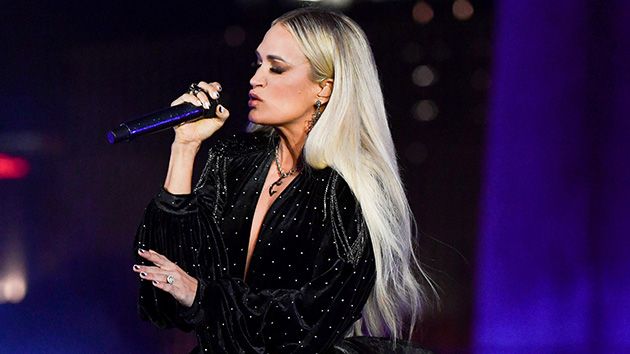
It’s official: Garth Brooks is opening a new entertainment complex and bar in Nashville.
Garth is now the proud owner of a three-story, 40,000-square-foot property on Lower Broadway in downtown Nashville that he will transform into the venue.
After reports surfaced that Garth had purchased a property on Broadway, it’s now been confirmed that the sale was through 411 LLC, which is connected to the singer’s lawyer, Russell A. Jones.
The country icon has teamed up with Strategic Hospitality to create the concept. The Nashville-based company is also behind popular Nashville eateries including Merchants, a Southern fare-meets-formal dining restaurant in a historic building on Broadway.
“We feel very lucky to have the chance to be part of Lower Broad, which is arguably THE hottest spot in the country,” Garth says in a statement. “The goal is a classic honky-tonk that welcomes all and encourages love and kindness while playing the greatest music in the world in the home of Country Music!”
Garth is the latest in a long line of his country peers who have opened bars on Broadway, includingLuke Bryan, Jason Aldean, Blake Shelton and, most recently, Miranda Lambert.
Carrie Underwood is mourning the loss of her beloved pet.
On Monday, hours after she appeared at the Grammy Awards, the superstar revealed the sad news that her dog, Ace, has passed away. In a heartfelt tribute post to the pup, Carrie shared that Ace journeyed with her through many phases of her life, from touring the world to welcoming her two sons, Isaiah and Jacob.
“He was there for me when I was on my own trying to figure out life when it was at its craziest! He was with me through 3 houses, 6 tours and 2 kids…always ready to snuggle and play…through all the highs and lows,” she writes alongside a gallery of photos that show her giving Ace a sweet smooch and an adorable photo of him posing in front of a Christmas tree with an Elf of the Shelf on his back. “He will forever live on in our hearts and be forever missed.”
The singer also referred to the rat terrier as a “true friend and a good boy till the very end.”
Carrie has made her passion for animals well known. She grew up on a farm in her hometown of Checotah, OK and has been a vegetarian since the age of 13. Carrie and family have two other dogs, Penny and Zero.
Kelly Clarkson broke into the limelight in 2002 when she became the first winner of American Idol. And Vanessa Hudgens says Kelly’s Idol journey is what inspired her own career.
Appearing Tuesday onThe Kelly Clarkson Show, Vanessa revealed she wanted to follow in the “Breakaway” singer’s footsteps and compete on American Idol, to be just like her. She said she “grew up doing theater” and acting has “always been a passion of mine” — just like Kelly — so she committed to being on Idol. But life had other plans when she was ready to try out.
“That next week I got an audition for High School Musical and booked it. So then I was like, ‘Never mind,'” she laughed. “But I was like, ‘I’m doing it.’ And you were the catalyst.”
Kelly and Vanessa then bonded over the audition process, with Kelly disclosing, “People don’t know that, but there were many auditions before you even got to the TV part.”
As for the Princess Switch star, she “remember[s] all the auditions” she had to go through to play Gabriella Montez on High School Musical. Noting that the the hit Disney Channel movie turns 16 this year, Vanessa says, “It’s wild, the time just keeps flying.”
Marveling on American Idol turning 20, Kelly agreed it “feels weird” that the show is celebrating its platinum anniversary this year, because she was “so young” when it became a part of her life.
The late Minnie Riperton‘s timeless song, “Lovin’ You,” peaked at number one on the Billboard Hot 100 chart on April 5, 1975. Penned by Riperton, the beautiful love ballad is from the singer’s second studio album, Perfect Angel, and was produced by her husband, Richard Rudolph, along with Stevie Wonder. The tune is still considered an R&B classic, and boasts the most famous high note of the 70s.
Here are a few facts you might not know about the track:
— According to the liner notes on Riperton’s album, “Lovin’ You” is said to have been created as a distraction for Riperton’s daughter, actress and SNL star Maya Rudolph, so that Riperton and Rudolph could have some alone time.
— Speaking of her daughter, Riperton can be heard singing Maya’s name at the end of the track, but only on the unedited version.
— “Lovin’ You” has been featured in numerous commercials, including a 1998 Burger King spot and a Visa ad.
— “Lovin’ You” was sampled many times over the years by artists like R&B singers Shanice and Sparkle and pop singer Olivia Newton-John. Grammy-nominated singer Chloe Bailey gained lots of recognition after covering the hit song earlier this year.
(NEW YORK) — Severe weather continues to strike the South with damaging winds, tornados and huge hail.
Chunks of hail the size of golf balls were reported Monday night in Texas, Louisiana and Mississippi.
On Tuesday afternoon severe thunderstorms will move into Georgia, South Carolina and Florida.
A tornado already touched down overnight in Jackson County, Texas, near the town of Joshua.
A tornado watch will be in effect until 7 p.m. CT across the South.
Six tornadoes were also reported in central Mississippi and Alabama. One of the confirmed tornadoes caused some structure and tree damage near the town of Newtown and Highway I-2.
Tornado warnings are ongoing in Alabama.
Thousands are without power in Washington state as a major storm moved through the area, producing wind gusts near 81 mph.
As this storm system moves east, wind and snow alerts are issued from the Rockies into the Plains with high fire danger from Texas to South Dakota. Red flag warnings have been issued for the Plains where winds could gust up to 70 mph.
California’s first major heat wave of the season is expected soon; a heat advisory was issued for Los Angeles and San Diego with high wind alerts posted for the mountain areas.
The heat wave will begin Wednesday with highs in the lower to middle 90s.
Artists including Bruce Springsteen, Jon Bon Jovi, Carole King and Julian Lennon have joined the Stand Up for Ukraine social media campaign.
As previously reported, the Global Citizen-organized initiative will feature musicians coming together on social media this Friday, April 8, to show support for Ukraine as it continues to fight against Russia’s ongoing invasion.
Stand Up for Ukraine is designed to mobilize people across the globe to call on world leaders to commit billions of dollars to help refugees. It takes place ahead of a global humanitarian pledging summit taking place on April 9.
Among the other artists that have newly signed on to take part in the initiative are Metallica, Third Eye Blind, Dave Matthews, Weezer, Fall Out Boy, Hozier and Panic! at the Disco.
Previously announced participants include are Billy Joel, Elton John, Stevie Nicks, Madonna, U2, Stevie Wonder, Annie Lennox, Green Day, Red Hot Chili Peppers, Alanis Morissette, Chris Isaak, Celine Dion and many more.
More than 12 million people need assistance due to the war in Ukraine, and more than 6.5 million have been displaced internally; in addition, more than 3.5 million have left the country for neighboring countries. Nearly two million are women and children. Since the conflict began, one child from Ukraine becomes a refugee every second.
Bad Boys and Bad Boys II director Michael Bay didn’t want to talk about the Oscar moment everyone has been talking about — but like the rest of us, he found himself doing it anyway.
After initially telling Yahoo! Entertainment he didn’t really care about the buzzworthy moment between Will Smith and Chris Rock, Bay relented.
“First of all, it’s wrong to begin with,” said the filmmaker, who was promoting his new movie Ambulance.
He added, “I don’t really care. Hollywood gets very self-absorbed. There are babies getting blown up in the Ukraine right now. We should be talking about that…”
That said, Bay noted regarding Smith, “I’ve worked with him. He’s not that guy. I’ve never seen him lose his cool like that.”
He also maintained that when he first saw the incident, “I thought it was a setup because I saw his smirk. I’ve been on set when Will has screwed with people and joked with people.”
However, Bay said that when he heard Will yell, he could tell he was really mad.
Bay also seemed to think Smith could have done more damage if he’d wanted to. “Listen, it was a slap. It wasn’t a punch. He’s very good at fighting, he’s trained at that,” the director said, before repeating, “It was wrong.”
Paul McCartney‘s childhood home in Liverpool at 20 Forthlin Road will be opened to unsigned music artists for them to record and perform there as part of a new initiative launched by the U.K.’s National Trust organization, which focuses on heritage conservation in England, Wales and Northern Ireland.
As part of the campaign, dubbed “The Forthlin Sessions,” the National Trust will team up with Sir Paul’s younger brother, Mike McCartney, and U.K. journalist and broadcaster Pete Paphides to choose artists who will have the opportunity to record and/or perform at the historic residence and have those sessions publicized.
To find out how to apply for the chance to perform at the home, and other details about the initiative, visit NationalTrust.org.uk. Those who apply must be based in the U.K. and at least 18 years old.
The McCartney family moved to 20 Forthlin Road in 1955. A few years later, the residence became the site where Paul wrote and rehearsed many Beatles songs with John Lennon, including “Love Me Do,” “I Saw Her Standing There,” “I’ll Follow the Sun” and “When I’m 64.”
The initiative is being launched to mark a few Beatles-related milestones taking place in 2022, including Paul’s 80th birthday in June and the 60th anniversary of “Love Me Do” in October. The goal of “The Forthlin Sessions” is to help inspire creativity in young musicians and increase interest in McCartney’s childhood home as a tourist destination.
In conjunction with the launch of the talent search, a new poem titled “Ordinary House, An Ordinary Street,” which tells the story of the residence, has debuted as part of a short film available for viewing at NationalTrust.org.uk.
The clip features a number people associated with the house, including Mike McCartney and Quarry Men drummer Colin Hanton.
Travis Barker and Kourtney Kardashian are reportedly married.
According to TMZ, the Blink-182 drummer and the reality TV star tied the knot during a Las Vegas ceremony early Monday morning after Barker performed at the Grammys Sunday night. E! News and People confirmed the news with the Vegas chapel’s owner, Marty Frierson.
Adding to the Vegas vibes, the wedding was apparently officiated by an Elvis Presley impersonator.
“I didn’t know who it was until they pulled up,” Frierson tells People. “I advertise as 24-hours but they wanted to make sure I was still there. They paid and they requested Elvis Presley, that was mandatory. I called back five minutes later and was like, I got an Elvis, and there they were.”
TMZ and E! News both note that Barker and Karsdashian did not have a marriage license, so the nuptials might not be official official just yet.
Barker and Kardashian got engaged last October. This is Kardashian’s first marriage, and Barker’s third.
(INDIANAPOLIS) — Police have named a man who died in 2013 as the serial killer responsible for the deaths of three women in the late 1980s.
Harry Edward Greenwell was identified as the man known as the “I-65” or “Days Inn” killer, an elusive figure who killed three motel clerks along Interstate 65 in Indiana and Kentucky, Indiana State Police spokesperson Sgt. Glen Fifield told reporters at a news conference Tuesday.
The case began on Feb. 21, 1987, after the murder of Vicki Heath, a 41-year-old mother who would had recently gotten engaged and was working the night shift at the Super 8 motel in Elizabethtown, Kentucky, Fifield said. By March 3, 1989, Indiana State Police were investigating two more murders that occurred under similar circumstances on the same day Heath was killed, Fifield said.
Margaret Gill, also known as Peggy Gill, was murdered while working the night shift at the Days Inn in Merrillville, Indiana, while Jean Gilbert was murdered while working the night shift at the Days Inn in Remington, Indiana, Fifield said. Gill, who was 24 at the time, had been promoted from maid to night auditor, while Gilbert, a mother of two, had traded shifts to watch her daughter’s last game as a cheerleader, the Indy Star reported.
The women were raped before they were killed, the Indy Star reported.
On Jan. 2, 1990, a clerk working in the Days Inn in Columbus, Indiana, was attacked in a similar manner as the previous three victims, but she was able to escape her attacker and survived, later giving authorities “an excellent physical description of the suspect and details of the crime,” Fifield said. The clerk was sexually assaulted and stabbed in the attack, the Indy Star reported.
The primary factor that linked the four cases together was the proximity to Interstate 65. Numerous pieces of forensic evidence were collected and preserved to include DNA, clothing, hairs, fibers and ballistic evidence from the cases, allowing investigators to match ballistic evidence linking the Gill and Gilbert murders and to later match DNA evidence linking the Heath and Gilbert murders to the case of the surviving victim, Fifield said.
Decades after the murders took place, Indiana State Police and the FBI were able to use genetic genealogy to generate investigative leads on the killer. Greenwell — who was born on Dec. 9, 1944, and died in January 2013 — had an “extensive criminal history” and had been “in and out of prison several times,” Fifield said.
Investigators were able to put together a timeline of Greenwell’s movements through police reports, newspaper archives and “some self-reporting by him” Fifield said. Greenwell is feared to be responsible for additional murders, rapes, robberies and assaults stretching from Gary, Indiana, down to Mobile, Alabama, the length of Interstate 65, Fifield said.
Indiana State Police Superintendent Doug Carter addressed the family members of the victims, saying he hopes the announcement “might bring a little bit of solace to you to know that the animal that did this is no longer on this earth.”
Carter described the decadeslong investigation as a “relentless and dogged pursuit” that had detectives chasing leads all over the country. Advances in technology finally allowed investigators to solve the cold case, Carter said.
“It’s amazing what happens over the course of generations,” Carter said. “There’s detectives in this very room that have been involved in this in some form or another, literally for generations. And they’re owed a debt of gratitude that we could never possibly repay. But, you know, their effort was for you.”
ABC News’ Ahmad Hemingway and Beatrice Peterson contributed to this report.