(NEW YORK) — The mayor of an occupied Ukrainian city allegedly kidnapped by Russian forces last week has been freed, Ukrainian officials said Wednesday.
Melitopol Mayor Ivan Fedorov was freed from captivity in a “special operation,” according to Kirilo Timoshenko, an advisor to Ukraine’s presidential office. Timoshenko did not provide any further details.
Melitopol has been occupied since the first days of Russia’s invasion. Ukrainian officials said Fedorov, who had insisted that the southeastern Ukrainian city remain free and backed daily pro-Ukrainian protests, was kidnapped on March 11 after resisting takeover.
Fedorov disappeared after he was purportedly shown being led away with a bag over his head by a large group of heavily armed Russian soldiers in Melitopol’s Victory Square in a CCTV video shared by Timoshenko on Telegram. Russian-controlled separatists then announced they were bringing charges against Fedorov for “aiding terrorism.”
Ukrainian President Volodymyr Zelenskyy released a video of himself on Telegram Wednesday reportedly talking on the phone with Fedorov. The mayor thanked Zelenskyy and said he needed a couple of days to recover from his ordeal and then would be ready to fulfill any orders.
A smiling Zelenskyy said he was very glad to speak with Fedorov and that “we don’t leave ours behind.”
The president had demanded the release of Fedorov in several video messages, calling it a “crime against democracy.”
“The actions of the Russian invaders will be equated with the actions of ISIS terrorists,” he said last week.
Following the alleged kidnapping, a pro-Russian administration appeared to have been installed in Melitopol. A local lawmaker from a pro-Russian party made a television address Saturday, during which she said a “committee of the chosen” is now taking over the running of the city. The lawmaker, Galina Danilchenko, called protesters “extremists” and urged people not to allow activists to “destabilize” the situation.
Russian riot police were also deployed in Melitopol to block protests there.
Russian forces allegedly kidnapped another mayor in an occupied city in the region. Dniprorudne Mayor Yevgeny Matveyev was kidnapped on Sunday, according to Oleksandr Starukh, head of the regional military administration.
Russian invaders continue to abduct democratically elected local leaders in Ukraine. Mayor of Skadovsk Oleksandr Yakovlyev and his deputy Yurii Palyukh abducted today. States & international organizations must demand Russia to immediately release all abducted Ukrainian officials! pic.twitter.com/bmaAuurx9h
Earlier on Wednesday, Ukrainian officials claimed a third southern Ukrainian mayor — Oleksandr Yakovlyev of Skadovsk — and his deputy Yurii Palyukh were “abducted” by Russian forces.
“Russian invaders continue to abduct democratically elected local leaders in Ukraine,” Dmytro Kuleba, Ukraine’s minister of foreign affairs, said on Twitter. “States & international organizations must demand Russia to immediately release all abducted Ukrainian officials!”
ABC News’ Patrick Reevell contributed to this report.
(NEW YORK) — A strong earthquake struck off the coast of Japan late Wednesday, triggering a tsunami threat and leaving more than 2 million households without electricity, officials said.
Preliminary reports put it at a 7.3 magnitude. The earthquake occurred just off the coast from Fukushima.
At least 88 people were injured in multiple prefectures of Japan, and one death was reported by officials in Soma City in the Fukushima Prefecture, according to Japan’s NHK World news service.
A tsunami threat was issued for the east coast of Honshu, Japan, by the Pacific Tsunami Warning Center based on preliminary earthquake parameters. The center warned of possible hazardous tsunami waves for coastal communities within 186 miles of the epicenter.
A tsunami is not expected in California, Oregon, Washington, British Columbia or Alaska, according to the U.S. National Tsunami Warning Center.
Japan’s NHK World news service initially reported that the Tokyo area was under large power outages with more than 2 million households currently without power. By 3 a.m. local time, power had been restored to “most” of the Tokyo area, NHK reported.
As a result of the earthquake, one of Japan’s Tohoku Shinkansen high-speed rail-line trains derailed with 100 passengers on board, according to the Kyodo News agency. No injuries were reported, the agency said.
The Japan Meteorological Agency said the quake struck around 11:36 p.m. local time and its epicenter was pinpointed about 20.5 miles below the sea.
In 2011, a strong earthquake struck in the same general area causing a tsunami and causing a nuclear disaster at Fukushima Daiichi Nuclear Power Plant.
Japan’s nuclear regulator reported Wednesday that preliminary information indicates no abnormalities at the Fukushima nuclear plant.
(LONDON) — Nazanin Zaghari-Ratcliffe and Anoosheh Ashoori, dual British-Iranian nationals detained in Iran for years, have been freed and are on a plane headed to the U.K., Prime Minister Boris Johnson said.
Tulip Siddiq, Zaghari-Ratcliffe’s lawmaker in the U.K., tweeted a photo of the freed woman from her flight.
“I am very pleased to confirm that the unfair detention of Nazanin Zaghari-Ratcliffe and Anoosheh Ashoori in Iran has ended today, and they will now return to the U.K.,” Johnson tweeted on Wednesday. “The U.K. has worked intensively to secure their release and I am delighted they will be reunited with their families and loved ones.”
Zaghari-Ratcliffe’s long spell in detention began when she was arrested on charges of espionage in April 2016 on a visit to see family in the country.
Her detention drew international condemnation, and her husband, Richard, led the calls back home for her release, going as far as a hunger strike outside the U.K. Parliament in October of last year to compel the government to do more.
Ashoori was arrested in August 2017 when he was visiting his mother in Tehran. He said he was arrested by plain clothes intelligence agents on a street near his mother’s home, according to Amnesty International. He was then forced into their car and was driven, blindfolded, to an unknown location, the group said.
For years, Islamic Republic officials denied they were keeping Zaghari and Ashoori as bargaining chips to compel the U.K. to unfreeze millions of dollars linked to a decades-long debt, saying the judicial power is independent and the two issues should not be connected.
Families of Zaghari and Ashoori, however, had urged British officials to pay Iran’s debt.
Fars News confirmed that $520 million of Iran’s blocked assets were transferred to Iran’s account before the pair was released, although U.K. Foreign Secretary Liz Truss said the debt had been settled in a way that complies with international sanctions, with the funds released restricted to humanitarian uses.
Another British national, Morad Tahbaz, has been released from prison on furlough, Truss said, and the U.K. government will continue to work to secure his departure from the country.
Zaghari and Ashoori will be reunited with their loved ones later this evening, she said.
(WASHINGTON) — The Biden administration will announce new building ventilation standards for schools and businesses on Thursday — a welcome step for experts who feel the U.S. has long been behind the curve on using air filtration as a valuable tool to fight COVID-19.
The new guidance, the latest addition to President Joe Biden’s recent COVID-19 plan, is the first time such a standard has been created at the national level, synthesizing expert guidance on how clean air can prevent the spread of illness.
The new recommendations, which will be rolled out by the Environmental Protection Agency, urge all building owners and operators to hit four main steps in the form of a detailed “checklist” to ultimately get more fresh air in.
“It’s a two-page document. It’s written in plain language, very straightforward,” Mary Wall, a senior policy adviser at the White House, told ABC News. “We think this is an action list that really all buildings can draw from.”
The checklist includes tasks that cost money, like hiring an expert in HVAC systems to assess the building or adding extra ventilation to “higher risk areas,” like a school nurses office, but also immediate, low-effort advice like opening windows and doors at opposite sides of a room to allow for “cross ventilation.”
In the next few weeks, the White House will also announce a recognition program, Wall said, which will award buildings for their ventilation systems, similar to LEED certification awards for sustainable buildings.
Experts like Dr. Joseph Allen, director of the Healthy Buildings Program at the Harvard T.H. Chan School of Public Health, say the new guidance will be a necessary part of the country’s COVID-19 response.
“The thing I think that is most important about this is the White House is using its pulpit to drive home the message that clean air and buildings matter. That sounds simple, but it’s actually long overdue,” said Allen, who advised the White House on the policy and has publicly pushed for greater focus on ventilation since early in the pandemic.
While it could have been helpful over the last two years, this is a particularly good moment to turn attention toward ventilation, Allen said, because it can be “operating all the time, in the background,” even as masking has become a personal choice.
It also comes at a time when Americans are enjoying relaxed coronavirus measures, but cautiously eying a rise in cases in Europe and China from a more transmissible strain of omicron called the BA.2 variant that is expected to soon hit the U.S. to the same effect.
“We should take this reprieve. We’re certainly gonna get another curveball in the future. When, where or what that looks like is undetermined, but we should be ready,” Allen said. “These are improvements we could be making — getting our buildings ready.”
The Biden administration has no way to enforce the recommendations, though some experts sees it as a strong first step.
David Michaels, another adviser on the plan and a former head of the Occupational Safety and Health Administration, acknowledged that the federal government has no authority over indoor air, but compared this step to how the ban on indoor smoking became widespread in the early 2000s, despite no national laws in place.
“This will push states and cities to issue indoor rules just as they did on tobacco smoke,” said Michaels, who is also a professor at George Washington University.
No new federal funding has been set aside to encourage buildings to upgrade their ventilation.
Wall pointed to existing funding streams, including the $122 billion allocated to schools through the American Rescue Plan for coronavirus relief and money in the infrastructure legislation Biden signed in November, as resources to help pay for improvements.
The White House intends the latest EPA standards to “re-raise this as an important priority,” Wall said, particularly for schools that haven’t yet been able to invest in better ventilation.
“I think that this is something that people haven’t been as focused on, but that it can be very effective in reducing COVID spread,” Wall said.
Proponents of improving the nation’s indoor air quality also point to “decades of benefits that go beyond COVID.”
In schools, better air quality has been shown to impact student test performance in math and reading. It’s also led to reduced asthma attacks and fewer absences, Allen said.
On the business front, studies have shown fewer workers call out sick, higher cognitive function and better productivity. Allen, in his research, estimated the benefit of good air quality to be about $7,000 per person, per year, before COVID.
“We should have been doing this all along. But in terms of why now with COVID, we should be prepared for whatever comes next,” Allen said.
(NEW YORK) — Russian forces are continuing their attempted push through Ukraine from multiple directions, while Ukrainians, led by President Volodymyr Zelenskyy, are putting up “stiff resistance,” according to U.S. officials.
The attack began Feb. 24, when Russian President Vladimir Putin announced a “special military operation.”
Russian forces moving from neighboring Belarus toward Ukraine’s capital, Kyiv, have advanced closer to the city center in recent days despite the resistance. Heavy shelling and missile attacks, many on civilian buildings, continue in Kyiv, as well as major cities like Kharkiv and Mariupol. Russia also bombed western cities for the first time this week, targeting Lviv and a military base near the Poland border.
Russia has been met by sanctions from the United States, Canada and countries throughout Europe, targeting the Russian economy as well as Putin himself.
Here’s how the news is developing. All times Eastern:
Mar 17, 6:59 am
Russia ‘stalled on all fronts,’ UK military says
Russia’s invasion of Ukraine has “largely stalled on all fronts,” the UK Ministry of Defence said on Thursday.
“Russian forces have made minimal progress on land, sea or are in recent days and they continue to suffer heavy losses,” the Ministry said in an update posted to Twitter.
The Ukrainian resistance “remains staunch and well-coordinated,” the update said.
“The vast majority of Ukrainian territory, including all major cities, remain in Ukrainian hands,” the Ministry said.
Latest Defence Intelligence update on the situation in Ukraine – 17 March 2022
Mar 16, 9:00 pm
Theater sheltering civilians hit by Russian airstrikes, Ukrainian official says
A Ukrainian official claimed Wednesday that Russian airstrikes destroyed a theater in the besieged city of Mariupol where civilians were taking shelter.
The number of victims from the bombing of the Donetsk Regional Theatre of Drama “is impossible to count,” Pavlo Kyrylenko, head of the Donetsk Region administration, said in a Facebook post.
Ukrainian President Volodymyr Zelenskyy said during an address tonight that hundreds of people were hiding in the theater and that the death toll is still unknown.
“Russia is killing civilians!” Kyrylenko said, adding that it is also “impossible to determine” the number of victims in Mariupol since the start of the invasion.
The city has been burying its dead in a mass grave on the outskirts of Mariupol as it endures heavy shelling.
Stephen Lam/The San Francisco Chronicle via Getty Images
(NEW YORK) — Since November, at least four school shootings had an alarming connection to law enforcement and activists alike; the suspected shooters used a “ghost gun.”
A “ghost gun” is a firearm that comes packaged in parts, can be bought online and assembled without much of a trace, which experts warn are becoming increasingly dangerous.
“When we first heard about these weapons, we thought anyone can get them, even a kid. It’s not a hypothetical anymore,” Alex McCourt, an assistant professor with the Johns Hopkins Center for Gun Violence Prevention and Policy, told ABC News.
McCourt, law enforcement offices and other experts who have been studying the proliferation of “ghost guns” told ABC News this trend is likely to continue beyond the school setting unless policymakers take action.
There are two types of weapons that fall under the ghost gun moniker, according to McCourt.
The first is a plastic gun that can be made with a 3D printer and usually fires one bullet.
The second version, which he said has been increasingly found at crime scenes, is do-it-yourself gun assembly kits that include all the parts of a gun, but without serial numbers or specific components. McCourt said these homemade guns bypass federal laws requiring registration and tracing.
Due to loopholes in federal gun laws, the kits are not considered firearms because they are missing specific completed components. In addition, under current laws, users aren’t allowed to register their constructed weapons with the federal government.
A spokeswoman for the U.S. Bureau of Alcohol, Tobacco, Firearms and Explosives told ABC News that the number of “privately made firearms” or PMF recovered from crime scenes by law enforcement has increased over the years. In 2016, law enforcement agencies across the country confiscated 1,750 PMFs from crime scenes, and the number jumped to 8,712 in 2020, according to the agency.
“From Jan. 1, 2016, through Dec. 31, 2020, there were approximately 23,906 suspected PMFs reported to ATF as having been recovered by law enforcement from potential crime scenes, including 325 homicides or attempted homicides,” ATF spokeswoman Carolyn Gwathmey said in a statement.
Gwathmey said the data might be undercounted as not all law enforcement agencies have submitted their PMF and “ghost gun” numbers to the federal government.
Legal loopholes allow the “ghost gun” kits to be sold online, and all it takes is common house tools to construct in under half an hour, McCourt said.
“It’s much less complicated than you might think,” he said. “If you can put together IKEA furniture, you can assemble these weapons.”
Rob Wilcox, the federal legal director at Everytown for Gun Safety, a non-profit gun safety organization, told ABC News there are several online sites that not only sell the “ghost gun” kits but also provide step-by-step instructions to customers of any age without any oversight or background check. Wilcox said even though the federal government has limited data on these online marketplaces, his group’s research has found that the number of Internet-based “ghost gun” retailers has been increasing over the years.
“You can ship it to a place where there is no watchful eye,” he said.
The weapons have recently made their way into school grounds.
On Nov. 29, a 15-year-old student allegedly shot and wounded a 16-year-old classmate with a “ghost gun” at Cesar Chavez High School in Phoenix, according to the Phoenix Police Department. The investigation is ongoing, a police spokeswoman told ABC News.
Steven Alston Jr., a 17-year-old student at Magruder High School in Rockville, Maryland, allegedly shot and critically wounded a 15-year-old classmate on Jan. 21, during a dispute, police said. Investigators said Alston, who is being tried as an adult with attempted second-degree murder, allegedly used a “ghost gun.”
“Three different parts were literally delivered to his home,” Montgomery County Police Chief Marcus Jones told reporters at a news conference days after the shooting.
Albuquerque, New Mexico, police said on Feb. 25, 14-year-old Marcos Trejo shot his classmate outside West Mesa High School during a fight over a ghost gun. Trejo has been charged with murder, police said.
The most recent incident took place on March 4, when an 18-year-old suspect used a “ghost gun” to wound two teachers and a student at Olathe East High School in Kansas, according to prosecutors. Jaylon Desean Elmore has been charged with attempted capital murder, according to Johnson County District Attorney Steve Howe.
In all of the investigations, police and prosecutors told ABC News they are still looking into how the guns got into the hands of the teen suspects and have been warning about their spread in their communities.
A spokeswoman for the Montgomery County State’s Attorney’s Office, which is investigating the Magruder High School shooting, told ABC News in a statement that “ghost guns have been recovered from five county schools since the start of the school year.”
Some states have taken legislative action against “ghost guns in light of these incidents.”
Nine states, including New York and California, have responded to the growth of “ghost guns” with laws that regulate the sales of them by requiring background checks and serial numbers for all of the components in the kits, according to Everytown for Gun Safety.
New York state’s “ghost gun” regulations went into effect this fall after legislators said it saw a 479% increase in “ghost gun” seizures across the state over the last three years.
“If you can’t pass a background check to get a gun, then you shouldn’t be able to get a gun–period,” State Sen. Anna Kaplan, who introduced one of the New York bills, said in a statement last year.
Cities like Denver, San Francisco and Philadelphia have also adopted similar laws.
Some states are also considering similar legislation. For example, Maryland state lawmakers are debating a bill, SB 387, which would prohibit “a person from purchasing, receiving, selling, offering to sell, or transferring an unfinished frame or receiver.”
During a hearing last month, law enforcement groups and district attorney offices, including Montgomery County State’s Attorney John McCarthy, pushed Maryland legislators to pass the bill.
“If you’re looking at an increase in violent crime across the country and in my county in particular, ghost guns are involved,” McCarthy told ABC News. “The real danger of ghost guns is really two-fold. Number one, prohibited persons, who we in Maryland have decided should not have guns, can get these guns- and number two, we’re finding increasingly they fall into the hands of children.”
Maryland Sen. Justin Ready told the Baltimore Sun before the Jan. 25 hearing that he didn’t think banning “ghost guns” would be effective because criminals would still find a way to obtain a weapon.
“I would have a lot more respect for these gun control groups if they came in strong supporting the bills cracking down on the people that commit violent acts,” Ready told the Baltimore Sun.
McCourt said lawmakers have constantly played catch up with evolving technology and these bills are a good first start, but because of the reach of online sales, the federal government needs to step in.
“Having a patchwork of state laws doesn’t do much,” he said.
Last year, the Biden administration and Justice Department proposed a new rule that would allow the ATF to redefine “firearm frame or receiver” and “frame or receiver” so the agency can regulate “ghost guns.”
The ATF is currently reviewing public comments for the proposal, according to the White House.
Wilcox said Biden’s proposal would effectively cripple the sale of “ghost guns” online and make it easier for law enforcement agencies to track the kits.
In the meantime, Wilcox said parents and caregivers need to be in frequent conversation with their children about the homemade gun kits.
“You have to know if your child is in crisis, you have to limit their access to guns,” he said. “That includes access to the sites that sell those ghost guns.”
Leonid Faerberg/SOPA Images/LightRocket via Getty Images
(NEW YORK) — Russia and the United States have both used thermobaric weapons in previous conflicts and have been in a decades-long race to refine the artillery, but Russia’s alleged deployment of the so-called “vacuum bomb” on Ukrainian forces has prompted widespread backlash and fears that it will be used on civilians.
Oksana Markarova, Ukraine’s ambassador to the United States, was the first to publicly accuse Russia of launching a thermobaric weapon on Ukrainian forces, killing 70 soldiers.
A senior U.S. Department of Defense official said the United States has yet to corroborate Markarova’s accusations. Meanwhile, the United Kingdom Ministry of Defense claimed the Russian Ministry of Defense confirmed its forces’ use of the weapon in Ukraine but did not provide details on when and where that occurred, or say how it verified the information.
“The Russian MoD has confirmed the use of the TOS-1A weapon system in Ukraine. The TOS-1A uses thermobaric rockets, creating incendiary and blast effects,” the United Kingdom Ministry of Defense said in a tweet that was accompanied by a video explaining the weapon’s devastating capabilities.
“We have seen the reports. If that were true, it would potentially be a war crime,” White House press secretary Jen Psaki said during a Feb. 28 press briefing.
While no evidence has publicly surfaced that Russia has used thermobaric weapons on civilians in Ukraine, Russia has been accused by Ukrainian officials of using other weapons to attack civilians, including at a maternity hospital in the city of Mariupol in southeast Ukraine. Russian forces were also accused by Ukraine President Volodymyr Zelenskyy of bombing a dormitory building in the northern Ukraine city of Zhytomyr.
The Biden administration publicly warned Wednesday that as Russia continues to meet stiff resistance in Ukraine, the Kremlin might seek to up the ante and use chemical or biological weapons.
What is a thermobaric weapon?
Thermobaric weapons pack a devastating one-two punch, according to experts. First, a detonation unleashes a foreboding vaporized cloud of fuel that can penetrate small crevices and even underground bunkers before a second ignition charge creates a very hot mid-air blast that depletes the surrounding air of oxygen, thus the nickname “vacuum bomb.”
Russia deployed the weapon in Chechnya in the 1990s and over the past decade in Syria. The United States used the weapon in Vietnam in the 1960s and most recently in Afghanistan in 2017.
“It’s a particularly nasty weapon. It’s a terrible way to die. It has a really broad effect and is probably most useful against hardened facilities,” John Tierney, executive director at the Center for Arms Control & Non-Proliferation in Washington, D.C., told ABC News.
Tierney, a former Massachusetts congressman who served on the House Intelligence Committee, said that if Russia ever uses a thermobaric weapon in a Ukrainian city, “It’s going to be hard to miss civilians with it,” explaining the explosive vaporous fuel cloud settles on everything, including people.
Tierney said the purported use of the bomb by Russia could be a sign of how desperate Russian President Vladimir Putin is to break the will of the Ukrainian people.
“You can’t say what’s going on in his mind, but it would seem to indicate that he’s getting a little desperate, that things aren’t going the way he planned,” Tierney said.
The United States and Russia have reportedly been in a race to perfect the thermobaric weapon, billed as a substitute to nuclear weapons.
Tierney said Russia’s largest thermobaric weapon, tested in 2007, is believed to have packed the equivalent of 44 tons of TNT. By comparison, U.S. strategic nuclear weapons yield the equivalent of 50,000 tons to 1.2 megatons of TNT.
The destruction radius of a thermobaric explosion is estimated to be about 1,000-feet-wide but can have a blast area of up to 6,500 feet, according to a 2018 report from the U.S. Army War College.
In 2017, the Pentagon announced U.S. forces targeting an ISIS cave complex in eastern Afghanistan used a 22,000-pound thermobaric bomb nicknamed “the mother of all bombs.” Formally known as the GBU-43, or massive ordnance air blast (MOAB) bomb, it was developed in 2003.
“Accurate casualty totals were impossible to calculate because any living thing close to the blast area was vaporized,” a U.S. Army War College report said in describing the 2017 MOAB bomb drop in Afghanistan.
(NEW YORK) — As attacks from Russia continue to escalate in Ukraine, one concrete bunker has become a nursery of sorts filled with nearly two dozen babies.
The babies, most of them newborns, were born to surrogate mothers in Ukraine, and now are unable to be reunited with their parents, who live in countries around the world.
They are being cared for by nurses and caregivers who have stayed behind to care for them.
Together, they shelter in a basement of a building owned by BioTexCom, a fertility clinic, in Kyiv.
More than 4,300 babies have been born in Ukraine since the conflict with Russia began, according to a March 6 Facebook post from Ukraine’s Ministry of Justice.
While some parents were able to evacuate their babies from Ukraine, many, including the babies in the shelter in Kyiv, remain in place as the attacks from Russia continue.
In recent years, Ukraine has become a popular location for foreign parents who want to hire a surrogate to carry their baby.
It is one of the few countries in the world where commercial surrogacy is allowed, according to Erica Horton, president and partner of Growing Generations, a United States-based surrogacy and egg donation agency.
Because of its lower cost of living and lower cost of medical care, Ukraine is also one of the most cost-effective surrogacy options in the world, Horton told ABC News’ Good Morning America.
“Surrogacy in the United States at a minimum is probably going to cost someone between $100,000 and $150,000, and in Ukraine, from what I know, you’re looking at maybe $50,000 to $60,000,” she said. “That’s a pretty big difference even if you factor in the cost of travel.”
Horton said that as someone who works in the surrogacy industry, it is “heartbreaking” to see babies left behind and parents unable to get their children.
“We work with people every day who are going through this process, and it’s already scary enough to trust another person to do one of the most important things in your life,” she said. “Then to have something like this layered on top of that is devastating for the parents who care about their child and who, undoubtedly, care about the woman who put her hand up to help them have their child. It’s very difficult to witness.”
(NEW YORK) — Olympic gold medal-winning gymnast Suni Lee is opening up about the mental health struggles she says she has faced since competing in the Tokyo Olympics last summer, including anxiety and impostor syndrome.
“I feel like after the Olympics, there’s just been so much doubt in like, ‘Oh, she shouldn’t have won Olympics, blah, blah, blah,’ and it really hits my soul,” Lee, 19, said this week in an interview with ESPN, adding, “I think I just put in my head that I didn’t deserve to win.”
Lee, who grew up in Minnesota, won gold in the gymnastics all-around competition in Tokyo, making her the fifth American female gymnast in a row to win that title. She also helped lead the U.S. women’s team to a silver medal in the team competition.
Lee’s teammate, Simone Biles, had been favored to win the gold in the all-around competition, but withdrew from that competition to focus on her mental health.
Lee began her college career at Auburn University after the Olympics and told ESPN she struggled with a lack of confidence.
“Like impostor syndrome,” she said. “That’s exactly what I have. And it’s very hard. It was very hard for me to motivate myself the first couple of weeks here because it was like I didn’t want to do gymnastics, I hated it.”
Lee said the intense fame she garnered after the Olympics also led to anxiety so crippling she considered pulling out of her college gymnastics meets, according to ESPN.
In Tokyo, Lee made history as the first Hmong American to compete for Team USA and the first to win a gold medal at the Olympics.
“I would have anxiety attacks at the meets,” she said. “Like the first couple of the meets of this season, I was a wreck because it was like constant screaming my name and like, ‘Suni, can you take a picture?’ or ‘Can you sign an autograph?’ while I’m trying to concentrate.”
She continued, “When everybody expects you to be good for Auburn, it’s really hard for me just mentally, because I already put so much pressure on myself that when I have that extra pressure stress added on to it, I just kind of break.”
Lee said she has used journaling as a tool to help her cope. In February, she shared a page from her journal on Twitter.
In her pre-meet notes, Lee wrote to herself, “Be average Suni. Nothing more. Nothing less. You are good enough. Have faith. Be great.”
“I think it’s important because a lot of the times people forget that we’re human,” Lee told ESPN. “I think people just look at me as a famous person; they don’t actually look at me as a person and to kind of see that we can make mistakes, too.”
What to know about impostor syndrome
Lee is not alone in speaking about imposter syndrome, a form of intellectual self-doubt that can be accompanied by anxiety and depression, according to the American Psychological Association (APA).
High-achieving figures ranging from former first lady Michelle Obama to Oscar-winning actress Viola Davis and Facebook executive Sheryl Sandberg have also spoken out about feeling a sense of impostor syndrome, despite their record of accomplishments.
Lisa Orbe-Austin, a licensed psychologist and the author of Own Your Greatness: Overcome Impostor Syndrome, describes the feeling of imposter syndrome as, “A phenomenon where highly-skilled, experienced, qualified, credentialed people have not internalized those credentials or experience and, as a result of that, fear being exposed as a fraud.”
“The idea of fraudulence in imposter syndrome is that you don’t have the skills. You don’t have the credibility. You don’t have the competence, and that you’re hiding it,” Orbe-Austin told ABC News’ Good Morning America last year. “The result of it is often burnout, exhaustion, a constant feeling of fatigue because they are constantly overworking to cover up this experience of fraudulence.”
As many as 70% of people experience impostor syndrome, according to Orbe-Austin, who noted the condition has been studied for more than 40 years and has “significant amounts of research” behind it.
“Typically, imposter syndrome makes you less happy in your job,” she said. “It also affects your ability to feel like you can negotiate for yourself because you’re just happy to be there.”
Impostor syndrome can often stem from early childhood roles and family dynamics, according to Orbe-Austin.
The APA notes that feelings of being an impostor can “often go hand in hand” with perfectionism, explaining, “So-called impostors think every task they tackle has to be done perfectly, and they rarely ask for help.”
While impostor syndrome can happen to men and women and people of all backgrounds and races, there are “additive effects” for people of color, according to Orbe-Austin.
“There has been research to show that when you are a person of color and you experience imposter syndrome, you also have higher levels of anxiety and higher levels of discrimination-related depression,” she said.
When it comes to coping with the feelings of self-doubt, Orbe-Austin said it’s important to identify and remember why a person is successful.
“The reason you are successful is because you have skills, abilities, credentials, competencies that you’re not aware of, that you’re having trouble internalizing, but that’s the reason why you’re successful,” she said. “The impostor syndrome is not the reason.”
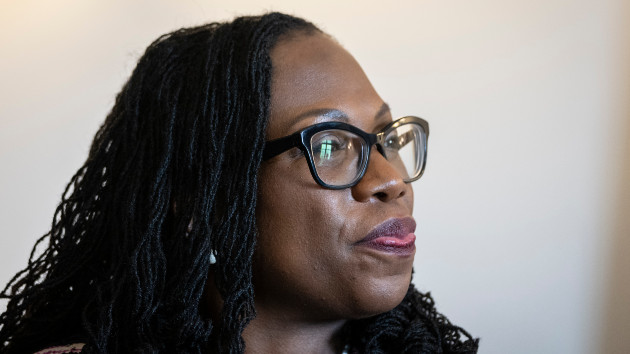
(WASHINGTON) — At her Senate confirmation hearing next week, Supreme Court nominee Ketanji Brown Jackson will face calls to recuse herself from one of the first major cases she would hear as a justice: a challenge to Harvard University’s use of race as a factor in undergraduate admissions.
Jackson, an alumna of Harvard College and Harvard Law School, currently sits on the university’s Board of Overseers that “provides counsel to the University’s leadership on priorities, plans, and strategic initiatives,” according to its website.
The justices this fall are slated to hear a challenge to the school’s admissions policy brought by a group of Asian American students that alleges they were illegally targeted and rejected at a disproportionately higher rate because of their race. The case could determine the fate of affirmative action policies nationwide.
“It would be profoundly inappropriate for a jurist to sit on a case for a school in which she has held a governing position and a role in setting institutional policies,” George Washington University law professor Jonathan Turley wrote in a column this month. “For that reason, Jackson will be asked in her confirmation hearing to confirm whether she will recuse herself from the Harvard case.”
It could also provide an opening for Republicans to raise sensitive issues of race, opposition to affirmative action in general, and President Joe Biden’s pledge to prioritize race and gender in his high court pick.
“I expect one of the first questions at this hearing to be: You are highly qualified, but a lot of other highly qualified people weren’t considered for this job because of their race. Would you think that was lawful if it happened at a private employer?” said Sarah Isgur, a former Trump Justice Department lawyer and ABC News contributor.
Jackson’s six-year Harvard board term concludes on May 26, a school spokesman said. Supreme Court oral arguments in the school’s case would be heard several months later.
Federal law stipulates that federal judges must recuse themselves from cases whenever their “impartiality might reasonably be questioned” or when “the judge has a personal bias or prejudice concerning a party, or personal knowledge of disputed evidentiary facts concerning the proceeding.”
Enforcement of the rules on the Supreme Court is by honor system, leaving it to each justice individually to decide when it’s appropriate to recuse from a case. Those decisions are rarely explained.
“Six years on the Board is a long time, and her impartiality in the case — that is, in favor of Harvard, given her ties to the Board — might be reasonably questioned,” said Gabe Roth, executive director of Fix the Court, a nonpartisan judicial watchdog group. “I think that balancing these factors, it’d be prudent for her to recuse, though it’s not as clear cut as some pundits have made it out to be.”
Board involvement in setting admissions policy, including potential consideration of race as a factor, and in guiding the school’s response to the lawsuit is not clear. A university spokesman declined to comment.
“As I understand it, the Board of Overseers is not a policymaking body and does not make admissions decisions or policies, nor are its members in a fiduciary relationship with the university,” said Stephen Gillers, an expert in legal ethics at NYU School of Law. “Recusal would not be necessary, even if Judge Jackson were still a board member when the case is heard.”
Judge Jackson, who is a member of the board’s executive committee, has not publicly addressed the apparent potential conflict or possible recusal from the Harvard case.
Former Democratic Sen. Doug Jones of Alabama, who is shepherding Jackson through the confirmation process, declined to say whether recusal has been discussed.
“That’s a question that she’ll answer once she gets at the confirmation hearings, rather than me trying to answer for her,” Jones told ABC.
White House spokesman Andrew Bates told ABC News “Judge Jackson would follow the highest ethical standards when it comes to recusals.”
As a U.S. District Court judge, Jackson removed herself from at least two cases involving Harvard University, according to her written responses to a Senate Judiciary Committee questionnaire this month.
In 2016, she recused herself from a case involving the Education Department’s sexual assault guidelines for colleges and universities because the Harvard Board of Overseers was “evaluating its own potential response to those guidelines.” In 2018, Jackson stepped aside in a case involving a Harvard research librarian who was suing the Environmental Protection Agency over a Freedom of Information Act request.
“For similar reasons – even if Jackson resigns from the Board – she may need to recuse from the [affirmative action] case because she ‘has personal knowledge of disputed evidentiary facts concerning the proceeding,’ as described in the federal statute governing judicial disqualification,” said Carrie Severino, president of the Judicial Crisis Network, a conservative legal advocacy group with influence among Republican senators.
Isgur said an apparent conflict of interest is already evident.
“She’s been on the Harvard Board of Overseers for five years — that’s from the start of this litigation through the discovery process. The likelihood that she hasn’t discussed the case while on that Board is very, very low,” Isgur observed.
Jackson would become the fifth graduate of Harvard Law School on the nation’s highest court if she’s confirmed, though legal analysts noted that simply being an alumnus of the school did not alone create an ethics issue.
“Her being a graduate won’t be a problem at all,” said Cardozo School of Law professor and ABC News legal analyst Kate Shaw. “If it were, there’d be several other recusals. But it might be prudent for her to resign from that board prior to joining the Supreme Court, which I think would resolve any conflict.”
The Harvard case and a related suit against the University of North Carolina will be argued together at the Supreme Court sometime in October or November. Many court watchers believe the conservative majority will move to roll back, or outright ban, the use of race in admissions.
The cases will be the first test on affirmative action for the six-justice conservative majority since the retirement of Justice Anthony Kennedy and death of Justice Ruth Bader Ginsburg, both of whom defended the policy.
Judge Jackson’s views are not clear, but an examination of her jurisprudence suggests she would likely be in tandem with the court’s liberal wing.