
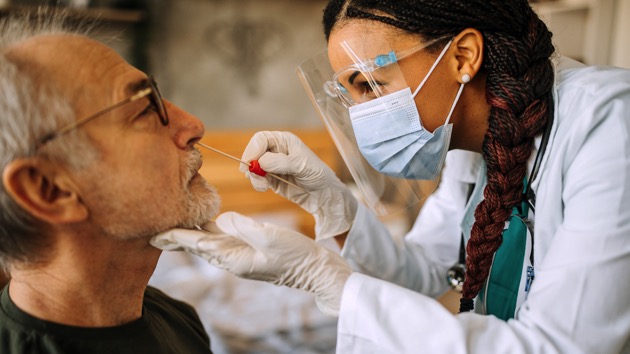
Why some Americans haven’t gotten COVID yet and why it’s not inevitable they ever will: Experts

Why some Americans haven’t gotten COVID yet and why it’s not inevitable they ever will: Experts
Pekic/Getty Images

(NEW YORK) — When the omicron wave hit the United States, it spread throughout the country like wildfire.

Different models estimate that anywhere from 50% to 75% of Americans had been infected with the variant by the end of the surge.

So, what does that mean for the rest of the U.S. population that did not contract COVID-19 during the last wave?

Because omicron has shown the ability to cause breakthrough infections despite vaccination status, this has led to fears that everyone will catch the virus at some point. However, it is important to clarify that the COVID vaccines continue to be highly effective in its primary purpose in preventing hospitalization and death.

However, public health experts said it’s not inevitable Americans who have not gotten COVID yet eventually will, and that there are several reasons people have been able to avoid infection so far, including certain behaviors such as being serious about masking and social distancing, vaccination rates and maybe even genetics.

Why some people haven’t gotten COVID yet

Doctors said there are several reasons millions of Americans have yet to contract the virus.

One of those reasons is human behaviors, meaning people take proper precautions to lower their risk of getting infected.

“Sometimes people don’t get infected because they’re extremely cautious,” Dr. Mark Siedner, an associate professor of medicine at Harvard Medical School, told ABC News. “There are people who have their own health behaviors or are concerned about their own health or their loved ones’ health.”

He continued, “Maybe they have comorbidities … they may be the kind of people who are largely homebound, or not really interacting with others or are particularly careful with things like social distancing and masking, and that certainly can stop a lion’s share of infections or certainly decrease the risk to where it’s unlikely you’d be infected.”

These people are also more likely to have been vaccinated and boosted, and the experts said it’s impossible to disregard the effect vaccination rates have had on preventing infections among Americans.

Dr. Jonathan Grein said there are also social and environmental reasons that could determine why some Americans have been infected and others haven’t, including how much time people spend with others and where they interact.

“Some people may come into more contact with people more regularly than others,” Grein, director of hospital epidemiology at Cedars-Sinai in Los Angeles, told ABC News. “There’s probably environmental reasons as well, the virus is probably transmitted more efficiently in certain circumstances like classically the indoor, poorly-ventilated space compared to outside.”

However, genetics could also be playing a role.

Dr. Stuart Ray, a professor of medicine at Johns Hopkins University, said similar circumstances have been seen in people who were at high risk for HIV but did not contract the disease.

“One of the things that was discovered was people who had mutations in [a certain] receptor … and that was associated with not getting infected with HIV and in the uncommon people who do get infected, very slow progression to AIDS,” he told ABC News.

Although there has not yet been a clearly identified gene, Ray said it’s feasible some people are genetically less susceptible to COVID.

Is infection with COVID-19 inevitable?

The experts said they don’t believe that infection with COVID-19 is inevitable or at least inevitable for everyone.

“The fact that we’re now two years in and a substantial number of people have not yet been infected is good evidence that it’s not inevitable everyone will get it,” Grein said. “One thing we’ve clearly identified is that being vaccinated is the most important variable in deciding how protected somebody may be.

However, Ray said he thinks Americans who are unvaccinated but haven’t contracted the virus yet eventually will.

“As these variants have become more and more infectious, the likelihood that those people will get infected seems significant,” he said. “I do think it’s likely that people who have not been vaccinated and not had COVID will eventually get it because we are not going to be tracking infections as closely as we have in the past and so there will be less awareness as the virus renters the community … and at some point their bubble will burst if they are not immune.”

Dr. Peter Chin-Hong, an infectious diseases specialist at the University of California, San Francisco, said the COVID situation in Hong Kong is a “horror story” of what can happen in an unvaccinated country.

Hong Kong currently has the world’s highest COVID-19 death rate with a seven-day rolling average of 37.68 per million people, according to Our World in Data.

“Many people were vaccinated in Hong Kong, but it was the reverse of the U.S.,” he said. “In the U.S, so many seniors are vaccinated and boosted, but in Hong Kong, it was the opposite. Very few seniors were vaccinated so that when they did get it, even something ‘milder’ like omicron, many people were still dying, so that is a cautionary tale.”

There is no number that determines when the U.S. has enough immunity

Early in the pandemic, Dr. Anthony Fauci and other public health experts said the U.S. needed to vaccinate 75% to 85% to achieve herd immunity.

Currently, only 65.3% of all Americans are fully vaccinated.

Then, when U.K. Prime Minister Boris Johnson announced last month he would be dropping the remaining COVID-19 restrictions in England, supporters said one of the reasons was because government figures showed more than 98% of the adult population in England has detectable COVID-19 antibodies either from previous infection or from vaccination.

But officials said there is no number in the U.S. for which officials can declare there is “enough immunity.”

“The game has been changed to some extent because the virus has been able to infect so many people and evolve,” Ray said. “It’s level of infectivity right now is so high that the levels of antibodies required to prevent infection, the level we need to achieve is hard to sustain for a long period of time.”

Copyright © 2022, ABC Audio. All rights reserved.

Looming COVID drug cuts prompt plans to reclaim, redistribute unused supply

Looming COVID drug cuts prompt plans to reclaim, redistribute unused supply
JIM WATSON/AFP via Getty Images

(WASHINGTON) — With President Joe Biden’s $15.6 billion request for COVID-19 relief stalled in Congress, the federal government plans to begin significantly cutting the number of viral treatments available to the states, according to internal planning documents obtained by ABC News, which show a decrease of some 30%.

The drawdown, which begins Monday, includes monoclonal antibodies that have been shown to work against the omicron variant. Their ability to curb hospitalization rates, particularly among unvaccinated high-risk patients, has made them a key component in Biden’s COVID plan.

Weekly allocations of the monoclonal antibody Sotrovimab from GSK and Vir Biotechnology will be cut from 52,250 to 35,000 through at least the next three weeks, according to the documents, which were verified by two people familiar with the situation.

Weekly allocations of Eli Lilly’s recently authorized monoclonal Bebtelovimab, which has so far worked against both the omicron and BA.2 subvariant, will be cut from 49,000 to 30,000 doses.

The White House has also warned that antiviral pills from Pfizer and Merck could run out by September if the government doesn’t place more orders soon.

Also starting Saturday, unordered doses in each distribution cycle will be reclaimed and reabsorbed into the federal inventory for later redistribution, according to the planned allocation schedule. The monoclonal Evusheld, which is meant for highly vulnerable groups like immunocompromised people to protect them even before exposure to the virus, will be allocated on a monthly basis, and unordered doses will be swept up at the end of each month, starting March 31.

This new supply policy comes as the COVID funding cuts threaten to force the government to ration lifesaving drugs.

The White House has warned that with funding stalled in Congress “critical COVID response efforts” will grind to a halt; absent that cash infusion, the nation will not be able to keep up with testing, supplies of antibody treatments, boosters and antiviral treatments.

A new purchase of hundreds of thousands more monoclonal courses planned for next week will also be canceled. The White House predicts the U.S. will fully exhaust the supply by May.

“The allocation projections are subject to change and should be used for planning purposes only,” the planning document advises. “Of course, the COVID-19 environment remains dynamic.”

ABC News’ Anne Flaherty, Cheyenne Haslett, Ben Gittleson, Eric M. Strauss and Sony Salzman contributed to this report.

Copyright © 2022, ABC Audio. All rights reserved.

Hospital uses camera to let parents watch during C-section

Hospital uses camera to let parents watch during C-section
Amanda Koop

(GRAND RAPIDS, Mich.) — A hospital in Michigan is giving birthing parents a new way to stay connected during a cesarean section delivery.

Spectrum Health Butterworth, a hospital in Grand Rapids, Michigan, allows parents to watch the birth on a monitor display next to the operating table.

That’s how Amanda Koop got the first glimpse of her son, Charlie, when she gave birth to him at Spectrum Health Butterworth on Nov. 24, 2021.

“They turned the camera toward me right when they were going to pull him out,” Koop told “Good Morning America.” So, similar to a vaginal birth, I saw him come up and out, which was great.”

Koop, 36, had an unplanned C-section with Charlie, her first child.

She said that once it was decided she would be undergoing a C-section, a nurse asked her if she wanted the option to watch the delivery, which she otherwise would have not been able to witness. As is typical with a C-section, Spectrum Health Butterworth uses a drape to separate the expectant parents from the surgical procedure.

“I wanted to use the camera, because it could be a once-in-a-lifetime opportunity, and I didn’t want to miss those moments, his first breath, that can be something that sometimes you could miss in a C-section,” said Koop, who added that the camera also made the C-section “less anxiety-provoking.”

“For me to be able to see him in those moments, OK, he’s out and he looks great, that was extremely calming and reassuring,” she said. “There’s a lot happening in those [operating rooms]. They’re loud and they’re bright, and I could kind of focus right on him, which was really nice.”

The camera and monitor system is the same one that doctors themselves use in other surgical procedures, such as laparoscopic surgeries, according to Dr. Cheryl Wolfe, a practicing, board-certified OBGYN and vice president and department chief of women’s health at Spectrum Health, a Michigan-based health system.

Wolfe said Spectrum Health Butterworth, which delivers around 7,500 babies annually, is the only hospital she knows of in the country that has applied surgical camera technology to C-sections.

“We’re using this technology that’s been around but using it in a different way, and that is not the norm across the country,” she said. “I’m hoping that there will be more hospitals and labor and delivery units that opt to put this in place. I think their patients will be asking for it.”

Nearly 32% of all births in the United States are done by C-section, according to data from the Centers for Disease Control and Prevention.

Since the majority of C-sections are not expected, it can often feel startling for expectant parents to go from the comfort of the labor and delivery room to the sterility of the operating room, according to Wolfe.

She said the goal of giving parents the option to watch the delivery is to “flip the script” and make it a more personal experience.

“Anytime you have something unplanned, especially around something as momentous as having your child, you’re going to have some trepidation about, ‘Oh, now I need a C-section. Now I need surgery. What does that mean?'” Wolfe said. “Now you’re given an option where you can actually … watch the process, something previously you were unable to do because the technology wasn’t in place.”

The medical team is able to move the monitor so that parents can watch what they want of the delivery, as was the case during Koop’s C-section.

“I did not want to see the initial incision and getting down to the baby, so I just saw those parts that I thought were important,” Koop said, adding that the monitor’s location and flexibility also gave her husband the chance to stay by her side while choosing what he wanted to see.

“I think it can be kind of scary for people, what am I going to see, but the team does an amazing job of kind of blocking things that you don’t need to see and really focusing on that little baby,” she said. “I just thought it made such a difference in my delivery. I didn’t miss a thing.”

Copyright © 2022, ABC Audio. All rights reserved.

Pete Davidson won’t be going to space

Pete Davidson won’t be going to space
Mary Ellen Matthews/NBC

Pete Davidson won’t be blasting off to space this month after all.

Late Thursday evening, Jeff Bezos‘ space exploration company Blue Origin tweeted that the 20th flight of its New Shepard rocket will now be blasting off on Tuesday, March 29, and “Pete Davidson is no longer able to join the NS-20 crew on this mission.” 

The company added, “We will announce the sixth crew member in the coming days.”

The stand-up comic, Saturday Night Live cast member and King of Staten Island star was supposed to be aboard the space exploration company’s fourth human flight on March 23.

His fellow travelers were to be Party America CEO Marty Allen; property developer Marc Hagle and his wife Sharon Hagle, who runs a science education non-profit; entrepreneur Jim Kitchen; and Commercial Space Technologies president Dr. George Nield.

For the record, former Obama White House staffer and Designated Survivor actor Kal Penn tweeted a “raised hand” emoji in response to Blue Origin’s announcement, to try to fill Pete’s seat.


Copyright © 2022, ABC Audio. All rights reserved.

In Brief: ‘New trailer for ‘Flight Attendant’ takes off; Alice Eve in ‘Early Edition’ reboot, and more

In Brief: ‘New trailer for ‘Flight Attendant’ takes off; Alice Eve in ‘Early Edition’ reboot, and more

The Flight Attendant‘s second season takes off April 21 on HBO Max. The premium cable channel dropped the new teaser trailer on Thursday. Kaley Cuoco returns as flight attendant Cassie Bowden, who is now “living her best sober life in Los Angeles while moonlighting as a CIA asset in her spare time,” per HBO. “But when an overseas assignment leads her to inadvertently witness a murder, she becomes entangled in another international intrigue”…

Squid Game breakout HoYeon Jung has been tapped for a role in writer-director Alfonso Cuarón’s upcoming thriller series Disclaimer, according to The Hollywood Reporter. The South Korean model-turned-actress joins stars Cate BlanchettKevin KlineSacha Baron Cohen and Kodi Smit-McPhee in the series that follows Blanchett’s “successful and respected television documentary journalist whose work has been built on revealing the concealed transgressions of long-respected institutions.”  However, she herself ends up as the key character in a novel written by a widower — played by Kline — that reveals a dark secret she thought was buried in her past. Hoyeon plays Kim, who is described as an “ambitious, hardworking, and eager-to-please” employee of Blanchett’s character…

CBS has cast Alice Eve as the star of its Early Edition reboot, according to Variety. She’ll play an “ambitious but uncompromising” journalist named Beth, who “starts receiving tomorrow’s newspaper today and finds herself in the complicated business of changing the news instead of reporting it.” Eve’s credits include recurring roles on the TV series Entourage and Iron Fist. She’s also appeared the films She’s Out of My LeagueMen in Black 3Star Trek Into Darkness and Before We Go

Hulu has revealed a first look at the upcoming original limited series Candy, starring Jessica BielTimothy SimonsMelanie LynskeyPablo Schreiber and Raúl Esparza. The series, set in 1980, is based on the true story of Texas killer Candy Montgomery, a wife and mother who seemed to have it all before inexplicably killing her church friend with an ax. Candy premieres May 9, kicking off a five-night event leading up to the finale on May 13…


Copyright © 2022, ABC Audio. All rights reserved.

How schoolhouse culture wars may factor into the 2022 midterms

How schoolhouse culture wars may factor into the 2022 midterms
Jetta Productions/Getty Images

(NEW YORK) — States nationwide are grappling with ongoing debates over critical race theory, sexual orientation and book censorship.

In many ways, some of the most contentious and deeply divisive issues in politics are anchored in the classroom and playing out in school boards across America.

Republicans across the country have been zeroing in on how social issues are covered by teachers, including lessons on race, gender identity, sexual orientation and more.

At least 35 states have introduced what is being called anti-critical race theory legislation that limits lessons about race and inequality which are perceived to be divisive by Republican bill supporters.

The country saw the power of “parental rights” and education play out in the Virginia election, where the now-governor was propelled to victory by focusing on those exact issues.

Experts say that Democrats have to pay close attention to these debates and shift the conversation away from the culture wars to avoid losses at the ballot box in 2022.

But students themselves are caught in the middle, especially those in vulnerable groups who are suffering as a result, experts say.

Parental Rights

While education has always been a key issue in America, it has gained steam in the past two years a proxy for the culture wars that were intensified during the pandemic.

Many Republicans have been pushing back against what they believe to be aspects of public education systems run amok, first with COVID-related restrictions and then with issues like race and sexuality, attempting to restrict and refocus discussions.

The Florida legislature recently passed the deeply controversial Parental Rights Education Bill, dubbed the “Don’t Say Gay” bill by LGBTQ activists, which would limit what some classrooms can teach about sexual orientation and gender identity.

Under the new legislation, these lessons “may not occur in kindergarten through grade 3 or in a manner that is not age-appropriate or developmentally appropriate for students in accordance with state standards.”

It’s an effort that gives parents and guardians more control over what their children learn in school and that opponents say is overly broad.

Similar bills from Republican legislators restricting LGBTQ education have crept up in several other states, including Tennessee, Arkansas, Montana and Georgia.

However, a new ABC News/IPSOS poll found that 62% of Americans oppose legislation that would prohibit classroom lessons about sexual orientation or gender identity in elementary school, while 37% of Americans support legislation that would.

There have also been attempts to impart issues like structural racism and comprehensive sex education into school curricula. Especially since protests sparked by the killing of George Floyd, there has been a renewed push to highlight the role of racism in American history and institutions.

Many of those efforts have been lumped under the banner of “critical race theory,” a discipline in higher education that teaches about racism in U.S legal systems. While it is not taught in K-12 classes, many legislators have been invoking critical race theory broadly in their arguments to attempt to restrict discussions of race in the classroom.

What is taught in schools has typically been a state and local issue (with relatively recent exceptions like No Child Left Behind), impacting governor races across the country, according to experts. However, many experts now predict that the importance of education may extend nationally to the midterm elections.

A recent CNN poll found that 81% of respondents said education was either extremely or very important to them heading into the 2022 elections.

Shavar Jeffries, the national president of political advocacy organization Democrats for Education Reform, said he believed that growing frustrations from parents on their involvement in education may be swaying them at the polls.

Jeffries pointed to Republican Gov. Glenn Youngkin’s win in Virginia, after making education a centerpiece of his campaign and promising to “invest more in schools, raise teacher pay, and demand better performance from our schools.” His slogan: “parents matter.”

“The 2022 midterms will hinge on Democrats’ ability to learn from these lessons and lead on education,” said Jeffries in a press release on Youngkin’s win.

Republicans steer education debate

Joanna Rodriguez, a spokesperson for the Republican Governor Association, told ABC News that Republican governors said they are hearing from parents that they want a say in their children’s education. Now, governors are channeling that energy, and believe a parent’s say “needs to be codified into law.”

Most, if not all, legislation that restricts LGBTQ content or race education in schools comes from Republican legislators.

“As we begin to see those successes — with those surface-level successes, and public opinion changing — we also begin to have these very big conversations around the nation’s history and inequality within the nation’s history,” Rigueur told ABC News.

The debate even made it into the White House, with the Trump administration issuing its 1776 Report in opposition to the 1619 project which reframes the story of America by placing “slavery and its continuing legacy at the center of the [country’s] national narrative,” according to the project website.

Rigueur said that so-called “culture warriors” are trying to channel the fears and vulnerabilities of some parents to turn back the clock on social progress.

“One of the fastest ways to get parents to rally around a cause is to [imply] that schools are teaching something that’s inappropriate … something dangerous,” Rigueur said.

“It is a relatively easy way to get parents, who often feel powerless in the education process, deeply invested in order to change both the curriculum and the subject matter that their children have access to.”

On anti-LGBTQ legislation, Cathryn Oakley, state legislative director and senior counsel at the Human Rights Campaign, said education is the key to combating fear-mongering and the demonization of LGBTQ people.

“It is about painting a picture that is just completely not true,” Oakley said of this legislation. “The American public needs to understand that they’re being lied to by the folks who are putting these bills forward.”

As the midterm elections approach, Rigueur said Democrats have to fight to combat the forces against them.

Not only does the party of the incumbent president typically have a much harder time during the midterms, but the pandemic has also piled on the pressure in several political spheres, Rigueur said.

Rigueur added that a lot of these culture wars have been tied to the pandemic. The debate about freedom regarding mask mandates and vaccines highlights the growing want for parental control amid the dramatic changes that COVID-19 has caused.

“Part of what Democrats can do is really push the issue back to these bread-and-butter issues that the vast majority of Americans signify over and over again that they care about,” she said, like the economy and health care.

However, as politicians fight these ongoing political battles, students lie in their wake according to Becky Pringle, the president of the National Education Association (NEA).

“True learning only happens when students feel supported and celebrated in the classroom,” Pringle said in response to the Florida anti-LGBTQ bill.

Battleground heads to the classroom

Some students have circumvented book bans by delivering restricted readings to other students, holding sit-ins in the state Capitol building, or walking out of their classrooms in protest of bills that are anti-race education and anti-LGBTQ.

“Students, pre-K through [12th grade] are always silenced,” CJ Walden, a youth activist in South Florida, told ABC News. “Lawmakers need to know that this is not a game that they are playing.”

Other activist organizations, including the NEA, LGBTQ suicide prevention group The Trevor Project and the Human Rights Campaign, have highlighted the impact this will have on students in the classroom.

“We will not fall for the politics of division and distraction, in Florida or anywhere — we will continue to join together to ensure all students can learn, grow, and thrive,” Pringle said.

Copyright © 2022, ABC Audio. All rights reserved.

Fauci says COVID-19 cases will likely increase soon, though not necessarily hospitalizations

Fauci says COVID-19 cases will likely increase soon, though not necessarily hospitalizations
Greg Nash/The Hill/Bloomberg via Getty Images

(NEW YORK) — Over the next few weeks, the U.S. should expect an increase in cases from the BA.2 variant, Dr. Anthony Fauci told ABC News, but it may not lead to as severe a surge in hospitalizations or deaths.

“I would not be surprised if in the next few weeks we see somewhat of either a flattening of our diminution or maybe even an increase,” Fauci told ABC News’ Brad Mielke on the podcast “Start Here.”

His prediction is based on conversations with colleagues in the U.K., which is currently seeing a “blip” in cases, Fauci said. The pandemic trajectory in the U.S. has often followed the U.K. by about three weeks.

However, he added, “Their intensive care bed usage is not going up, which means they’re not seeing a blip up of severe disease.”

The BA.2 variant, a more transmissible strain of omicron, now represents around 23% of all cases in the U.S., according to the latest data from the Centers for Disease Control and Prevention.

And while Fauci predicted that the BA.2 variant will eventually overtake omicron as the most dominant variant, it’s not yet clear how much of a problem that will be.

“Whether or not that is going to lead to another surge, a mini surge or maybe even a moderate surge, is very unclear because there are a lot of other things that are going on right now,” Fauci said.

Similar to the U.K., much of the U.S. has recently relaxed mitigation efforts like mask mandates and requirements for proof of vaccination. At the same time, people who were vaccinated over six months ago and still haven’t gotten a booster shot, which is about half of vaccinated Americans, according to the CDC, are facing continuously waning immunity.

It’s also not yet clear how long immunity from prior infection will last, Fauci said.

Taken together, it’s why Fauci and other experts, including CDC Director Rochelle Walensky, have increasingly predicted that elderly people will need a second booster shot soon. The Food and Drug Administration began reviewing data from Pfizer on the safety and efficacy this week, and its advisory panel will debate if and when the additional booster shot is necessary in the coming weeks.

At the same time, Fauci urged Americans who haven’t yet gotten their first booster, which would be their third shot in a Pfizer or Moderna series, to do so.

A resurgence of cases could also mean Americans are asked to wear masks again, which Fauci predicted would be an uphill battle.

“From what I know about human nature, which I think is pretty much a lot, people are kind of done with COVID,” Fauci said.

Still, he defended the CDC decision to loosen its mask recommendations earlier this month by shifting to a strategy that focused more on severe outcomes, like hospitalizations and deaths, rather than on daily case spread.

“You can go ahead and continue to tiptoe towards normality, which is what we’re doing, but at the same time, be aware that you may have to reverse,” Fauci said.

And if the U.S. does continue to make its way back toward normal times, Fauci himself has a personal choice to consider. At 81 years old, the director of the National Institute of Allergy and Infectious Diseases is “certainly” thinking about retirement.

“I have said that I would stay in what I’m doing until we get out of the pandemic phase and I think we might be there already, if we can stay in this,” Fauci said, referring to the falling cases and hospitalizations in the U.S.

“I can’t stay at this job forever. Unless my staff is gonna find me slumped over my desk one day. I’d rather not do that,” he said, laughing.

While he doesn’t currently have retirement plans, the recent hire of Dr. Ashish Jha, dean of the Brown University School of Public Health, to be White House coronavirus coordinator, could alleviate some of his pandemic response duties and give him a window.

But Fauci, who has dedicated his career to public health, primarily studying HIV and AIDS, and worked under seven U.S. presidents, said he doesn’t have any particular hobbies waiting for him in retirement.

“I, unfortunately, am somewhat of a unidimensional physician, scientist, public health person. When I do decide I’m going to step down, whenever that is, I’m going to have to figure out what it is I’m going to do,” he said.

“I’d love to spend more time with my wife and family. That would really be good.”

Copyright © 2022, ABC Audio. All rights reserved.

Bill backs up new 988 suicide prevention line with funding

Bill backs up new 988 suicide prevention line with funding
The Good Brigade/Getty Images

(WASHINGTON) — In advance of the rollout of the National Suicide Prevention Lifeline’s new three-digit number, legislators have announced a bill to help fund its implementation.

The bill includes federal funding and guidance for states and localities preparing for the July launch, including mental health block grants and $100 million to partner with cities on mobile crisis response teams to help stabilize people in need. It would also increase the amount of federal funding for the Lifeline, which runs a national backup network to receive calls that can’t be picked up at the state and local levels, and provide $10 million for an awareness campaign about the new 988 number — modeled after 911.

The 24-hour hotline has been in service since 2005 and has received more than 20 million calls.

The Substance Abuse and Mental Health Services Administration expects calls to the Lifeline to more than double during the first full year of the three-digit number, and advocates say the Lifeline is underfunded and understaffed to meet the expected increase in call volume.

Despite the effort to improve the system, advocates say, people in crisis could face delays — or might not be able to reach a counselor at all without more funding.

Rep. Tony Cárdenas, D-Calif., announced the funding bill to address that issue at a press conference Thursday.

“[My bill] is to go ahead and move 988 in the right direction — to move 988 in a direction where we’re going to have local states and local city councils and local county supervisors and mayors and governors and legislators, state legislators, to start to pass funding bills,” Cárdenas told ABC News.

The 988 Implementation Act is also co-sponsored by Rep. Lisa Blunt Rochester, D-Del., Rep. Doris Matsui, D-Calif., Rep. Brian Fitzpatrick, R-Pa., Rep. Grace Napolitano, D-Calif., Rep. Don Beyer, D-Va., and Rep. Jamie Raskin, D-Md, Rep. Seth Moulton, D-Mass.

Hannah Wesolowski, chief advocacy officer for the National Alliance on Mental Illness, said about 80% of calls to the Lifeline can be de-escalated over the phone. Of the 20% that can’t, she said, about 70% can be resolved with the help of mobile crisis response teams. The rest can go to crisis stabilization centers, after which a majority can be discharged back into the community without needing to be hospitalized.

“Mobile crisis teams, which provide an alternative to law enforcement, are so critical. Relying on law enforcement is just an ineffective way to respond to [mental health] crises. That’s not the job law enforcement signed up for, nor should we be asking them to do that,” Wesolowski said.

She added that people experiencing a mental health crisis are often taken to emergency departments that don’t specialize in psychiatric care.

“So this would really help provide capital grants and other capacity resources to build crisis receiving and stabilization facilities that really serve as kind of a psychiatric emergency room that provides that short-term stabilization, [and] connections to additional care — whether that’s helping somebody return to the community, or in some cases, might be inpatient hospitalization,” Wesolowski said. “Overwhelmingly, when this whole continuum is availabl, we can avoid a lot of that hospitalization, incarceration, homelessness and other negative outcomes that we often see with our current crisis response system.”

Taun Hall, whose son Miles was shot and killed in 2019 at age 23 while experiencing a mental health crisis in California, also spoke at the press conference. She said her family tried to get Miles help for two years, but it was “almost impossible.”

“Getting help is a reactive process and leads to criminalization, especially when police are involved and responsible for their care. This is exactly what happened to our family. I called 911 to get Miles help while he was experiencing a mental health emergency and Miles was criminalized for his Black skin,” Hall said. “He was shot and killed in the community where he lived and grew up for 18 years.”

“Everyone knows you dial 911,” Moulton said. “The same needs to be true for anyone, if you wake up in the middle of the night and you or a loved one is experiencing a mental health emergency. That’s the difference that this bill is going to make.”

Moulton, who introduced the legislation to designate 988 as the Lifeline number back in 2020, said it will save lives.

“We’ll save thousands, but we don’t want to miss a single one,” Moulton said. “We have to make sure that everybody is geared up. So no matter where you are, no matter what phone you have access to, you can get the help that you need, 24/7.”

Copyright © 2022, ABC Audio. All rights reserved.

Hairstylist spots skin cancer on client: What dermatologists want you to know

Hairstylist spots skin cancer on client: What dermatologists want you to know
redshorts/Getty Images

(NEW YORK) — While many people know a trip to the hairdresser can save you from a bad hair day, it could also save your life.

That was the case for an Illinois-based woman, Mary Rahilly, who had an appointment for a cut and color. Her hairstylist, Sharon Lupo, who she visits regularly, noticed something new and unusual on her scalp — and suggested that she visit a dermatologist.

“It was almost a discolored spot. I knew I had to tell her,” Lupo told Good Morning America.

After making a rush appointment, Rahilly’s doctor could almost immediately tell it was a form of cancer and proceeded to run a biopsy, which confirmed it.

The scalp is a common place for skin cancer, Dr. Ramona Beshad, assistant professor of dermatology at St. Louis University, told GMA.

“It’s a place where skin cancers tend to be diagnosed late, because oftentimes they’re covered by hair and not easy to see,” she said.

In Rahilly’s case, Lupo was able to get a good look at what was hiding underneath her client’s hair.

Luckily, Rahilly got the squamous cell on her scalp removed before it spread.

“She knows I’m grateful and that, you know, she’s an awesome person. She is,” Rahilly said. Lupo chimed in, sharing that Rahilly called her a hero.

Skin cancer is one of the most common cancers in the United States, with one in five Americans developing it by the age of 70, according to the Skin Cancer Foundation.

Because hairstylists can play an integral role in spotting skin cancer in this often-hidden area, Beshad started Stylists Against Skin Cancer, a program to teach cosmetology students how to properly identify these cancers.

There’s also another program Sty-Lives, short for Styling Hair and Saving Lives, that is led by two Ontario-based medical students and has launched across Canada with the Save Your Skin Foundation. The foundation trains hairdressers to spot lesions on the ears, faces and scalps of their clients.

Dr. Whitney Bowe, a dermatologist, shared some of her tips and best practices for spotting skin cancer with GMA.

“I highly recommend doing a self exam every month and looking at your skin closely from head to toe,” she said.

Bowe also recommends recruiting a friend or loved one to look at places you can’t see, such as behind your ears, your back and the back of your neck as well as the legs.

When looking for skin cancer, Bowe says to look at:

A- Asymmetry

B- Border

C- Color

D- Diameter

E- Evolution

When it comes to the summer months, skin cancer prevention is key, according to Bowe.

She suggests broad spectrum sunscreen and re-applying every two hours to dry skin or more often if you are wet, swimming or sweating.

“But sunscreen is not enough,” she added. “Also wear sun protective fabric, a broad rimmed hat, sunglasses, and seek shade especially when the sun is at its peak.”

Copyright © 2022, ABC Audio. All rights reserved.

Russia-Ukraine live updates: Russia threatens countries arming Ukraine

Russia-Ukraine live updates: Russia threatens countries arming Ukraine
Scott Peterson/Getty Images

(NEW YORK) — Russian forces are continuing their attempted push through Ukraine from multiple directions, while Ukrainians, led by President Volodymyr Zelenskyy, are putting up “stiff resistance,” according to U.S. officials.

The attack began Feb. 24, when Russian President Vladimir Putin announced a “special military operation.”

Russian forces moving from neighboring Belarus toward Ukraine’s capital, Kyiv, have advanced closer to the city center in recent days despite the resistance. Heavy shelling and missile attacks, many on civilian buildings, continue in Kyiv, as well as major cities like Kharkiv and Mariupol. Russia also bombed western cities for the first time this week, targeting Lviv and a military base near the Poland border.

Russia has been met by sanctions from the United States, Canada and countries throughout Europe, targeting the Russian economy as well as Putin himself.

For previous coverage please click here.

Here’s how the news is developing. All times Eastern:

Mar 18, 6:48 am
Russian foreign minister threatens countries arming Ukraine

Russia’s Foreign Minister Sergei Lavrov said Friday that any foreign supplies to Ukraine containing military equipment will be considered “legitimate targets” for Russian strikes.

“We clearly said that any cargo moving into the Ukrainian territory which we would believe is carrying weapons would be fair game. This is clear because we are implementing the operation the goal of which is to remove any threat to the Russian Federation coming from the Ukrainian soil,” Lavrov said in an English-language interview with the RT television channel.

Mar 18, 6:29 am
Putin says Ukraine ‘seeking to drag out’ negotiations

The Kremlin says Russian President Vladimir Putin in a phone call with Germany’s leader Olaf Scholz accused Ukraine of “seeking to drag out” negotiations with Russia to end the war by putting forward “new unrealistic proposals.”

Putin told Scholz Russia was “nonetheless ready to continue the search for a solution within the bounds of its well-known principled approaches,” the Kremlin said in a readout of the call.

It’s a negative sign for the ongoing talks with Ukraine that both sides have suggested have made some progress this week.

-ABC News’ Patrick Reevell

Mar 18, 4:41 am
Lviv struck by missiles for the first time

Russian missiles have hit the western Ukrainian city of Lviv for the first time Friday, a key location that had been spared from the assault until now.

The missiles struck the area around the city’s airport, according to the mayor, Andriy Sadovyi, around 6:30 a.m. local time, hitting an aircraft repair facility and destroying the building.

There were no immediate reports of casualties in the attack, according to the mayor.

Preliminary data indicated that six cruise missiles were fired from the Black Sea, according to the country’s western military command. Two were destroyed by anti-aircraft missile systems.

-ABC News’ Martha Raddatz

Mar 17, 8:34 pm
White House ‘focused’ on ways to help growing Ukrainian refugee crisis

The Biden administration is “focused” on ways to help Ukrainian refugees, as the number of people displaced by the war continues to grow, according to U.S. officials.

More than 3 million people have fled Ukraine since Russia’s invasion began, according to the United Nations’ refugee agency, in Europe’s largest refugee crisis since World War II.

“As the numbers increase, as the burden increases for European partners, we will certainly do everything we can to help,” Secretary of State Antony Blinken told reporters Thursday, adding it was “something we’re very focused on right now.”

Without offering specifics, Blinken confirmed the administration is “looking at things that we can do ourselves and do directly — for example, looking at steps we may be able to take on family reunification and other things.”

One limited option is fast-tracking the process to admit refugees to the U.S. itself, which is defined by law and requires a referral from the U.N.’s refugee agency and thorough vetting. A senior administration official told ABC News that the refugee program “is not an emergency response program, so our goal would be to provide humanitarian assistance to keep people safe where they are for now.”

As Blinken told reporters, the referral process to be granted refugee status “takes time.” Refugee resettlement is a yearslong process, and there are already 7,000 Ukrainian refugees in the pipeline, according to resettlement agency Church World Service.

The senior administration official also said U.S. embassies and consulates in the region are processing emergency visa applications, but that they are overwhelmed. “We are not able to process the volume of the people who are thinking about that as an option,” the official said.

Refugee resettlement agencies say the administration is considering using the Lautenberg program, which allows religious minorities — including Ukrainian Greek Catholics and Ukrainian Autocephalous Orthodox Christians — to bring family members to the U.S. with a potentially expedited refugee status. One agency told ABC News there are thousands of Ukrainian applicants who the U.S. could swiftly admit.

The administration has already approved temporary protected status for any Ukrainians in the U.S. before March 1 — allowing them to stay and work in the U.S. for at least the next 18 months.

-ABC News’ Ben Gittleson, Sarah Kolinovsky and Conor Finnegan

Copyright © 2022, ABC Audio. All rights reserved.