
Reporter’s notebook: Traveling along Ukraine’s southern border

Reporter’s notebook: Traveling along Ukraine’s southern border
Ibtissem Guenfound/ABC News

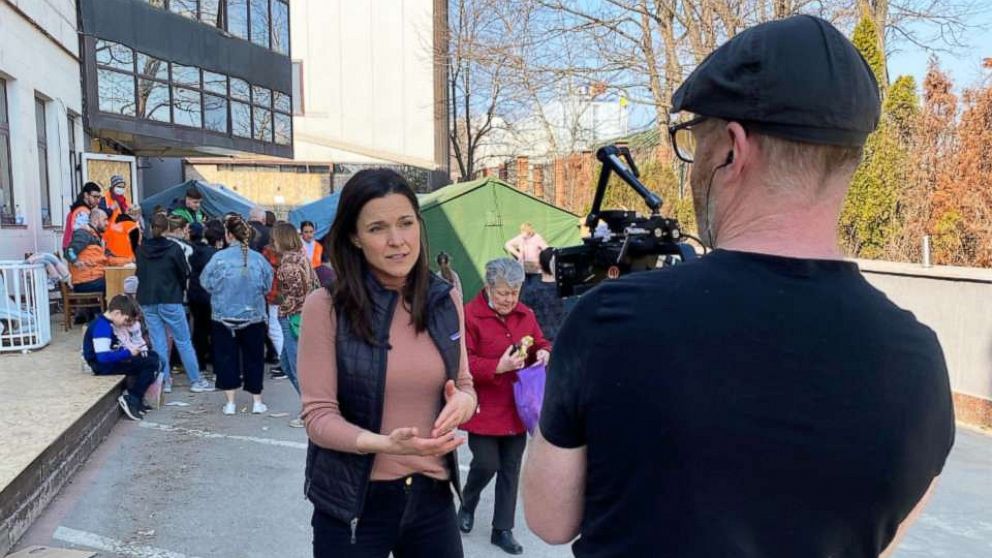
(LONDON) — Our team spent five days tracing the southern border of Ukraine. We drove more than 650 long miles through the big open, empty lands and packed small towns of Slovakia, Hungary, Romania and Moldova, countries that have welcomed more than 1 million people fleeing the war.

On the way, we found countless individual stories of horror, perseverance and kindness — and a group of unique countries giving back any way they can, while living with their own fears that they could be next.

Moldova in some ways felt the most like Ukraine. The only other non-NATO, non-EU country along the border, Moldova and Ukraine are also two of the poorest countries in Europe. Many families live across the border here, and both countries have lost territory to Russian aggression in the past.

There’s a kinship you can feel between the countries, with so many people we meet here calling Ukrainians “their neighbors, their brothers.”

Despite few resources and crushing numbers, Moldovans are doing whatever they can to help. Since the start of the war, more than 380,000 people have fled through the country, more than 15% of the country’s entire population and the most per capita of any other country.

We discovered an old movie theater in the country’s capital of Chisinau that had been left standing empty for four years, now converted into a shelter for up to 200 people. The walls were crumbling, but the place had brand new mattresses on the floor.

The makeshift home meant a place to stay for Irina and her four-year-old son, Arcadyi. Irina tells us she didn’t want to leave Odessa. Her other son turned 18 in October and since he is now old enough to fight, he isn’t allowed to leave Ukraine. But she says he told her she had to go, she had to save his little brother. She had to make sure at least one son survived this war.

She chose to come here to Moldova, because it was the closest that she could stay to her other son. It’s something we hear from many refugees — the desire to stay as close to home as they can. But Moldova is complicated. It’s close to Ukraine, but also to Russia. There are pro-Russian parties in the government and in some groups in town.

While we’re at the shelter, a tractor pulls up to drop off supplies. On it — a large Z, a symbol that’s now become synonymous with Putin’s forces in Russia and is often seen on the tanks there. A tractor with support for Russia, dropping off items that locals have donated to help Ukrainians feeling the Russian attack? Nothing about the scene makes sense, but it’s perhaps the best explanation of life in Moldova.

Close proximity to Russia means some people befriend the country, and many are worried that they could be invaded next.

We found a similar fear in Romania. On my way out of the region, we flew out of a small airport close to the border. A security guard there asked us what it was like in Ukraine. I asked if he had family there. He said, “No, I’m just worried that Putin will come after us next.”

Romania is also a NATO and European Union member. Attacking it would have worldwide implications. But even with these assurances, people here still live in fear.

Romania has the largest border with Ukraine of any EU country. Driving along the winding road as it hugs the dividing line between the two countries, we see mostly vast, empty miles. It makes sense that it’s a well-known route for illegal crossings. That could mean men trying to flee Ukraine. We see at least one man sitting with police on the side of the road. But at official crossings, it is almost exclusively women and children.

In Siret, Romania’s busiest border crossing, we meet Elenea and her young daughter Katya just moments after they cross. The mother tells us they’re from Kiev and lived right by the television tower that was bombed recently. They wanted to stay, but when one of Katya’s classmates died, Elenea knew she had to leave. We’re there as she FaceTimes her husband to let him know they made it across safely. He had to stay behind to fight.

Working in this job, you’re used to being with people during the worst and often hardest moments of their lives. But witnessing this intimate moment broke me. A simple check in between husband and wife, now torn apart by war. Their daughter now asking when she would be able to see her dad again. A heartbreak so big, you could see it.

Sadly, their story isn’t uncommon. We met so many families forced to separate, unsure when, or if, they will ever be together again.

And as war rages on, the numbers of those fleeing only keep increasing. We hear rumblings from NGOs and volunteers, even other refugees, about hundreds of thousands of internally displaced Ukrainians waiting just on the other side of the border. People want to stay in Ukraine, but may have to flee as the fighting moves west. We ask for numbers of those at the border, but no one is able to tell us for certain.

While everyone says they want to remain open to refugees, resources are already stretched thin. If one million people turns into 2 or 3 million, there are concerns about how these countries can keep up.

For now, people are stepping up however they can.

In Slovakia, we meet Father Pavel Novack who leads a congregation at a small church less than a mile from the border. He helped turn a school nearby into a shelter, one of 24 in this small region. Everything inside is donated from the community. He’s already helped more than 100 refugees, and on the day we visit there are 34 people living inside. Entire groups of families and friends share one room, but always with a roof, food and plenty of hope to go around.

Father Pavel says refugees of all faiths are welcome. He shows us his church and tells us that in Orthodox Christianity the sermons are always sung, and as the sun sets outside he begins to pray. After a day of running around chasing stories and driving hundreds of miles, his song stopped our whole crew and forced us to stand still. His voice filled the tiny house of worship with a calmness we hadn’t felt in days. In that brief moment, the war, the heartache, the violence all felt far away.

It’s these moments that will stick with me. Of people sacrificing everything to save their families. Of people giving everything of what little they have to help others. Of people trying to find joy even in the darkest moments of war.

On our final day, we visited a small park in Moldova and stumbled into a group of older people dancing. As Moldovan music blasted on speakers and elderly couples held hands and shouted in delight, you could feel their joy from across the park. With war just a few dozen miles from where they stood, and with refugees fleeing unthinkable violence, this group remembered to dance.

We watched this moment of joy, of life lived well, and were reminded what’s worth fighting for.

Copyright © 2022, ABC Audio. All rights reserved.

Avengers reassemble: Chris Evans, Scarlett Johansson team up for Apple TV+’s ‘Project Artemis’

Avengers reassemble: Chris Evans, Scarlett Johansson team up for Apple TV+’s ‘Project Artemis’
Paul Drinkwater/NBCUniversal Media, LLC via Getty Images

Chris Evans and his Avengers series co-star Scarlett Johansson will finally re-team, for an Apple TV+ film called Project Artemis.

The big budget, hush-hush feature will be directed by Ozark‘s Emmy nominated star and Emmy-winning director, Jason Bateman, ABC Audio has confirmed.

In response to the headline, Evans tweeted, “Very excited!!!”

Plot details are being kept quiet, though the real-life Project Artemis is NASA’s mission to send humans back to the moon, including landing the first female astronaut there.

Incidentally, Evans and Johansson, who first met on the set of the 2004 teen comedy The Perfect Score, were supposed to reunite in a different film for the streaming service called Ghosted. However, as previously reported, No Time to Die star Ana de Armas took Johansson’s place in the “a high-concept romantic action adventure film.”

Johansson is also starring in and producing Bride, a genre-bending film for the streamer, which will be directed by Oscar winner Sebastián Lelio.

Copyright © 2022, ABC Audio. All rights reserved.

‘X’ gender marker soon available on passports as part of push for inclusivity

‘X’ gender marker soon available on passports as part of push for inclusivity
Jeff Mccollough / EyeEm

(WASHINGTON) — The U.S. State Department announced on Thursday that starting April 11 people applying for U.S. passports will be able to select “X” to mark their gender in a move designed to accommodate nonbinary, intersex and gender non-conforming individuals.

“The Department of State has reached another milestone in our work to better serve all U.S. citizens, regardless of their gender identity,” Secretary of State Anthony Blinken said in a statement released on Thursday, which marks Transgender Day of Visibility.

Blinken first announced the State Department’s intention to make this change in June and said that the option to select “X” for gender will also become available on other documentation in the coming year.

The White House introduced additional changes to travel-related policies, including replacing the Transportation Security Administration’s “gender-based system” with new and more precise technology aimed at reducing pat-downs and unnecessary additional screenings.

The Department of Homeland Security is also in the process of adding “X” gender markers to the systems to facilitate the check-in process for gender non-conforming travelers, the White House said.

“These updates to passports and TSA policy will make it safer for transgender, nonbinary, and intersex members of our community to travel and to walk through everyday life,” said the Gay & Lesbian Alliance Against Defamation known as GLAAD in a statement on Thursday. “Everyone deserves the right to have identity documents that reflect who they are, and to go through airport security without harassment and public humiliation.”

The changes to the travel experience are part of a series of new policies and actions announced by the Biden White House on Thursday that address discrimination against transgender individuals and come as Republican lawmakers push a wave of transgender and LGBTQ legislation across the country that many see as discriminatory.

Most recently, Oklahoma and Arizona became the latest states to impose transgender sports bans. Similar legislation has been introduced in more than 30 states. On Monday, Florida Gov. Ron DeSantis signed the Parental Rights in Education bill into law. The legislation, which is dubbed the “Don’t Say Gay” bill by LGBTQ activists, limits what classrooms can teach about sexual orientation and gender identity. Meanwhile, various states have introduced legislation banning and/or criminalizing gender-affirming care for transgender youth.

The White House condemned anti-LGBTQ legislation and vowed to fight against it at the state level.

“The evidence is clear that these types of bills stigmatize and worsen the well-being and mental health of transgender kids, and they put loving and supportive families across the country at risk of discrimination and harassment,” the White House said. “As the President has said, these bills are government overreach at its worst, they are un-American, and they must stop.”

The White House vowed to provide additional mental health resources and investments in education for LGBTQ youth, their families and their support networks, as well as enhance federal services and benefits for the community.

“To everyone celebrating Transgender Day of Visibility, I want you to know that your President sees you. The First Lady, the Vice President, the Second Gentleman, and my entire Administration see you for who you are — made in the image of God and deserving of dignity, respect, and support,” President Joe Biden said in a statement on Thursday.

“We’re committed to advancing transgender equality in the classroom, on the playing field, at work, in our military, and our housing and healthcare systems – everywhere, simply everywhere,” the statement said.

Jeopardy champion Amy Schneider, the first openly transgender individual to compete on the show, visited the White House for the Transgender Day of Visibility to meet with second gentleman Doug Emhoff.

Schneider, who won a historic 40-game streak, told ABC News she hopes that her visit would advance visibility for the transgender community.

“I think just the same thing that I have been accomplishing, which is being a trans person out there that isn’t monstrous, that isn’t threatening, and is just a normal person like we all are. So the more people like me can be seen, the harder it is to sustain the myths that are driving a lot [of] this hate and fear,” she said.

Many civil rights groups advocating for LGBTQ rights welcomed the changes announced by the White House.

“Today’s actions prove that transgender people have an ally in the White House, and come at a much needed time when transgender people – particularly young people – are under attack in statehouses across the country,” the Human Rights Campaign said in a statement on Thursday.

The National Center for Transgender Equality said in a statement that at a time when “transgender people are being attacked and targeted by state and local politicians,” the White House’s new policies show the community “that the president of the United States has their back.”

ABC News’ Molly Nagle, Conor Finnegan, Robert Zepeda and Luke Barr contributed to this report.

Copyright © 2022, ABC Audio. All rights reserved.

California county officials frustrated with pace of efforts to investigate Turpin case as probe continues

California county officials frustrated with pace of efforts to investigate Turpin case as probe continues
Watchara Phomicinda/The Press-Enterprise via Getty Images

(RIVERSIDE COUNTY, Calif.) — Top officials in California’s Riverside County said this week that they continue to be frustrated in their efforts to find out why social services systems have “harmed” some of the 13 Turpin children who were rescued in 2018 from captivity and torture at the hands of their parents.

The Riverside County Board of Supervisors had vowed to fix the system that broke down for some of the 13 Turpin siblings, but said this week that the process has been bogged down by a tangle of court-mandated confidentiality rules and other state laws that prevent information-sharing.

“We’re trying to do what we can do because we all take this very serious,” county Supervisor Karen Spiegel said Tuesday of the ongoing investigation into revelations first reported in 2021 by ABC News that many of the Turpin children were not given access to many of services and resources they were guaranteed by the system. “There are things that our hands are totally tied on.”

The 13 siblings were rescued in January 2018 from their home in Perris, California, where their parents had subjected them to brutal violence and deprived them of food, sleep, hygiene, education, and health care.

In 2021, Jennifer and Jordan Turpin spoke to ABC News’ Diane Sawyer for the first time about the challenges and hardships they and their siblings have faced in the years since sheriff’s deputies rescued them from a life of home imprisonment.

An ABC News investigation found that some of the Turpin children continue to face challenges and hardships since they were rescued, and some of them had even faced danger again.

In the wake of ABC News’ 20/20 report, Riverside County hired an outside firm to conduct an independent investigation into the county’s care of the Turpin children. The firm, headed by retired federal Judge Stephen Larson, was due to deliver its finding this week on March 31. But on Tuesday his team announced the findings would be delayed by two months as investigators continue to press for access to “vital” court and county records that underpin the Turpin cases.

“These records are vital to ensure that … the final report comprehensively addresses each area of inquiry,” Hillary Potashner, a partner at Larson LLP helping lead the investigation, told the board on Tuesday. “The process to require the records nonetheless remains slow moving.”

In the meantime, Potashner reported to the Board that the team has already reviewed more than 2,600 documents and conducted over 85 interviews — including with two of the Turpin siblings and two staffers with the Riverside County District Attorney’s Office. District Attorney Mike Hestrin went public with his concerns that the county had “failed” the Turpin siblings in the ABC broadcast.

Also interviewed by the outside investigators were 11 members of the Riverside County Public Guardian’s Office, which was responsible for helping the seven oldest Turpin children obtain critical medical, educational and life-skill resources after their parents were arrested.

Still, the supervisors expressed frustration that other aspects of state and federal law have blocked them — as well as other county departments — from sharing information with each other, which has led to what Riverside County Supervisor Kevin Jeffries said was a “disconnected — and I’m being generous — a disconnected level of service to our children.”

“It is the most frustrating experience in my time I’ve had on the Board of Supervisors,” Jeffries said, “to be told you’re responsible as an elected official to make sure all these things run smoothly and you have the right people in place, but you can’t ask any questions about how they do their job, or how effective they are, or the problems they face.”

Last week, a separate Board of Supervisors committee that was formed in the wake of the ABC News report found that “more must be done” to improve care and services to the vulnerable for which they are responsible, including the Turpin siblings.

“Although much work is already in process to continue to improve on our delivery of services to children and adults, leaders recognize that more must be done,” according to a five-page report issued Friday.

Among the changes the supervisors are eyeing, according to the report, is a change to the “legislative hurdle that prevents departments from sharing information.” The report said the committee is pushing to change state law to “allow for the disclosing of information between county adult protective agencies and county child welfare agencies.”

Additionally, the report said the county has created a new “multi-department, multi-disciplinary team” to oversee the care of the 13 Turpin children — one of the first reforms since the probe was enacted.

Copyright © 2022, ABC Audio. All rights reserved.

Pence releases policy agenda for Republican Party, paving way for 2024 candidacy

Pence releases policy agenda for Republican Party, paving way for 2024 candidacy
Justin Sullivan/Getty Images, FILE

(WASHINGTON) — Former Vice President Mike Pence announced Thursday a multi-pronged policy agenda for the Republican Party, the latest in a series of indicators he’s planning to mount a run for the presidency in 2024.

Pence sees his “Freedom Agenda” as “focused on the future” and said it “offers a clear and compelling choice to the American people,” according to a statement on his political advocacy group’s website.

While he didn’t say it outright, the timing suggests the choice he’s referring to is between far-right conservative grievances over the 2020 election championed by former President Donald Trump and Pence’s nod toward the future.

In a speech earlier this year, Pence forcibly broke from Trump, saying it was “wrong” for the former president to have pushed him to reject Electoral College votes for President Joe Biden. The pair have publicly grown apart since the Jan. 6 attack on the Capitol at which Trump supporters called for Pence’s head, forcing him to hide in a secure location.

During a call with a handful of news outlets prior to the plan’s release, Pence subtly highlighted the contrast with Trump.

“Elections are about the future, and frankly the opposition would love nothing more for conservatives to talk about the past or to talk of the mess they’ve made of the president,” Pence told reporters, according to Politico. “And I think by relentlessly focusing on the future we can stop the radical left, we can turn this country around, we can win the Congress and statehouses back in 2022, and we can win back America in 2024 and beyond.”

Pence’s plan is organized into three pillars — American opportunity, American leadership and American culture — that strike largely at conservative cultural issues that helped rising stars like Virginia’s Glenn Youngkin flip blue states red. Some of those agenda items include promoting “patriotic” education, a clear reference to critical-race-theory rhetoric in the classroom, which many Republicans oppose; protecting individuals from being “censored”; “protecting female athletic competition” by barring transgender women from playing in certain sporting events; honoring “God-given worth” by ending taxpayer funded abortion and abolishing Planned Parenthood.

Pence’s plan calls for a version of election reform but doesn’t mention the fallacy pushed by Trump and his allies that the 2020 election was “stolen.” Nevertheless, Pence’s agenda pushes for a voting system in which identification is required, in-person voting is preferred and encouraged and mail-in voting is “rare.”

The Pence agenda also includes anti-Russian sentiments as the invasion of Ukraine barrels on, saying Putin “undermines freedom and democracy at home and abroad” while calling for the creation of private-sector led energy production centered around the export of American-produced natural gas that would cut Europe’s dependency on Russian oil.

According to Pence’s political group’s website, the former vice president collaborated with several dozen prominent conservatives to create his plan, including former administration officials Kellyanne Conway, Betsy DeVos, and David Bernhardt. One notable contributor is outgoing Arizona Gov. Doug Ducey, a frequent target of Trump’s harsh criticism, who drew ire from the former president for distancing himself from the Arizona audit of the 2020 election — another indicator of the daylight between Trump and Pence.

Pence is now one of two high-profile Republicans who have released formalized policy proposals for the GOP as the party attempts to secure the advantage in the upcoming midterm elections. Florida Sen. Rick Scott, who chairs the National Republican Senatorial Committee, announced his controversial 11-point plan in February. Other rumored GOP 2024 candidates, including Sen. Tom Cotton, R-Ariz., have made public their priorities for the midterms and beyond.

Pence’s advocacy organization, Advancing American Freedom, rolled out his plan with a video narrated by Pence, which closely resembles a campaign tease, Thursday morning.

“Our best days are yet to come,” said Pence, “for renewing American culture, American opportunity, and American leadership, for a more perfect union for the people.”

Copyright © 2022, ABC Audio. All rights reserved.

DOJ charges 9 anti-abortion protesters, police say 5 fetuses found in one’s home

DOJ charges 9 anti-abortion protesters, police say 5 fetuses found in one’s home
Sarah Silbiger-Pool/Getty Images

(WASHINGTON) — The Justice Department has charged nine anti-abortion protesters with conspiring to obstruct access to a women’s reproductive health facility in Washington, D.C., in October 2020, according to an indictment unsealed Wednesday afternoon.

Prosecutors say Lauren Handy, Jonathan Darnel, Jay Smith, Paula Harlow, Jean Marshall, John Hinshaw, Heather Idoni, William Goodman and Joan Bell all invaded the unnamed health facility on Oct. 22, 2020, and created a blockade to prevent patients from receiving abortions and other reproductive health services.

All have been charged with two counts of engaging in a conspiracy against individuals’ civil rights and clinic access obstruction. If convicted, they could each face a maximum of 11 years in prison. Attorneys for each defendant were not listed on their court docket as of Thursday afternoon.

On Wednesday, the Metropolitan Police Department raided a home — where Handy, a prominent anti-abortion activist who has previously faced state charges for carrying out a similar clinic protest in Michigan, lives, she told WUSA. The charges in Michigan were dropped after a lack of evidence.

Police said they were acting on a tip that biohazardous material was at the house.

The department said officers found five fetuses at the home. “Upon further investigation, MPD located five fetuses inside a residence at the location,” MPD said in a statement. “The fetuses were collected by the DC Office of the Chief Medical Examiner.”

Handy told WUSA she expected the raid to “happen sooner or later.”

According to the indictment, all the individuals traveled to D.C. to participate in the blockade under direction from Handy. The group calls itself Red Rose Rescue; during their demonstrations at clinics, they commonly hand out red roses to women in clinic waiting rooms.

Handy allegedly called the clinic days before their protest, telling them she was a woman named Hazel Jenkins who needed care and made an appointment for the morning of Oct. 22, according to the indictment.

While in the D.C. clinic, prosecutors say the demonstrators blocked two doors using their bodies, furniture, chains and rope while broadcasting their actions live on Facebook.

Darnel began the livestream by saying, “We have people intervening physically with their bodies to prevent women from entering the clinic to murder their children,” the indictment states.

Copyright © 2022, ABC Audio. All rights reserved.
Planned Parenthood sues Idaho over abortion ban

Planned Parenthood sues Idaho over abortion ban
Witthaya Prasongsin/Getty Images

(BOISE, Idaho) — Planned Parenthood filed a lawsuit Wednesday that seeks to reverse Idaho’s new abortion law.

The law bans abortions once cardiac activity in a fetus is detected, which happens at approximately six weeks of pregnancy. Many women are unaware at six weeks that they are pregnant.

The suit was filed in Idaho’s Supreme Court on behalf of Planned Parenthood Great Northwest, Hawai’i, Alaska, Indiana, Kentucky and Dr. Caitlin Gustafson, a health care provider who performs abortions at Planned Parenthood clinics, according to court documents.

The bill, set to go into effect on April 22, was signed by the governor last week, making Idaho the first state to model legislation after Texas’ abortion ban.

“It should be clear to everyone that the Idaho state legislature intentionally abandoned the ordinary rule of law when they passed this six-week abortion ban. Then the governor joined their effort to deny his constituents their constitutional rights when he signed the abortion ban into law — despite his own acknowledgement that it was wrong,” Alexis McGill Johnson, president and CEO of Planned Parenthood Federation of America, said in a press release.

The law would also allow the father, grandparents, siblings, uncles or aunts of the fetus to sue a medical provider that performs the procedure and collect a reward of at least $20,000 for a successful claim filed within four years of an abortion, according to Planned Parenthood.

The law’s “enforcement mechanism and substance are blatantly unconstitutional, so much so that Idaho’s Attorney General’s Office released an opinion to this effect, and the Governor emphasized similar concerns upon signing,” the lawsuit states.

In a letter to Janice McGeachin, the lieutenant governor and president of the state’s senate, Idaho Gov. Brad Little criticized the bill, saying, “I stand in solidarity with all Idahoans who seek to protect the lives of preborn babies.”

He then added, “While I support the pro-life policy in this legislation, I fear the novel civil enforcement mechanism will in short order be proven both unconstitutional and unwise.”

Planned Parenthood is asking the court to rule that the bill is “unlawful and unenforceable” and forbid Idaho courts from implementing civil cases as the bill allows.

Without intervention from the court, the law would go into effect, “wreaking havoc on this State’s constitutional norms and the lives of its citizens,” according to the lawsuit.

“The abortion ban blatantly undermines patients’ right to privacy. It also improperly and illegally delegates law enforcement to private citizens, violating the separation of powers and allowing plaintiffs without injury to sue, in violation of the Idaho Constitution,” Planned Parenthood said.

Added Rebecca Gibron, the interim CEO of Planned Parenthood Great Northwest, Hawai’i, Alaska, Indiana, Kentucky: “This law is a cruel overreach by politicians so intent on controlling the lives of their constituents that they’re willing to compromise our constitutional rights and compromise our health and safety, all in order to ban abortion.”

The lawsuit requests emergency relief by April 21 to prevent the implementation of the abortion ban before it becomes law.

“Unless this abortion ban is stopped, Idahoans will watch in real time as their government strips them of the very rights they were sworn to protect. Everyone deserves to make their own decisions about their bodies, families, and lives — and we’re going to keep fighting to make sure that is a reality,” McGill Johnson said.

Copyright © 2022, ABC Audio. All rights reserved.

ABBA releasing box sets, picture-disc collections to celebrate opening of virtual concert experience in London

ABBA releasing box sets, picture-disc collections to celebrate opening of virtual concert experience in London
POLAR/Universal Music

ABBA Voyage, the concert experience featuring digital avatars of the Swedish pop icons’ four members, is set to open in London on May 27, and in celebration of the premiere, ABBA has announced plans to release a number of special audio collections.

Coinciding with the show’s premiere, career-encompassing 10-disc box sets featuring all nine ABBA studio albums, including 2021’s reunion project, Voyage, as well as a bonus disc of tracks that originally were only issued as singles, will be released May 27 on CD and vinyl.

Both collections — CD Album Box Set and Vinyl Album Box Set — feature the band’s classic eight original albums, spanning from 1973’s Ring Ring through 1981’s The Visitors, the aforementioned Voyage and the singles compilation, which is titled ABBA Tracks. The CD box set also comes with a 40-page booklet features information about the albums and a variety of photos. The LP set features discs pressed on 180-gram vinyl.

ABBA also will be releasing a limited-edition bundle featuring picture-disc versions of all of their studio albums on June 10. The collection will be available as a discounted eight-LP bundle featuring the group’s first eight albums and as a nine-disc set that adds a picture of Voyage. The picture discs also will be available for purchase individually.

Meanwhile, earlier this month, a new series of lyric videos was launched at ABBA’s YouTube channel that will eventually see clips for all of the songs from group’s classic ABBA Gold compilation premiering over the next 12 months. The first video, “Chiquitita,” debuted on March 18, while the second, “Waterloo,” premieres April 6.

The ABBA Voyage show will take place at the specially built ABBA Arena at London’s Queen Elizabeth Olympic Park. Visit ABBAVoyage.com for full details.

Copyright © 2022, ABC Audio. All rights reserved.

Kentucky, Arizona move forward on 15-week abortion bans

Kentucky, Arizona move forward on 15-week abortion bans
Michael Brochstein/SOPA Images/LightRocket via Getty Images, FILE

(WASHINGTON) — Arizona and Kentucky are moving forward on 15-week abortion bans before a Supreme Court decision in June could decide the fate of the procedure in the United States.

In Arizona, Gov. Doug Ducey signed a bill into law Wednesday after it passed the Arizona legislature last week without a single Democrat vote.

The Arizona legislation only includes exemptions for medical emergencies when continuing with the pregnancy would “create serious risk of substantial and irreversible impairment of a major bodily function” for the mother.

It does not include any exemptions for rape or incest.

“In Arizona, we know there is immeasurable value in every life — including preborn life,” Ducey, a Republican, wrote in a letter announcing the signing of the bill. “I believe it is each state’s responsibility to protect them.”

Ducey has been very vocal about his opposition to abortion and he has signed every piece of anti-abortion legislation that has crossed his desk since he took office in 2015.

“This bill stigmatizes and shames our patients who are making choices about their bodies and their lives,” Brittany Fonteno, president of Planned Parenthood Advocates of Arizona, told ABC News. “We know this is just a political move to strip people of their rights. It’s not based on any medical evidence and politicians should not play doctors.”

Under the legislation, women cannot be prosecuted for having an abortion, but doctors who perform abortions after 15 weeks would face felony charges and could see their medical licenses suspended or revoked.

Meanwhile, the Kentucky state legislature passed a similar ban Tuesday as well as other abortion restrictions.

Under what is known as HB3, any drugs used for a medication abortion — a nonsurgical procedure typically used up to 10 weeks in pregnancy — must be provided by a physician licensed to practice medicine and in good standing with Kentucky.

An in-person examination needs to be had at least 24 hours prior, during which women are informed about any risks. The drugs cannot be sent through the mail.

Abortion advocates say this will prevent many women, particularly low-income, from accessing abortion if they have to go to a clinic to receive it.

“Those with the means will always be able to access abortions; they can afford the planes, the hotel rooms,” Tamarra Wieder, state director of Planned Parenthood Alliance Advocates – Kentucky, told ABC News. “But those who are poor, live in rural communities, so far away from care, already are going to be further disenfranchised. It’s a massive burden for those who have time off work or school, find child care and make sure they can afford gas.”

Additionally, the bill requires the names of physicians who provide medication abortions to be published and a state-run “complaint portal” will be set up so people can anonymously report abortion providers who are violating the program.

Meg Stern, director of the abortion support fund for Kentucky Health Justice Network, an advocacy group, said this could lead to complaints filed by people who have personal vendettas against abortion providers.

She added that she has experienced harassment herself as a volunteer clinic escort at EMW Women’s Surgical Center, one of only two abortion providers in Kentucky.

“I’ve been physically assaulted, I’ve been followed, I’ve had my picture published on social media, I’ve had my address published — and I’m just a volunteer escort and an abortion funder,” Stern said. “I’m not giving people medicine, I’m not doing abortions, but I’m accessible, so what do we think will happen to the providers? It’s creating a headhunter type of situation.”

Wieder agreed, calling it “a hit list” that could put abortion providers in harm’s way.

Several other states, including Texas and Idaho, have passed abortion bans.

Currently, it is unconstitutional to pass abortion bans before a fetus is viable – anywhere from 22 to 26 weeks. The states are hoping the Supreme Court will change this.

In June, the court will review a 15-week ban in Mississippi and whether or not it is constitutional. If the court determines the bill is constitutional, this could mean Roe v. Wade is either overturned or fundamentally weakened.

“My personal opinion is that Kentucky lawmakers are confident SCOTUS will gut, if not destroy, Roe v. Wade,” Stern said. “And they’re counting on, even if doesn’t happen, Texas has showed a way to ban abortions despite Roe.”

Copyright © 2022, ABC Audio. All rights reserved.

Lizzo introduces Yitty, a new body-positive shapewear line

Lizzo introduces Yitty, a new body-positive shapewear line
Emma McIntyre/Getty Images for dcp

(NEW YORK) — Lizzo is known for making fans feel “Good as Hell” with her music, and now she is doing the same with an upcoming shapewear line called Yitty.

“This is a dream 5 years in the making” the Grammy Award-winning superstar wrote on Instagram about her newest venture, which is slated to launch on April 12.

In partnership with Fabletics, the “no-shame, smile-inducing shapewear” is designed for all body types and will include undergarments ranging in size from XS to 6X.

“I was tired of seeing this sad, restrictive shapewear that literally no one wanted to wear,” Lizzo said in a statement. “I had an epiphany like, ‘Who can actually do something about this?’ I decided to take on the challenge of allowing women to feel unapologetically good about themselves again.”

Regarding her own journey as a body-positive advocate, Lizzo said she felt she was always told, through social constructs, that her body wasn’t good enough.

“And, in order to be considered ‘acceptable’ I had to inflict some sort of pain upon it to fit into an archetype of beauty,” she said. “Because of this, I’ve been wearing shapewear for a long time, maybe since I was in fifth or sixth grade.”

The collection will include three different drops, including Nearly Naked, which is a lightweight seamless collection designed to comfortably shape and firm your natural curves; Mesh Me, which will include smoothing mesh styles that can be worn as underwear or outerwear; and Major Label, which will be an assortment of everyday lifestyle pieces that are super soft.

Additionally, everything included in the lineup has a musical spin with vibrant names such as Tempo Lavender and Headliner.

Yitty, which is named after Lizzo’s childhood nickname, comes on the heels of another dream fulfilled for Lizzo. The star says she was “crying in an ice bath” on the day her body-positive dance reality show “Watch Out for the Big Grrrls” premiered.

“Instead of thinking about size in this linear way, we’re thinking about it on a spectrum where everyone is included,” Lizzo said. “Everyone’s size is just their size. It’s not high, it’s not low. It’s not big, it’s not small. It’s just your size.”

Copyright © 2022, ABC Audio. All rights reserved.