Just in time for Father’s Day, Rod Stewart is paying tribute to his late father, Robert, with a video and a concert.
Rod has dropped two teaservideos for “Touchline” from his most recent album, The Tears of Hercules. The song is about his father and, specifically, about how love and tradition is passed down to generations via sports — in this case soccer or, as they call it in the U.K., football. The full video will debut Friday at 11 a.m. ET.
Rod says in a statement, “If you know anything about me, you know that our dad’s love of football has most definitely left its impact on me and my brothers, and I’m delighted that it’s now such an important part of my children’s lives as well. The song ‘Touchline’ was my tribute to him and I’m so happy and moved that the new video takes that to the ultimate level just in time for Father’s Day.”
Rod will also perform a special show in Edinburgh, Scotland, on November 13 in honor of his dad, who was born in Leith, in northern Edinburgh, and died in 1990 at the age of 85. Details on that will be announced soon.
In addition, Rod has announced that select tickets on his U.K. tour this fall will be donated to National Health Service frontline workers. “It’s terrific that we’ll be able to have both NHS workers and doctors and nurses who have been on the front lines these last couple of years as our guests!” he says.
In Ms. Marvel, Iman Vellani plays a superhero fan who becomes a superhero herself — something that happened to the real-life Marvel geek when she landed in the Marvel Cinematic Universe herself.
The 19-year-old explains to ABC Audio that joining the ranks of big- and small-screen heroes came with quite the support group.
“They’re so incredibly welcoming,” Vellani says of her fellow MCU stars.
“I was kind of intimidated going into this entire thing because I didn’t know if anyone else was going to reach out. And I really needed some sort of handbook on the superhero world, because it’s difficult, and it’s very overwhelming at times.”
She adds, “And the fact that, you know, Brie Larson and, like, Simu [Shang-Chi‘s Simu Liu] and Chris Pratt, they all just made themselves available for me to kind of ask my questions and then just vent if I wanted to. It … just really meant the world.”
She says, “Yeah. It’s crazy: The people that are on my posters back home are now my friends!”
Iman’s turn as Kamala Khan/Ms. Marvel will also be seen on the big screen, as she’ll appear alongside her character’s favorite hero, Larson’s Captain Marvel, in The Marvels, hitting theaters next July.
The first two episodes of Ms. Marvel are now streaming on Disney+.
Marvel Studios is owned by Disney, the parent company of ABC News.
(WASHINGTON) — Georgia Republican Senate nominee Herschel Walker this week acknowledged he has three more children in addition to the son, Christian, he has publicly helped raise for the last 20 years.
Walker’s statements on the matter, issued via his campaign, come after a series of reports in The Daily Beast about his other kids — all of whom have remained out of the spotlight cast on their father, a businessman and college football legend in his home state.
Walker, who has talked about the importance of his being a dad to Christian, had not previously discussed his role as a parent to multiple children.
The issue of Walker’s involvement as a father has brought renewed focus to the fact that he has repeatedly touted the importance of being an active father and, in particular, has said “the fatherless home is a major, major problem” for Black people.
It is, however, unclear what role Walker has played in the life of his children beyond Christian, a budding conservative social media influencer whom he shares with his first wife.
In statements to ABC News, Walker pushed back on any criticism that his kids were kept out of view.
“I have four children. Three sons and a daughter. They’re not ‘undisclosed’ – they’re my kids,” he said on Thursday. “I support them all and love them all. I’ve never denied my children, I confirmed this when I was appointed to the President’s Council on Sports Fitness and Nutrition, I just chose not to use them as props to win a political campaign. What parent would want their child involved in garbage, gutter politics like this?”
He continued: “Saying I hide my children because I don’t discuss them with reporters to win a campaign? That’s outrageous. I can take the heat, that’s politics — but leave my kids alone.”
A court order obtained by ABC News shows Walker admitted in 2013 to being the youngest boy’s father after the boy’s mother filed a paternity petition that April.
In an initial statement on Wednesday, Walker’s campaign manager, Scott Paradise, insisted that the 10-year-old boy wasn’t being hidden.
“Herschel had a child years ago when he wasn’t married. He’s supported the child and continues to do so. He’s proud of his children,” Paradise said. “To suggest that Herschel is ‘hiding’ the child because he hasn’t used him in his political campaign is offensive and absurd.”
Paradise pointed to Democratic Sen. Raphael Warnock’s court fight with his ex-wife over their child custody arrangement. (Walker hopes to unseat Warnock in November.)
A spokeswoman for Warnock, Meredith Brasher, told ABC News on Wednesday he is a “devoted father who is proud to continue to co-parent his two children as he works for the people of Georgia.”
Walker, who easily won the Republican nomination in the state’s primary in May, has previously faced scrutiny about his personal life. That includes allegations of violent behavior and his diagnosis with dissociative identity disorder, or D.I.D., a complex mental health condition characterized by some severe and potentially debilitating symptoms.
Walker has denied some of the past allegations of domestic violence, physical threats and stalking; others he claimed not to remember.
His campaign previously referred ABC News to his 2008 memoir, which detailed his D.I.D. diagnosis, and a 2008 interview he did with ABC News in which he discussed its effects on his first marriage.
ABC News’ Lucien Bruggeman, Pete Madden and Stephanie Lorenzo contributed to this report.
L-R — Tyler James Williams, Quinta Brunson, Iyana Halley from “Abbott Elementary” — ABC/Temma Hankin
ABC has announced its upcoming fall schedule: Wednesday, September 21, will kick things off with the premieres of The Conners at 8 p.m. ET, followed by The Goldbergs and Abbott Elementary‘s return for a sophomore year, on a new night, at 9 p.m.
At 9:30 p.m., Home Economics returns, leading to the premiere of the drama Big Sky starring country music legend Reba McEntire and The Boys‘ Jensen Ackles.
On Thursday, September 22, Station 19 returns at 8 p.m. ET, followed by TV’s longest running drama, Grey’s Anatomy, at 9 p.m. At 10:01 p.m., two-time Oscar winner Hilary Swank debuts in the drama Alaska Daily.
Friday, September 23, will see the first live episode of Shark Tank at 8 p.m., followed by the first installment of 20/20‘s new season.
Sunday, September 25, will mark the return of Celebrity Jeopardy! at 8 p.m., followed by an all new Celebrity Wheel of Fortune an hour later. The Rookie returns at 10 p.m.
Tuesday, September 27, at 8 p.m. will see Bachelor in Paradise return for one night, followed by Niecy Nash in the spin-off The Rookie: Feds.
On Sunday, October 2, America’s Funniest Home Videos comes back at 7 p.m., and on Monday at 8 p.m., Bachelor In Paradise resumes in its normal slot, ahead of The Good Doctor at 10 p.m.
(WASHINGTON) — The Jan. 6 committee is holding its third public hearing of the month Thursday with the focus on the pressure campaign on then-Vice President Mike Pence.
The committee says it will detail efforts from then-President Donald Trump and his allies before and on Jan. 6 to get Pence to reject electoral votes Congress was certifying — as part of what it says was a plot to overturn the presidential election.
Please check back for updates. All times Eastern:
Jun 16, 3:51 pm
Pence’s life in danger as he hid for hours with rioters 40 feet away: Committee
Showing video footage of Secret Service agents rushing Pence down stairs in the Capitol, the committee said Pence was in hiding for four and a half hours, while, at times, rioters were just 40 feet away.
Greg Jacob, a former adviser to Pence who was with the vice president on Jan. 6 told the hearing room, “I could hear the din of the mob as we moved, but I don’t think I was aware,” when told how close they got.
“Approximately 40 feet, that’s all there was, 40 feet between the vice president and the mob,” said Rep. Pete Aguilar, D-Calif., telling Jacob, “Forty feet is the distance from me to you roughly.”
“Make no mistake about the fact that the vice president’s life was in danger,” Aguilar said, arguing the “big lie” directly contributed to the Capitol attack and put Pence’s life at serious risk. “A recent court filing by the Department of Justice explains that a confidential informant from the Proud Boys told the FBI that the Proud Boys would’ve killed Mike Pence, if given the chance.”
Jun 16, 3:50 pm
Trump attorney pressured Pence to delay certification even after the riot, email shows
John Eastman, an attorney advising the Trump campaign, sent an email after the riot at the U.S. Capitol to once again pressure Pence to violate the Electoral Count Act, according to the committee’s presentation Thursday.
“I implore you to consider one more relatively minor violation and adjourn for ten days to allow the legislatures to finish their investigations,” Eastman wrote to Pence adviser Greg Jacob at 11:44 p.m. that day.
Jacob said he relayed Eastman’s message to Pence, who responded that the email was “rubber room stuff.”
“What did you interpret that to mean?” Rep. Pete Aguilar asked Jacob.
Jacob replied he translated that to mean Pence was calling it “certifiably crazy.”
Former White House lawyer Eric Herschmann told the committee that on Jan. 7, 2021, after Pence certified Joe Biden’s victory, Eastman called him to talk about a possible appeal in Georgia.
“I said to him, ‘Are you out of your f—— mind?’ I said, ‘I only want to hear two words coming out of your mouth for now: orderly transition,” Herschmann recalled.
Jun 16, 3:39 pm
Trump aware of insurrection underway when he tweeted criticism at Pence: Committee
The committee displayed a slate of video testimony from those inside the White House and close to Trump to argue he was well aware of the violence underway on the Capitol grounds on Jan. 6 when he tweeted, “Mike Pence didn’t have the courage to do what was necessary” at 2:24 p.m.
Trump White House aide Sarah Matthews, in video testimony with the committee, recalled, “It felt like he was pouring gasoline on the fire by tweeting that.”
“It was clear that it is escalating, and escalating quickly,” she said. “When the Mike Pence tweet was sent out, I remember us saying that that was the last thing that needed to be tweeted out. The situation was already bad.”
Earlier, Rep. Pete Aguilar noted that the Capitol building itself was breached at 2:13 p.m. As the attack continued, Trump tweeted to “stay peaceful” at 2:38 p.m., said “no violence” at 3:13 p.m., and finally, at 4:17, he tweeted a video that telling people to go home while also saying, “We love you,” and repeating the false claim the election was stolen.
Jun 16, 3:24 pm
Witnesses recount for first time ‘heated’ Jan. 6 call between Trump, Pence: ‘Wimp’
Ivanka Trump, former White House lawyer Eric Herschmann and others told the committee in previously taped testimony what they heard when Trump called Pence from the Oval Office on Jan. 6.
“The conversation was pretty heated,” Ivanka Trump recalled.
Nicholas Luna, Trump’s former assistant, described entering the Oval Office at the time to deliver a note and hearing Trump say the word “wimp.”
“I remember hearing the word ‘wimp’,” Luna told the committee. “Either he called him a wimp, I don’t remember if he said, ‘You are a wimp, you’ll be a wimp.’ Wimp is the word I remember.”
Gen. Keith Kellog, Pence’s national security adviser at the time, said in his deposition that Trump told Pence he wasn’t “tough” enough. Ivanka’s chief of staff, Julie Radford, told the committee that Ivanka said Trump called Pence “the p-word.”
Jun 16, 3:10 pm
Committee says Trump’s chief of staff discussed how plan was illegal
Committee members revealed evidence that White House chief of staff Mark Meadows knew — or was at least telling other aides that he agreed with their view — that Trump and his attorney John Eastman’s plan to overturn the election was illegal and that Pence had no ability to reject electoral votes for Biden sent to Congress.
In his taped interview with the committee, Pence’s chief of staff Marc Short told panel lawyers that that Meadows, Trump’s chief of staff, said he agreed with Short and Pence that the vice president lacked such authority.
“Did Mr. Meadows ever explicitly … agree with you or say, ‘Yeah, that makes sense’?” interviewers asked.
“I believe that Mark did agree,” Short said. “But as I mentioned, I think Mark told so many people so many different things that it was not something that I would necessarily accept as … resolved.”
-ABC News’ Benjamin Siegel
Jun 16, 3:04 pm
Pence’s chief of staff alerted Secret Service about VP’s safety on Jan. 5
Marc Short, Pence’s former chief of staff, said he grew worried about the vice president’s safety as the disagreement between Pence and Trump escalated in the days leading up to Jan. 6.
“The concern was for the vice president’s security, so I wanted to make sure the head of the vice president’s Secret Service was aware that likely, as these disputes became more public, that the president would lash out in some way,” Short said in his taped deposition.
Short called the Secret Service on Jan. 5, 2021.
“After the recess, we will hear that Marc Short’s concerns were justified,” Rep. Pete Anguilar said. “The vice president was in danger.”
Jun 16, 2:58 pm
DOJ tells committee it’s ‘critical’ to provide investigation intel
As Attorney General Merrick Garland and his prosecutors are closely watching the hearings conducted by the committee this week, the Department of Justice sent a new letter telling the committee it is “critical” members “provide us with copies of the transcripts of all its witness interviews.”
In a letter to the committee’s chief investigator Wednesday, senior officials at the Justice Department said that the first two hearings this month showed the interviews conducted by the hearing “are not just potentially relevant to our overall criminal investigations but are likely relevant to specific prosecutions that have already commenced.”
The request suggests there are matters beyond violence on the ground on Jan. 6 that the Justice Department is already investigating — specifically alternate or fake electors as a part of the theory that Pence could unilaterally block the ceremony of Joe Biden as President.
Click here for more on potential federal crimes the committee has floated.
-ABC News’ Alexander Mallin
Jun 16, 3:23 pm
Attorney who pushed theory Pence could save Trump previously dismissed that same claim: Docs
Trump White House attorney John Eastman, at the center of the alleged scheme to send a false slate of electors to Congress and have Pence refuse to certify votes, based his reasoning on a theory the committee argued he never believed.
According to the committee, Eastman sought to take advantage of an ambiguity in the Electoral Count Act and claim the vice president could has the constitutional authority to reject electoral votes outright and use his capacity as presiding officer to suspend the proceedings.
“He described for me what he thought the ambiguity was in the statute. And he was walking through it at that time. And I said, ‘Hold on a second, I don’t understand you’re saying,'” said former Trump White House attorney Eric Herschmann in taped testimony.
Showing past documents, the committee said that Eastman had dismissed the same power he later claimed Pence could have used.
“In this letter, an idea was proposed that the vice president could determine which electors to count — but the person writing in blue negates that argument,” said Rep. Pete Aguilar. “Judge Luttig, does it surprise you that the author of those comments in blue, are in fact, John Eastman?
Former federal judge Michael Luttig responded “yes” and called it “constitutional mischief.”
Jun 16, 2:32 pm
Pence told Trump ‘many times’ he couldn’t overturn election: Marc Short
The committee aired several clips featuring Trump, Rudy Giuliani, Jason Miller, Steve Bannon and others publicly pressuring Pence to refuse the Electoral College votes that were in favor of Joe Biden.
“I hope Mike Pence comes through for us,” Trump said in one video from his rally at the Ellipse on Jan. 6, 2021. “He’s a great guy. If he doesn’t come through, I won’t like him quite as much.”
Marc Short, Pence’s former chief of staff, told the committee in previously recorded testimony that Pence directly conveyed his view to Trump “many times” that he didn’t have the authority to do what they were asking of him.
“He’d been consistent in conveying his position to the president?” the committee asked Short.
“Very consistent,” Short replied.
Jun 16, 2:09 pm
Pence and adviser found that ‘history was absolutely decisive’: He couldn’t help Trump
Greg Jacob, a former adviser to Pence, said they analyzed history and constitutional text to map out the vice president’s role when it came to certifying elections.
The two then examined “every single electoral vote count that had happened in Congress” since the country’s founding, Jacob testified. They found no vice president ever claimed to have the kind of authority Trump and his attorney John Eastman claimed Pence had.
“The history was absolutely decisive and again, part of my discussion with Mr. Eastman was, ‘If you were right, don’t you think Al Gore might have liked to have known in 2000 that he had authority to just declare himself president of the United States? Did you think that the Democrat lawyers just didn’t think of this very obvious quirk that he could use to do that?’”
Jun 16, 2:15 pm
Trump, Pence haven’t spoken in a year: Sources
Trump and Pence haven’t spoken to one another since last summer, according to sources familiar with their conversations.
Pence defended Trump through a slate of controversies during their administration. But, as the House committee is highlighting at its hearings, Pence drew a line at Trump’s alleged plot to overturn the election — breaking from the president and drawing the rage of the Trump mob on Jan. 6.
When ABC News Chief Washington Correspondent Jonathan Karl interviewed Trump for his book “Betrayal,” Karl asked about the “Hang Mike Pence” chants and whether Trump had been concerned for the safety of the man he chose to be his vice president.
“Well, the people were very angry,” Trump said.
“They said, ‘hang Mike Pence,’” Karl told Trump.
“It’s common sense, Jon. It’s common sense that you’re supposed to protect,” Trump said. “How can you, if you know a vote is fraudulent, right, how can you pass on a fraudulent vote to Congress?”
While Pence himself isn’t testifying and has not sat before the committee, a range of former Pence aides cooperated with the investigation.
Since his term ended, Pence has publicly reiterated he had no power to overturn the 2020 results. But like other conservatives, he has said “election integrity” should be a national priority.
-ABC News’ Katherine Faulders
Jun 16, 1:40 pm
Inside the hearing room
Notable faces were spotted across the hearing room as proceedings kicked off Thursday.
Capitol Police Officer Harry Dunn, Capitol Police Staff Sgt. Aquilino Gonell, Metropolitan Police Officer Daniel Hodges and former Metropolitan Police Officer Michael Fanone, who testified at the committee’s first hearing last year on their experience defending the Capitol on Jan. 6, were all present.
Former Pence national security adviser Olivia Troye, who resigned from the administration in 2020, was spotted sitting next to Gonell as well as Allison Gill, a former high-level Veterans Affairs official who was secretly recording a podcast on the weekends about Robert Mueller’s investigation that attracted thousands of listeners.
A couple of members of Congress have been spotted in the back of the room including Reps. Ayanna Pressley, D-Mass., and Steve Cohen, D-Tenn., sitting together. Rep. Adam Kinzinger, R-Ill., who along with Vice Chair Liz Cheney has been ostracized by the Republican Party for speaking out against Trump, also stopped by.
-ABC News’ Katherine Faulders and Benjamin Siegel
Jun 16, 1:35 pm
Retired judge says Trump risked throwing country into ‘revolution’
In his testimony on Thursday, former federal judge Michael Luttig painted a dire picture of what he believed would have happened had Pence followed through with Trump’s plea to remain in power.
“That declaration of Donald Trump as the next president would have plunged America into what I believe would’ve been tantamount to a revolution within a constitutional crisis in America,” Luttig said, “which in my view, and I am only one man, would’ve been the first constitutional crisis since the founding of the republic.”
Luttig is one of the panel’s two live witnesses in today’s hearing. The former judge informally advised Pence on his role in affirming the results of the 2020 presidential election.
Jun 16, 1:35 pm
Clip played of Pence saying Trump was ‘wrong’
In her opening statement, Vice Chair Liz Cheney played a clip of a Pence pushing back against Trump’s claim that he had the power to overturn the 2020 election in the weeks after the Jan. 6 attack.
“President Trump is wrong,” Pence said in a speech in February before The Federalist Society. “I had no right to overturn the election. The presidency belongs to the American people and the American people alone. And frankly, there is no idea more un-American than the notion that any one person could choose the American president.”
Cheney said the select committee will now reveal the details of that pressure campaign.
Jun 16, 1:10 pm
Thompson commends Pence’s ‘courage’ in rejecting Trump’s orders
The House select committee has kicked off its third of seven public hearings slated for this month.
Chairman Bennie Thompson, D-Miss., gaveled in the hearing just after 1 p.m.
“Donald Trump wanted Mike Pence to do something no other vice president has ever done,” Thompson said in his opening remarks. “The former president wanted Pence to reject the votes and either declare Trump the winner or send the votes back to the states to be counted again. Mike Pence said no. He resisted the pressure. He knew it was illegal. He knew it was wrong. We are fortunate for Mr. Pence’s courage on Jan. 6. Our democracy came dangerously close to catastrophe. That courage put him in tremendous danger.”
Jun 16, 11:22 am
Live witnesses for Thursday
Pence himself will not appear before the committee, but his adviser Greg Jacobs — who was with the former vice president the day of the Capitol insurrection — is slated to testify. Jacobs, who is an attorney, pushed back against legal theories that Pence could single-handedly stop Joe Biden from becoming president.
Former federal judge Michael Luttig will also testify in front of lawmakers. Luttig previously told ABC News that if Pence had attempted to keep Trump in power, he would’ve “plunged the country into a constitutional crisis of the highest order.”
In addition to the live witnesses, the committee is expected to include pre-recorded video testimony from Marc Short, Pence’s former chief of staff, and others who have been deposed behind closed doors.
Jun 16, 11:02 am
Rep. Pete Aguilar to lead hearing
Rep. Pete Aguilar, D-Calif., is going to be leading this third hearing, which he said will “lay out new evidence about the pressure campaign against Vice President Pence asking him to reject the votes of millions of people.”
Former U.S. Attorney John Wood will also be questioning the witnesses on Thursday, according to committee aides. Wood was federal prosecutor during the George W. Bush administration and is now a senior investigative counsel for the House committee.
Aguilar told reporters earlier this week that through these public hearings, the committee is making the point that “Trump was at the center of a coordinated strategy to overturn the results of a free and fair election.”
Jun 16, 10:29 am
Thursday to focus on Trump pressuring Pence
The House select committee investigating the attack on the Capitol will convene its third public hearing of the month at 1 p.m. with members set to focus on how former President Donald Trump pressured then-Vice President Mike Pence with “relentless effort” to intervene to help overturn the 2020 election.
“President Trump had no factual basis for what he was doing and he had been told it was illegal,” Vice Chair Liz Cheney said in a video teasing Thursday’s hearing. “Despite this, President Trump plotted with a lawyer named John Eastman and others to overturn the outcome of the election on Jan. 6.”
A key component of evidence is never-before-seen photos of Pence and his family taken by an official White House photographer on Jan. 6 itself. In one — obtained by ABC News’ Jonathan Karl ahead of the hearing — second lady Karen Pence is seen hurriedly closing the curtains of the vice president’s ceremonial office at the Capitol, apparently fearful the mob outside could see where they were.
Last week, at the prime-time kickoff to this round of hearings, Cheney teased testimony to come around Trump’s awareness of rioters’ “hang Mike Pence” chants. Quoting from witness testimony, Cheney said Trump suggested as the attack was underway: “Maybe our supporters have the right idea. Mike Pence deserves it.”
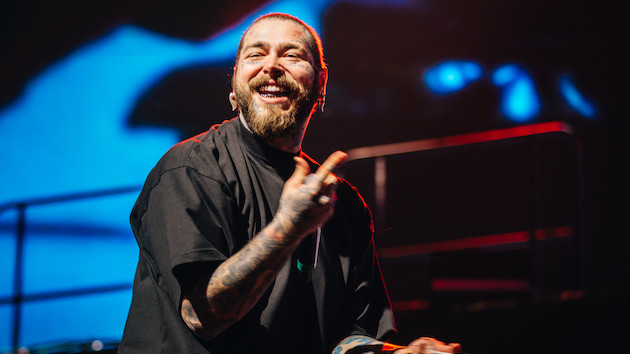
Rapper Post Malone is known for blending elements of pop, R&B and hip-hop into his style, but he says he’d like to venture even further into new genre territory.
“To be honest, there’s nothing stopping me from taking a camera or setting up in my studio in Utah and just recording a country album on YouTube,” he said during a recent appearance on The Howard Stern Show. “I’m allowed to do that. I’m a human being.”
Though Post Malone and country music might sound like a strange combination, it’s actually not that far-fetched. He’s a devoted Shania Twain fan, which he proved by singing and dancing along to her performance of “Man! I Feel Like a Woman” at the 2019 American Music Awards.
He also covered Brad Paisley’s “I’m Gonna Miss Her” and Sturgill Simpson’s “You Can Have the Crown” during the Matthew McConaughey-led We’re Texas benefit in 2021.
Malone’s country fandom is mutual: Michael Ray and Danielle Bradbery have both covered his song “Psycho,” proving that the rapper’s songwriting works just fine with a country arrangement.
The only thing stopping Posty from going country is logistics, he adds. “And then I’m happily obligated to write music and make beats by myself, and I’m happily obligated to, you know, take care of my family,” he points out. “So it’s a lot of time, and it’s about finding the space to allot that time. If I get another year to myself, maybe I’ll make a f***ing country album.”
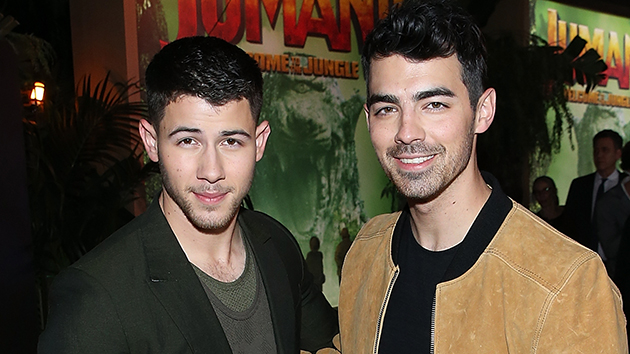
Nick and Joe Jonas did not hold back how much they love their wives and growing families.
The brothers spoke to People in two separate interviews. During Joe’s discussion, he opened up about getting ready to welcome baby number two with wife Sophie Turner.
While the “Cake By The Ocean” singer admits he doesn’t “know what to expect” when the baby arrives, Joe attested he is “maybe a little less nervous” this time around. He and Turner, who share two-year-old Willa, announced last month they are expecting again.
Joe also thanks his older brother, Kevin, for showing him how wonderful fatherhood is. “It’s beautiful to see Kevin as a dad many more years than us and to see how he’s done it,” he said. “It’s really amazing. He’s always prioritized getting home as soon as he could.”
As for Nick, he and wife Priyanka Chopra recently welcomed their first child, a daughter named Malti. Speaking to the outlet, the “Jealous” singer opened up about Malti spending over 100 days in the NICU.
“It was eye-opening in a lot of ways,” Nick told People of the amount of help and support the family received during “her journey in the hospital.”
The first-time dad also revealed why he and Chopra decided to come forward with Malti’s health scare, saying, “It was really important that people know that whatever their journey is or whatever challenges might come up, you’re not alone… [It] makes this very big world a little bit smaller.”
Nick also sang praises for his “teammate”, saying his wife “was a rock the whole time and continues to be.”
Looking ahead to raising Malti, he said both he and Chopra are going to share with her “[my wife’s Indian culture and my American culture.”
Machine Gun Kelly is the subject of a new documentary set to premiere on Hulu this summer.
The film, titled Machine Gun Kelly’s Life in Pink, takes a behind-the-scenes look at the last couple years of the artist’s life as he moved from rap to rock with his 2020 album Tickets to My Downfall and this year’s Mainstream Sellout.
“My whole life changed in the last two years, and we had the cameras rolling,” Kelly says of the movie.
Judging by the Life in Pink trailer, the doc will tackle everything from MGK’s relationship with his father and daughter to his tiff with MMA fighter Conor McGregor at the 2021 MTV VMAs and the hostile reaction he got from crowds at rock festivals.
Talk about a glow-up: Lainey Wilson and Luke Combs are both big stars now, but their friendship dates back to when they were still unknown artists.
“I’ve known Luke for, oh my gosh, I met him in 2014,” Lainey reveals to Entertainment Tonight. “And he used to come over to my camper and write songs with me.”
If you’re not familiar with Lainey’s story, that camper was her home for three years after moving from her home state of Louisiana to Nashville to pursue her dream of being a country star.
But these days, all those difficult days of struggling to pay her dues seem worth it: She earned her first two #1 hits with her debut single, “Things a Man Oughta Know,” and a duet with Cole Swindell called “Never Say Never.” Plus, she’s been cast in the next season of the hit television show Yellowstone, cementing her superstar status.
Of course, Luke’s no slouch at country radio himself: Earlier this spring, he earned his 13th consecutive #1 hit with “Doin’ This.” That means that every one of the singles he’s released since he debuted has hit the top of the country charts.
Now, the old-pals-turned-stars are reuniting for Luke’s fall tour, called the Middle of Somewhere Tour, with Lainey serving as an opening act. She’s not letting her tour boss forget their early days together, though. “I’m reminding him of it all the time, and I guess he remembers,” she adds.
The Middle of Somewhere Tour launches September 2 with two dates in Bangor, Maine. Jordan Davis is also on the bill.
ndrew Lipovsky/NBCU Photo Bank/NBCUniversal via Getty Images via Getty Images
Many artists have had to postpone shows in the middle of a tour because they or members of their crew tested positive for COVID. But Josh Groban has perfect timing: He just caught COVID about a week and a half ago, which means he’ll be all clear for the start of his Harmony tour on Friday.
He tells the Milwaukee Journal-Sentinel that both he and his family tested positive after being “so hyper careful” and after they “outran it for so long.” “It hit me hard,” he admits, though he reassures fans, “I’ve been singing in my apartment and have no issues with breath control.” His family is fine too, he says.
However, Josh is still going to be careful: He’s playing only outdoor venues on the tour. As the singer, who’s vaccinated and boosted, explains, “My lungs are my job and my parents are in their seventies. It’s vitally important to make the most educated risks as possible to make sure we can all still thrive as a society.”
And then there’s the fact that he really enjoys playing outside. “Some of the best times we’ve had on the road have been at beautiful outdoor [venues],” he notes. “There’s nothing better than music under the stars.”
Josh is also excited to perform the songs from his 2020 album, Harmony,to crowds for the first time.
“These were the songs we were recording, the soundtrack that was keeping my head sane, during these awful months [of the pandemic],” he explains. “To be out in beautiful settings, singing songs I didn’t know would be sung at all (live), is really cathartic.”