After The Zombies canceled two shows in Ontario, Canada, this week because founding singer Colin Blunstone and keyboardist Rod Argent contracted COVID-19, the band launches the second leg of its 2022 Life Is a Merry-Go-Round Tour tonight in Jim Thorpe, Pennsylvania.
Interestingly, Blunstone also celebrates his 77th birthday today.
The North American summer trek features 26 shows, and is mapped out through a three-night stand, July 28-30, in Park City, Utah.
Fans who attend the shows can expect the British Invasion group to perform their classic hits, some deeper cuts from their 1960s heyday and a few brand-new tunes that will be featured on the band’s upcoming studio album, which is expected to be released in the coming months.
Argent tells ABC Audio that it’s very important for the band to continue to make new music and to include fresh material in their concerts. He also notes that in general, Zombies fans have been reacting very positively to the new songs that the group has been performing.
“Obviously, if we play ‘Time of the Season,’ the place erupts,” Argent explains. “But…[when we play a] new song after that, [while the reaction isn’t] quite as amazing as we get after ‘Time of the Season’…it’s a really, really significant reaction…So people embrace that as well.”
One of the new tunes The Zombies are playing is “Merry-Go-Round,” which is the song that the tour is named after. Argent says “Merry-Go-Round” was one of the first tracks that the band recorded for the upcoming album, and he feels that it could be chosen as a single.
You can check out The Zombies’ full schedule at TheZombiesMusic.com. No word yet if the canceled Ontario shows will be rescheduled.
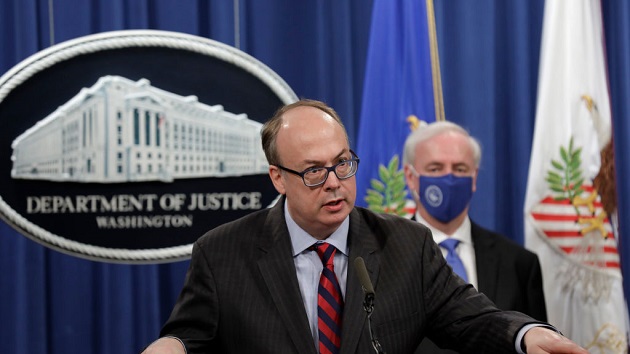
(WASHINGTON) — Federal agents searched the Virginia home of former Trump Justice Department official Jeffrey Clark on Wednesday morning, according to multiple sources with direct knowledge of the activity.
It was unclear which federal agencies conducted the search, but one neighbor who witnessed the law enforcement activity said they saw officials entering and exiting the Lorton, Virginia, home after arriving there early Wednesday. A spokesperson for the Fairfax County, Virginia, Police Department told ABC News that its officers assisted with law enforcement activity at the house, but deferred to the Justice Department for further comment.
A spokesperson for the U.S. Attorney’s Office in Washington, D.C., said they “can confirm there was law enforcement activity in that area yesterday,” but declined to comment on specific individuals or the nature of that activity.
A lawyer for Clark did not respond to a request for comment. But Russ Vought, a former Trump White House official and the president of the Center for Renewing America, where Clark is now a senior fellow, said in a statement that “more than a dozen DOJ law enforcement officials searched Jeff Clark’s house in a pre-dawn raid, put him in the streets in his pajamas, and took his electronic devices.”
“The new era of criminalizing politics is worsening in the U.S.” Vought said. “This is not America, folks. The weaponization of government must end. Let me be very clear. We stand by Jeff and so must all patriots in this country.”
Clark, a former assistant attorney general for the environment and natural resources, has emerged as a key player in Donald Trump’s efforts to leverage the powers of the Justice Department to find widespread corruption in the 2020 electoral process after it became clear that Joe Biden had won.
On Thursday, the House panel investigating the Jan. 6 attack was expected to hear testimony from multiple former Justice Department officials with knowledge of Clark’s proposal of a plan to pressure states to invalidate Biden’s electoral victories after the 2020 election.
In one instance, emails obtained by ABC News in August 2021 showed how Justice Department officials rebuffed Clark’s request to urge officials in Georgia to investigate and possibly overturn Biden’s victory in the state.
An alleged plan to appoint Clark acting attorney general — which would have empowered him to pursue baseless allegations of voter fraud — prompted several Justice Department officials to threaten their resignation. Trump ultimately withdrew the plan.
Editor’s Note: This story has been updated to reflect that the eyewitness to Wednesday’s activity was not certain what agency the officials were from.
(WASHINGTON) — The Supreme Court ruling Thursday striking down a New York state law limiting the right to carry a concealed handgun in public is sparking a furor from Albany to Washington as gun safety activists and Democrats warn the ruling will lead to more guns, and more violence.
The high court’s ruling struck down the century-old law mandating that gun owners demonstrate “proper cause” to carry a concealed handgun outside of their homes.
The 6-3 opinion was authored by Justice Clarence Thomas for the conservative majority with the three liberal justices dissenting.
President Joe Biden said he was “deeply disappointed” by the ruling, saying it “contradicts both common sense and the Constitution, and should deeply trouble us all.”
“In the wake of the horrific attacks in Buffalo and Uvalde, as well as the daily acts of gun violence that do not make national headlines, we must do more as a society — not less — to protect our fellow Americans,” he said in a statement. “I urge states to continue to enact and enforce commonsense laws to make their citizens and communities safer from gun violence.”
The decision sparked an outcry among New York Democrats, including New York Democratic Gov. Kathy Hochul, who said she might call a special session of the state legislature to consider responses to the ruling — falling just six weeks after 10 Black people were killed in a mass shooting at a Buffalo supermarket.
“It is outrageous that at a moment of national reckoning on gun violence, the Supreme Court has recklessly struck down a New York law that limits those who can carry concealed weapons,” Hochul tweeted.
“In response to this ruling, we are closely reviewing our options — including calling a special session of the legislature,” she added. “Just as we swiftly passed nation-leading gun reform legislation, I will continue to do everything in my power to keep New Yorkers safe from gun violence.”
New York City’s Democratic Mayor Eric Adams warned that the ruling would allow for more guns on the streets and put residents at risk.
“We have been preparing for this decision and will continue to do everything possible to work with our federal, state, and local partners to protect our city. Those efforts will include a comprehensive review of our approach to defining ‘sensitive locations’ where carrying a gun is banned, and reviewing our application process to ensure that only those who are fully qualified can obtain a carry license,” he said in a statement.
“We will work together to mitigate the risks this decision will create once it is implemented, as we cannot allow New York to become the Wild West,” he added, ahead of a public press conference.
Congressional Democrats pan ruling after prominent mass shootings
Democrats in Washington, meanwhile, bemoaned the decision, noting that it comes as the nation grapples with a spate of high-profile mass shootings, including in Buffalo and at an elementary school in Uvalde, Texas.
“Just weeks after mass shootings in Buffalo and Uvalde, as parents and young people across the country call for an end to gun violence, the far-right Supreme court has struck down one of the nation’s oldest gun safety laws. Congress must pass gun safety legislation now,” Sen. Ed Markey, D-Mass., tweeted.
“This right-wing Supreme Court just gave in to the gun lobby and struck down a critical New York State gun control law. As we face rising gun violence across the country, this decision will only make it harder to protect New Yorkers from dangerous weapons in our communities,” added Rep. Mondaire Jones, D-N.Y.
Aligned groups advocating for stricter gun laws echoed those lamentations, painting in stark terms the violence they say could follow the ruling.
“More people will be harmed by guns as a result of today’s decision,” Everytown for Gun Safety Executive Director Eric Tirschwell said Thursday. “More people will be intimidated by guns, more people will be shot and wounded and more people will be shot and killed. By wrongly issuing this decision, and ignoring its public safety implications, the Supreme Court risks converting the Constitution into a suicide pact…”
Republicans, gun rights groups rejoice
Republicans and gun rights groups, for their part, hailed the ruling, casting it as a needed protection of the Second Amendment.
“Today’s SCOTUS decision reaffirms what we already knew: the right to keep and bear arms shall not be infringed,” tweeted Sen. Steve Daines, R-Mont. “This is a major victory for law-abiding gun owners across America.”
“While states like NY have tried to restrict your Constitutional 2nd Amendment right through burdensome laws and regulations, today’s Supreme Court ruling rightfully ensures the right of all law-abiding Americans to defend themselves without unnecessary government interference,” said House Minority Leader Kevin McCarthy, R-Calif., in a tweet.
The National Rifle Association, the nation’s preeminent gun rights group, praised the ruling as a “watershed win.”
“The right to self-defense and to defend your family and loved ones should not end at your home. This ruling brings life-saving justice to law-abiding Americans who have lived under unconstitutional regimes all across our country, particularly in cities and states with revolving door criminal justice systems, no cash bail and increased harassment of law-enforcement,” NRA chief Wayne LaPierre said in a statement.
Ruling comes as Congress pushes gun reform bill
The reactions come as Congress is working to move forward with a gun reform bill that would, among other things, provide funds for states to implement so-called red flag laws and close the “boyfriend loophole” to keep weapons out of the hands of domestic abusers, and break a 26-year long stalemate on bipartisan gun legislation on Capitol Hill.
Democrats, in particular, have been buoyed by what they say is public support for stricter gun laws, including a September Pew survey showing that majorities of Democrats and Republicans are against people carrying concealed guns without a permit.
The legislation is expected to ultimately pass, with 15 Senate Republicans voting Thursday to end debate on the bill ahead of a final vote by the end of the week and House Democrats, expected to be supportive, controlling that chamber.
(ATLANTA) — A committee of advisers at the Centers for Disease Control and Prevention voted unanimously Thursday to greenlight the Moderna COVID-19 vaccine for kids ages 6 to 17, clearing the way for parents to have one more vaccine to choose from when considering whether to inoculate their children against the virus.
At this time, the Pfizer-BioNTech COVID-19 vaccine is the only shot available for children and adolescents 5 years old and older.
Last week, the Food and Drug Administration completed the first step in the authorization process, when it signed off on the use of Moderna’s COVID-19 shots for children ages 6 and older, following a unanimous vote from their advisers.
CDC Director Dr. Rochelle Walensky is now expected to issue her official recommendation for use.
However, even with another COVID-19 vaccine on the horizon, health experts question how much the Moderna shot will truly move the needle with hesitant parents.
Children 5 years and older became eligible for a primary series of the Pfizer COVID-19 vaccine in November. Even with the shots available for nearly eight months, more than 25.4 million children over the age of 5 are still completely unvaccinated against COVID-19, with just 44% of the age group now fully vaccinated, according to CDC data.
Despite slow uptake, scientists from the CDC stressed on Thursday that vaccination against COVID-19 for children remains critical, as young people are not immune to severe disease or the long-term consequences of the virus.
As parents consider getting their children vaccinated, scientists from Moderna reported that their COVID-19 shots are safe and effective for use in children.
Myocarditis, a form of heart inflammation that can occur following vaccination, remains “rare,” according to officials. The greatest risk for the heart inflammation appears to be in adolescents 12 to 17 years old.
For children ages 5 to 11 years old, there have been no statistical significance for myocarditis, and the risk level remains “very low” for younger children, Dr. Tom Shimabukuro of the CDC COVID-19 Vaccine Coordination Unit reported.
Although officials acknowledged that adverse events following vaccination can occur, most people recover in the subsequent weeks and months.
“In general, most adverse events reported after COVID vaccines are mild and transient events like injection site and systemic reactions,” one official said.
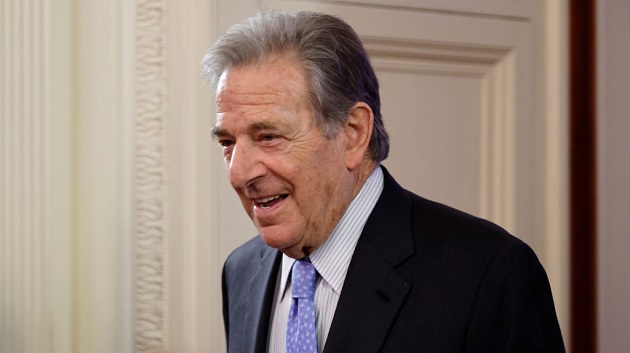
(NAPA COUNTY, Calif.) — House Speaker Nancy Pelosi’s husband, Paul Pelosi, has been charged with driving under the influence, causing injury, following his May 28 arrest, the Napa County District Attorney’s Office said.
Paul Pelosi is also charged with driving with 0.08% blood alcohol level or higher, causing injury, the office said in a press release Thursday. Both charges were filed as misdemeanors.
The 82-year-old was detained on May 28 around 11:44 p.m. and booked on two misdemeanor counts at the time, according to the Napa County Criminal Justice Network’s records.
The California Highway Patrol in Napa said at the time that units responded to a two-vehicle crash at 10:26 p.m. local time on State Route 29 at Walnut Lane. Paul Pelosi was driving a Porsche and traveling eastbound on Walnut Lane and attempted to cross SR-29 when his vehicle was hit by a party traveling northbound on SR-29 in a Jeep, according to the CHP.
Paul Pelosi’s bail had been set at $5,000 and he was released the next morning, the records show.
ABC News’ Morgan Gstalter contributed to this report.
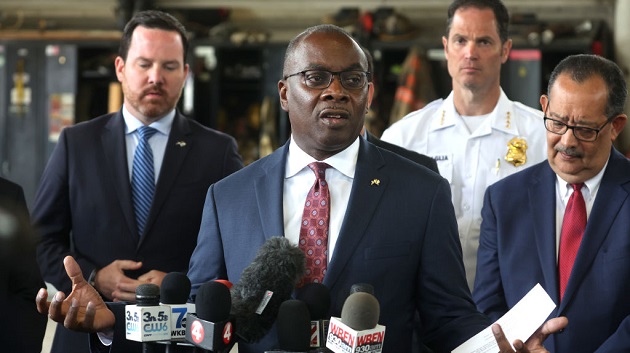
(BUFFALO, N.Y.) — The Supreme Court’s ruling Thursday striking down a New York State law limiting the right to carry a concealed handgun in public is drawing criticism from many in the state, including Buffalo Mayor Byron Brown.
“It is a disappointment and it is a dark day for sensible gun reform in this nation,” Brown told ABC News’ Linsey Davis during an interview for ABC News Live Prime.
This ruling comes weeks after 10 African Americans were gunned down on May 14 in a racially motivated mass shooting at a Tops supermarket in Buffalo, New York, and after many other mass shootings in the country. Brown added the ruling would only add to gun violence in the country and be another hurdle for law enforcement.
“I do see a concern for law enforcement. They will not know who is legally permitted to carry a weapon if there are more weapons being carried in a concealed fashion in the city of Buffalo, and across the state of New York and other communities across the country. It will make the job of law enforcement a lot more difficult,” Brown said.
While Brown is criticizing the ruling, other New York lawmakers are praising the decision.
“Today’s Supreme Court ruling upholds the Constitutional rights of law abiding citizens to keep and bear arms and correctly declares New York’s shameful attempt to shred Second Amendment rights on New Yorkers unconstitutional,” New York Congresswoman Elise Stefanik said in a statement shortly after the decision was announced.
Brown called her statement “absolutely wrong.”
“Far too many innocent Americans are losing their lives to gun violence. We don’t want to take away the rights of responsible gun owners. We certainly do not want to infringe on the Second Amendment, but it does make sense for there to be sensible gun reform that does not infringe on the rights of responsible gun owners and at the same time keeps average innocent Americans safe from unnecessary gun violence,” he said.
This ruling also coming on the heels of what could potentially be historical bipartisan gun reform legislation passage in Congress, gaining support from 15 Senate Republicans, including Senate Minority Leader Mitch McConnell.
“The timing of this ruling is very difficult, particularly when you have a bipartisan group of United States senators that have advanced sensible gun reform after years of inaction in the Congress,” Brown said.
Legislation that was pressed upon after several mass shootings, most recently in Uvalde, Texas, would be the first time in nearly 30 years that Congress has acted on gun reform.
“It took tragedies like the mass shooting, the act of domestic terror that took place in Buffalo on May 14, and other mass shootings since that time to finally get Congress to take some action– and on the day when we are seeing further movement in Congress on sensible gun reform, this ruling comes down from the United States Supreme Court. It is a disappointment,” Brown said.
(WASHINGTON) — The House Jan. 6 committee hearing on Thursday afternoon focused on what it said was a “brazen attempt” by then-President Donald Trump to misuse the Department of Justice for his own political gain.
The panel heard from three former officials directly affected by Trump’s pressure campaign: former attorney general Jeffrey Rosen, former deputy attorney general Richard Donoghue and former top DOJ lawyer Steve Engel, all of whom said they repeatedly told Trump allegations of widespread voter fraud were untrue.
All three men described in stunning detail the desperate attempts by Trump and his allies to recruit the department in his plot to overturn his 2020 election loss to Joe Biden — which culminated in a plan to replace Rosen with Jeffrey Clark, a less-qualified but loyal official who was leading the department’s environmental division.
Notably, Clark’s Virginia home was raided by federal agents on Wednesday, as the Justice Department expands its investigation into a scheme to send fake electors to Congress and the National Archives.
Chairman Bennie Thompson, D-Miss., on Thursday characterized Trump’s pressure campaign against the DOJ — as well as his attacks on local election officials, then-Vice President Mike Pence and more — as the “inner workings of what was essentially a political coup.”
“He pressured the Justice Department to act as an arm of his reelection campaign,” Thompson summarized in his closing statement. “He hoped law enforcement officials would give the appearance of legitimacy to his lies, so he and his allies had some veneer of credibility when they told the country that the election was stolen.”
Here are some key takeaways from Thursday’s hearing:
Trump’s demands included seizing voting machines
Rosen and Donoghue shed light on an emergency meeting called by a particularly “agitated” Trump on New Year’s Eve, during which the president urged the department to seize voting machines from across the country.
Rosen said the officials in the room told him no.
“There was no factual basis nor was there any legal authority to do so,” Rosen testified.
It wasn’t the only request Trump made of the department before Jan. 6. He also wanted officials to send a lawsuit to the Supreme Court regarding election fraud, appoint a special counsel to investigate alleged fraud and more, witnesses said.
One theory propagated by Trump was that Italian satellites had switched votes from him to Biden, which Donoghue described as “pure insanity.”
Rosen said the department declined all of Trump’s demands because they “did not think that they were appropriate based on the facts and the law as we understood them.”
Tense Jan. 3 White House meeting on ‘murder-suicide pact’
The second half of the hearing zoomed in on a critical meeting at the White House on Jan. 3, 2021, when Trump weighed appointing Clark to lead the Justice Department.
The committee displayed a White House call log that already referred to Clark as the “acting attorney general,” suggesting that Trump was already ready to turn over the Justice Department to Clark before the meeting.
“What do I have to lose?” Trump mused at one point in the meeting. Donoghue replied that it was “not in anyone’s best interest.”
All three live witnesses described threatening to quit if Clark was appointed, citing his lack of qualifications to serve in such a high-level role.
“I said, Mr. President, within 24, 48, 72 hours you could have hundreds and hundreds of resignations of the leadership of the entire Justice Department because of your actions, what’s that going to say about you?” Engel said.
Engel said at that point, White House counsel stepped in to describe appointing Clark as a “murder-suicide pact.”
Scott Perry emerges as key figure in DOJ pressure campaign
The committee on Thursday outlined what it said was the role Rep. Scott Perry, R-Penn., played in trying to elevate Clark to attorney general as other officials in the department pushed back on Trump’s election baseless claims.
Perry was among the group of Republicans who met with Trump on Dec. 21, 2020, on how to continue challenging Joe Biden’s victory and push claims of voter fraud.
The next day, Perry introduced Clark to Trump in a White House meeting. Clark met with the president without the knowledge of his superiors, in violation of DOJ rules.
Perry also texted White House chief of staff Mark Meadows to help with Clark’s ascension. In one message displayed during the hearing, Perry wrote: “Mark, just checking in as time continues to count down. 11 days to 1/6 and 25 days to inauguration. We gotta get going.”
Perry’s office continued to defend his actions, with his spokesperson telling ABC News Congressional Correspondent Rachel Scott on Thursday there’s “nothing new here.”
Clark was ready to inform Georgia officials the DOJ found fraud
Clark was a key player in Trump’s attempt to get the Justice Department to falsely claim voter fraud in Georgia and other states.
A draft letter Clark circulated asked Georgia’s governor and other top state officials to convene the state legislature into a special session to investigate claims of voter fraud — fraud former Attorney General Bill Barr had already deemed meritless.
Donoghue said he and Rosen had “visceral reactions” to the draft document, adding that if it had been sent it might have sparked a “constitutional crisis.”
Former White House counsel Eric Herschmann recalled what he said to Clark when he became aware of his plans.
“When he finished discussing what he planned on doing, I said ‘[expletive], congratulations. You just admitted your first step you would take as AG would be committing a felony,” Herschmann said. “‘You’re clearly the right candidate for this job.'”
“I told Clark the only thing he knew was that environmental and election both start with “e,” and I’m not even sure you know that,” he added.
Trump: ‘Just say it was corrupt and leave the rest to us’
Drawing from handwritten notes, Donoghue documented that Trump told him to, “Just say that the election was corrupt + leave the rest to me and the R. Congressmen.”
When Donoghue told Trump on a Dec. 27, 2020, phone call he couldn’t change the outcome of the election, he recalled Trump “responded very quickly — and said, ‘that’s not what I’m asking you to do — I’m just asking you to say it is corrupt and leave the rest to me and the Republican congressmen,” Donoghue recalled.
He also said Trump told him the Justice Department was “obligated to tell people that this was an illegal, corrupt election,” despite officials repeatedly telling him no widespread fraud existed and that Biden was the legitimate winner.
Rep. Adam Kinzinger, one of two Republicans on the panel, emphasized the gravity of Trump’s request, saying, “The president wanted the top Justice Department officials to declare that the election was corrupt, even though, as he knew, there was absolutely no evidence to support that statement.”
GOP members of Congress sought preemptive pardons
Former White House officials detailed in taped depositions how several Republican members of Congress requested “blanket pardons” in the final days of the Trump administration.
Among those listed by the officials were Reps. Perry, Mo Brooks of Alabama, Andy Biggs of Arizona and Louie Gohmert of Texas.
Cassidy Hutchinson, a top aide to Meadows, added in her testimony that Gaetz had been asking for a pardon since “early December.” ABC News has previously reported on an ongoing DOJ investigation on sex trafficking allegations involving Gaetz.
Hutchinson also said she “heard” that Rep. Marjorie Taylor Greene of Georgia had requested a pardon from White House lawyer Pat Phillbin and said that Rep. Jim Jordan of Ohio “talked about pardons,” and asked for an update on whether the White House was going to pardon members of Congress, but did not directly ask for one, to her knowledge.
John McEntee, a former Trump White House aide, testified that at one point, the idea of a “blanket pardon” was floated for everyone involved in Jan. 6.
One after another, Republican lawmakers dismissed of denied the allegations.
In a statement to ABC News, Brooks dismissed said pardons “were unnecessary after all,” and while Gaetz did not deny the claim, he dismissed the committee in a tweet as a “political sideshow.”
Jordan called his involvement “100% fake news” in a tweet, and Perry’s spokesperson called it “a ludicrous and soulless lie.” Greene called it “gossip and lies” and the committee a “Witch Hunt.”
(WASHINGTON) — Justice Stephen Breyer invoked the nation’s latest gun violence massacres, including those at Uvalde and Buffalo, in his dissent against the Supreme Court’s ruling to expand the Second Amendment on Thursday.
The 6-3 ruling struck down a New York state gun law that regulates the right to concealed carry, making this the most significant case regarding the Second Amendment since a 2010 decision to dismantle a nearly 30-year ban on handgun ownership in Chicago.
The decision comes as the country grapples with daily gun violence across the nation, and as investigations into the massacres at Uvalde and Buffalo are still underway.
In his dissent, Breyer noted the recent series of shootings.
“Since the start of this year alone (2022), there have already been 277 reported mass shootings—an average of more than one per day,” Breyer wrote.
Breyer argued that the court’s decision was made based on pleadings, rather than with “the benefit of discovery or an evidentiary record.”
As such, Breyer’s dissent includes a thorough recognition of instances of firearm violence within recent years.
Breyer added that this ruling “concerns the extent to which the Second Amendment prevents democratically elected officials from enacting laws to address the serious problem of gun violence…And yet the Court today purports to answer that question without discussing the nature or severity of that problem.”
Breyer wrote that the primary difference between his opinion and that of the court majority is that he believes the Second Amendment allows states to address the issues that are caused by gun violence. Therefore, Breyer believes the ruling will take away the state’s ability to do so.
“Many states have tried to address some of the dangers of gun violence just described by passing laws that limit, in various ways, who may purchase, carry, or use firearms of different kinds. The Court today severely burdens States’ efforts to do so,” Breyer wrote.
The opinion in Thursday’s case was authored by Justice Clarence Thomas for the conservative majority with the three liberal justices dissenting.
Thomas wrote that the Second and Fourteenth Amendments protect an individual’s right to carry a handgun for self-defense outside the home.
President Joe Biden also addressed the link between court’s decision and the recent atrocities at Uvalde and Buffalo.
“In the wake of the horrific attacks in Buffalo and Uvalde, as well as the daily acts of gun violence that do not make national headlines, we must do more as a society — not less — to protect our fellow Americans,” he said in a statement. “I urge states to continue to enact and enforce commonsense laws to make their citizens and communities safer from gun violence.”
Just a month before the court’s ruling, 19 students and 2 teachers were murdered at Robb Elementary School in Uvalde, Texas. The shooter legally purchased an AR-15 just days before committing the massacre.
Over a week before the shooting in Uvalde, a shooter killed 10 people, all of whom were Black, at a grocery store in Buffalo, New York. The shooter had also obtained an AR-15 while following state laws.
The 13th annual Global Beatles Day will be observed on Saturday, June 25.
The event, which was founded in 2009 by an Indianapolis-based Beatles fan named Faith Cohen, was established to honor the music and ideals of the Fab Four’s members and their many contributions to the world’s culture, including their promotion of peace and love.
June 25 was chosen as the date of the annual event because that was the day in 1967 that The Beatles’ performance of “All You Need Is Love” was part of Our World, a famous satellite broadcast that aired around the world.
This year, in addition to generally celebrating the band on June 25, Cohen is asking people to send a link to a video of the 1967 “All You Need Is Love” performance, which can be found at DailyMotion.com, to “10 people who matter” as a way to spread the message of peace and love around the world.
“This could be to family, friends and coworkers or elected officials,” Cohen says. “It could be kings, queens, princes, presidents, ambassadors, military leaders and law enforcement organizations.”
She adds, “We want them to send links to 10 people or organizations that matter in running our world and keeping it going. Then we want them to ask those 10 entities to send it on to 10 more and ask them to do the same. On and on … Send the link to those in power, from the local to global level, who keep the world running.”
You also can check out Cohen’s general suggestions for 10 ways you can celebrate Global Beatles Day at the event’s official site.
Interestingly, Paul McCartney‘s headlining set at England’s Glastonbury Festival coincides with the 2022 Global Beatles Day.
Former White Stripes frontman Jack White has shared a preview of his contribution to the soundtrack for the upcoming Elvis Presley biopic, Elvis.
The song is a combination of Presley’s 1969 recording of “Power of My Love” and White’s new vocals.
“It is an incredible honor to be a part of this ‘duet’ with the king of rock n’ roll,” White writes in a message posted on his social media sites, along with a video playing a clip of the track.
Elvis, directed by Baz Luhrmann, stars Austin Butler in the title role and Tom Hanks as his manager, Colonel Tom Parker. Both the film and its soundtrack, which also features Stevie Nicks, Chris Isaak, Rufus Thomas, Gary Clark Jr., Eminem, CeeLo Green and many others, will be released this Friday, June 24.