William “Poogie” Hart, the lead singer of legendary Philadelphia soul group The Delfonics, died Thursday at age 77.
TMZ reports that, according to Hart’s son Hadi, William died of complications from surgery after he was recently brought to a Philadelphia hospital with breathing difficulties.
Hart co-founded The Delfonics with his brother Wilbert around the mid-1960s under the name The Orphonics, and the group began to take off after working with famed Philadelphia-based producer Thom Bell.
The Delfonics then went on to become one of the early purveyors of the classic Philly soul sound.
In January 1968, The Delfonics released “La-La (Means I Love You)” — co-written by William and Bell — which became the group’s biggest hit, peaking at #4 on the Billboard Hot 100 and at #2 on Billboard‘s R&B singles chart.
William continued to co-write most of the group’s original songs with Bell. Over the next few years, The Delfonics would score several other top-40 hits, including “Break Your Promise,” “Ready or Not Here I Come (Can’t Hide from Love),” “You Got Yours and I’ll Get Mine” and “Didn’t I (Blow Your Mind This Time).”
“Didn’t I (Blow Your Mind This Time)” reached #10 on the Hot 100 and won a Grammy Award for Best R&B Vocal Performance by a Duo or Group.
The original Delfonics broke up in 1975, and in the ensuing years, William and his brother both led various spinoff lineups of the group.
“Didn’t I (Blow Your Mind This Time)” was featured prominently in Quentin Tarantino‘s 1997 film Jackie Brown.
Meanwhile, the chorus of “Ready or Not Here I Come” served as the basis of the popular 1996 Fugees song “Ready or Not.”
In 2014, The Delfonics were inducted into the National Rhythm & Blues Hall of Fame.
Most Star Wars fans are familiar with the struggles it took to bring George Lucas‘ groundbreaking 1977 film to life, but a new Vice TV documentary is revealing details even die-harders may not know.
Icons Unearthed: ‘Star Wars’ was produced by Nacelle Company, the folks behind the Netflix hits Movies That Made Us and Toys That Made Us.
The new two-part project boasts never-before-seen interviews with those who helped bring the film and its two sequels to life — including Marcia Lucas.
Now 76, the ex-wife of George Lucas was one of the editors who won an Oscar for helping shape the original film, following a production fraught with failing droids, crushing studio pressure, and a disastrous rough cut.
Nacelle Company CEO Brian Volk-Weiss, tells ABC Audio Marcia Lucas was a galaxy-sized “get.”
“There’s a very good reason you’ve never heard her speak, and that is because we got her first ever recorded interview.”
Marcia gave “great insight” into the production, revealing, for example, that 20th Century Fox wanted to shut down Star Wars so badly, it was ready to entirely cut out the movie’s unforgettable climactic Death Star battle to save money.
In other words, the film would have closed with Luke, Han, Leia, and Chewie flying out of the battle station, without, arguably, one of the greatest endings in movie history.
“It would have ended in the belly of the Millennium Falcon just — ‘Hey, we did it. Yay!'” Volk-Weiss laughs. “Cut to black. Like that, that’s what was on the table.”
Instead, Lucas stuck to his guns, and to the ownership of the blockbuster franchise, and the rest is history.
Marcia Lucas also brought into focus with the “complicated” relationship Lucas had with his father — which helped inspire the fatherly dynamics between Darth Vader and Luke Skywalker, Volk-Weiss says.
“As complicated as George’s relationship was with his father, it was his father just over and over again saying, ‘Bet on yourself…be your own boss.’ And…I don’t think he gets any credit or not nearly enough of the credit he deserves for the risks he took over, and over, and over again…”
After her trip to “Paradise City,” Carrie Underwood is taking the “Crazy Train” to cover another hard rock artist.
The country star has released a rendition of the classic Ozzy Osbourne power ballad “Mama, I’m Coming Home.” The performance is included on Underwood’s new Apple Music Sessions EP, which was recorded exclusively for the streaming service.
“I have always been an Ozzy Osbourne fan and ‘Mama, I’m Coming Home’ is one of my all-time favorite songs,” Underwood says.
“I’ve always thought it felt a lot like a country song, and I’ve wanted to cover it for a long time,” she adds. “This was a really fun opportunity for me to be able to finally make that happen. I hope we’ve done Ozzy proud and I hope he likes it.”
As previously reported, Axl Rose joined Underwood for performances of the Guns N’ Roses classics “Paradise City” and “Sweet Child O’ Mine” during her set at the Stagecoach festival in April. She then joined all of GN’R to sing both songs during the band’s concert in London earlier this month.
J-Hope just released his debut album, Jack in the Box, and says this marks a new chapter.
With BTS currently on an extended break, the K-pop artist spoke to Varietyabout how he plans to establish himself as an independent artist while juggling his responsibilities to his bandmates.
“I’m the first one to release a solo album. I do feel the weight on my shoulders. And I do want to start off successfully for all of our team members as well,” he admitted. “I don’t want to risk or undermine our reputation as a team with BTS. However, overall, I’m very confident and content with the album. I really poured everything into this album and conveyed the messages that I wanted to convey.”
J-Hope also revealed why he wanted “More” to be the first track released off his solo work. The song is moodier and infuses a mixture of rap and hip hop elements, which complements the “overall flow or style” of his upcoming work.
“I wanted to express a little bit of a darker side of me, as J-Hope, as an individual. This song is very powerful,” he explained. “This album is full of this type of particular style, and it definitely reveals a little darker side of me, a different aspect of myself.”
J-Hope also assuages fans’ concerns that BTS’ hiatus is indefinite — much like when One Direction split apart so its members could pursue solo ventures. “We’re not on hiatus. The team is going to remain active,” he assured.
The pause, he said, is to allow everyone to hone their craft at their own pace so that when it is time to reassemble, BTS “will have a greater synergistic effect as a team.”
Jahi Chikwendiu/The Washington Post via Getty Images
(WASHINGTON) — A Maryland man faces federal hate crime charges for allegedly posing as a federal officer and targeting gay men in a series of attacks at a Washington, D.C., park, the Department of Justice announced Thursday.
Federal prosecutors allege that Michael Thomas Pruden, 48, assaulted five men with a “chemical irritant” at Meridian Hill Park on five separate occasions between 2018 and 2021.
A federal grand jury indicted Pruden last month on five counts of assault on federal land, one count of impersonating a federal officer and a hate crimes sentencing enhancement “alleging that Pruden assaulted four of the victims because of their perceived sexual orientation,” the Justice Department said.
Meridian Hill Park is informally known in the D.C. community as “cruising” spot for gay men, according to the indictment. Pruden allegedly frequented the park at night on multiple occasions and assaulted men “by approaching them with a flashlight, giving police-style commands, and spraying them with a chemical irritant,” the indictment states.
Pruden was arrested on Thursday in Norfolk, Virginia. He faces a maximum sentence of 10 years for each assault count — which could be increased by the hate crimes sentencing enhancement — and a three-year maximum sentence for impersonating a federal officer, the Justice Department said.
Court records do not list any attorney information for the suspect.
Pruden was arrested last year in connection with a similar attack at a federal park in Alexandria, Virginia, in March 2021.
Prosecutors allege that Pruden falsely presented himself as a police officer and sprayed victims with pepper spray at Daingerfield Island, also informally known as a cruising spot for gay men.
Pruden was indicted in a Virginia district court on a charge of assault with a dangerous weapon and acquitted in August 2021.
(NEW YORK) — American men are sicker and die earlier than men living in other developed nations, according to a new report from The Commonwealth Fund, a non-profit organization focusing on public health issues.
The study looked at men from the U.S, Switzerland, Norway, New Zealand, Germany, Australia, the U.K., France, the Netherlands, Canada and Sweden and found that rates of avoidable deaths, chronic conditions and mental health needs are among the highest with American men.
Around 29% of American men reported they have multiple chronic illnesses, followed closely by Australian men at 25%, according to the study. Men living in France and Norway were the lowest at 17%.
Experts reveal how likely reinfection is from COVID with spread of omicron subvariant BA.5
“Whether it’s stubbornness, an aversion to appearing weak or vulnerable, or other reasons, men go to the doctor far less than women do,” the study’s authors wrote.
Men in the U.S. also die from avoidable deaths, classified as deaths before 75 years old, at a higher rate than men from the 10 other countries listed in the report.
The study showed that income disparities also play a factor in one’s health. Men with lower incomes tend to partake in unhealthy habits more frequently, such as drinking and smoking, leading to chronic conditions such as diabetes, obesity and heart disease.
Low-income earners are least likely to afford adequate care and can’t visit the doctor regularly, which contributes to worsening health issues, the study added. Men stressed because they are low-income earners were less likely to have a regular doctor.
The U.S. remains an outlier being the only industrialized nation without universal healthcare and has led to men avoiding getting the care they need because costs are too high, researchers noted.
Long Island school district found to have higher rates of cancer cases: Study
“Roughly 16 million U.S. men are without health insurance and affordability is the reason that people most often cite for why they do not enroll in a health plan,” they wrote.
American men also don’t think highly of the U.S. health care system, with only 37% giving it a high rating. It’s even worse among men with a below-average income, with only 32% approving the healthcare system.
There was a silver lining among men in the U.S. They have the lowest rate of prostate cancer-related deaths among the other countries studied, largely because the U.S. offers wide-ranging cancer testing and advanced treatments, the authors of the study said.
ABC News reached out to the authors of the study for comment but have not heard back.
Demetrius Freeman/The Washington Post via Getty Images
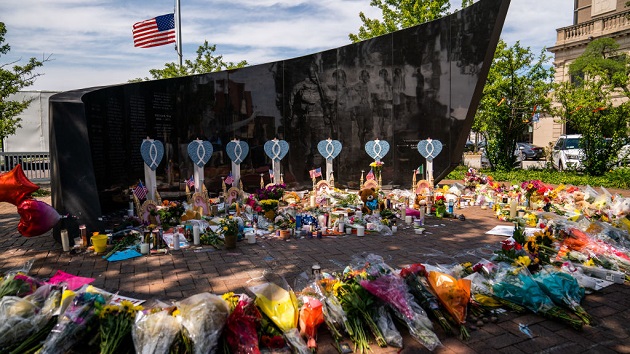
(HIGHLAND PARK, Ill.) — Rabbi Michael Sommer’s congregation has been “in a state of shock” ever since seven people were killed in a mass shooting during a July Fourth parade in Highland Park, Illinois.
Sommer, the leader of the Har Shalom congregation, told ABC News that both he and the majority of his congregants are from Highland Park. The congregation meets in nearby Northbrook.
Many of his congregants were at the suburb’s Fourth of July parade where a shooter opened fire from a rooftop.
“Everyone is in a state of grief. Everyone is looking how lucky they were to have their family safe… So everyone is trying to pull together, we hope; we all know each other here. It’s a very warm community,” Sommer said.
Highland Park is among a group of suburbs north of Chicago, including Skokie, Glencoe, and Deerfield, that have large Jewish communities and a constellation of synagogues, Kosher and Jewish restaurants, and organizations serving the Jewish community.
In the aftermath of the shooting, the Jewish community there is trying to grieve and find meaning through Jewish institutions and practice, even though leaders say that it is too soon to truly be healing.
Jewish news outlet The Forward reported that five of the seven victims were either Jewish or members of Jewish families.
One of them was Katherine Goldstein, who was a mother to two adult daughters, an avid bird watcher, and a lover of travel, according to a friend of hers who spoke with ABC News. She was 64.
Her synagogue’s rabbi, Ike Serotta, described her and her family as “just remarkable people.”
“All of them are the most incredible, gentle, kind, caring people that you could ever want to meet,” said Serotta, who leads the Makom Solel Lakeside congregation in Highland Park, told ABC News. “And Katie was just a delightful, funny, vibrant person who was really just one of the kindest people you could ever expect to meet in this world.”
While authorities have not said what motivated the suspect, investigative groups have pointed to the suspect’s social media posts as gravitating towards far-right ideas. The suspect also reportedly visited the Central Avenue Synagogue, a Chabad Jewish center in Highland Park, around Passover, leaving on his own after his presence raised concerns.
Michla Tzipporah Schanowitz, who runs the Central Avenue Synagogue with her husband Rabbi Yosef Schanowitz, described dealing with the events of July 4 as “kind of overload, trying to process the sorrow and the pain of what happened, and the shock. But also at the same time, knowing that we can do so much to bring so much light and goodness into the world.”
In the immediate aftermath of the shooting, Jewish leaders in the community scrambled to provide support to their congregants and to the broader community.
For Sommer, that meant helping out with social services at the local high school, as well as calling congregants to check in with them to see how they are doing. “I dread the phone calls I miss, or the phone number I don’t have, or who I should have called that I didn’t,” Sommer said.
And for Rabbi Yosef Schanowitz, that meant rushing to Highland Park’s hospital, where he regularly volunteers as a chaplain. He went from door to door, with “no time for small talk… I didn’t even ask people their names. They urged me to go from from door to door, and it was [for people of] all faiths,” Schanowitz said.
“I just poked my head into the door and just being introduced as I’m clergy and I just want to wish you all the best; our prayers are with you and God give you strength and bless you, and went on to the next room unless somebody needed to talk,” he added. “But in most cases, they were all traumatized, and there wasn’t a lot of back and forth discussion.”
The Jewish Sabbath, which runs from Friday night at sundown to Saturday night at sundown, exemplifies rest and joy in Jewish tradition.
“We’re supposed to celebrate Shabbat with with song and joy, and it was very subdued. And I added some outside readings to express our pain… and God’s presence in our lives to help us on this journey of healing and through our grief,” Sommer said.
Michla Tzippora Schanowitz said that ahead of the Shabbat, she worked with others to give out Shabbat candlestick kits, used for the ritual lighting of Shabbat candles at sundown on Friday. “And people were very receptive… it felt like it was able to channel their feeling of yes, bring light, spiritual light” after such a dark week.
Rabbi Yosef Schanowitz said that at the Seudah Shlishit, a third meal of the Sabbath that is usually held in synagogue between afternoon and evening services on Saturday, the congregation took some time to reflect.
“We also went around the table, and people had an opportunity to express themselves–where they had been [during the shooting], and the effect that it had on them, and who they knew that may have been hurt, and so on,” Rabbi Yosef Schanowitz said.
Serotta cautioned against speaking about the Jewish community being ready to heal so soon after the shooting.
“When something as evil and unnatural as this, I can’t say how long it will be until people are ready to start talking about the word healing,” he said.
Looking ahead, some of leaders emphasized discussions around enhancing synagogue security in light of the shooting, staying connected and finding strength with the broader community.
“We’ve always felt a responsibility one for another as a Jewish community, and also responsibility to other people who live in our community,” Michla Tzippora Schanowitz told ABC News. “We always rise to the occasion and support each other. And we’re doing that here and we’ll continue to do that.”
ABC News’ Will McDuffie and Aaron Katersky contributed to this report.
The Killers and Phoebe Bridgers performed their duet “Runaway Horses” live for the first time Thursday at the Czech Republic’s Colours of Ostrava festival.
Footage of the onstage collaboration, which was posted to The Killers’ TikTok, shows frontman Brandon Flowers singing along with Bridgers amid heavy rainfall, adding even more emotional weight to the song.
“Runaway Horses” appears on The Killers’ latest album, Pressure Machine, which was released last August.
The Killers are currently on tour in Europe and will launch a North American tour in August They’re also planning to release a new single called “Boy,” which they debuted live earlier this month.
(DAR ES SAALAM, Tanzania) — Health officials are investigating a deadly outbreak of a mystery disease in southern Tanzania that has infected over a dozen people and killed at least three of them.
Tanzania’s chief medical officer, Dr. Aifelo Sichalwe, urged the public to “remain calm” as he gave a briefing Wednesday from the capital, Dodoma. So far, a total of 13 cases of the unknown illness have been reported in Mbekenyera village in the East African nation’s Lindi region, with patients exhibiting symptoms similar to Ebola or Marburg virus diseases — fever, headache, fatigue and bleeding, especially from the nose, according to Sichalwe.
However, Sichalwe said preliminary results from laboratory testing has ruled out the Ebola and Marburg viruses in these cases, and that the patients had also tested negative for COVID-19.
The first case was recorded at Mbekenyera Health Center on July 5 and within three days, the hospital had received a second case, according to Sichalwe.
While three of the 13 patients have since succumbed to the strange disease, two who were isolated at Mbekenyera Health Center have recovered and returned home. Five patients remain in isolation, Sichalwe said.
The Tanzanian Ministry of Health has dispatched a team of experts to Lindi region to investigate the outbreak and take measures to prevent further spread of the unknown illness, such as conducting contact tracing, identifying people with similar symptoms and isolating them. Anyone who has had contact with confirmed or suspected cases are being monitored for 21 days, according to Sichalwe, who advised anyone experiencing similar symptoms to seek medical attention immediately.
The Tanzanian health ministry did not immediately respond to ABC News’ request for comment or additional information.
Dr. Fiona Braka, team lead for emergency responses at the World Health Organization’s regional office for Africa, confirmed that “WHO teams in Tanzania are working closely with” teams from the Tanzanian health ministry (MoH) “to investigate the disease further and are monitoring the situation closely.”
“The Tanzania MoH released a statement on Wednesday indicating that they have done an initial assessment and all investigations so far are negative for Ebola and Marburg,” Braka told ABC News in a statement Friday. “WHO and MoH teams are working on getting further testing done to rule out other diseases, including conducting sequencing of the samples. Currently, there is no new information on the cause of this illness.”
On Thursday, the WHO warned that Africa is facing a growing risk of outbreaks caused by zoonotic pathogens that originate in non-human animals and then switch species and infect humans. There has been a 63% increase in the number of zoonotic outbreaks in the region in the decade from 2012 to 2022, compared with 2001 to 2011, according to a new analysis by the United Nation’s global health arm.
The analysis found that between 2001 and 2022, there were 1,843 substantiated public health events recorded in the WHO African region, of which 30% were zoonotic disease outbreaks. While these numbers have increased over the last two decades, the WHO noted, there was a particular spike in 2019 and 2020 when zoonotic pathogens represented around 50% of public health events. Ebola virus disease and other viral hemorrhagic fevers constitute nearly 70% of these outbreaks, while dengue fever, anthrax, plague, monkeypox and a range of other diseases make up the remaining 30%, according to the analysis.
“Infections originating in animals and then jumping to humans have been happening for centuries, but the risk of mass infections and deaths had been relatively limited in Africa. Poor transport infrastructure acted as a natural barrier,” Dr. Matshidiso Moeti, the WHO’s regional director for Africa, said in a statement Thursday. “However, with improved transportation in Africa, there is an increased threat of zoonotic pathogens traveling to large urban centers. We must act now to contain zoonotic diseases before they can cause widespread infections and stop Africa from becoming a hotspot for emerging infectious diseases.”
The WHO warned that there can be a devastating number of cases and deaths when zoonotic disease arrive in cities, as several West African countries saw with the 2014-2016 Ebola outbreak — the largest and deadliest on record.
“We need all hands on deck to prevent and control zoonotic diseases such as Ebola, monkeypox and even other coronaviruses,” Moeti added. “Zoonotic diseases are caused by spillover events from animals to humans. Only when we break down the walls between disciplines can we tackle all aspects of the response.”
Kent Nishimura / Los Angeles Times via Getty Images
(WASHINGTON) — House Democrats will vote Friday on two measures to restore abortion rights after the Supreme Court’s overturning of Roe v. Wade.
The action comes as Democrats ramp up their political messaging on abortion ahead of the November midterm elections, hoping the issue will drive voters to the ballot box to preserve the party’s majorities in Congress.
“It’s outrageous that 50 years later, women must again fight for our most basic rights against an extremist court and Republican Party,” House Speaker Nancy Pelosi, D-Calif., said Friday in a press conference on the U.S. Capitol steps ahead of the vote.
“Democrats are honoring the basic truth: women’s most intimate health decisions are her own,” Pelosi added.
One bill, titled the Women’s Health Protection Act, would establish a statutory right for health care providers to provide, and patients to receive, abortion services. It would also prohibit states from imposing restrictions on abortion care.
The lower chamber passed this bill in September 2021, but it failed to move forward in the Senate.
Any abortion-related legislation will likely meet a similar fate in the upper chamber, where Democrats need 10 Republican votes to overcome the 60-vote filibuster.
“We must ensure that the American people remember in November, because with two more Democratic senators, we will be able to eliminate the filibuster when it comes to a woman’s right to choose and to make reproductive freedom the law of the land,” Pelosi said Friday.
The second bill to be voted on by the House on Friday, known as the Ensuring Access to Abortion Act, addresses recent efforts by state legislatures to punish Americans traveling for reproductive health care. The bill would would ensure no person acting under state law could prevent, restrict, or otherwise retaliate against a person traveling across state lines for lawful abortion services.
Senate Republicans on Thursday blocked a bill that would have both legally shielded the people who travel across states lines to receive an abortion and the providers who care for those patients.
At least 13 states have ceased nearly all abortion services after the high court’s June 24 decision ending Roe, and several Republican-controlled states are already considering legislation to bar women from seeking services out-of-state.
“Are we going to allow these lawmakers to hold American citizens hostage in their own states, forcing them to give birth?” Senate Majority Whip Dick Durbin, D-Ill., said in a floor speech on Thursday. “Does that sound like the America that we know? No it doesn’t, and we need to draw the line here and now.”
Just last week, hundreds of abortion rights activists protested outside the White House calling on President Joe Biden to do more to ensure abortion rights. Biden signed an executive order on July 8 aimed at protecting access, but said it’s ultimately up to Congress to codify Roe.
Biden’s message to the demonstrators was to “keep protesting.”
“Keep making your point. It’s critically important,” he said.