(UVALDE, Texas) — The principal of the Texas elementary school that was the site of one of the deadliest school shootings in U.S. history was among the witnesses who appeared before state lawmakers Thursday when they held the first hearing in a special investigation into the massacre.
The state committee is investigating the circumstances surrounding last month’s shooting at Robb Elementary School in Uvalde.
Police officers, lawyers and a few community members joined state lawmakers at the Uvalde City Hall building on Thursday for the first day of hearings.
In her first public comments following the shooting, Robb Elementary principal Mandy Gutierrez told San Antonio ABC affiliate KSAT she didn’t have much to say at this time.
“It was just an information session. They’re going to compile a report. And when that comes out, I may have more comment at that time,” she told the station outside city hall Thursday evening.
Gutierrez met with President Joe Biden when he traveled to Uvalde in the days after the shooting.
When asked how she was personally doing following Thursday’s hearing, she said, “I’m just concerned for [the] families and my kids.”
Nineteen children and two teachers were killed after a gunman entered the building through an unlocked door and opened fire in a classroom, the deadliest shooting at a public school in Texas history and the second-deadliest nationwide.
After 77 minutes, a tactical unit breached the classroom door and killed the gunman. Law enforcement has come under intense scrutiny for failing to act faster.
The probe will be an “objective and nonpartisan examination” of what happened, Texas state Rep. Dustin Burrows, chairman of the committee investigating the shooting, has said.
“I would say that the most respectful thing I think we can do is to try to get some of those lingering questions answered, for the people in this city,” Burrows said Thursday.
Former Texas Supreme Court Justice Eva Guzman emphasized the committee’s commitment to their task “to gather the facts…to know the truth about the story.” These facts, she said, “cannot be ignored, enhanced, or diminished.”
Guzman continued that it is her “hope and prayer” that the committee “will produce the information the legislature needs to protect our children.”
Following public remarks, the executive session began, where witnesses were interviewed in private.
Witnesses testifying Thursday included Gutierrez and Uvalde Consolidated Independent School District superintendent Hal Harrell, among other school staff. The hearings are scheduled to continue on Friday, Monday and Tuesday.
Law enforcement officials are also expected to testify, Burrows said last week.
The committee might produce a preliminary report for the public ahead of completing its full investigation, he said.
ABC News’ Laura Romero, Gina Sunseri and Emily Shapiro contributed to this report.
Surprise! Drake‘s seventh studio album Honestly, Nevermind is here!
The Canadian rapper released the project at midnight Friday, just hours after he announced it in an Instagram post Thursday evening.
Alongside a shot of the album’s artwork, Drake wrote, “7th studio album, “HONESTLY, NEVERMIND” out at midnight.”
Shortly after, the 35-year-old shared the tracklist. The album, which was co-produced by the “Way 2 Sexy” rapper, his longtime collaborator Noah “40” Shebib, his manager Oliver El-Khatib, Noel Cadastre, and Black Coffee, features a total of 14 songs, with only one feature from 21 Savage on the album’s final track titled “Jimmy Cooks.”
Honestly, Nevermind is the follow up to Drake’s Certified Lover Boy, which dropped less than a year ago in September 2021.
(WASHINGTON) — In its third hearing Thursday, the House select committee investigating the Capitol attack outlined former President Donald Trump’s pressure campaign against then-Vice President Mike Pence — and demonstrated just how close he came to danger in the Capitol on Jan. 6.
The committee detailed what it calls just one part in a “sophisticated seven-part plan” then-President Donald Trump and his allies to unlawfully overturn the 2020 election — with Thursday’s focus on Trump’s attempted coercion of Pence as a desperate last effort to accomplish their goal.
Members focused on a theory espoused by Trump’s White House attorney John Eastman — though they said Eastman never believed the theory was lawful himself — that Pence could unilaterally reject electors on Jan. 6 as Congress met to certify the 2020 election results, as well as the “relentless pressure campaign” against Pence by Trump in private and public — even as White House aides were telling Trump the scheme was illegal.
The committee argued, “that pressure campaign directly contributed to the attack on the Capitol” and put Pence’s life at serious risk, and one witness, a former federal judge and respected conservative, warned against the ongoing threat to democracy saying Trump allies are “executing a blueprint” to overturn 2024 election.
Here are some of the key arguments from the committee Thursday’s hearing:
40 FEET FROM THE MOB
The committee released never-before-seen photos of Pence on Jan. 6 showing the vice president and his family just steps from angry rioters who entered the Capitol to disrupt the electoral vote count.
“Vice President Pence and his team ultimately were led to a secure location where they stayed for the next 4 1/2 hours,” said Rep. Pete Aguilar, D-Calif., who led the hearing.
“Approximately 40 feet, that’s all there was, 40 feet between the vice president and the mob,” he said.
Greg Jacob, the vice president’s lawyer who was with him that day, told the committee he could “hear the din of rioters in the building” but was not “aware that they were as close as that.”
In a photo reported by ABC News Wednesday night, Pence and his family are seen hiding from rioters in his ceremonial Senate office just steps from the Senate chamber. Second lady Karen Pence was captured closing the window curtains — presumably afraid rioters outside the building could see her and her family.
“When Mike pence made it clear that he wouldn’t give in to Donald Trump’s scheme, Donald Trump turned the mob on him,” Chairman Bennie Thompson, D-Miss., said Thursday. “A mob that was chanting ‘hang Mike pence.’ A mob that had built a hanging gallows just outside the Capitol.”
PENCE REPEATEDLY TOLD TRUMP THE PLAN WAS ILLEGAL
The committee revealed evidence that Trump was repeatedly told that his demand for Pence to reject the certified slates of electors from key states won by Biden to block his victory was illegal — but that he and his allies continued to pressure Pence to do so on Jan. 6.
Pence’s chief of staff Marc Short told the panel that Pence had told Trump that “many times” and that he had been “very consistent.”
Short also told the committee in a videotaped interview that he believed Mark Meadows, Trump’s chief of staff, also understood that Pence lacked the power to overturn the election results.
“I believe that Mark did agree,” Short said. “I believe that’s what he told me. But as I mentioned, I think Mark told so many people so many different things that it was not something that I would necessarily accept as … resolved.”
Other figures around Trump — including White House lawyer Eric Herschmann and campaign adviser Jason Miller — told the committee that people around the president at the time believed the plan to stop the counting of Biden electors was “nuts” and “crazy.”
“You’re going to turn around and tell 78-plus million people in this country that your theory is this is how you’re going to invalidate their votes?” Herschmann said in videotaped testimony, recalling his conversation with Trump lawyer Eastman.
Herschmann said he told Eastman, “You’re going to cause riots in the streets.”
“They thought he was crazy,” Miller told the committee when asked what Trump’s lawyers thought of Eastman’s idea.
Jacob told the committee there was “no way” Pence had the authority to determine who would be the president of the United States, laying out how his team examined 230 years of history and found no such instance of this happening “since the beginning of the country.”
‘I REMEMBER THE WORD WIMP’
During Thursday’s hearing, the committee played a video of Trump aides recounting what they overheard in the Oval Office of Trump’s Jan. 6 phone call with Pence ahead of his rally on the National Mall — his last-ditch attempt to pressure Pence to block the electoral results.
The recollections confirmed contemporaneous reporting on the tenor of the heated phone call and of Trump’s anger with Pence.
“I remember the word ‘wimp,'” Trump aide Nick Luna testified to the committee. “Wimp is the word I remember.”
“The conversation was pretty heated,” Ivanka Trump told the committee in her interview. “It was a different tone than I’d heard him take with the vice president before.”
“It was something like … ‘you’re not tough enough to make that call,'” Pence national security adviser Keith Kellogg testified.
Ivanka Trump’s chief of staff, Julie Radford, told the committee that the president’s eldest daughter told her Trump called Pence “the p-word.”
EASTMAN KNEW THE LEGAL EFFORT WOULD FAIL
In one exchange with the committee, Pence counsel Jacob said Eastman acknowledged “his theory [about Pence’s power] didn’t hold water,” in the words of Aguilar.
“We had an extended discussion an hour and a half to two hours on January 5 … When I pressed him on the play, I said, ‘John, if the vice president did what you’re asking him to do, he would lose nine to nothing in the Supreme Court.'”
“Initially, he started, ‘Well, I think he would lose only 7 to 2.’ After some further discussion, he acknowledged, ‘Well, yeah, you’re right, we would lose nine to zero,'” Jacob recalled Thursday.
Jacob also said he told Eastman his theory was “just wrong,” and that if the shoe was on the other foot, he would not want Al Gore or Vice President Kamala Harris to have the power to reject slates of electors.
Jacob said Eastman replied by saying “Absolutely — Al Gore did not have a basis to do it in 2000, Kamala Harris shouldn’t be able to do it in 2024, but I think you should do it today.”
EASTMAN ASKED FOR A PARDON
The committee revealed Thursday that Eastman was still pushing Pence’s team to delay the counting of electoral votes even after rioters had been cleared from the Capitol.
But days after the attack, he emailed Trump lawyer Rudy Giuliani saying he would be interested in a pardon — which the committee has said could suggest he believed he may have acted illegally.
“I’ve decided that I should be on the pardon list, if that is still in the works,” Eastman said in his email.
Eastman also pleaded the Fifth 100 times in his interview with the committee, for which he appeared under subpoena after repeated delays.
ABC News’ Libby Cathey contributed to this report.
Could there be a Wolf Alice and Hayley Williams collaboration brewing?
During the latest episode of her Everything Is EmoBBC Sounds radio show, the Paramore singer shared her love for the English rockers after playing their Blue Weekend song “How Can I Make It OK?”
“I cannot imagine Ellie [Rowsell‘s] voice live,” Williams said of the Wolf Alice frontwoman. “It is insane on the album. And you just can’t fake that.”
Williams then added, “Ellie, I wanna sing with you, so bad.”
When news of Williams’ comments reached Wolf Alice thanks to a fan on Twitter, Rowsell replied, “I would sing with u any day queen,” alongside a heart emoji.
While you wait for a possible collaboration to materialize, you can catch Wolf Alice playing U.S. shows next week opening for Bleachers and Halsey. They’ll launch their own North American headlining tour in September.
Paramore, meanwhile, will make their return to the live stage for the first time in four years in October at the Austin City Limits and When We Were Young festivals.
(NEW YORK) — A number of forces are putting pressure on the economy right now and that has Wall Street betting on a recession sometime in the next 12 to 18 months.
Consumer prices are at a 40-year high, the ongoing global health crisis continues to disrupt supply chains and Russia’s invasion of Ukraine threatens to create a world food crisis.
The war has also helped to push gasoline prices to record levels, taking an even bigger bite out of household budgets.
Add to the mix a tight labor market and a volatile stock market and those recessionary warning signs are starting to flash yellow.
The Federal Reserve is responding by hiking interest rates to combat stubbornly high inflation. The Fed is making it more expensive for businesses and consumers to borrow money in the hopes that it will reduce consumer demand and push prices lower.
But the Fed is walking a tightrope. It wants to slow the economy just enough to bring down inflation, but not so much that it tips the economy into a recession.
The textbook definition of a recession is a significant decline in economic growth that lasts months, even years. During a recession, a country’s overall economic output declines, the unemployment rate goes up, retail sales fall, businesses cut their spending and manufacturers produce less goods.
There is a self-fulfilling aspect to recessionary psychology. If everyone believes a recession is coming, then consumers and businesses will drastically cut back their spending, sending the economy into a tailspin.
Economists say the best way to prepare for a recession is not to retrench, but instead build resilience to protect your finances from an economic shock.
You can do that by ensuring a steady stream of income. Lock in a new job or ask for that raise now. With unemployment at its lowest level in nearly half a century, it’s a job seeker’s market. A recession could quickly change all that.
Build up your cash cushion. Try to have at least six months of living expenses covered in case you lose your job or for unexpected emergencies or anticipated expenses like college tuition.
That may mean changing your buying habits and spending more on the things you “need” versus the things you “want.”
If you’re invested in the stock market, now may be a good time to rebalance your portfolio. If you need your money in the next one to three years, you might want to consider moving some of your investments into cash or the relative safety of the bond market, a money market fund, or dividend paying stocks.
If your time horizon is three years or longer and you have a diversified portfolio, experts agree that the best thing you can do is ride it out.
They say the most effective way to meet your long-term financial goals is to stay invested, stay disciplined and don’t let your emotions get the best of you.
If there’s a silver lining, it’s that recessions don’t last forever and they’re usually followed by a period of strong growth. The so-called Great Recession, which was triggered by the housing collapse in 2007, lasted 18 months. It was followed by the longest economic expansion in U.S. history.
(WASHINGTON) — Buffalo Police Commissioner Joseph Gramaglia testified on Capitol Hill this month that the recent domestic terror attack at the Tops supermarket in his city was even more deadly because the shooter was wearing military-style body armor and a ballistic helmet.
Gramaglia described how retired police officer Aaron Salter, Jr. confronted the shooter, got off multiple shots — even struck the shooter — but was unable to stop him. Salter was one of the 10 people killed in the mass shooting on May 14.
“[Salter’s] service weapon was no match for the military-style weapons and armor the perpetrator was equipped with,” he wrote to lawmakers.
Those details have renewed a debate among local elected officials and law enforcement about whether tactical body armor, which is largely unregulated across the country, has an appropriate place in civilian society.
Right after the shooting, New York signed into a law a new policy aiming to ban such gear. Gramaglia said he supports it and thinks it could be a model.
“Why do you need tactical body armor?” he told ABC News in an interview on Capitol Hill after testifying. “Unless you’re in a profession that requires the use of it. And I think the law still leaves it open that if you have a job that requires it, then you can still obtain it. But why does the average citizen need to have body armor?”
Some experts worry the new law in New York could have caused a spike in the sale of such gear and also may have been written too narrowly to actually include the type of armor the Buffalo shooter used.
At the federal level, it is against the law for felons convicted of violent crimes to tactical gear like military-style, bullet proof vest. The City of Chicago has a ban on the books too, and in Connecticut it is illegal to purchase tactical gear online. Sales in that state have to be done in person.
In reality, there are few checks and a huge range available online, that can be purchased and delivered to almost anyone in days.
The Violence Project, a non-partisan research center that studies gun violence in America, found that at least 21 times in the last 40 years a mass shooter has worn body armor during their attacks, including in Sutherland Springs, Texas; San Bernardino, California; and Aurora, Colorado.
And there is evidence the trend is growing more frequent.
“Shooters understand if they go into a public place and open fire, that this [gear] could, in a sense, help them continue to shoot and to make more of a deadly impact. But it is also a point of emulation behavior — shooters looking to previous attackers for inspiration and wanting to be like them. So there’s some imitation going on here, too,” author Mark Follman, who has covered mass shootings for more than a decade, told ABC News in a zoom interview.
“The purchase of tactical gear in and of itself tells you nothing. But if a person of concern is going out and doing this, that could be significant. In other words, a person who is already on the radar for disturbing behaviors, as we see in virtually all of these cases, they’re preceded by a long pattern, often of disturbing behavior. So in that context, if a person is then going out to purchase tactical gear or large quantities of ammunition or new weapons, that could be a warning sign,” Follman added, saying that armor in theory, could also be easier to regulate than some guns as there is no mention in the constitution about any right to anything around tactical gear.
Former counterterrorism coordinator at the Department of Homeland Security, John Cohen, agreed some state and even federal lawmakers might look to the new New York law as an example for writing new bills.
“We need to think very hard about whether we should be regulating the sales of body armor unless one is in a profession that requires its use. I see very little reason why a member of the public should be allowed to go out and buy a bulletproof vest or a ballistic shield,” Cohen, who is also an ABC News contributor, said in an interview.
Experts worry about an increase in hyper-militarized advertising both online and at gun shows focused on a need to be “combat” or “warrior” ready.
Keith Barrett runs one of the largest body armor retailer companies on the East Coast. Online and at gun shows his company sells a range of gear from ballistic helmets to concealable armor to military-style vests that are able to take several hits from riffle rounds. They sell bulletproof, removable plates designed to sit inside a vest and are made from various metals or ceramics, ranging in cost and efficacy.
At a gun show outside Philadelphia last weekend, he had one pink camouflage vest on display as well as smaller plates designed for kids’ vests.
“It’s a piece of defensive equipment that somebody can buy just in case. And that’s just a regular layperson. Now, if you’re talking about people who are active sports shooters, go to range handle weapons on a regular basis – that would be no different than ear protection or eye protection. It’s extremely common and prudent to have that piece of safety equipment,” he told ABC News during an interview outside the gun show.
Barrett, a retired Maryland State Police officer, bristled when asked about whether body armor could make it harder for law enforcement to respond to active shooter situations and said he has seen a wider range in ages and demographics of people at shows looking for armor in the last few years.
“Tell the average lawmaker who lives in his $500,000 house to go down to the inner city and live in the environment where they’re shooting at each other every day and tell them they don’t need body armor,” he added.
He concedes that as there are no federal regulations requiring background checks for the sale of body armor; at gun shows, he is taking customers at their word in terms of their criminal record.
(VESTAVIA HILLS, Ala.) — Two people were shot and killed and one injured Thursday evening at St. Stephen’s Episcopal Church in Vestavia Hills, Alabama, The Vestavia Hills Police Department said.
Police were alerted to the incident at 3775 Crosshaven Drive around 6:22 p.m.
Capt. Shane Ware said during a briefing that a lone suspect entered the church meeting and began shooting. Three people were shot and two died. Another person is receiving treatment at a hospital, Ware added.
(LONDON) — The British government has approved the extradition of Julian Assange, the founder of Wikileaks, to the United States to face charges of espionage.
Assange now has 14 days to appeal the decision of both the District Judge and the Secretary of State’s decision to order extradition.
Assange has always denied any wrongdoing.
According to a tweet by Wikileaks, Assange will appeal through the legal system to the High Court.
“Under the Extradition Act 2003, the Secretary of State must sign an extradition order if there are no grounds to prohibit the order being made,” the U.K. Home Office said in a statement following the decision. “Extradition requests are only sent to the Home Secretary once a judge decides it can proceed after considering various aspects of the case. On 17 June, following consideration by both the Magistrates Court and High Court, the extradition of Mr Julian Assange to the US was ordered. Mr Assange retains the normal 14-day right to appeal.”
According to the U.K. Home Office, all extradition requests from countries outside Europe are sent to Westminster Magistrates’ Court. The court then hears arguments from both sides before making a decision on the extradition.
“In this case, the UK courts have not found that it would be oppressive, unjust or an abuse of process to extradite Mr Assange,” the U.K. Home Office continued. “Nor have they found that extradition would be incompatible with his human rights, including his right to a fair trial and to freedom of expression, and that whilst in the US he will be treated appropriately, including in relation to his health.”
Assange is wanted in the U.S. in connection with one of the largest thefts of classified government information in American history. He was arrested in the U.K. in April 2019 and, just hours later, the United States announced charges against him for allegedly conspiring with former intelligence officer Chelsea Manning in order to gain unlawful access to a government computer.
Following his arrest by The Metropolitan Police in London in April 2019, the indictment again Assange, which was originally filed in March 2018, was released and claimed that Assange helped Manning crack a password on a Pentagon computer.
Manning was sentenced to 35 years in prison for her role in the offense in 2013. However, her sentence was commuted by President Barack Obama as one of his final acts in office in January 2017.
This is a developing story. Please check back for updates.
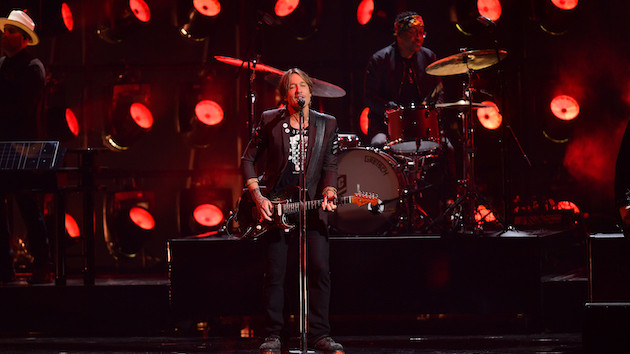
Keith Urban’s currently looking ahead to his big return to the road: His The Speed of Now Tour launches this month.
The live show veteran has played all over the place, and his current tour will traverse the U.S. and make a few stops in Canada and his native Australia. But the absolute craziest crowd he’s ever played to? It’s gotta be the UK, he tells ET Online.
“All of the UK. Every single show,” Keith reveals. “It’s like a soccer final. It is insane.”
Keith’s hoping to keep the energy high in every city he goes to, and over the years, he’s learned that it’s important to take breaks in between shows if you want to keep the energy up.
“I’m lucky where I can do a few shows and then come home for a few days. I structured the tour where I can do that,” he continues. “…It also keeps the shows fresh. ‘Cause I’ve been to plenty of shows where you can tell, ‘That person probably needs to take a break.’”
To find a stop on Keith’s The Speed of Now Tour near you, head over to his tour calendar.