Actor, director and United Nations Goodwill Ambassador Ben Stiller met with Ukrainian President Volodymyr Zelenskyy on Monday’s World Refugee Day.
Stiller called Zelenskyy his “hero,” as he gave up a career in front of the camera for public service — and that was before he became the face of defiance amid the Russian invasion.
“You quit a great acting career for this,” Stiller said to the leader, to which the former comedian replied, “Not so great as yours,” getting a laugh from the Meet The Parents star.
“But what you’ve done and the way that you’ve rallied the country and for the world, it’s really inspiring,” Stiller told Zelenskyy, calling it a “great honor” to meet him.
Stiller is visiting Poland and Ukraine as an ambassador for the United Nations High Commission for Refugees, and as such is calling for urgent global support and funding for millions of refugees worldwide.
He’s also scheduled to visit Irpin, the scene of heavy fighting early in the Russian invasion of Ukraine.
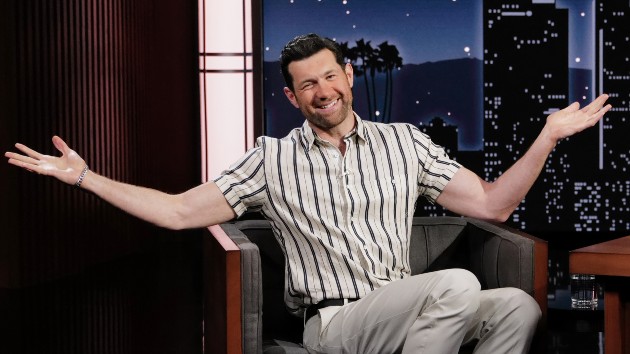
Everybody has seen obvious clickbait stories, and knows to ignore them, but when actor Billy Eichner saw one relating to his dating life, he couldn’t resist a click.
The post, titled “New Celebrity Relationships That Made Us Feel Better About 2021,” featured Eichner, the writer and star of the gay rom-com Bros, paired up with Anna Kendrick.
“Um,” Eichner responded, before tweeting it at the Pitch Perfect actress: “Hey @AnnaKendrick47 – cats out of the bag!!!”
He also added, “Guys I know this is really bad timing with all the Bros stuff but…I’m straight.”
For her part, Kendrick replied, “We can finally live our truth Billy! You’ve felt so pressured to seem like a gay man that you made #BrosMovie but you’re free now! Our love can flourish!”
However, Eichner has already moved on from his fake relationship. The Billy on the Street and The Lion King star retweeted a post from Mariah Carey, who said she was planning to watch Bros at a private New York City screening related to Pride Month.
“Can’t wait to laugh, cry, laugh some more and love @billyeichner’s #BrosMovie,” the diva captioned a short video tweet.
To that, Eichner posted, “I’m sorry @AnnaKendrick47 but I’m seeing a new woman tonight.”
Keith Urban will perform on the Today show’s Citi Concert Series on June 30.
Carrie Underwood is honoring Barbara Mandrell‘s 50th anniversary as a Grand Ole Opry member and will perform two shows at the Opry on July 30. Barbara will be in attendance.
Tiera Kennedy has officially released “Found It In You” to country radio as her debut single. The song is inspired by her love story with husband Kamren Kennedy.
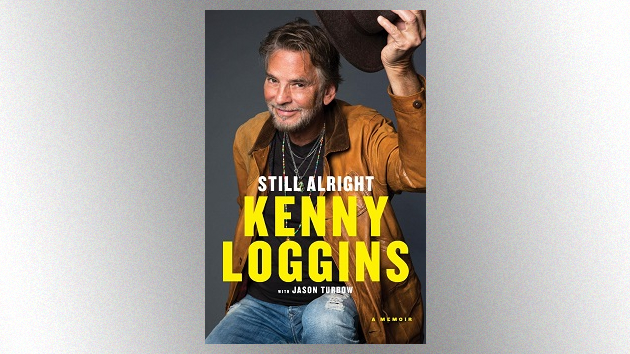
Kenny Loggins‘ new memoir, Still Alright, is out now, and in it he details his decades-long career, including his time in Loggins & Messina, his solo career, his hit movie songs, his drug use and his many famous collaborators, one of whom he identifies as his “musical soulmate.”
Loggins tells USA Today about the book, “I was very careful to tell the truth, but in a way that people wouldn’t be mad at me. I didn’t want Jimmy [Messina] going, ‘[F***] you,’ and my ex-wives, I let them both read their chapters before submitting [it].”
One of Loggins’ collaborators who gets a lot of space in the book is Michael McDonald, with whom he wrote the Doobie Brothers mega hit “What a Fool Believes” and his own solo smash “This Is It.” When asked by USA Today if he’d call McDonald his “musical soulmate,” Loggins says, “I think in some ways, yeah, I would give you that one … Every time we get together, we write something musically neither would have done alone.”
He adds, “I can’t explain it, but I think we didn’t really exploit our opportunities in the ’80s. I wish we would have written 100 songs and let 80 of them suck. When there’s chemistry there, don’t waste it.”
Loggins adds that he and McDonald are “still great friends and appreciate the history we created.”
The singer is also having a pop culture moment: His song “Footloose” has gone viral on TikTok, and his song “Danger Zone” was the only song from the original Top Gun that was retained for the soundtrack of the hit sequel Top Gun: Maverick. Loggins says he’s “dumbfounded” by the movie’s success.
“We knew something big was going to happen, but it’s just way huger than any of us imagined,” he adds.
(WASHINGTON) — The clock is ticking for Senate negotiators working to reach a final agreement on an anti-gun violence package before the Fourth of July recess.
After agreeing earlier this month on a framework for the deal — including enhanced background checks for those ages 18-21 and funding for mental health and school safety programs — negotiators trying to turn the agreement into legislative text left Washington over the weekend without a clear path forward on two outstanding elements: “red flag” laws and closing the so-called “boyfriend loophole” by expanding a ban on domestic abusers owning firearms.
Republican Sens. John Cornyn, of Texas, and Thom Tillis, of North Carolina, have been huddled with Democratic colleagues Chris Murphy, of Connecticut, and Kyrsten Sinema, of Arizona, in efforts to turn their broad consensus into an actual piece of legislation that can be considered and taken up for a vote on the Senate floor.
Though tensions ran high at the close of last week, a source close to the negotiations told ABC News on Sunday that discussions were back on track and that they were “moving in the right direction.”
But time is running out for quick action, which many in Congress would prefer.
The Senate is set to depart for a two-week recess at the close of business this week. Pushing a vote on the legislation until after the break threatens to slow momentum for a package already struggling to find a home in the Republican conference.
A senior Democratic leadership aide told ABC that bipartisan negotiators must produce bill text by Tuesday, at the latest, to keep the upper chamber on track for a vote this week.
President Joe Biden, speaking to reporters in Rehoboth Beach, Delaware, on Monday, would not say whether he thought negotiators would have the legislative text finalized by later that day. But he expressed some optimism about the state of the talks.
“I’m confident that … there’s a serious, serious negotiation that’s getting close to becoming fruition,” Biden said. He pointed to the success of some state laws in controlling gun violence but ultimately added that “it’ll be better if we had better regulation of sale of firearms, nationally and nationally mandated.”
Biden won’t get the assault weapons ban he called for in an address to the nation after the mass shooting in Uvalde, Texas, last month left 19 elementary school students and two teachers dead — days after a separate shooting in a Buffalo, New York, grocery store killed 10. Still, lawmakers working on the package in the Senate hope their proposal, if passed, could make an impact on the high tide of gun violence.
But two outstanding topics have plagued bipartisan negotiators.
The framework, announced on June 12 with the filibuster-proof support of 10 Senate Republicans, included funding to incentivize states to implement “red flag” laws to remove firearms from people who are a danger to themselves and others. Lawmakers have struggled, in recent days, to define what sort of programs would qualify for that funding.
According to Cornyn, the chief Republican working on the deal, negotiators were struggling last week over whether monies made available to states to support such programs should also be available to states with other types of violence prevention, like veterans’ courts, mental health courts and assisted outpatient treatment programs.
Some Republicans have long struggled with “red flag” programs out of concern that those provisions violate the due process rights of those accused of being a threat.
Cornyn told reporters Thursday that he and the other senators were still “grappling with the contours” of the laws but assured, as he has in floor speeches, that states who qualify for funding under the proposed legislation would be held to “the most rigorous due process standards that exist.”
The group has also stumbled over how to draft legislative text aimed at closing the “boyfriend loophole.” Under current law, those convicted of domestic violence against their married partner or against those with whom they have a child are prohibited from purchasing guns. Democrats want to expand that language to include other kinds of dating partners.
But the group working on the Senate bill has had trouble agreeing upon a legal definition of a “boyfriend,” and Cornyn has expressed concerns about how such a change might be implemented.
“We’ve got to come up with a good definition of what that actually means, because what this does is it would add a category to a bar for people being able to purchase a firearm if they fall in that category,” Cornyn said last week. “So it’s got to be clear and it’s got to be something that can actually be applied, because we are talking about pretty serious consequences.”
The difficulty finalizing these outstanding topics emphasizes the pinch that many Republicans are feeling as they weigh supporting the first significant gun reform legislation in nearly 30 years.
Cornyn said, upon announcement of the original framework, that he hoped more than the 10 original GOP senators would ultimately back the finalized legislation. But as Republicans involved have tried to drum up additional support from their conference, they faced yet another warning of the potential political consequences on Friday when Texas Republicans at the state’s party convention booed Cornyn as he tried to defend the package.
“I will not, under any circumstance, support new restrictions for law-abiding gun owners,” Cornyn told the audience. “That will always be my red line. And despite what some of you may have heard, the framework that we are working on is consistent with that red line.”
The anger from the crowd was clear — though crossing the GOP base may not ultimately sway the crucial block of 10 Republicans. Cornyn would not go up for reelection until 2026. None of the other conservatives who signed onto the initial framework will face voters during the 2022 midterm races in November.
Republican Leader Mitch McConnell last week signaled willingness to support new gun legislation if it mirrored the proposals outlined in the group’s framework.
“My view of the framework if it leads to a piece of legislation I intend to support it I think it is progress for the country and I think the bipartisan group has done the best they can to get total support and the background check enhancement for that age group I think is a step in the right direction,” McConnell said Tuesday.
Other Republicans have also said they’re amenable to the broad details. But they’ll need to see text before they can make a determination.
ABC News’ Trish Turner and Rachel Scott and Sarah Kolinovsky contributed to this report
(WASHINGTON) — Police are asking for the public’s help after a mass shooting broke out in Washington, D.C., killing a 15-year-old boy.
The Sunday night shooting took place during a festival called “Moechella,” which was celebrating Juneteenth, officials said.
The 15-year-old boy, identified by his first name Chase, was killed and three people, including a D.C. Metropolitan police officer, were injured, Metropolitan Police Chief Robert Contee said.
The officer is expected to be OK and the two civilians were listed in stable condition, officials said Sunday night.
No suspects are in custody, authorities said.
Police are collecting evidence and interviewing witnesses, Contee said in a statement Monday.
A reward up to $25,000 has been offered for information leading to the gunman’s arrest and conviction.
“The person who took Chase’s life and brought this violence to our community must be held accountable,” Contee said.
Anyone with information is urged to call the Metropolitan Police Department at 202-727-9099.
(COLUMBUS, Ohio) — Traci Arway, a special education coordinator within the public school system in Columbus, Ohio, has had nightmares about having guns in her classroom.
Arway works in multiple different schools across the district, helping students with special needs, and her nightmare has just become closer to reality, she said.
Earlier this week, Ohio Gov. Mike DeWine passed a law that makes it easier for teachers to carry guns within schools. House Bill 99 reduces the hours of training required for teachers to carry guns from 700 to less than 24.
Her response to this decision is disgust and anger, she told ABC’s “Start Here.”
“I am having a hard time connecting the dots of how arming untrained people are going to keep people safe,” Arway said.
Governor DeWine succeeded in making it easier for teachers to carry guns in classrooms, effectively weakening the impact of a 2021 state Supreme Court ruling requiring teachers to receive extensive training.
Although the majority of states prohibit firearms in K-12 schools, teachers are currently exempt in at least nine states, according to the National Conference of State Legislatures.
Arway, who has had a history of gun violence in her family, says she chooses to keep her household “gun free.”
In regards to her classroom, “I would leave the profession if I was told I had to carry,” she said.
Working at different schools and in different classrooms on a regular basis, Arway says she takes extra precautions because she is fearful of a school shooting.
“I don’t go into a building without thinking of my exit plan,” she said. “I make sure I tell at least three different people that I’m in their building and where I’ll be in the building.”
Federally, a bipartisan group of lawmakers are moving closer to an agreement that would require enhanced states’ background checks and provide states grants to encourage the creation of ‘red flag’ laws that are triggered when supposedly dangerous individuals try to purchase guns, although the negotiations are currently stalled over a few provisions.
The policy of arming teachers has resurfaced in debates surrounding gun legislation after the mass shootings in Uvalde, Texas, which left 21 dead, and Buffalo, New York, which left 10 dead.
The first weekend of June saw at least 11 mass shootings across the country, leaving 17 dead and 62 injured.
“Why are we resorting to arming teachers?” said Arway. “We need to put money, resources and effort into being proactive and not reactive.”
(UVALDE, Texas) — ABC News pieced together what happened the day Salvador Ramos allegedly killed 21 people at Robb Elementary School, using maps, video evidence and information from law enforcement.
Nearly a month after a gunman killed 19 students and two teachers inside Robb Elementary School, shattering a West Texas community, a litany of key questions about the police response remain unanswered — and some experts say the shifting narrative from state and local leaders in the massacre’s aftermath could threaten to exacerbate the trauma for those affected.
“These types of tragedies can tear communities apart,” said John Cohen, a former senior Homeland Security official who is now an ABC News contributor. “One of the ways the healing process can begin is for the community to have a clear understanding of what happened, and of what will be done to prevent something similar from happening again.”
As families of the victims lay their loved ones to rest, residents of Uvalde continue to hope for answers. They may start to get some on Tuesday, when a Texas House panel convenes to hear testimony regarding the shooting.
Here are five questions that remain unanswered:
1) Was the door to the classroom locked?
Since the very first days after the attack, law enforcement officials have said their response was stymied by the very measure enacted to keep children safe during an active shooter event: a locked door. Officials have said that the gunman entered into the classroom and immediately locked the door behind him, keeping officers outside of the room while they waited for backup, supplies, and a key that could open the “hardened” door that was unable to be kicked in.
The gunman was left inside the classroom for 77 minutes as 19 officers waited in the hallway — and many more waited outside the building — after the incident commander wrongly believed the situation had transitioned from an active shooter to a barricaded subject, law enforcement has said.
The incident commander, Uvalde School District Police Chief Pete Arredondo, said in an interview that he waited in the hallway as a janitor brought dozens of keys, which he tried on an adjacent classroom door in search of a master key — but none worked. Eventually a working one came.
But now surveillance video shows that police never tried to open the door to the classroom the gunman was in, according to a report from the San Antonio Express News that has been confirmed by sources to ABC News, although ABC News did not review the footage. While the classroom doors at the school are designed to lock automatically when they close, according to the report, new evidence suggests that the door may have been unlocked the entire time, despite the police assuming it was locked.
Officers in the hallway also had access to a “crowbar-like tool” which could have opened the door regardless of whether it was locked or not, the report said.
2) Did an active shooter alert reach the Robb community?
In recent decades, with mass shootings on the rise and advances being made in technology, school administrators and law enforcement across the country have scrambled to put in place safety protocols meant to alert staff and students in real time to a possible threat.
At Robb Elementary, shortly before the gunman entered the building on the day of the shooting, a teacher used their smart phone to trigger an alert through the school’s emergency response app — called Raptor — according to the company that makes the alert system.
But whether the alert successfully reached the Robb community remains unclear. Arnulfo Reyes, a teacher inside one of the classrooms attacked by the gunman, said sometimes his Raptor app pings with alerts about nearby incidents — but that no alert came on the day of the attack.
“You could hear the gunshots, but there was no announcement,” Reyes told ABC News in an exclusive interview this month. “I didn’t get anything, and I didn’t hear anything.”
At 11:43 a.m. — ten minutes after the rampage began — Robb Elementary School posted to Facebook that the campus had gone under lockdown “due to gunshots in the area.”
3) Were officers informed of the 911 calls coming from children inside the classroom?
While officers waited outside of the classroom for 77 minutes, children who were still alive inside the adjoining classrooms the gunman had attacked were repeatedly calling 911 pleading for help, officials have said. There were multiple 911 calls made from children inside, officials have said, including one plea to “please send police now.”
Texas Department of Public Safety Director Steven McGraw said it appeared that information may not have been relayed to officers on the ground, and Arredondo said in an interview that he was not aware of 911 calls while he waited in the hallway outside the classroom because he did not have his radio — which he said he intentionally left behind because he thought it would slow him down.
“That question will be answered,” McGraw said in the days after the shooting when asked directly if the incident commander on the ground received the 911 information. “I’m not going to share the information we have right now. Because I don’t have — I don’t have the detailed interview right now.”
Video obtained by ABC News last month taken outside Robb Elementary School as the massacre was unfolding appeared to capture a 911 dispatcher alerting officers on scene of 911 calls they had received from children inside the classroom.
4) Were responding officers appropriately trained?
Seventy-seven minutes passed from the time the gunman entered Robb Elementary until officers breached the classroom and ended his deadly siege. Law enforcement officials have since faced intense scrutiny for their failure to act faster, prompting questions about their level of preparedness.
Two months before the mass shooting, the Uvalde school district hosted an all-day training session for local police and other school-based law enforcement officers that was focused on “active shooter response.” But basic training protocols — including those involving communication channels and chain of command — went unheeded, law enforcement officials later said. A failure to secure important equipment, including shields and high-powered weapons, may have also contributed to delays.
Eventually, officers on the scene used a key retrieved from a janitor to unlock the door to the classroom where the gunman had barricaded himself. Cohen, the former Homeland Security official, said the fact that officers had to resort to such a simple method of breaching the classroom after such a long period of time reflects poorly on the officers’ planning.
“When developing an emergency response plan, it is deeply troubling that basic equipment — such as keys or other breaching devices — seemed to be unavailable,” Cohen said.
5) Are law enforcement officials cooperating with the investigation?
As the probes into the police response continue, questions have arisen about whether or not Arredondo — who has emerged as a key figure in the police response — is cooperating.
Texas House Committee chair Dustin Burrows said on Friday that Arredondo had not yet agreed to testify before the committee, but on Monday he said that all law enforcement agencies have been cooperating.
“The Uvalde Police Department has been cooperative,” said Burrows. Regarding Tuesday’s hearing, he said, “We’re going to hear from another officer with the Uvalde ISD [school district]. We’re going to hear from a member of the Department of Public Safety on the ground.”
“I want to at least compliment all the law enforcement agencies for being cooperative and providing witnesses that we have asked for,” Burrows said.
On May 31, in the immediate aftermath of the shooting, The Texas Department of Public Safety said that Arredondo had not responded “for days to a request for a follow up interview” as part of that agency’s investigation into police response to the massacre.
Arredondo’s attorney disputed that characterization, telling the Texas Tribune that Arredondo had participated in multiple interviews with DPS in the days following the shooting, but could not come in for another interview when they requested because he was covering shifts for other officers.
“At no time did he communicate his unwillingness to cooperate with the investigation,” Hyde said in the interview with the Texas Tribune. “His phone was flooded with calls and messages from numbers he didn’t recognize, and it’s possible he missed calls from DPS, but still maintained daily interaction by phone with DPS assisting with logistics as requested.”
Brett Tuggle, a veteran keyboardist who toured with the David Lee Roth Band, Fleetwood Mac, Rick Springfield and many other artists, died on Sunday, June 19, “from complications related to cancer,” Rolling Stone reports. He was 70.
“Our sweet Brett Tuggle made it home tonight,” tweeted Springfield, with whom Tuggle toured and recorded during the mid-1980s. “God bless his beautiful spirit.”
Brett is survived by his two children — son Matt and daughter Michelle.
“He was loved by his family so much,” Matt told Rolling Stone. “His family was with him throughout the entire time of his illness. He was a lovely father. He gave me music in my life.”
Tuggle was a founding member of Roth’s first solo band after Diamond Dave split with Van Halen. He was a member of Roth’s backing group from 1986 to 1994. He co-wrote several songs with the singer, including “Just Like Paradise,” which reached #6 on the Billboard Hot 100 in 1988.
In 1992, he began playing with the Mick Fleetwood side project The Zoo, and he later served as Fleetwood Mac’s touring keyboardist from 1997 to 2017. He also played keyboards on Mac members Lindsey Buckingham‘s and Stevie Nicks‘ solo tours, as well as on Buckingham and Christine McVie‘s trek in support of the duo’s 2017 collaborative album.
In a 2020 Rolling Stone interview, Tuggle explained that he lost his gig with Fleetwood Mac after Buckingham was fired from the group in 2018, claiming that he was perceived as “Lindsey’s guy.”
Most recently, Tuggle had been touring with Buckingham during Lindsey’s 2021 solo tour, but he did not appear at any of the singer/guitarist’s 2022 concerts.
Over the years, Tuggle also played with Jimmy Page & David Coverdale, John Kay and Steppenwolf, Styx‘s Tommy Shaw and many others.
(WASHINGTON) — As top White House officials reiterate that tackling high inflation remains President Joe Biden’s chief priority, his administration is debating strategies to bring prices down — and sending mixed signals about how, and how quickly, Biden may act on an issue that is top of mind for voters and weighing on his approval ratings.
The president said Monday he could make a decision as soon as this week on whether to support Congress instituting a pause on the federal gas tax of 18.4 cents per gallon, which experts have estimated could lower prices by approximately 14.72 cents per gallon.
Treasury Secretary Janet Yellen said on Sunday that the administration was open to considering such a move, citing the cost on consumers. As of Monday, the national average gas price was $4.98 per gallon.
“Gas prices have risen a great deal, and it’s clearly burdening households,” Yellen said during an appearance on “This Week” with George Stephanopoulos. “So [the president] stands ready to work with Congress and [gas tax holidays are] an idea that’s certainly worth considering.”
But Yellen’s counterpart at the Department of Energy seemingly disagreed with that notion in her own appearance Sunday.
“Part of the challenge with the gas tax, of course, is that it funds the roads,” Energy Secretary Jennifer Granholm said on CNN. “[W]e just did a big infrastructure bill to help fund the roads. So if we do — if we remove the gas tax — that takes away the funding that was just passed by Congress to be able to do that.”
“That’s one of the challenges. But I’m not saying that that’s off the table,” Granholm said.
A gas tax holiday would require approval from Congress, where Democrats hold a fragile majority. House Speaker Nancy Pelosi has previously spoken skeptically of the idea, saying it was possibly better “PR” than policy.
Biden told reporters on Monday that, as another relief measure, gas rebate cards were also under deliberation.
“That’s part of what we’re considering,” he said when asked. “That’s part of the whole operation.”
It’s unclear, however, how such rebate cards would work — whether they would be pre-loaded or provide rebates post-purchase.
A recession isn’t guaranteed: White House
Administration officials are united on one point: A recession is “not inevitable,” they have all said.
“There’s nothing inevitable about a recession,” Biden said Monday.
Yellen, Granholm and National Economic Council Director Brian Deese likewise all used variations of that language during their Sunday show appearances.
“There’s a lot of things about the economy right now that are unique,” Deese said. “Americans are spending less money on goods, they’re spending more money on services from companies … The housing market is recalibrating.”
Yellen acknowledged Sunday that inflation was “unacceptably high,” again blaming Russia’s invasion of Ukraine and long-term supply chain issues as contributors.
“These factors are unlikely to diminish immediately, but over time, I certainly expect inflation to come down,” she said.
Still, she noted, “Consumer spending remains very strong. There’s month-to-month volatility, but overall spending is strong.” And, she added, “Bank balances are high. It’s clear that most consumers, even lower-income households, continue to have buffer stocks of savings.”
With the Federal Reserve taking increasingly aggressive action to curb inflation — raising interest rates by three-quarters of a percentage point, the largest hike in nearly 30 years — Yellen said the goal was a delicate balancing act.
“[Fed] Chair [Jerome] Powell has said that his goal is to bring inflation down while maintaining a strong labor market. That’s going to take skill and luck, but I believe it’s possible,” she said Sunday.
As the administration insist there’s a way to avoid recession while reigning in inflation, Republican lawmakers are taking the opportunity to hammer Biden on higher prices — a key talking point for the GOP ahead of the November midterm elections.
“Bidenflation is costing average Americans an extra $460 a month,” Pennsylvania Rep. Lloyd Smucker tweeted on Monday.
Officials weigh more economic measures
Biden made clear Monday he has no plans to meet oil executives in person but is instead tasking top aides, like Granholm, with making his administration’s position clear.
In a letter last Wednesday, Biden called out seven oil refiners for earning record profits while oil supplies decrease. He asked the companies to increase production or risk facing White House intervention.
While the president did not specifically identify the tools he could use, Granholm hinted during a Wednesday CNN appearance that the Defense Production Act may be on the table.
In his letter, Biden also instructed his energy secretary to convene an emergency meeting with oil company executives.
Granholm will probe the companies to explain reductions in oil refining capacity, according to an ABC News report. Trade groups representing the producers contend that “U.S. refineries are running at 94 percent of capacity.”
The American Petroleum Institute also fired back at Biden’s letter, with its CEO and president arguing it was “the administration’s misguided policy agenda shifting away from domestic oil and natural gas [that] has compounded inflationary pressures and added headwinds to companies’ daily efforts to meet growing energy needs while reducing emissions.”
Separately, Yellen told federal lawmakers earlier this month that her department was reviewing Trump-era tariffs targeting China.
Economists in a March policy brief said that “eliminating the tariff would save US firms and households about $81 billion annually on direct purchases from China.”
When asked Saturday about his position on eliminating those tariffs, the president said, “We are still in the process of making up my mind.”
ABC News’ Justin Gomez contributed to this report.