Judas Priest has added another U.S. leg to the band’s ongoing 50 Heavy Metal Years tour.
The newly announced fall outing will run from October 13 in Wallingford, Connecticut, to November 29 in Houston, Texas. Queensryche will also be on the bill.
“Defending the heavy metal faith for 50 years, the Priest is back!” says frontman Rob Halford.
Tickets go on sale this Friday, June 24, at 10 a.m. local time. For the full list of dates and all ticket info, visit JudasPriest.com.
Priest first launched the 50 Heavy Metal Years tour, which celebrates the “Breaking the Law” icons’ 50th anniversary, in 2021 after being postponed from 2020 due to the COVID-19 pandemic.
Meanwhile, Halford and company are set to be inducted into the Rock & Roll Hall of Fame this year with the Musical Excellence Award. The 2022 Induction Ceremony takes place November 5 in Los Angeles.
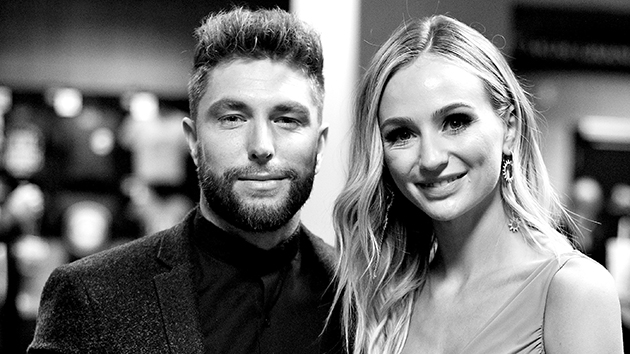
Chris Lane has a full plate right now between juggling tour dates while prepping for baby #2 with his wife, Lauren. But it sounds like he has it all under control, as he plans to bring his wife and 1-year-old son, Dutton, out on the road this summer.
To make life easier, the singer has baby-proofed the tour bus, including adding a crib. “The beautiful part about touring as well is that the family can come out anytime. I have my own tour bus that they can jump on. We have a little crib for Dutton and that’ll make things a lot easier,” he tells E! News.
The “Fix” hitmaker adds that becoming a dad has made him more “picky” when it comes to live shows, as to not leave his wife and child every weekend. But Dutton may follow in his father’s footsteps one day, as it seems he’s already enamored by music.
“I’ll play on the guitar and he is usually mesmerized by that. You can tell he really loves music just from the reactions he gives anytime there’s music playing throughout the house. I think he’s going to have the itch for it as he gets older,” Chris says. “He’s such a joy to be around. I’m so proud to be his father.”
Chris and Lauren are expecting their second child in the fall.
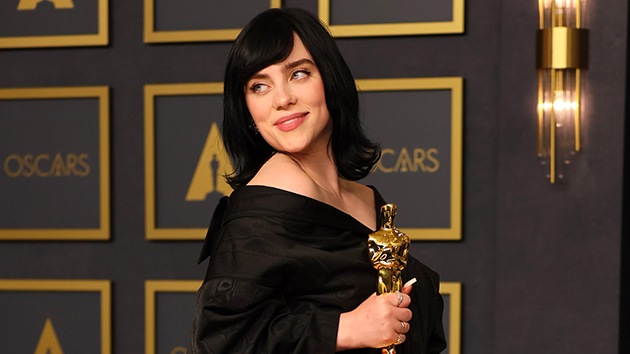
After a three-year hiatus, the legendary Glastonbury festival returns to the U.K. this Friday with Billie Eilish as its youngest-ever headliner. The Grammy winner admits she’s feeling the pressure but is trying not to “overthink it.”
“I’m constantly feeling like I’m undeserving of everything, and I think that’s a good thing… But first of all, it makes you doubt everybody because you’re like, ‘Why would you choose me?'” Billie added, noting that women aren’t asked to headline as often as their male counterparts — which makes the stakes even higher.
“If you overthink it, you might bomb. So I try to keep myself as composed as possible,” the “Bad Guy” singer admitted. “I mean, there’s always a hesitation just because you have to figure out timing wise like if everything works out.”
And while Billie is “very geeked, very excited” about her upcoming Pyramid Stage performance, she also dove into what her “pre-show” ritual looks like.
The Oscar winner revealed she arrives “two hours” before the show and will “work out for a while” before getting ready. “I do my own makeup and then I do my own hair and I have to do it a very specific way. And then I have to find an outfit and then I have to make sure the outfit fits right,” said Billie. After putting on jewelry, which she jokingly says takes “three hours,” she tapes up her ankles and shins.
“And then I warm up my voice. And then I do more hair. And then I do another warm up. And then I go on stage,” she revealed.
Following the release of her new studio album, Denim & Rhinestones, on June 10, the project has debuted at #2 on the Billboard Top Country Albums chart and #10 on the all-genre Billboard 200, marking her 10th consecutive album to debut inside the top 10 on both charts.
The project sold 31,000 equivalent album units in its first week. The American Idol winner began her chart-topping streak with her 2005 debut album, Some Hearts. Prior to Denim & Rhinestones, Carrie led both the Top Country Albums chart and Billboard Top Christian Albums chart with My Savior in 2021.
Denim‘s lead single, “Ghost Story,” is also climbing the charts and is currently inside the top 15 on country radio.
She’ll embark on the Denim & Rhinestones Tour from October through March with opening act Jimmie Allen.
Christian Bale finally joins the Marvel Cinematic Universe as the villainous Gorr the God Butcher in the new film Thor: Love and Thunder, but the former caped crusader claims he had no idea what the MCU was before he joined the project.
In an interview with Total Film Magazine that was published Tuesday, The Dark Knight star denied having any reservations about playing another comic book character, saying, “That didn’t even enter my head at all. I’d read that, and people would go, ‘Oh, look at this! He’s entered the MCU!'”
The only problem: Bale didn’t know what the acronym meant.
“I’d go, ‘I’ve done what? I haven’t entered s*** thank you very much,'” he said. “I’m like, ‘The MCU?’ I had to ask what that was.”
Love and Thunder, slated for a July 8 theatrical release, is the fourth film in the Thor franchise. It follows the god of thunder (Chris Hemsworth) on his quest for inner peace, and also stars Natalie Portman, Tessa Thompson and Russell Crowe.
Marvel is owned by Disney, the parent company of ABC News.
(AUSTIN) — The Texas state Senate heard testimony Tuesday on the deadly school shooting in Uvalde as part of a committee hearing on preventing future mass shootings in Texas. Among those testifying was Texas Department of Public Safety Director Steven McCraw, whose office is conducting one of multiple investigations into the law enforcement response to the massacre.
Uvalde school district Police Chief Pete Arredondo, who was the incident commander on site, was the lone witness in a separate hearing on the shooting held Tuesday in executive session by the Texas state House of Representatives.
Here’s how the news developed. All times Eastern.
Jun 21, 3:21 pm
McCraw concludes his testimony
After nearly five hours of testimony, the committee chairman of the Texas state Senate concluded Texas Department of Public Safety Director Steven McCraw’s portion of Tuesday’s hearing.
The panel was scheduled to hear additional testimony from experts in Texas law enforcement training and protocols, with an eye toward preventing future mass shootings in the state.
Jun 21, 3:16 pm
McCraw recommends equipping troopers with ‘go-bag’
Among the recommendations that Texas Director of Public Safety Steven McCraw made with an eye toward improving police response to future mass shootings was equipping all officers with a specialized “go-bag.”
“I’d like a go-bag for every trooper, that has the shield that I discussed … and certainly breaching tools. And then not just issued but trained on them,” McCraw said.
Jun 21, 3:08 pm
Lawmakers question why state troopers ceded command to local police chief
Multiple state senators challenged Texas Director of Public Safety Steve McCraw to explain why arriving officers from larger law enforcement agencies did not take over command during the Uvalde shooting, instead leaving those responsibilities to Pete Arredondo, the local school district police chief.
McCraw explained that the agency with the most expertise should take command — and that the school district police chief, in this circumstance, was the best person to deliver orders.
“I’m reluctant to encourage — or even think of any situation — where you’d want some level of hierarchy, where a larger police department gets to come in and take over that type of thing,” McCraw said.
“I don’t see why y’all didn’t take command once you had DPS agents inside the hall pushing to breach the door,” one state senator asked McCraw later. “Lives would have been saved.”
“They don’t have authority by law,” McCraw shot back.
Jun 21, 2:21 pm
State senator calls on chief to testify in public
New revelations from the Senate hearing have put an additional spotlight on Pete Arredondo, the embattled school district police chief who was the on-site commander during the Uvalde shooting but has largely remained silent in the wake of the mass shooting.
Arredondo has spent the day in the neighboring House chamber, testifying behind closed doors. A lawmaker on the state Senate panel called on Arredondo to appear before their committee in a public setting.
“I challenge this chief to come testify in public as to what happened here,” said Sen. Brian Birdwell, a Republican on the state Senate committee. “Don’t go hide in the House and talk privately — come to the Senate, where the public … can ask these questions.”
“Not a single responding officer ever hesitated, even for a moment, to put themselves at risk to save the children,” Arredondo told The Texas Tribune on June 9. “We responded to the information that we had and had to adjust to whatever we faced. Our objective was to save as many lives as we could, and the extraction of the students from the classrooms by all that were involved saved over 500 of our Uvalde students and teachers before we gained access to the shooter and eliminated the threat.”
Jun 21, 1:24 pm
‘Not enough training was done’ in Uvalde, McCraw says
Texas Director of Public Safety Steven McCraw alluded on multiple occasions to specific lapses in protocol and training during the Uvalde shooting — but his overall message is that police officials on site were not trained well enough.
“Obviously, not enough training was done in this situation, plain and simple. Because terrible decisions were made by the on-site commander,” McCraw said.
Asked what one recommendation he would make to prevent a repeat of Uvalde, McCraw was unequivocal: “We need to train more men.”
He also suggested that the police failures at Robb Elementary could pose lasting harm to law enforcement’s reputation.
“Mistakes were made. It should have never happened that way. And we can’t allow that ever to happen in our profession,” he said. “This set our profession back a decade, is what it did.”
Jun 21, 12:35 pm
Door to classroom might not have been locked, McCraw says
Texas Director of Public Safety Steven McCraw sought to clarify some confusion over whether the exterior and interior doors used by the Uvalde gunman to enter Robb Elementary School were locked — and whether officers even needed keys to breach the classroom where the gunman had barricaded himself.
According to McCraw, the door to the classroom containing the gunman could not be locked from inside, meaning it was likely unlocked for the duration of the shooting.
“I have great reasons to believe [the door] was never secured,” he said.
McCraw later said it appears that officers on the scene never checked whether the door to the classroom was unlocked, even as they waited for additional equipment to breach it and worked to secure a set of keys.
“How about trying the door and seeing if it’s locked?” McCraw said he would ask the officers who responded first.
Regarding the gunman’s entry into the building, McCraw confirmed previous reporting that a teacher at one point propped a door open but later closed it before the gunman arrived. He did not clarify how or why the door closed but remained unlocked.
“The only way you can lock these exterior doors in the West building … the only way to do that is from the outside. You can’t do it otherwise,” McCraw said. “So when [the teacher] knocked the rock out, it closed securely, but there’s no way for her to tell that the door was unlocked. The only way to know that the door is unlocked is to go out, close the door, OK, then try it.”
Jun 21, 12:00 pm
Police radios didn’t work well in school, McCraw confirms
Texas Director of Public Safety Steven McCraw laid out a series of communications failures that exacerbated the decision-making missteps that hampered the police response to the shooting at Robb Elementary School.
McCraw confirmed previous reporting that Pete Arredondo, the on-scene commander, arrived at the school without a radio. Later, according to McCraw, local police and Border Patrol lost radio communication signals inside the school.
Those circumstances ultimately led Arredondo and others to begin communicating with dispatchers on their cellphones, McCraw said.
“Cellphones did work, obviously, inside the school,” he said. “It’s just the portable radio devices that first responders had didn’t.”
McCraw also said “there was no duress system throughout the campus,” which caused confusion among those inside the building. The principal of the school did trigger an emergency alert system called Raptor, but the program did not appear to sufficiently inform those inside the school about the shooting.
“It’s not the same as a direct system,” he said.
Jun 21, 11:28 am
‘We’re trying to preserve life,’ commander said on police radio
Texas Department of Public Safety Director Steven McCraw walked through an updated timeline of events from the Uvalde shooting and read aloud from a transcript of police radio communications.
The transcript describes Uvalde school district Police Chief Pete Arredondo and other officers speculating on the status of those inside the classroom and painstakingly debating whether and how to breach the door.
Nearly an hour after the gunman entered the school, according to the transcript, an officer told Arredondo, “People are going to ask why we’re taking so long.”
“We’re trying to preserve life,” Arredondo replied, per the transcript.
Jun 21, 11:17 am
McCraw says commander was ‘only thing’ holding back officers
Reviewing the timeline of the Uvalde shooting, Texas Department of Public Safety Director Steven McCraw, said that enough officers and equipment arrived on-site “within three minutes” of the gunman entering the school to “neutralize” him.
McCraw said the on-scene commander, Uvalde schools Police Chief Pete Arredondo, was the “only thing stopping” officers from breaching the classroom.
Arredondo, McCraw said, “decided to place the lives of officers before the lives of children.”
In his opening statement, Texas Director of Public Safety Steven McCraw said his department’s ongoing probe has uncovered “compelling evidence” to suggest that the police response “was an abject failure.”
“Three minutes after the subject entered the west hallway, there was a sufficient number of armed officers wearing body armor, to isolate distract and neutralize the subject,” McCraw said in reviewing the timeline of events. “The only thing stopping a hallway of dedicated officers from entering room 111 and 112 was the on-scene commander, who decided to place the lives of officers before the lives of children.”
“The officers had weapons — the children had none. The officers had body armor — the children had none,” he said.
“One hour, 14 minutes and eight seconds. That’s how long the children waited and the teachers waited in rooms 111 to be rescued. And while they waited, the on-scene commander waited for radios and rifles. Then he waited for shields. Then he waited for SWAT. Lastly, he waited for key that was never needed,” McCraw said.
Jun 21, 11:10 am
Hearing gaveled in with moment of silence
Committee Chairman Sen. Robert Nichols, a Republican, gaveled the hearing to order shortly and immediately asked those present to observe a moment of silence for the lives lost in Uvalde.
Members of the panel then had an opportunity to make brief opening remarks, where lawmakers wasted little time criticizing law enforcement officials who presented shifting narratives about the Uvalde shooting in the ensuing days and weeks.
“I have never seen in my entire public policy career facts that change 180 degrees from one week to the next,” said Texas state Sen. Paul Bettencourt. “I hope today with the witnesses that we have, we can get nearer to the bottom of the facts because they’ve been elusive … we are all in the dark.”
(WASHINGTON) — The Supreme Court ruled Tuesday that the state of Maine must allow parents who receive taxpayer-funded tuition assistance payments to use them at religious schools, saying a ban on the practice had violated the First Amendment.
The decision is a significant expansion of religious liberty and opens the door for wider use of taxpayer funds for sectarian education.
“The State pays tuition for certain students at private schools — so long as the schools are not religious. That is discrimination against religion,” Chief Justice John Roberts wrote in the majority opinion joined by the court’s five other conservatives.
Justices Stephen Breyer, Elena Kagan and Sonia Sotomayor dissented.
“The Court continues to dismantle the wall of separation between church and state that the Framers fought to build,” Sotomayor wrote.
Half of Maine’s school districts — mostly in rural and sparsely populated areas of the state — do not operate their own public schools. Instead, they either contract with a neighboring district to provide public education for residents, or they provide parents with tuition assistance payments to use at a private school of their choice. About 5,000 students currently use the assistance to attend private schools.
State regulations have prohibited use of the funds at a school that promotes a specific faith or belief system and teaches academic material through a “lens of faith.”
A pair of families who want to send their children to religiously-affiliated private schools using the program sued the state alleging discrimination under the First Amendment. Two lower federal courts sided with the state, saying that the program was rightly restricted because of the First Amendment’s Establishment Clause, which prohibits government establishment of religion.
“A neutral benefit program in which public funds flow to religious organizations through the independent choices of private benefit recipients does not offend the Establishment Clause,” Roberts writes. “Maine’s decision to continue excluding religious schools from its tuition assistance program …thus promotes stricter separation of church and state than the Federal Constitution requires.”
Chief Justice Roberts noted that Maine is not required outright to fund religious schools, but that once it allows general subsidy of private education it could not discriminate. “The State retains a number of options: it could expand the reach of its public school system, increase the availability of transportation, provide some combination of tutoring, remote learning, and partial attendance, or even operate boarding schools of its own,” he wrote.
In dissent, Justice Stephen Breyer argued that the Constitution gives the states some leeway to choose how scrupulous they want to be in keeping taxpayer dollars away from religious use.
“That need is reinforced by the fact that we are today a Nation of more than 330 million people who ascribe to over 100 different religions. In that context, state neutrality with respect to religion is particularly important,” Breyer wrote.
Justice Sotomayor, in a separate dissent, sharply rebuked the court’s conservative majority.
“Today, the Court leads us to a place where separation of church and state becomes a constitutional violation,” she writes. “If a State cannot offer subsidies to its citizens without being required to fund religious exercise, any State that values its historic anti-establishment interests more than this Court does will have to curtail the support it offers to its citizens.”
Advocates for the Maine families challenging the program celebrated the court’s decision.
“We are thrilled that the Court affirmed once again that religious discrimination will not be tolerated in this country,” said First Liberty president and chief counsel Kelly Shackelford. “Parents in Maine, and all over the country, can now choose the best education for their kids without fearing retribution from the government.”
Rachel Laser, president of Americans United for Separation of Church and State, said the justices were infringing on the rights of those who believe the government must remain neutral in matters of religion.
“This nation was built on the promise of religious freedom, which has always prevented the state from using its taxing power to force citizens to fund religious worship or education,” Laser said in a statement. “Here, the court has violated that founding principle by requiring Maine to tax citizens to fund religious schools. Far from honoring religious freedom, this decision tramples the religious freedom of everyone.”
(WASHINGTON) — The House select committee investigating the Jan. 6 attack on the Capitol holds another hearing Tuesday at 1 p.m. on the pressure campaign it says former President Donald Trump and allies put on state election officials as part of a larger “seven-part scheme” to overturn the results of the 2020 election.
Please check back for updates. All times Eastern.
Jun 21, 3:47 pm
Schiff calls Trump’s action ‘unpatriotic’ but punts to DOJ on whether criminal
Rep. Adam Schiff, D-Calif., who led the hearing Tuesday focused on Trump’s pressure campaign on state election officials, appeared to speak to Attorney General Merrick Garland and other prosecutors at the Department of Justice watching the committee unfold its findings, reminding the public that lawmakers will not be the ones to bring charges to Trump and allies.
“Whether his actions were criminal will ultimately be for others to decide. But what he did was without a doubt unconstitutional. It was unpatriotic, and it was fundamentally un-American,” Schiff said.
The committee has appeared to make the case that Trump directly engaged in a conspiracy to defraud the government.
Jun 21, 3:37 pm
Mother-daughter election duo describe impact of ‘hateful’ attacks
Ruby Freeman, the mother of Shaye Moss, both former election workers in Fulton County, Georgia, sat behind her daughter in the hearing room Tuesday as Moss detailed “racist” and “hateful” threats to their lives after Trump and his attorney Rudy Giuliani falsely accused them of “smuggling” ballots in suitcases.
Both women told the committee they are now scared to use their names, and Freeman was told by the FBI she had to leave her home for two months because of threats. Rep. Adam Schiff, D-Calif., said that in Trump’s call with Georgia Secretary of State Brad Raffensperger, he mentioned Freeman’s name 18 times.
“I’ve lost my name and I’ve lost my reputation,” Freeman, a 62-year-old grandmother, said in taped testimony. “I’ve lost my sense of security, all because a group of people starting with No. 45 and his ally Rudy Giuliani decided to scapegoat me and my daughter Shaye, to push their own lies about how the presidential election was stolen.”
“I can’t believe this person has caused this much damage to me and my family,” she added. “It was horrible.”
Asked how the false attack espoused by the president and his allies affected her, Moss said it has “in every way.”
“I haven’t been anywhere at all. I’ve gained about 60 pounds. I just don’t do nothing anymore. I don’t want to go anywhere,” she said. “All because of lies — for me doing my job, same thing I’ve been doing forever.”
Jun 21, 3:30 pm
Former elections worker describes moment she learned about threats against her
Shaye Moss, a former election worker in Fulton County, Georgia, told the committee about the moment she learned Trump attorney Rudy Giuliani was falsely accusing her and her mother of smuggling ballots in suitcases.
“When I saw the video, of course the first thing that I said was, ‘Why? Why are they doing this? What’s going on?'” Moss recalled.
Moss then described the onslaught of threats and hateful messages she received online — a situation she had never been in during her 10 years as an elections worker.
“It was just a lot of horrible things,” she said.
“A lot of threats, wishing death upon me, telling me that, you know I’ll be in jail with my mother,” Moss added.
Moss opened her remarks by telling the committee what she had loved about her job, stating she took pride in helping elderly voters and college students cast their ballots.
Jun 21, 3:13 pm
Committee plays audio of Trump’s call to Raffensperger to ‘find’ votes
The committee played audio clips of the now-infamous phone call between Trump and Georgia Secretary of State Brad Raffensperger on Jan. 2, 2021, in which Trump told Raffensperger he needed to “find” 11,780 votes in Georgia — just one vote over the margin by which he trailed President-elect Joe Biden — so he could be declared the winner of an election that three separate counts in the state confirmed he lost.
The call lasted 67 minutes and appeared to follow a cycle of Trump offering false election conspiracies and Raffensperger calmly explaining to him that each one was not accurate. At one point, Trump suggested to Raffensperger that his inaction could mean he was criminally liable.
Rep. Adam Schiff, D-Calif., leading Tuesday’s hearing, also said that White House chief of staff Mark Meadows reached out to Raffensperger 18 times to set up the call with Trump.
Jun 21, 3:04 pm
Audio of Trump pressuring Georgia official aired in hearing
The committee aired audio from a call in which Trump tried to convince Frances Watson, the Georgia secretary of state’s lead elections investigator, to reverse his loss.
“You know, you have the most important job in the country right now,” Trump told her as he continued to falsely claim victory in the Peach State — which he lost to Joe Biden by some 11,000 votes.
“When the right answer comes out, you’ll be praised,” Trump said to Watson.
Jun 21, 2:55 pm
Sterling describes threats to election workers amid Trump’s pressure
Gabe Sterling, the chief oversight officer of Georgia’s election, said trying to combat misinformation spread by Trump and his team was “kind of like a shovel trying to empty out the ocean,” adding that he even argued with his own family members over the ‘big lie.’
With Rep. Adam Schiff, D-Calif., asking the Georgia election officials about threats made against them, Sterling said the “straw that broke the camel’s back” for him was a message to a Dominion contractor which said, “You committed treason — May God have mercy on your soul,” accompanied with a “slowly twisting GIF of a noose,” he said.
“I lost my temper, but it seemed necessary at the time because it was just getting worse,” Sterling said.
The committee went on to play a video of him from December 2020 in which he pleaded with Trump to “stop inspiring people to commit potential acts of violence.”
Georgia Secretary of State Brad Raffensperger was the first to testify after a short recess and was immediately asked by Rep. Adam Schiff, D-Calif., to address the false allegations of widespread voter fraud Trump and his allies pushed in the battleground state.
“Our election went remarkably smooth,” Raffensperger said. “President Biden carried the state of Georgia by approximately 12,000 votes,” he reminded.
Raffensperger, a Republican who supported Trump’s re-election bid, recounted how three separate audits in the state confirmed President Joe Biden as the winner.
“Three counts — all remarkably close — which show that President Trump did come up short,” he said.
Jun 21, 2:38 pm
GOP Sen. Johnson attempted to give fake electors to Pence, committee shows
The committee showed evidence that Sen. Ron Johnson, R-Wis., attempted to deliver slates of “fake” Trump electors from Wisconsin and Michigan to then-Vice President Mike Pence.
Text messages the House panel obtained between Johnson staffer Sean Riley and Pence aide Chris Hodgson were displayed on-screen during Tuesday’s hearing.
Riley wrote that Johnson wanted to hand over fake electors from the two states — which Joe Biden won — to Pence ahead of Jan. 6.
“Do not give that to him,” the Pence aide replied.
Jun 21, 2:32 pm
Arizona House speaker recounts faith in standing up to pressure
Arizona House Speaker Rusty Bowers emotionally recounted the pushback he and his family faced under immense pressure from Trump’s top team, who tried to convince him there was a law in Arizona that would have allowed him to overturn electors in the state — which did not legally exist.
Bowers summarized the effort to go around him and send fake Arizona electors to Washington as a “tragic parody” and recounted how people turned on him as Trump continued to espouse the ‘big lie.’
“It is painful to have friends who have been such a help to me turn on me with such rancor,” he said. “I may, in the eyes of men, not hold correct opinions or act according to their vision or convictions, but I do not take this current situation in a light manner, a fearful manner, or a vengeful manner.”
“I do not want to be a winner by cheating,” he added. “I will not play with laws I swear allegiance to with any contrived desire towards deflection of my deep, foundational desire to follow God’s will as I believe he let my conscience to embrace. How else will I ever approach Him in the wilderness of life knowing that I ask of His guidance only to show myself a coward in defending the course he led me to take.”
He mentioned the threats around his home and how it upset is daughter, Kacey Rae Bowers, who was gravely ill at the time. She passed away at age 42, just days after the attack on the Capitol, on Jan. 28, 2021.
Jun 21, 2:15 pm
RNC chairwoman Ronna McDaniel appears in videotaped testimony
Republican National Committee Chairwoman Ronna McDaniel, niece of Republican Sen. Mitt Romney, made her first appearance at a Jan. 6 hearing in video testimony where she was asked about the scheme to send “fake” electors to Congress to decertify President-elect Joe Biden’s win.
The House select committee says the RNC assisted Trump in coordinating the effort “at the president’s direct request.”
“He turned the call over to Mr. Eastman, who then preceded to talk about the importance of — helping the campaign gather these contingent electors in case any of the legal challenges that were ongoing change the results of any states,” McDaniel recounted.
“The campaign took the lead, and we just were helping them in that role,” she added, appearing to try to distance the RNC from the effort.
Jun 21, 2:07 pm
Arizona House speaker says he told Eastman twice he wouldn’t break oath
Arizona House Speaker Rusty Bowers said he told Trump election lawyer John Eastman on two occasions that he would not break his oath of office and decertify electors for President-elect Joe Biden and recalled the conversations before the committee.
“I said, ‘What would you have me do?’ He said, ‘Just do it and let the courts sorted out.’ I said, ‘You’re asking me to do something that is never been done in history, the history of the United States. And I’m gonna put my state through that without sufficient proof? That’s going to be good enough with me that I would put us through that, my state?”
Bowers recalled telling Eastman, “‘I swore to uphold both in the Constitution and in law — no, sir,'” and said that Eastman suggested he “do it” and let the courts figure it out.
Bowers also said he also received a call from Arizona Rep. Andy Biggs the morning of Jan. 6, 2021, asking Bowers if he’d support the decertification of electors. Bowers told Biggs he would not.
Jun 21, 1:58 pm
Arizona Republican gets emotional describing pressure to violate his oath
Rusty Bowers, the Republican speaker of the Arizona House of Representatives, got emotional Tuesday as he described to the committee the pressure placed on him by Trump and others to violate his oath to the Constitution.
Bowers said he was not presented with any strong evidence that would have given him doubt as to the integrity of the election.
“It is a tenet of my faith that the Constitution is divinely inspired, one of my most basic foundational beliefs,” Bowers said. “And so for me to do that because somebody just asked me to is foreign to my very being. I will not do it.”
Jun 21, 1:49 pm
Arizona House speaker rejects Trump’s claim, says he told Giuliani he wouldn’t be ‘used as a pawn’
After Trump claimed earlier Tuesday on his social media platform Truth Social that Arizona House Speaker Rusty Bowers told him the election was rigged, Bowers said that was “false.”
“I did have a conversation with the president. That certainly isn’t it. There are parts that are true. There are parts that are not,” Bowers said, asked about Trump’s claim. “Anyone, anywhere, anytime [saying] I said the election was rigged, that would not be true,” he added.
Bowers said Trump’s team claimed widespread fraud in Arizona but couldn’t provide evidence of it.
“I did not feel that the evidence, and its absence, merited the hearing,” he said, explaining that Trump attorney Rudy Giuliani wanted him to reconvene his state legislature to change the state’s vote. “I didn’t want to be used as a pawn.”
“I said, look, you are asking me to do something that is counter to my oath that I swore to the Constitution to uphold it. I also swore to the Constitution and the laws of the state of Arizona — this is totally foreign as an idea or a theory to me,” Bowers recalled. “You’re asking me to do something against my oath. I will not break my oath.”
Jun 21, 1:36 pm
Arizona House speaker faces 1st questions
Arizona House Speaker Rusty Bowers, a Republican who was pressured by Ginni Thomas, the wife of Supreme Court Justice Clarence Thomas, to decertify Biden’s victory in the state, according to emails reviewed by ABC News, as well as Trump attorney Rudy Giuliani, according to The Arizona Republic, faced the first questions from the committee on Tuesday, establishing that he did support Trump’s re-election bid.
Bowers and other state officials on the first panel did not deliver opening statements, but Rep. Adam Schiff, D-Calif., said the Republican House speaker of Arizona will talk about “conversations with the president, with Rudy Giuliani and John Eastman, what’s the president’s team asked of him and how his oath of office would not permit it.”
A spokesperson said for the Arizona House of Representatives said that Bowers is appearing in response to a committee subpoena.
-ABC News’ Ali Dukakis
Jun 21, 1:30 pm
Trump’s election lies are ‘a dangerous cancer,’ Schiff warns
Rep. Adam Schiff, D-Calif., described the pressure placed on state officials as a “dangerous precursor” to the violence the nation witnessed on Jan. 6, 2021.
“This pressure campaign brought angry phone calls and texts, armed protests, intimidation, and, all too often, threats of violence and death,” Schiff said in his opening statement. “State legislators were singled out. So, too, were statewide elections officials. Even local elections workers, diligently doing their jobs, were accused of being criminals, and had their lives turned upside down.”
Trump’s supporters, Schiff said, saw his conduct toward local officials as “a call to action.”
“The president’s lie was — and is — a dangerous cancer on the body politic,” Schiff said. “If you can convince Americans that they cannot trust their own elections, that anytime they lose, it is somehow illegitimate, then what is left but violence to determine who should govern?”
Jun 21, 1:20 pm
Cheney says committee will show Trump’s ‘direct and personal role’ in fake electors scheme
Vice Chair Liz Cheney, R-Wyo., in her opening statement, said the committee will provide evidence that Trump “had a direct and personal role” in a scheme to have key states send fake electors to Congress and for Vice President Mike Pence to overturn the results, “as did Rudy Giuliani, as did John Eastman.”
“In other words, the same people who were attempting to pressure Vice President Mike Pence to reject electoral votes illegally, were also simultaneously working to reverse the outcome of the 2020 election at the state level,” Cheney said.
Cheney said the public will learn about calls Trump made to officials of Georgia and other states, and asked, “As you listen to these tapes, keep in mind what Donald Trump already knew at the time he made those calls — he had been told over and over again that his stolen election allegations were nonsense,” she said, going on to play video testimony of Trump’s attorney general Bill Barr.
Also raising threats of violence to election workers, Cheney said, “Donald Trump didn’t care about the threats of violence” and “made no effort to stop them; he went forward with his fake allegations anyway.”
“Do not be distracted by politics,” she added, as the former president and GOP allies continue to attack the committee’s investigation. “This is serious. We cannot let America become a nation of conspiracy theories and thug violence.”
Jun 21, 1:10 pm
Chairman opens hearing
Chairman Bennie Thompson convened the committee’s fourth hearing this month shortly after 1 p.m. and previewed the pressure campaign he said Trump and his allies put on election officials in key states with the aim of overturning the 2020 election.
In his opening statement, Thompson said “pressuring public servants into betraying their oaths was a fundamental part of the playbook” and that, in 2020, only a handful of election officials in key states “stood between Donald Trump and the upending of American democracy.”
“Everything we describe today — the relentless, destructive pressure campaign on state and local officials — was all based on a lie. Donald Trump knew it,” Thompson said. “He did it anyway.”
Explaining how the U.S. elects its president with the Electoral College system, Thompson also warned that “the lie hasn’t gone away” but is still “corrupting our democratic institutions,” citing an example of a county commissioner in New Mexico who refused to certify primary results last week.
“People who believe that lie are now seeking positions of public trust,” Thompson said. “If that happens, who will make sure our institutions don’t break under the pressure? We won’t have close calls. We’ll have catastrophe.”
Jun 21, 12:18 pm
Committee subpoenas filmmaker for new footage of Trump
The House select committee has subpoenaed a British documentary filmmaker who had substantial access to Trump, his family and closest aides both before and after the Jan. 6 attack, according to a statement from the filmmaker obtained by ABC News.
A spokesperson for filmmaker Alex Holder, who began filming Trump for a project in September 2020, confirmed the subpoena, first reported by Politico.
Holder said he has “fully complied with all of the committee’s requests” and handed over footage which includes interviews with Trump, Donald Trump Jr., Ivanka Trump, Eric Trump, son-in-law Jared Kushner and Vice President Mike Pence, shot in the weeks around the Jan. 6 attack.
-ABC News’ Ali Dukakis and Benjamin Siegel
Jun 21, 12:09 pm
Former election worker to describe threats against her, family
Shaye Moss, a former election worker in Georgia, will testify Tuesday about the threats she said she and her family received in the aftermath of the 2020 race, according to a copy of her opening statement obtained by ABC News.
“Ever since December 2020, I have been under attack for just doing my job,” the statement reads. “My mom too.”
Moss will describe how they were the target of lies spread by Trump and Rudy Giuliani, including false accusations that they brought ballots into the State Farm Arena in a suitcase.
“People showed up at my grandmother’s home trying to bust the door down and conduct a citizen’s arrest of my mom and me,” her statement reads. “The threats followed me to work. People would email the general email address for our office so everyone could see their threats and the hateful messages directed at me.”
Jun 21, 12:04 pm
4th June hearing to include 4 live witnesses
Georgia Secretary of State Brad Raffensperger, whom Trump asked to “find” just one vote over the margin by which he trailed President-elect Joe Biden in a now-infamous phone call on Jan. 2, 2021, will testify before the committee this afternoon, along with his blunt-spoken deputy, Gabe Sterling, after facing backlash from their own party for pushing back on Trump’s claims of election fraud in Georgia.
Joining them will be Arizona House Speaker Rusty Bowers, who was pressured by Ginni Thomas, the wife of Supreme Court Justice Clarence Thomas, to decertify Biden’s victory in the state, according to emails reviewed by ABC News. Bowers previously described to The Arizona Republic that Rudy Giuliani also called him after the election to pressure him to involve the state legislature to manipulate results in his state.
Former Fulton County election worker Shaye Moss, who was falsely accused by Giuliani and other Republicans of election fraud and smuggling “suitcases” of illegal ballots in Atlanta on election night, will testify on a second panel. She’s said that she and her mother, another election worker, were subject to harassment and threats online even after Georgia election officials debunked fraud allegations.
Jun 21, 11:42 am
What to expect at Tuesday’s hearing
The committee’s afternoon hearing will focus on what it says was then-President Donald Trump’s “unprecedented” effort to push key state officials to reject the election results and his central role in the plot to create “fake” slates of electors to overturn Joe Biden’s victory.
Trump “drove a pressure campaign bases on lies” about the election, an aide told reporters on a briefing call Monday, and was “warned that his actions risked inciting violence” but “did it anyway.”
Rep. Adam Schiff, D-Calif., will lead the 1 p.m. ET hearing that the aide said will reveal new information obtained by the committee detailing Trump’s involvement and feature live witness testimony from Arizona and Georgia officials.
(HOUSTON) — A 5-year-old boy has died after being left in a hot car in Houston as record-high temperatures struck the city.
The boy had been inside the car, which was parked outside his home, for several hours before he was found dead on Monday, according to the Harris County Sheriff’s Office.
Houston hit a scorching 102 degrees Monday, marking the hottest temperature this early in the summer since 2011.
The family told authorities they had been preparing for the boy’s sister’s birthday party, the sheriff’s office said.
The boy’s mother was “excited, trying to get things together [for the party] … with the busyness of the activities that they were preparing for, it took them awhile to notice that the child wasn’t in the house,” Harris County Sheriff Ed Gonzalez told reporters.
The sheriff said it appeared the boy knew how to unbuckle himself from his carseat and exit his family’s car on his own, but it’s believed that on Monday the family had a rental car.
“Perhaps the child wasn’t as familiar with” the rental car, the sheriff said, noting, “the door didn’t have any kind of child safety lock.”
The sheriff’s office said “investigators will meet with the Harris County District Attorney’s Office to present their finding of the investigation.”
The little boy, who hasn’t been identified, is the fifth child to die in a hot car in the U.S. this year, according to national nonprofit KidsAndCars.org. Click here for tips on how to keep children safe from hot cars this summer.
(WASHINGTON) — Connecticut Sen. Chris Murphy, the top Democratic negotiator on a pending package to address gun violence, told reporters on Tuesday afternoon that a deal had been reached on the legislative text — and that the bill will be out soon.
“We have an agreement and the text will be coming out very shortly,” Murphy said before walking onto the Senate floor to preside.
Murphy declined to give more specific timing on when the draft bill would be introduced ahead of what leaders have signaled would be a quick vote.
A bipartisan group of senators has been working for days behind the scenes to turn a previously announced legislative framework into a specific bill that retains enough Republican support to avoid a filibuster.
Democratic leadership, including Illinois Sen. Dick Durbin, have been clear they need bill text by Tuesday to get to a vote before the July 4 recess.
The disagreements negotiators faced
Sources previously told ABC News that abortion funding had emerged as the latest snag in the Senate’s talks to finalize the legislative agreement, with the informal deadline looming at the end of Tuesday in order to keep a potential bill on track for a vote before the two-week holiday break.
Negotiators had recently been focusing on the Hyde Amendment, which forbids federal funding from being used to pay for abortions. That provision got caught up in the portion of the possible gun law dealing with mental health funding, with Republicans pushing for language barring any money in an ultimate agreement from being used pay for abortions, according to a source familiar with the matter.
That snag marked the latest curveball in the discussions.
Sen. John Cornyn of Texas, the lead Republican working on the deal, expressed optimism to ABC News earlier on Tuesday that an agreement could be reached later that day, saying that draft text would emerge “hopefully shortly.”
Still, Cornyn said — without elaborating — that certain “details” needed to be worked out.
“It’s a complicated bill and it’s been a tough negotiation,” he said.
The other core negotiators have been Sens. Murphy, Kyrsten Sinema (D-Ariz.) and Thom Tillis (R-N.C.).
The gun talks recently narrowed in on two other disagreements: funding for “red flag” laws, which would allow law enforcement to remove firearms from those deemed a danger to themselves or others, and how extensively to address the “boyfriend loophole” by expanding the kinds of domestic abusers barred from having firearms.
Sen. Durbin, the majority whip, suggested to ABC News on Tuesday that conversations over the Hyde Amendment could be resolved quickly and aides were still optimistic that an overall deal would not be derailed.
Negotiators have been pressing for a bill that can get the filibuster-proof support of 10 Republican senators, the same number who previously supported the framework announced on June 12.
Democrats want a deal to be wrapped up shortly to maintain momentum amid public outcry following high-profile mass shootings in Buffalo, New York, and Uvalde, Texas. Republicans, meanwhile, are facing calls from their base to blunt the gun-access aspects of any legislation, with that pressure on display over the weekend when Cornyn was booed at a state party convention in Texas.
When asked by ABC News on Tuesday if that made negotiations more difficult, Cornyn replied, “Oh no. No it hasn’t.”