(UVALDE, Texas) — Uvalde residents, including families of Robb Elementary School shooting victims, have signed and sent a petition against assault weapons to Randy Klein, the owner of Oasis Outback, the local sporting goods store where the gunman retrieved the AR-15 he used to shoot at the school.
ABC News has reached out for comment.
“The members of this group feel strongly about our second amendment rights and support your establishment’s commitment to selling guns and ammunition,” the petition reads. “However, we come to you today with a request.”
It continued, “Out of RESPECT for and in support of those affected by this catastrophe, we strongly urge you to cease the sale of assault rifles and the ammunition paired with them.”
The petition also asks for Klein to end the handling of gun transfers of this style of firearm from gun retail stores and manufacturers.
“Doing so will ensure that children across Uvalde County will never have to worry about a new purchase of this type of weapon,” the petition reads.
In a Wednesday meeting of the “Uvalde Strong for Gun Safety” group, a local pediatrician and gun safety advocate Roy Guerrero said that Klein will have 30 days to respond to the petition. Guerrero urged others to sign and mail in the petition themselves.
If Klein refuses to respond or meet with victims’ families, the residents behind the petition have several plans of action – including protests, media campaigns, and calls to legislators.
“I’m not here to hurt anyone’s business, but I am here to do the right thing,” Guerrero said.
Several meeting attendees and petitioners – including parents of Robb Elementary School victims – have said they are gun owners themselves and are pleading with business owners and local leaders to make a change.
“You can’t meet us at a happy medium? Just raising the age on [gun purchases]?” said Nikki Cross, the aunt of 10-year-old victim Uziyah Garcia and who is a gun owner herself. “I think that would be tremendous to start.”
In Texas, there are few restrictions on purchasing firearms. People 18 and older can legally purchase long guns, and “law-abiding Texans” can carry handguns without a license or training.
The Uvalde city council and school board have passed resolutions calling on Gov. Greg Abbot to increase the age for purchasing assault rifles.
According to the Giffords Law Center to Prevent Gun Violence, which advocates for gun control and studies gun laws across the country, four of the deadliest mass shootings in the U.S., including the Uvalde tragedy, have happened in Texas.
Abbott has blamed the mass shooting in Uvalde on mental health issues. He has said that law enforcement believes increased gun violence is due to the growing prevalence of people with mental health issues, not lax gun laws.
Meeting attendees said they plan to keep pushing for gun safety policy, in hopes that no one forgets the May 24 tragedy.
“Nobody understands what a victim’s parent is going through, or a family member is going through,” said one attendee. “They want to sit there and they want to bash [us]. But yet, you have no idea. You’re already back to your normal life like it’s nothing.”
(NEW YORK) — The monkeypox outbreak continues to grow globally with over 14,000 cases in the U.S. alone, according to the U.S. Centers for Disease Control and Prevention.
Dr. Rosamund Lewis, the World Health Organization’s Technical Lead for the monkeypox outbreak, spoke with “ABC News Live” Thursday about the latest updates and what health agencies are doing to combat the spread.
ABC NEWS: Thank you so much for your time tonight, Dr. Lewis. Big picture is the World Health Organization’s thinking about declaring monkeypox a pandemic.
LEWIS: At the moment, the situation is that there are 38,000 cases of monkeypox in the world reported.
It certainly is a concerning figure that the number of cases continues to rise. On the 23rd of July of this year, the World Health Organization declared a public health emergency of international concern. This is under the international health regulations, and it is the highest level of alert the WHO can already declare. So, we are on alert and doing everything possible.
ABC NEWS: So focusing a little bit on the U.S., [which] accounts for about a third of all cases worldwide. Why do you think that is?
LEWIS: There are a number of countries that have concerning situation. So, at the moment there are other countries in the Americas that are also seeing steep increases in the number of cases. And part of that may be the spread of the virus. Another component may be increasing access to testing. There are countries in Europe that began their outbreak earlier and they are already beginning to see some sort of leveling off of the new cases being reported.
ABC NEWS: Dr. Lewis, when you speak about control, 98% of the cases have been among men, almost all of whom are men who have sex with other men. How can you balance the need to warn gay men that they’re at higher risk without stigmatizing them?
LEWIS: It’s a really fine line to walk and it’s a really most important question, so thank you for that. It’s the most important work that any public health agency can be doing right now and working with community organizations of people who are affected by this outbreak. Contributing to stigma is not a solution and not for anyone. Because what happens with that is it actually undermines the outbreak response. Contributing to stigma, in any way, may drive people away from testing, [and] drive people away from seeking vaccines. They may even drive people away from seeking care. And so in that way, the outbreak can continue to spread.
ABC NEWS: To your point that all segments of the population feel supported, we would like to do a quick rapid fire round through some of the common questions that people may have. I hope you’re okay with that. First up, can the virus be spread among people with no symptoms?
LEWIS: This is something we don’t know yet. We do know that people can have infection without symptoms, but it is not yet known whether they can spread it at that time. That’s another area that we’re monitoring very closely.
ABC NEWS LIVE: Can you get infected twice?
LEWIS: This has occurred. People have been infected more than once. We don’t know yet how often this might happen.
ABC NEWS LIVE: And what are the first signs of infection?
LEWIS: So the first symptoms have been fever, feeling unwell, backache, muscle aches, and then followed by a rash. And now we’re seeing right now sometimes that is flipped around. Sometimes people are having a rash and then followed by fever or other symptoms, and the rash can be milder or can be more severe. We are basically seeing a whole range of how this disease can present right now.
ABC NEWS LIVE: Lastly, Dr. Lewis, with schools starting across the globe, there is a concern about cases starting to spread more among children. What do people need to know in that context?
LEWIS: So this pattern, as you described, has been very consistent. And the folks who are at higher risk and need to figure out what information, they need to protect themselves are people who are having predominantly multiple sexual partners.
It doesn’t have to be only men. It can be other groups who may be having active sexual activities with people that they don’t know so well or in situations where they’re multiple partners at once. So this could happen on a college campus, for example. Obviously, we’re talking about young people here.
The risk to children is really quite low at the moment because the spread in general population has not really manifested; it’s not taken off. We have seen some children exposed in different ways, but the numbers are really very small at the moment. Usually, that happens in a household setting and that is typical. That is very common.
It’s always been known that people can transmit through hugging, kissing, whether that be household members who also share towels, for example. And so historically, for monkeypox, that has been described as the mode of transmission-close proximity in the household.
(NEW YORK) — Some of New York City’s area have less than 60% of kids fully vaccinated against polio, according to data from the city’s Department of Health.
Just last week, officials found traces of the poliovirus in the city’s wastewater system. Officials believe the virus has been in the system since April.
This comes after an unvaccinated Rockland County man tested positive for polio and displayed symptoms of paralysis.
According to the DOH data, the Williamsburg, Battery Park City and Bedford-Stuyvesant/Ocean Hill/Brownsville zip codes all report a vaccination level under 60% for children 6 months to 5 years of age.
The Brooklyn neighborhoods that show low vaccination rates in young kids are linked to the Hasidic Jewish populations that have become increasingly adamant against vaccinations, experts say.
The overall New York City polio vaccination rate for that age group is 82.6%, according to the DOH.
Experts say the rates in low-vaccinated neighborhoods are alarming because unvaccinated populations will allow a greater spread, opening the way for more severe cases.
Adam J. Ratner, director of pediatric infectious diseases at NYU Langone Health, told ABC News that 75% of those infected with polio have no symptoms. Another 20-25%, he said, will experience mild symptoms such as fatigue or low fevers. Less than 1% of polio cases are paralytic, according to the CDC.
Because of the rarity of the Rockland County case, experts believe many individuals must have been infected in the area to lead to the paralytic case.
“When we see one case of paralysis, that very likely means that several hundred people have actually been exposed and infected with the polio virus,” Roy M. Gulick, chief of the Weill Cornell Medicine Division of Infectious Diseases, told ABC News.
New York state has some of the strictest vaccination requirements for schools across the nation. In 2019, the state eliminated all nonmedical exemptions for required vaccinations in schools, including the three-dose vaccination for polio.
So, how are so many young children in New York City unvaccinated?
Experts say there are two main factors: the COVID-19 pandemic and the spread of misinformation.
The pandemic had multiple effects on vaccination status, according to experts, including the fact that kids weren’t physically in school, so vaccination enforcement was essentially paused, and that parents weren’t taking their kids to the doctor for routine checkups and immunizations due to lockdowns.
Ratner said that despite the harsher requirements established in 2019, many communities are still playing “catch-up,” particularly because parents faced less pressure to take their kids to the doctor for routine vaccinations during remote learning.
Part of why today’s parents are not so worried about getting their kids vaccinated is because people have forgotten how terrible the virus actually is, Ratner and Gulick both said.
Practically all adults in the U.S. are vaccinated against polio because their parents watched the destruction of rampant polio in the 1950s, Gulick said.
“People may have heard of it, but others will have not,” Gulick said. “It’s the older people who remember it well, about how transmissible it was, the fear of getting polio and the dreaded complications in terms of paralysis.”
Parents today take the vaccine for granted, Gulick said. The other part, though, is misinformation.
“I’m thinking specifically of Orthodox Jewish communities in in Brooklyn, where there are some Orthodox Jewish groups that have very high levels of vaccine hesitancy,” Ratner said. “I think that the Orthodox Jewish community has unfortunately been directly targeted by anti-vaccine groups that have spread misinformation in the community, which is unfortunate.”
Walter Orenstein, a polio expert at Emory University and former director of the United States’ National Immunization Program, told ABC News that these communities have been plagued by anti-vaccination groups spreading allegations of danger with vaccines.
Orenstein said it’s all about finding “the right messenger to give the right message” when it comes to battling misinformation.
“We need to work with them, to better understand what vaccines are, how they work and all the efforts that are made to assure they’re not only effective, but safe before they’re made available,” Orenstein said.
Ratner said it’s essential for parents to understand that it is a dangerous choice to not vaccinate their kids against polio, both for those children and for their communities.
If these low-vaccinated communities do not decide to start vaccinating their children, paralytic cases will increase, Ratner said.
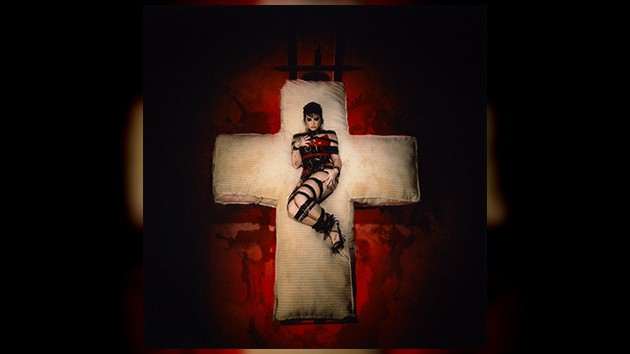
Demi Lovato is going back to their rock roots with their latest album, Holy F***.
The project, which is Demi’s eighth studio album, dropped at midnight Friday and is “stacked with ascendent pop-punk, grunge-y anthemic rock, biblical references, and diaristic revelations about inappropriate sexual relationships,” as described by Apple Music.
Although the 16-track album contains mostly solo songs, three collaborations did make the cut. Yungblud is featured on the opening track, “Freak,” while Royal and Dead Sara guest on songs titled “Eat Me” and “Help Me,” respectively.
Shortly after the release of Holy F***, the “Skin of my Teeth” singer took to social media to share what the album means to them.
“HOLY F*** gave me the freedom to express myself in ways I didn’t know were possible and find joy I’d been missing when making music,” Demi wrote. “It’s cathartic and grounded, yet exhilarating and a hell of a good time.”
“I don’t know where I’ll be in life in a year, or in five or 10 years — but what I do know is that this record is exactly where I am now, and I am damn proud of it. I hope everyone who listens is too,” they concluded.
As part of the promotion for Demi’s latest work, they took over The Tonight Show with Jimmy Fallon for three days, closing out her reign on Thursday night with a live performance of “29.”
Fans can stream Holy F*** now. They can also catch Demi on the Holy F*** tour, which kicked off earlier this month.
(NEW YORK) — A Spanish “stonehenge” has reemerged amid the country’s devastating drought, officials said.
The historic marvel, officially called the Dolmen of Guadalperal, has only been visible four times, according to officials.
Experts believe the striking circle of dozens of megalithic stones has existed since 5000 BC. However, it was first discovered by German archaeologist Hugo Obermaier in 1926 before it became flooded in 1963 due to a rural development project under Francisco Franco’s dictatorship.
Now, the structure sits in a corner of the Valdecanas reservoir located in the country’s central province of Caceres.
As Spain faces its worst drought in 60 years, officials say the water level in the reservoir has dropped to 28% capacity.
“It’s a surprise, it’s a rare opportunity to be able to access it,” archaeologist Enrique Cedillo from Madrid’s Complutense University told Reuters.
The structure itself has an unknown creator, experts say.
Dolmens are vertically arranged stones that usually support a flat boulder or capstone, according to the New World Encyclopedia. How they became erected, however, remains a mystery.
Because it is common to find human remains near or in dolmens across Europe, it is believed that the structures served as tombs, New World Encyclopedia said.
The dolmen was last visible in 2019, when Europe was facing a drought, NASA said. This 2019 drought was the first time the entire structure became visible since it was flooded in 1963, according to NASA.
A petition by Asociación Raíces de Peraleda was posted on Change.org in 2019 to have the structure moved from the reservoir. As of Thursday, it has over 45,000 signatures.
“It is a megalithic dolmen of great value that is now, for the first time, and who knows if it will be the last, fully accessible,” the petition reads.
The petition continues to read that the association launches a “voice of alarm” to officials to move the dolman, in order to “rescue” it and take “advantage of the current circumstances since it is still well preserved.”
The petition states that the structure is deteriorating, as the rock has become porous and is cracking in some areas. It warns that if the structure is not moved, it may not be strong enough to move in the future.
The Iberian peninsula where the dolman lives is at its driest in 1,200 years, with winter rains expected to diminish further, a study published by the Nature Geoscience journal stated.
(FORT LAUDERDALE, Fla.) — Florida Gov. Ron DeSantis announced Thursday that state officials have criminally charged 20 people for voting while ineligible during the 2020 general election. The alleged fraudsters are now being arrested, DeSantis said, the highest-profile move yet by the newly minted Florida office tasked with policing voting.
Flaunting the Office of Election Crimes and Security, rolled out in early July, DeSantis said during a press conference that the individuals were convicted of murder or felony sex offenses, which by Florida law stripped them of their right to vote.
“Yet they went ahead and voted anyways. That is against the law, and now they’re going to pay the price for it,” DeSantis said at the Broward County Courthouse in Fort Lauderdale.
The announcement comes just days before the state’s primary election on Aug. 23. Some voting rights groups have spoken out against the introduction of the new voting office, suggesting it might intimidate voters and slow turnout at the polls.
DeSantis said the “real protections for voter integrity” will be “live” on the ballot on Aug. 23, when voters hit the polls to cast their ballots in Florida’s primary election.
“Our new election crimes office has sprung into action to hold individuals accountable for voter fraud. Today’s actions send a clear signal to those who are thinking about ballot harvesting or fraudulently voting. If you commit an elections crime, you will be prosecuted to the fullest extent of the law,” he said.
Those charged now face third-degree felonies, up to a $5,000 fine and a maximum of 5 years in prison.
DeSantis said during the press conference that some local prosecutors might be slow to uptake and litigate election crimes. But now, with the election policing unit, Attorney General Ashley Moody and the state office, which was approved earlier this year by the GOP-controlled legislature, can bring the cases directly.
“As elected leaders, it is incumbent on us to ensure free and fair elections and instill confidence in the voting process,” Moody said at the press conference on Thursday.
“No voting system can stand without the backing and confidence of the people it serves, and thanks to Governor DeSantis, we are reinforcing that trust, and Florida’s elections system will serve as the standard-bearer for the rest of the nation.”
DeSantis’ announcement also comes on the heels of news that Andrew Warren, a Democratic Tampa Bay-area state attorney who was suspended by DeSantis earlier month, would be suing him.
Moody was also present at a press conference held by DeSantis earlier this month when the governor announced the suspension of Warren, who said he would not prosecute abortion crimes.
Warren announced on Wednesday that he’s suing the governor, claiming his removal from office violated his First Amendment rights. Warren called his suspension “political theater” on the part of DeSantis, who has long been seen as a potential contender for the White House in 2024.
On Sunday, DeSantis traveled to Arizona to speak at a Turning Point USA conference in support of Donald Trump-backed Republican Senate nominee Blake Masters and GOP gubernatorial nominee Kari Lake. He visited Carlsbad, New Mexico earlier in the day– both appearances part of a larger tour of battleground states ahead of a hotly contested midterm cycle. DeSantis will resume a national rally tour on Friday in Pennsylvania.
DeSantis also said on Thursday that his Office of Elections Integrity and Security is looking into other classes of fraud and is slated to pursue people who cast multiple ballots in the state, as well as “illegal aliens.”
“There are investigations ongoing into people that have voted in two different jurisdictions. And I imagine you are going to see prosecutions on that,” DeSantis said.
“We also have folks who are voting who are illegal aliens who are not citizens of the united states. And as we know in Florida’s constitution, the only people eligible to vote are U.S. citizens and we think it’s really important that we do that.”
Democrat gubernatorial candidate Charlie Crist called the press conference a “voter intimidation event.”
“This is about playing politics, intimidating Democratic voters, and his desire to run for president, not securing elections,” he said in a statement.
Crist’s primary opponent, Nikki Fried, also fired back at DeSantis following his announcement.
“Ron DeSantis went to Broward County today for one reason and one reason only — to intimidate voters and suppress turnout in the most Democratic counties in Florida,” she said in a statement.
(WASHINGTON) — A teenage suspect was arrested in Washington, D.C., on Thursday in connection with a mass shooting that killed one person and wounded three others, police said.
The 15-year-old boy, who lives in the northwestern part of the U.S. capital, was taken into custody by members of the Capital Area Regional Fugitive Task Force. He was then transported to a juvenile processing center where he was charged with first degree murder while armed, according to the Metropolitan Police Department of the District of Columbia, which did not release the suspect’s name.
The charge stems from a deadly shooting that took place in Northwest D.C. on the night of June 19 during a music festival called Moechella, which was calling for racial and social justice while celebrating Juneteenth, the federal holiday commemorating the emancipation of enslaved African Americans. Police said they were ordering organizers to shut down the large event when suddenly gunshots rang out in the area. Police said they located a 15-year-old boy, a woman and two men, including a Metropolitan Police Department officer, who had all been struck by gunfire.
The victims were rushed to area hospitals for treatment. The 15-year-old boy, identified as Chase Poole, ultimately died from his injuries, while the three other victims were treated for non-life threatening injuries, according to police.
Poole is one of 856 children ages 12 to 17 who have died from gun violence so far this year, according to the Gun Violence Archive, which tracks shootings in the United States from more than 7,500 law enforcement, media, government and commercial sources. Another 216 children who were 11 years old or younger have died from guns in 2022.
In a statement on June 21, Moechella organizers called the shooting a “senseless tragedy” and expressed their condolences to the victims and their families.
“Moechella has always been a peaceful demonstration of our constitutionally protected right of assembly and free speech under the 1st amendment,” the organizers added. “The purpose of this demonstration has always been to speak out against the social inequities plaguing Washington, D.C., like gun violence, like the lack of resources for the underserved community, police brutality and the need for D.C. statehood.”
Police said the Juneteenth shooting remains under investigation and that a reward of up to $25,000 is being offered for information that leads to the arrest and conviction of the person or people responsible.
Anyone with information about the case is urged to call the Metropolitan Police Department at 202-727-9099. In addition, information may be submitted anonymously to the department’s text tip line by sending a text message to 50411.
ABC News’ Beatrice Peterson contributed to this report.
(NEW YORK) — The designated press area at a recent Doug Mastriano event in Indiana County was a small, roped-off square tucked into the back corner of an airport hangar where the Republican nominee to be Pennsylvania’s governor spoke to a crowd of more than 100 people in fold-up lawn chairs.
There were no audio jacks, as are typically provided at campaign events to route high-quality sound to TV cameras, and no risers to give reporters a clear view of the stage. The five journalists in the press area left enough room for only about five more.
The scene in moderately populated Indiana County, roughly 60 miles east of Pittsburgh, is emblematic of much of the campaign for Mastriano, a right-wing state senator who has shunned the news media, relying instead on small events, Facebook, conservative press and campaign volunteers to project his message.
“It’s like an underground network,” Patricia Poprik, the Republican chair in Bucks County, told ABC News.
That doesn’t mean it’s a bad thing, Poprik said: “I can tell you: My county’s got a huge, huge amount of volunteers.”
Indeed, interviews this month with more than a dozen voters, Republican leaders and campaign workers depict an extensive grassroots movement that has energized conservatives around a candidate that had been seen by many — including some Republicans — as flawed and too extreme for the governor’s mansion, which he will reach only by defeating state Attorney General Josh Shapiro, a Democrat.
With about three months to go before Election Day, Shapiro holds a nine-point lead in the race, according to FiveThirtyEight’s polling average. His campaign touts its own bottom-up prowess, citing an app the campaign says has pulled in hundreds of volunteers and thousands of accounts that have joined the official pro-Shapiro group on Facebook.
“While Josh is campaigning across the Commonwealth, bringing people together around his positive vision for Pennsylvania’s future, Doug Mastriano continues to be defined by his dangerous extremism,” Manuel Bonder, a spokesman, said in a statement.
Some Republican experts consider Mastriano’s chances in November slim, but certainly not zero.
Nationally — and particularly before the overturning of Roe v. Wade brought the issue of abortion access back on the ballot — there had been many indicators this year that voters soured on the Democratic majority in Washington, including concerns about President Joe Biden’s handling of the economy.
“I think Mastriano is a terrible candidate,” said Josh Novotney, a Philadelphia-based Republican consultant, “but I think he actually has a shot of keeping it very close, and in a crazy situation actually winning.”
Mastriano, an Army veteran who won his state Senate seat in a 2019 special election, is staunchly anti-abortion, introducing a bill soon after taking office that would ban the procedure after six weeks. (The bill has not yet been brought to the floor for a vote.)
Tom Wolf, the incumbent Democratic governor, has vowed to veto any legislation that restricts the right to an abortion. Mastriano, meanwhile, has suggested he would sign his bill into law as well as similar ones that arrive at his desk.
“January 22, 1973 was one of the darkest days in American history. On that day, seven justices of the Supreme Court ruled that the right to life could merely be reduced to a decision of convenience,” he said in a statement this spring, referring to Roe, the decision that granted a constitutional right to abortion which was overturned by the Supreme Court this summer.
Mastriano has also called climate change “fake science,” said gay marriage should “absolutely not” be legal and argued that LGBTQ couples should not be allowed to adopt. His campaign did not respond to questions asking whether he still holds these positions.
Perhaps most notoriously, at least to his critics, Mastriano also attended then-President Donald Trump’s rally outside the White House preceding the Jan. 6 insurrection and was reportedly among a group of people who appeared in a video from that day walking through police lines at the Capitol — although he denied that he breached the security barriers, saying he and his wife left when the violence began.
“I join with all patriotic Americans in condemning what occurred in the Capitol,” he said in a statement at the time.
He was also a “point person” in the scheme to send alternate Pennsylvania electors to Washington, according to The New York Times, although Poprik — one of the “fake” electors — told ABC News that she “never saw Doug at anything for the electors.” Separately, sources told ABC News last week that he was set to be interviewed by the House Jan. 6 committee.
GOP voters overwhelmingly favored Mastriano in the crowded field and he won the May primary by more than 20 points.
Despite the qualms of other Republicans, he has also impressed party officials with his grassroots approach, which he carried into the general election against Shapiro.
“It is one of the best ground campaigns I’ve ever seen,” Randy Degenkolb, the chair of the Indiana County Republican Committee, told ABC News. “I’ve been in politics a long time and on a county level, this is a really energized grassroots group.”
“He’s not trying to do a top-down campaign where it’s all marketing and politics and commercials,” added Degenkolb. “He’s really doing community events, person to person, keeping it real and keeping it fairly low-budget, which is really driving the grassroots campaign to do as much as they can to support him.”
Glenn Geissinger, the Republican chair in Northampton County, a swing county, recently told ABC News that there were “easily” at least 100 Mastriano volunteers in the county, an effort he called “exceptional.”
“We have a constant request for his stuff,” he said.
Don Clark, a 72-year-old who makes and distributes Mastriano lawn signs in Indiana County, told ABC News that he believes Mastriano is “fighting for the people.”
“The other [candidates] are fighting to pad their pockets,” he said.
Along the way, Mastriano’s campaign has kept the media at arm’s length. A video posted to Twitter in May shows a man appearing to prevent a Washington Post reporter from entering a venue hosting a campaign event. The man does not identify himself in the video or answer when asked if he works for the campaign.
ABC News was not restricted from accessing the event in Indiana County or speaking to voters there — but has not received a response to multiple messages it has sent the campaign this month.
When reached by phone, Dennis Zappone, a coordinator for the campaign in Montgomery County, told ABC News, “I don’t really know if we’re permitted to even be talking to the news media.”
“You have a lot of media folks who have basically been hostile in the past to either the senator or conservatives,” Sam DeMarco, the Republican Party chair in Allegheny County, suggested when asked why he thinks Mastriano rejects many traditional news outlets.
“He’s going to focus on taking his campaign and his message to the voters,” DeMarco said — and Mastriano wouldn’t be the first to try.
Yet, some supporters and party leaders who spoke to ABC News said they hope Mastriano will open up to the press this fall.
“I think he has to,” said Tom Eddy, the Erie County Republican chair. “You’ve got to be able to work with those people. Because if he doesn’t, I have to believe he’s not going to get any good press.”
“It might be helpful,” acknowledged Pat Jonner, a supporter in her late 60s, as she left the Indiana event. “But he’s done quite well just working closely with local people who are involved in campaigns throughout the state.”
The dragons are coming! HBO’s Game of Thrones prequel House of the Dragon, the highly anticipated spinoff of one of the most successful shows ever on TV, premieres Sunday night.
Fabien Frankel stars as the knight Ser Criston Cole, and he tells ABC Audio that while the new series is “still in the same world” as Game of Thrones, including “the decadence and beauty of the sets and the level of intricacy that goes into making the costumes…it still feel like its own show.”
The dragons — 17 of them — will also be there, and Frankel says working with the fire-breathers isn’t easy.
“It’s like a ball on a stick, and like a man holding the ball on the stick and he looks exhausted. His arms look like they’re going to give way at any moment,” he recalls. “And you have to sort of make this tennis ball look like it’s terrifying.”
And remember all those times you wanted to throw your remote at the TV because something crazy happened on Game of Thrones? Frankel says House of the Dragon will also have “that kind of constant feeling of surprise.”
“You kind of feel like you’re at the top of the rollercoaster and you have no idea when it’s going to go start going down,” he shares.
That craziness played out during rehearsals, when Frankel actually cut his co-star, Matt Smith, during a fight scene in the first episode, although Frankel thinks he’s getting a bad rap.
“His sword rebounded off my shield and hit him in the face…if you think about it from a…court of law…he’s to blame…I take no responsibility,” Frankel insists, adding, “He can’t stop talking about it and it’s getting me in some serious trouble.”