The dramatic fall from grace of one-time Hollywood mogul Harvey Weinstein takes center stage in the upcoming drama She Said, the trailer for which just dropped.
An adaptation of the book of the same name written by Megan Twohey and Jodi Kantor, the film chronicles their Pulitzer Prize-winning New York Times exposé on Weinstein, which eventually led to his trial, conviction and imprisonment on sex assault charges.
Carey Mulligan and Zoe Kazan star as the two journalists in the Universal Pictures film. The studio teases that the reporters “broke one of the most important stories in a generation — a story that helped propel the #MeToo movement, shattered decades of silence around the subject of sexual assault in Hollywood and altered American culture forever.”
(INGLEWOOD, Calif.) — The U.S. Drug Enforcement Administration (DEA) has seized approximately one million pills laced with fentanyl allegedly linked to the Sinaloa Cartel in what authorities say is the biggest bust for the drug in California history.
The seizure happened earlier this month in Inglewood, California, after the DEA’s Los Angeles Field Division High Intensity Drug Trafficking Area (HIDTA) Group 48, along with the DEA New York Division Tactical Diversion Squad and Hawthorne Police Department, had been investigating a Los Angeles-area drug trafficking organization since May that authorities believed was linked to the Sinaloa Cartel.
“DEA agents identified Southern California narcotic couriers and stash house managers who were responsible for distributing narcotics to other drug distributors in the area,” the DEA said in a press release regarding the seizure.
Authorities subsequently obtained a federal search warrant and executed the drug bust on July 5 at a residence in Inglewood which resulted in the seizure of approximately one million fake pills laced with fentanyl that were intended for retail distribution with an estimated street value of between $15 to $20 million.
“This massive seizure disrupted the flow of dangerous amounts of fentanyl into our streets and probably saved many lives,” said DEA Special Agent in Charge Bill Bodner. “The deceptive marketing coupled with the ease of accessibility makes these small and seemingly innocuous pills a significant threat to the health and safety of all our communities. A staggering number of teens and young adults are unaware that they are ingesting fentanyl in these fake pills and are being poisoned.”
According to the Centers for Disease Control and Prevention, fentanyl is 50 to 100 times more potent than morphine and is a synthetic opioid that is approved for treating severe pain but can often be diverted for abuse and misuse.
“Most recent cases of fentanyl-related harm, overdose, and death in the U.S. are linked to illegally made fentanyl,” the CDC warns on their website. “It is sold through illegal drug markets for its heroin-like effect. It is often mixed with heroin and/or cocaine as a combination product — with or without the user’s knowledge — to increase its euphoric effects.”
More than 107,000 Americans have died as a result of fentanyl overdose or poisoning, according to the CDC.
“Criminal drug networks in Mexico are mass-producing illicit fentanyl and fake pills pressed with fentanyl in filthy, clandestine, unregulated labs,” the DEA warned in their statement. “These fake pills are designed to look like real prescription pills right down to the size, shape, color and stamping. These fake pills typically replicate real prescription opioid medications such as oxycodone (Oxycontin, Percocet), hydrocodone (Vicodin), and alprazolam (Xanax); or stimulants like amphetamines (Adderall).”
According to the DEA, Los Angeles is a major transport and shipment hub for illegal drugs coming from the U.S.-Mexico border and are often stored in warehouses, storage units and residential properties in the region.
“The bulk shipments of drugs are usually broken down into smaller quantities and transported to other states or distributed to local dealers,” the DEA said. “The greater Los Angeles area has many international airports, freeways, and bus and train lines that make it easy for shipments to be smuggled to other destinations.
The DEA, however, has been getting more successful year on year at stopping and seizing drug shipments. The DEA offices in Los Angeles seized approximately three million fentanyl pills in 2021 — close to three times the amount seized in 2020. And, in the first four months alone of 2022, DEA Los Angeles have seized an estimated 1.5 million of the pills — a 64% increase over the same period in 2021.
This investigation into the drug trafficking organization is ongoing.
(KYIV, Ukraine) — One of Ukraine’s leading medical experts on developing prosthetic limbs for amputees says there has been a dramatic surge in demand for artificial arms and legs since Russia invaded Ukraine.
Dr. Oleksandr Stetsenko told ABC News that financial support or donations of prosthetic parts are needed from abroad to meet the increased demand.
External support, he said, is vital so that people have the chance to continue with their lives.
“With good prosthetics people can come back to life again.”
There is currently no official figure for how many people in Ukraine have undergone surgery to remove limbs because of injuries sustained from the war but Dr. Stetsenko estimates that around 500 people have had limbs amputated since the end of February with the majority of those cases being soldiers and around a fifth being civilians.
While the number of patients in Ukraine needing artificial limbs has increased, the domestic supply of components to make prosthetic arms and legs has reduced.
That is because a third of the companies which were previously producing components in Ukraine are now located in territory which has recently been occupied by Russian forces or in areas near to the frontline, according to Ukraine’s Ministry of Health.
A Director at the Ministry, Oleksandra Mashkevych, confirmed that Ukraine is no longer able “to cover all of the demand relating to artificial limbs.”
She told ABC News that children who need artificial limbs are sent abroad to Europe or to the United States and that around 20 children in Ukraine are thought to have had limbs amputated since the start of the war in February.
Mashkevych explained that in cases where patients need prosthetic limbs, the total treatment can last up to six months and financial support from the European Union has been critical to ensure the needs of patients and their families who get transferred to countries such as Germany and Poland can be met.
One of Dr. Stetsenko’s patients, 19-year-old Daniil Melnyk, who is currently undergoing intensive rehabilitation with two new artificial legs at a hospital in Kyiv, epitomizes the impact of the war on individual Ukrainians as well as his country’s broader fighting spirit.
Daniil was still a cadet at Ukraine’s military academy when Russia launched its full-scale invasion in late February and, just days later, he joined the Ukrainian army’s 14th Brigade and was soon serving on the frontline defending the Ukrainian capital in the initial phase of the war.
But on March 7, his unit was traveling in a Ukrainian military convoy near Kyiv when they came under Russian fire and Melnyk sustained horrific shrapnel wounds to his hands and legs.
Despite being badly wounded he survived for two days before being captured by Russian troops. He was treated at a Russian field hospital and later transferred to military hospitals in Russia before returning to Ukraine after being exchanged in a prisoner swap.
Melnyk’s left hand was amputated when he was held and treated in Russia and both of his legs were later amputated when he returned to Ukraine.
Melnyk, however, with two prosthetic legs, is impressively mobile and upbeat about his future.
“Life is very precious” he told ABC News. “Being alive is enough for me. I can move. I feel great.”
The 19-year-old dreams about using his steely sprit to help others and wants to become a military psychologist.
To underline the importance of good quality prosthetics for patients such as Melnyk, Dr Oleksandr Stetsenko joked that it is like “the difference between a good car, and a bad car.”
“People with good prosthetics can have a family and they can do any job.”
John Sciulli/Getty Images for Amnesty International USA
Is Nick Cannon preparing to tie the knot again? It seems that way based on his most recent social media post.
On Thursday night, the Wild ‘n Out host took to Instagram to share a photo of himself with a unidentified woman whose arms were lovingly draped around his neck.
“I said I would never do it again but…Finally doing what the world wants me to do,” Cannon captioned the post, adding the ring emoji. The post also included a close-up of what looked like a stunning diamond ring in a box.
While the post hinted that the Drumline star popped the question, users in the comments were skeptical.
“This must be a musical video,” one wrote, while another questioned, “What movie is this for?”
“I thought you wanted Mariah back lol,” a third commented, seemingly making reference to an interview published just two days ago where Cannon told The Hot Tee Talk Show that if the opportunity presented itself, he’d for sure take another stab at a relationship with ex-wife Mariah Carey.
“It was literally like a fairytale with Mariah. I’d rather it just be that way — I appreciate that fantasy because if I tried to go back and it wasn’t the same …” he said before emphasizing, “But if it could be the way that it was, I’m there!”
Cannon and Carey married in the Bahamas in 2008, welcomed twins in 2011 and were together for eight years. They divorced in 2016.
In addition to his twins with Carey, Cannon shares Golden and Powerful with Brittany Bell; another set of twins, Zion and Zillion, with Abby De La Rosa; son Zen — who died at five months — with Alyssa Scott; and he’s expecting a baby boy with Bre Tiesi this year.
(NEW YORK) — Early cases of COVID-19 are believed to be linked to a live-animal market in Wuhan, China.
Facing yet another COVID-19 variant, this one said to be faster and stealthier than those before it, health officials say the calculus has changed and are urging booster shots even more strongly to buck up the country’s armor.
There is a renewed push for everyone over 5 to go out and get a first booster shot if they haven’t yet. That’s the majority of Americans since despite evidence of significant improvements in protection against hospitalization and death from the third shot since only 48% of Americans have gotten a third shot, according to data from the Centers for Disease Control and Prevention.
Officials are also urging a second booster shot, about four months after the first booster shot, for people who have received their first boosters but are considered high-risk, including people 50 and older and the immunocompromised.
“For people who are 50 years of age or older, my message is simple. If you have not gotten a vaccine shot in the year 2022 — if you have not gotten one this year, please go get another vaccine shot,” White House COVID-19 Response Coordinator Dr. Ashish Jha said during a press briefing on Tuesday.
“If you’ve not gotten a vaccine shot this year, go get one now. It could save your life,” he said.
The Food and Drug Administration and the Centers for Disease Control are also considering widening that eligibility to include all adults in the next few weeks, Jha said.
But the newfound urgency to offer second boosters to younger populations has been met with confusion, particularly after federal officials previously suggested that shots for people who weren’t high risk wouldn’t be necessary until the fall.
And even for those over the age of 50, prior guidance on the CDC’s website stated that if getting a shot now would make you hesitant to get one in the fall, you should wait until fall to get a second booster. The emergence of the omicron subvariant BA.5 appears to have changed that calculus, however.
Why does BA.5 change the urgency of booster shots?
BA.5, which is now estimated to account for 65% of new COVID-19 cases in the U.S. according to CDC data, became dominant earlier this month. It brought with it a surge of cases and hospitalizations, which will likely be followed by deaths.
It seems to be the most immune-evasive variant the world has seen so far, in terms of its ability to get around past protection from bouts with COVID and from the vaccines.
That means people who have already had COVID-19 are still at risk of becoming reinfected.
And that decline in protection, paired with a new variant that’s better at getting around the vaccine, poses a renewed threat.
“The frequency of BA.5 infections are rising across the US, for those that have not been vaccinated in several months, immunity has likely waned,” C. Buddy Creech, director of the Vanderbilt Vaccine Research Program and associate professor of pediatric infectious diseases, told ABC News.
So who should get one?
Even if you’ve already had COVID-19 and even if you plan to get a booster this fall, when variant-specific vaccines are expected to be available, experts who spoke with ABC News widely agreed that eligible people should still ensure they are up to date with their COVID-19 vaccinations and booster shots.
“If I had not gotten booster number two already, I would get it today,” Dr. Bob Wachter, chair of the department of medicine at the University of California, San Francisco, told ABC News.
“You can get a painless, free, and essentially risk-free intervention that will lower the probability of mortality, hospitalization and, at least for a while, infection, at a time when the virus is absolutely rampant,” Wachter said. “That seems like a pretty easy call to me.”
Wachter said the risks of another booster shot is less than most of the procedures he does daily in his job at the hospital, and carries a big benefit.
“The booster is about as safe as anything we do. So my threshold to give it when I think there might be benefit is pretty low,” he said.
What if you’ve recently had COVID?
Though the CDC recommends waiting about three months after having COVID-19 to get vaccinated, experts watching BA.5 said they thought people should consider getting a shot one or two months after recovering.
“I have shortened up my timeline. If you got infected a month or more ago, and you’re eligible for a booster now, I would go ahead and get it,” Wachter said.
Because BA.5 may better can evade prior infection compared to previous variants, people who got COVID recently shouldn’t consider that to be as strong of protection as it once was.
“For anybody who was infected prior to a month ago, an educated guess would be that it wasn’t BA.5, and therefore, your immunity is not good for as long as it used to be,” Wachter said.
Dr. Anna Durbin, director of Center for Immunization Research at Johns Hopkins University, said she would also wait a month, or perhaps two months for people who are lower risk.
“You want your immune system to cool down a bit before you give another vaccine because once it’s cooled down, then you get the biggest effect from that vaccination,” she told ABC News.
“That recent infection is going to provide you with an immune response that will keep you out of the hospital. It is a better booster than the vaccine because it is more aligned with what’s currently circulating,” added Durbin.
Dr. David Dowdy, an infectious disease epidemiologist at Johns Hopkins Bloomberg School of Public Health, agreed that the need for a booster shortly after infection is not pressing, as the added value of a booster shot that soon is “relatively small.”
What about the boosters coming this fall?
Even though the U.S. is expecting a new booster campaign this fall with updated, variant-specific vaccines, several experts encouraged getting a booster now, in light of BA.5, and then again in a few months, when the new vaccines arrive.
“There’s this theoretical risk of over-boosting but we’ve been at this now for two years, we have people having gotten two, three, even four shots — and I think it remains a theoretical risk,” he told ABC News. “I don’t think there’s any strong evidence that is true.”
Durbin said she thinks people who get a booster now would also have enough of an interval between shots for another booster this fall or winter to still have a strong impact.
“Because it’s July now, there’s enough of a window between that booster and then the Omicron-specific booster that you should get a really good benefit from that in the fall,” she said.
If health agencies recommend a booster for younger people, should they get one?
For younger people, if the FDA and CDC decide to open up eligibility for second booster shots, experts agreed that it would be worth it to re-up protection in certain cases.
“I would say the benefit outweighs the risk, certainly,” Durbin said.
It won’t eliminate the chance of getting COVID, though, and people shouldn’t expect it to because of how fast the virus has evolved since the original vaccines were created.
“We have to really be careful in our messaging and manage people’s expectations, otherwise they’re not going to want to get boosters in the fall that are more specific for Omicron and may prevent infection far better than the current vaccine does,” Durbin said.
That said, other experts were more conservative in their recommendations for young people.
“While the benefits of vaccination certainly outweigh the risks, I’m not sure that it’s more urgent now than before to get younger people yet another booster,” said Dowdy.
“If anything, hospitalizations in the BA.5 era are increasingly among people 70 and older, so the focus on people under 50 isn’t really following what we see in the data.”
And particularly for young people who have recently had COVID, Wachter, too, said it would be reasonable to wait until the fall.
“I’d say for a truly low-risk person, a healthy young person with three shots and gets COVID now, then I’d be on the fence and I probably wait until the fall,” Wachter said.
Creech added that although some younger Americans may feel hesitant to get the booster now and in the fall, most people will understand the continued threat of COVID-19 and the need to maintain protection.
“I think people recognize that a new COVID variant seems to always be lurking around the corner and vaccines are the best prevention we have,” Creech said.
(BUFFALO, N.Y.) — The supermarket in Buffalo, New York, where a deadly mass shooting occurred in May is officially reopening Friday after extensive renovations.
The Tops Friendly supermarket was closed for months as the site of an active law enforcement investigation into the shooting that killed 10 people and injured three more.
An 18-year-old white male, who has now been indicted on federal hate crime charges, allegedly opened fire in what authorities say was a racially motivated attack. All 10 of those who died were Black.
The store has undergone renovations in the aftermath of the attack, in which the suspected gunman fired more than 60 shots from a high-powered, AR-15-style rifle.
The Tops grocery store on Jefferson Avenue was a lifeline in the predominantly Black community. It served as the area’s lone grocery store, in a neighborhood struggling under years of historic segregation and divestment.
“We understand the important role this store plays in this community and we are committed to reopening our Jefferson avenue location in the right way at the right time, with the best in class amenities that you see in all of our stores,” Tops Friendly Markets stated in a press release in late May.
On Thursday, Tops representatives and community leaders held a prayer service and a moment of silence to honor the victims, store workers and community members affected by the shooting.
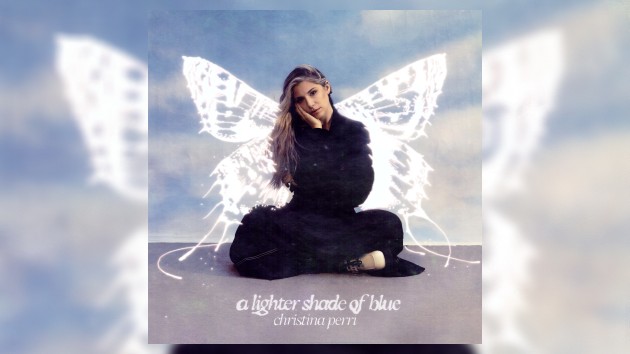
Christina Perri‘s new album, a lighter shade of blue, her first since 2014, is out on Friday — and it’s a good thing, too. The singer says she’s “overflowing with stuff I need to sing about.”
Unfortunately, that stuff is sad. Christina suffered postpartum depression after having her daughter in 2018. Then in early 2020, she had a miscarriage. Later that year, after getting pregnant again, her daughter Rosie was stillborn. Christina is now expecting another baby, but says her grief inspired many of the songs on the album.
“We hardly talk about [grief] openly,” she notes. “So I feel a sense of responsibility, having gone through all these things. But I can only say that now, having done all that inner work. So I feel like, ‘OK, I’m ready to really share my experiences.'”
And Christina hopes that detailing what she’s gone through in song will help others.
“These songs feel so important to me that I have to put them out,” she explains. “Like, I don’t know many people singing about postpartum depression, but I gotta share that song with everyone in the world.”
“It’s really the music that’s encouraging me to do it even when I feel like I can’t,” she adds.
Christina’s journey through her grief is reflected in the album’s title, which was inspired by the album’s song “Blue.”
“The lyric has to do with becoming a lighter shade of this darkness I’ve always carried around with me. And as soon as we wrote this song, I saw the entire thing,” she explains. “Every song has some sort of reference to either blue … specifically, or just that moody kind of vibe. And all the songs kind of tell the story of starting in a very dark place and slowly getting lighter.”
The 74th Emmy Awards will be held live Monday, Sept. 12, at 8 p.m. ET on NBC, but so far, two potential hosts have declined.
Dwayne “The Rock” Johnson was reportedly approached, but the actor, producer, and entrepreneur had to RSVP no.
“It was just schedule,” he told Entertainment TonightThursday nightduring the red carpet premiere of his animated film DC Super Pets. “I was really, truly honored when they came to me and asked, but it was just a scheduling thing…That’s really what it comes down to,” he told ET.
Another rock-related host also replied in the negative: Chris Rock.
“He’s in the middle of his tour and is preparing for the taping of his comedy special, which will be taping this fall,” a source told ET.
As reported, Rock is behind the mic on his Ego Death world tour.
While the comedian and actor has obviously hit the stage since, the Emmys gig would have been the first time the former Oscars host had presenter’s duty since last year’s infamous slap at the hands of Will Smith.
For the Television Academy, the search for a host continues. Stay tuned.
Bernd von Jutrczenka/picture alliance via Getty Images
(RIYADH, Saudi Arabia) — U.S. President Joe Biden has promised to bring up human rights concerns when he meets with Saudi leaders in Jeddah on Friday as part of his first Middle Eastern trip, but the visit has been surrounded by considerable intrigue and controversy.
During his presidential campaign, Biden said he would make Saudi Arabia a “pariah state” over the murder of journalist Jamal Khashoggi, but he has refused to answer whether he will bring up the case specifically with Crown Prince Mohammed bin Salman, the de facto ruler of the Kingdom once seen as a reformer, but who now has a reputation for targeting his critics and crushing dissent.
Human rights campaigners have expressed concern that Saudi Arabia’s human rights record once again may be overlooked in favor of cheap oil, especially since the West is in need of alternative energy options following the war in Ukraine.
The awkward nature of the visit is perhaps summed up by the White House’s refusal to even say whether Biden will shake the Crown Prince’s hand.
But for the families of those who killed in a mass execution earlier this year, which saw 81 people executed on March 12 in what human rights groups condemned as a “massacre,” the trip is seen as nothing less than legitimizing the Kingdom’s regime.
Hamza al-Shakhouri’s brother, Mohammad al-Shakhouri, was executed in March after being convicted of crimes relating to various “terrorist” activities. But in a letter in November 2021, UN special rapporteurs said that they had received evidence that al-Shakouri’s confession, relied on by state prosecutors, was based on torture, and they appealed to the Kingdom to overturn his sentence. The reported use of coerced confessions as evidence of guilt, they said, “would constitute a blatant violation of due process and of fair trial guarantees.”
Saudi Arabia’s counter-terrorism laws have been criticized by the UN as being “unacceptably broad” which have been used against “human rights defenders, writers, bloggers, journalists and other peaceful critics.”
The Kingdom’s secretive judicial system has long drawn condemnation from human rights campaigners for failing to meet the basic standards of due process.
“President Biden has attempted to justify his visit to Saudi Arabia and pledged that his government will not tolerate authorities harassing dissidents and activists,” Hamza said in a statement shared with ABC News by the human rights charity Reprieve. “The Saudi regime doesn’t just harass those who speak out against it; it murders them. My brother is just one of the many victims.”
Yasser al-Khayat, the brother of Mustafa al-Khayat who was also executed in March for alleged “terrorist” activities, told ABC News that the family have still not received his body for a proper burial. According to the European Saudi Organization for Human Rights, Mustafa was also tortured into signing a confession having been held in solitary confinement for six months.
“We are still mourning,” he said in a statement shared with ABC News. “This visit legitimizes Mohammed bin Salman’s actions, sending the message that my brother’s life doesn’t matter and that America will continue to support the regime no matter how many of us they kill.”
“Americans often describe their country as the world’s greatest democracy but its president is partnering with a man who has killed countless people like my brother for daring to ask for those same democratic rights,” he said.
Both men are now outside Saudi Arabia, and so were able to provide their testimony without imminent fear of reprisals.
The White House did not respond to a requests for comment from ABC News on whether officials will raise concerns about Saudi Arabia’s use of the death penalty during the visit to Jeddah.
Reprieve’s Director, Maya Foa, described the current climate under the rule of Crown Prince Mohammed Bin-Salman as an “execution crisis.”
“The authorities are on track to execute more people this year than ever before,” Foa told ABC News. “Child defendants, pro-democracy protesters and people convicted of non-violent drug crimes are among those at risk. There are likely thousands of people on death row but the justice system is so secretive that we simply don’t know how many.”
ABC News’ Ben Gittleson contributed to this report
(BUFFALO, N.Y.) — When the Tops Friendly Market on Jefferson Avenue shut down after the Buffalo mass shooting, the community lost its only grocery store — a lifeline in a predominantly Black neighborhood that fought for years to obtain access to affordable and quality fresh food.
Two months after the shooting, the store is opening its doors again to the public on Friday, but the prospect of returning to the site of the massacre has been difficult for the community. With no other grocery store in the area, some have no choice.
Pastor Dwayne Jones was at his church, Mount Aaron Missionary Baptist Church, when the shooting occurred less than half a mile away. Jones, a developer who has spearheaded projects across the city to provide affordable housing to the community, said that the Tops should open only “temporarily” while they build a grocery store at a new location.
“[It] has been very traumatic to the congregation, to the community, to people — seeing those bodies come out of their Tops,” Jones said.
Ten Black people were shot and killed at the Tops by a white teenager in an alleged racially motivated shooting on May 14. The victims included four grocery store employees as well as six customers, several of them regulars at the store, according to the Buffalo Police Department and those who knew them.
Jones leads a congregation of 300 people at his church where one of the shooting victims, 63 year-old Geraldine Talley, was a member and was buried on church grounds.
“There’s a lot of fear,” Jones said. “There’s a lot of questions. Where do we go from here? How do we trust people that don’t look like us in the community? I wouldn’t say it’s healing, but it’s trying to get through the traumatic part before we get to the healing.”
Jamil Crews, a community leader and organizer who grew up in the East Buffalo neighborhood, said he understands why some don’t want to go back to the Tops and if there was another “viable option” in the community, he also wouldn’t want it to reopen.
“I saw the full video of [the shooting] – unedited, just raw, unedited, and it completely broke me,” Crews, who runs a marketing business located a few hundred feet away from the Tops, told ABC News on Wednesday.
But for many people, he said, “this is the only resource they have in that community, so they need it.”
Crews said he and some of his fraternity brothers will be at the reopening Friday to help elderly people with their groceries and send a message that “it’s safe to come back.”
Community members, store workers and Tops executives gathered on Thursday afternoon for a prayer service and a moment of silence to mark the two-month anniversary of the shooting and honor the victims ahead of the store reopening.
The company said in a statement the store “will quietly and respectfully reopen to the public.”
Regular shoppers, a retired police officer: Remembering the victims of the Buffalo shooting
Asked about relocating, Tops Friendly Markets President John Persons said at a press conference in June that it would take two to three years to do so, according to Buffalo ABC affiliate WKBW.
According to Persons, who spoke at the rededication of the store on Thursday, about 75% of the employees who worked at the Jefferson Avenue store at the time of the shooting have returned to work, which he said is “a testament to their resiliency.”
Persons said in June that employees who don’t feel comfortable returning have the option of working at other branches. According to the franchise’s website, Tops Friendly Markets operates 150 stores across Pennsylvania, Vermont and New York, with seven locations in Buffalo.
Persons also said the store will undergo extensive renovations and remodeling and when it reopens, it will have a different look and feel.
The remodeled store “will provide more space for produce, organic options, fresh foods, personal care products and, importantly, community collaborations for nutrition education and health screenings,” Persons said Thursday.
“It will become an ever greater resource to combat local food insecurity and support health and wellness,” he added.
Following the shooting, the closure of the Tops supermarket underscored the long-standing divestment in East Buffalo that led to the predominantly-Black area to become a “food desert.”
Food deserts are when households lack access to a market because they live beyond walking distance and don’t have a personal vehicle, translating to overall food insecurity, Andre Perry, senior fellow at the Brookings Institution and author of the book “Know Your Price: Valuing Black Lives and Property in America’s Black Cities,” told ABC News, adding that Black households are more than two times likely to be food insecure than the national average.
Perry attributes practices such as redlining as a key factor that contributed to the lack of food access. Redlining refers to the practice of withholding services — such as providing housing subsidies — from low-income or minority communities.
“We know that in order to get a supermarket there, there are models created largely around density, around buying power and a number of other factors that really punish poor communities, low income communities and rural communities for not having wealth,” Perry said.
He added, “When people look at black communities, there’s a dim view. Corporations don’t see the potential. They don’t see the value in Black communities, by and large. And that is certainly the case in places like Buffalo.”
Community leaders and city officials, including Buffalo Mayor Byron Brown who was a council member at the time of the store’s opening, advocated and lobbied for a supermarket. When Tops Friendly Market opened in 2003, it became a source of pride for the community.
“There was a significant effort to bring a supermarket chain to the community, but markets refused to come in and refused to provide support for the community,” Brown told ABC News, adding that he “reached out directly to supermarket chains and convinced Tops to come to the community.”
Crews said he still remembers what it was like before the Tops opened its doors when the area was a food desert, with the nearest grocery store more than 3 miles away.
Tops’ opening, he said, “was a big deal because it’s like, finally we have something where we can have access to the fresh fruits and vegetables and we don’t have to rely on like the secondhand stuff or the powdered milk.”
Following the shooting, the store was inaccessible as a crime scene in an active investigation.
While the store was closed, community leaders like Crews worked to make sure people still had access to fresh food. Advocates planned food drives across the city, buses provided free transportation to neighboring grocery stores and volunteers worked to distribute donated hot meals and groceries to East Buffalo families.
“The whole community kind of rallied together,” Crews said.
In the aftermath of the shooting, Tops Friendly Markets partnered with the National Compassion Fund to establish the Buffalo 5/14 Survivors Fund to provide direct financial assistance to family members of the deceased and those impacted by the tragedy. As of Thursday morning, the fund received more than $4.26 million in donations, including a $500,000 donation from Tops Markets.
Jones said his mission is to meet with city officials to advocate for a “full-sized” grocery store to be built at a new location because even before the shooting, the Tops “wasn’t good enough.”
According to Jones, the grocery store is smaller than others across the city and having only one option speaks to years of divestment, redlining and systemic racism in the predominantly Black community in East Buffalo.
Pointing to the plan to demolish Robb Elementary School — the site of the mass shooting that left 19 dead in Uvalde, Texas — Jones said he believes the city should demolish the Tops building and the site should become a memorial to those who were killed.
“They’re going to build a new school because they don’t want to send the kids or the community back into somewhere that was traumatized,” Jones said, reflecting on his own trip to Uvalde, where he met with families of the victims.
“I think we need to have that same compassion in Buffalo, New York,” he said.