Of all the acts currently on the radio, Black Eyed Peas are among the veterans, having released their first album in 1998. But the group doesn’t take for granted that more than 20 years later, they’re still scoring hits, especially in today’s competitive pop landscape.
During a 2020 interview with ABC News, will.i.am noted success in the late ’90s and early aughts was measured by record sales and appearances on shows like MTV’s TRL: “That was your entry point. Now the entry point … it’s so competitive, because it’s like Instagram. It’s Spotify, it’s TikTok, YouTube.”
“There wasn’t a measure of how many times your song was played on TRL or how long,” he explains. “Now it’s different. Now there’s, like, skip rates. Like, ‘What? Skip rate?’ ‘Yeah. If they skip the song.’ ‘If they skip the song????'”
As a result, will says BEP isn’t resting on its laurels as one of the best-selling groups of all time. They’re going hard, like all the up-and-coming artists. That definitely worked on 2020’s Translation, which produced a string of hits.
“You gotta freakin, like, humble yourself, look at it and compete,” will explains. “The ticket is not, like, ‘But I was big!’ Nah, nah, nah. Nope. Who cares? They moved on.”
He laughs, “There’s people that have more followers than Black Eyed Peas on Instagram. And what do they do? I don’t know.They’re on Instagram! And that’s humbling!”
That’s why will says the group puts so much thought into their songs.
“Every single second in the song’s duration, every moment, we made sure that we kept people’s attention,” he notes. “We don’t want skips!”
The Peas’ latest hit is “Don’t You Worry” with their pals David Guetta and Shakira. Their ninth album is coming soon.
While the 2000s emo and pop-punk kids have the When We Were Young festival, aughts indie rock fans have the Lights, Camera, Factions tour, co-headlined by Spoon and Interpol.
Touring together feels a little like destiny realized for the two bands, given how much their careers have been interconnected over the past 20 years. For example, both their 2002 albums, Kill the Moonlight and Turn on the Bright Lights, and their 2007 records, Ga Ga Ga Ga Ga and Our Love to Admire, were released on the same day.
“It’s gonna be pretty killer to be touring with Spoon, who’s just a band that is one of the great bands, period,” Interpol guitarist Daniel Kessler tells ABC Audio. “Britt [Daniel]’s one of the great songwriters, and a good friend. They’re all good friends. We’ve known them … for 20 years, since we put out our first record.”
Spoon drummer Jim Eno hopes that their friendship might lead to an onstage collaboration.
“We’re talking about seeing if we can do anything with those guys as far as a song,” Eno shares. “We’re friends with them, so I imagine there’s gonna be a lot of hanging out and stuff, so hopefully we’ll be able to do something special.”
The Lights, Camera, Factions tour launches Thursday in Asbury Park, New Jersey. Spoon and Interpol will be touring in support of their respective 2022 albums, Lucifer on the Sofa and The Other Side of Make-Believe.
While Harry Styles did appear in the movie Dunkirk, his new film Don’t Worry Darlingis one of his first starring roles. It was, of course, directed by Harry’s now-girlfriend, Olivia Wilde, and for a Variety cover story on her and the film, Harry revealed what advice she gave him as he becomes a leading man.
“‘The first step is to lose the Oscar you won in the shower that morning,'” Harry says Olivia told him. “‘Listen, and do the scene with your partner, not at them. Be a human, tell the truth.'”
“As a director, Olivia is incredibly focused. She communicated what she was looking for from the cast with both clarity and respect,” Harry tells Variety. “I think transitioning from acting into directing has made her a director who knows how to get the best out of everyone.”
Harry also explains why he wanted to take on the role of Jack in Don’t Worry Darling. He plays one half of a couple who lives in an experimental utopia where all the women are housewives and all the men work on the same mysterious project.
“It felt like an opportunity to play someone who is incredibly complex, caught between love and obsession,” says Harry. “There were always two sides of the character to play with. It’s fun to play someone that you feel like you’re trying to work out the whole time.”
Richard Brener, the president of the studio behind the movie, tells Variety, “Harry obviously is a revelation. I think there will very quickly be a conversation about why is he even bothering with music when he is such a huge movie star?”
Thirty years ago today, Eric Clapton released what has become the best-selling album of his career, Unplugged.
The 14-track acoustic live collection features performances from an episode of the MTV Unplugged series that was shot in front of an intimate audience in January of 1992 at Bray Studios outside of London and premiered in March of that year.
The Unplugged album spent three weeks at #1 on the Billboard 200 chart in March 1993. It included one hit single, a low-key, jazzy rendition of Eric’s 1971 Derek and the Dominos classic “Layla,” which reached #4 on the Billboard Hot 100.
Unplugged also features a version of Clapton’s 1992 hit “Tears in Heaven,” a few other original tunes, and a variety of blues covers, including renditions of Bo Diddley‘s “Before You Accuse Me,” Son House‘s “Walkin’ Blues,” Robert Johnson‘s “Malted Milk” and Muddy Waters‘ “Rollin’ and Tumblin’.”
Clapton’s backing band for the Unplugged show included longtime Rolling Stones touring keyboardist and former Allman Brothers Band member Chuck Leavell, longtime Tom Petty and the Heartbreakers drummer Steve Ferrone and longtime Elton John percussionist Ray Cooper.
At the 1993 Grammy Awards, Clapton won a trio of trophies for Unplugged — Album of the Year; Best Rock Vocal Performance, Male; and Best Rock Song for his acoustic version of “Layla.”
An expanded two-CD/DVD version of Unplugged was released in 2013. It featured a bonus CD with six additional tracks, and a restored version of the concert video, plus more than an hour of unseen footage from the rehearsal for the show.
In 2016, Unplugged was certified Diamond by the RIAA for selling over 10 million copies in the U.S. It’s among the bestselling live albums of all time.
Here’s the full track list of the Unplugged album:
“Signe”
“Before You Accuse Me”
“Hey Hey”
“Tears in Heaven”
“Lonely Stranger”
“Nobody Knows You When You’re Down and Out”
“Layla”
“Running on Faith”
“Walkin’ Blues”
“Alberta”
“San Francisco Bay Blues”
“Malted Milk”
“Old Love”
“Rollin’ and Tumblin'”
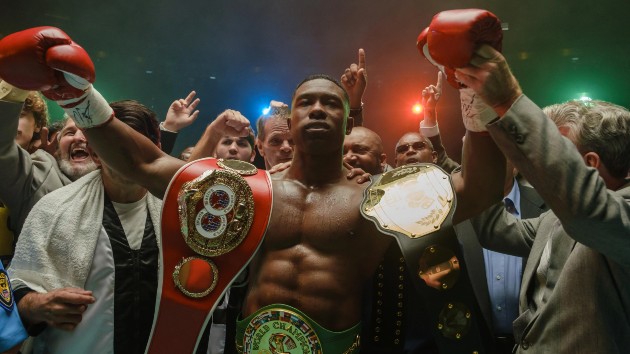
Mike, the new Hulu limited series that details the life of former heavyweight boxing champion Mike Tyson, is not afraid to go for it.
Trevante Rhodes, the acclaimed actor known for his lead role in the Oscar-winning film Moonlight, told ABC Audio he took on the role of Tyson without much time to prepare.
Rhodes called the shoot “tumultuous,” saying, “You get hurt, and they don’t care. You know what I mean? So, you just gotta keep it pushing.”
He was otherwise tight-lipped about any on-set injuries, but revealed he got a platelet-rich plasma injection during the shoot, which is used to accelerate healing in body tissue.
Injuries aside, the actor said “everything else was just beautiful” about shooting the series. The chance to portray as complicated a character as Tyson was not something Rhodes took for granted.
“To have the opportunity to … represent all that, that’s a blessing,” Rhodes said. “As a man, just having the chance to walk in those shoes, you know what I mean? It felt good.”
The series covers all aspects of Tyson’s life and career, everything from his unmatched boxing success to his rape conviction. Rhodes did not consult Tyson about the project, but said it was not for lack of trying.
“He’s not involved at all, but I’ll tell you, I shot him a DM, man,” Rhodes said. “He’s out in the world right now and he’s making himself known. Maybe because of the show, maybe not. I don’t know. So hopefully I get a chance to bump into him, and give him a hug and everything. But, I don’t know man, we’ll see.”
The two-episode premiere of Mike drops Thursday on Hulu.
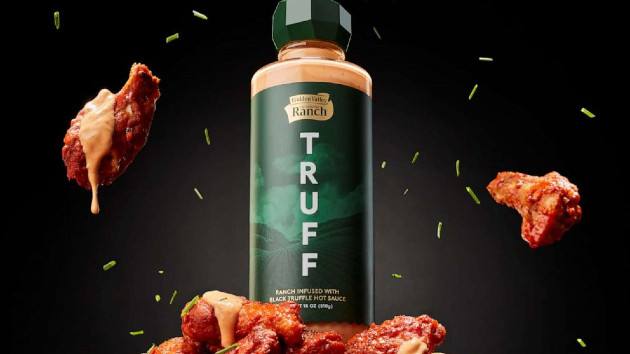
(NEW YORK) — Condiment fans are clamoring on social media over the luxurious and spicy new collaboration from Hidden Valley Ranch and hot sauce company Truff, Spicy Truffle Ranch.
The two companies announced the ultra-limited release on Tuesday, encouraging interested tasters to join the online waitlist to get notified when the black truffle infused hot sauce and ranch dressing blend goes live later this month.
From pizza to chicken wings, ranch and hot sauce are a well-known go-to for all things dipping, dunking and drizzling, so it comes as no surprise that fans are hyped about the hybrid Spicy Truffle Ranch blend.
“TRUFF is all about flavor exploration and reimagination. While we’ve had the privilege of working with world-class chefs, sometimes the best suggestions come from our customers, who have been very vocal about requesting a truffle ranch,” Truff co-founder Nick Ajluni said. “Partnering with Hidden Valley Ranch was the obvious choice. Not only are they the original ranch, but they’re a truly iconic brand with a passionate community that’s helped make ranch a cultural phenomenon.”
This unique new spicy truffle ranch features “the spice of red chiles, umami depth of black truffles, and tangy, creaminess of ranch dressing, all of which morph into a truly gourmet condiment,” according to the press release.
Deb Crandall, marketing director at Hidden Valley Ranch, hailed Truff as “the perfect partner” to deliver ranch fans a “new and unexpected” flavor experience.
Truff Hot Sauce, an upscale version of the spicy pantry staple, first reached viral acclaim when it debuted in 2017 and quickly became the fastest-growing company in the hot sauce space with its distinctive flavors, sleek bottle and truffle-shaped cap. The company now offers a variety of products, including pasta sauce, mayonnaise and truffle oil.
Previous iterations of Truff Hot Sauce have been tried and beloved by celebrities like Oprah and Machine Gun Kelly to home cooks.
The limited-time Spicy Truffle Ranch sauce officially goes live Aug. 30 at 11 a.m. ET and will be available for $24.99 in TRUFF’s larger 18-ounce “magnum” bottles while supplies last.
(NEW YORK) — Here are the scores from Wednesday’s sports events:
MAJOR LEAGUE BASEBALL
INTERLEAGUE
Detroit 6, San Francisco 1
Oakland 3, Miami 2
Texas 16, Colorado 4
Washington 3, Seattle 1
Cleveland 7, San Diego 0
Kansas City 5, Arizona 3
AMERICAN LEAGUE
Toronto 3, Boston 2
Chi White Sox 5, Baltimore 3
Houston 5, Minnesota 3
Tampa Bay 4, LA Angels 3
NATIONAL LEAGUE
Atlanta 14, Pittsburgh 2
Philadelphia 7, Cincinnati 5
Chi Cubs 7, St. Louis 1
LA Dodgers 12, Milwaukee 6
WOMEN’S NATIONAL BASKETBALL ASSOCIATION PLAYOFFS
Connecticut 73, Dallas 58
A jury awarded Vanessa Bryant $16 million in her invasion of privacy trial against Los Angeles County over photos taken at the scene of the 2020 helicopter crash that killed her husband, basketball star Kobe Bryant, and their 13-year-old daughter, according to ABC Los Angeles station KABC.
The jury also awarded $15 million to Chris Chester, an Orange County financial adviser who had also sued the county over photos taken of his wife and daughter, who were killed in the same crash, according to KABC.
The jury deliberated for several hours before reaching the verdict.
The federal trial began on Aug. 10, with the jury hearing from those in law enforcement, first responders and the family of the victims, including Vanessa Bryant and Chester. Attorneys gave closing statements on Tuesday and Wednesday after nearly two weeks of testimony.
Vanessa Bryant filed a lawsuit several months after the 2020 crash against Los Angeles County, alleging that first responders took graphic photos of human remains at the scene as “souvenirs” and shared them with others. She claimed she suffered emotional distress and sued for an undisclosed amount of damages for negligence and invasion of privacy.
In July, U.S. District Judge John Walter decided to consolidate Vanessa Bryant’s and Chester’s cases into one trial.
Kobe Bryant and their daughter, Gianna, were headed to a basketball game at his Mamba Sports Academy in Thousand Oaks along with others connected to the basketball program on Jan. 26, 2020, when the helicopter they were traveling in crashed in Calabasas. All nine people on board were killed.
(KIEV) — Andrii Pokrasa is being hailed as a hero in Ukraine, known to the public as “Drone Boy,” after he helped a crucial Ukrainian military operation using his drone.
Andrii, 15, helped by his father, put his life in danger and sent the Ukrainian military the coordinates of advancing Russian forces during the early days of the war.
The war in Ukraine, which has raged on for six months, has had a particularly brutal effect on children.
Nearly 1,000 children have been killed or injured during the war, UNICEF estimates, and more than 5 million Ukrainian children both in the country and living as refugees abroad are in need of humanitarian aid.
“My mother was very scared at first,” Andrii told ABC News reporter Britt Clennett. “But now she is proud that we did well, that we are healthy and that we were able to help.
Andrii said that they posted in a local village group that they had a drone, and that Andrii knew how to operate it. A man named Yuri Kasyanov from the civil defense forces responded to their post, Andrii told ABC News, adding that “he didn’t know that I’m 15.”
Andrii was asked to use his drone to spy on advancing Russian vehicles in Makariv, a village near his own village of Kolonschyna, in the outskirts of Kiev.
“There were fuel trucks, tanks, artillery, armored personnel carriers,” he said. “I tracked them on a drone, they were in my picture. And then I opened the tab with the map on the drone and put a mark on it and the coordinates appeared there.”
Andrii said he passed the coordinates to Kasyanov, who passed them on to the Ukrainian artillery. The artillery decimated the column of Russian tanks within minutes.
They were near enough to an explosion related to the attack that they had to evacuate the area, he said.
“Yuri organized a green corridor for us – a convoy,” he said. “We went through this field to the Zhytomyr highway that had already been liberated by that time.”
Andrii said his friends didn’t believe him at first when he recounted his story of helping to defeat Russian forces, but then they saw him on TV.
MORE: Ukrainian children’s book author imagines the war through their eyes
“My friends are very happy that everything turned out and I am fine,” he said. “I had to help because I could.”
(UVALDE, Texas) — In a March 3, 2021, school board meeting, Uvalde police chief Pete Arredondo, raised concerns about security issues in schools.
Uvalde school board officials unanimously voted Wednesday to fire Pete Arredondo, the school district’s police chief, exactly three months after the school shooting that killed 19 students and two teachers.
The termination is effective immediately.
Arredondo was not in attendance at his termination hearing out of concerns over his safety, his attorney, George Hyde, said in a 17-page statement released shortly before the community gathered Wednesday evening.
Hyde claimed that the district did not file proper legal procedures in proceeding with disciplinary action and that follow-up requests for access to district complaints or investigations “have been ignored by the district,” calling the proceedings an “illegal and unconstitutional public lynching.”
Arredondo has been the target of criticism for the delayed response to the May 24 tragedy.
School officials have continued to face pressure to hold officers accountable for the 77 minutes it took before law enforcement breached a classroom door and killed the 18-year-old gunman.
The Uvalde Consolidated Independent School District recommended that Arredondo be fired. The Uvalde school board canceled its July 23 special session to consider the district’s recommendation “in conformity with due process requirements, and at the request of his attorney.”
School board members agreed in an Aug. 15 meeting to hire outside attorneys ahead of the hearing.
Parents and community members have called on officials to fire Arredondo immediately, with some calling for the firing of other members of Uvalde’s school district police force who were present during the shooting.
According to an investigative report by the Texas House of Representatives into the events of May 24, the school district’s written active shooter plan assigned Arredondo “to assume command and control” during an active shooter incident.
“But as events unfolded, he failed to perform or to transfer to another person the role of incident commander,” the report from the state House read. “This was an essential duty he had assigned to himself in the plan mentioned above, yet it was not effectively performed by anyone.”
The report goes on to describe the general consensus from witnesses that officers on the scene either “assumed that Chief Arredondo was in charge, or that they could not tell that anybody was in charge of a scene described by several witnesses as ‘chaos’ or a ‘cluster.'”
Uvalde:365 is a continuing ABC News series reported from Uvalde and focused on the Texas community and how it forges on in the shadow of tragedy.
In an interview with The Texas Tribune, Arredondo said he did not consider himself the commanding officer on the scene. He has said he was not made aware of the 911 calls coming from the children in the attacked classrooms.
Arredondo has defended the police response to the incident.
“We responded to the information that we had and had to adjust to whatever we faced,” Arredondo said. “Our objective was to save as many lives as we could, and the extraction of the students from the classrooms by all that were involved saved over 500 of our Uvalde students and teachers before we gained access to the shooter and eliminated the threat.”
Fifteen months before the school shooting, Arredondo at a school board meeting mentioned some of the security issues that investigators found played critical roles in the failures connected with the May 24 massacre, including problems with police radios and school doors left open.
In other remarks, Arredondo pointed out the need for more active shooter training.
Arredondo resigned from his city council post and is currently on leave from his position as UCISD police chief.
He is calling for the board to “immediately reinstate him, with all back pay and benefits and close the complaint as unfounded,” his attorney said Wednesday.