(NEW YORK) — Executives with the social media company Meta announced Thursday that they recently removed 480 Facebook and Instagram accounts, pages, and groups associated with the Proud Boys, for violating the platforms’ ban on the far-right extremist group.
The Proud Boys organization was banned by Facebook and Instagram in 2018. Meta is the parent company of both platforms.
Since the ban, Meta representatives say they have taken down 750 assets associated with the Proud Boys, including accounts, pages, groups, and events.
Many of the pages Meta recently removed represented so-called “front groups” that hid their affiliation with the Proud Boys, according to the company. They would “appear benign,” a Meta spokesperson told ABC News — but they were in fact “attempting to direct people off platform to facilitate discussion, recruitment, and organizing” for the extremist group.
“The change in adversarial tactics makes it clear this group is aware that we’re tracking them and enforcing against them,” the spokesperson said.
“While there’s no silver bullet here, our approach is impacting these dangerous organisations, and we can see adversaries trying harder to hide their affiliation & change tactics,” Meta Counterterrorism Policy Lead Dina Hussein posted on Twitter. “We’ll continue to stay vigilant and share our findings.”
The social media giant used a tactic they call “strategic network disruption” to remove an entire network at once, company officials said.
It’s “an important tool in our work to keep our platforms and communities safe — and counter malicious groups like the Proud Boys when they attempt to abuse our platforms to cause offline harm and violence,” the spokesperson told ABC News.
The tool allows Meta to study how groups attempt to bypass the company’s detection systems, the spokesperson said.
Meta Vice President of Content Policy Monika Bickert told reporters Thursday that the company “will continue to refine our targeted approach to adversarial threats, as well as our scaled enforcement.”
The takedown of Proud Boys content represents just a tiny fraction of the company’s recent enforcement efforts, according to company officials. In the second quarter of 2022, Meta removed 2.3 million pieces of Facebook content related to organized hate, and 449,000 on Instagram — the majority of which was removed before users reported it, the company said.
In June, the Justice Department charged Proud Boys leader Enrique Tarrio and four other members of the group with seditious conspiracy related to the Jan. 6 attack on the U.S. Capitol, alleging that they coordinated efforts to disrupt the peaceful transition of power.
ABC News’ Alexander Mallin contributed to this report.
(WASHINGTON) — The United States said Wednesday that although it “does not seek conflict with Iran,” it will continue to “defend” its troops against Tehran-backed militias in Syria.
Three U.S. service members were injured in separate rocket attacks on two facilities housing American troops in northeastern Syria on Wednesday, prompting U.S. forces to respond, according to a statement from the U.S. military’s Central Command.
Beginning at approximately 7:20 p.m. local time, several rockets landed inside the perimeter of Mission Support Site Conoco. Shortly after, more rockets landed in the vicinity of Mission Support Site Green Village. Both sites are located near large oil and gas fields in northeastern Syria. One service member at Mission Support Site Conoco was treated for a minor injury and returned to duty, while two others were under evaluation for minor injuries, CENTCOM said.
Speaking with ABC News, a U.S. official characterized the injuries as “very minor.”
CENTCOM said U.S. forces responded over the last 24 hours with Apache attack helicopters, AC-130 gunships, and 155mm artillery, “resulting in four enemy fighters killed and seven enemy rocket launchers destroyed.”
“We will respond appropriately and proportionally to attacks on our servicemembers,” Gen. Michael “Erik” Kurilla, commander of CENTCOM, said in a statement on Thursday. “No group will strike at our troops with impunity. We will take all necessary measures to defend our people.”
Colin Kahl, the U.S. undersecretary of defense for policy, was asked about the latest exchange in Syria during a press briefing on Wednesday afternoon in Washington, D.C. Kahl told reporters he did not have any details to share at the time but noted: “As a general matter, we’re not going to hesitate to defend ourselves.”
Militias allegedly backed by Iran’s Islamic Revolutionary Guard Corps, an elite branch of the Iranian Armed Forces, have targeted American troops in Syria this month and several other times over the past year, since establishing a foothold in the region while fighting in support of the Syrian government amid the country’s ongoing civil war.
Iran routinely denies arming, funding and training militias that target U.S. forces in Syria, despite weapons and equipment linking back to them, officials said.
On Aug. 15, Iran-backed militias allegedly launched drones targeting the al-Tanf Garrison used by U.S. forces in the energy-rich Homs province in central Syria. At that time, CENTCOM described the attack as causing “zero casualties and no damage.”
In response, on Tuesday, U.S. forces carried out airstrikes targeting infrastructure facilities used by Iran-backed militias in eastern Syria’s oil-rich Deir ez-Zor province, near the country’s border with Iraq. CENTCOM said the strikes came at the orders of President Joe Biden and were “proportionate, deliberate action intended to limit the risk of escalation and minimize the risk of casualties.”
CENTCOM did not identify the specific targets or offer any casualty figures from Tuesday’s strikes. However, the Syrian Observatory for Human Rights, a U.K.-based war monitoring group, said the U.S. strikes targeted the Ayash Camp run by the Fatemiyoun Brigade, a militia made up of Afghan Shiite refugees sent by Iran to fight in the Syrian Civil War alongside Syrian government troops. The Syrian Observatory for Human Rights reported that at least six Syrian and foreign militants were killed in the strikes.
Nasser Kanaani, spokesman for the Iranian Ministry of Foreign Affairs, issued a statement condemning the U.S. strikes “against the people and infrastructure of Syria” on Tuesday. He denied that Tehran had any connections to the targets.
There was no immediate acknowledgment by Syria of Tuesday’s strikes.
Speaking to reporters on Wednesday, Kahl said the Aug. 15 attack fueled concerns that “Iran intends to do more of this and we wanted to disabuse them of any sense that that was a good idea.”
Unlike Wednesday’s counterattack, the U.S. strikes on Tuesday were “carefully calibrated” to avoid killing any civilians or militants, according to Kahl. He said there were originally 11 intended targets but only nine were struck due to evidence that people may be near two of the locations.
The counterattacks and strikes came as Biden seeks to revive a 2015 nuclear deal with Iran that his predecessor abandoned.
Kahl said the negotiations with Tehran to resume its compliance with the 2015 nuclear deal “has nothing to do with our willingness and resolve to defend ourselves.”
“The threats that they engage in against our people in the region or elsewhere, are not linked to wherever we end up on the nuclear deal,” he told reporters. “And I think the strike last night was a pretty clear communication to the Iranians that these things are all on different tracks.”
Since 2014, the U.S. has led a coalition of countries conducting strikes targeting the Islamic State group in Syria. U.S. ground forces entered Syria in 2015. In more recent years, the American-led coalition has also launched strikes targeting the Syrian government’s forces and allies, mainly in defense of the Syrian Democratic Forces, a U.S.-backed alliance of Kurdish and Arab militias that was formed as part of the campaign against ISIS.
What started as a local protest movement in Syria’s southern city of Dara’a expanded into a full-fledged civil war by 2012. ISIS, which grew out of al-Qaeda in Iraq, took root in northern and eastern Syria in 2013 after seizing swaths of territory in neighboring Iraq. The jihadist group is fighting to overthrow Syrian President Bashar al-Assad’s regime and establish a caliphate.
The Syrian Civil War has pulled in the United States, Russia, Iran and almost all of Syria’s neighbors. It has become the largest humanitarian crisis since World War II, according to the United Nations.
(NEW YORK) — Novak Djokovic, one of the world’s top tennis players, confirmed Thursday that he won’t be competing at the upcoming U.S. Open.
The Serbian athlete will miss this year’s tournament in New York City due to his COVID-19 vaccination status.
“Sadly, I will not be able to travel to NY this time for US Open,” Djokovic, 35, said on Twitter Thursday. “Good luck to my fellow players! I’ll keep in good shape and positive spirit and wait for an opportunity to compete again. See you soon tennis world!”
Sadly, I will not be able to travel to NY this time for US Open. Thank you #NoleFam for your messages of love and support. ❤️ Good luck to my fellow players! I’ll keep in good shape and positive spirit and wait for an opportunity to compete again. 💪🏼 See you soon tennis world! 👋🏼
The U.S. government does not allow international travelers to come into the U.S. without proof of COVID-19 vaccination. Djokovic is not vaccinated, telling the BBC earlier this year that “based on all the information that I got, I decided not to take the vaccine.”
The U.S. Tennis Association said Djokovic withdrew from the U.S. Open prior to the draw to determine the tournament’s official seeding list. His withdrawal paved the way for a “lucky loser” to be included in the draw, the association said.
“Novak is a great champion and it is very unfortunate that he will be unable to compete at the 2022 U.S. Open, as he is unable to enter the country due to the federal government’s vaccination policy for non-U.S.citizens. We look forward to welcoming Novak back at the 2023 U.S. Open,” U.S. Open tournament director Stacey Allaster said in a statement.
The athlete was deported from Australia in January over his vaccination status after arriving to compete in the Australian Open. His visa was revoked at the Melbourne airport, restored, then ultimately canceled.
Djokovic won Wimbledon in the U.K. last month — his 21st grand slam title. The U.K. allows travelers into the country without requiring proof of vaccination. France relaxed its COVID-19 requirements in time to allow Djokovic to play in the French Open in May.
After his Wimbledon win, Djokovic told reporters that an exemption to play in the U.S. Open didn’t seem “realistically possible.”
The U.S. Open and New York City allow visitors without proof of vaccination.
“Though the U.S. Open does not have a vaccination mandate in place for players, we respect the U.S. government’s position regarding travel into the country for non-U.S. citizens,” a spokesperson for the U.S. Open told ABC News last month.
ABC News’ Michela Moscufo contributed to this report.
(WASHINGTON) — A federal judge granted the Biden administration a preliminary injunction Wednesday in its lawsuit against a near-total ban on abortions in Idaho — temporarily barring some enforcement of the new law.
The U.S. Department of Justice sued the state over the ban, which goes into effect on Thursday, arguing that it violates a federal law guaranteeing access to emergency medical care.
The Idaho abortion law would make it a felony to perform an abortion in all but extremely narrow circumstances. There are exceptions for cases of rape or incest that have been reported. To avoid criminal liability, a doctor must prove that the abortion was necessary to prevent the death of the pregnant woman, though there is no defense for an abortion to protect the woman’s health, according to the DOJ.
U.S. District Judge B. Lynn Winmill in Boise granted a preliminary injunction, effective immediately, barring the state from enforcing the law “as applied to medical care required by the Emergency Medical Treatment and Labor Act” amid the court proceedings, his order stated.
The case at hand is “not about the bygone constitutional right to an abortion,” he wrote. “This Court is not grappling with that larger, more profound question. Rather, the Court is called upon to address a far more modest issue — whether Idaho’s criminal abortion statute conflicts with a small but important corner of federal legislation. It does.”
Given that the U.S. has shown it will “likely succeed on the merits,” he continued, “the Court has determined it should preserve the status quo while the parties litigate this matter.”
The state is prohibited from enforcing the law to the extent that it conflicts with Emergency Medical Treatment and Labor Act-mandated care, Winmill ordered.
The decision “ensures that women in the State of Idaho can obtain the emergency medical treatment to which they are entitled under federal law. This includes abortion when that is the necessary treatment,” U.S. Attorney General Merrick Garland said in a statement. “The Department of Justice will continue to use every tool at its disposal to defend the reproductive rights protected by federal law.”
White House press secretary Karine Jean-Pierre said in a statement that the ruling “will prevent serious harm to women in Idaho.”
In its complaint, filed on Aug. 2, the Justice Department claimed that the Idaho law violates the Emergency Medical Treatment and Labor Act, which states that hospitals that receive Medicare funds are required to provide necessary treatment to women who arrive at their emergency departments while experiencing a medical emergency. That medical care could include providing an abortion, according to the DOJ.
The Justice Department is seeking a declaratory judgment that the Idaho law is preempted by the Emergency Medical Treatment and Labor Act in emergency situations, as well as an order permanently barring the law to the extent that it conflicts with the federal act.
The lawsuit marked the Biden administration’s first legal challenge to a state abortion ban after the U.S. Supreme Court struck down Roe v. Wade in June, ending the constitutional right to an abortion.
Prosecutors argued that the Idaho law would prevent doctors from performing medically necessary abortions, as required by federal law.
Idaho Attorney General Lawrence Wasden called the lawsuit “politically motivated” and charged that the DOJ did not attempt to “engage Idaho in a meaningful dialogue on the issue” prior to filing its complaint.
A case involving the Emergency Medical Treatment and Labor Act as it pertains to abortion care is also ongoing in Texas.
Last month, the state of Texas sued the Biden administration on its guidance to hospitals that doctors should perform an abortion if doing so would protect a woman’s health. The complaint was filed days after Health and Human Services Secretary Xavier Becerra instructed hospitals to follow the Emergency Medical Treatment and Active Labor Act when determining whether to provide an abortion in emergency cases “regardless of the restrictions in the state where you practice.”
On Tuesday, a federal judge temporarily blocked the federal government from enforcing the guidance, saying the federal law is “silent as to abortion.”
Attorneys for the state of Idaho drew attention to that case in a court filing on Wednesday, saying Idaho “has not yet had a full opportunity to consider how the Texas court’s decision should be persuasive in aspects of this current lawsuit, or in the pending preliminary injunction motion.”
Garland said the DOJ is considering “appropriate next steps” following the Texas court’s decision.
Idaho’s so-called trigger law would be even more restrictive than an abortion ban that went into effect in the state earlier this month. That law, modeled after a similar “heartbeat law” in Texas, bans abortion at about six weeks and also allows civil lawsuits against medical providers who perform the procedure.
Amid legal challenges from abortion providers, the Idaho Supreme Court upheld both abortion laws in a ruling issued on Aug. 12, allowing them to go into effect.
Another trigger law that would make it a felony for doctors to perform an abortion after about six weeks of pregnancy went into effect on Aug. 19 in the state. That law, which has exceptions for rape, incest and medical emergencies, is also currently being challenged by abortion providers.
ABC News’ Alexander Mallin contributed to this report.
Maddie McGarvey/For The Washington Post via Getty Images
(COLUMBUS, Ohio) — The Columbus teachers union has reached a “conceptual agreement” with its school board after three days of picketing.
The Columbus Board of Education and the Columbus Education Association did not disclose terms of the deal.
The CEA began its strike after a vote on Sunday, just days away from the district’s first day of school on Wednesday.
Teachers began picketing outside over a dozen of the district’s schools on Monday morning. The union said it would gather outside schools from 7 a.m. to 4:30 p.m. every day until a deal is reached.
“This deal would not have been possible without the unwavering support of parents, community members, organized labor, and local businesses in Columbus,” the union said in a statement on Thursday morning.
“While the details cannot yet be disclosed, the contract recognizes the board’s commitment to improving our student outcomes, the essential work of the CEA members, and strengthening our learning environments,” Board President Jennifer Adair said in a statement Thursday.
Over 4,000 teachers, librarians, nurses, counselors, psychologists and other education professionals will meet to vote on the new contract over the weekend. Following the union’s ratification, the school board is scheduled to vote on the agreement and in-school classes would resume on Monday, both the board and CEA said on Thursday.
The Columbus Education Association, with 4,000 members, reached a 94% majority on the vote to strike on Sunday.
“It is with a full understanding of the sacrifices that students, parents, and teachers will make together to win the schools Columbus Students Deserve that CEA members overwhelmingly rejected the Board’s last, best and final offer tonight and voted to strike,” Columbus Education Association spokesperson Regina Fuentes said in a statement on Sunday.
The Columbus Board of Education called the decision to strike “incredibly disappointing.”
Fuentes said Sunday the board has “tried desperately” to make the compromise about teacher salary, teacher professional development and teacher leaves.
“Let me be clear,” Fuentes said. “This strike is about our students who deserve a commitment to modern schools with heating and air conditioning, smaller class sizes, and a well-rounded curriculum that includes art, music and P.E.”
Jennifer Adair, Columbus Board of Education President, said in a statement on Sunday the board’s offer “put children first and prioritized their education and their growth.”
Adair said the board offered a generous compensation package for teachers and responded to the concerns raised by the teacher’s union during the negotiations process.
The union and board last met in a mediated discussion on Aug. 18, where the board offered guaranteed raises of 3% annually for three years and $2,000 per CEA member in retention and recruitment bonuses.
According to the board, by the end of the contract, a teacher with a current average salary of $74,000 will earn more than $91,000.
The board’s last offer also stated that it committed funds to install air conditioning in every school, with the exception of one that already has central air in about 50% of the building and is slated to be replaced by a new school in a proposed facilities master plan, the board said.
The 2022-2023 school year began Wednesday with the teachers on strike and students back to school virtually with substitute teachers.
Columbus Mayor Andrew Ginther said in a statement Sunday it was important to get students back in the classroom.
Ginther said the past few years have “underscored the value of our teachers, the resiliency of our kids and the need for Columbus City Schools to position itself for the future.”
MORE: Severe staffing crisis in Sacramento schools leads teachers, staff to go on strike
“A responsible solution is within reach, but only
Star Trek veteran Nichelle Nichols, who passed away in July, is getting ready to follow some of her former colleagues into the stars.
Her son Kyle Johnson has signed up with Celestis, the company that has launched some of the cremated remains of Star Trek creator Gene Roddenberry, those of his widow, Majel Barrett-Roddenberry, and those of James “Scotty” Doohan into space via rocket.
The company is also letting fans pay tribute to Nicholls, who famously played Lt. Nyota Uhura on the show and its spin-off movies, and who in real life recruited diverse applicants for NASA’s ranks.
Celestis is gathering messages to the actress and activist on a special tribute page. The messages — or music or art and other commemorations — will be digitized and stored aboard the Enterprise Memorial Spaceflight that is scheduled for launch later this year.
Slash has announced a new book diving into the many guitars he’s played over the years.
The 300-page tome, simply titled The Collection: Slash, includes photographs and illustrations of Slash’s personal guitars, accompanied by interviews with the Guns N’ Roses shredder himself.
The Collection: Slash is the debut release from Gibson Publishing, a newly launched division of the Gibson guitar company.
“It’s been a blast working with Gibson to create a platform for me to talk about my favorite thing: guitars,” Slash says. “This book is a great exposé of all the great guitars I’ve collected over many years.”
The Collection: Slash will be released in a variety of formats, including the signed $999 Custom Edition, which includes, among other things, an Axe Heaven Appetite Les Paul miniature guitar and an “exclusive Slash bandana.”
While you wait for your copy to arrive, you can watch Slash chat guitars in a new episode of Gibson’s The Collection series. The hourlong video is streaming now on YouTube.
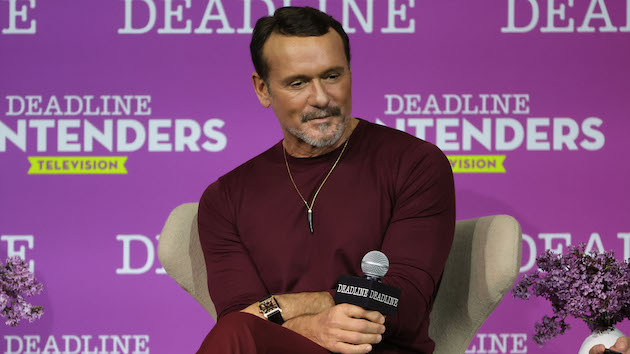
Just in time for Labor Day weekend, Tim McGraw dropped an exciting new merch item that’s a callback to a 1999 hit.
Fans can now head over to his merch store and pick up a white T-shirt with “BBQ Stain” written across the front in sauce-colored lettering. Of course, that’s a nod to “Something Like That,” a single of Tim’s A Place in the Sun album.
The song recounts the narrator’s first experience of falling in love, when he’s hanging out at a fair on Labor Day weekend (yes, with a barbecue stain on his white T-shirt) and meets a woman. Years later, the two lovebirds reconnect while on a flight to New Orleans.
Tim says that his BBQ Stain shirt is “one of the most requested” items in his merch store — and now it’s officially up for sale. The tee retails for $35.
Nowhere Special Recordings; Credit: Sentient Camera
cleopatrick has premiered a new single called “OK.”
The track, which is available now via digital outlets, was produced on the road during the Canadian duo’s tour opening for Royal Blood.
“We wanted this song to sound like it was recorded and produced using a sentient IBM computer from 2002,” says guitarist/vocalist Luke Gruntz. “We digitally abused this song, chopping, degrading, stretching and looping sections with no regard for the rules.”
“OK” follows cleopatrick’s 2021 debut album, Bummer, which includes the singles “Hometown” and “Family Van.”
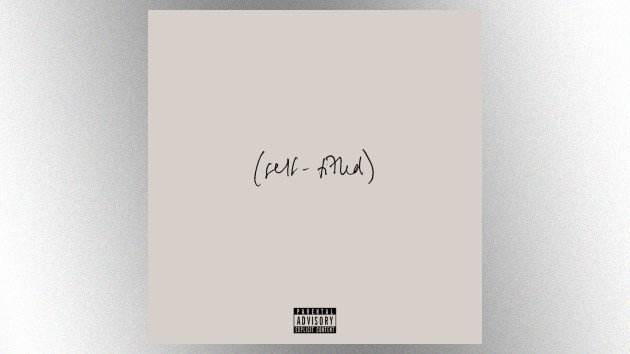
Mumford & Sons frontman Marcus Mumford has premiered a new song called “Better Off High,” a track off his upcoming debut solo album, self-titled.
“Better Off High” is the third track to be released from self-titled, following the cuts “Cannibal” and “Grace.” The album, which includes guest spots from Brandi Carlile, Phoebe Bridgers, Clairo, Monica Martin and Julia Michaels, will arrive in full on September 16.
You can listen to “Better Off High” now via digital outlets.
Mumford will launch a U.S. headlining tour in support of self-titled September 19 in Boulder, Colorado.